


Search results
Search for "continuous flow" in Full Text gives 199 result(s) in Beilstein Journal of Organic Chemistry.
Triple-channel microreactor for biphasic gas–liquid reactions: Photosensitized oxygenations
Beilstein J. Org. Chem. 2011, 7, 1158–1163, doi:10.3762/bjoc.7.134
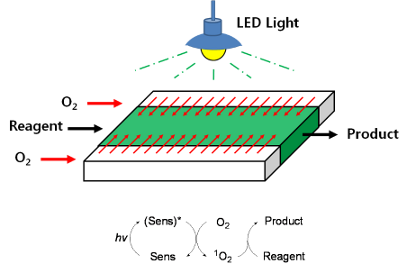
- context triple-channel microreactors could be quite useful as they comprise all the required elements for photosensitized oxygenations, namely continuous-flow processing, large gas–liquid interfacial area, short molecular diffusion distances, and very high surface illumination homogeneity. The middle


Scaling up of continuous-flow, microwave-assisted, organic reactions by varying the size of Pd-functionalized catalytic monoliths
Beilstein J. Org. Chem. 2011, 7, 1150–1157, doi:10.3762/bjoc.7.133
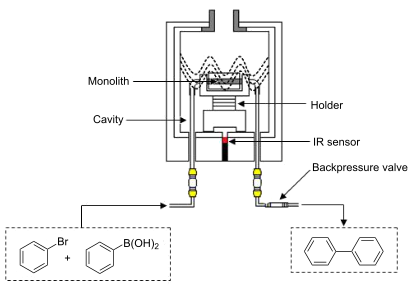
- , respectively. Under optimal reaction conditions the quantity of product could be increased from 31 mg per hour to 340 mg per hour simply by changing the volumetric capacity of the monolith. Keywords: continuous flow; microwave heating; monolith; scaling-up; Suzuki–Miyaura reaction; Introduction Interest in
- ][5][6][7]. Much of this work has focused on continuous-flow microreactor methodology for laboratory based organic synthesis, and has featured the development of inorganic and organic polymer based functionalized monolithic reactors that can operate at elevated temperatures and under high pressure [8
- [12][13]. To this end, the use of microwave heating in conjunction with microporous monolithic reactors has attracted some interest for small-scale synthesis under continuous-flow conditions [14][15][16]. One obvious problem, however, when using microwaves to heat solvents/reagents and surface


Evaluation of a commercial packed bed flow hydrogenator for reaction screening, optimization, and synthesis
Beilstein J. Org. Chem. 2011, 7, 1141–1149, doi:10.3762/bjoc.7.132
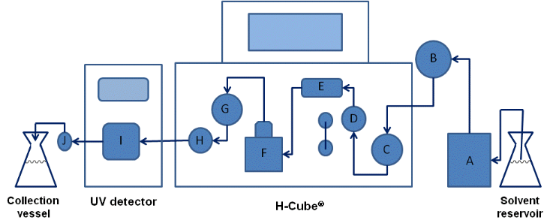
- H-Cube® and the effect of that dispersion on the reaction outcome [15]. As a result of that study, we generated a predictive correlation between non-steady state and continuous flow scale-up conditions for simple reductions. In this report, using the reduction of styrene to ethylbenzene over 10% Pd
- (Figure 7). It should be noted that Kappe observed a “Pd mirror” due to soluble Pd leaching from a CatCart® during a continuous flow Mizorki–Heck reaction [24]. In comparison, the fine black precipitate seen in our wash experiment is more consistent with solid Pd/C catalyst. The experiment was repeated


Continuous flow photolysis of aryl azides: Preparation of 3H-azepinones
Beilstein J. Org. Chem. 2011, 7, 1124–1129, doi:10.3762/bjoc.7.129
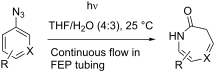
- Berlin, Germany 10.3762/bjoc.7.129 Abstract Photolysis of aryl azides to give nitrenes, and their subsequent rearrangement in the presence of water to give 3H-azepinones, is performed in continuous flow in a photoreactor constructed of fluorinated ethylene polymer (FEP) tubing. Fine tuning of the
- reaction conditions using the flow reactor allowed minimization of secondary photochemical reactions. Keywords: azepinones; azides; continuous flow; nitrenes; photochemistry; Findings Although photochemical rearrangements are an important class of reactions for heterocycle synthesis [1][2], their use is
- often hindered by technical difficulties, both in research laboratories and in industry, particularly when large quantities of material are required [3][4]. In response, there has been a recent growth in the application of continuous flow techniques [5][6][7] for the deployment of photochemical


Continuous gas/liquid–liquid/liquid flow synthesis of 4-fluoropyrazole derivatives by selective direct fluorination
Beilstein J. Org. Chem. 2011, 7, 1048–1054, doi:10.3762/bjoc.7.120
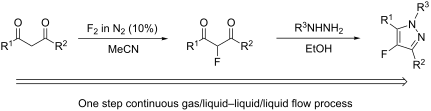
- : continuous flow reactions; fluorine; fluoropyrazole; gas-liquid flow reactor; selective direct fluorination; Introduction Organic systems which bear fluorine atoms are used in an ever widening range of applications in the life sciences. Many commercially significant pharmaceutical and agrochemical products
- manufacturing, we developed continuous flow microreactor systems that enabled gas/liquid fluorination reactions between fluorine and various substrates to occur in very efficient processes [19][20][21]. Fluoro-carbonyl derivatives can, in principle, be utilised as building blocks for the preparation of more
- established that, in both batch and continuous flow processes, 1,3-dicarbonyl derivatives are not equally reactive towards fluorine gas [12] and that the ease of selective direct fluorination depends on the nature and proximity of other functional groups. Substrates that have a high initial equilibrium enol


Chemistry in flow systems II
Beilstein J. Org. Chem. 2011, 7, 1046–1047, doi:10.3762/bjoc.7.119
- promising results, and the lasting effects will certainly become apparent in the years to come. I am very pleased to say that this series contains representative examples of fields in organic synthesis where continuous flow conditions have already made a significant impact. In particular I would like to
Continuous flow hydrogenation using polysilane-supported palladium/alumina hybrid catalysts
Beilstein J. Org. Chem. 2011, 7, 735–739, doi:10.3762/bjoc.7.83
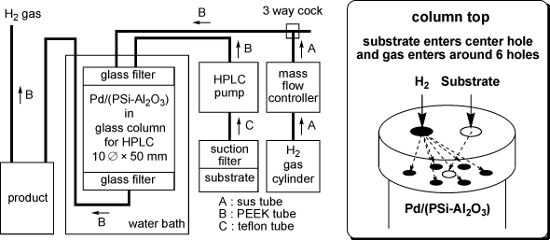
- Hidekazu Oyamada Takeshi Naito Shu Kobayashi Department of Chemistry, School of Science and Graduate School of Pharmaceutical Sciences, The University of Tokyo, Hongo, Bunkyo-ku, Tokyo 113-0033, Japan 10.3762/bjoc.7.83 Abstract Continuous flow systems for hydrogenation using polysilane-supported
- polymer-incarcerated (PI) catalysts, which have high catalytic activity without causing metal leaching [1]. Heterogeneous catalytic hydrogenation in a batch system has recently been applied to continuous flow hydrogenation systems for high-throughput synthesis [2][3][4][5][6][7][8][9][10]. There are
- of catalysts (or inability for their re-use), the need for vigorous stirring to achieve catalytic activity, and the possible necessity for longer reaction times, which may lead to undesirable side reactions or harsh reaction conditions. Continuous flow systems have the potential to overcome these


Unusual behavior in the reactivity of 5-substituted-1H-tetrazoles in a resistively heated microreactor
Beilstein J. Org. Chem. 2011, 7, 503–517, doi:10.3762/bjoc.7.59
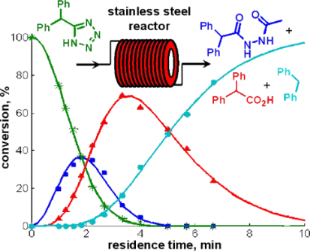
- Chemistry, Karl-Franzens-University Graz, Universitätsplatz 1, A-8010 Graz, Austria Continuous Flow/Microreactor Technologies, Lonza AG, CH-3930 Visp, Switzerland 10.3762/bjoc.7.59 Abstract The decomposition of 5-benzhydryl-1H-tetrazole in an N-methyl-2-pyrrolidone/acetic acid/water mixture was
- explanations for these highly unusual rate accelerations are presented. In addition, general aspects of reactor degradation, corrosion and contamination effects of importance to continuous flow chemistry are discussed. Keywords: flow chemistry; heterogeneous catalysis; microreactors; palladium; process
- continuous flow processes is becoming increasingly important. In the past few years our research group [19][20][21][22][23][24][25] has reported a number of successful case studies where initial reaction optimization for a variety of synthetic transformations was performed under batch microwave conditions


Studies on Pd/NiFe2O4 catalyzed ligand-free Suzuki reaction in aqueous phase: synthesis of biaryls, terphenyls and polyaryls
Beilstein J. Org. Chem. 2011, 7, 310–319, doi:10.3762/bjoc.7.41
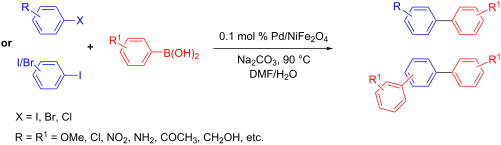
- continuous flow of hydrogen gas [43]. The scanning electron microscope image shows that particle size of the catalyst is ~100 to 300 nm (Supporting Information File 1). The X-ray photoemission spectra confirms the formation of metallic Pd(0) particles, the binding energy values were 335.3 and 340.5 eV for Pd

About the activity and selectivity of less well-known metathesis catalysts during ADMET polymerizations
Beilstein J. Org. Chem. 2010, 6, 1149–1158, doi:10.3762/bjoc.6.131
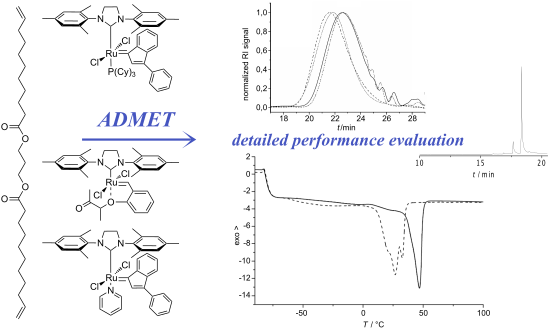
- from Radleys. Stirring was continued at the selected temperature under a continuous flow of nitrogen for 5 h. After 5 h reaction time, the reaction mixture was dissolved in 1 mL of THF and polymerization halted by the addition of 1 mL of ethyl vinyl ether. The mixture was then stirred for 30 min at



Self-assembly and semiconductivity of an oligothiophene supergelator
Beilstein J. Org. Chem. 2010, 6, 1070–1078, doi:10.3762/bjoc.6.122
- , and then cooled to 0 °C in an ice-bath. To this solution, a solution of 2, 2´-bithiophene in dry THF (68.0 mg in 5 mL) was added dropwise under continuous flow of argon. A white solid precipitate was formed. The reaction mixture was stirred at room temperature for 1 h and then immersed in an ice-bath
- product was dissolved in 20 mL dry DMF, compound 9 added and the flask evacuated, purged three times with argon and ~15 mg of the Pd-catalyst added under continuous flow of argon. The reaction mixture was then heated at 80 °C for 8 h under an argon atmosphere. It was observed that an orange precipitate


Kinetics and mechanism of vanadium catalysed asymmetric cyanohydrin synthesis in propylene carbonate
Beilstein J. Org. Chem. 2010, 6, 1043–1055, doi:10.3762/bjoc.6.119
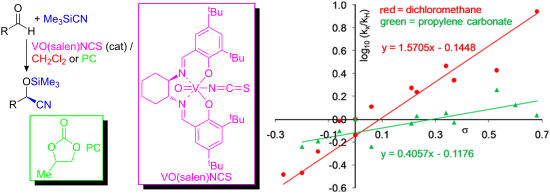
- achieved at atmospheric pressure and room temperature [74][75][76][77], or in a gas-phase continuous flow reactor [78], thus facilitating the use of waste carbon dioxide in this process [79]. In this paper we give full details of the use of catalyst 2 in propylene carbonate, and describe kinetic studies






Continuous flow enantioselective arylation of aldehydes with ArZnEt using triarylboroxins as the ultimate source of aryl groups
Beilstein J. Org. Chem. 2009, 5, No. 56, doi:10.3762/bjoc.5.56
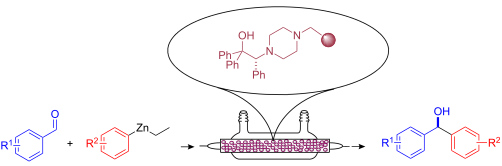
- : asymmetric synthesis; continuous flow; diarylmethanols; solid-supported catalyst; triarylboroxins; Introduction Diarylmethanols constitute the basic scaffold in several important drugs such as antihistamines and muscle relaxants (R)-neobenodine, (R)-orphenadrine or (S)-carbinoxamine (Figure 1) [1]. Despite
- -pass, continuous flow highly enantioselective ethylation of aldehydes characterized by very short residence times (down to 2.8 min) [23]. According to these precedents, we considered that 2 could be a good candidate for a planned continuous enantioselective production of diarylmethanols. When a large
- continuous flow enantioselective processes [52] are still scarce [22][53][54][55][56][57] in spite of the enormous potential of this methodology. Herein, we report the development of a continuous flow system for the preparation of enantioenriched diarylmethanols using triarylboroxins as the ultimate aryl


Acid- mediated reactions under microfluidic conditions: A new strategy for practical synthesis of biofunctional natural products
Beilstein J. Org. Chem. 2009, 5, No. 40, doi:10.3762/bjoc.5.40
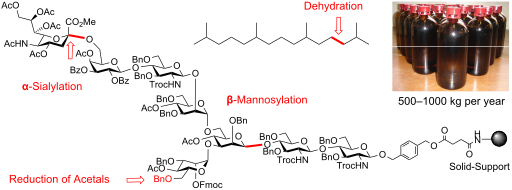
- prominent biological activity in a “practical” and a “industrial” manner. Keywords: acid-mediated reaction; microreactor; natural products synthesis; oligosaccharide; pristane; Introduction A continuous flow microreactor, an innovative technology, has been used to realize efficient mixing and fast heat
- problems, we used a continuous flow microreactor. An application of the microfluidic system to the glycosylation reaction was first reported by Seeberger and co-workers on α-mannosylation [18]. We also have established an efficient microfluidic glycosylation in combination with the affinity separation
- the synthetic procedure, therefore, we used a continuous flow microreactor. Optimal conditions for reductive opening of 4,6-O-benzylidene acetals by a microfluidic system, similar to the α-sialylation and the β-mannosylation protocols, were examined using the glucose 4,6-O-benzylidene acetal 7 (Table


Gold film- catalysed benzannulation by Microwave- Assisted, Continuous Flow Organic Synthesis (MACOS)
Beilstein J. Org. Chem. 2009, 5, No. 35, doi:10.3762/bjoc.5.35
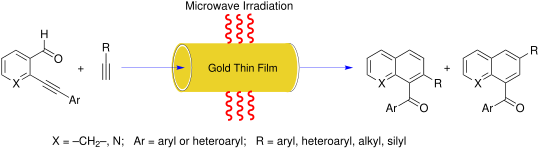
- of gold, copper, silver, and gold-on-silver were prepared and evaluated for their catalytic activity in the microwave-assisted, continuous flow benzannulation of aryl, alkyl and silylalkynes with alkynylbenzaldehydes. Only the gold-on-silver films possessed both the high level of catalytic activity


Radical carbonylations using a continuous microflow system
Beilstein J. Org. Chem. 2009, 5, No. 34, doi:10.3762/bjoc.5.34
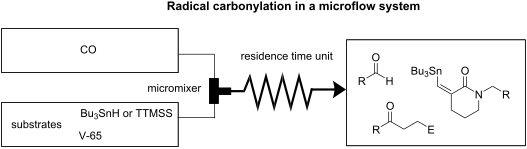
- pressurized carbon monoxide gas. Good to excellent yields of carbonylated products were obtained via radical formylation, carbonylative cyclization and three-component coupling reactions, using tributyltin hydride or TTMSS as a radical mediator. Keywords: continuous flow system; microreactor; radical


Controlling hazardous chemicals in microreactors: Synthesis with iodine azide
Beilstein J. Org. Chem. 2009, 5, No. 30, doi:10.3762/bjoc.5.30
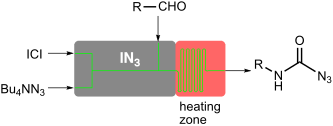
- Johan C. Brandt Thomas Wirth Cardiff University, School of Chemistry, Park Place, Cardiff CF10 3AT, UK. 10.3762/bjoc.5.30 Abstract Aromatic aldehydes have been converted into the corresponding carbamoyl azides using iodine azide. These reactions have been performed safely under continuous flow


From discovery to production: Scale- out of continuous flow meso reactors
Beilstein J. Org. Chem. 2009, 5, No. 29, doi:10.3762/bjoc.5.29
- Peter Styring Ana I. R. Parracho Department of Chemical & Process Engineering, The University of Sheffield, Mappin Street, Sheffield S1 3JD, United Kingdom 10.3762/bjoc.5.29 Abstract A continuous flow parallel reactor system has been developed to provide a rapid and seamless transition from the
- a full analysis. By replication of the single reactor in parallel, the same chemistry can be achieved on a larger scale, on a small footprint and without the mass and heat transport limitations of reactor scale-out in batch. Keywords: catalysis; continuous flow; Kumada reaction; parallel; scale-out
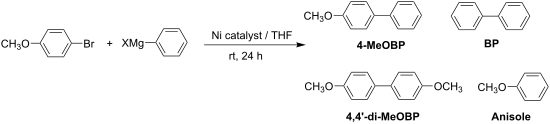
- Suzuki and Heck coupling reactions at elevated temperatures while the nickel catalyst is active in the Kumada coupling [11][12] reaction at room temperature in batch (Scheme 1) and continuous flow reactors. In the latter, the catalyst is packed into a 3 mm diameter glass reactor tube of length 25 mm and


The development and evaluation of a continuous flow process for the lipase- mediated oxidation of alkenes
Beilstein J. Org. Chem. 2009, 5, No. 27, doi:10.3762/bjoc.5.27
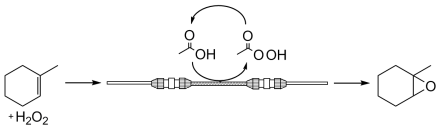
- lipase B, Novozym® 435, in a preliminary investigation into the development of a continuous flow reactor capable of performing the chemo-enzymatic oxidation of alkenes in high yield and purity, utilising the commercially available oxidant hydrogen peroxide (100 volumes). Initial investigations focussed
- on the lipase-mediated oxidation of 1-methylcyclohexene, with the optimised reaction conditions subsequently employed for the epoxidation of an array of aromatic and aliphatic alkenes in 97.6 to 99.5% yield and quantitative purity. Keywords: Candida antarctica lipase B; continuous flow; epoxidation
- alternative to traditional techniques. With this in mind, we report herein the development and evaluation of continuous flow technique for the enzyme-mediated synthesis of epoxides, employing the immobilised Candida antarctica lipase B, Novozym® 435 (4). This was recently found to be the most efficient





Continuous flow based catch and release protocol for the synthesis of α-ketoesters
Beilstein J. Org. Chem. 2009, 5, No. 23, doi:10.3762/bjoc.5.23
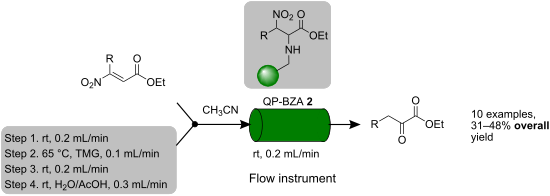
- chemical syntheses [38][39][40][41][42][43][44][45][46][47][48][49][50][51][52][53][54]. In this work we report the use of the Uniqsis FlowSyn™ continuous flow reactor [55] (Figure 1) to effect a flow-based preparation of α-ketoesters. The key feature of this process is the application of a catch and
- promote the base-catalysed dehydration, affording the nitroolefinic esters 1 (Scheme 2) [105]. As we have deliberately constructed this sequence for implementation in a continuous flow process, the intermediate nitroalkanols 5 were not isolated and the nitroolefinic esters were used without further
- Uniqsis FlowSyn™ unit to achieve multi-step organic synthesis under continuous flow-chemistry conditions. This was accomplished by adapting the device to incorporate immobilised reagents packed in flow tubes, enabling clean transformations without recourse to conventional product work-up or purification


Polyionic polymers – heterogeneous media for metal nanoparticles as catalyst in Suzuki–Miyaura and Heck–Mizoroki reactions under flow conditions
Beilstein J. Org. Chem. 2009, 5, No. 21, doi:10.3762/bjoc.5.21
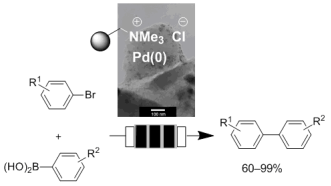
- heterogeneous supports for palladium(0) nanoparticles is described. These functionalized polymers were incorporated inside a flow reactor and employed in Suzuki–Miyaura and Heck cross couplings under continuous flow conditions. Keywords: Heck–Mizoroki reaction; heterogeneous catalysis; ion exchange resin
- heterogenization of transition metals. A major hurdle for industrial applications of heterogenized homogeneous metal catalyst is associated with keeping metal leaching down to a minimum. Immobilization can be regarded as one enabling technique in organic chemistry [5][6] that in conjunction with continuous flow
- transition metals on solid phases inside monolithic flow reactors [9][10][11][12][13][14][15][16][17][18] we describe the preparation of palladium nanoparticles loaded on polyionic polymers and their use under continuous flow conditions in various C-C-cross-coupling reactions [19][20][21][22]. Results and


Asymmetric reactions in continuous flow
Beilstein J. Org. Chem. 2009, 5, No. 19, doi:10.3762/bjoc.5.19
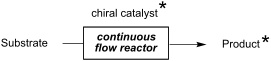
- Xiao Yin Mak Paola Laurino Peter H. Seeberger Department of Biomolecular Systems, Max Planck Institute of Colloids and Interfaces, Research Campus Golm, D-14424 Potsdam, Germany 10.3762/bjoc.5.19 Abstract An overview of asymmetric synthesis in continuous flow and microreactors is presented in
- this review. Applications of homogeneous and heterogeneous asymmetric catalysis as well as biocatalysis in flow are discussed. Keywords: asymmetric catalysis; biocatalysis; continuous flow; microreactors; solid phase synthesis; Introduction While many technological advancements have been made over
- reproducibility due to the precise control over reaction conditions in these devices. Continuous flow technology has excellent potential for the integration of a high level of automation and for the incorporation of on-demand reaction analysis. This can be advantageous for applications such as high-throughput


A biphasic oxidation of alcohols to aldehydes and ketones using a simplified packed- bed microreactor
Beilstein J. Org. Chem. 2009, 5, No. 17, doi:10.3762/bjoc.5.17
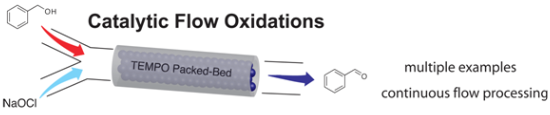
- potential as continuous flow processes. Realizing this, we developed a catalytic packed-bed microreactor that could be used for the continuous flow oxidation of alcohols to aldehydes or ketones. Oxidations that do not require transition metal catalysts are particularly appealing since there is neither




Chemistry in flow systems
Beilstein J. Org. Chem. 2009, 5, No. 15, doi:10.3762/bjoc.5.15
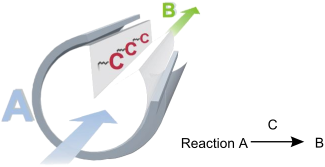
- focus on the development of flow devices for laboratory use and hence for industrial applications. An important field of research is the optimization and adaptation of known reactions and reaction sequences for use in flow systems. Advantageously, continuous-flow processes can be further improved by




