


Search results
Search for "donor–acceptor" in Full Text gives 206 result(s) in Beilstein Journal of Organic Chemistry. Showing first 200.
Influence of perylenediimide–pyrene supramolecular interactions on the stability of DNA-based hybrids: Importance of electrostatic complementarity
Beilstein J. Org. Chem. 2014, 10, 1589–1595, doi:10.3762/bjoc.10.164
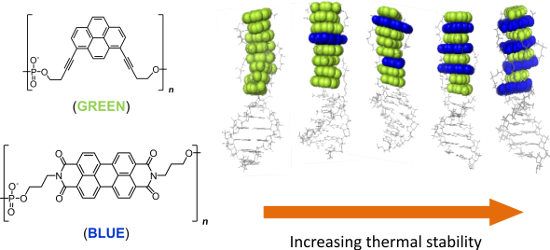
- linked by negatively charged phosphodiester groups [29]. The importance of aromatic and hydrophobic factors for duplex stability was demonstrated by replacing the natural nucleobases by size expanded analogs [30][31][32][33][34][35]. A classic example of polymeric donor–acceptor complexes are the
- aedamers (aromatic electron donor acceptor oligomers) pioneered by Iverson and coworkers [18][36][37]. They consist of face-to-face stacked electron-rich naphthalene and electron-poor naphthalenediimide (NDI) chromophores and belong to the broader area of foldamers [38]. DNA has been described as a



Organic synthesis using photoredox catalysis
Beilstein J. Org. Chem. 2014, 10, 1097–1098, doi:10.3762/bjoc.10.107
- -coated semiconductor nanoparticles. On the substrate side, the focus is on redox-active donor/acceptor molecules, which range from all kind of aromatic, olefinic and carbonyl-type electron acceptor compounds to heteroatom-linked electron donors. The relevance of carbon–carbon bond formation for organic
The Ugi four-component reaction as a concise modular synthetic tool for photo-induced electron transfer donor-anthraquinone dyads
Beilstein J. Org. Chem. 2014, 10, 1006–1016, doi:10.3762/bjoc.10.100
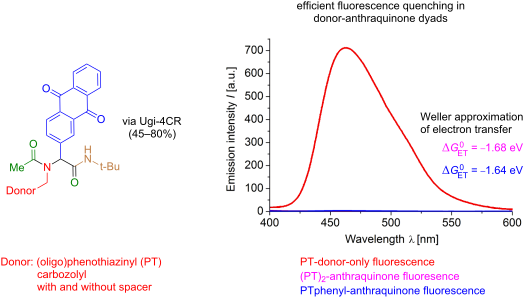
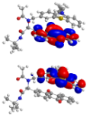
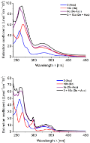
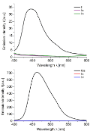
- . These novel donor–acceptor dyads are electronically decoupled in the electronic ground state according to UV–vis spectroscopy and cyclic voltammetry. However, in the excited state the inherent donor luminescence is efficiently quenched. Previously performed femtosecond spectroscopic measurements account
- these novel donor–acceptor dyads. In addition, the X-ray structure of a phenothiazinyl–anthraquinone dyad supports short donor–acceptor distances by an intramolecular π-stacking conformation, an important assumption also implied in the calculations of the Gibbs energies according to the Weller
- anthraquinone-substituted aldehyde together with acetic acid and tert-butyl isocyanide for rapidly assembling a donor–acceptor conjugate 1 displaying a photo-induced electron transfer leading to a charge-separated state with a lifetime of >2 ns (Figure 1), as elucidated by femtosecond transient absorption




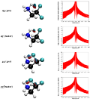
Conformational analysis of 2,2-difluoroethylamine hydrochloride: double gauche effect
Beilstein J. Org. Chem. 2014, 10, 877–882, doi:10.3762/bjoc.10.84
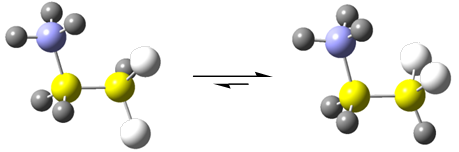
- perturbation analysis of donor-acceptor interactions in the natural bond orbitals (NBOs) framework shows that the global minimum of 1 is more stabilized by hyperconjugation than the other conformers (both in the gas phase and implicit water), despite being significantly destabilized by Lewis-type interactions

First synthesis of meso-substituted pyrrolo[1,2-a]quinoxalinoporphyrins
Beilstein J. Org. Chem. 2014, 10, 808–813, doi:10.3762/bjoc.10.76
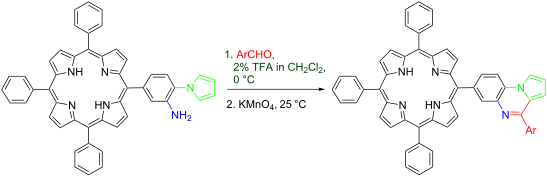
- useful as fluorescent materials for various applications [36][37]. In recent years, numerous covalent or non-covalent supra-porphyrin arrays, based on donor–acceptor architectures have been constructed for mimicking the natural photosynthetic light harvesting systems [38][39][40]. Additionally, a variety


Direct and indirect single electron transfer (SET)-photochemical approaches for the preparation of novel phthalimide and naphthalimide-based lariat-type crown ethers
Beilstein J. Org. Chem. 2014, 10, 514–527, doi:10.3762/bjoc.10.47
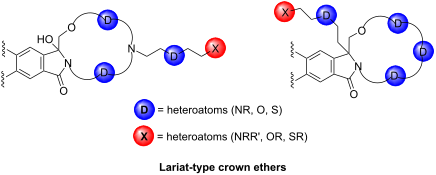
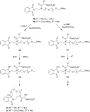
- SET-promoted photocyclization reactions of donor–acceptor-linked substrates could be employed in practical and efficient routes for the preparation of new metal cation-fluorescence sensors. As described earlier by de Silva and others [74][75][76][77][78][79], SET based fluorescence sensors are useful




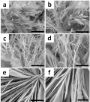
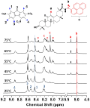
Charge-transfer interaction mediated organogels from 18β-glycyrrhetinic acid appended pyrene
Beilstein J. Org. Chem. 2013, 9, 2877–2885, doi:10.3762/bjoc.9.324
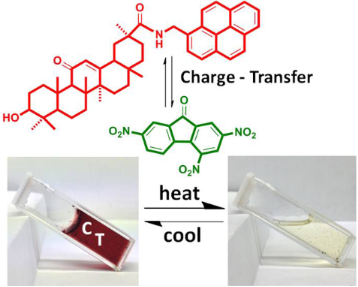
- driving forces for the formation of such self-assembled fibrillar networks include hydrogen-bonding interaction, van der Waals force, π–π stacking, and donor–acceptor interaction [7][8][9][10]. Since LMWGs are often thermally reversible and the gelation can be triggered by pH or the addition of small
- observation suggested the presence of a CT complex in the gel system. Thermal stability Sol to gel transition temperature (Tgel) was measured as a function of the total concentration of the 1:1 (molar ratio) donor–acceptor mixture. These were done by inverted test tube experiments after gels were stabilized




Gold(I)-catalyzed enantioselective cycloaddition reactions
Beilstein J. Org. Chem. 2013, 9, 2250–2264, doi:10.3762/bjoc.9.264
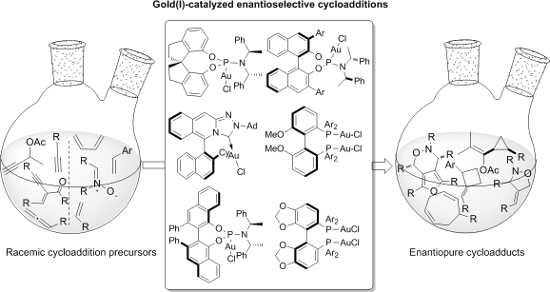
- chiral digold cationic complex XylylBinap(AuCl)2/AgSbF6 provided higher enantiomeric excesses and better yields of the desired cyclopropenes 8 (Scheme 5). The scope of the method encompasses a variety of aryl disubstituted alkynes 6 and several donor/acceptor aryldiazoacetates 7. In 2013, Zhou and co
- promoter of the cyclopropanation between donor–acceptor diazooxindoles such as 9 and a broad range of alkenes (Scheme 6) [47]. The resulting spirocyclopropyloxindoles 10, which are obtained in excellent yields and enantioselectivities, are appealing structures from a medicinal point of view. The scope of


Self-assembly of 2,3-dihydroxycholestane steroids into supramolecular organogels as a soft template for the in-situ generation of silicate nanomaterials
Beilstein J. Org. Chem. 2013, 9, 1826–1836, doi:10.3762/bjoc.9.213
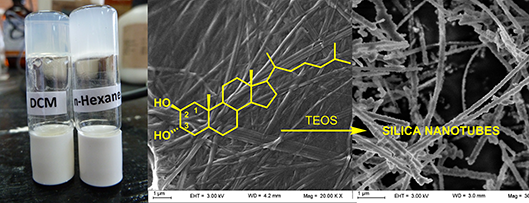
- possess a complementary donor–acceptor hydrogen bond motif, such as for instance amides, ureas, carbamates, saccharides, ammonium carboxylate salts, etc. A rod-like molecular shape is also a general structural requirement for steroid derived LMOGs because it allows a good face to face molecular contact to


Molecular assembly of amino acid interlinked, topologically symmetric, π-complementary donor–acceptor–donor triads
Beilstein J. Org. Chem. 2013, 9, 1565–1571, doi:10.3762/bjoc.9.178
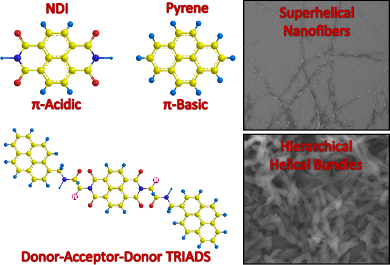
- naphthalenediimide (NDI) based novel donor–acceptor–donor (D-A-D) triads are designed to exploit their topological symmetry and complementary π-character for facile charge-transfer complexation. Consequently, free-floating high-aspect-ratio supercoiled nanofibres and hierarchical helical bundles of triads are
- molecular materials [7][8][9][10] is essentially dependant on their molecular assembly [11][12][13][14][15][16], it is extremely important to identify suitable donor–acceptor sequences for efficient energy or charge-transfer processes. It is with this conception that we have designed pyrene based D-A-D
- functional molecules are believed to pave the way for programmable molecular assemblies with advanced applications. Molecular structures of donor–acceptor–donor traids. The red colouring highlights the topological symmetry of NDI and pyrene. (a) UV–vis and (b) fluorescence spectra of 1 (200 μM) in aqueous


An organocatalytic route to 2-heteroarylmethylene decorated N-arylpyrroles
Beilstein J. Org. Chem. 2013, 9, 1480–1486, doi:10.3762/bjoc.9.168
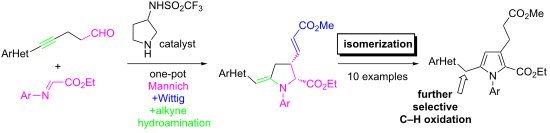
- preparation of N-arylpyrroles is an active field of investigation [5]. Depending on their substituents, N-arylpyrroles could also be electron donor/acceptor molecules with a dual fluorescence ability suggesting attractive optoelectronic applications [6][7]. If the N-arylation of pyrroles is possible by
- ideal for the preparation of electron donor/acceptor N-arylpyrroles as demonstrated in this study. In addition, we documented an efficient C–H oxidation of the bis(heteroaryl)methylene position promoted by CAN. Experimental General: 1H and 13C NMR spectra were recorded in deuterated chloroform on Bruker


Conformational analysis and intramolecular interactions in monosubstituted phenylboranes and phenylboronic acids
Beilstein J. Org. Chem. 2013, 9, 1127–1134, doi:10.3762/bjoc.9.125
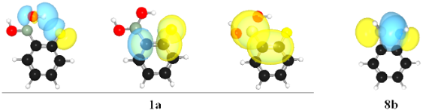
- goals, NMR spectroscopy (by means of suitable coupling constants) and theoretical calculations were used. Second-order perturbation analysis of donor–acceptor interactions in the natural bond orbitals (NBO) was used to interpret conformational isomerism in terms of hyperconjugative interactions, in such


Enhancement of efficiency in organic photovoltaic devices containing self-complementary hydrogen-bonding domains
Beilstein J. Org. Chem. 2013, 9, 1102–1110, doi:10.3762/bjoc.9.122
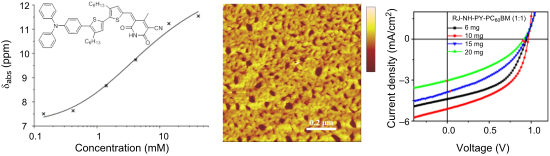
- -processing, leading to cost and energy input advantages in device manufacture. Recently, a donor–acceptor small molecule with a cyanopyridone moiety as the acceptor motif and displaying moderate photovoltaic efficiency in a BHJ device with a fullerene was reported [20]. The efficiency of these optimized


Automated synthesis of sialylated oligosaccharides
Beilstein J. Org. Chem. 2012, 8, 1601–1609, doi:10.3762/bjoc.8.183
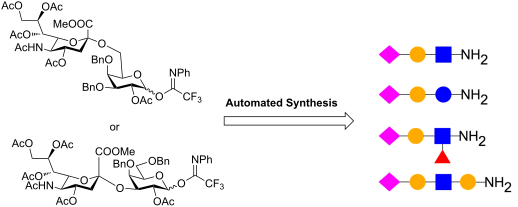
- conditions used for the synthesis. Moreover, building blocks 18 and 28 have been observed to be a non-ideal donor–acceptor pair (unpublished results). Nevertheless, simple reverse-phase HPLC was sufficient to isolate semiprotected tetrasaccharide 29 in milligram quantities. To complete the synthesis


Exploring chemical diversity via a modular reaction pairing strategy
Beilstein J. Org. Chem. 2012, 8, 1293–1302, doi:10.3762/bjoc.8.147
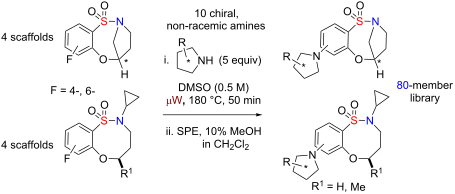
- the quantitative estimate of drug-likeness (QED) has been proposed [43]. The QED concept is a simple approach to multicriteria optimization whereby compound desirability is defined as a function of eight molecular properties, i.e., molecular weight, ALogP, polar surface area, H-bond donor, acceptor


The effect of the formyl group position upon asymmetric isomeric diarylethenes bearing a naphthalene moiety
Beilstein J. Org. Chem. 2012, 8, 1018–1026, doi:10.3762/bjoc.8.114
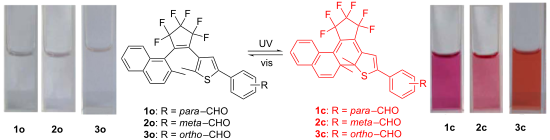
- fatigue resistance and thermal stability [2][36]. In general, the photochromic reactivity of diarylethenes mainly depends on heteroaryl groups and different electron-donor/acceptor substituents. The formyl group can be modified to form various chemical groups and it can also be connected with different


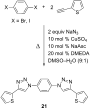
Thiophene-based donor–acceptor co-oligomers by copper-catalyzed 1,3-dipolar cycloaddition
Beilstein J. Org. Chem. 2012, 8, 683–692, doi:10.3762/bjoc.8.76

- Stefanie Potratz Amaresh Mishra Peter Bauerle University of Ulm, Institute of Organic Chemistry II and Advanced Materials, Albert-Einstein-Allee 11, 89081 Ulm, Germany 10.3762/bjoc.8.76 Abstract Herein we present a three-component one-pot procedure to synthesize co-oligomers of a donor–acceptor
- 1,2,3-triazole rings as acceptors to conveniently build up novel donor–acceptor co-oligomeric and copolymeric materials by click chemistry. Thereby, the inherent instability of 2-azidothiophene was a problem. Results and discussion In 2005, Liang et al. [32] described a mild, copper-catalyzed method to
- -shifted in comparison to that of 12 (λmax = 337 nm) and 13 (λmax = 339 nm). This band is not ascribed to individual bithienyl subunits, but to a weak conjugation through the triazole ring, caused by the donor–acceptor–donor system. Maarseveen et al. recently published synthesis and optical properties of




Imidazole as a parent π-conjugated backbone in charge-transfer chromophores
Beilstein J. Org. Chem. 2012, 8, 25–49, doi:10.3762/bjoc.8.4
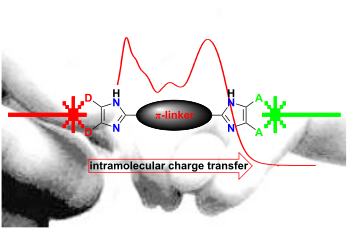
- diimidazoles, benzimidazoles, bis(benzimidazoles), imidazole-4,5-dicarbonitriles, and imidazole-derived chromophores chemically bound to a polymer chain. Keywords: charge transfer; chromophore; conjugation; donor–acceptor system; imidazole; Introduction Over the past three decades, great progress has been
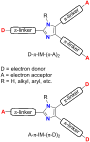
- -A)2 and A-π-IM-(π-D)2 push–pull systems. An initial effort to synthesize and apply azole derivatives as CT chromophores and to study their optical (non)linearities can be ascribed to Moylan, Miller, and co-workers as early as 1993 [31][32]. Donor–acceptor-substituted imidazoles, oxazoles, and
- measured second-order hyperpolarizability β significantly and also shifts the CT band bathochromically. In 2009, our group also contributed to Y-shaped imidazole-derived chromophores [11]. We synthesized a library of substituted lophines 16–19 with four types of donor–acceptor orientations (Figure 7): D-π




Supramolecular FRET photocyclodimerization of anthracenecarboxylate with naphthalene-capped γ-cyclodextrin
Beilstein J. Org. Chem. 2011, 7, 290–297, doi:10.3762/bjoc.7.38
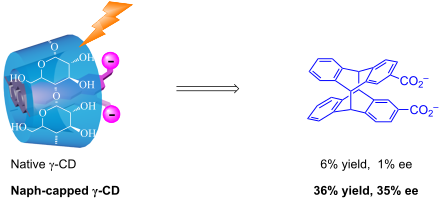
- system, it is likely that only AC that is included in the CD cavity can be FRET-sensitized by naphthalene, since the FRET efficiency is inversely proportional to the sixth power of donor–acceptor distance. We expected therefore that the AC photocyclodimerization could be catalyzed even with a sub



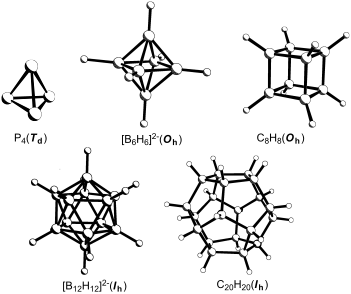
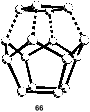
Reciprocal polyhedra and the Euler relationship: cage hydrocarbons, CnHn and closo-boranes [BxHx]2−
Beilstein J. Org. Chem. 2011, 7, 222–233, doi:10.3762/bjoc.7.30
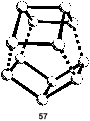
- ) – Group 15 (Y = N, P, As) tetramers [51]. It was shown that they should be stabilized when decorated with donor–acceptor linkages as in 79. Moreover, it was suggested that they may function as single source precursors of Group 13 – Group 15 materials with applications in microelectronics. Conclusion We






Syntheses and properties of thienyl-substituted dithienophenazines
Beilstein J. Org. Chem. 2010, 6, 1180–1187, doi:10.3762/bjoc.6.135
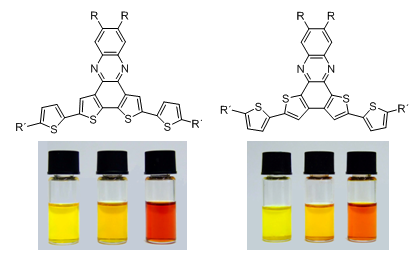
- , when compared with the optical spectra of the quater- and sexithiophene [28] (Table 2, 19 and 20), a clear red-shift could be observed for both oligomer series, regardless if they are based on 10 or 11, due to the intramolecular donor-acceptor character of the compounds. Quantum chemical calculations
- thiophene-based (well-established) materials, compounds with additional electron-poor moieties are in focus, as they are known to shift the HOMO and LUMO levels towards lower energies, thus increasing the compounds' stability against oxidation. In addition, the HOMO-LUMO gap is reduced (by the donor
- -acceptor (DA) approach), thereby red-shifting the absorption edge. This is of special importance, as there is still a need for new materials (exhibiting additionally the above mentioned processability criteria) absorbing the longer wavelength region (> 600 nm) of the sunlight spectrum, being required for


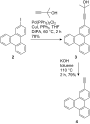
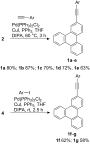
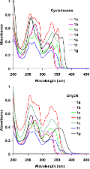
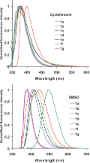
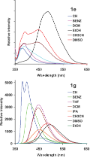
Donor-acceptor substituted phenylethynyltriphenylenes – excited state intramolecular charge transfer, solvatochromic absorption and fluorescence emission
Beilstein J. Org. Chem. 2010, 6, 992–1001, doi:10.3762/bjoc.6.112
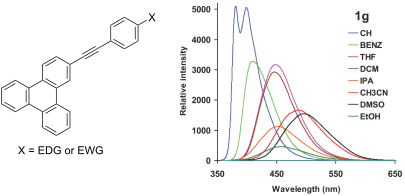
- and also by substituting donor-acceptor groups along the conjugation [23][24][25]. In addition, pyrene also exhibits excimer emission at a longer wavelength compared to monomer emission which can be used in sensing applications [26][27][28][29][30]. The pyrene chromophore can act as a donor or as an




Conjugated polymers containing diketopyrrolopyrrole units in the main chain
Beilstein J. Org. Chem. 2010, 6, 830–845, doi:10.3762/bjoc.6.92
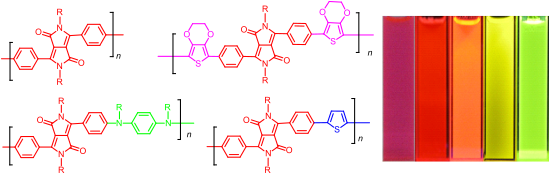
- diphenylDPP and thiophene, bisthiophene, or 3,4-ethylenedioxythiophene (EDOT) units in alternating fashion (Table 2). Because of the strong donor-acceptor interaction between the thiophene and the DPP units, the absorption and emission maxima were shifted to longer wavelength: A solution of EDOT-DPP copolymer
- arylamine units in the main chain. Due to presence of electron-rich nitrogen atoms it was hoped that donor-acceptor interactions along the main chain would be enhanced and lead to a red-shift of the absorption and emission. Furthermore, the presence of easily oxidizable nitrogen in the main chain should




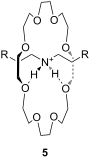
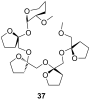
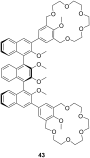
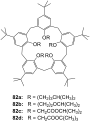
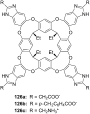
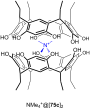
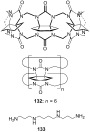
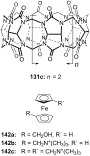
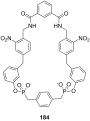
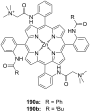
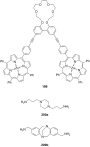
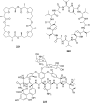
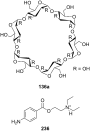
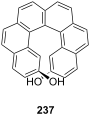
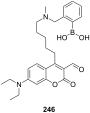
Molecular recognition of organic ammonium ions in solution using synthetic receptors
Beilstein J. Org. Chem. 2010, 6, No. 32, doi:10.3762/bjoc.6.32










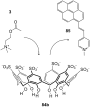


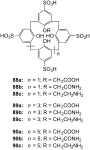


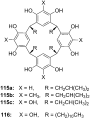
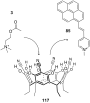










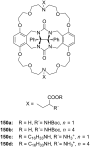
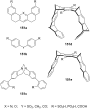


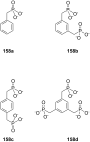

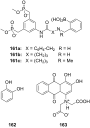


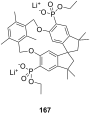
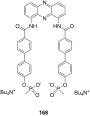

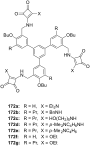
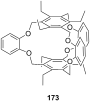














Synthesis of mesogenic phthalocyanine-C60 donor–acceptor dyads designed for molecular heterojunction photovoltaic devices
Beilstein J. Org. Chem. 2009, 5, No. 49, doi:10.3762/bjoc.5.49
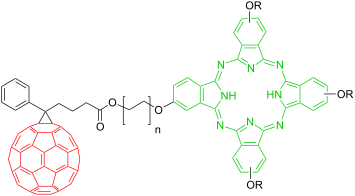
- example of LC phthalocyanine-C60 dyads. Keywords: donor–acceptor dyad; fullerene; liquid crystals; phthalocyanine; phthalonitrile; Introduction Among sustainable energy technologies, photovoltaic (PV) conversion of solar energy is considered as a promising solution. Although currently the market is
- heterojunction” architecture, featuring blends of the two immiscible materials: a donor and an acceptor of electrons [4][5][6][7]. After absorption of a photon, an initially formed exciton is dissociated at the donor/acceptor interface into a positive charge (hole) and a negative charge (electron), which are





