


Search results
Search for "enzyme" in Full Text gives 566 result(s) in Beilstein Journal of Organic Chemistry. Showing first 200.
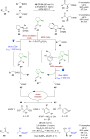
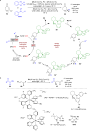
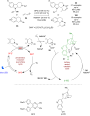
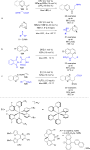
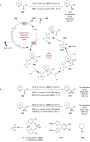
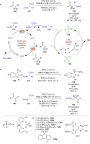
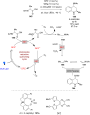
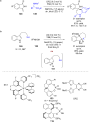
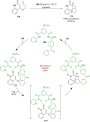
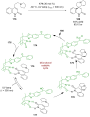
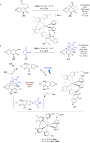
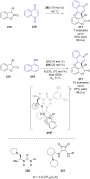
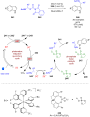
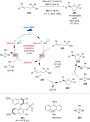
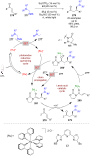
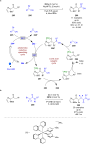
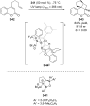
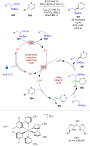
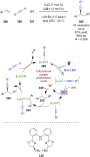
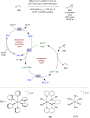
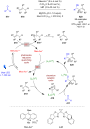
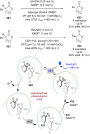
Recent developments in enantioselective photocatalysis
Beilstein J. Org. Chem. 2020, 16, 2363–2441, doi:10.3762/bjoc.16.197



























Tools for generating and analyzing glycan microarray data
Beilstein J. Org. Chem. 2020, 16, 2260–2271, doi:10.3762/bjoc.16.187
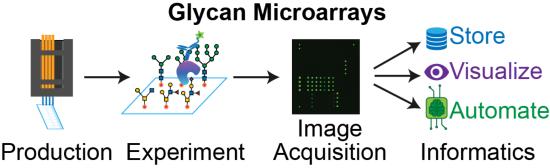
- , all concentration plots, and a model structure. The software was designed to be useful for lectin and enzyme analysis. It has been used to discover fine specificities of lectins (AAL, SNA) and glycosidase enzymes (α1-2-fucosidase and an α2-3,6,8-neuraminidase) [45]. 3. SignalFinder-Microarray: Status


Azo-dimethylaminopyridine-functionalized Ni(II)-porphyrin as a photoswitchable nucleophilic catalyst
Beilstein J. Org. Chem. 2020, 16, 2119–2126, doi:10.3762/bjoc.16.179
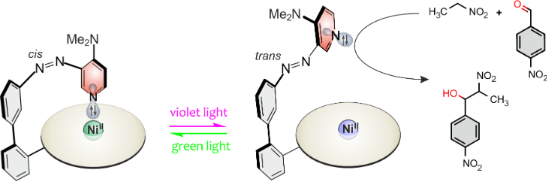
- of sugars [6], enzyme mimics [7], and the utilization of intermolecular cooperative effects [8] are further applications of photoswitchable catalysis. Particularly interesting and close to our approach is an early work by Inoue et al. who achieved control of the transformation of CO2 and 1,2


Access to highly substituted oxazoles by the reaction of α-azidochalcone with potassium thiocyanate
Beilstein J. Org. Chem. 2020, 16, 2108–2118, doi:10.3762/bjoc.16.178
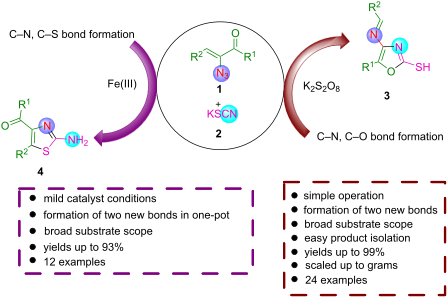
- ][22][23][24][25][26]. Some oxazoles play a significant role in biological properties such as TRPV1 antagonistical activity, antifungal, analgesic, anti-inflammatory, antiproliferative, antileukemia, anticancer [27][28][29][30][31][32] and enzyme inhibitory activities [33][34][35][36][37][38][39][40




The biomimetic synthesis of balsaminone A and ellagic acid via oxidative dimerization
Beilstein J. Org. Chem. 2020, 16, 2026–2031, doi:10.3762/bjoc.16.169
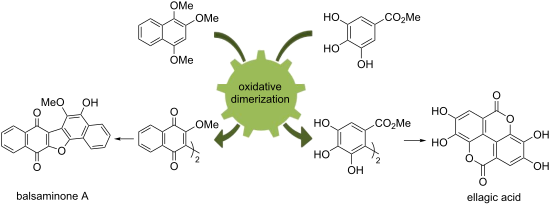
- with shikimic acid, feature the dimerization of monomeric phenolic precursors by a laccase enzyme, a single-electron enzyme complex within macro-organisms which facilitates oxidative dimerization through phenolic coupling [19]. In the case of balsaminone A (4), lawsone (6) is methylated to ether 7
- which undergoes reduction to the dihydroxynaphthalene 8. This is then dimerized by the copper-rich enzyme to quinone arenol 9, which, following intramolecular cyclization, affords balsaminone A (4, Scheme 1). Similarly, the biosynthetic precursor of ellagic acid (5), gallic acid (10), undergoes


Synthesis, docking study and biological evaluation of ᴅ-fructofuranosyl and ᴅ-tagatofuranosyl sulfones as potential inhibitors of the mycobacterial galactan synthesis targeting the galactofuranosyltransferase GlfT2
Beilstein J. Org. Chem. 2020, 16, 1853–1862, doi:10.3762/bjoc.16.152
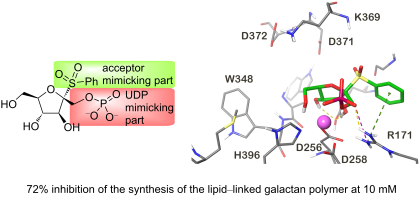
- substrate of mycobacterial galactofuranosyltransferase GlfT2 in the transition state, we evaluated these compounds by computational methods, as well as in an enzyme assay for the possible inhibition of the mycobacterial galactan biosynthesis. Our data show that despite favorable docking scores to the active
- decaprenyl-P-P-GlcNAc-Rha, (glycolipid 2, GL2), which serves as a lipid carrier for arabinogalactan polymerization [7][8]. The latter enzyme, GlfT2, extends the product of GlfT1-catalyzed reaction, decaprenyl-P-P-GlcNAc-Rha-Galf2 (glycolipid 4, GL4), producing the lipid-linked galactan polymer [8]. Both
- enzymes require an activated sugar donor uridine diphosphate (UDP)-Galf, which is synthesized from UDP-galactopyranose (UDP-Galp) by the enzyme UDP-Galp mutase [9] (Supporting Information File 1, Figure S1). The recently published GlfT2 X-ray structure with a UDP donor part [10] was used in the reaction


When metal-catalyzed C–H functionalization meets visible-light photocatalysis
Beilstein J. Org. Chem. 2020, 16, 1754–1804, doi:10.3762/bjoc.16.147

- –H activations, visible-light-induced photocatalysis, electrosynthesis, enzyme catalysis, and others. Each of these techniques aims at accessing complex molecules while limiting ecological footprint. Over the last decade, the metal-catalyzed C–H activation established itself as one of the most


Microwave-assisted efficient one-pot synthesis of N2-(tetrazol-5-yl)-6-aryl/heteroaryl-5,6-dihydro-1,3,5-triazine-2,4-diamines
Beilstein J. Org. Chem. 2020, 16, 1706–1712, doi:10.3762/bjoc.16.142
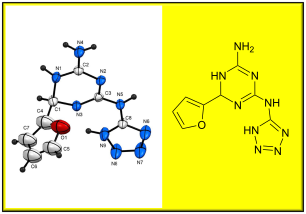
- specific biological target such as a receptor or an enzyme. A promising strategy that overcomes the classical one-target, one-molecule approach is the design of stable chemical hybrid molecules which are a combination of two biologically active scaffolds acting at different targets [20][21][22][23][24


Heterogeneous photocatalysis in flow chemical reactors
Beilstein J. Org. Chem. 2020, 16, 1495–1549, doi:10.3762/bjoc.16.125
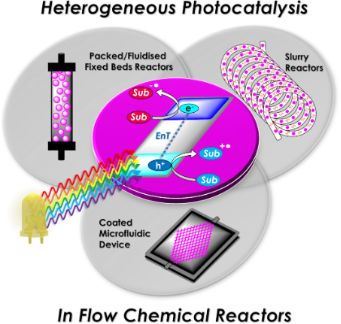
- ][188][189][190]. Supramolecular photocatalysts are an interesting class of materials which utilise non-bonding interactions to control photochemical processes, a biomimetic strategy that imitates enzyme catalysis [191]. Supramolecular self-assemblies and coordination polymers based on perylene diimide










Synthesis of new fluorescent molecules having an aggregation-induced emission property derived from 4-fluoroisoxazoles
Beilstein J. Org. Chem. 2020, 16, 1411–1417, doi:10.3762/bjoc.16.117
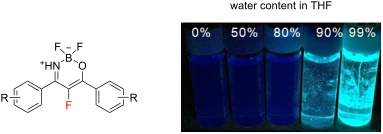
- ; Introduction Fluorescence bioprobes based on conventional organic dyes are used for enzyme activity measurements and in bioimaging systems with promising applications in the field of clinical diagnostics [1][2][3][4][5][6][7]. Most of the fluorescence bioprobes are mainly excited with near-ultraviolet or blue


Highly selective Diels–Alder and Heck arylation reactions in a divergent synthesis of isoindolo- and pyrrolo-fused polycyclic indoles from 2-formylpyrrole
Beilstein J. Org. Chem. 2020, 16, 1320–1334, doi:10.3762/bjoc.16.113
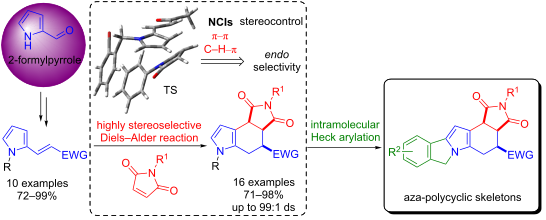
- stereoselective approaches of substrates and reagents or catalysts in a variety of processes. Examples include the substrate–enzyme recognition (the host–guest interaction) responsible for inducing pharmacological activity, the DNA-intercalation capable of generating biomolecular activity, molecular dynamics [63


Synthesis, antiinflammatory activity, and molecular docking studies of bisphosphonic esters as potential MMP-8 and MMP-9 inhibitors
Beilstein J. Org. Chem. 2020, 16, 1277–1287, doi:10.3762/bjoc.16.108
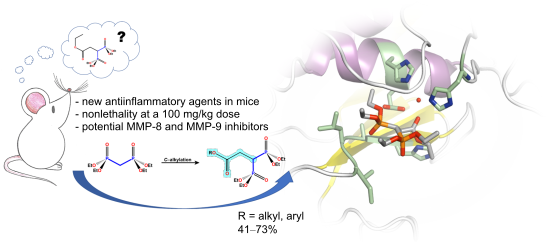
- describe the enzyme inhibitor site binding modes [16][17][18]. Thus, in this work, the bisphosphonates 3–6 were synthesized by a two-step method and then evaluated through two in vivo acute inflammation models in BALB/c mice. Furthermore, the acute toxicity was determined for these derivatives, and
- mechanism of action of the bisphosphonates 3–6, we propose that the tested derivatives are acting as MMP inhibitors. In this respect, MMP-8 and MMP-9 isoenzymes are related to inflammatory processes in different tissues [32][33][34][35]. Furthermore, for MMP-8 and MMP-9, enzyme–inhibitor interaction modes
- the cavity of the enzyme in MMP-8, as shown in Figure 4. For the compounds 4 and 5, the tert-butyl and benzyl groups at the ester moiety were pointing out to the solvent, without any important interactions with the hydrophobic zone inside the cavity (Figure 4b and Figure 4c). The only molecule that


A smart deoxyribozyme-based fluorescent sensor for in vitro detection of androgen receptor mRNA
Beilstein J. Org. Chem. 2020, 16, 1135–1141, doi:10.3762/bjoc.16.100
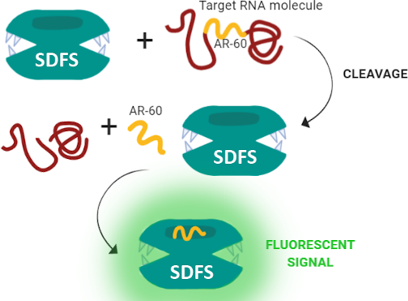
- electrode, covered by immobilizing enzyme glucose oxidase, for the detection of glucose [1]. A biosensor means a small molecular device that traditionally consists of a bioreceptor (enzyme, cell, aptamer, oligonucleotide, antibody, and other) for the specific recognition of the target molecule and a



The charge-assisted hydrogen-bonded organic framework (CAHOF) self-assembled from the conjugated acid of tetrakis(4-aminophenyl)methane and 2,6-naphthalenedisulfonate as a new class of recyclable Brønsted acid catalysts
Beilstein J. Org. Chem. 2020, 16, 1124–1134, doi:10.3762/bjoc.16.99
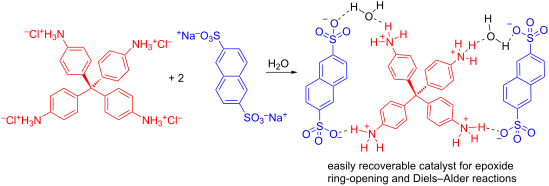
- ][31], gas separation and absorption [28][29], enzyme encapsulation [36], and even asymmetric synthesis (albeit with a framework that contained a transition metal ion) [37]. However, for the HOF and CAHOF catalysts to have a similar appeal to other regular active site distribution materials, such as




Fluorinated phenylalanines: synthesis and pharmaceutical applications
Beilstein J. Org. Chem. 2020, 16, 1022–1050, doi:10.3762/bjoc.16.91
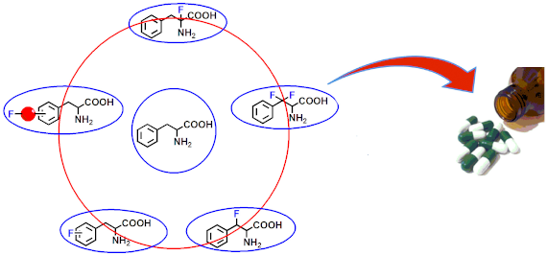
- over the last few decades. ᴅ- or ʟ-fluorinated phenylalanines have had considerable industrial and pharmaceutical applications and they have been expanded also to play an important role as potential enzyme inhibitors as well as therapeutic agents and topography imaging of tumor ecosystems using PET
- , geometry, conformation, reactivity, and moreover the bioavailability of the analogue [1]. Fluorinated amino acids (FAAs) have considerable industrial and pharmaceutical potential [2]. Also, they have played an important role as enzyme inhibitors as well as therapeutic agents [3][4]. Moreover, they modulate
- diesters 20a–c. Partial hydrolysis followed by decarboxylation gave the N-benzyloxycarbonyl ᴅʟ-amino acid esters 22a–c, which upon enzymatic hydrolysis of the ester group using the subtilisin-type Carlsberg enzyme led to ᴅ-amino acid esters 23a–c and the corresponding Cbz-protected p, m-fluoro-, or


Fabclavine diversity in Xenorhabdus bacteria
Beilstein J. Org. Chem. 2020, 16, 956–965, doi:10.3762/bjoc.16.84
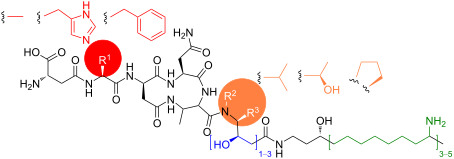
- identified. These are generated when the peptide biosynthesis starts directly with the second NRPS enzyme FclJ, which results in the formation of a dipeptide instead of the usual hexapeptide (Figure 1) [22]. Structurally related compounds are the (pre)zeamines described for Serratia plymuthica and Dickeya


Copper catalysis with redox-active ligands
Beilstein J. Org. Chem. 2020, 16, 858–870, doi:10.3762/bjoc.16.77
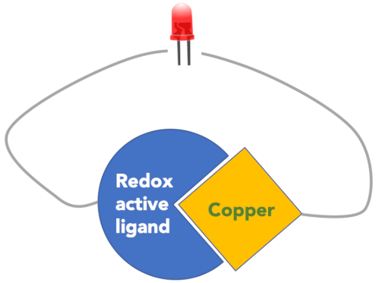
- -abundant metals, such as copper, with radical ligands is originally known from biological systems such as metalloenzymes [1]. Among the myriad of existing enzymes, galactose oxidase (GAO) is a copper-based enzyme performing the two-electron oxidation of galactose through a mechanism involving the metal and
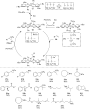
- regenerates the active catalyst, thus closing the catalytic cycle. Interestingly, this catalytic behavior involving participation of the ligand framework to release electrons and store an H-atom is reminiscent of the galactose oxidase copper enzyme. A recent investigation by Martins, Davidovich and co-workers



Efficient synthesis of dipeptide analogues of α-fluorinated β-aminophosphonates
Beilstein J. Org. Chem. 2020, 16, 756–762, doi:10.3762/bjoc.16.69
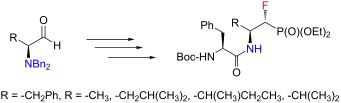
- enzyme binding may depend on the C–F stereochemistry, the synthesis of such compounds with a specific configuration is very important [9][10][11]. α-Fluorinated phosphonates can be prepared by many different protocols [12][13][14][15][16]. Nucleophilic fluorination is one of the fundamental reactions in


Microwave-assisted efficient and facile synthesis of tetramic acid derivatives via a one-pot post-Ugi cascade reaction
Beilstein J. Org. Chem. 2020, 16, 663–669, doi:10.3762/bjoc.16.63
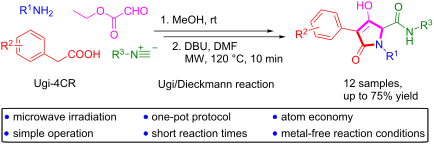
- exhibit a wide range of biological activities, including antibiotic [8], antiviral [9], antifungal [10], phytotoxic [11], cytotoxic [12][13], and enzyme inhibitory activities against bacterial DNA-directed RNA polymerase [14]. The wide range of biological activity and structural variation of this class of



Design and synthesis of diazine-based panobinostat analogues for HDAC8 inhibition
Beilstein J. Org. Chem. 2020, 16, 628–637, doi:10.3762/bjoc.16.59
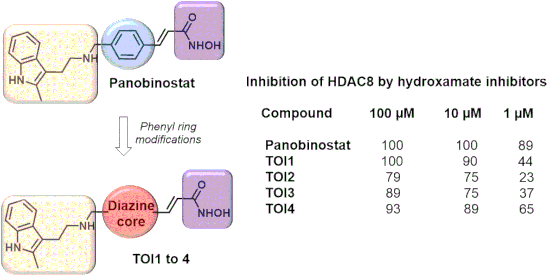
- the positive control consisted of HDAC8 without inhibitor added. The substrate concentration was 5 µM, and HDAC8 concentration per well was 4 ng/µL. The reaction was initiated by addition of enzyme. The fluorogenic substrate was excited at 360 nm and the emission signal was detected at 460 nm using a




Oligomeric ricinoleic acid preparation promoted by an efficient and recoverable Brønsted acidic ionic liquid
Beilstein J. Org. Chem. 2020, 16, 351–361, doi:10.3762/bjoc.16.34
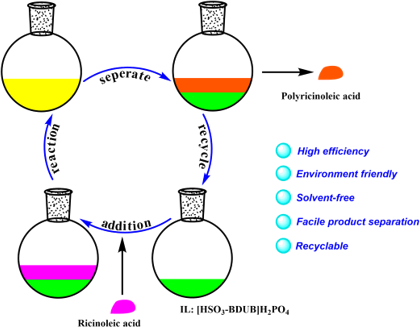
- process efficiency. Moreover, the byproduct formation and the resulting product coloration reduce the product quality. To address the above issues, the enzyme catalysis is proposed accordingly. Nevertheless, the high cost, low efficiency and operational unstability of enzymatic reaction make it difficult


Synthesis and herbicidal activities of aryloxyacetic acid derivatives as HPPD inhibitors
Beilstein J. Org. Chem. 2020, 16, 233–247, doi:10.3762/bjoc.16.25
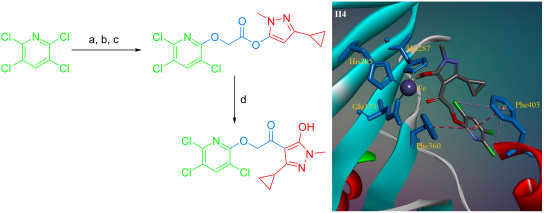
- . Keywords: aryloxyacetic acid; herbicidal activity; 4-hydroxyphenylpyruvate dioxygenase; modification; synthesis; Introduction 4-Hydroxyphenylpyruvate dioxygenase (EC 1.13.11.27, HPPD), which belongs to the family of non-heme FeII-containing enzymes, is a vital enzyme for tyrosine catabolism. This enzyme
- the protein receptor binding site. After the docking calculations were performed, the best binding modes were determined by docking scores and also compared with the simulated binding mode of mesotrione with AtHPPD. Enzyme inhibition study AtHPPD was prepared and purified according to the reported
- binding modes of compound I39 and I40 in a target enzyme (AtHPPD). The key residues in the active site are shown in blue sticks, the FeII is shown as a dark blue sphere, and compound I39 and I40 is shown in gray sticks. Crystal structures of I18 and III4. Simulated binding mode of mesotrione (A), compound




Understanding the role of active site residues in CotB2 catalysis using a cluster model
Beilstein J. Org. Chem. 2020, 16, 50–59, doi:10.3762/bjoc.16.7
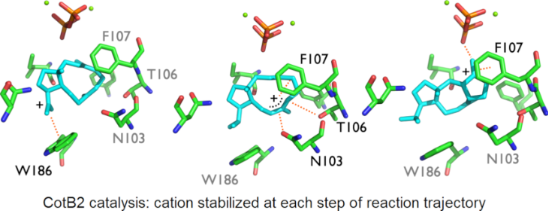
- active site cluster model. The results revealed the significant effect of the active site residues on the relative electronic energy of the intermediates and transition state structures with respect to gas phase data. A detailed understanding of the role of the enzyme environment on the CotB2 reaction
- crystal structure of a diterpene cyclase was reported by Christianson and co-workers [22]. These structures, in conjunction with extensive biochemical work [10][13][14][23], have contributed to the understanding of mechanistic details of terpene cyclases and facilitated rational enzyme design [24
- ]. Theoretical quantum mechanical (QM) investigations on the chemistry of terpenes in the gas phase have provided a detailed understanding of the carbocation mechanisms underlying terpene synthase function [25][26][27]. Further, we have used multiscale modeling tools to study the effects of the enzyme


Synthesis of C-glycosyl phosphonate derivatives of 4-amino-4-deoxy-α-ʟ-arabinose
Beilstein J. Org. Chem. 2020, 16, 9–14, doi:10.3762/bjoc.16.2
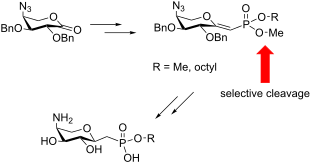
- were inactive towards enzyme upstream of the biosynthetic pathway to undecaprenyl Ara4N, the peracetylated 4-azido derivative showed modest reduction of Ara4N incorporation into the lipid A part of Salmonella typhimurium [8]. We have recently set out to study the substrate specificity of ArnT enzymes


Bacterial terpene biosynthesis: challenges and opportunities for pathway engineering
Beilstein J. Org. Chem. 2019, 15, 2889–2906, doi:10.3762/bjoc.15.283
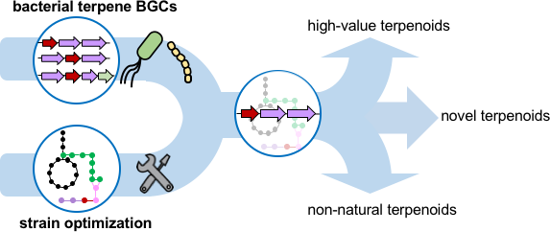
- potential with molecular structure is severely restricted. The canonical terpene biosynthetic pathway uses a single enzyme to form a cyclized hydrocarbon backbone followed by modifications with a suite of tailoring enzymes that can generate dozens of different products from a single backbone. This
- a linear polyene with branching methyl groups that form the core hydrocarbon structure in a single enzyme-catalyzed step [9]. The enzyme, which is called terpene cyclase, holds the linear methyl-branched polyene in a defined conformation that initiates a series of carbocation-driven cyclizations and
- placed on terpene pathways from bacteria, as their biosynthetic pathways usually have the genes encoding the terpene cyclase and modifying enzyme in close proximity, which simplifies both analysis and pathway engineering. The review will begin with a brief description of terpene families with a special





