


Search results
Search for "tricyclic" in Full Text gives 278 result(s) in Beilstein Journal of Organic Chemistry. Showing first 200.
Tandem processes promoted by a hydrogen shift in 6-arylfulvenes bearing acetalic units at ortho position: a combined experimental and computational study
Beilstein J. Org. Chem. 2016, 12, 260–270, doi:10.3762/bjoc.12.28
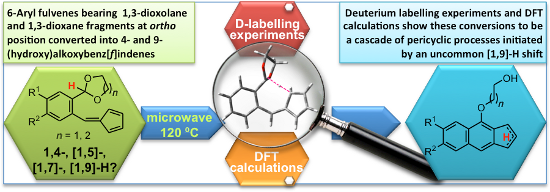
- 10a and 11a can lead respectively to the final benzindenes 5a and 6a. Thus, intermediate 11a undergoes a disrotatory 6π-electrocyclic ring closure [49] via the transition structure TS6 to give the tricyclic species 13a. By an analogous electrocyclic ring closure through TS7, compound 10a is converted
- tricyclic intermediates 12a and 13a, the rate determining reaction step is predicted to be the first one, i.e. the initial hydrogen migration, and this study predicts that a [1,9]-H shift is less costly in terms of energy than a [1,5]-H or [1,7]-H one. The more extended conjugation, the lower steric


Catalytic asymmetric formal synthesis of beraprost
Beilstein J. Org. Chem. 2015, 11, 2654–2660, doi:10.3762/bjoc.11.285
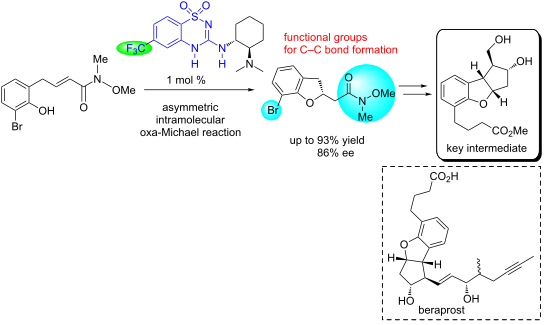
- the tricyclic core were controlled via Rh-catalyzed stereoselective C–H insertion and the subsequent reduction from the convex face. Keywords: bifunctional catalysis; hydrogen bonding; organocatalyst; oxa-Michael; prostacyclin; Introduction Prostacyclin (PGI2, Figure 1) is a physiologically active
- clinical application of 1, as well as the development of more active derivatives. Due to the unique tricyclic core of 1, which bears four contiguous stereocenters, various approaches for the synthesis of key intermediate 2 (Scheme 1) have been reported [14][15][16][17][18][19][20][21][22][23], including a
- ) at the ortho position was methyl, or via coupling reactions with C4 units when X was a bromo substituent. The cis-fused tricyclic core of 3 was assumed to be constructed by a stereoselective C–H insertion of diazoester 4, which can be readily prepared from the Weinreb amides 5 or 6 via Claisen



Assembly of synthetic Aβ miniamyloids on polyol templates
Beilstein J. Org. Chem. 2015, 11, 2646–2653, doi:10.3762/bjoc.11.284
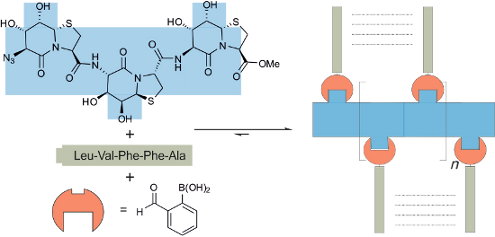
- ester even under the dilution conditions of an NMR tube (Figure 4). The signal set of boronic ester 7 is significantly shifted compared to the 1H NMR spectra of the educts, because the central δ-valerolactam of the 5,6,5-membered tricyclic fused ring system is locked in the boat conformation. Increasing


Synthesis of Xenia diterpenoids and related metabolites isolated from marine organisms
Beilstein J. Org. Chem. 2015, 11, 2521–2539, doi:10.3762/bjoc.11.273
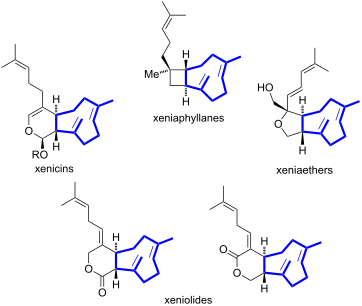
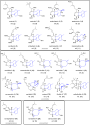
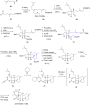
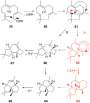
- Danishefsky. Proposed biosynthesis of plumisclerin A (118). Synthesis of the tricyclic core structure of plumisclerin A by Yao. Total synthesis of 4-hydroxydictyolactone (137) by Williams. Photoisomerization of 4-hydroxydictyolactone (137) to 4-hydroxycrenulide (138). The total synthesis of







Recent highlights in biosynthesis research using stable isotopes
Beilstein J. Org. Chem. 2015, 11, 2493–2508, doi:10.3762/bjoc.11.271
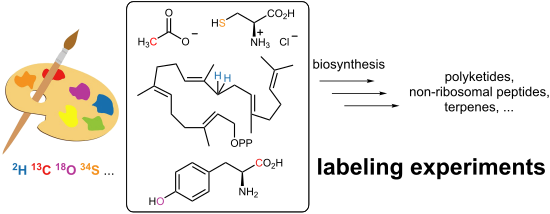
- incorporation pattern in the tricyclic aromatic moiety suggests a normal PKS assembly line. Moreover, a decarboxylation step is indicated by incorporation of the acetate methyl carbon atom into C-18. In contrast, the origins of C-13 to C-17 remained unclear because of low incorporation of acetate into this part
- -10 excluded a simple mechanistic assembly of the tricyclic system. Instead, advanced NMR experiments focusing on 2JC,C-couplings revealed that C-8 and C-10 originate from the same glucose molecule. To account for this surprising observation, a new mechanistic proposal was suggested involving a carbon
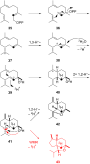
- are in line with the proposed cyclization mechanism starting from geranylfarnesyl diphosphate (GFPP, 53), which undergoes two cyclizations yielding cation 54. A 1,5-hydride shift at C-12 to C-19 leads to the allylic cation 55. Additional ring closure fuses the tricyclic system 56, which rearranges to











Beyond catalyst deactivation: cross-metathesis involving olefins containing N-heteroaromatics
Beilstein J. Org. Chem. 2015, 11, 2223–2241, doi:10.3762/bjoc.11.241
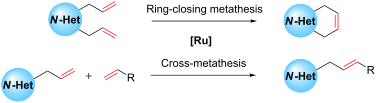
- it may be suspected that the presence of the two chlorine atoms significantly decreased the basicity of the pyridine (Scheme 21). Tricyclic compound 59 was prepared by a RCM of diene 58 that incorporates a quinoline moiety [61]. In this case, a phenyl group was present at C2 and may be responsible
- involving alkenes containing various N-heteroaromatics. Synthesis of dihydroisoquinoline using a RCM. Formation of tricyclic compound 59. RCM in the synthesis of normuscopyridine. Synthesis of macrocycle 64. Synthesis of macrocycles possessing an imidazole group. Retrosynthesis of an analogue of


Copper-catalyzed aerobic radical C–C bond cleavage of N–H ketimines
Beilstein J. Org. Chem. 2015, 11, 1933–1943, doi:10.3762/bjoc.11.209

- tetrahydropyranyl rings derived from nitriles 1c and 1d, respectively, afforded tricyclic oxaspirocyclohexadienones 3c and 3d in moderate yields along with the corresponding alkenes 4c and 4d as well as p-tolunitrile (5a) (Table 2, entries 2 and 3). On the other hand, the reaction starting from carbonitrile 1e




Recent applications of ring-rearrangement metathesis in organic synthesis
Beilstein J. Org. Chem. 2015, 11, 1833–1864, doi:10.3762/bjoc.11.199
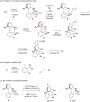
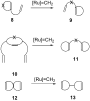
- with the RCM product 78 in 71% (Scheme 15). Burnell and co-workers [20] have demonstrated the RRM of unsaturated spirocycles with two alkenyl chains by employing catalyst 2 to generate a unsaturated spiro-fused tricyclic system. In this context, the compounds 80 and 81 were subjected to RRM with
- catalyst 2 to furnish exclusively fused tricyclic systems 83a and 83b in 85% and 61% yields, respectively. Substitution on the cyclohexene system as in compound 82 did not deliver the RRM product (Scheme 16). Pyran systems Donnard and co-workers [21] have accomplished a RRM approach for assembling complex
- system such as 102. To this end, the spironorbornene 102 was subjected to a RRM sequence under the influence of catalyst 1 to deliver the RRM product 103 and the RCM product 104 in a 99:1 ratio. When norbornene derivative 102 was treated with catalyst 2 tricyclic compound 103 and spironorbornene




Design and synthesis of propellane derivatives and oxa-bowls via ring-rearrangement metathesis as a key step
Beilstein J. Org. Chem. 2015, 11, 1727–1731, doi:10.3762/bjoc.11.188
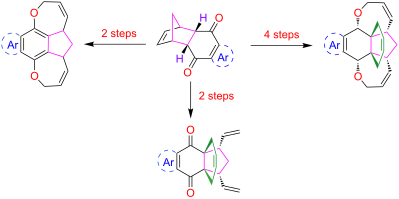
- with allyl bromide in the presence of NaH delivered the aromatized compound 2a in 42% yield. Then, the tricyclic compound 2a was subjected to RRM with Grubbs 1st generation (G-I) catalyst in the presence of ethylene to furnish the tetracyclic compound 1a in 75% yield (Scheme 1). The structures of


SmI2-mediated dimerization of indolylbutenones and synthesis of the myxobacterial natural product indiacen B
Beilstein J. Org. Chem. 2015, 11, 1700–1706, doi:10.3762/bjoc.11.184
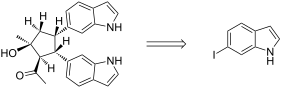
- dichlorobenzene at 150 °C to obtain a 3:5 mixture of the tricyclic cyclopentanones 17 and 18 (Scheme 4) [34]. Almost no regioselectivity between the 5- and 7-positions was observed. Our ongoing studies investigate the influence of bulky N-protecting groups. In the absence of the α,β-double bond, SmI2 in THF did
- Merck KGaA (Darmstadt, Germany) for chromatography materials. BASF Group (Ludwigshafen, Germany) and Honeywell Specialty Chemicals Seelze GmbH (Seelze, Germany) are thanked for the donation of solvents. Tina Bohlmann is thanked for the synthesis of tricyclic cyclopentanones 17 and 18. Wera Collisi



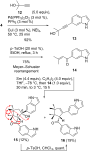


Fates of imine intermediates in radical cyclizations of N-sulfonylindoles and ene-sulfonamides
Beilstein J. Org. Chem. 2015, 11, 1649–1655, doi:10.3762/bjoc.11.181
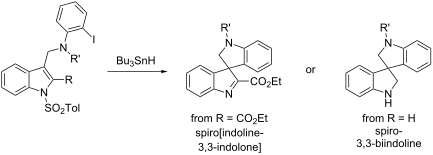
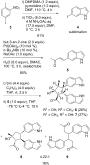
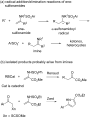
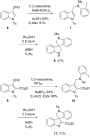
- spectra, and in one case, from an X-ray crystal structure. Assorted bicyclic and tricyclic imines were formed with both spiro-rings and fused-rings and with varying ring sizes and substituents. Extending this work, we have studied radical cyclizations of several ene-sulfonamides and N-sulfonylindoles. The





Synthesis of a tricyclic lactam via Beckmann rearrangement and ring-rearrangement metathesis as key steps
Beilstein J. Org. Chem. 2015, 11, 1503–1508, doi:10.3762/bjoc.11.163
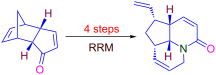
- Sambasivarao Kotha Ongolu Ravikumar Jadab Majhi Department of Chemistry, Indian Institute of Technology-Bombay, Powai, Mumbai-400 076, India, Fax: 022-25767152 10.3762/bjoc.11.163 Abstract A tricyclic lactam is reported in a four step synthesis sequence via Beckmann rearrangement and ring
- target molecule 1 is shown in Figure 1. RRM of the tricyclic allylated compound 2 can deliver the target lactam 1. The key synthon 2 can be derived by allylation of lactam 3, which in turn can be prepared via BR starting with the known enone 4 [25][26][27], derived from dicyclopentadiene (5) [28][29][30
- ]. Results and Discussion To begin with, the oxidation of dicyclopentadiene (5) in the presence of SeO2 gave 1α-dicyclopentadienol (6), which on treatment with pyridinium chlorochromate (PCC) [31] delivered the known tricyclic enone 4. Selective reduction of enone 4 with Zn in AcOH/EtOH under reflux


Structure and conformational analysis of spiroketals from 6-O-methyl-9(E)-hydroxyiminoerythronolide A
Beilstein J. Org. Chem. 2015, 11, 1447–1457, doi:10.3762/bjoc.11.157
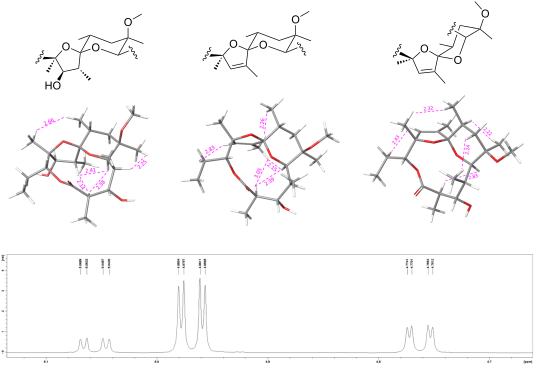
- -dimensional structure and avoid time-consuming molecular dynamic simulations, the starting model of 2 was created from the X-ray single crystal structure of tricyclic spiroketal (CSD entry: ERYTHR) [55], with replacement of the 6-hydroxy group by 6-methoxy. A two-step minimization process consisted of adding
- energy constraints to the X-ray structure followed by unconstrained minimization. Significant conformational changes were not expected due to the rigidity of the tricyclic system. A low energy conformation of 2 is presented in Figure 1. Analogous to pyranoside conformations, the highly substituted
- acid-promoted modification of 6-O-methyl-9(E)-hydroxyiminoerythronolide A into three rigid tricyclic spiroketal systems 2, 3 and 4. Compound 2 proved to be stable in non-acidic media. After acidic treatment two new dehydrated molecules are formed: compound 3 which with time spontaneously transforms




Design and synthesis of polycyclic sulfones via Diels–Alder reaction and ring-rearrangement metathesis as key steps
Beilstein J. Org. Chem. 2015, 11, 1373–1378, doi:10.3762/bjoc.11.148
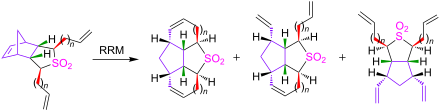
- synthesized from the functionalized tricyclic sulfone 2 by RRM sequence. The sulfone 2 may be prepared from the dimesylate 3, which in turn, can be assembled from the known anhydride 4 via reduction followed by mesylation of the resulting diol. Compound 4 could be prepared via DA reaction starting with
- attention towards the RRM step. Initially, the diallyl sulfone 2a (~0.0141 M solution in dry CH2Cl2) was subjected to RRM using G-I catalyst in the presence of ethylene gas in refluxing CH2Cl2 to get the tetracyclic sulfone 1a, however, we isolated the tricyclic sulfone 10 in 48% yield. When the G-I
- conditions to furnish 1c. Interestingly, the tricyclic sulfone 11 was isolated in 60% along with the expected tetracyclic sulfone 1c (32%) and a minor amount of ring-opened product 12 (6%, Scheme 5). A complex mixture of products was obtained when compound 2c was exposed to the metathesis catalyst for a


Hybrid macrocycle formation and spiro annulation on cis-syn-cis-tricyclo[6.3.0.02,6]undeca-3,11-dione and its congeners via ring-closing metathesis
Beilstein J. Org. Chem. 2015, 11, 1123–1128, doi:10.3762/bjoc.11.126

- new strategy based on Fischer indolization and ring-closing metathesis as the key steps. To develop a simple synthetic methodology to aza-polycycles and spiropolycycles from readily available starting materials [47][48][49][50][51][52], bicyclic, tricyclic and pentacyclic diones (1–3) were identified
- ]. Also, based on Fischer indolization and ring-closing metathesis (RCM), we have developed a new strategy to indole-based propellane derivatives [57]. Here, the tricyclic dione 2 required was prepared starting with the Cookson’s dione 4 in two steps involving flash vacuum pyrolysis (FVP) and
- hydrogenation steps (Scheme 1). A variety of synthetic transformations involving tricyclic diones 5 and 2 were reported in the literature [47]. To expand the utility of building block 2 in organic synthesis, we conceived a simple retrosynthetic approach to macrocylic aza-polyquinane 6 and spiro-polyquinane


A new and convenient synthetic way to 2-substituted thieno[2,3-b]indoles
Beilstein J. Org. Chem. 2015, 11, 1000–1007, doi:10.3762/bjoc.11.112
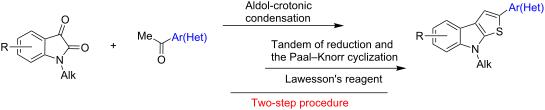
- –Knorr cyclization, thus affording tricyclic thieno[2,3-b]indoles. Keywords: aldol-crotonic condensation; isatin; Lawesson’s reagent; methyl ketones; Paal–Knorr reaction; thieno[2,3-b]indole; Introduction 8H-Thieno[2,3-b]indole is a fused heterocyclic system, which has attracted a considerable
- through a tandem reduction of the C=C double bond and the Paal–Knorr cyclization, thus affording tricyclic thieno[2,3-b]indoles. In its turn, the required indolin-2-ones have been prepared by a simple “aldol-crotonic” type of condensation of N-alkylated isatins with acetophenones or their heterocyclic


DBU-promoted carboxylative cyclization of o-hydroxy- and o-acetamidoacetophenone
Beilstein J. Org. Chem. 2015, 11, 906–912, doi:10.3762/bjoc.11.102

- the carboxylative cyclization reaction to furnish the tricyclic product 2h in moderate yield (Table 2, entry 8). With the successful DBU-promoted carboxylative cyclization of o-hydroxyacetophenone at hand, we then extended this strategy to o-acetamidoacetophenone to synthesize 4-hydroxy-2(1H


Direct access to pyrido/pyrrolo[2,1-b]quinazolin-9(1H)-ones through silver-mediated intramolecular alkyne hydroamination reactions
Beilstein J. Org. Chem. 2015, 11, 416–424, doi:10.3762/bjoc.11.47
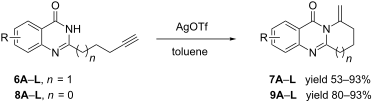
- studied for the construction of heterocycles. We have reported on a highly efficient gold/silver-catalyzed intramolecular hydroamination of terminal alkynes in water for the synthesis of fused tricyclic xanthenes [34]. On the basis of this methodology, we have also afforded two fused benzimidazoles


An unusually stable chlorophosphite: What makes BIFOP–Cl so robust against hydrolysis?
Beilstein J. Org. Chem. 2015, 11, 313–322, doi:10.3762/bjoc.11.36
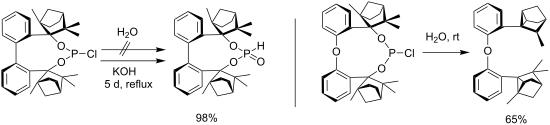
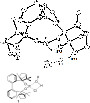
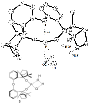
- striking differences regarding their reaction with water. While BIFOP–Cl is nearly completely unreactive, its oxo-derivative O–BIFOP–Cl reacts instantly with water, yielding a tricyclic hydrocarbon unit after rearrangement. The analysis of the crystal structure of O–BIFOP–Cl and BIFOP–Cl revealed that the


Copper-catalyzed cascade reactions of α,β-unsaturated esters with keto esters
Beilstein J. Org. Chem. 2015, 11, 213–218, doi:10.3762/bjoc.11.23

- diastereoselectivity. As expected, a cyclic β-halo-α,β unsaturated aldehyde substrate led to the respective tricyclic lactone, the core structure of strigolactone [12]. Bertrand synthesized β-carboxylic acid-γ-lactones in high yields but with low diastereoselectivity via a dialkylzinc-mediated radical addition to the


The Shono-type electroorganic oxidation of unfunctionalised amides. Carbon–carbon bond formation via electrogenerated N-acyliminium ions
Beilstein J. Org. Chem. 2014, 10, 3056–3072, doi:10.3762/bjoc.10.323
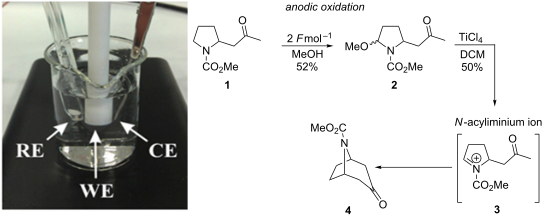
- proved difficult to determine the cis/trans relationship in many examples due to the presence of rotameric forms, however the products of phenyl magnesiumbromide were identified to be trans presumably due to opposite face attack of intermediate 52b. Bicyclic lactams [73] and tricyclic systems [74] have
- such as the nucleobases: protected cytosine, guanine 87, adenine, and thymine to afford azanucleoside products such as 88 (Scheme 20). The use of the Shono-type electrooxidation in peptide and peptidomimetic chemistry The preparation of a bridged tricyclic analogue to induce an α-helix conformation in
- synthetically challenging aza-nucleosides employing an electrochemical step [88]. Synthesis of a bridged tricyclic diproline analogue 93 that induces α-helix conformation into linear peptides [90]. Synthesis of (i) a peptidomimetic and (ii) a functionalised peptide from silyl electroauxiliary precursors [91


The unexpected influence of aryl substituents in N-aryl-3-oxobutanamides on the behavior of their multicomponent reactions with 5-amino-3-methylisoxazole and salicylaldehyde
Beilstein J. Org. Chem. 2014, 10, 3019–3030, doi:10.3762/bjoc.10.320
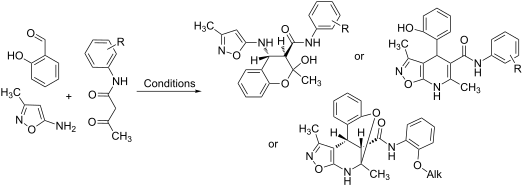
- hydroxyaryl group as well as tricyclic nitrogen-containing heterocycles derived from salicylaldehyde have been reported as anticancer [1], antihypertensive agents [2], neuropeptide Y antagonists [3], and calcium channel blockers [4]. Fused azoloazines containing carboxamide substituents also exhibit a broad
- ). Obtaining of two classes of compounds was found to originate from steric influence rendered by the alkyl moiety of the ester group in the active methylene species. Inspired by Světlik’s studies, Jing et al. [17] developed an efficient method for the synthesis of oxygen-bridged pyrimidine tricyclic


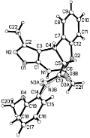
A one-pot multistep cyclization yielding thiadiazoloimidazole derivatives
Beilstein J. Org. Chem. 2014, 10, 2989–2996, doi:10.3762/bjoc.10.317
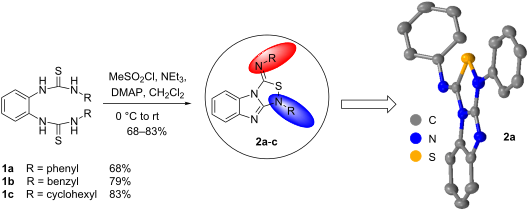
- 14‡. Distances are shown in angstrom (italics). Synthesis of tricyclic 1,2,4-thiadiazoles 2a–c. Possible mechanistic scenarios. DMAP assisted cyclization-I and IIa. Free energies are reported in kcal mol−1 at 25 °C referenced to 8 for cyclization-I and 13 for cyclization-IIa. Free energy values


Thermal and oxidative stability of the Ocimum basilicum L. essential oil/β-cyclodextrin supramolecular system
Beilstein J. Org. Chem. 2014, 10, 2809–2820, doi:10.3762/bjoc.10.298
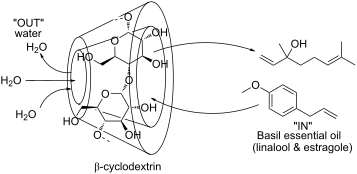
- (b). The number given for each compound can correspondingly be found in Table 1. The compound class is indicated in parenthesis (M – acyclic monoterpenes, OM – oxygenated acyclic monoterpenes, OM1/2 – oxygenated mono/bicyclic monoterpenes, P – phenolic derivatives, S1/2/3 – mono/bi/tricyclic
- sesquiterpenes, OS2/3 – oxygenated bi/tricyclic sesquiterpenes). The score plot from the PCA analysis of the O. basilicum L. essential oil compounds nanoencapsulation in β-CD (classification as acyclic or cyclic (numbered) mono- and sesquiterpenoid hydrocarbons (M and S), or the corresponding oxygenated terpenes


Aspergiloid I, an unprecedented spirolactone norditerpenoid from the plant-derived endophytic fungus Aspergillus sp. YXf3
Beilstein J. Org. Chem. 2014, 10, 2677–2682, doi:10.3762/bjoc.10.282
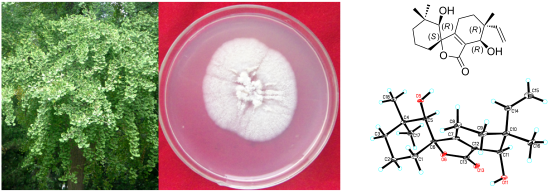
- carbon skeleton with an unprecedented 6/5/6 tricyclic ring system bearing an α,β-unsaturated spirolactone moiety in ring B, and represents a new subclass of norditerpenoid, the skeleton of which is named aspergilane. The hypothetical biosynthetic pathway for 1 was also proposed. The cytotoxic
- enone fragment. HMBC correlations from H2-8 to C-7 and C-12 secured the connectivity of the C-8 to C-7. The connectivity of C-6 to the ketone carbon C-13 through an ester linkage, which was also supported by the downfield chemical shift of C-6 (δC 88.6) completed the structure of 6/5/6 tricyclic
- Bijvoet pairs by single-crystal X-ray diffraction experiment [13]. Therefore, the absolute configurations of the chiral centers in 1 were established as 5R, 6S, 10R, 11R. This compound is structurally characterized by a new carbon skeleton with an unprecedented 6/5/6 tricyclic ring system bearing an α,β





