


Search results
Search for "urea" in Full Text gives 229 result(s) in Beilstein Journal of Organic Chemistry. Showing first 200.
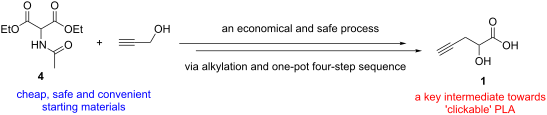
An economical and safe procedure to synthesize 2-hydroxy-4-pentynoic acid: A precursor towards ‘clickable’ biodegradable polylactide
- Quanxuan Zhang,
- Hong Ren and
- Gregory L. Baker
Beilstein J. Org. Chem. 2014, 10, 1365–1371, doi:10.3762/bjoc.10.139
- change of KI-starch test paper), which destroy product 1 during concentration and drying under vacuum. And neither addition of urea (reacting with HNO2 to release N2, CO2 and H2O) nor passing of crude product 1 through a short silica gel column can stop its decomposition. So three reductants were
- acid 6 at 0 °C followed by the addition of another 3 equiv of NaNO2 in water (40%). The resulting mixture was stirred for 40 h at room temperature, and urea in diluted HCl (1 M) was added dropwise until the mixture did not make potassium iodide starch test paper blue or purple. The resulting product 1

Graphical Abstract

Scheme 1: Synthesis of 2-hydroxy-4-pentynoic acid (1).

Scheme 2: Synthesis of 1 via epoxide ring opening with organoalane.

Scheme 3: Attempted synthetic routes for compound 1.

Scheme 4: Synthesis of 2-hydroxy-4-pentynoic acid (1) from diethyl 2-acetamidomalonate.
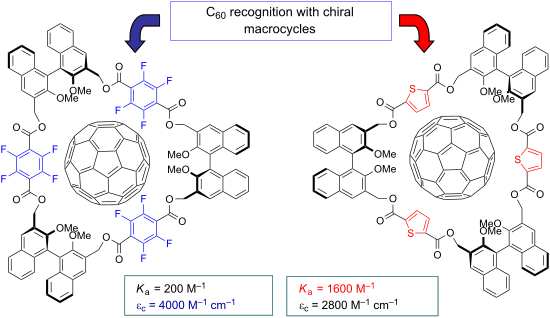
Homochiral BINOL-based macrocycles with π-electron-rich, electron-withdrawing or extended spacing units as receptors for C60
- Marco Caricato,
- Silvia Díez González,
- Idoia Arandia Ariño and
- Dario Pasini
Beilstein J. Org. Chem. 2014, 10, 1308–1316, doi:10.3762/bjoc.10.132
- macrocycles [16], and urea-based structures [17] have all been exploited to develop the nanotube concept. Efficient supramolecular receptors for C60 and higher fullerenes have been already reported in the literature and research in this area is still very active [18][19]. Jasti and co-workers have

Graphical Abstract

Scheme 1: Synthesis of macrocycles 3 and 4.

Figure 1: 1H NMR spectra of macrocycles 3a–d, with key proton resonances for the spacing units and key benzyl...

Figure 2: 1H NMR spectroscopy of macrocycles 4a–d, with proton resonances for the spacing units and key benzy...

Figure 3: CD spectra of macrocycles 3b, 3d, 4b, 4d in EtOH (0.5–12 × 10−6 M).
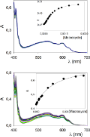
Figure 4: UV–vis titration of C60 (1.8 × 10⁻⁴ M) in toluene with increasing amounts of macrocycle 4b (top) an...
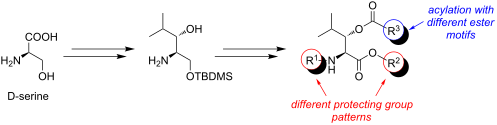
Amino acid motifs in natural products: synthesis of O-acylated derivatives of (2S,3S)-3-hydroxyleucine
- Oliver Ries,
- Martin Büschleb,
- Markus Granitzka,
- Dietmar Stalke and
- Christian Ducho
Beilstein J. Org. Chem. 2014, 10, 1135–1142, doi:10.3762/bjoc.10.113
- , acidic deprotection afforded the desired building blocks 13a,b suitable for N-derivatization, with the compounds not being fully purified. In order to demonstrate the synthetic versatility of these 3-hydroxyleucine derivatives, they were coupled with urea dipeptide 14 [36], thus providing protected

Graphical Abstract

Figure 1: Structures of muraymycins A1, B6, C1 and D1 1a–d.
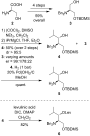
Scheme 1: Synthesis of stereoisomerically pure amino alcohol 5 [32] and of derivative 6 suitable for X-ray crysta...

Figure 2: Molecular structure of levulinyl ester 6. Anisotropic displacement parameters are depicted at the 5...
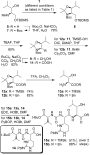
Scheme 2: Synthesis of (2S,3S)-3-hydroxyleucine building blocks 13a,b useful for N-derivatization and of the ...
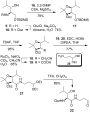
Scheme 3: Synthesis of (2S,3S)-3-hydroxyleucine building block 19 useful for C-derivatization and of aldehyde ...
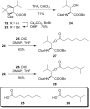
Scheme 4: Synthesis of O-acylated (2S,3S)-3-hydroxyleucine derivatives 27 and 28.

Scheme 5: Synthesis of 6-methylheptanoic acid (26).
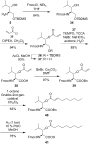
Scheme 6: Synthesis of Fmoc-protected building blocks 38 and 41 suitable for SPPS, with late-stage side chain...
Nonanebis(peroxoic acid): a stable peracid for oxidative bromination of aminoanthracene-9,10-dione
- Vilas Venunath Patil and
- Ganapati Subray Shankarling
Beilstein J. Org. Chem. 2014, 10, 921–928, doi:10.3762/bjoc.10.90
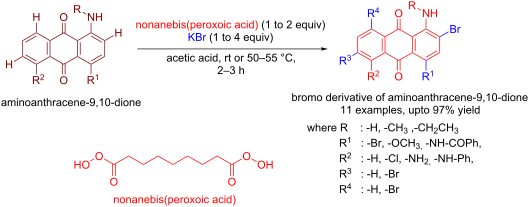
- , Oxone (Table 3, entry 2) shows 94% conversion of 1a in 2 h. In case of 50% Hydrogen peroxide (Table 3, entry 3), more than 7 equivalents of oxidant were required with successive addition. The urea hydrogen peroxide shows moderate conversion in 20 h (Table 3, entry 6). The other diperoxy acids like

Graphical Abstract

Scheme 1: Aliphatic peracid mediated bromination of aminoanthracene-9,10-dinone.

Scheme 2: Plausible mechanism for the bromination of aminoanthracene-9,10-dione [36,37].
Staudinger ligation towards cyclodextrin dimers in aqueous/organic media. Synthesis, conformations and guest-encapsulation ability
- Malamatenia D. Manouilidou,
- Yannis G. Lazarou,
- Irene M. Mavridis and
- Konstantina Yannakopoulou
Beilstein J. Org. Chem. 2014, 10, 774–783, doi:10.3762/bjoc.10.73
- couplings [16][23], the classical formation of ester [12][17], amide [25][26] or imide [27] bonds between CDs or amino CDs and acid- or anhydride-linkers, and finally urea/thiourea bonds [28][29]. However, the obvious advantages of the Staudinger ligation (high reaction rates, absence of a catalyst, aqueous

Graphical Abstract

Scheme 1: (a) Staudinger reaction (b) Staudinger ligation, (c) the cyclodextrin structure with glucopyranose ...

Scheme 2: (a) i) HCl, NaNO2/H2O, then KI/H2O, 58%, ii) Ph2PH, Pd(OAc)2, Et3N, MeOH, 48%; (b) i) CH3COOH, H2SO4...

Scheme 3: Staudinger ligation reactions: (a) Preparation of 4 from mono[6-(3-azidopropylamino)-6-deoxy]-β-CD ...

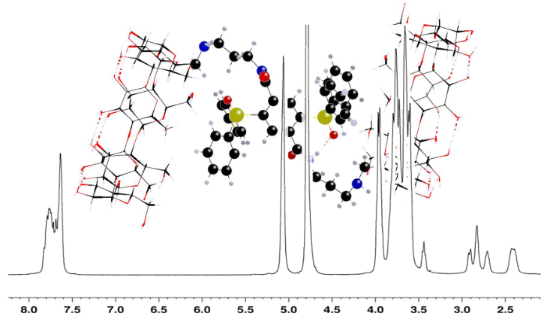
Figure 1: 1H NMR chemical shift change (Δδ) of CD cavity Η3 signal of compounds titrated with 1-adamantylamin...
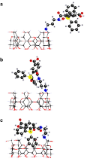
Figure 2: The most stable conformations of 4 at the PM3(COSMO) level of theory: (a) open, (b) vicinal, and (c...

Figure 3: Typical conformations of 6: (a) open conformation, (b) vicinal, (c) inclusion/vicinal and (d) doubl...
Isocyanide-based multicomponent reactions towards cyclic constrained peptidomimetics
- Gijs Koopmanschap,
- Eelco Ruijter and
- Romano V.A. Orru
Beilstein J. Org. Chem. 2014, 10, 544–598, doi:10.3762/bjoc.10.50


Graphical Abstract

Scheme 1: The proposed mechanism of the Passerini reaction.

Scheme 2: The PADAM-strategy to α-hydroxy-β-amino amide derivatives 7. An additional oxidation provides α-ket...

Scheme 3: The general accepted Ugi-mechanism.

Scheme 4: Three commonly applied Ugi/cyclization approaches. a) UDC-process, b) UAC-sequence, c) UDAC-combina...

Scheme 5: Ugi reaction that involves the condensation of Armstrong’s convertible isocyanide.

Scheme 6: Mechanism of the U-4C-3CR towards bicyclic β-lactams.

Scheme 7: The Ugi 4C-3CR towards oxabicyclo β-lactams.

Scheme 8: Ugi MCR between an enantiopure monoterpene based β-amino acid, aldehyde and isocyanide resulting in...

Scheme 9: General MCR for β-lactams in water.

Scheme 10: a) Ugi reaction for β-lactam-linked peptidomimetics. b) Varying the β-amino acid resulted in β-lact...

Scheme 11: Ugi-4CR followed by a Pd-catalyzed Sn2 cyclization.

Scheme 12: Ugi-3CR of dipeptide mimics from 2-substituted pyrrolines.

Scheme 13: Joullié–Ugi reaction towards 2,5-disubstituted pyrrolidines.

Scheme 14: Further elaboration of the Ugi-scaffold towards bicyclic systems.

Scheme 15: Dihydroxyproline derivatives from an Ugi reaction.

Scheme 16: Diastereoselective Ugi reaction described by Banfi and co-workers.

Scheme 17: Similar Ugi reaction as in Scheme 16 but with different acids and two chiral isocyanides.

Scheme 18: Highly diastereoselective synthesis of pyrrolidine-dipeptoids via a MAO-N/MCR-procedure.

Scheme 19: MAO-N/MCR-approach towards the hepatitis C drug telaprevir.

Scheme 20: Enantioselective MAO-U-3CR procedure starting from chiral pyrroline 64.

Scheme 21: Synthesis of γ-lactams via an UDC-sequence.

Scheme 22: Utilizing bifunctional groups to provide bicyclic γ-lactam-ketopiperazines.

Scheme 23: The Ugi reaction provided both γ- as δ-lactams depending on which inputs were used.

Scheme 24: The sequential Ugi/RCM with olefinic substrates provided bicyclic lactams.

Scheme 25: a) The structural and dipole similarities of the triazole unit with the amide bond. b) The copper-c...

Scheme 26: The Ugi/Click sequence provided triazole based peptidomimetics.

Scheme 27: The Ugi/Click reaction as described by Nanajdenko.

Scheme 28: The Ugi/Click-approach by Pramitha and Bahulayan.

Scheme 29: The Ugi/Click-combination by Niu et al.

Scheme 30: Triazole linked peptidomimetics obtained from two separate MCRs and a sequential Click reaction.

Scheme 31: Copper-free synthesis of triazoles via two MCRs in one-pot.

Scheme 32: The sequential Ugi/Paal–Knorr reaction to afford pyrazoles.

Scheme 33: An intramolecular Paal–Knorr condensation provided under basic conditions pyrazolones.

Scheme 34: Similar cyclization performed under acidic conditions provided pyrazolones without the trifluoroace...

Scheme 35: The Ugi-4CR towards 2,4-disubstituted thiazoles.

Scheme 36: Solid phase approach towards thiazoles.

Scheme 37: Reaction mechanism of formation of thiazole peptidomimetics containing an additional β-lactam moiet...

Scheme 38: The synthesis of the trisubstituted thiazoles could be either performed via an Ugi reaction with pr...

Scheme 39: Performing the Ugi reaction with DMB-protected isocyanide gave access to either oxazoles or thiazol...

Scheme 40: Ugi/cyclization-approach towards 2,5-disubstituted thiazoles. The Ugi reaction was performed with d...

Scheme 41: Further derivatization of the thiazole scaffold.

Scheme 42: Three-step procedure towards the natural product bacillamide C.

Scheme 43: Ugi-4CR to oxazoles reported by Zhu and co-workers.

Scheme 44: Ugi-based synthesis of oxazole-containing peptidomimetics.

Scheme 45: TMNS3 based Ugi reaction for peptidomimics containing a tetrazole.

Scheme 46: Catalytic cycle of the enantioselective Passerini reaction towards tetrazole-based peptidomimetics.

Scheme 47: Tetrazole-based peptidomimetics via an Ugi reaction and a subsequent sigmatropic rearrangement.

Scheme 48: Resin-bound Ugi-approach towards tetrazole-based peptidomimetics.

Scheme 49: Ugi/cyclization approach towards γ/δ/ε-lactam tetrazoles.

Scheme 50: Ugi-3CR to pipecolic acid-based peptidomimetics.

Scheme 51: Staudinger–Aza-Wittig/Ugi-approach towards pipecolic acid peptidomimetics.

Figure 1: The three structural isomers of diketopiperazines. The 2,5-DKP isomer is most common.

Scheme 52: UDC-approach to obtain 2,5-DKPs, either using Armstrong’s isocyanide or via ethylglyoxalate.

Scheme 53: a) Ugi reaction in water gave either 2,5-DKP structures or spiro compounds. b) The Ugi reaction in ...

Scheme 54: Solid-phase approach towards diketopiperazines.

Scheme 55: UDAC-approach towards DKPs.

Scheme 56: The intermediate amide is activated as leaving group by acid and microwave assisted organic synthes...

Scheme 57: UDC-procedure towards active oxytocin inhibitors.

Scheme 58: An improved stereoselective MCR-approach towards the oxytocin inhibitor.

Scheme 59: The less common Ugi reaction towards DKPs, involving a Sn2-substitution.

Figure 2: Spatial similarities between a natural β-turn conformation and a DKP based β-turn mimetic [158].

Scheme 60: Ugi-based syntheses of bicyclic DKPs. The amine component is derived from a coupling between (R)-N-...

Scheme 61: Ugi-based synthesis of β-turn and γ-turn mimetics.

Figure 3: Isocyanide substituted 3,4-dihydropyridin-2-ones, dihydropyridines and the Freidinger lactams. Bio-...

Scheme 62: The mechanism of the 4-CR towards 3,4-dihydropyridine-2-ones 212.

Scheme 63: a) Multiple MCR-approach to provide DHP-peptidomimetic in two-steps. b) A one-pot 6-CR providing th...

Scheme 64: The MCR–alkylation–MCR procedure to obtain either tetrapeptoids or depsipeptides.

Scheme 65: U-3CR/cyclization employing semicarbazone as imine component gave triazine based peptidomimetics.

Scheme 66: 4CR towards triazinane-diones.

Scheme 67: The MCR–alkylation–IMCR-sequence described by our group towards triazinane dione-based peptidomimet...

Scheme 68: Ugi-4CR approaches followed by a cyclization to thiomorpholin-ones (a) and pyrrolidines (b).

Scheme 69: UDC-approach for benzodiazepinones.

Scheme 70: Ugi/Mitsunobu sequence to BDPs.

Scheme 71: A UDAC-approach to BDPs with convertible isocyanides. The corresponding amide is cleaved by microwa...

Scheme 72: microwave assisted post condensation Ugi reaction.

Scheme 73: Benzodiazepinones synthesized via the post-condensation Ugi/ Staudinger–Aza-Wittig cyclization.

Scheme 74: Two Ugi/cyclization approaches utilizing chiral carboxylic acids. Reaction (a) provided the product...

Scheme 75: The mechanism of the Gewald-3CR includes three base-catalysed steps involving first a Knoevnagel–Co...

Scheme 76: Two structural 1,4-thienodiazepine-2,5-dione isomers by U-4CR/cyclization.

Scheme 77: Tetrazole-based diazepinones by UDC-procedure.

Scheme 78: Tetrazole-based BDPs via a sequential Ugi/hydrolysis/coupling.

Scheme 79: MCR synthesis of three different tricyclic BPDs.

Scheme 80: Two similar approaches both involving an Ugi reaction and a Mitsunobu cyclization.

Scheme 81: Mitsunobu–Ugi-approach towards dihydro-1,4-benzoxazepines.

Scheme 82: Ugi reaction towards hetero-aryl fused 5-oxo-1,4-oxazepines.

Scheme 83: a) Ugi/RCM-approach towards nine-membered peptidomimetics b) Sequential peptide-coupling, deprotect...

Scheme 84: Ugi-based synthesis towards cyclic RGD-pentapeptides.

Scheme 85: Ugi/MCR-approach towards 12–15 membered macrocycles.

Scheme 86: Stereoselective Ugi/RCM approach towards 16-membered macrocycles.

Scheme 87: Passerini/RCM-sequence to 22-membered macrocycles.

Scheme 88: UDAC-approach towards 12–18-membered depsipeptides.

Figure 4: Enopeptin A with its more active derivative ADEP-4.

Scheme 89: a) The Joullié–Ugi-approach towards ADEP-4 derivatives b) Ugi-approach for the α,α-dimethylated der...

Scheme 90: Ugi–Click-strategy for 15-membered macrocyclic glyco-peptidomimetics.

Scheme 91: Ugi/Click combinations provided macrocycles containing both a triazole and an oxazole moiety.

Scheme 92: a) A solution-phase procedure towards macrocycles. b) Alternative solid-phase synthesis as was repo...

Scheme 93: Ugi/cyclization towards cyclophane based macrocycles.

Scheme 94: PADAM-strategy towards eurystatin A.

Scheme 95: PADAM-approach for cyclotheanamide.

Scheme 96: A triple MCR-approach affording RGD-pentapeptoids.

Scheme 97: Ugi-MiBs-approach towards peptoid macrocycles.

Scheme 98: Passerini-based MiB approaches towards macrocycles 345 and 346.

Scheme 99: Macrocyclic peptide formation by the use of amphoteric aziridine-based aldehydes.
Silver and gold-catalyzed multicomponent reactions
- Giorgio Abbiati and
- Elisabetta Rossi
Beilstein J. Org. Chem. 2014, 10, 481–513, doi:10.3762/bjoc.10.46
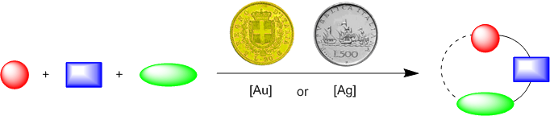
- p-TsNCO 18 to generate the acyclic urea IV, and the alkyne moiety of IV coordinates to gold to form a new alkyne π-complex V. A 5-exo-dig cyclization by nucleophilic attack of the urea oxygen forms the vinylgold carbamimidinium ion VI (the minor 6-endo-dig 19 product is not shown), which undergoes

Graphical Abstract

Scheme 1: General reaction mechanism for Ag(I)-catalyzed A3-coupling reactions.

Scheme 2: A3-coupling reaction catalyzed by polystyrene-supported NHC–silver halides.

Figure 1: Various NHC–Ag(I) complexes used as catalysts for A3-coupling.

Scheme 3: Proposed reaction mechanism for NHC–AgCl catalyzed A3-coupling reactions.

Scheme 4: Liu’s synthesis of pyrrole-2-carboxaldehydes 4.

Scheme 5: Proposed reaction mechanism for Liu’s synthesis of pyrrole-2-carboxaldehydes 4.

Scheme 6: Gold-catalyzed synthesis of propargylamines 1.

Scheme 7: A3-coupling catalyzed by phosphinamidic Au(III) metallacycle 6.

Scheme 8: Gold-catalyzed KA2-coupling.

Scheme 9: A3-coupling applied to aldehyde-containing oligosaccharides 8.

Scheme 10: A3-MCR for the preparation of propargylamine-substituted indoles 9.

Scheme 11: A3-coupling interceded synthesis of furans 12.

Scheme 12: A3/KA2-coupling mediated synthesis of functionalized dihydropyrazoles 13 and polycyclic dihydropyra...

Scheme 13: Au(I)-catalyzed entry to cyclic carbamimidates 17 via an A3-coupling-type approach.

Scheme 14: Proposed reaction mechanism for the Au(I)-catalyzed synthesis of cyclic carbamimidates 17.

Figure 2: Chiral trans-1-diphenylphosphino-2-aminocyclohexane–Au(I) complex 20.

Scheme 15: A3-coupling-type synthesis of oxazoles 21 catalyzed by Au(III)–salen complex.

Scheme 16: Proposed reaction mechanism for the synthesis of oxazoles 21.

Scheme 17: Synthesis of propargyl ethyl ethers 24 by an A3-coupling-type reaction.

Scheme 18: General mechanism of Ag(I)-catalyzed MCRs of 2-alkynylbenzaldehydes, amines and nucleophiles.

Scheme 19: General synthetic pathway to 1,3-disubstituted-1,2-dihydroisoquinolines.

Scheme 20: Synthesis of 1,3-disubstituted-1,2-dihydroisoquinolines 29.

Scheme 21: Synthesis of 1,3-disubstituted-1,2-dihydroisoquinolines 35 and 36.

Scheme 22: Rh(II)/Ag(I) co-catalyzed synthesis of 1,3-disubstituted-1,2-dihydroisoquinolines 40.

Scheme 23: General synthetic pathway to 2-amino-1,2-dihydroquinolines.

Scheme 24: Synthesis of 2-amino-1,2-dihydroquinolines 47.

Scheme 25: Synthesis of tricyclic H-pyrazolo[5,1-a]isoquinoline 48.

Scheme 26: Synthesis of tricyclic H-pyrazolo[5,1-a]isoquinolines 48.

Scheme 27: Cu(II)/Ag(I) catalyzed synthesis of H-pyrazolo[5,1-a]isoquinolines 48.

Scheme 28: Synthesis of 2-aminopyrazolo[5,1-a]isoquinolines 53.

Scheme 29: Synthesis of 1-(isoquinolin-1-yl)guanidines 55.

Scheme 30: Ag(I)/Cu(I) catalyzed synthesis of 2-amino-H-pyrazolo[5,1-a]isoquinolines 58.

Scheme 31: Ag(I)/Ni(II) co-catalyzed synthesis of 3,4-dihydro-1H-pyridazino[6,1-a]isoquinoline-1,1-dicarboxyla...

Scheme 32: Ag(I) promoted activation of the α-carbon atom of the isocyanide group.

Scheme 33: Synthesis of dihydroimidazoles 65.

Scheme 34: Synthesis of oxazoles 68.

Scheme 35: Stereoselective synthesis of chiral butenolides 71.

Scheme 36: Proposed reaction mechanism for the synthesis of butenolides 71.

Scheme 37: Stereoselective three-component approach to pirrolidines 77 by means of a chiral auxiliary.

Scheme 38: Stereoselective three-component approach to pyrrolidines 81 and 82 by means of a chiral catalyst.

Scheme 39: Synthesis of substituted five-membered carbocyles 86.

Scheme 40: Synthesis of regioisomeric arylnaphthalene lactones.

Scheme 41: Enantioselective synthesis of spiroacetals 96 by Fañanás and Rodríguez [105].

Scheme 42: Enantioselective synthesis of spiroacetals 101 by Gong [106].

Scheme 43: Synthesis of polyfunctionalized fused bicyclic ketals 103 and bridged tricyclic ketals 104.

Scheme 44: Proposed reaction mechanism for the synthesis of ketals 103 and 104.

Scheme 45: Synthesis of β-alkoxyketones 108.

Scheme 46: Synthesis of N-methyl-1,4-dihydropyridines 112.

Scheme 47: Synthesis of tetrahydrocarbazoles 115–117.

Scheme 48: Plausible reaction mechanism for the synthesis of tetrahydrocarbazoles 115–117.

Scheme 49: Carboamination, carboalkoxylation and carbolactonization of terminal alkenes.

Scheme 50: Oxyarylation of alkenes with arylboronic acids and Selectfluor as reoxidant.

Scheme 51: Proposed reaction mechanism for oxyarylation of alkenes.

Scheme 52: Oxyarylation of alkenes with arylsilanes and Selectfluor as reoxidant.

Scheme 53: Oxyarylation of alkenes with arylsilanes and IBA as reoxidant.
Continuous flow nitration in miniaturized devices
- Amol A. Kulkarni
Beilstein J. Org. Chem. 2014, 10, 405–424, doi:10.3762/bjoc.10.38
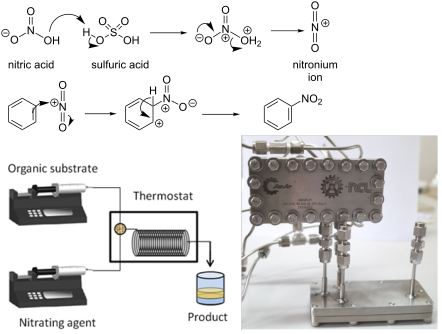
- and industrial explosive. Nitro derivatives of glycerine, urea and naphthalene also exhibit explosive properties. Some of the aniline based dyes were used for medical applications, too. The extension of the aniline based medicines led to hundreds of drugs [11], which were used for medication during

Graphical Abstract

Figure 1: Analysis of the literature on aromatic nitration over the last 50 years. Numbers next to each nitra...

Figure 2: Schematic of a typical experimental setup for aromatic nitration. The circular segment shown inside...

Scheme 1: Nitration of substituted pyrazole-5-carboxylic acid 1. T = 90 °C, residence time = 35 min, yield: 7...

Scheme 2: Nitration of 2-methylindole (4). T = 3 °C, residence time = 48 s, yield: 70%. [27].

Scheme 3: Nitration of pyridine-N-oxide (6), T = 120 °C, residence time = 80 min, yield: 78% (72% in the flas...

Scheme 4: Nitration of toluene (8). Method 1: H2SO4/HNO3, T = 65 °C, residence time = 15 min. Method 2: Ac2O/H...

Figure 3: Graphical presentation of a microreactor used for double nitration and the schematic of the experim...

Scheme 5: Nitration of 2-amino-6-chloro-4-pyrimidinol (14) [25].

Scheme 6: Nitration of benzaldehyde (16) [35].

Scheme 7: Nitration of salicylic acid (19) [30].

Scheme 8: Nitration of phenol (22) yielding mono-nitro isomers 23 and 24 as main products, hydroquinone (25),...

Scheme 9: Synthesis of 3-methyl-4-nitropyrazole (29) and 3,5-dimethyl-4-nitropyrazole (31) [31].

Figure 4: Photograph of the experimental setup for the synthesis of alkyl-nitropyrazoles. IMM’s SIMM-V2 micro...

Scheme 10: Nitration of chlorobenzene (33) [23].

Figure 5: Continuous flow nitration of chlorobenzene (33) with nitric acid in a sequence of continuously stir...

Scheme 11: Nitration of 2-isopropoxybenzaldehyde (36) by using red fuming nitric acid [37].

Figure 6: Silicon-glass microreactor by Knapkiewicz et al. [37]. (A) Layout of the microreactor with a built-in m...

Scheme 12: Synthesis of nitropyridine (40) [39].

Figure 7: Schematic of the experimental setup involving a pressure based charging system [39]. Reproduced with pe...

Scheme 13: Nitration of p-difluorobenzene (42) [40].

Figure 8: Schematic of the flow reactor arrangement. Reproduced with permission from [40]. Copyright 2013 The Ame...

Scheme 14: Nitration of naphthalene (47) [34].

Figure 9: Structure of the microreactor. (A) Top view (1, 2 – inlets, 3 – mixing points, 4 – outlet). (B) Lat...

Scheme 15: Nitration of 2-nitropropane (52) [38].

Figure 10: Schematic of the continuous nitration system reported in CN103044261A [56].
Secondary amine-initiated three-component synthesis of 3,4-dihydropyrimidinones and thiones involving alkynes, aldehydes and thiourea/urea
- Jie-Ping Wan,
- Yunfang Lin,
- Kaikai Hu and
- Yunyun Liu
Beilstein J. Org. Chem. 2014, 10, 287–292, doi:10.3762/bjoc.10.25
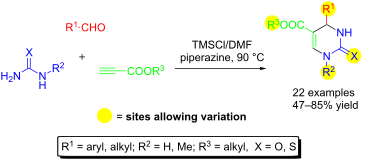
- ] and enaminones [34]. On the other hand, as frequently utilized building blocks in organic synthesis, alkynes have been known to possess versatile reactivity in the synthesis of small molecules. For example, a previous protocol employing aryl alkynes, aldehydes and urea/thiourea has been found to
- scope. Various aldehydes of different properties have been subjected to react with thioureas/N-substituted thioureas/urea as well as different propiolates. Typical results were listed in Table 2. It can be seen from these reactions that aldehydes containing various functional groups tolerate the
- thiourea and alkyne were not successful. On the other hand, benzaldehydes with ortho- and meta-substitution could also react with thioureas and propiolates to give the corresponding DHPMs 5l–5p. However, compared with thiourea, urea has been found to undergo a similar transformation more toughly, and DHPMs

Graphical Abstract

Figure 1: Some DHPMs-based lead compounds.

Scheme 1: Regioselective 1,3-thiazines and DHPMs via aldehydes, ureas/thioureas and alkynes.

Scheme 2: Synthesis of enamino ester intermediate and its transformation to DHPM.

Scheme 3: Proposed reaction mechanism.
New hydrogen-bonding organocatalysts: Chiral cyclophosphazanes and phosphorus amides as catalysts for asymmetric Michael additions
- Helge Klare,
- Jörg M. Neudörfl and
- Bernd Goldfuss
Beilstein J. Org. Chem. 2014, 10, 224–236, doi:10.3762/bjoc.10.18
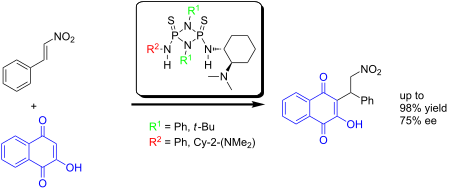
- . DFT computations reveal high hydrogen-bonding strengths of cyclodiphosphazane PV-amides compared to urea-based catalysts. Experimental results and computations on the enantiodetermining step with cis-cyclodiphosphazane 14a suggest a strong bidentate H-bond activation of the nitrostyrene substrate by
- ) catalysts represent an ever growing class [6][7][8]. The majority of non-specific hydrogen-bonding catalysts are based on the (thio)urea motif (I, Figure 1) [9][10]. More recently squaramides (II, Figure 1) have emerged as complementing motif in HB catalysis [11]. Other H-bonding motifs are less established
- , e.g. sulfonamides [12], urea-N-sulfoxides [13], guanines [14] as well as protonated catalysts such as ammonium [15], 2-aminopyridinium [16] and guanidinium [17] motifs. Most catalysts can form two hydrogen bonds to a reactant, which further enhances their ability to activate and constrain it to a

Graphical Abstract

Figure 1: Thiourea, squaramide, P-triamide and cyclodiphosphazane with computed distances between H-atoms.

Figure 2: Urea, squaramide, P-triamide and cyclodiphosphazane coordinated to nitrobenzene, with the computed ...

Scheme 1: Chiral PV-amide catalysts based on BINOL and chinchona backbones.

Scheme 2: Exclusive formation of the mono- and trisubstituted product from thiophosphoryl chloride and anilin...

Figure 3: X-ray structure of 6-dimer. The hydrogen atoms are omitted for clarity, except at all nitrogens.

Figure 4: X-ray structure of 7a-dimer. The hydrogen atoms are omitted for clarity, except at all nitrogens.

Scheme 3: Synthesis of chiral cyclodiphosphazane catalysts 14a/b, 15 and 16.

Figure 5: X-ray structure of 14a. The hydrogen atoms are omitted for clarity, except at nitrogen.

Figure 6: 31P{1H} NMR spectrum in CDCl3 at rt showing C2 symmetry of 14a at rt.

Figure 7: X-ray structure of 15. The hydrogen atoms are omitted for clarity, except at nitrogen.

Figure 8: X-ray structure of 16. The hydrogen atoms are omitted for clarity, except at nitrogen.

Figure 9: Enantiodetermining transition states TS-14a/TS-14b arising from the addition of 2-hydroxynapthoquin...
Synthesis of five- and six-membered cyclic organic peroxides: Key transformations into peroxide ring-retaining products
- Alexander O. Terent'ev,
- Dmitry A. Borisov,
- Vera A. Vil’ and
- Valery M. Dembitsky
Beilstein J. Org. Chem. 2014, 10, 34–114, doi:10.3762/bjoc.10.6
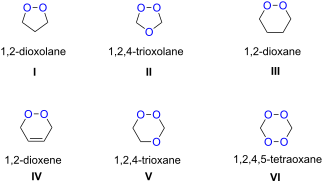
- -fused 7,8,10,11-tetraoxatrispiro[5.2.2.5.2.2]henicosane 227 (Scheme 64) [252]. 3.5. Synthesis of 1,2-dioxanes by the Kobayashi method The synthesis is based on the peroxidation of the carbonyl group of unsaturated ketones 228 with the urea–hydrogen peroxide complex followed by a Michael cyclization of

Graphical Abstract

Figure 1: Five and six-membered cyclic peroxides.

Figure 2: Artemisinin and semi-synthetic derivatives.

Scheme 1: Synthesis of 3-hydroxy-1,2-dioxolanes 3a–c.

Scheme 2: Synthesis of dioxolane 6.

Scheme 3: Photooxygenation of oxazolidines 7a–d with formation of spiro-fused oxazolidine-containing dioxolan...

Scheme 4: Oxidation of cyclopropanes 10a–e and 11a–e with preparation of 1,2-dioxolanes 12a–e.

Scheme 5: VO(acac)2-catalyzed oxidation of silylated bicycloalkanols 13a–c.

Scheme 6: Mn(II)-catalyzed oxidation of cyclopropanols 15a–g.

Scheme 7: Oxidation of aminocyclopropanes 20a–c.

Scheme 8: Synthesis of aminodioxolanes 24.
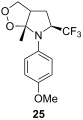
Figure 3: Trifluoromethyl-containing dioxolane 25.

Scheme 9: Synthesis of 1,2-dioxolanes 27a–e by the oxidation of cyclopropanes 26a–e.

Scheme 10: Photoinduced oxidation of methylenecyclopropanes 28.

Scheme 11: Irradiation-mediated oxidation.

Scheme 12: Application of diazene 34 for dioxolane synthesis.

Scheme 13: Mn(OAc)3-catalyzed cooxidation of arylacetylenes 37a–h and acetylacetone with atmospheric oxygen.
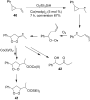
Scheme 14: Peroxidation of (2-vinylcyclopropyl)benzene (40).

Scheme 15: Peroxidation of 1,4-dienes 43a,b.

Scheme 16: Peroxidation of 1,5-dienes 46.

Scheme 17: Peroxidation of oxetanes 53a,b.

Scheme 18: Peroxidation of 1,6-diene 56.

Scheme 19: Synthesis of 3-alkoxy-1,2-dioxolanes 62a,b.

Scheme 20: Synthesis of spiro-bis(1,2-dioxolane) 66.

Scheme 21: Synthesis of dispiro-1,2-dioxolanes 68, 70, 71.

Scheme 22: Synthesis of spirohydroperoxydioxolanes 75a,b.

Scheme 23: Synthesis of spirohydroperoxydioxolane 77 and dihydroperoxydioxolane 79.

Scheme 24: Ozonolysis of azepino[4,5-b]indole 80.

Scheme 25: SnCl4-mediated fragmentation of ozonides 84a–l in the presence of allyltrimethylsilane.

Scheme 26: SnCl4-mediated fragmentation of bicyclic ozonide 84m in the presence of allyltrimethylsilane.

Scheme 27: MCl4-mediated fragmentation of alkoxyhydroperoxides 96 in the presence of allyltrimethylsilane.

Scheme 28: SnCl4-catalyzed reaction of monotriethylsilylperoxyacetal 108 with alkene 109.

Scheme 29: SnCl4-catalyzed reaction of triethylsilylperoxyacetals 111 with alkenes.

Scheme 30: Desilylation of tert-butyldimethylsilylperoxy ketones 131a,b followed by cyclization.

Scheme 31: Deprotection of peroxide 133 followed by cyclization.

Scheme 32: Asymmetric peroxidation of methyl vinyl ketones 137a–e.

Scheme 33: Et2NH-catalyzed intramolecular cyclization.

Scheme 34: Synthesis of oxodioxolanes 143a–j.

Scheme 35: Haloperoxidation accompanied by intramolecular ring closure.

Scheme 36: Oxidation of triterpenes 149a–d with Na2Cr2O7/N-hydroxysuccinimide.

Scheme 37: Curtius and Wolff rearrangements to form 1,2-dioxolane ring-retaining products.

Scheme 38: Oxidative desilylation of peroxide 124.

Scheme 39: Synthesis of dioxolane 158, a compound containing the aminoquinoline antimalarial pharmacophore.

Scheme 40: Diastereomers of plakinic acid A, 162a and 162b.

Scheme 41: Ozonolysis of alkenes.

Scheme 42: Cross-ozonolysis of alkenes 166 with carbonyl compounds.

Scheme 43: Ozonolysis of the bicyclic cyclohexenone 168.

Scheme 44: Cross-ozonolysis of enol ethers 172a,b with cyclohexanone.

Scheme 45: Griesbaum co-ozonolysis.

Scheme 46: Reactions of aryloxiranes 177a,b with oxygen.

Scheme 47: Intramolecular formation of 1,2,4-trioxolane 180.

Scheme 48: Formation of 1,2,4-trioxolane 180 by the reaction of 1,5-ketoacetal 181 with H2O2.

Scheme 49: 1,2,4-Trioxolane 186 with tetrazole fragment.

Scheme 50: 1,2,4-Trioxolane 188 with a pyridine fragment.

Scheme 51: 1,2,4-Trioxolane 189 with pyrimidine fragment.

Scheme 52: Synthesis of aminoquinoline-containing 1,2,4-trioxalane 191.

Scheme 53: Synthesis of arterolane.

Scheme 54: Oxidation of diarylheptadienes 197a–c with singlet oxygen.

Scheme 55: Synthesis of hexacyclinol peroxide 200.

Scheme 56: Oxidation of enone 201 and enenitrile 203 with singlet oxygen.

Scheme 57: Synthesis of 1,2-dioxanes 207 by oxidative coupling of carbonyl compounds 206 and alkenes 205.

Scheme 58: 1,2-Dioxanes 209 synthesis by co-oxidation of 1,5-dienes 208 and thiols.

Scheme 59: Synthesis of bicyclic 1,2-dioxanes 212 with aryl substituents.

Scheme 60: Isayama–Mukaiyama peroxysilylation of 1,5-dienes 213 followed by desilylation under acidic conditio...

Scheme 61: Synthesis of bicycle 218 with an 1,2-dioxane ring.

Scheme 62: Intramolecular cyclization with an oxirane-ring opening.

Scheme 63: Inramolecular cyclization with the oxetane-ring opening.

Scheme 64: Intramolecular cyclization with the attack on a keto group.

Scheme 65: Peroxidation of the carbonyl group in unsaturated ketones 228 followed by cyclization of hydroperox...

Scheme 66: CsOH and Et2NH-catalyzed cyclization.

Scheme 67: Preparation of peroxyplakoric acid methyl ethers A and D.

Scheme 68: Hg(OAc)2 in 1,2-dioxane synthesis.

Scheme 69: Reaction of 1,4-diketones 242 with hydrogen peroxide.

Scheme 70: Inramolecular cyclization with oxetane-ring opening.

Scheme 71: Inramolecular cyclization with MsO fragment substitution.

Scheme 72: Synthesis of 1,2-dioxane 255a, a structurally similar compound to natural peroxyplakoric acids.

Scheme 73: Synthesis of 1,2-dioxanes based on the intramolecular cyclization of hydroperoxides containing C=C ...

Scheme 74: Use of BCIH in the intramolecular cyclization.

Scheme 75: Palladium-catalyzed cyclization of δ-unsaturated hydroperoxides 271a–e.

Scheme 76: Intramolecular cyclization of unsaturated peroxyacetals 273a–d.

Scheme 77: Allyltrimethylsilane in the synthesis of 1,2-dioxanes 276a–d.

Scheme 78: Intramolecular cyclization using the electrophilic center of the peroxycarbenium ion 279.

Scheme 79: Synthesis of bicyclic 1,2-dioxanes.

Scheme 80: Preparation of 1,2-dioxane 286.

Scheme 81: Di(tert-butyl)peroxalate-initiated radical cyclization of unsaturated hydroperoxide 287.

Scheme 82: Oxidation of 1,4-betaines 291a–d.

Scheme 83: Synthesis of aminoquinoline-containing 1,2-dioxane 294.

Scheme 84: Synthesis of the sulfonyl-containing 1,2-dioxane.

Scheme 85: Synthesis of the amido-containing 1,2-dioxane 301.

Scheme 86: Reaction of singlet oxygen with the 1,3-diene system 302.

Scheme 87: Synthesis of (+)-premnalane А and 8-epi-premnalane A.

Scheme 88: Synthesis of the diazo group containing 1,2-dioxenes 309a–e.

Figure 4: Plakortolide Е.

Scheme 89: Synthesis of 6-epiplakortolide Е.

Scheme 90: Application of Bu3SnH for the preparation of tetrahydrofuran-containing bicyclic peroxides 318a,b.

Scheme 91: Application of Bu3SnH for the preparation of lactone-containing bicyclic peroxides 320a–f.

Scheme 92: Dihydroxylation of the double bond in the 1,2-dioxene ring 321 with OsO4.

Scheme 93: Epoxidation of 1,2-dioxenes 324.

Scheme 94: Cyclopropanation of the double bond in endoperoxides 327.

Scheme 95: Preparation of pyridazine-containing bicyclic endoperoxides 334a–c.

Scheme 96: Synthesis of 1,2,4-trioxanes 337 by the hydroperoxidation of unsaturated alcohols 335 with 1O2 and ...

Scheme 97: Synthesis of sulfur-containing 1,2,4-trioxanes 339.

Scheme 98: BF3·Et2O-catalyzed synthesis of the 1,2,4-trioxanes 342a–g.

Scheme 99: Photooxidation of enol ethers or vinyl sulfides 343.

Scheme 100: Synthesis of tricyclic peroxide 346.

Scheme 101: Reaction of endoperoxides 348a,b derived from cyclohexadienes 347a,b with 1,4-cyclohexanedione.

Scheme 102: [4 + 2]-Cycloaddition of singlet oxygen to 2Н-pyrans 350.

Scheme 103: Synthesis of 1,2,4-trioxanes 354 using peroxysilylation stage.

Scheme 104: Epoxide-ring opening in 355 with H2O2 followed by the condensation of hydroxy hydroperoxides 356 wi...

Scheme 105: Peroxidation of unsaturated ketones 358 with the H2O2/CF3COOH/H2SO4 system.

Scheme 106: Synthesis of 1,2,4-trioxanes 362 through Et2NH-catalyzed intramolecular cyclization.

Scheme 107: Reduction of the double bond in tricyclic peroxides 363.

Scheme 108: Horner–Wadsworth–Emmons reaction in the presence of peroxide group.

Scheme 109: Reduction of ester group by LiBH4 in the presence of 1,2,4-trioxane moiety.

Scheme 110: Reductive amination of keto-containing 1,2,4-trioxane 370.

Scheme 111: Reductive amination of keto-containing 1,2,4-trioxane and a Fe-containing moiety.

Scheme 112: Acid-catalyzed reactions of Н2О2 with ketones and aldehydes 374.

Scheme 113: Cyclocondensation of carbonyl compounds 376a–d using Me3SiOOSiMe3/CF3SO3SiMe3.

Scheme 114: Peroxidation of 4-methylcyclohexanone (378).

Scheme 115: Synthesis of symmetrical tetraoxanes 382a,b from aldehydes 381a,b.

Scheme 116: Synthesis of unsymmetrical tetraoxanes using of MeReO3.

Scheme 117: Synthesis of symmetrical tetraoxanes using of MeReO3.

Scheme 118: Synthesis of symmetrical tetraoxanes using of MeReO3.

Scheme 119: MeReO3 in the synthesis of symmetrical tetraoxanes with the use of aldehydes.

Scheme 120: Preparation of unsymmmetrical 1,2,4,5-tetraoxanes with high antimalarial activity.

Scheme 121: Re2O7-Catalyzed synthesis of tetraoxanes 398.

Scheme 122: H2SO4-Catalyzed synthesis of steroidal tetraoxanes 401.

Scheme 123: HBF4-Catalyzed condensation of bishydroperoxide 402 with 1,4-cyclohexanedione.

Scheme 124: BF3·Et2O-Catalyzed reaction of gem-bishydroperoxides 404 with enol ethers 405 and acetals 406.

Scheme 125: HBF4-Catalyzed cyclocondensation of bishydroperoxide 410 with ketones.

Scheme 126: Synthesis of symmetrical and unsymmetrical tetraoxanes 413 from benzaldehydes 412.

Scheme 127: Synthesis of bridged 1,2,4,5-tetraoxanes 415a–l from β-diketones 414a–l and H2O2.

Scheme 128: Dimerization of zwitterions 417.

Scheme 129: Ozonolysis of verbenone 419.

Scheme 130: Ozonolysis of O-methyl oxime 424.

Scheme 131: Peroxidation of 1,1,1-trifluorododecan-2-one 426 with oxone.

Scheme 132: Intramolecular cyclization of dialdehyde 428 with H2O2.

Scheme 133: Tetraoxanes 433–435 as by-products in peroxidation of ketals 430–432.

Scheme 134: Transformation of triperoxide 436 in diperoxide 437.

Scheme 135: Preparation and structural modifications of tetraoxanes.

Scheme 136: Structural modifications of steroidal tetraoxanes.

Scheme 137: Synthesis of 1,2,4,5-tetraoxane 454 containing the fluorescent moiety.

Scheme 138: Synthesis of tetraoxane 458 (RKA182).
Efficient synthesis of dihydropyrimidinones via a three-component Biginelli-type reaction of urea, alkylaldehyde and arylaldehyde
- Haijun Qu,
- Xuejian Li,
- Fan Mo and
- Xufeng Lin
Beilstein J. Org. Chem. 2013, 9, 2846–2851, doi:10.3762/bjoc.9.320
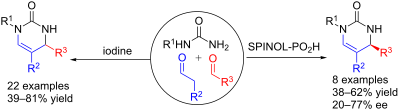
- Haijun Qu Xuejian Li Fan Mo Xufeng Lin Department of Chemistry, Zhejiang University, Hangzhou 310027, China 10.3762/bjoc.9.320 Abstract A one-pot three-component synthesis of dihydropyrimidinones via a molecular iodine-catalyzed tandem reaction of simple readily available mono-substituted urea
- Biginelli [3][4]. Among them, the Biginelli multicomponent reaction, involving a multicomponent condensation of aldehyde, β-ketoester, and urea, provides an easy access to the preparation of DHPMs, because multicomponent reactions (MCRs) are considered with high facileness, efficiency and economy in organic
- Biginelli-type synthesis of DHPMs from simple readily available mono-substituted urea, alkylaldehyde, and arylaldehyde under mild reaction conditions [22][23][24]. The present method is suitable for a wide range of substrates, and especially for functionalized arylaldehydes. The first catalytic

Graphical Abstract

Figure 1: X-ray crystal structure of 4a.

Scheme 1: Possible mechanism.

Figure 2: Scope of the enantioselective reaction. Reaction conditions: 5a (10 mol %, 0.02 mmol), 1 (0.2 mmol)...
New developments in gold-catalyzed manipulation of inactivated alkenes
- Michel Chiarucci and
- Marco Bandini
Beilstein J. Org. Chem. 2013, 9, 2586–2614, doi:10.3762/bjoc.9.294
- type 11 were isolated by Toste in the intramolecular hydroamination of alkenyl urea 14 with a stoichiometric amount of phosphine–gold complex [(PPh3Au)3O]BF4 (Scheme 5a) [2]. The reaction proceeded at room temperature and was found being favoured by electron-withdrawing ligands. Finally, the use of the

Graphical Abstract

Figure 1: Elementary steps in the gold-catalyzed nucleophilic addition to olefins.

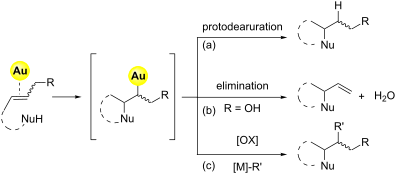
Figure 2: Different approaches for the gold-catalyzed manipulation of inactivated alkenes.

Figure 3: Computed mechanistic cycle for the gold-catalyzed alkoxylation of ethylene with PhOH.

Scheme 1: [Au(I)]-catalyzed addition of phenols and carboxylic acids to alkenes.

Scheme 2: [Au(III)] catalyzed annulations of phenols and naphthols with dienes.

Scheme 3: [Au(III)]-catalyzed addition of aliphatic alcohols to alkenes.

Scheme 4: [Au(III)]-catalyzed carboalkoxylation of alkenes with dimethyl acetals 6.

Figure 4: Postulated mechanism for the [Au(I)]-catalyzed hydroamination of olefins.
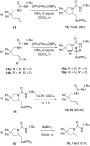
Scheme 5: Isolation and reactivity of alkyl gold intermediates in the intramolecular hydroamination of alkene...

Scheme 6: [Au(I)]-catalyzed intermolecular hydroamination of dienes.
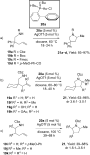
Scheme 7: Intramolecular [Au(I)]-catalyzed hydroamination of alkenes with carbamates.
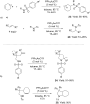
Scheme 8: [Au(I)]-catalyzed inter- as well as intramolecular addition of sulfonamides to isolated alkenes.

Scheme 9: Intramolecular hydroamination of N-alkenylureas catalyzed by gold(I) carbene complex.

Scheme 10: Enantioselective hydroamination of alkenyl ureas with biphenyl tropos ligand and chiral silver phos...

Scheme 11: Intramolecular [Au(I)]-catalyzed hydroamination of N-allyl-N’-aryl ureas. (PNP = pNO2-C6H4, PMP = p...

Scheme 12: [Au(I)]-catalyzed hydroamination of alkenes with ammonium salts.

Scheme 13: Enantioselective [Au(I)]-catalyzed intermolecular hydroamination of alkenes with cyclic ureas.

Scheme 14: Mechanistic proposal for the cooperative [Au(I)]/menthol catalysis for the enantioselective intramo...

Scheme 15: [Au(III)]-catalyzed addition of 1,3-diketones to alkenes.

Scheme 16: [Au(I)]-catalyzed intramolecular addition of β-keto amides to alkenes.

Scheme 17: Intermolecular [Au(I)]-catalyzed addition of indoles to alkenes.

Scheme 18: Intermolecular [Au(III)]-catalyzed hydroarylation of alkenes with benzene derivatives and thiophene....

Scheme 19: a) Intramolecular [Au(III)]-catalyzed hydroarylation of alkenes. b) A SEAr-type mechanism was hypot...

Scheme 20: Intramolecular [Au(I)]-catalyzed hydroalkylation of alkenes with simple ketones.

Scheme 21: Proposed reaction mechanism for the intramolecular [Au(I)]-catalyzed hydroalkylation of alkenes wit...

Scheme 22: Tandem Michael addition/hydroalkylation catalyzed by [Au(I)] and [Ag(I)] salts.

Scheme 23: Intramolecular [Au(I)]-catalyzed tandem migration/[2 + 2] cycloaddition of 1,7-enyne benzoates.

Scheme 24: Intramolecular [Au(I)]-catalyzed cyclopropanation of alkenes.

Scheme 25: Stereospecificity in [Au(I)]-catalyzed hydroalkoxylation of allylic alcohols.

Scheme 26: Mechanistic investigation on the intramolecular [Au(I)]-catalyzed hydroalkoxylation of allylic alco...

Scheme 27: Mechanistic investigation on the intramolecular enantioselective [Au(I)]-catalyzed alkylation of in...

Scheme 28: Synthesis of (+)-isoaltholactone via stereospecific intramolecular [Au(I)]-catalyzed alkoxylation o...

Scheme 29: Intramolecular enantioselective dehydrative amination of allylic alcohols catalyzed by chiral [Au(I...

Scheme 30: Enantioselective intramolecular hydroalkylation of allylic alcohols with aldehydes catalyzed by 20c...
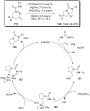
Scheme 31: Gold-catalyzed intramolecular diamination of alkenes.
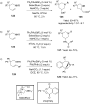
Scheme 32: Gold-catalyzed aminooxygenation and aminoarylation of alkenes.

Scheme 33: Gold-catalyzed carboamination, carboalkoxylation and carbolactonization of terminal alkenes with ar...
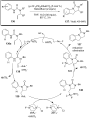
Scheme 34: Synthesis of tricyclic indolines via gold-catalyzed formal [3 + 2] cycloaddition.

Scheme 35: Gold(I) catalyzed aminoarylation of terminal alkenes in presence of Selectfluor [dppm = bis(dipheny...

Scheme 36: Mechanistic investigation on the aminoarylation of terminal alkenes by bimetallic gold(I) catalysis...

Scheme 37: Proposed mechanism for the aminoarylation of alkenes via [Au(I)-Au(I)]/[Au(II)-Au(II)] redox cataly...

Scheme 38: Oxyarylation of terminal olefins via redox gold catalysis.

Scheme 39: a) Intramolecular gold-catalyzed oxidative coupling reactions with aryltrimethylsilanes. b) Oxyaryl...
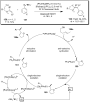
Scheme 40: Oxy- and amino-arylation of alkenes by [Au(I)]/[Au(III)] photoredox catalysis.
One-pot sequential synthesis of isocyanates and urea derivatives via a microwave-assisted Staudinger–aza-Wittig reaction
- Diego Carnaroglio,
- Katia Martina,
- Giovanni Palmisano,
- Andrea Penoni,
- Claudia Domini and
- Giancarlo Cravotto
Beilstein J. Org. Chem. 2013, 9, 2378–2386, doi:10.3762/bjoc.9.274
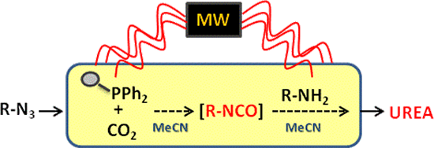
- , University of Insubria, Via Valleggio 11, 22100 Como, Italy Department of Chemistry, Universidad Nacional del Sur, Av. Alem 1253, B8000CPB, Bahía Blanca, Buenos Aires, Argentina 10.3762/bjoc.9.274 Abstract A fast and efficient protocol for the synthesis of N,N'-disubstituted urea derivatives from alkyl
- : isocyanates; microwave-assisted reaction; one-pot reaction; tandem Staudinger–aza-Wittig reaction; urea derivatives; Introduction The industrial and commercial impact of isocyanates (R–NCO) is steadily growing. In particular, the polyurethane output has undergone yearly increases of 5% over the last decade
- [1]. Isocyanates play a relevant role as chemical intermediates in the manufacturing of thermoplastic foams, elastomers, adhesives, agrochemicals and pharmaceuticals. The isocyanate group is also widely used as a precursor to several bioactive compounds and drugs that contain urea and carbamate


An overview of the synthetic routes to the best selling drugs containing 6-membered heterocycles
- Marcus Baumann and
- Ian R. Baxendale
Beilstein J. Org. Chem. 2013, 9, 2265–2319, doi:10.3762/bjoc.9.265
- various robust routes (Scheme 31) [84][85]. Most of these transformations use condensation reactions between urea (3.6) and a bis-electrophile to generate the desired structures. For instance, ester 3.7 furnishes uracil (3.5), which in turn can be converted into cytosine (3.4) by selective amination with
- ammonia/ammonium chloride (Scheme 31). Alternatively, thymine (3.3) may be accessed by reacting methyl formylpropionate (3.8) which acts as a bis-electrophile with urea. Following construction of the pyrimidone core the linkage to the anomeric position of a ribose is best achieved using the Vorbrüggen

Graphical Abstract

Scheme 1: Scaled industrial processes for the synthesis of simple pyridines.

Scheme 2: Synthesis of nicotinic acid from 2-methyl-5-ethylpyridine (1.11).

Scheme 3: Synthesis of 3-picoline and nicotinic acid.

Scheme 4: Synthesis of 3-picoline from 2-methylglutarodinitrile 1.19.

Scheme 5: Picoline-based synthesis of clarinex (no yields reported).

Scheme 6: Mode of action of proton-pump inhibitors and structures of the API’s.

Scheme 7: Hantzsch-like route towards the pyridine rings in common proton pump inhibitors.

Figure 1: Structures of rosiglitazone (1.40) and pioglitazone (1.41).

Scheme 8: Synthesis of rosiglitazone.

Scheme 9: Syntheses of 2-pyridones.

Scheme 10: Synthesis and mechanism of 2-pyrone from malic acid.

Scheme 11: Polymer-assisted synthesis of rosiglitazone.

Scheme 12: Synthesis of pioglitazone.

Scheme 13: Meerwein arylation reaction towards pioglitazone.

Scheme 14: Route towards pioglitazone utilising tyrosine.

Scheme 15: Route towards pioglitazone via Darzens ester formation.

Scheme 16: Syntheses of the thiazolidinedione moiety.

Scheme 17: Synthesis of etoricoxib utilising Negishi and Stille cross-coupling reactions.

Scheme 18: Synthesis of etoricoxib via vinamidinium condensation.

Figure 2: Structures of nalidixic acid, levofloxacin and moxifloxacin.

Scheme 19: Synthesis of moxifloxacin.

Scheme 20: Synthesis of (S,S)-2,8-diazabicyclo[4.3.0]nonane 1.105.

Scheme 21: Synthesis of levofloxacin.

Scheme 22: Alternative approach to the levofloxacin core 1.125.

Figure 3: Structures of nifedipine, amlodipine and clevidipine.

Scheme 23: Mg3N2-mediated synthesis of nifedipine.

Scheme 24: Synthesis of rac-amlodipine as besylate salt.

Scheme 25: Aza Diels–Alder approach towards amlodipine.

Scheme 26: Routes towards clevidipine.

Figure 4: Examples of piperidine containing drugs.

Figure 5: Discovery of tiagabine based on early leads.

Scheme 27: Synthetic sequences to tiagabine.

Figure 6: Structures of solifenacin (2.57) and muscarine (2.58).

Scheme 28: Enantioselective synthesis of solifenacin.

Figure 7: Structures of DPP-4 inhibitors of the gliptin-type.

Scheme 29: Formation of inactive diketopiperazines from cis-rotameric precursors.

Figure 8: Co-crystal structure of carmegliptin bound in the human DPP-4 active site (PDB 3kwf).

Scheme 30: Improved route to carmegliptin.

Figure 9: Structures of lamivudine and zidovudine.

Scheme 31: Typical routes accessing uracil, thymine and cytosine.

Scheme 32: Coupling between pyrimidones and riboses via the Vorbrüggen nucleosidation.

Scheme 33: Synthesis of lamivudine.

Scheme 34: Synthesis of raltegravir.

Scheme 35: Mechanistic studies on the formation of 3.22.

Figure 10: Structures of selected pyrimidine containing drugs.

Scheme 36: General preparation of pyrimidines and dihydropyrimidones.

Scheme 37: Synthesis of imatinib.

Scheme 38: Flow synthesis of imatinib.

Scheme 39: Syntheses of erlotinib.

Scheme 40: Synthesis of erlotinib proceeding via Dimroth rearrangement.

Scheme 41: Synthesis of lapatinib.

Scheme 42: Synthesis of rosuvastatin.

Scheme 43: Alternative preparation of the key aldehyde towards rosuvastatin.

Figure 11: Structure comparison between nicotinic acetylcholine receptor agonists.

Scheme 44: Syntheses of varenicline and its key building block 4.5.

Scheme 45: Synthetic access to eszopiclone and brimonidine via quinoxaline intermediates.

Figure 12: Bortezomib bound in an active site of the yeast 20S proteasome ([114], pdb 2F16).

Scheme 46: Asymmetric synthesis of bortezomib.

Figure 13: Structures of some prominent piperazine containing drugs.

Figure 14: Structural comparison between the core of aplaviroc (4.35) and a type-1 β-turn (4.36).

Scheme 47: Examplary synthesis of an aplaviroc analogue via the Ugi-MCR.

Scheme 48: Syntheses of azelastine (5.1).

Figure 15: Structures of captopril, enalapril and cilazapril.

Scheme 49: Synthesis of cilazapril.

Figure 16: Structures of lamotrigine, ceftriaxone and azapropazone.

Scheme 50: Synthesis of lamotrigine.

Scheme 51: Alternative synthesis of lamotrigine (no yields reported).

Figure 17: Structural comparison between imiquimod and the related adenosine nucleoside.

Scheme 52: Conventional synthesis of imiquimod (no yields reported).

Scheme 53: Synthesis of imiquimod.

Scheme 54: Synthesis of imiquimod via tetrazole formation (not all yields reported).

Figure 18: Structures of various anti HIV-medications.

Scheme 55: Synthesis of abacavir.

Figure 19: Structures of diazepam compared to modern replacements.

Scheme 56: Synthesis of ocinaplon.

Scheme 57: Access to zaleplon and indiplon.

Scheme 58: Different routes towards the required N-methylpyrazole 6.65 of sildenafil.

Scheme 59: Polymer-supported reagents in the synthesis of key aminopyrazole 6.72.

Scheme 60: Early synthetic route to sildenafil.

Scheme 61: Convergent preparations of sildenafil.

Figure 20: Comparison of the structures of sildenafil, tadalafil and vardenafil.

Scheme 62: Short route to imidazotriazinones.

Scheme 63: Alternative route towards vardenafils core imidazotriazinone (6.95).

Scheme 64: Bayer’s approach to the vardenafil core.

Scheme 65: Large scale synthesis of vardenafil.

Scheme 66: Mode of action of temozolomide (6.105) as methylating agent.

Scheme 67: Different routes to temozolomide.

Scheme 68: Safer route towards temozolomide.

Figure 21: Some unreported heterocyclic scaffolds in top market drugs.
- cyanate could be converted into urea [2]. Since that seminal finding, chemical synthesis has advanced to extents which must have been unimaginable to its early practitioners. The numerous paradigm-shifts which have taken place throughout the history of synthesis have been driven largely by a single
Raman spectroscopy as a tool for monitoring mesoscale continuous-flow organic synthesis: Equipment interface and assessment in four medicinally-relevant reactions
- Trevor A. Hamlin and
- Nicholas E. Leadbeater
Beilstein J. Org. Chem. 2013, 9, 1843–1852, doi:10.3762/bjoc.9.215
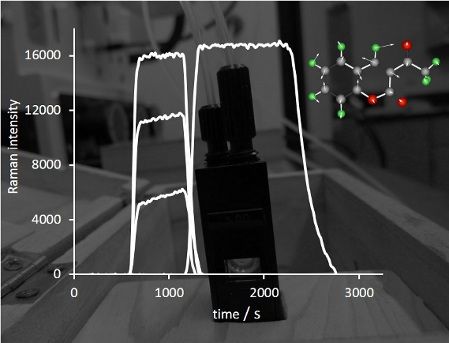
- product conversions of 66−98% depending on how electron rich or deficient the aromatic ring of the aldehyde was (Table 3). The Biginelli reaction As our final reaction for study, we turned to the Biginelli reaction (Scheme 4) [43][44][45][46][47][48]. This acid-catalyzed cyclocondensation of urea, β
- reaction of benzaldehyde, ethyl acetoacetate and urea catalyzed by sulfuric acid (Figure 8). The calculated Raman spectrum of the product, 4a, shows a strong signal at 1598 cm−1 which was selected for monitoring. Using a catalyst loading of 10 mol % and a flow rate of 1 mL/min, we monitored the reaction
- volumetric flask was dissolved urea (3.003 g, 50 mmol, 1 equiv.) in methanol (~30 mL). Into the flask was then added benzaldehyde (1.306 g, 50 mmol, 1 equiv) and ethyl acetoacetate (6.507 g, 50 mmol, 1 equiv). Methanol was added to bring the total volume to 50 (1 M) and the reagents were thoroughly mixed. An

Graphical Abstract
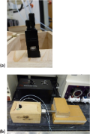
Figure 1: (a) Flow cell and (b) Raman interface used in the present study.

Scheme 1: The reaction between salicylaldehyde and ethyl acetoacetate to form 3-acetyl coumarin (1).

Figure 2: The Raman spectrum of 3-acetylcoumarin (1) generated using Gaussian 09 [40] at the B3LYP/6-31g(d) level...

Figure 3: Monitoring an aliquot of 3-acetyl coumarin (1) as it passes through the flow cell (scan time = 15 s...

Figure 4: Monitoring the conversion of salicylaldehyde and ethyl acetoacetate to 3-acetylcoumarin (1) across ...

Figure 5: Plot of Raman intensity of the peak arising at 1608 cm-1 vs concentration of 3-acetyl coumarin (1),...

Scheme 2: The Knoevenagel condensation of benzaldehyde and ethyl acetoacetate to yield (Z)-ethyl 2-benzyliden...

Figure 6: Monitoring the conversion of benzaldehyde and ethyl acetoacetate to (Z)-ethyl 2-benzylidene-3-oxobu...

Scheme 3: Claisen-Schmidt condensation of benzaldehyde with acetophenone to yield chalcone, 3a.

Figure 7: Monitoring the conversion of benzaldehyde with acetophenone to chalcone, 3a, across a range of reac...

Scheme 4: The Biginelli cyclocondensation of benzaldehyde, ethyl acetoacetate, and urea to yield 5-ethoxycarb...

Figure 8: Monitoring the conversion of benzaldehyde, ethyl acetoacetate, and urea to 5-ethoxycarbonyl-6-methy...
Organocatalyzed enantioselective desymmetrization of aziridines and epoxides
- Ping-An Wang
Beilstein J. Org. Chem. 2013, 9, 1677–1695, doi:10.3762/bjoc.9.192
- desirable products (Scheme 2, 13 to 18, up to 97% ee) with 50% aqueous K2HPO4 as base. However, under the same conditions, the PTCs with a free 9-OH (OC-17) led to 13 in low yields and enantioselectivities (21% ee). The urea catalyst OC-19 proved to be very inefficient and afforded 13 in 10% yield with 6

Graphical Abstract

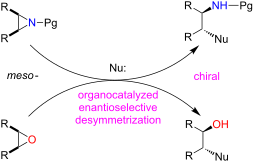
Figure 1: The catalyzed enantioselective desymmetrization.
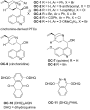
Figure 2: Cinchona alkaloid-derived catalysts OC-1 to OC-11.

Scheme 1: The enantioselective desymmetrization of meso-aziridines in the presence of selected Cinchona alkal...

Figure 3: Cinchona alkaloid-derived catalysts OC-12 to OC-19.

Scheme 2: The enantioselective ring-opening of aziridines in the presence of OC-16.

Scheme 3: OC-16 catalyzed enantioselective ring-opening of aziridines.

Figure 4: The chiral phosphoric acids catalysts OC-20 and OC-21.

Scheme 4: OC-20 and OC-21 catalyzed enantioselective desymmetrization of meso-aziridines.

Figure 5: The proposed mechanism for chiral phosphorous acid-induced enantioselctive desymmetrization of meso...

Scheme 5: OC-21 catalyzed enantioselective desymmetrization of meso-aziridines by Me3SiSPh.

Scheme 6: OC-21 catalyzed the enantioselective desymmetrization of meso-aziridines by Me3SiSePh/PhSeH.

Figure 6: L-Proline and its derivatives OC-22 to OC-27.

Scheme 7: OC-23 catalyzed enantioselective desymmetrization of meso-aziridines.

Figure 7: Proposed bifunctional mode of action of OC-23.

Figure 8: The chiral thioureas OC-28 to OC-44 for the desymmetrization of meso-aziridines.

Scheme 8: Desymmetrization of meso-aziridines with OC-41.

Figure 9: The chiral guanidines (OC-45 to OC-48).

Scheme 9: OC-46 catalyzed desymmetrization of meso-aziridines by arylthiols.

Scheme 10: Desymmetrization of cis-aziridine-2,3-dicarboxylate.

Figure 10: The proposed activation mode of OC-46.

Scheme 11: The enantioselective desymmetrization of meso-aziridines by amine/CS2 in the presence of OC-46.

Figure 11: The chiral 1,2,3-triazolium chlorides OC-49 to OC-55.

Scheme 12: The enantioselective desymmetrization of meso-aziridines by Me3SiX (X = Cl or Br) in the presence o...

Figure 12: Early organocatalysts for enantioselective desymmetrization of meso-epoxides.

Scheme 13: Attempts of enantioselective desymmetrization of meso-epoxides in the presence of OC-58 or OC-60.

Scheme 14: The enantioselective desymmetrization of a meso-epoxide containing one P atom.
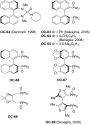
Figure 13: Some chiral phosphoramide and chiral phosphine oxides.

Scheme 15: OC-62 catalyzed enantioselective desymmetrization of meso-epoxides by SiCl4.

Figure 14: The proposed mechanism of the chiral HMPA-catalyzed desymmetrization of meso-epoxides.

Scheme 16: The enantioselective desymmetrization of meso-epoxides in the presence of OC-63.

Figure 15: The Chiral phosphine oxides (OC-70 to OC-77) based on an allene backbone.

Scheme 17: OC-73 catalyzed enantioselective desymmetrization of meso-epoxides by SiCl4.

Figure 16: Chiral pyridine N-oxides used in enantioselective desymmetrization of meso-epoxides.
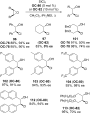
Scheme 18: Catalyzed enantioselective desymmetrization of meso-epoxides in the presence of OC-80 or OC-82.

Figure 17: Chiral pyridine N-oxides OC-85 to OC-94.

Scheme 19: Enantioselective desymmetrization of cis-stilbene oxide by using OC-85 to OC-92 as catalysts.

Figure 18: A novel family of helical chiral pyridine N-oxides OC-95 to OC-97.

Scheme 20: Desymmetrization of meso-epoxides catalyzed by OC-95 to OC-97.

Scheme 21: OC-98 catalyzed enantioselective desymmetrization of meso-epoxides by SiCl4.
The rapid generation of isothiocyanates in flow
- Marcus Baumann and
- Ian R. Baxendale
Beilstein J. Org. Chem. 2013, 9, 1613–1619, doi:10.3762/bjoc.9.184
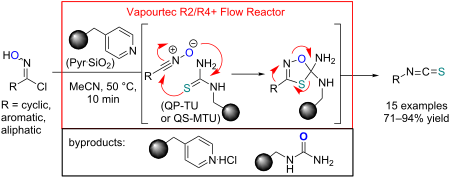
- -oxathiazoline intermediate that readily rearranges into urea and eliminates the desired isothiocyanate product [37][38] (Scheme 1b). Whilst this approach appears on initial inspection to be very attractive it is somewhat hampered by the requirement to access the reactive nitrile oxide species, which once formed

Graphical Abstract

Scheme 1: Strategies towards isothiocyanates.

Scheme 2: Flow approach towards isothiocyanates.
Structures of the reaction products of the AZADO radical with TCNQF4 or thiourea
- Hideto Suzuki,
- Yuta Kawahara,
- Hiroki Akutsu,
- Jun-ichi Yamada and
- Shin’ichi Nakatsuji
Beilstein J. Org. Chem. 2013, 9, 1487–1491, doi:10.3762/bjoc.9.169

- the reaction product of AZADO and thiourea We next tried to perform the reaction of AZADO (2) with thiourea (4) to see if some intriguing complexes would be formed, since a lot of inclusion compounds derived from urea or thiourea are known [13]. The reaction between 2 and 4 was first tried by mixing

Graphical Abstract

Figure 1: Structural formula of TEMPO (1), AZADO (2), TCNQF4 (3) and thiourea (4).

Scheme 1: Difference of the reaction products from TEMPO (1) and AZADO (2) with TCNQF4 (3).

Figure 2: Molecular structure of the adduct 5 obtained by X-ray analysis.

Scheme 2: A plausible mechanism of the reaction of AZADO (2) with TCNQF4 (3).

Figure 3: UV–vis spectra of 2 (red line), 3 (blue line) and 5 (green line).

Scheme 3: The reaction of 2 with 4 to form 6.

Figure 4: Crystal structure of the inclusion compound 6 obtained by X-ray analysis.
Aqueous reductive amination using a dendritic metal catalyst in a dialysis bag
- Jorgen S. Willemsen,
- Jan C. M. van Hest and
- Floris P. J. T. Rutjes
Beilstein J. Org. Chem. 2013, 9, 960–965, doi:10.3762/bjoc.9.110
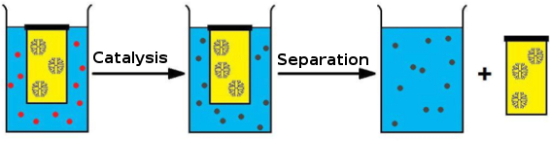
- signals at 1580 and 1640 cm−1 derived from the newly formed urea functionalities. The next reaction, coordination of iridium to the dendritic ligands in methanol, afforded the corresponding iridium complexes 14 and 15 in quantitative yield. In the final step, the complex was converted into the water

Graphical Abstract

Figure 1: General approach for the use of dendritic catalysts in a dialysis bag.

Scheme 1: Synthesis of water-soluble iridium catalyst 3.

Scheme 2: Synthesis of the desymmetrized bipyridine 8.

Scheme 3: Attachment of the adapted ligand 8 to the dendrimers via a multi-isocyanate coupling, followed by i...

Scheme 4: Catalytic reductive amination of valine (18) via unfavorable equilibrium reactions in water.

Figure 2: Formation of 19 catalyzed by the three iridium catalysts.

Figure 3: Reaction setup to perform compartmentalized catalysis.

Figure 4: G3 catalyst 16 activity in dialysis device.

Figure 5: G4 catalyst 17 activity in subsequent runs.
Carbolithiation of N-alkenyl ureas and N-alkenyl carbamates
- Julien Lefranc,
- Alberto Minassi and
- Jonathan Clayden
Beilstein J. Org. Chem. 2013, 9, 628–632, doi:10.3762/bjoc.9.70

- products that may be deprotected in situ to provide a new connective route to hindered amines. Keywords: carbamate; carbolithiation; carbometallation; organolithium; stereospecificity; styrene; urea; Introduction Enamines and N-acyl enamines are in general nucleophiles, reacting with electrophiles at the
- -alkenyl carbamates. Results and Discussion Simple N-alkenyl ureas 1 were prepared by a reported method [2] entailing N-acylation of an acetophenimine with an isocyanate, followed by N-alkylation of the resulting urea. When urea 1a was treated with t-BuLi or s-BuLi in THF at −78 °C for one hour, followed
- by protonation, carbolithiated products 2a and 2b were isolated in good yield (Scheme 1 and Table 1, entries 1 and 2). Similar reactivity was observed between urea 1a and less hindered organolithiums such as iPrLi or n-BuLi [3], but in THF even at −78 °C a rearrangement [14][15][16][17][18] of the

Graphical Abstract

Scheme 1: Carbolithiation of ureas 1.

Scheme 2: Diastereospecific carbolithiation of ureas 3.

Scheme 3: Diastereospecific carbolithiation of ureas 5.

Figure 1: X-ray crystal structure of urea 6c.

Scheme 4: Synthesis of N-alkenyl carbamates 9–11.

Figure 2: X-ray crystal structure of carbamate E-10.

Scheme 5: Umpolung carbolithiation of carbamates 9 and 10.
Facile synthesis of benzothiadiazine 1,1-dioxides, a precursor of RSV inhibitors, by tandem amidation/intramolecular aza-Wittig reaction
- Krishna C. Majumdar and
- Sintu Ganai
Beilstein J. Org. Chem. 2013, 9, 503–509, doi:10.3762/bjoc.9.54

- -dioxides are generally synthesized either by condensation of o-aminobenzenesulfonamides with urea at elevated temperature [23] or by the reaction of o-aminobenzenesulfonamide with isocyanates in DMF under reflux [24]. Although various approaches to the preparation of 1,2,4-benzothiadiazine 1,1-dioxide

Graphical Abstract

Figure 1: Biologically active 1,2,4-benzothiadiazine 1,1-dioxide derivatives.

Scheme 1: Retrosynthesis analysis of RSV inhibitors.

Scheme 2: Preparation of 3-ethoxy-1,2,4-benzothiadiazine 1,1-dioxide. Reagent and conditions: (i) (COCl)2, DM...

Scheme 3: Rationalization of the formation of compound 13.

Scheme 4: Preparation of benzothiadiazine-3-one 1,1-dioxide derivatives by acid-catalyzed hydrolysis; reagent...
Design and synthesis of a photoswitchable guanidine catalyst
- Philipp Viehmann and
- Stefan Hecht
Beilstein J. Org. Chem. 2012, 8, 1825–1830, doi:10.3762/bjoc.8.209
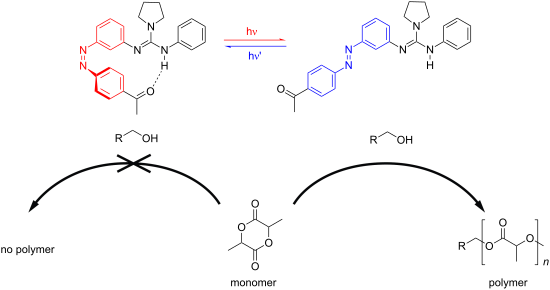
- 2E. The therefore necessary urea 4 can be obtained from the addition of pyrrolidine to phenylisocyanate (3). The structure of guanidine 2E was proven by NMR spectroscopy, HRMS, as well as by single-crystal X-ray structure analysis (Figure 1). To our knowledge, this is the first example of an X-ray

Graphical Abstract

Scheme 1: Ring-opening polymerization (ROP) of lactide with TBD or the acyclic guanidine 1 as catalysts [16,18].

Scheme 2: Illustration of a photoswitchable guanidine catalyst for the ROP of lactide and the corresponding t...

Scheme 3: Synthesis of guanidine 2E.

Figure 1: ORTEP image of the single-crystal X-ray structure of guanidine 2E, as well as a rotated close-up of...

Figure 2: UV–vis spectra of guanidine 2 in acetonitrile, c = 3.9·10−5 mol/L. (a) E→Z isomerization with irrad...

Scheme 4: Guanidine 11 as a catalyst in the ROP of rac-lactide (catalyst/initiator/monomer ratio = 10:1:100).

Figure 3: Supposed intermediates resulting from either a cyclohexane-substituted guanidine (a) [18] or an aromati...
Organocatalytic asymmetric addition of malonates to unsaturated 1,4-diketones
- Sergei Žari,
- Tiiu Kailas,
- Marina Kudrjashova,
- Mario Öeren,
- Ivar Järving,
- Toomas Tamm,
- Margus Lopp and
- Tõnis Kanger
Beilstein J. Org. Chem. 2012, 8, 1452–1457, doi:10.3762/bjoc.8.165
- bicyclic guanidines [7][9][12]. Xiao et al. reported the addition of nitroalkanes to 4-oxo-enoates, using chiral urea derivatives [7]. Miura et al. achieved an asymmetric addition of α,α-disubstituted aldehydes to maleimides catalyzed by primary amine thiourea organocatalyst [13]. Wang et al. reported the

Graphical Abstract

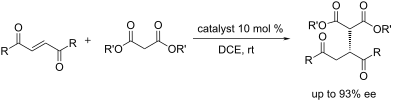
Figure 1: The conjugated addition to unsaturated 1,4-diketone 1.

Figure 2: Organocatalysts screened.

Figure 3: Proposed transition state.

Figure 4: Calculated (red) and experimental (blue) IR (A) and VCD spectrum (B) of compound (R)-3a.



