


Search results
Search for "carrier mobility" in Full Text gives 98 result(s) in Beilstein Journal of Nanotechnology.
Piezotronic effect in AlGaN/AlN/GaN heterojunction nanowires used as a flexible strain sensor
Beilstein J. Nanotechnol. 2020, 11, 1847–1853, doi:10.3762/bjnano.11.166
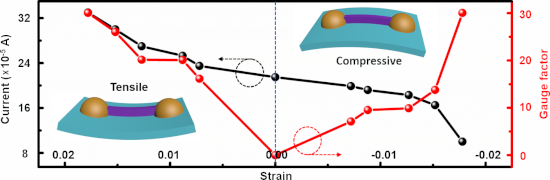
- introduced during the epitaxial growth process [1][2][3]. Furthermore, the analysis of the internal polarization of the AlGaN/AlN/GaN heterojunction showed the existence of a 2D electron gas (2DEG), which effectively suppresses the degradation of the carrier mobility caused by the scattering at charge


Effect of localized helium ion irradiation on the performance of synthetic monolayer MoS2 field-effect transistors
Beilstein J. Nanotechnol. 2020, 11, 1329–1335, doi:10.3762/bjnano.11.117
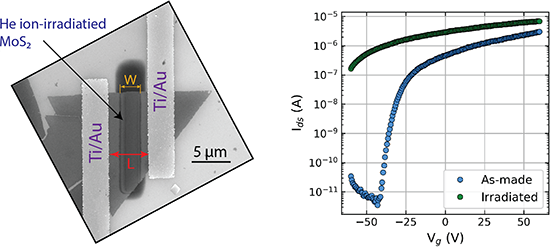
- Technology, Universität der Bundeswehr München, Werner-Heisenberg-Weg 39, 85577 Neubiberg, Germany 10.3762/bjnano.11.117 Abstract Helium ion irradiation is a known method of tuning the electrical conductivity and charge carrier mobility of novel two-dimensional semiconductors. Here, we report a systematic
- improvement of both the carrier mobility in the transistor channel and the electrical conductance of the MoS2, due to doping with ion beam-created sulfur vacancies. Larger areal irradiations introduce a higher concentration of scattering centers, hampering the electrical performance of the device. In addition
- negative gate biases [20][21]. These complex states may also improve the carrier mobility across a given gate bias range by forming stable impurity bands near the conduction band [22]. Some theoretical studies suggest, however, that individual SVs ought to act as electron acceptors in MoS2 [23][24]. As the


Nonadiabatic superconductivity in a Li-intercalated hexagonal boron nitride bilayer
Beilstein J. Nanotechnol. 2020, 11, 1178–1189, doi:10.3762/bjnano.11.102
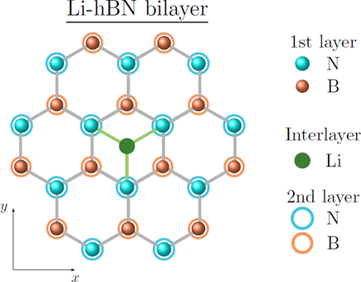
- ][17][18][19], Ru [20][21], Pt [22][23], SiC [24][25][26], and SiO2 [27][28][29]. Unfortunately, the obtained experimental data showed that the incompatible crystalline structure of the above materials leads to significant suppression of the carrier mobility of graphene [13][30]. It is now assumed that


![[Graphic 34]](/bjnano/content/inline/2190-4286-11-102-i54.svg?max-width=637&scale=1.18182) for Li-hBN. The results were obta...
for Li-hBN. The results were obta...
Structural optical and electrical properties of a transparent conductive ITO/Al–Ag/ITO multilayer contact
Beilstein J. Nanotechnol. 2020, 11, 695–702, doi:10.3762/bjnano.11.57
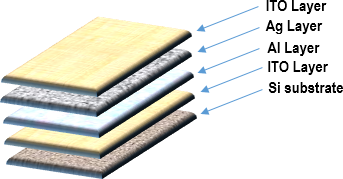
- roughness is attributed to the increasing grain sizes [35]. The large grain sizes of IAAI films reduce the number of grain boundaries and thus the scattering at grain boundaries. This improves the carrier mobility leading to an increased electrical conductivity of the films. The surface morphology of the
- . Likewise, the carrier mobility increased significantly from ca. 22.5 cm2 V−1 s−1 to ca. 30.2 cm2 V−1 s−1. Similar findings were reported by Meshram et al. [4], Kumar et al. [9] and Ali et al. [34]. The increased carrier concentration is attributed to grain growth and decreased scattering. The quality of
- determined at room temperature with a four-point probe taking into account the measured film thickness and a supply current of 4 mA. The results obtained are the average of repeated measurements. Hall effect measurements analyses Further studies on electrical properties in terms of carrier mobility and


Implementation of data-cube pump–probe KPFM on organic solar cells
Beilstein J. Nanotechnol. 2020, 11, 323–337, doi:10.3762/bjnano.11.24
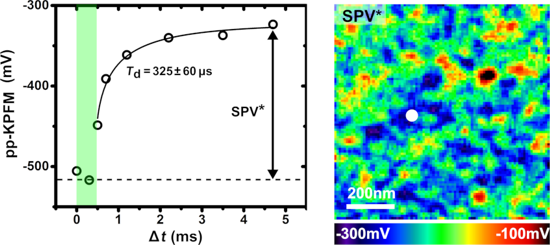
- optical power. At the lowest fluence applied (Popt = 2.4 mW∙cm−2), the photocharging time even exceeds the pulse duration within the second sequence (Figure 6f). The physics of the photocharging dynamics are based on a drift-diffusion process limited by the carrier mobility. Hence, our data (Figure 6
- ) indicate that the effective carrier mobility strongly depends on the photocarrier concentration, which is inversely proportional to the optical power. Such a situation has been reported for different organic blends [33][34][35]. In some models, traps are the source of this concentration-dependent mobility
- global electrostatic landscape probed by KPFM in the dark state [20]. The photocharging dynamics can be understood as follows. After exciton splitting and dissociation of the charge transfer states at the D–A interfaces, the photogenerated carriers experience a drift-diffusion limited by the carrier




Recent progress in perovskite solar cells: the perovskite layer
Beilstein J. Nanotechnol. 2020, 11, 51–60, doi:10.3762/bjnano.11.5
- perovskites is lower than that of their 3D counterparts because of the lower carrier mobility, the wide optical bandgap, the low conductivity and the large exciton binding energy. Therefore, Priya et al. [8] created a methylammonium (MA)-based 2D perovskite film by using the vapor-fumigation technique. The


Mobility of charge carriers in self-assembled monolayers
Beilstein J. Nanotechnol. 2019, 10, 2449–2458, doi:10.3762/bjnano.10.235
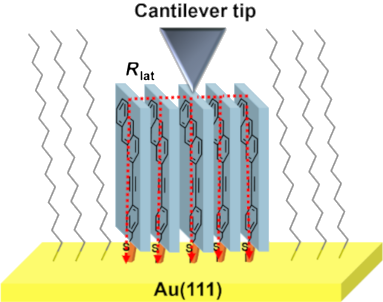
- a top electrode. We were able to determine a relationship between island size and electrical conductivity, and from this dependence, we could obtain information on the lateral charge transport and charge carrier mobility within the thin OSC layers. Our study demonstrates that AFM nanografting of
- ]. Domain boundaries, contaminations and defects have a pronounced, negative effect on charge carrier mobility. This fact calls for measurements on low-defect density samples, preferentially macroscopic single crystals, to determine the intrinsic mobilities. This approach, however, is difficult due to the
- demonstrated that the molecular packing of the monomers within the SAM is beneficial to the intermolecular electronic coupling and further promote charge carrier mobility. In accordance with the simulation, the experimental analysis of the apparent height of the islands as a function of island diameter in the


Nontoxic pyrite iron sulfide nanocrystals as second electron acceptor in PTB7:PC71BM-based organic photovoltaic cells
Beilstein J. Nanotechnol. 2019, 10, 2238–2250, doi:10.3762/bjnano.10.216
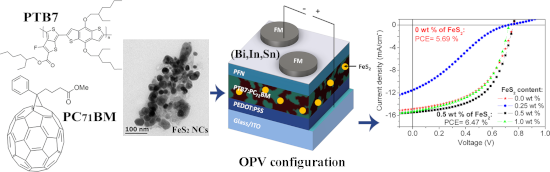
- ][8], a high optical absorption coefficient (2 × 105 cm−1) [4], high carrier mobility (2 to 80 cm2/Vs) [4][9] and a large charge carrier lifetime (200 ps) [10]. Therefore, FeS2 nanoparticles (NPs) can be a good alternative for PV applications [11]. Nanostructures of FeS2 have been used as counter


Improvement of the thermoelectric properties of a MoO3 monolayer through oxygen vacancies
Beilstein J. Nanotechnol. 2019, 10, 2031–2038, doi:10.3762/bjnano.10.199
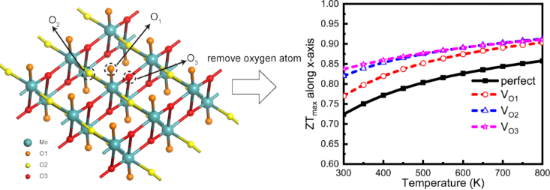
- materials show a better thermoelectric performance than bulk materials [14]. Few-layer MoO3 nanosheets have already been experimentally synthesized by exfoliation similar to graphene [12][13][15][16]. Theoretical research has proved that few-layer MoO3 possesses a markedly high carrier mobility above 3000
- of the relaxation time τ, we apply the deformation potential (DP) theory [25] where τ is estimated by τ = μm*/e. The carrier mobility μ2D in 2D materials is given by Where m* is the effective mass and md is the density of states (DOS) mass determined by E1 is the DP constant and C2D is the elastic
- modulus. All parameters corresponding to the carrier mobility and the effective mass are taken from [17] and summarized in Table 1. As for phononic transport properties, we calculate the thermal conductivity of the lattice using the Boltzmann transport theory as implemented in the Quantum ESPRESSO (QE


Review of advanced sensor devices employing nanoarchitectonics concepts
Beilstein J. Nanotechnol. 2019, 10, 2014–2030, doi:10.3762/bjnano.10.198
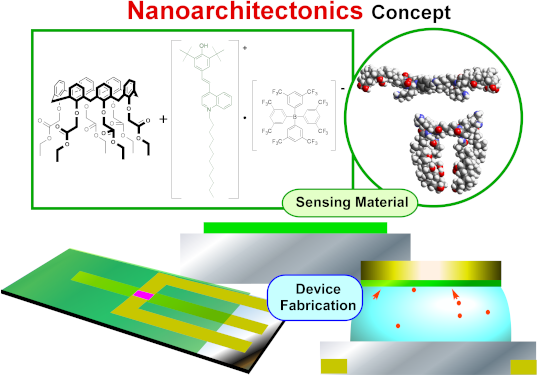
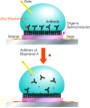
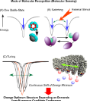
- . Ultrathin film nanoarchitectures are crucial not only for the facile contact between analytes and the sensor device but also with respect to the carrier mobility for semiconductor-based sensor devices. The enhancement of sensor performance on ultrathin films has been recognized in several recent research





Remarkable electronic and optical anisotropy of layered 1T’-WTe2 2D materials
Beilstein J. Nanotechnol. 2019, 10, 1745–1753, doi:10.3762/bjnano.10.170
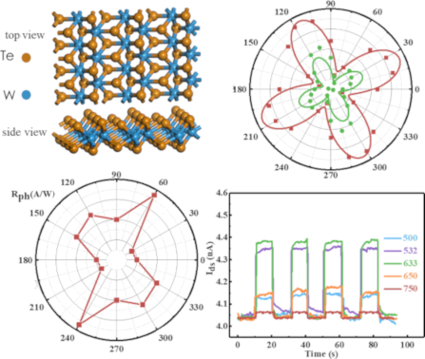
- anisotropic acoustic phonon scatter and elliptic elastic constants (both are relevant to the anisotropic crystalline structure) [31]. One of the consequences of an anisotropic carrier mobility is the anisotropic resistance. Therefore, we also performed angle-resolved DC conductance measurements on the 1T


Electronic and magnetic properties of doped black phosphorene with concentration dependence
Beilstein J. Nanotechnol. 2019, 10, 993–1001, doi:10.3762/bjnano.10.100
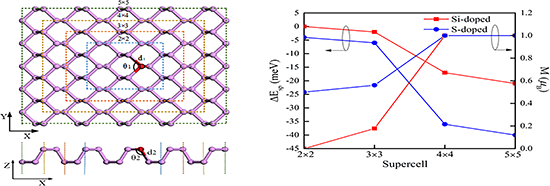
- graphene has led to extensive research efforts on two-dimensional (2D) materials. Although graphene exhibits large carrier mobility and intriguing mechanical properties, its zero bandgap impedes its application in spintronic devices [1][2]. Subsequently, 2D transition-metal dichalcogenides (TMDs) have
- received enormous attention [3][4]. While the electronic properties of TMDs range from metallic (such as NbS2) [5] to semiconducting (such as WS2) [6], the low carrier mobility limits the application of these materials. Recently, black phosphorene has attracted research interest owing to its direct bandgap
- and high carrier mobility [7][8]. Unlike zero-band-gap graphene, the layer-dependent bandgap of black phosphorene ranges from 0.31 to 1.9 eV [9]. The hole-dominated mobility of phosphorene is up to 1000 cm2·V−1·s−1 theoretically [10], which is much higher than that of TMDs. These properties render


Nanocomposite–parylene C thin films with high dielectric constant and low losses for future organic electronic devices
Beilstein J. Nanotechnol. 2019, 10, 428–441, doi:10.3762/bjnano.10.42
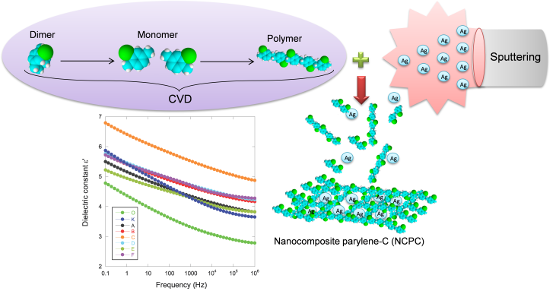
- gate dielectric, which is a crucial requirement for the performance of the OFETs and for the device reliability. Charge-carrier mobility is improved in the presence of this polymer [17]. PPXC is also an appropriate hydroxyl-free gate dielectric and prevents trapping of electrons at the semiconductor




Effects of post-lithography cleaning on the yield and performance of CVD graphene-based devices
Beilstein J. Nanotechnol. 2019, 10, 349–355, doi:10.3762/bjnano.10.34
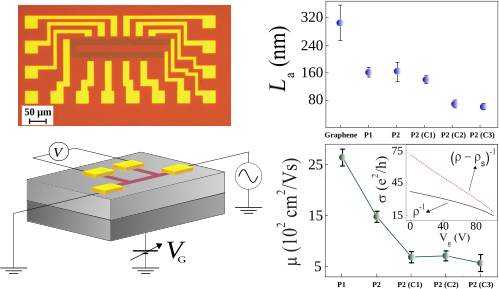
- applied in standard lithography processes and that, inevitably, modify the electrical proprieties of graphene. By Raman spectroscopy and electrical-transport investigations, we correlate the room-temperature carrier mobility of graphene devices with the size of well-ordered domains in graphene. In
- properties are deteriorated as compared with devices fabricated by conventional production methods. Keywords: CVD graphene; defects; mobility; well-ordered domain; Introduction The unique properties of graphene, such as high conductivity, high carrier mobility at room temperature, high sensitivity of the
- performed Raman spectroscopy and electrical transport measurements, at room temperature, to correlate the size of well-ordered domains in graphene with its carrier mobility. The Raman spectroscopy was performed using an InVia Renishaw Raman spectrometer with a 514.5 nm laser and the electrical transport


Uniform Sb2S3 optical coatings by chemical spray method
Beilstein J. Nanotechnol. 2019, 10, 198–210, doi:10.3762/bjnano.10.18
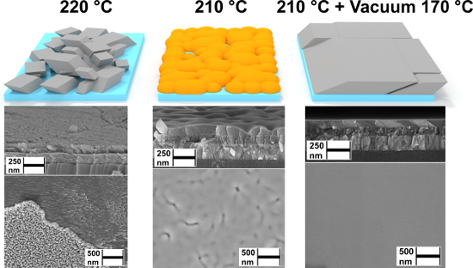
- conversion efficiency of all solar absorber materials because decreasing the amount of grain boundaries likely increases charge carrier mobility [26]. The crystallite sizes of as-deposited and thermally treated Sb2S3 layers are presented in Table 2. The effect of the deposition temperature is observed in Sb




Graphene-enhanced metal oxide gas sensors at room temperature: a review
Beilstein J. Nanotechnol. 2018, 9, 2832–2844, doi:10.3762/bjnano.9.264
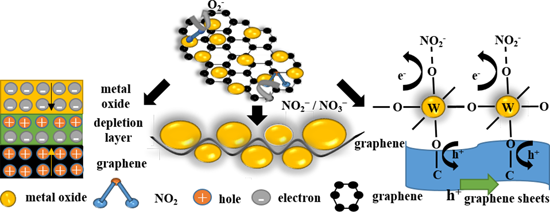
- ], graphene has been widely used in various fields such as photocatalysts, lithium battery electrodes, supercapacitors, gas sensors and electronic devices [2][3][4] due to its high specific surface area (2630 m2/g) and high carrier mobility at room temperature [5]. The electrical properties of graphene are



Contactless photomagnetoelectric investigations of 2D semiconductors
Beilstein J. Nanotechnol. 2018, 9, 2741–2749, doi:10.3762/bjnano.9.256
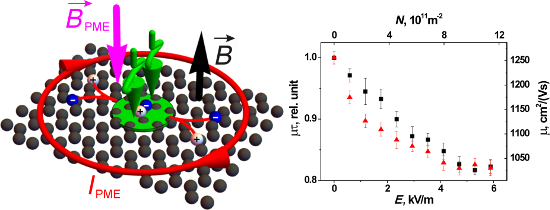
- carrier mobility on the concentration of electrons and holes induced by a back-gate voltage. Conclusion: The presented contactless PME method, used in Corbino geometry, is complementary to the mobility extraction methods based on field-effect measurements. It can be used for determining the mobility and
- diffusion length of carriers in different 2D materials. Keywords: carrier mobility; contactless investigations; graphene; photomagnetoelectric effect; 2D materials; Introduction The application of two-dimensional (2D) materials in electronic devices [1][2][3][4][5][6] requires the development of
- appropriate measurement methods for determining their typical semiconductor parameters, i.e., carrier mobility (μ) and lifetime (τ). Among these methods, contactless techniques [7][8] and mobility extraction methods based on field-effect measurements [9] are of great importance. Here we show a contactless

![[Graphic 1]](/bjnano/content/inline/2190-4286-9-256-i2.svg?max-width=637&scale=1.18182) evoked by the PME circulating current in a point-illuminated 2D...
evoked by the PME circulating current in a point-illuminated 2D...

![[Graphic 7]](/bjnano/content/inline/2190-4286-9-256-i8.svg?max-width=637&scale=1.18182) vs the illumination intensity for differe...
vs the illumination intensity for differe...

![[Graphic 15]](/bjnano/content/inline/2190-4286-9-256-i16.svg?max-width=637&scale=1.18182) vs the carrier lifetime for different values ...
vs the carrier lifetime for different values ...


Optimization of Mo/Cr bilayer back contacts for thin-film solar cells
Beilstein J. Nanotechnol. 2018, 9, 2700–2707, doi:10.3762/bjnano.9.252
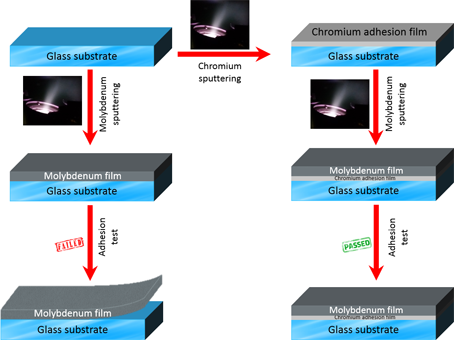
- more dense grains as compared with the films deposited at higher pressure and lower power. This results in less grain boundaries and consequently higher carrier mobility and conductivity. The SEM images also show more uniform surfaces over the film area for the samples deposited at 3 mTorr compared


High-temperature magnetism and microstructure of a semiconducting ferromagnetic (GaSb)1−x(MnSb)x alloy
Beilstein J. Nanotechnol. 2018, 9, 2457–2465, doi:10.3762/bjnano.9.230
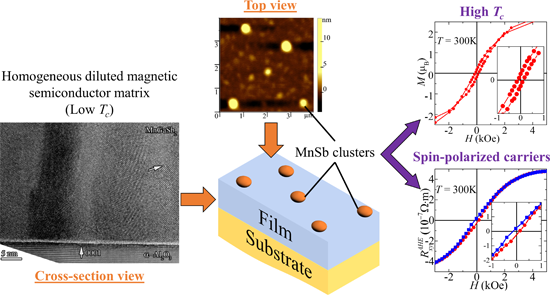
- granular systems are the higher values of carrier mobility, about one order of magnitude higher than that in traditional DMS such as Ga1−xMnxAs. This is due to the aggregation of the majority of magnetic impurity atoms within nanoinclusions, which results in a higher crystalline quality of the
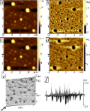
- which MFM image (f) was made. Sample parameters: deposition temperature Tdep; film thickness d; carrier concentration Np; carrier mobility μ; coercive force Hc; remanent magnetization Mrem; saturation magnetization Msat (Np, μ and Msat were obtained at T = 300 K, while the values of Hc and Mrem



Intrinsic ultrasmall nanoscale silicon turns n-/p-type with SiO2/Si3N4-coating
Beilstein J. Nanotechnol. 2018, 9, 2255–2264, doi:10.3762/bjnano.9.210
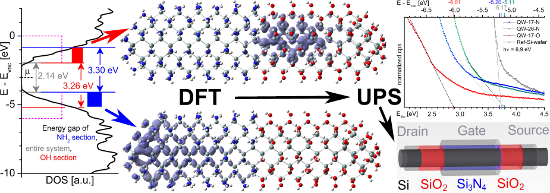
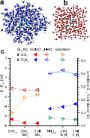
- [13][14]. This concept eliminates doping altogether, leading to a lower inelastic carrier scattering rate and higher carrier mobility which allow for decreased heat loss and bias voltages in ULSI. Such properties enable Si-FET technology to work at even smaller structure sizes, potentially enabling


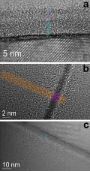


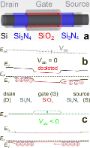

Lead-free hybrid perovskites for photovoltaics
Beilstein J. Nanotechnol. 2018, 9, 2209–2235, doi:10.3762/bjnano.9.207
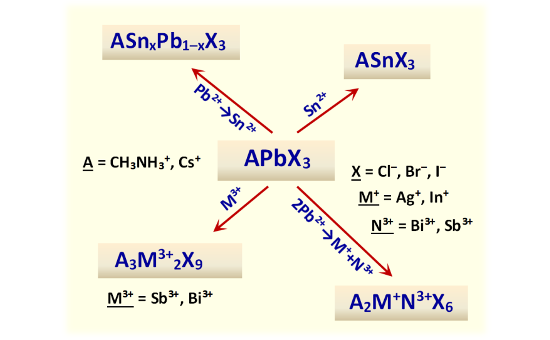
- -charged cations, such as Sn2+, Mn2+, or Ge2+, where the tin-based materials have gained the most attention and progress [10][16][18][29][30][38][44][54][59][60][61][62][63][64][65]. The Sn-based HPs (CsSnX3, MASnX3) show a high charge carrier mobility and diffusion length, comparable to the Pb-based
- luminescent Cs3Bi2X9 NCs [159]. A study of single-crystal and polycrystalline MABI showed that both materials have a long exciton lifetime and a high carrier mobility [161][163]. A transient absorption study of MABI crystals showed only a minor change of the exciton dynamics when the crystal size was reduced


A variable probe pitch micro-Hall effect method
Beilstein J. Nanotechnol. 2018, 9, 2032–2039, doi:10.3762/bjnano.9.192
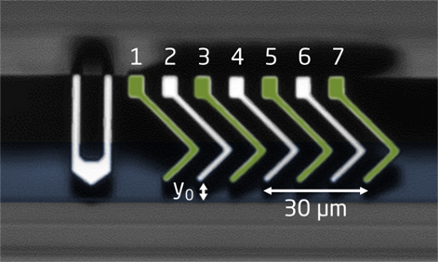
- characterization of ultrathin films with minimal sample preparation. Here, we study in detail how the analysis of raw measurement data affects the accuracy of extracted key sample parameters, i.e., how the standard deviation on sheet resistance, carrier mobility and Hall sheet carrier density is affected by the
- ; in that case, the better method depends on the experimental conditions, i.e., the distance between the insulating boundary and the electrodes. Improvement to the accuracy of Hall Effect measurement results is crucial for nanoscale metrology, since surface scattering often leads to low carrier
- mobility. Keywords: four-point probes; Hall effect; metrology; mobility; variable Probe Pitch; Introduction Materials characterization becomes increasingly difficult as the dimensions of transistors continue to decrease. Although three dimensional electrical characterization is the ultimate goal of


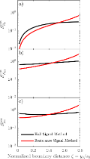
![[Graphic 11]](/bjnano/content/inline/2190-4286-9-192-i25.svg?max-width=637&scale=1.18182) for a) R0, b) NHS and c) μH when in- and off-line errors are present during ...
for a) R0, b) NHS and c) μH when in- and off-line errors are present during ...

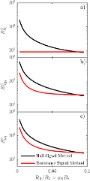
![[Graphic 15]](/bjnano/content/inline/2190-4286-9-192-i29.svg?max-width=637&scale=1.18182) for the sheet resistance, Hall mobility and Hall sheet carrier density, due ...
for the sheet resistance, Hall mobility and Hall sheet carrier density, due ...
A differential Hall effect measurement method with sub-nanometre resolution for active dopant concentration profiling in ultrathin doped Si1−xGex and Si layers
Beilstein J. Nanotechnol. 2018, 9, 1926–1939, doi:10.3762/bjnano.9.184
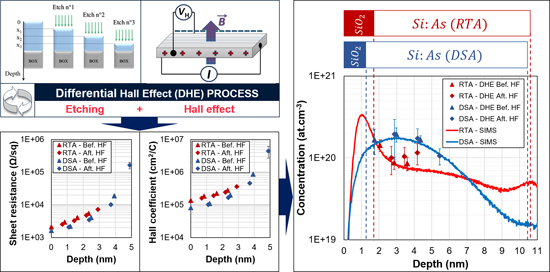
- SiGeOI and 11 nm thick SOI. In both cases, DHE is shown to be a uniquely sensitive characterisation technique for a detailed investigation of dopant activation in ultrashallow layers, providing sub-nanometre resolution for both dopant concentration and carrier mobility depth profiles. Keywords: carrier
- measured without any assumption about the magnitude of the carrier mobility. In addition, measurements are made by stripping the material in successive steps rather than bevelling the surface. The depth resolution of the final dopant concentration profile is therefore defined by the etch rate and indeed
- discontinuity throughout the two measurement runs. On the other hand, the sheet resistance RS constantly increases (while the Hall dose NH decreases) and exhibits a discontinuity between the two runs. Indeed, as the doping concentration is uniform throughout the doped layer, the associated carrier mobility is


The role of the Ge mole fraction in improving the performance of a nanoscale junctionless tunneling FET: concept and scaling capability
Beilstein J. Nanotechnol. 2018, 9, 1856–1862, doi:10.3762/bjnano.9.177
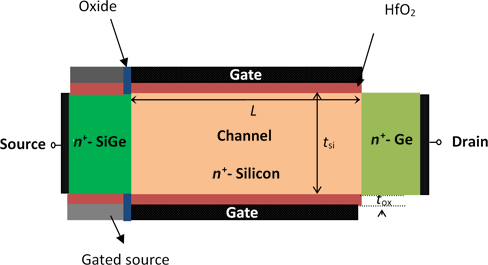
- temperatures in the current equations [25]. Moreover, models for carrier recombination (Shockley–Read–Hall (SRH), Auger and surface recombination) are also adopted [26]. In fact, the carrier mobility mainly depends on three quantities, transverse and parallel electric field, doping and temperature, which were
- combined using Matthiessen’s formula. Accordingly, the Lombardi model (CVT) is used to express the carrier mobility in the channel [27]. Moreover, the intrinsic parameters of the materials (Si, Si1−xGex and Ge) such as band gap, mobility and the density of states were considered to be dependent on the Ge
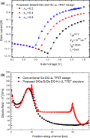
- mainly due to the enhanced carrier mobility caused by the increased Ge content. Moreover, introducing SiGe at the source side can be effective for reducing the tunneling barrier. Besides, the Ge concentration increase induces a lowering of the tunneling barrier, which enables enhancing the derived



Improving the catalytic activity for hydrogen evolution of monolayered SnSe2(1−x)S2x by mechanical strain
Beilstein J. Nanotechnol. 2018, 9, 1820–1827, doi:10.3762/bjnano.9.173
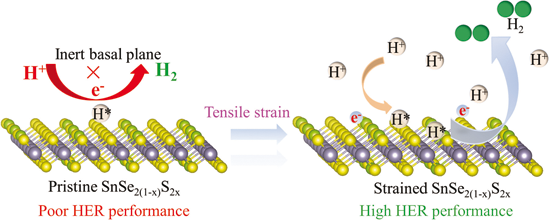
- conductivity. Tuning the band structure of the catalyst is important for improving the HER efficiency. It was reported that the band structure and carrier mobility of monolayer MX2 can be tuned by substitution of M with M' atoms or X with X' atoms to form monolayer MxM'(1−x)X2 or MX2xX'2(1−x) alloys [31][32





