Search results
Search for "nanowires" in Full Text gives 335 result(s) in Beilstein Journal of Nanotechnology. Showing first 200.
Electromagnetic analysis of the lasing thresholds of hybrid plasmon modes of a silver tube nanolaser with active core and active shell
Beilstein J. Nanotechnol. 2019, 10, 294–304, doi:10.3762/bjnano.10.28
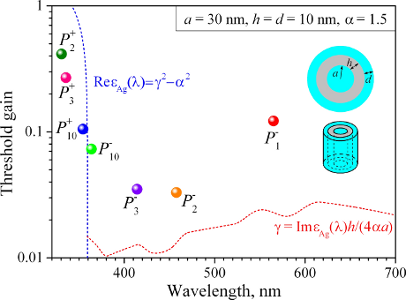
- of publications have dealt with the modeling of nanolasers based on metal nanoparticles and nanowires equipped with active cores or shells [4][5][6][7][8][9]. Note that in [4], the authors studied the effect of a metal tube on the lowest-order modes of the active core while the presence of the
- circular shell. Alternatively, such configurations can be seen as a quantum wire loaded with a plasmonic open resonator. An infinite array of circular quantum nanowires was considered with LEP in [27] where it was shown that such a periodic open active resonator can support so-called lattice modes with
- ultra-low thresholds and wavelengths located near to the Rayleigh anomalies. A similar LEP-based study of the lasing modes of an infinite binary grating of circular silver and quantum nanowires was published in [14] where the thresholds of the LSP modes were found to be higher than those of the lattice


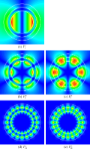
![[Graphic 29]](/bjnano/content/inline/2190-4286-10-28-i46.svg?max-width=637&scale=1.18182) λ = 565.03...
λ = 565.03...

![[Graphic 36]](/bjnano/content/inline/2190-4286-10-28-i53.svg?max-width=637&scale=1.18182) ...
...


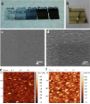
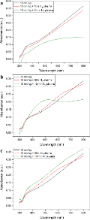
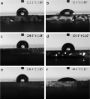
Site-specific growth of oriented ZnO nanocrystal arrays
Beilstein J. Nanotechnol. 2019, 10, 274–280, doi:10.3762/bjnano.10.26
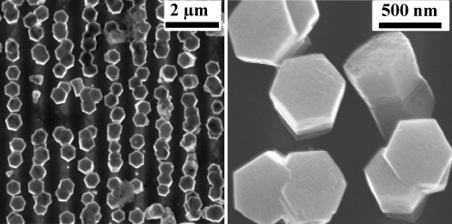
- morphological structures such as nanorods [5][6][7], nanowires [8], tetrapods [9], nanodisks [10], nanotubes [11], flowers [12], and nanocrystals [13], have been reported. Among the many nanostructured morphologies possible for ZnO, self-assembled ZnO nanocrystals (NCs) have been attracting great attention due


Sputtering of silicon nanopowders by an argon cluster ion beam
Beilstein J. Nanotechnol. 2019, 10, 135–143, doi:10.3762/bjnano.10.13
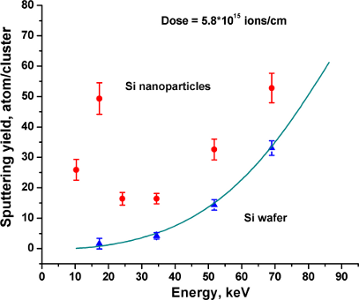
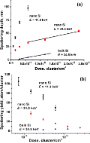
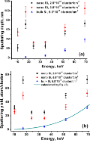
- nanowires. There are many molecular dynamics simulations using the collision cascade theory and, at the same time, only a few experimental studies on the interaction of monomer and cluster projectiles with nanodimensional systems. Using a MD simulation, Kissel et al. [16] have studied the effect of the
- been revealed for 80 keV Xe ion irradiation of Au nanowires of 20 nm in diameter and micrometers in length [24][25]. The sputtering yield dependence on the gold particle size under bombardment with 20 keV С60 ions has been studied in [26]. At 9.3 nm the particle diameter the yield was 320, whereas for





Hydrogen-induced plasticity in nanoporous palladium
Beilstein J. Nanotechnol. 2018, 9, 3013–3024, doi:10.3762/bjnano.9.280
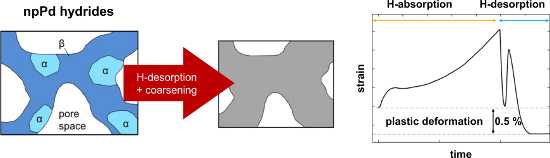
- still plausible in this case, although with a reduced strain amplitude. Lattice reorientations driven by surface stress, suggested by simulations in both pristine [40] and hydrided Pd nanowires [41], could also be indicative for the concept of a surface-stress contribution to the α-phase straining


Charged particle single nanometre manufacturing
Beilstein J. Nanotechnol. 2018, 9, 2855–2882, doi:10.3762/bjnano.9.266
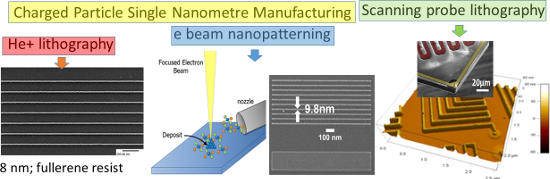
- fabrication of isolated structures, for example by Koops et al. [79], and by Frabboni et al. [80] who attempted to overcome the resolution limit due to the presence of a bulk or thin substrate by growing suspended nanowires by EBID on the tip of a tilted pillar, achieving a lateral resolution of 5 nm. Sub-10
- common in electrical measurements. Another important application of EBIE demonstrated there was the modification of as-deposited EBID structures to alter their physical or chemical properties. Carbonaceous nanowires of about 24 nm width deposited by EBID were slimmed by repeatedly scanning the field of
- view containing the deposits in the presence of water. In this manner, nanowires with widths down to 13 nm were achieved, as shown in Figure 12. The specific case of EBIE of SiO2 using XeF2 was studied by Randolph et al. [95] who performed experiments to study the etch rate as a function of beam


Graphene-enhanced metal oxide gas sensors at room temperature: a review
Beilstein J. Nanotechnol. 2018, 9, 2832–2844, doi:10.3762/bjnano.9.264
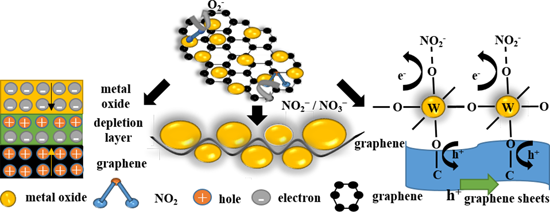
- components is equal, which accounts for the improved sensing performance to CO at room temperature. Wang et al. [52] mixed ZnO nanowires, prepared via carbothermal reduction, with GO under a protective gas atmosphere (Ar) at 300 °C to synthesize ZnO–rGO hybrids. Although the response to NH3 was not as well



Controlling surface morphology and sensitivity of granular and porous silver films for surface-enhanced Raman scattering, SERS
Beilstein J. Nanotechnol. 2018, 9, 2813–2831, doi:10.3762/bjnano.9.263
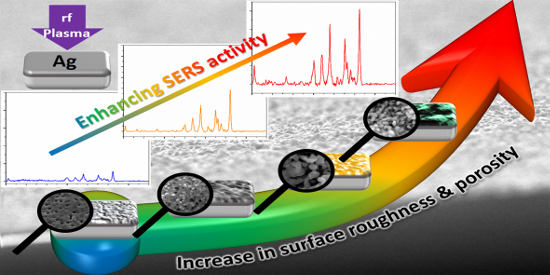
- ][55][56], and nanotransfer printing, which was used to build stacks of gold nanorods or nanowires [4]. The production of nanoporous metal films or particles through a dealloying process also emerged as an effective tool for the facile formation of a large number of SERS-active hot spots [57][58][59





Oriented zinc oxide nanorods: A novel saturable absorber for lasers in the near-infrared
Beilstein J. Nanotechnol. 2018, 9, 2730–2740, doi:10.3762/bjnano.9.255
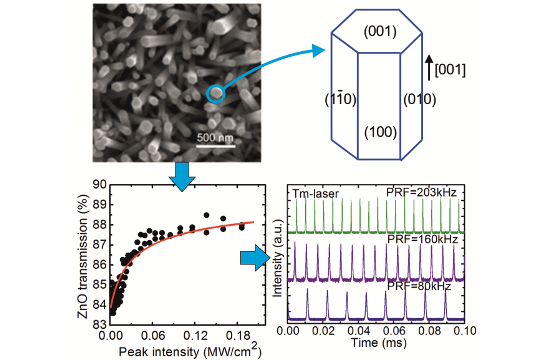
- , a lot of attention has been paid to the studies of ZnO nanostructures of various shapes, including oriented nanorods (NRs), nanowires, nanobelts, nanoparticles, etc. for versatile photonic applications [1][2]. ZnO NRs are especially attractive for short-wavelength nano-devices due to their high



Silencing the second harmonic generation from plasmonic nanodimers: A comprehensive discussion
Beilstein J. Nanotechnol. 2018, 9, 2674–2683, doi:10.3762/bjnano.9.250
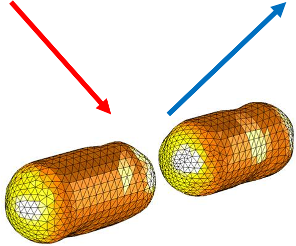
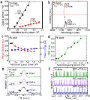
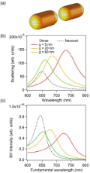
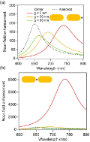
- nanowires with various gap sizes. They observed that the SHG does not increase as the gap between the two nanowires decreases, despite an increase of the fundamental field enhancement. Their experimental observations were supported by numerical results demonstrating that the SHG from nanogaps is not


Impact of the anodization time on the photocatalytic activity of TiO2 nanotubes
Beilstein J. Nanotechnol. 2018, 9, 2628–2643, doi:10.3762/bjnano.9.244
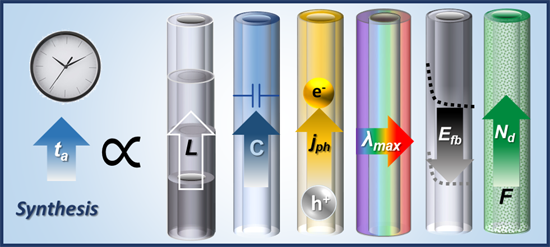
- synthesis methods resulting in a wide range of morphologies, such as mesoporous structures [4], microtubes [5], microdendrites, nanoparticles [6][7][8], nanorods [9][10], nanotubes [11][12][13], nanowires [14], and nanosheets [15][16]. Standing out from the rest of the synthesis techniques, electrochemical


Improved catalytic combustion of methane using CuO nanobelts with predominantly (001) surfaces
Beilstein J. Nanotechnol. 2018, 9, 2526–2532, doi:10.3762/bjnano.9.235
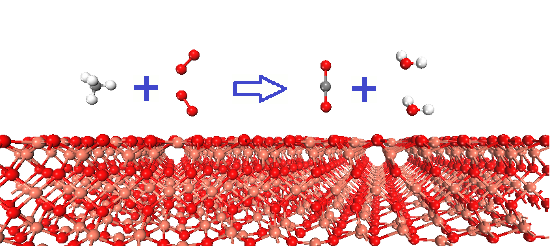
- with CuO nanobelts comprised of predominantly (001) surfaces has been performed and it is confirmed that the performance of such nanobelts is much higher than normal nanoparticles and nanowires. First principle calculations further clarified that two-coordinated oxygen plays a key role for methane
- shows high reactivity due to the high ratio of lowly coordinated oxygen – a feature that has been employed for gas sensing and Li-ion batteries [21]. Now we turn to the experimental validation, starting with the synthesis of CuO nanowires (NWs) and CuO nanobelts (NBs) comprised of predominantly (001
- are needed to improve the thermal stability of such nanostructures as they tend to aggregate after high temperature treatment. Experimental Synthesis of CuO nanowires and nanobelts For a typical sample, 1 g of Cu(NO3)2 was dissolved in 100 mL distilled water and 30 mL ammonia solution (NH3·H2O, 0.15


Thickness-dependent photoelectrochemical properties of a semitransparent Co3O4 photocathode
Beilstein J. Nanotechnol. 2018, 9, 2432–2442, doi:10.3762/bjnano.9.228
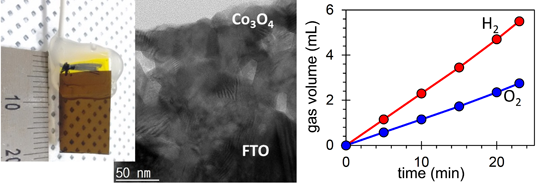
- 4.5 mA·cm−2 with Ag nanowires [24]. Interestingly, a high photocurrent density of 29 mA·cm−2 can be achieved from Co3O4 under one-sun illumination (AM1.5G) suggesting a high (solar-to-hydrogen) efficiency of 35.8% [3]. Studies using Co3O4 as a catalyst have explored the oxygen evolution reaction (OER



Magnetism and magnetoresistance of single Ni–Cu alloy nanowires
Beilstein J. Nanotechnol. 2018, 9, 2345–2355, doi:10.3762/bjnano.9.219
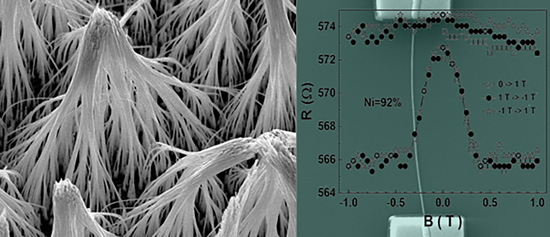
- University of Bucharest, Faculty of Physics, PO Box MG-11, 077125, Magurele-Bucharest, Romania 10.3762/bjnano.9.219 Abstract Arrays of magnetic Ni–Cu alloy nanowires with different compositions were prepared by a template-replication technique using electrochemical deposition into polycarbonate nanoporous
- membranes. Photolithography was employed for obtaining interdigitated metallic electrode systems of Ti/Au onto SiO2/Si substrates and subsequent electron beam lithography was used for contacting single nanowires in order to investigate their galvano-magnetic properties. The results of the magnetoresistance
- measurements made on single Ni–Cu alloy nanowires of different compositions have been reported and discussed in detail. A direct methodology for transforming the magnetoresistance data into the corresponding magnetic hysteresis loops was proposed, opening new possibilities for an easy magnetic investigation of


Intrinsic ultrasmall nanoscale silicon turns n-/p-type with SiO2/Si3N4-coating
Beilstein J. Nanotechnol. 2018, 9, 2255–2264, doi:10.3762/bjnano.9.210
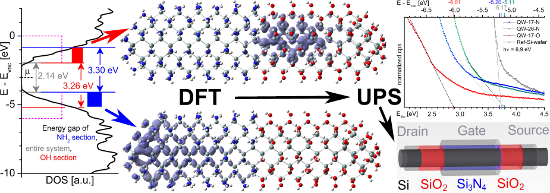
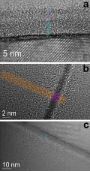
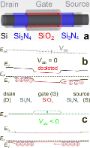
- of Si nanowires relevant to devices As we will show below, a Si-NWire with a combined SiO2-/Si3N4-coating can work as a highly scalable, high-performance and dopant-free metal-insulator-silicon (MIS) FET device. Using the same h-DFT methods as above, we computed the electronic properties of a Si233





Optimization of the optical coupling in nanowire-based integrated photonic platforms by FDTD simulation
Beilstein J. Nanotechnol. 2018, 9, 2248–2254, doi:10.3762/bjnano.9.209
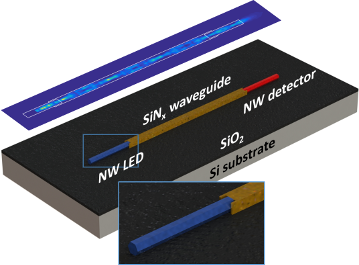
- design reported in the literature with a coupling efficiency of only 8.7%, we propose an optimized photonic platform with efficiency reaching 65.5%. Keywords: FDTD modeling; nanowire LED; nitride nanowires; photonic integrated circuit; photonic platform; SiN/InGaN co-integration; visible light
- tunable bandgap [14] and reduced dislocation density [15][16], nitride nanowires (NWs) have become important materials for optical components in the visible to ultraviolet (UV) spectral range [17][18]. Despite their small size, single NW light emitting diodes (LEDs) can produce bright electroluminescence


Lead-free hybrid perovskites for photovoltaics
Beilstein J. Nanotechnol. 2018, 9, 2209–2235, doi:10.3762/bjnano.9.207
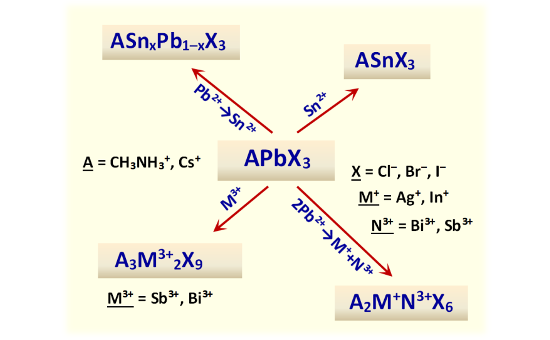
- from exposure to air/moisture was suggested via the growth of HP nanowires in the pores of anodized alumina membranes [122]. The effective blockage of the diffusion of water and oxygen molecules to the alumina-incorporated MASnI3 nanowires resulted in a three order of magnitude slower degradation of
- min ripening at 220 °C (Figure 7c) [133]. The Cs2SnI6 nanorods gradually transform into nanowires (Figure 7d) with the aspect ratio increasing from 3 to 28 after a 10 min reaction. At longer reaction times (30 min) nanowires transform into nanobelts (Figure 7e) that assemble into nanoplatelets with a


Interaction-induced zero-energy pinning and quantum dot formation in Majorana nanowires
Beilstein J. Nanotechnol. 2018, 9, 2171–2180, doi:10.3762/bjnano.9.203
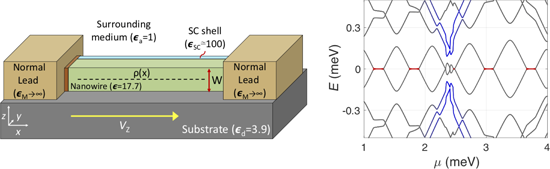
- , Universidad Autónoma de Madrid, E-28049 Madrid, Spain 10.3762/bjnano.9.203 Abstract Majorana modes emerge in non-trivial topological phases at the edges of specific materials such as proximitized semiconducting nanowires under an external magnetic field. Ideally, they are non-local states that are charge
- -neutral superpositions of electrons and holes. However, in nanowires of realistic length their wave functions overlap and acquire a finite charge that makes them susceptible to interactions, specifically with the image charges that arise in the electrostatic environment. Considering a realistic three
- features are observed in recent experiments on the detection of Majoranas and could thus help to properly characterize them. Keywords: hybrid superconductor–semiconductor nanowires; interactions; Majorana bound states; quantum dots; Introduction Semiconducting nanowires with strong spin–orbit interaction



Electrospun one-dimensional nanostructures: a new horizon for gas sensing materials
Beilstein J. Nanotechnol. 2018, 9, 2128–2170, doi:10.3762/bjnano.9.202
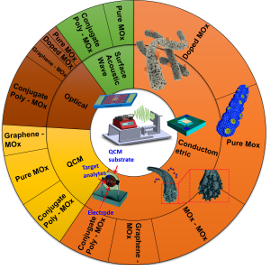
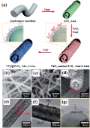
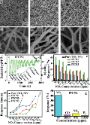
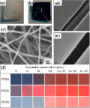
- , and larger surface-to-volume ratio [34]. The large surface-area-to-volume ratio of nanofibers (NFs), hollow nanofibers (HNFs), nanotubes (NTs) and nanowires (NWs) with micro/mesoporous surfaces results in improved adsorption and better reaction kinetics of gas-sensitive materials. Nanofibers can be






Localized photodeposition of catalysts using nanophotonic resonances in silicon photocathodes
Beilstein J. Nanotechnol. 2018, 9, 2097–2105, doi:10.3762/bjnano.9.198
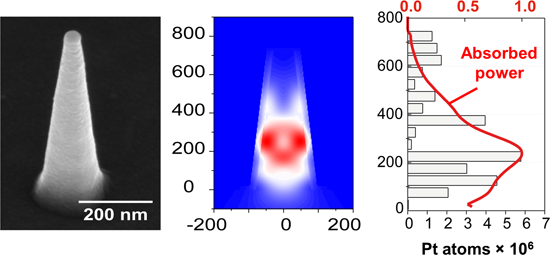
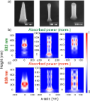
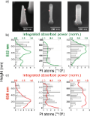
- spots”. These areas can be used for localized extraction of the photogenerated charges, which in turn could drive chemical reactions for synthesis of catalytic materials. In this work, we use these nanophotonic hot spots in vertical silicon nanowires to locally deposit platinum nanoparticles in a photo
- -electrochemical system. The tapering angle of the silicon nanowires as well as the excitation wavelength are used to control the location of the hot spots together with the deposition sites of the platinum catalyst. A combination of finite difference time domain (FDTD) simulations with scanning electron
- appearance of localized “hot spots”. In particular, semiconducting nanostructures can sustain Mie-like leaky modes due to their high refractive index and the occurrence of multiple internal light reflections from the boundaries of the structure [9][13]. However, in vertical nanowires under normal-incidence


A scanning probe microscopy study of nanostructured TiO2/poly(3-hexylthiophene) hybrid heterojunctions for photovoltaic applications
Beilstein J. Nanotechnol. 2018, 9, 2087–2096, doi:10.3762/bjnano.9.197
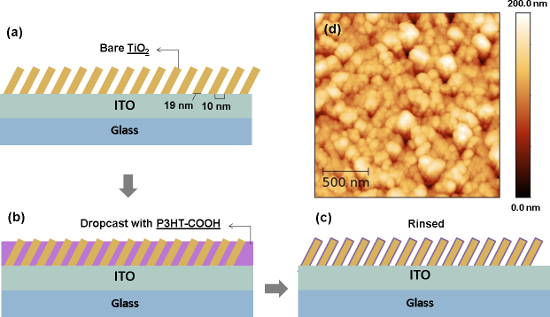
- can easily form nanostructures, such as nanoporous layers, nanowires or nanocolumns [5][11][12]. Because of its large band gap (3.2 eV [13]), light absorption is carried out by an organic or inorganic dye. The nanostructuration of the acceptor material is crucial for the cell performance [11], as it


High-throughput synthesis of modified Fresnel zone plate arrays via ion beam lithography
Beilstein J. Nanotechnol. 2018, 9, 2049–2056, doi:10.3762/bjnano.9.194
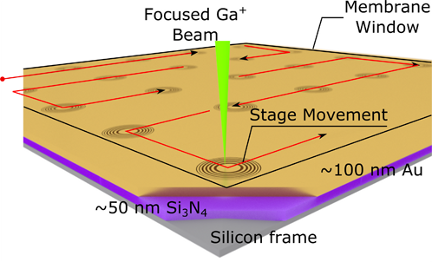
- . This can be attributed to the shifting plasmon resonances of the gold nanowires that make up the zones of the FZPs. A scanning transmission electron microscope (STEM) dark-field overview image of the completed array is shown in Figure 4b. The FZPs mostly exhibited high quality with zones free from


Recent highlights in nanoscale and mesoscale friction
Beilstein J. Nanotechnol. 2018, 9, 1995–2014, doi:10.3762/bjnano.9.190


A differential Hall effect measurement method with sub-nanometre resolution for active dopant concentration profiling in ultrathin doped Si1−xGex and Si layers
Beilstein J. Nanotechnol. 2018, 9, 1926–1939, doi:10.3762/bjnano.9.184
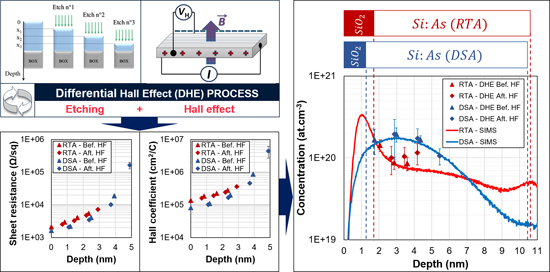
- this work will have a minimum thickness of about 6 nm, so that the quantum-confinement effect can be neglected. An additional low-dimension effect is the dielectric confinement, which has been investigated in silicon nanowires surrounded by a dielectric material (such as its native oxide) [37][38]. For


Nonlinear effect of carrier drift on the performance of an n-type ZnO nanowire nanogenerator by coupling piezoelectric effect and semiconduction
Beilstein J. Nanotechnol. 2018, 9, 1917–1925, doi:10.3762/bjnano.9.183
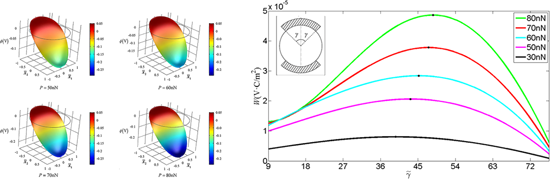
- vertically aligned ZnO nanowires [18][19][20][21][22][23][24][25][26][27]. The principle of nanogenerators is that the piezoelectric potential produced by the piezoelectric effect can produce a current in an external circuit when the ZNW is deformed. Specifically, a transversely applied force makes the
- -workers [35]. In particular, Henneghien et al. have pointed out that circular and hexagonal nanowires exhibit the same behavior if the ZnO nanowire sections of each structure have the same area. Linear solutions were obtained for small fluctuations of carrier concentration in a bent n-type ZnO nanowire


![[Graphic 46]](/bjnano/content/inline/2190-4286-9-183-i59.svg?max-width=637&scale=1.18182) and (b) boundary electric displacement Dr at Ω for different end f...
and (b) boundary electric displacement Dr at Ω for different end f...


Toward the use of CVD-grown MoS2 nanosheets as field-emission source
Beilstein J. Nanotechnol. 2018, 9, 1686–1694, doi:10.3762/bjnano.9.160
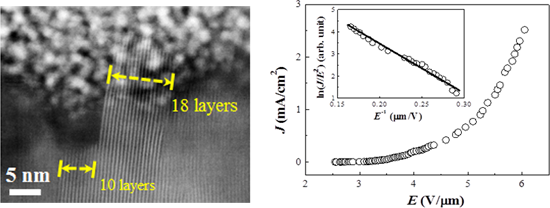
- displays, X-ray sources and cold-cathode electron sources [2]. 1D and 2D materials such as carbon nanotubes [3], ZnO nanorods [1], LaB6 nanowires [2], SnS2 nanosheets (NSs) [4], vertically aligned graphene [5], WS2 nanotubes [6], MoSe2 nanosheets [7], and MoS2 NSs [8][9][10] are potential field-emitter
- ][12], and comparable with the vertically aligned MoS2 NSs with ultrathin edges in [9] (Table 1). It has been shown previously that vertically grown 1D nanowires/nanotubes and 2D NSs with atomically thin edges may considerably improve the FE properties, so that vertically standing materials are