


Search results
Search for "sequential reaction" in Full Text gives 28 result(s) in Beilstein Journal of Organic Chemistry.
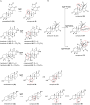
Palladium-catalyzed benzocyclization reactions of quinoline-2-carboxamides via sequential C–H/N–H functionalization
Beilstein J. Org. Chem. 2026, 22, 905–914, doi:10.3762/bjoc.22.71
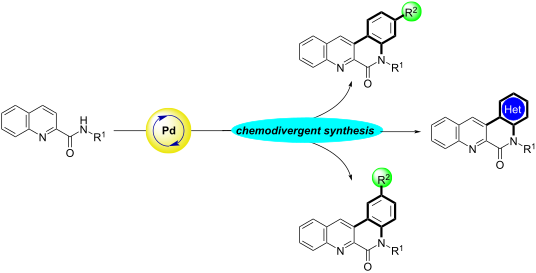
- ; sequential reaction; Introduction Cyclic structures comprising nitrogen-containing multifused rings are extremely important because such heterocycle-fused cyclic structures [1][2] are found in various advanced materials [3][4] and biologically essential molecules [5][6][7]. Quinoline is a particularly




Development of a flow photochemical process for a π-Lewis acidic metal-catalyzed cyclization/radical addition sequence: in situ-generated 2-benzopyrylium as photoredox catalyst and reactive intermediate
Beilstein J. Org. Chem. 2024, 20, 1973–1980, doi:10.3762/bjoc.20.173
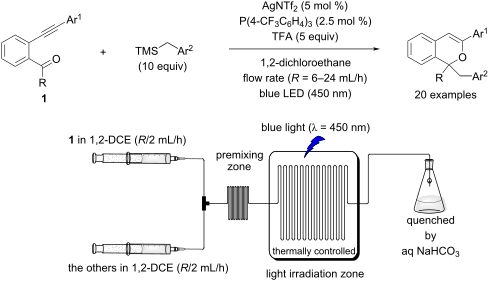
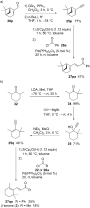
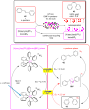
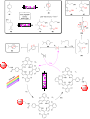
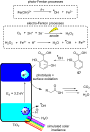
- envisioned that the characteristics of the flow photochemical process, i.e., efficient light irradiation and immediate separation of the formed product from the reaction system, would be suitable for this sequential reaction. Here, we report the results of our investigation on the use of a flow photochemical


Synthesis and properties of 6-alkynyl-5-aryluracils
Beilstein J. Org. Chem. 2024, 20, 898–911, doi:10.3762/bjoc.20.80
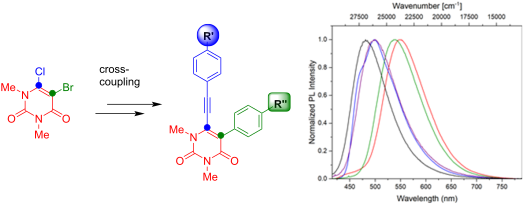
- isolated. This could be due to instabilities caused by two strong electron-withdrawing groups. As a prove of concept, a sequential reaction set-up was used to realize the formation of product 4h containing differentially functionalized arylalkynes. Subsequently, the formation of the desired product 5 was




Recent developments in the engineered biosynthesis of fungal meroterpenoids
Beilstein J. Org. Chem. 2024, 20, 578–588, doi:10.3762/bjoc.20.50
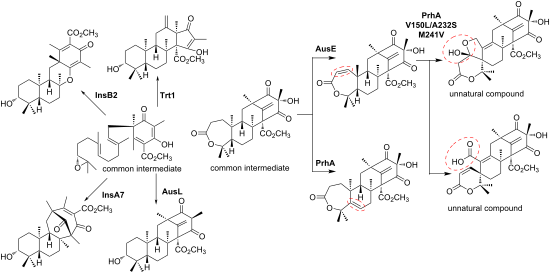
- sequential reaction to produce the spirolactone 27. In contrast, PrhA dehydrogenates H-1 of 26 to form the heptadiene 28. Comparing the active centers, only three amino acid residues differ between AusE and PrhA: L150(AusE)/V150(PrhA), S232(AusE)/A232(PrhA), and V241(AusE)/M241(PrhA). By swapping these






Unravelling a trichloroacetic acid-catalyzed cascade access to benzo[f]chromeno[2,3-h]quinoxalinoporphyrins
Beilstein J. Org. Chem. 2023, 19, 1216–1224, doi:10.3762/bjoc.19.89
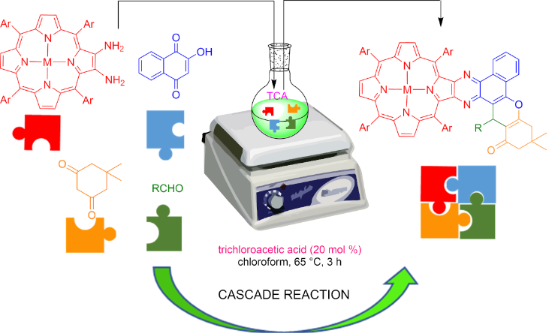
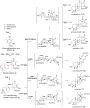
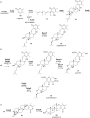
- ]quinoxalinoporphyrins in good yields via a sequential reaction of copper(II) 2,3-diamino-5,10,15,20-tetraarylporphyrins, 2-hydroxynaphthalene-1,4-dione, aromatic aldehydes, and dimedone in the presence of a catalytic amount of trichloroacetic acid in chloroform at 65 °C. Further, the newly prepared copper(II


Sequential hydrozirconation/Pd-catalyzed cross coupling of acyl chlorides towards conjugated (2E,4E)-dienones
Beilstein J. Org. Chem. 2023, 19, 176–185, doi:10.3762/bjoc.19.17
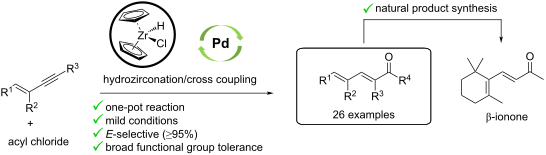
- sequential reaction, different enynes 25 and acid chlorides 26 were studied (Table 4). Fortunately, all desired products 27 were formed in ≥95% (2E,4E)-configuration (via 1H NMR). First, phenylenyne 25a (R1 = Ph) was chosen as the starting material and reacted with different acid chlorides 26a–s (Table 4



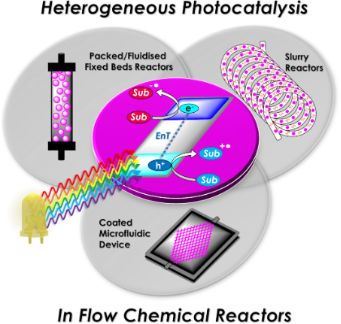
Heterogeneous photocatalysis in flow chemical reactors
Beilstein J. Org. Chem. 2020, 16, 1495–1549, doi:10.3762/bjoc.16.125










Efficiency Effsyn of complex syntheses as multicomponent reactions, its algorithm and calculations based on concrete criteria
Beilstein J. Org. Chem. 2019, 15, 1425–1433, doi:10.3762/bjoc.15.142
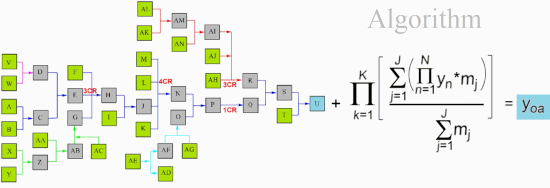
- efficiency is Effsyn = 2.9%, due to the high step number of 17 (real number of precursors). The same synthesis in linear architecture does not exist. A fictive comparison with the same dataset in a completely sequential reaction sequence results in a fictive yield of 2 yoa(fictive) = 0.192 (19%). The


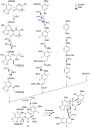

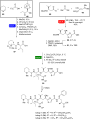
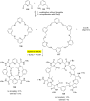
Synthesis of (macro)heterocycles by consecutive/repetitive isocyanide-based multicomponent reactions
Beilstein J. Org. Chem. 2019, 15, 906–930, doi:10.3762/bjoc.15.88
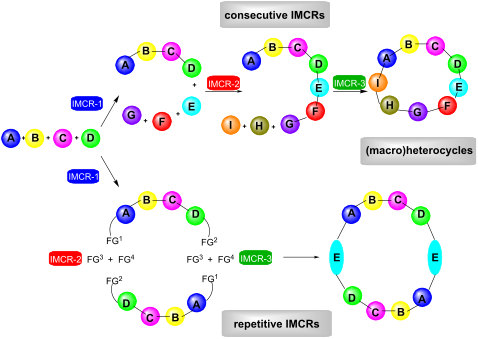
- a fast and reproducible synthesis of more complex products. It can be foreseen that this useful strategy will continue to be applied to the synthesis of molecules with even more structural diversity. Comparison between a normal sequential reaction and an MCR. Synthesis of tetrazoles and







DABCO- and DBU-promoted one-pot reaction of N-sulfonyl ketimines with Morita–Baylis–Hillman carbonates: a sequential approach to (2-hydroxyaryl)nicotinate derivatives
Beilstein J. Org. Chem. 2018, 14, 2771–2778, doi:10.3762/bjoc.14.254
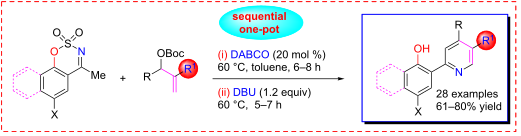
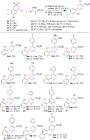
- generality and scope of the reaction by reacting several aryl/heteroaryl-substituted MBH carbonates derived from acrylates 2a–j and 4-methyl-N-sulfonyl ketimines 1a–e under present sequential reaction conditions. The results are incorporated in Scheme 3. The regioselective allylic alkylation/aromatization
- 1c in our established reaction conditions, resulting in good yields (68–76%) of aforesaid heterocycles 5ak–5am (Scheme 4). Conclusion In the current manuscript, a unique one-pot two-step sequential reaction of 4-methyl N-sulfonyl ketimines with MBH carbonates of acrylate/acrylonitrile catalyzed by
- . Drugs and agrochemicals having a nicotinic acid derivative. One-pot access to (2-hydroxyaryl)pyridines. A possible mechanism for this sequential reaction. Substrate scope for (2-hydroxyaryl)nicotinates syntheses. The reaction was performed with 1a–e (0.2 mmol), 2a–j (0.26 mmol) and DABCO (0.04 mmol, 20



Synthesis of indolo[1,2-c]quinazolines from 2-alkynylaniline derivatives through Pd-catalyzed indole formation/cyclization with N,N-dimethylformamide dimethyl acetal
Beilstein J. Org. Chem. 2018, 14, 2411–2417, doi:10.3762/bjoc.14.218
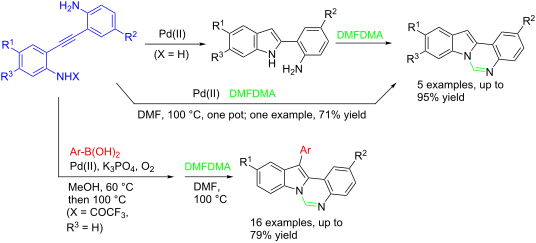
- different from the previously reported Pd-catalyzed sequential reaction of the same substrates with Ar–I, Ar–Br and ArN2+BF4−, that afforded 12-arylindolo[1,2-c]quinazolin-6(5H)-ones. Moreover, 12-unsubstituted indolo[1,2-c]quinazolines can be obtained both by reacting 2-(o-aminophenyl)indoles with DMFDMA
- -catalyzed reaction of 15a with aldehydes as electrophiles resulted in the divergent formation of 11H-indolo[3,2-c]quinolines 17 (Scheme 5b) [32] through functionalization of C-3 position of the indole ring instead of N-1. The sequential reaction shown in Scheme 5, path a, probably occurs through cyclization


Preactivation-based chemoselective glycosylations: A powerful strategy for oligosaccharide assembly
Beilstein J. Org. Chem. 2017, 13, 2094–2114, doi:10.3762/bjoc.13.207
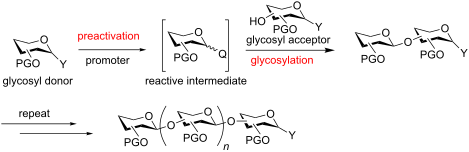
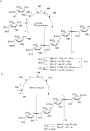
- acceptor 41 to the reaction mixture furnished trisaccharide 42. This approach was applied to the synthesis of hyaluronic acid (HA) oligomers [39]. The sequential reaction of building blocks 43, 44 and 46 led to HA trisaccharide 47 (Scheme 10). The modest overall yield of 26% for the two glycosylation







A novel method for heterocyclic amide–thioamide transformations
Beilstein J. Org. Chem. 2017, 13, 174–181, doi:10.3762/bjoc.13.20

- anthranilic acid to afford benzoxazines, followed by sequential reaction with ammonia to afford the benzanilide derivatives and finally, benzanilides were cyclized by heating in sodium hydroxide solution and gave quinazolines A2–A6. Methyl 1,2-dihydro-2-oxoquinoline-4-carboxylate (A9) [22][23] was prepared by


Synthesis of structurally diverse 3,4-dihydropyrimidin-2(1H)-ones via sequential Biginelli and Passerini reactions
Beilstein J. Org. Chem. 2017, 13, 54–62, doi:10.3762/bjoc.13.7
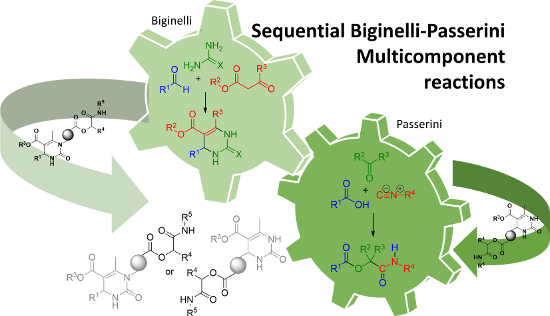
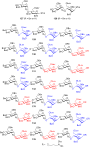
- tandem procedure. A general overview of our investigations is illustrated in Supporting Information File 1, Scheme S1. All synthesized substances are displayed in Supporting Information File 1, Figure S1. Results and Discussion For the Biginelli–Passerini sequential reaction, the Biginelli reaction was



Synthesis of Xenia diterpenoids and related metabolites isolated from marine organisms
Beilstein J. Org. Chem. 2015, 11, 2521–2539, doi:10.3762/bjoc.11.273
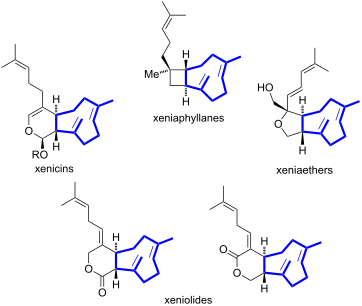
- tertiary amide was then formed by sequential reaction of carboxylic acid 53 with oxalyl chloride and N-methylaniline derivative 54. The following two-step debenzylation sequence afforded alcohol 55 which was converted to the corresponding mesylate, serving as a key intermediate for the construction of the







A new and efficient procedure for the synthesis of hexahydropyrimidine-fused 1,4-naphthoquinones
Beilstein J. Org. Chem. 2015, 11, 1235–1240, doi:10.3762/bjoc.11.137
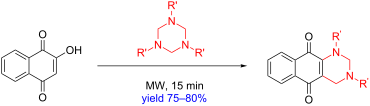
- method for the synthesis of hexahydropyrimidine-fused 1,4-naphthoquinones (13 and 21–25) in high yields, from the sequential reaction of readily available 1,3,5-triazinanes 14–19 with 2-hydroxy-1,4-naphthoquinone (20, or lawsone) under microwave irradiation (Scheme 2). The 1,3,5-triazinanes have several


Visible-light-induced bromoetherification of alkenols for the synthesis of β-bromotetrahydrofurans and -tetrahydropyrans
Beilstein J. Org. Chem. 2015, 11, 31–36, doi:10.3762/bjoc.11.5
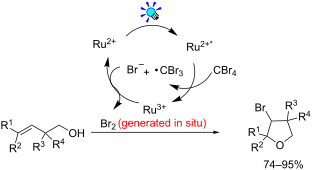
- ], sequential reaction with alkene 1a forms the three-membered bromonium intermediate 4 [28]. Finally, intramolecular nucleophilic cyclization furnishes the desired product β-bromotetrahydrofuran 2a. Conclusion In summary, we have developed a mild and operationally simple method for the bromoetherification of


Sequential decarboxylative azide–alkyne cycloaddition and dehydrogenative coupling reactions: one-pot synthesis of polycyclic fused triazoles
Beilstein J. Org. Chem. 2014, 10, 3031–3037, doi:10.3762/bjoc.10.321
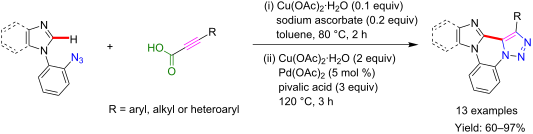
- as dioxane, toluene, 1,2-dichloroethane, DMF, and NMP were tested in this sequential reaction (Table 1, entries 6–10). Toluene was found to be superior to other solvents tested, affording a good yield (87%) of fused triazole 4a (Table 1, entry 7). No product formation was observed if the reaction was
- carried out in the absence of Pd(OAc)2 (Table 1, entry 11) and without pivalic acid the yield of 4a was only 22% (Table 1, entry 12). All these results demonstrated that the additive and solvent played a crucial role in the dehydrogenative coupling reaction. The sequential reaction was performed with


Continuous flow nitration in miniaturized devices
Beilstein J. Org. Chem. 2014, 10, 405–424, doi:10.3762/bjoc.10.38
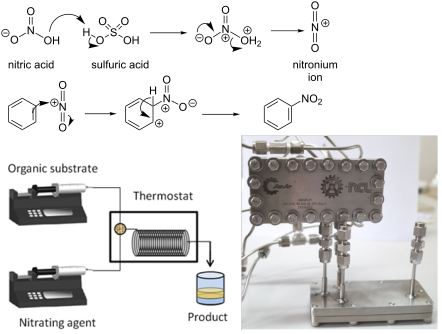
- . From various experiments under different conditions the authors observed that increasing the flow velocity actually increases the degree of conversion along with an increase of the byproduct due to parallel reaction and reduces the byproduct due to sequential reaction. Consequently, controlling the
- residence time distribution and the heat transfer rates allows for a restricted formation of byproducts from the sequential reaction. With an increase of the fluid velocity the overall mass transfer coefficient was found to increase. It seems that a higher fluid velocity facilitates the rapid mixing of the


Oxidative 3,3,3-trifluoropropylation of arylaldehydes
Beilstein J. Org. Chem. 2013, 9, 2417–2421, doi:10.3762/bjoc.9.279
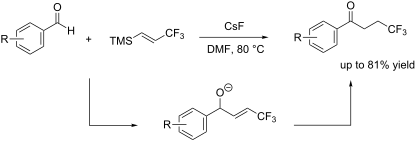
- to 6. Conclusion We reacted 1 with benzaldehyde in the presence of CsF to provide 3. We demonstrated that 4 was generated in the first step of the reaction, and then subsequently isomerized to 3 under basic conditions. This sequential reaction involves an oxidative 3,3,3-trifluoropropylation of the


Features of the behavior of 4-amino-5-carboxamido-1,2,3-triazole in multicomponent heterocyclizations with carbonyl compounds
Beilstein J. Org. Chem. 2012, 8, 2100–2105, doi:10.3762/bjoc.8.236
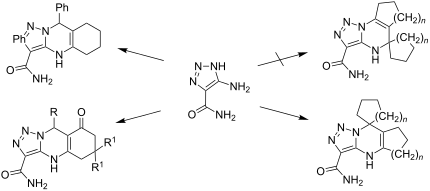
- the viewpoint of yields and purity of the target compounds were observed when ultrasound-assisted method C was applied. Sequential reaction via synthesis of arylidenecyclohexanone 10 also gave as sole reaction product compound 7 under all the methods of activation applied. However, microwave heating


Facile synthesis of functionalized tetrahydroquinolines via domino Povarov reactions of arylamines, methyl propiolate and aromatic aldehydes
Beilstein J. Org. Chem. 2012, 8, 1839–1843, doi:10.3762/bjoc.8.211
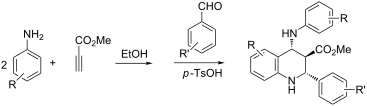
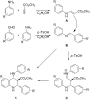
- overnight to give the desired β-enamino ester. Then, benzaldehyde and p-toluenesulfonic acid was introduced in the reaction system and the sequential reaction was finished in 48 hours at room temperature monitored by TLC. After workup we were pleased to find that the functionalized tetrahydroquinoline 1c


Organocatalytic asymmetric Michael addition of unprotected 3-substituted oxindoles to 1,4-naphthoquinone
Beilstein J. Org. Chem. 2012, 8, 1360–1365, doi:10.3762/bjoc.8.157
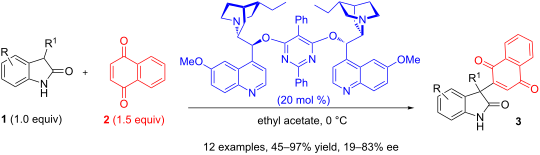
- could be operated as a “one-pot” sequential reaction. After the reaction of 1i and 2 was run at 0 °C for five days a small amount of oxindole 1i still remained. Then, the reaction was warmed to room temperature, followed by the addition of Pd/C and ammonium formate. When TLC analysis revealed that the
- following steps. Even if there is much potential for further improvement in the ee, this sequential reaction represented the first example of catalytic asymmetric synthesis of 3,3-diaryl oxindoles. Conclusion In summary, we have developed the first example of organocatalytic Michael addition of unprotected


Asymmetric one-pot sequential Friedel–Crafts-type alkylation and α-oxyamination catalyzed by a peptide and an enzyme
Beilstein J. Org. Chem. 2012, 8, 1333–1337, doi:10.3762/bjoc.8.152
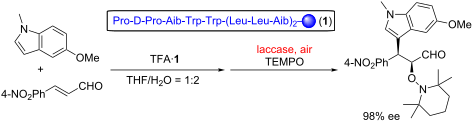
- Kengo Akagawa Ryota Umezawa Kazuaki Kudo Institute of Industrial Science, University of Tokyo, 4-6-1 Komaba, Meguro-ku, Tokyo 153-8505, Japan 10.3762/bjoc.8.152 Abstract In the presence of a peptide catalyst and the oxidative enzyme laccase, a one-pot sequential reaction including a Friedel
- –Crafts-type alkylation of α,β-unsaturated aldehydes followed by an α-oxyamination was realized. The reaction in aqueous solvent to promote the enzymatic oxidation, and the use of a peptide catalyst compatible with such conditions, were essential. The present sequential reaction afforded oxygen
- ][6][7][8][9][10][11]. Especially because organocatalysts have been demonstrated to possess a high feasibility for sequential reactions [12][13][14][15][16], it is expected that a sequential reaction including an organocatalytic FCAA step could provide highly functionalized indole compounds [17][18


An easy α-glycosylation methodology for the synthesis and stereochemistry of mycoplasma α-glycolipid antigens
Beilstein J. Org. Chem. 2012, 8, 629–639, doi:10.3762/bjoc.8.70
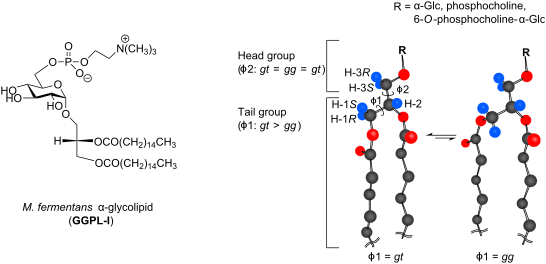
- glycerol sn-1 position. Then, this compound was converted to glycolipid 8a after sequential reaction of the temporary tert-butyldimethylsilyl (TBDMS) -protected sugar, and O-acylation at the glycerol 2-OH position to give 7a, followed by removal of the TBDMS protecting group. For introducing the





