Search results
Search for "XRD" in Full Text gives 121 result(s) in Beilstein Journal of Organic Chemistry.
C3-Alkylation of furfural derivatives by continuous flow homogeneous catalysis
Beilstein J. Org. Chem. 2023, 19, 582–592, doi:10.3762/bjoc.19.43
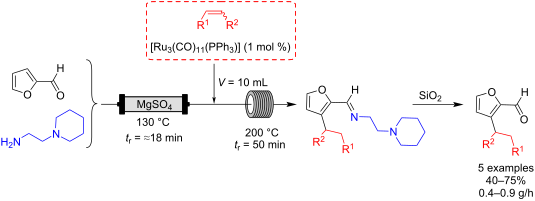
- Supporting Information File 20: Experimental and copies of spectra. Acknowledgements The authors acknowledge MS3U of Sorbonne Université for HRMS analysis and CNRS. We also thank J. Forté for the XRD analyses (IPCM) and A. Miche for the XPS analyses (LRS). Funding The authors acknowledge H2020-WIDESPREAD-05


Comparison of crystal structure and DFT calculations of triferrocenyl trithiophosphite’s conformance
Beilstein J. Org. Chem. 2022, 18, 1499–1504, doi:10.3762/bjoc.18.157
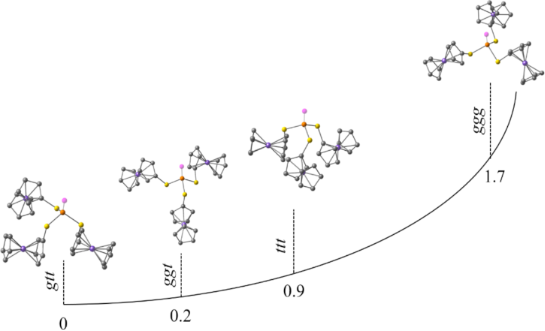
- [7]. It is important to know the conformational capabilities of such ligands for construction of such complexes [8][9][10][11]. However, to date, XRD data on phosphorus derivatives containing a ferrocenyl substituent at the sulfur atom are presented only in oxidized and sulfurized forms


Recent developments and trends in the iron- and cobalt-catalyzed Sonogashira reactions
Beilstein J. Org. Chem. 2022, 18, 262–285, doi:10.3762/bjoc.18.31
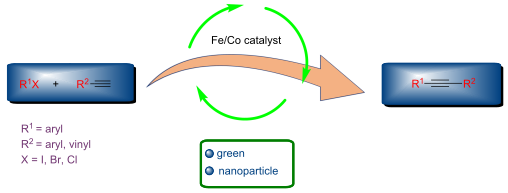
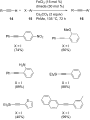
- phenylacetylene in the presence of a series of PdCo bimetallic nanoparticles with different compositions on graphite sheets as highly active catalysts (Scheme 27) [40]. The catalyst was prepared by a chemical reduction method and characterized by various techniques like Raman, XRD, TEM, and XPS. The Pd/Co(1:1)NPs




Synthesis of novel [1,2,4]triazolo[1,5-b][1,2,4,5]tetrazines and investigation of their fungistatic activity
Beilstein J. Org. Chem. 2022, 18, 243–250, doi:10.3762/bjoc.18.29
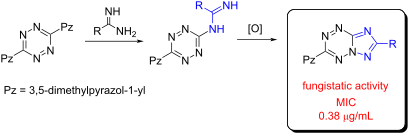
- XRD data (Figure 1). In order to select optimal conditions for the synthesis of compounds 3, the oxidative systems have been varied for the reactions of tetrazines 2a,b,g bearing methyl, phenyl, and pyrazolyl substituents. Attempts to use Pb(OAc)4 as an oxidizing agent in CHCl3 resulted in the


Ready access to 7,8-dihydroindolo[2,3-d][1]benzazepine-6(5H)-one scaffold and analogues via early-stage Fischer ring-closure reaction
Beilstein J. Org. Chem. 2022, 18, 143–151, doi:10.3762/bjoc.18.15
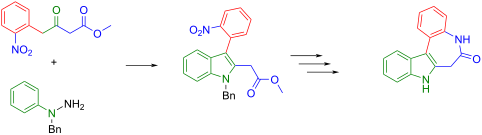
- interchanged. However, to our delight only the formation of the desired species 1a occurred, as evidenced by two-dimensional NMR measurements (for atom labeling scheme used for assignment of resonances see Figure S1 in Supporting Information File 1) and confirmed by SC-XRD (Figure 2), being in agreement with
- [2,3-d][1]benzazepin-6(5H)-one (3a). This procedure delivered analytically pure 3a in 80% yield as also confirmed by SC-XRD (Figure 3). The final step to structure C required removal of the benzyl group. Debenzylation of amines is commonly performed by palladium-catalyzed hydrogenation [40]. However
- glacial acetic acid at 100 °C gave 1c in 53% yield. Compound 2c was obtained by palladium-catalyzed reduction of 1c with hydrogen in an excellent yield and its structure was confirmed by SC-XRD (Figure S4 in Supporting Information File 1). The following ring-closure reaction of 2c with trimethylaluminum






Green synthesis of C5–C6-unsubstituted 1,4-DHP scaffolds using an efficient Ni–chitosan nanocatalyst under ultrasonic conditions
Beilstein J. Org. Chem. 2022, 18, 133–142, doi:10.3762/bjoc.18.14
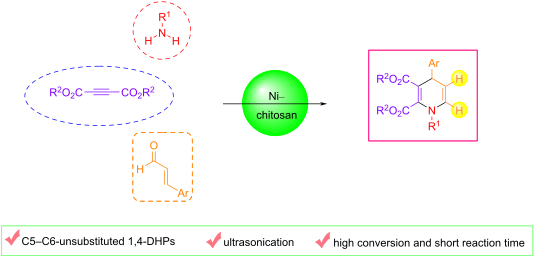
- characterized by powder Fourier-transform infrared (FTIR) spectroscopy, X-ray diffraction (XRD) analysis, scanning electron microscopy (SEM), high-resolution transmission electron microscopy (HRTEM), energy-dispersive X-ray (EDX) spectroscopy, etc. It was effectively utilized in the eco-friendly synthesis of
- similarity of the two spectra may have been due to the low content of nickel in the catalyst. To understand the crystallinity of the material, we carried out a powder XRD (PXRD) analysis (Figure 2). Chitosan, in general, gives rise to a characteristic, partially crystalline phase by virtue of intramolecular
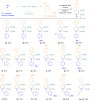
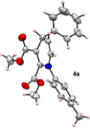
- with this methodology, as shown in Figure 5. The synthesized products were characterized by 1H NMR, 13C NMR, HRMS, and melting point analysis. The structure of the compounds was also confirmed by single-crystal XRD analysis of 4a (CCDC1949329, Figure 6). Plausible mechanism A plausible reaction




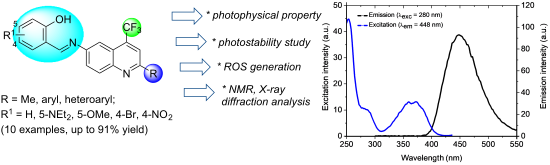
Photophysical, photostability, and ROS generation properties of new trifluoromethylated quinoline-phenol Schiff bases
Beilstein J. Org. Chem. 2021, 17, 2799–2811, doi:10.3762/bjoc.17.191
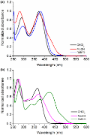
- solution and no signal belonging to the Z isomer was observed in all cases, which can be confirmed by the chemical shift values in the 1H NMR regarding the –CH=N bond. Finally, in order to determine the real molecular structure of the Schiff bases 3, single-crystal X-ray diffraction (SC-XRD) was performed




Synthesis of new bile acid-fused tetrazoles using the Schmidt reaction
Beilstein J. Org. Chem. 2021, 17, 2611–2620, doi:10.3762/bjoc.17.174
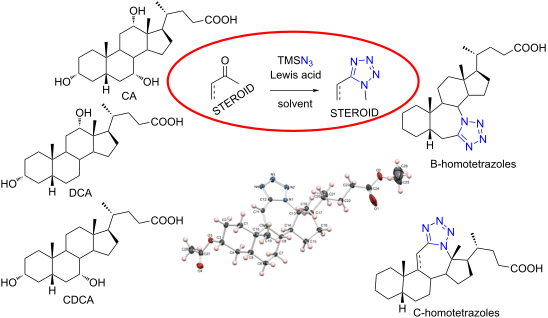
- the aromatic tetrazole ring. A characteristic example of this is the H-17 proton in compound 13 with an unusually high chemical shift (2.85 ppm). Unambiguous confirmation of the tetrazole molecular structure came from the XRD analysis of compounds 13 and 14 (Figure 3) [50][51]. The already established
- additional XRD analysis. A preliminary test of the antiproliferative activity showed that the introduction of C-ring-fused tetrazole lowered the activity towards some tumor cell lines compared to the corresponding ketone, while B-ring-fused tetrazole increased these activities. Experimental General procedure


Free-radical cyclization approach to polyheterocycles containing pyrrole and pyridine rings
Beilstein J. Org. Chem. 2021, 17, 1490–1498, doi:10.3762/bjoc.17.105
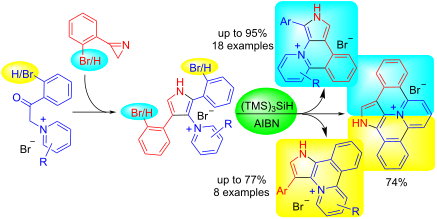
- ]pyrrolo[2,3,4-ij]quinolizin-14-ium bromide (Scheme 4). The structure of 13 was confirmed by XRD-analysis (Figure 2). The reaction of bromide 13 with aq KOH at room temperature gave quantitatively the corresponding base 14. This new 24π-electron hexacyclic phenalenoid doped with two nitrogens is
- XRD-analysis (Figure 3). It was found that both salt 17a and base 18a can be isomerized into isomer 19 under heating in the presence of AlCl3 via migration of the 3-Ph-group into the position 2 (Scheme 6). Compounds 18a, 19 can be quantitatively N-alkylated by MeI at room temperature and by BnBr at 40


Synthesis of 1-indolyl-3,5,8-substituted γ-carbolines: one-pot solvent-free protocol and biological evaluation
Beilstein J. Org. Chem. 2021, 17, 1453–1463, doi:10.3762/bjoc.17.101
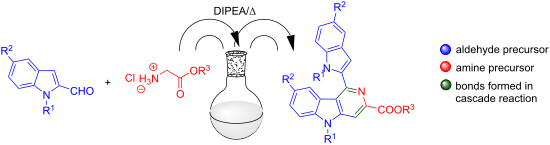
- derivative 3ac (10 nM, 100 nM, 1 μM, 10 μM, and 100 μM), the cellular uptake and distribution was monitored by using confocal microscopy (λex = 405 nm; λem range = 420–470 nm). Selected examples of compounds containing the γ-carboline core. Single-crystal XRD structure of 3ac (CCDC: 1897787). UV–vis
- various cancer cell lines. Supporting Information Supporting Information File 194: Copies of 1H, 13C NMR spectra of 1a–h, 3aa–ac, 3ba–bc, 3da, 3ea, 3ga, 12a–b, 12e–f, 12i, 14d, 14g and 15, UV calibration curves in different organic solvents for γ-carboline 3ac, and single-crystal XRD data of 3ac






A new and efficient methodology for olefin epoxidation catalyzed by supported cobalt nanoparticles
Beilstein J. Org. Chem. 2021, 17, 519–526, doi:10.3762/bjoc.17.46
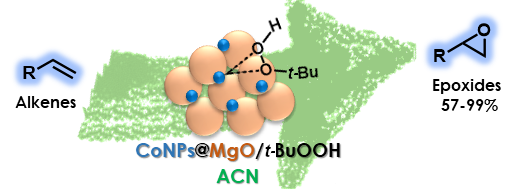
- confirming the heterogeneous nature of the catalytic method. The freshly prepared CoNPs/MgO catalyst was characterized by means of transmission electron microscopy (TEM), energy dispersive X-ray spectroscopy (EDX), inductively coupled plasma atomic emission spectroscopy (ICP-AES), X-ray diffraction (XRD) and
- Information File 1) confirmed the presence of cobalt with energy bands of 0.8 (L line), 6.9 and 7.7 keV (K lines). The XRD diffractogram showed only the support diffraction pattern, no diffraction peaks owing to cobalt species could be observed. The cobalt loading fixed to the MgO support was 1.9 wt % as
- . X-ray diffraction (XRD) analyses were performed using a Bruker AXS D8 Advance diffractometer, equipped with a Cu-Kα1,2 radiation source. Atomic absorption spectroscopy was carried out on a Perkin Elmer AAnalist200 spectrometer. X-ray photoelectron spectroscopic analyses (XPS) were performed on a PHI


Ultrasound-assisted Strecker synthesis of novel 2-(hetero)aryl-2-(arylamino)acetonitrile derivatives
Beilstein J. Org. Chem. 2020, 16, 2929–2936, doi:10.3762/bjoc.16.242
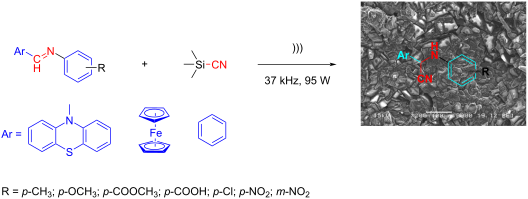
- that the C-(hetero)aryl-α-(arylamino)acetonitrile derivatives can be considered genotoxically safe and possibly antimutagenic. Keywords: Ames test; α-aminoacetonitriles; ferrocene; phenothiazine; SEM; single crystal XRD; sonochemistry; Introduction Sonochemistry can be considered as a major


Selective and reversible 1,3-dipolar cycloaddition of 6-aryl-1,5-diazabicyclo[3.1.0]hexanes with 1,3-diphenylprop-2-en-1-ones under microwave irradiation
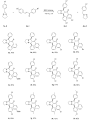
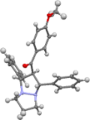
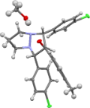
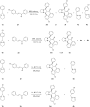
Beilstein J. Org. Chem. 2020, 16, 2679–2686, doi:10.3762/bjoc.16.218
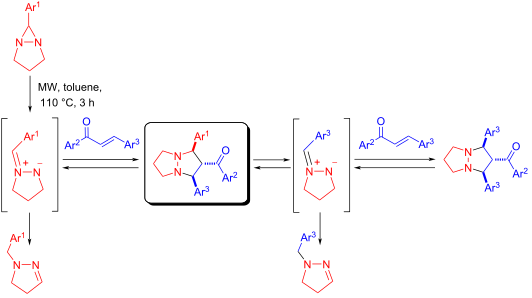
- of azomethine imine, generated from pyrazolopyrazole 3g. Supporting Information Supporting Information File 422: Experimental and characterization data of all new compounds. Acknowledgements NMR, HRMS and XRD studies were performed at the Saint Petersburg State University Center for Magnetic




Particle size effect in the mechanically assisted synthesis of β-cyclodextrin mesitylene sulfonate
Beilstein J. Org. Chem. 2020, 16, 2598–2606, doi:10.3762/bjoc.16.211
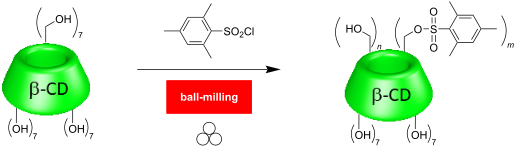
- (Table 1). As expected, an increase in the SSA was observed upon grinding because of the reduction of the β-CD particle size. XRD analysis X-ray diffraction data give additional evidence for the crystallinity variation of the β-CD particles upon grinding. Figure 3 shows a series of X-ray powder
- diffraction X-ray diffraction (XRD) measurements were performed using a Rigaku ULTIMA IV diffractometer equipped with Cu anticathode (λKα = 1.5418 Å), Soller slits to limit the divergence of X-ray beam and a nickel foil filter to attenuate the CuKβ line. XRD patterns were recorded in the range of 3–50° (scan
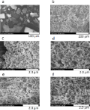
- modified CDs. Kinetics In a similar manner as described in [14]. SEM images of β-CD particles a) before grinding and ground for b) 5 min, c) 10 min, d) 29 min, e) 85 min, and f) 297 min. Granulometric composition of β-CD particles against time after grinding at 30 Hz. XRD patterns of β-CD powders obtained




Palladium nanoparticles supported on chitin-based nanomaterials as heterogeneous catalysts for the Heck coupling reaction
Beilstein J. Org. Chem. 2020, 16, 2477–2483, doi:10.3762/bjoc.16.201
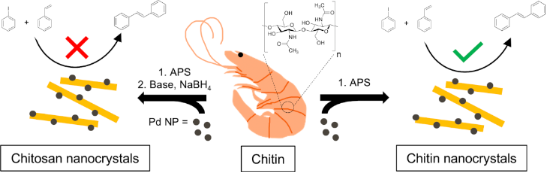
- afford much stronger coordination to Pd(II) than OH typically present in CNC, and potentially prevent its full reduction. Through FTIR (Supporting Information File 1, Figure S2) and XRD (Supporting Information File 1, Figure S3) analysis, there is little to no structural changes occurring in either the
- ChNC or the ChsNC during catalyst fabrication. The lack of metallic Pd peaks present in XRD is indicative of extreme broadening of the reflections of very small Pd NPs within the packets found. Heck coupling is a prominent reaction for arene alkenylation, as the production of stilbene derivatives is


Reactions of 3-aryl-1-(trifluoromethyl)prop-2-yn-1-iminium salts with 1,3-dienes and styrenes
Beilstein J. Org. Chem. 2020, 16, 2064–2072, doi:10.3762/bjoc.16.173
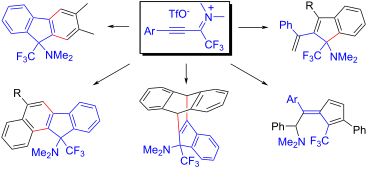
- cyclization required extended heating in refluxing toluene and finally furnished the neutral polycycle 11 in good yield. The paddlewheel-shaped structure of 11 was established by an XRD structure determination and is shown in Figure 1. The reactivity of 1a in the Diels–Alder reaction with anthracene may be
- reaction mechanism. Thus, the reaction of 1a with α-methylstyrene or 1,1-diphenylethene proceeded at a faster rate than with styrene and yielded 3-methyl- and 3-phenyl-2-vinylindenes 12b and 12c (structure confirmed by an XRD analysis, see Figure 2) in high yields. Benzo[a]fluorenes were found to a minor


Natural dolomitic limestone-catalyzed synthesis of benzimidazoles, dihydropyrimidinones, and highly substituted pyridines under ultrasound irradiation
Beilstein J. Org. Chem. 2020, 16, 1881–1900, doi:10.3762/bjoc.16.156
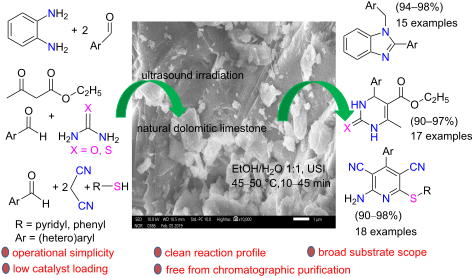
- pyridines via C–N, C–C, and C–S bond formations in a mixture of ethanol and H2O under ultrasound irradiation. The catalyst is characterized by XRD, FTIR, Raman spectroscopy, SEM, and EDAX analysis. The main advantages of this methodology include the wide substrate scope, cleaner reaction profile, short
- indicators. The catalyst was characterized by XRD, IR, Raman, SEM, and EDAX analysis. The chemical composition of the NDL was determined by adopting a standard quantitative analysis [75]. The obtained results are summarized in Table 1. The basic strength of the NDL catalyst (H_) was measured using Hammett
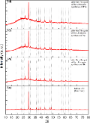
- 0.02 M benzoic acid solution. From the titer values of the benzoic acid solution, the amount of the basic sites was found to be 0.033 mmol/g. The powder XRD pattern of the NDL catalyst is shown in Figure 2. The diffraction peaks at 2θ = 23.16, 29.51, 31.05, 36.02, 38.07, 39.40, 43.0, 47.2, 47.5, 48.5


Clickable azide-functionalized bromoarylaldehydes – synthesis and photophysical characterization
Beilstein J. Org. Chem. 2020, 16, 1683–1692, doi:10.3762/bjoc.16.139
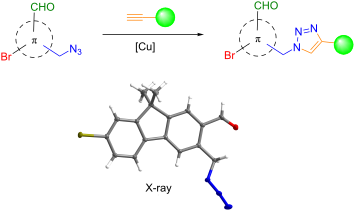
- previous deprotection reactions, fluorene 21 was converted by means of a three-step sequence to the desired azide-functionalized 7-bromofluorene-2-carbaldehyde 5 in 86% yield and an overall yield of 45% (starting from fluorene). The molecular structure of 5 could be verified by X-ray diffraction (XRD, see


Rearrangement of o-(pivaloylaminomethyl)benzaldehydes: an experimental and computational study
Beilstein J. Org. Chem. 2020, 16, 1636–1648, doi:10.3762/bjoc.16.136
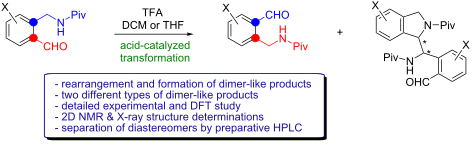
- ) coupled with a Dionex Ultimate 3000 RS HPLC (Sunnyvale, CA, USA) system with a diode array detector. HRMS spectra of the diastereomeric 23a and 23b compounds are shown on page S44 of Supporting Information File 1. Single-crystal X-ray diffraction (SC-XRD) measurements were carried out on a Rigaku R-Axis
- Spider diffractometer (Tokyo, Japan) with imaging plate area detector using graphite monochromatic Cu Kα radiation. SC-XRD structures were deposited at the Cambridge Crystallographic Data Centre under the following numbers: CCDC 1953421 (3a), 1953424 (3b), 1953422 (8b), 1953423 (23a) and 1958809 (23b


One-pot synthesis of 1,3,5-triazine-2,4-dithione derivatives via three-component reactions
Beilstein J. Org. Chem. 2020, 16, 1447–1455, doi:10.3762/bjoc.16.120
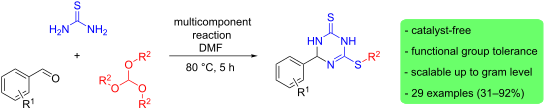
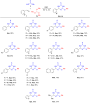
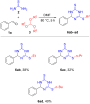
- structure unambiguously, as a representative example, the structure of 6aa was also confirmed by single crystal X-ray diffraction (XRD) studies after crystallization from ethyl acetate/hexane (Figure 2). CCDC 1991859 (for 6aa) contains the supplementary crystallographic data for this paper. These data are




Activated carbon as catalyst support: precursors, preparation, modification and characterization
Beilstein J. Org. Chem. 2020, 16, 1188–1202, doi:10.3762/bjoc.16.104
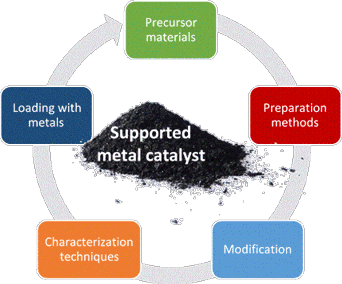
- /O elemental analysis, EDX, XPS, XRD and TGA. Keywords: activated carbon; catalysis; characterization techniques; metal supported on carbon catalysts; preparation methods; Introduction Support materials for metal catalysts allow the dispersion and stabilization of small metal particles on a surface
- phosphorous species in the carbons could be responsible for the examined difference [130]. X-ray diffraction (XRD): X-ray diffraction gives information on the crystallinity or amorphicity of activated carbons. Comparison of resulting XRD patterns with the crystallographic databases clarify that partially
- graphitic structures are available in the activated carbon materials. In addition, XRD can be used for investigations of the activation process by detecting crystalline intermediates of the activation reagents. Liang and co-workers found in the activated carbon prepared by microwave-induced ZnCl2 activation


Formal preparation of regioregular and alternating thiophene–thiophene copolymers bearing different substituents
Beilstein J. Org. Chem. 2020, 16, 317–324, doi:10.3762/bjoc.16.31
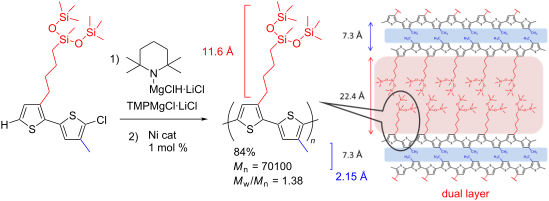
- fluoroalkyl group and a branched oligosiloxane unit in hexanes was noted. XRD analysis of the copolymer 6c, bearing branched oligosiloxane and methyl groups, was carried out. Two remarkable peaks were observed at 2θ = 3.94° and 12.18°, respectively, as shown in Figure 2a. The result suggested that the thin
- our result from the XRD analysis (7.3 Å) corresponding to the aggregation of the alternating methyl substituent [27]. Conclusion In summary, we showed that formally alternating thiophene–thiophene copolymers could be synthesized by employing differently substituted halobithiophenes as monomers in
- and KF-404HQ. Molecular weights and molecular weight distributions were estimated on the basis of the calibration curve obtained by 6 standard polystyrenes. UV–vis absorption spectra of the polymer films were measured with a Shimadzu UV-3150 spectrometer. XRD analysis was carried out with a Rigaku


Reversible photoswitching of the DNA-binding properties of styrylquinolizinium derivatives through photochromic [2 + 2] cycloaddition and cycloreversion
Beilstein J. Org. Chem. 2020, 16, 111–124, doi:10.3762/bjoc.16.13
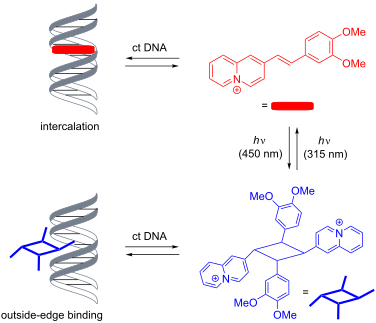
- single crystals after slow evaporation, their structure was determined by single crystal X-ray diffraction (XRD) analysis (Figure 8, cf. Supporting Information File 1). The cyclobutane 4b crystallized from water in the monoclinic space group P21/n, and the derivative 4c crystallized from water in the
- triclinic space group . Both XRD analyses clearly showed that both cyclobutane products were formed as rctt configured dimers 4b and 4c (Figure 8). The products 4b and 4c may have formed by a syn head-to-tail dimerization of the E-configured substrate 3a and 3b or by an anti head-to-tail photodimerization




Carbazole-functionalized hyper-cross-linked polymers for CO2 uptake based on Friedel–Crafts polymerization on 9-phenylcarbazole
Beilstein J. Org. Chem. 2019, 15, 2856–2863, doi:10.3762/bjoc.15.279
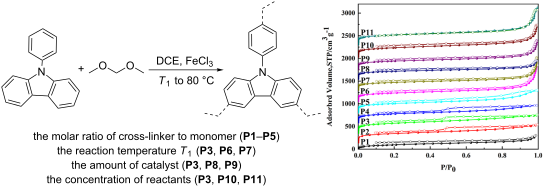
- of rough surface particles. The particles had different size and agglomerated to loose aggregates. There were plentiful pores randomly distributed among the particles. X-ray diffraction (XRD) of obtained HCPs exhibited similar diffraction patterns, only a round peak at 10°, hinting that P1–P11 were
- NETZSCH TG 209F1 TG analyzer for 40–800 °C at a heating rate of 10 °C min−1 under a nitrogen flow of 50 mL min−1. The X-ray diffraction (XRD) patterns of the as prepared polymers were collected using a PANalytical X’pert Pro MPD diffractometer with Cu Kα radiation at room temperature, with step size of
- 100% which was due to the adsorbed catalyst or solvent in the pore structure [15]. All obtained samples were colored ranging from pale brown to dark brown. FTIR spectrum of HCPs P1–P5 and 9-PCz. Solid state 13C NMR spectrum of P3. TGA curves of HCPs P1–P5. Scanning Electron micrograph of HCPs. The XRD


Synthesis of aryl-substituted thieno[3,2-b]thiophene derivatives and their use for N,S-heterotetracene construction
Beilstein J. Org. Chem. 2019, 15, 2678–2683, doi:10.3762/bjoc.15.261
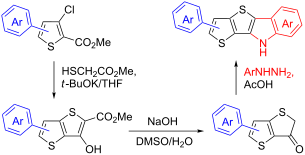
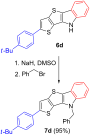
- suitable for XRD analysis (Figure 2). Conclusion In summary, in this study, we showed the convenience of the Fiesselmann thiophene synthesis for the construction of new aryl-substituted thieno[3,2-b]thiophene derivatives, namely the reaction of 5- or 4-aryl-3-chlorothiophene-2-carboxylates with methyl