Search results
Search for "biosynthetic pathway" in Full Text gives 97 result(s) in Beilstein Journal of Organic Chemistry.
Recent developments in the engineered biosynthesis of fungal meroterpenoids
Beilstein J. Org. Chem. 2024, 20, 578–588, doi:10.3762/bjoc.20.50
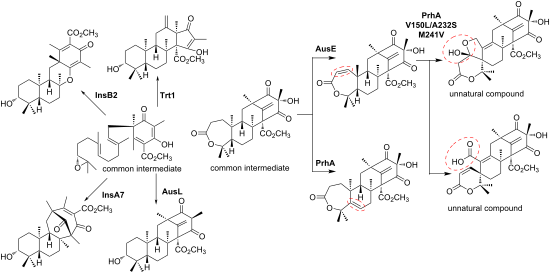
- will be discussed as examples of engineering biosynthetic pathways and key enzymes involved in fungal meroterpenoid biosynthesis. Furthermore, a construction of the artificial biosynthetic pathway composed of the fungal meroterpenoids pathway and the pathway from other species, in fungal host
- produce daurichromenic acid (61) (Figure 9), a plant-derived meroterpenoid that exhibits anti-HIV activity [40]. Furthermore, by expressing AscD, a fungal halogenase from the ascochlorin biosynthetic pathway, the authors succeeded in biosynthesizing 62, an unnatural meroterpneoid, chloro-daurichromenic






Pseudallenes A and B, new sulfur-containing ovalicin sesquiterpenoid derivatives with antimicrobial activity from the deep-sea cold seep sediment-derived fungus Pseudallescheria boydii CS-793
Beilstein J. Org. Chem. 2024, 20, 470–478, doi:10.3762/bjoc.20.42
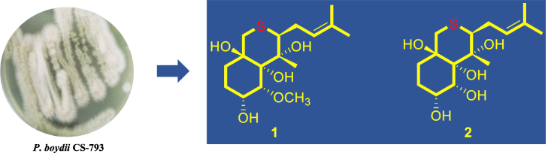
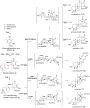
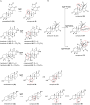
- data for compound 3 was conducted (Table 1) and its absolute configurations were assigned as 1R, 2S, 6R, 7R, 8S by single-crystal X-ray diffraction analysis with a Flack parameter of 0.024(6) (Figure 4). A plausible biosynthetic pathway for compounds 1–5 is proposed as shown in Scheme 1. In this
- . Key 1H-1H COSY (bond lines), and HMBC (red arrows) correlations of 1–3. NOE correlations of compounds 1 and 2 (solid line indicates β-orientation and dashed lines represent α-orientation). X-ray crystal structure of compounds 1–3 (with a thermal ellipsoid probability of 50%). Proposed biosynthetic
- pathway for compounds 1–5. 1H (500 MHz) and 13C NMR (125 MHz) data for compounds 1–3. Antimicrobial activities of compounds 1–3 (MIC).a Supporting Information Supporting Information File 5: Selected 1D and 2D NMR, and HRESIMS spectra of compounds 1 and 2, and 1D NMR spectra of compounds 3–5. Supporting


Development of a chemical scaffold for inhibiting nonribosomal peptide synthetases in live bacterial cells
Beilstein J. Org. Chem. 2024, 20, 445–451, doi:10.3762/bjoc.20.39
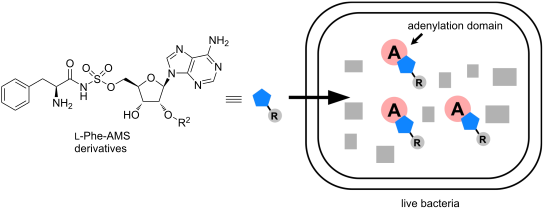
- modular synthases [5]. They used the inhibitors of individual domains to investigate the biosynthetic pathway of blue pigment synthetase A, which produces the blue pigment indigoidine, and demonstrated that their results complement the proposed biosynthetic pathway. Furthermore, among the catalytic domain


Identification of the p-coumaric acid biosynthetic gene cluster in Kutzneria albida: insights into the diazotization-dependent deamination pathway
Beilstein J. Org. Chem. 2024, 20, 1–11, doi:10.3762/bjoc.20.1
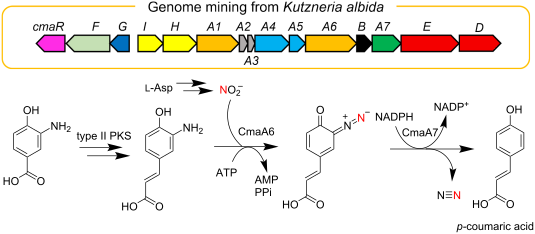
- , Bunkyo-ku, Tokyo 113-8657, Japan 10.3762/bjoc.20.1 Abstract Recently, we identified the biosynthetic gene cluster of avenalumic acid (ava cluster) and revealed its entire biosynthetic pathway, resulting in the discovery of a diazotization-dependent deamination pathway. Genome database analysis revealed
- vigorously used to search for novel compounds in recent years due to the rapid improvement of DNA sequence technologies and computational approaches to analyze BGCs [1][3]. Our research group previously identified the secondary metabolite-specific nitrous acid biosynthetic pathway, named ANS (aspartate
- biosynthetic pathway [13]. In this pathway, 3-amino-4-hydroxybenzoic acid (3,4-AHBA, 1), synthesized by AvaH and AvaI, is loaded onto AvaA3 (carrier protein) by AvaA1 (AMP-dependent ligase), resulting in 3,4-AHBA-AvaA3. A highly reducing type II polyketide synthase (PKS) system [15][16] (AvaA2, A4, A5, and A8


Unraveling the role of prenyl side-chain interactions in stabilizing the secondary carbocation in the biosynthesis of variexenol B
Beilstein J. Org. Chem. 2023, 19, 1503–1510, doi:10.3762/bjoc.19.107
- biosynthesis of trichobrasilenol [22], by combined methods of computational and experimental chemistry. Recently, Dickschat et al. reported the synthesis of a novel diterpene compound, variexenol B, using a substrate analogue called iso-GGPP (Scheme 1) [23]. This biosynthetic pathway has two interesting
- hyperconjugation determines whether the reaction proceeds in a stepwise or concerted manner. The second interesting aspect of the biosynthesis of variexenol B is that the biosynthetic pathway involves an intermediate with an exomethylene group. A terpene with an exomethylene group as a starting material is rare
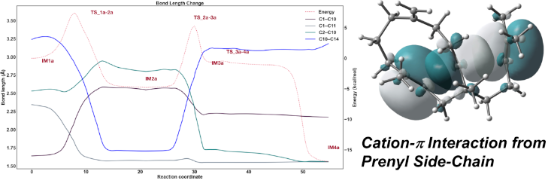
- carbocation and the prenyl side chain. Figure 1 shows the computed biosynthetic pathway and energy diagram without cation–π interaction, while Figure 2 shows the computed biosynthetic pathway including cation–π interaction from the prenyl side chain. Our research started with the application of DFT


Functions of enzyme domains in 2-methylisoborneol biosynthesis and enzymatic synthesis of non-natural analogs
Beilstein J. Org. Chem. 2023, 19, 1452–1459, doi:10.3762/bjoc.19.104
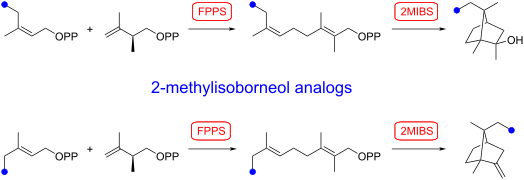
- for sodorifen [38] – potentially allow for an evolution towards a natural biosynthetic pathway for C12 monoterpenoids. Experimental General synthetic methods Chemicals were purchased from Sigma-Aldrich Chemie GmbH (Steinheim, Germany), Carbolution Chemicals GmbH (St. Ingbert, Germany), or Carl Roth


Cassane diterpenoids with α-glucosidase inhibitory activity from the fruits of Pterolobium macropterum
Beilstein J. Org. Chem. 2023, 19, 658–665, doi:10.3762/bjoc.19.47
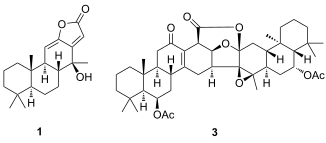
- , MeOH); lit. −44 (c 0.05, MeOH)) [18], confirming the same absolute configuration these compounds should be derived from the same biosynthetic pathway. In addition, the ECD spectra of (5S,8R,9S,10R,14S)-1 and its enantiomer were calculated at the B3LYP functional using a TD–DFT method [19]. As
- = 2.7 Hz) and H-6′ (J = 2.7 Hz). The syn orientations of H-15, H-15′, H-16′ and H3-17′ were established from the NOESY correlations of H-15′ to H3-17′, H-16′ and of H-15 to H-16′. From above information, the relative configuration of C-12′ was assigned and supported by the biosynthetic pathway based on


Combretastatins D series and analogues: from isolation, synthetic challenges and biological activities
Beilstein J. Org. Chem. 2023, 19, 399–427, doi:10.3762/bjoc.19.31
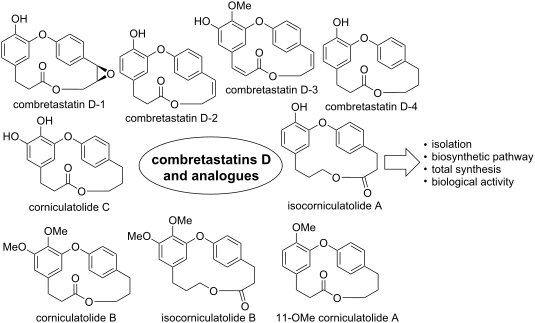
- compounds available in the literature, there is none which focuses only on combretastatins D and their isomers. Therefore, this review is divided into three main parts: the first comprises the isolation of these compounds from natural sources. In the following part, the biosynthetic pathway and the total
- elucidate the chemical structures of the isolated compounds [19]. 2 Synthesis 2.1 Biosynthetic pathway In the literature, there are two possible biosynthetic pathways for the formation of these compounds. The first one was proposed by Pettit and co-workers [16][17] based on tyrosine as the starting material
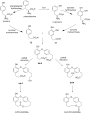
- ]. IC50 of compounds against α-glucosidase [19]. Biosynthetic pathway proposed by Pettit and co-workers. Biosynthetic pathway towards corniculatolides or isocorniculatolides proposed by Ponnapalli and co-workers. Retrosynthetic approaches. Attempt of total synthesis of 2 by Boger and co-workers employing




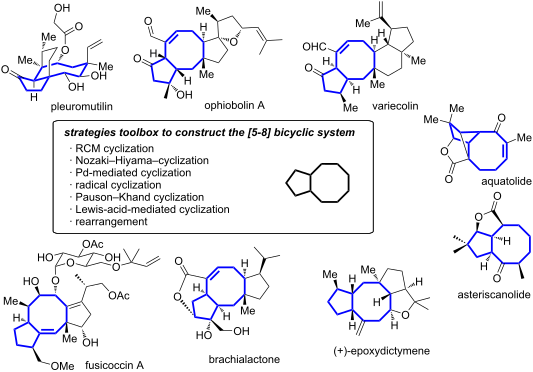
Strategies to access the [5-8] bicyclic core encountered in the sesquiterpene, diterpene and sesterterpene series
Beilstein J. Org. Chem. 2023, 19, 245–281, doi:10.3762/bjoc.19.23


Identification and determination of the absolute configuration of amorph-4-en-10β-ol, a cadinol-type sesquiterpene from the scent glands of the African reed frog Hyperolius cinnamomeoventris
Beilstein J. Org. Chem. 2023, 19, 167–175, doi:10.3762/bjoc.19.16
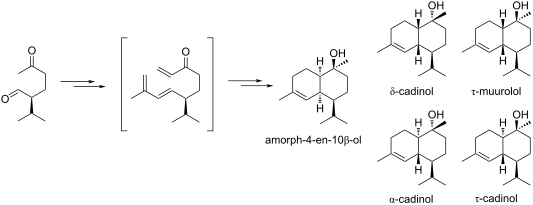
- scent gland macrolides can be biosynthesized by the frogs [7], although the macrolides are produced from the fatty acid biosynthetic pathway. The gas chromatographic separation obtained with the chiral phase also allowed the determination of the identity of the minor diastereomers formed during the


Combining the best of both worlds: radical-based divergent total synthesis
Beilstein J. Org. Chem. 2023, 19, 1–26, doi:10.3762/bjoc.19.1
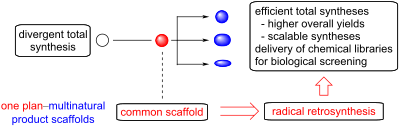
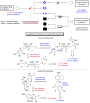
- ]: Reticuline-type alkaloid oxidative coupling is a well-established biosynthetic pathway that produces important pharmaceutical structures [93], such as (+)-corytuberine, (−)-codeine, (−)-morphine, (+)-sebiferine (181), etc., depending on the regioselectivity of the coupling (Scheme 15) [94]. During this



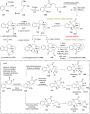


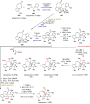

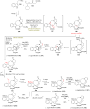


Synthesis of (−)-halichonic acid and (−)-halichonic acid B
Beilstein J. Org. Chem. 2022, 18, 1629–1635, doi:10.3762/bjoc.18.174
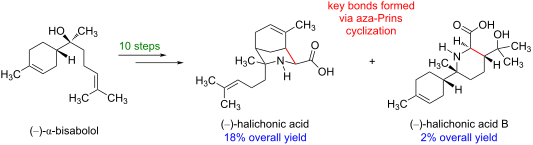
- derived from a common biosynthetic pathway starting from farnesyl pyrophosphate and glycine [5]. This prompted us to investigate a biomimetic synthesis in which the halichonic acids could be prepared from a common imine intermediate via divergent intramolecular aza-Prins cyclizations [8]. Herein, we
- , antifungal, and antimicrobial properties [10][19][20][21][22]. Notably, (+)-4 was also co-isolated with compounds (+)-1 and (+)-2 in sponge extracts, suggesting that these compounds may share a common biosynthetic pathway [4][5]. Both enantiomers of 4 have been previously synthesized [9][23][24], and this


Characterization of a new fusicoccane-type diterpene synthase and an associated P450 enzyme
Beilstein J. Org. Chem. 2022, 18, 1396–1402, doi:10.3762/bjoc.18.144
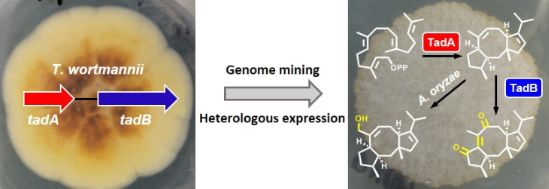
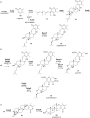
- cytotoxic FC-type diterpenoid isolated from T. purpurogenus PP-414 [7]. It will be important to elucidate the biosynthetic pathway of roussoellol C, providing enzymatic tools for expanding the chemical diversity of talaro-7,13-diene related FC-type diterpenoids via combinational biosynthesis [14
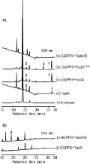
- monitored at 254 nm. Biosynthesis of FC-type diterpenoids. A) The biosynthetic pathway of 1, 2 and 4. B) Cyclization mechanisms of 1 and reported FC-type diterpenes. Supporting Information Supporting Information File 328: Experimental methods, nucleotide sequence, tables, and figures. Acknowledgements We



Cytochrome P450 monooxygenase-mediated tailoring of triterpenoids and steroids in plants
Beilstein J. Org. Chem. 2022, 18, 1289–1310, doi:10.3762/bjoc.18.135
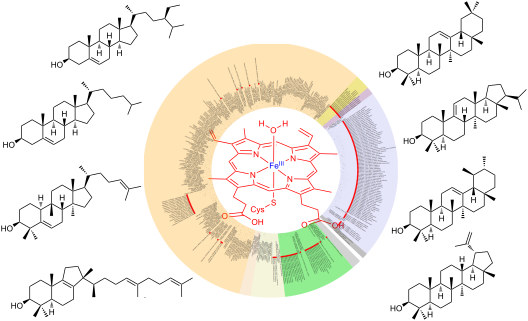
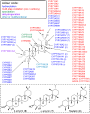
- scaffold in plants from the Cucurbitaceae family (Figure 3B). CYP87D18 (CYP85 clan) was identified as a multifunctional C11 oxidase involved in the biosynthetic pathway of mogrosides. Mogrosides, isolated from ripe fruits of Siraitia grosvenorii (Cucurbitaceae) are glycosylated triterpenoid saponins with
- protopanaxatriol [76][103]. CYP716A113v1 from Aquilegia coerulea hydroxylates cycloartenol with unknown regiospecificity when expressed in a yeast strain harbouring a tomato cycloartenol synthase gene [79]. CYP712 family members (clan 71) were first identified in the biosynthetic pathway of nor-triterpenoid




A Streptomyces P450 enzyme dimerizes isoflavones from plants
Beilstein J. Org. Chem. 2022, 18, 1107–1115, doi:10.3762/bjoc.18.113
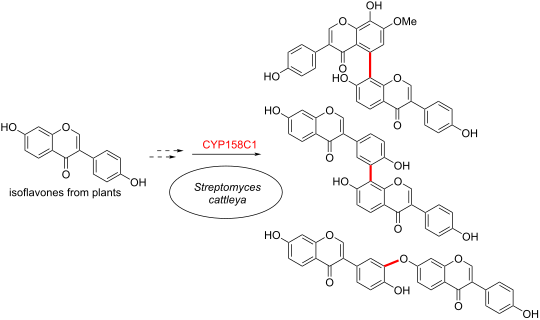
- clustered into the CYP158 clade that reportedly catalyzes dimerization of type III polyketide synthase (T3PKS) products, such as naphthols. Considering the similar biosynthetic pathway of isoflavones shared, this enzyme was expressed in E. coli and purified for in vitro biochemical assay together with four


New azodyrecins identified by a genome mining-directed reactivity-based screening
Beilstein J. Org. Chem. 2022, 18, 1017–1025, doi:10.3762/bjoc.18.102
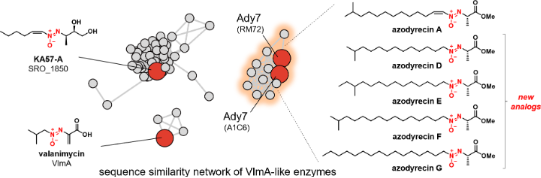
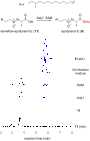
- was incubated with recombinant Ady1 in the presence of SAM, it was converted to 8, showing that Ady1 can install the methyl ester of azodyrecins (Figure 4). The in vitro characterization of Ady1 and the functional annotation of ady clusters allowed the prediction of the entire biosynthetic pathway of
- biosynthetic gene clusters of valanimycin and KA57-A, respectively. The in vitro characterization of Ady1 suggested the late-stage biosynthetic pathway of azodyrecin: the azoxy bond formation is followed by the Ady1-mediated methyl esterification to form saturated azodyrecins, and then the subsequent
- in the Refseq database. Nodes are colored according to the host organism’s order. Enzymes with known biosynthetic products are colored red. N2H4-detecting colorimetric assay. Proposed biosynthetic pathway of azodyrecin. 1H (500 MHz) and 13C (125 MHz) NMR data for azodyrecin D (7), azodyrecin E (8




Isolation and biosynthesis of daturamycins from Streptomyces sp. KIB-H1544
Beilstein J. Org. Chem. 2022, 18, 1009–1016, doi:10.3762/bjoc.18.101
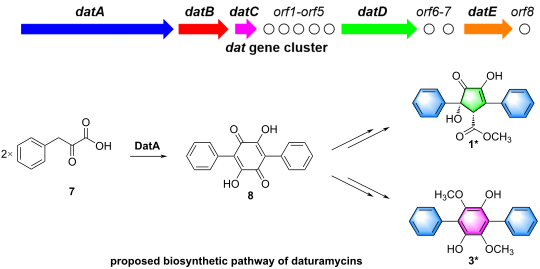
- daturamycins was identified through gene knockout and biochemical characterization experiments and the biosynthetic pathway of daturamycins was proposed. Keywords: biosynthesis; diarylcyclopentenone; polyporic acid synthetase; p-terphenyl; Streptomyces; Introduction Natural products containing a terphenyl
- DatA, which catalyzes the Claisen–Dieckmann condensation of phenylpyruvic acid (7) to generate the key intermediate polyporic acid (8). Finally, we proposed a biosynthetic pathway for daturamycins. Results and Discussion Daturamycin A (1), a yellow powder, possessed a molecular formula of C19H16O5 with
- . Diarylcyclopentenones, characteristic constituents of mushrooms [23], were rarely discovered in Streptomyces species. These components exhibit redox activity and are involved in reducing ferric (Fe3+) in the Fenton-based biological decomposition of lignocellulose [24][25]. The biosynthetic pathway of p-terphenyl was


Anti-inflammatory aromadendrane- and cadinane-type sesquiterpenoids from the South China Sea sponge Acanthella cavernosa
Beilstein J. Org. Chem. 2022, 18, 916–925, doi:10.3762/bjoc.18.91
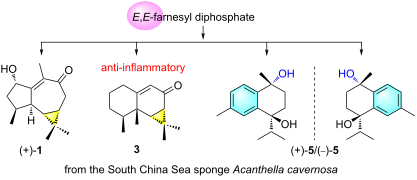
- -dependent density functional theory/electronic circular dichroism (TDDFT-ECD) calculations or X-ray diffraction analysis. A plausible biosynthetic pathway of these sesquiterpenoids and their internal correlation were proposed and discussed. In an in vitro bioassay, (+)-aristolone (3) exhibited promising
- anti-inflammatory activity by the inhibition of LPS-induced TNF-α and CCL2 release in RAW 264.7 macrophages. Keywords: Acanthella cavernosa; anti-inflammatory; biosynthetic pathway; chiral separation; marine sponge; sesquiterpenoid; Introduction Marine sponges of the genus Acanthella (class
- with five related known ones [2, 3, (−)-4, 6, and 7] (Figure 1), were obtained. Herein, we report the isolation, chiral separation of racemic mixtures of 4 and 5, structural elucidation, plausible biosynthetic pathway, and biological evaluation of these isolated compounds. Results and Discussion By the






Efficient production of clerodane and ent-kaurane diterpenes through truncated artificial pathways in Escherichia coli
Beilstein J. Org. Chem. 2022, 18, 881–888, doi:10.3762/bjoc.18.89
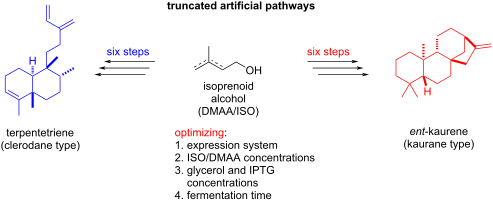
- production of terpentetriene. The medium screening for terpentetriene production as well as the elucidation of terpentetriene biosynthetic pathway in K. griseola DSM 43859 are underway in our lab. Thus, all essential genes (phoN, ipk, idi, ggdps, tdps, and ttes) for a truncated artificial pathway to produce
- the clerodane diterpene, terpentetriene, were fully collected. The biosynthetic pathway towards ent-kaurene resembles that of terpentetriene. First, a class II DTS catalyzes the cyclization of GGDP into a diphosphate intermediate, ent-copalyl diphosphate (ent-CPP). Next, a class I DTS further cyclizes


The stereochemical course of 2-methylisoborneol biosynthesis
Beilstein J. Org. Chem. 2022, 18, 818–824, doi:10.3762/bjoc.18.82
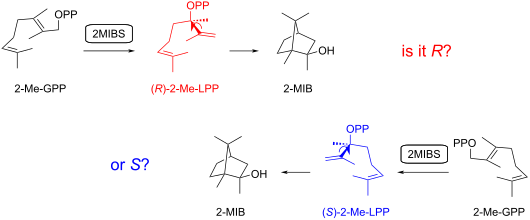
- processing through (R)-2-Me-LPP [23]. The GPP methyltransferase (GPPMT) and the 2-methylisoborneol synthase (2MIBS) and their coding genes were discovered and functionally characterized, giving further evidence for the biosynthetic pathway to compound 1 [23][24][25]. As we have recently demonstrated, the




Sesquiterpenes from the soil-derived fungus Trichoderma citrinoviride PSU-SPSF346
Beilstein J. Org. Chem. 2022, 18, 479–485, doi:10.3762/bjoc.18.50
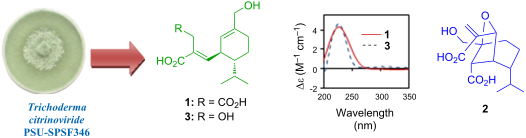
- . Structures of compounds 1–7 isolated from Trichoderma citrinoviride PSU-SPSF346. 1H-1H COSY, key HMBC, and NOEDIFF data of compounds 1 and 2. ECD spectra of compounds 1 and 3 in MeOH. Proposed biosynthetic pathway for compound 2. The NMR data of compounds 1 and 2 in CD3OD. Supporting Information Supporting


Amamistatins isolated from Nocardia altamirensis
Beilstein J. Org. Chem. 2022, 18, 360–367, doi:10.3762/bjoc.18.40
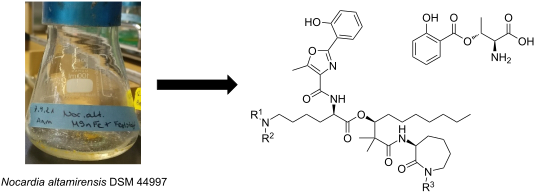
- reductive degradation of amamistatin-type siderophores. Compound 6 represents a possible shunt product of amamistatin biosynthesis. A similar molecule and its putative biosynthetic pathway were recently described by Jaspars et al. [12]. In accordance with this proposal, salicylic acid and ʟ-threonine would


α-Ketol and α-iminol rearrangements in synthetic organic and biosynthetic reactions
Beilstein J. Org. Chem. 2021, 17, 2570–2584, doi:10.3762/bjoc.17.172
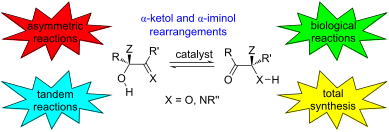
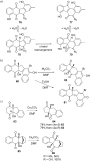
- a biosynthetic pathway for the novel steroid asperflotone (72), it was suggested that its source was asperfloroid (73), a similar steroid isolated from the same source fungus, Aspergillus flocculosus [23]. First, reduction of the C8–C9 double bond and oxidation at C15 would provide α-ketol 74
- of proposed intermediate 78, occurs with base (M = K or Cs), but dehydration to 81 occurs with acid. c) Substrate scope of similar Cs2CO3-catalyzed α-ketol rearrangements. Proposed biosynthetic pathway converting acylphloroglucinol (87) to isolated elodeoidins A–H 92–96. Oxidation at C3 followed by α




Synthesis of O6-alkylated preQ1 derivatives
Beilstein J. Org. Chem. 2021, 17, 2295–2301, doi:10.3762/bjoc.17.147
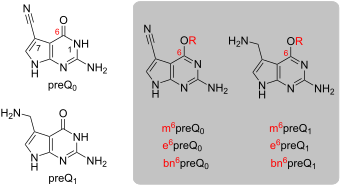
- in the biosynthetic pathway of the hypermodified tRNA nucleoside queuosine (Q) (Scheme 1) [5]. The core structure of the nucleobase is 7-aminomethyl-7-deazaguanine, a pyrrolo[2,3-d]pyrimidine also termed prequeuosine base (preQ1) [6][7]. In many bacteria, preQ1 binds to specific mRNA domains and
- residue in huimycin and to a 2-[4'-(4''-O-methyl-ß-ᴅ-glucopyranosyl)-6'-deoxy-α-ᴅ-glucopyranosyl] moiety in dapiramicin A [19][20]. In the biosynthetic pathway, the conversion of preQ0 into huimycin requires methylation of preQ0 and attachment of the N-acetylglucosamine moiety as final steps [18]. The


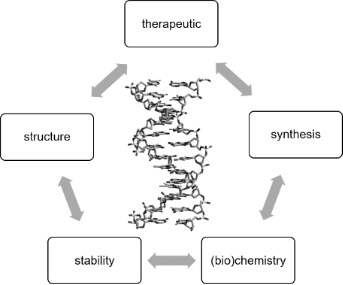
Beyond ribose and phosphate: Selected nucleic acid modifications for structure–function investigations and therapeutic applications
Beilstein J. Org. Chem. 2021, 17, 908–931, doi:10.3762/bjoc.17.76
- Damha [208]. Zhou reasoned that because 3'-O-β-glucosylated nucleocidin, an intermediate in the biosynthetic pathway of nucleocidin, was stable, they may be able to successfully achieve the synthesis of the 4'-F-rU phosphoramidite through a selective protection of the hydroxy groups in stages [211