


Search results
Search for "cycloisomerization" in Full Text gives 66 result(s) in Beilstein Journal of Organic Chemistry.
Is the tungsten(IV) complex (NEt4)2[WO(mnt)2] a functional analogue of acetylene hydratase?
Beilstein J. Org. Chem. 2017, 13, 2332–2339, doi:10.3762/bjoc.13.230
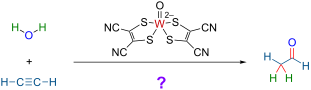
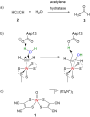
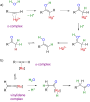
- cycloisomerization of alkynols, in which the alcohol adds to the alkyne [19]. The reaction of [W(CO)5(THF)] with ortho-ethynylacetophenone and excess water gives 1,2-diacetylbenzene via neighboring group attack to complexed alkyne, and hydrolysis [20]. The latter pathway represents the π-activation pathway of alkyne
- hydration (Scheme 2a), whereas alkynol cycloisomerization proceeds via rearrangement to a tungsten vinylidene complex and addition of the alcohol hydroxy group to the vinylidene α-carbon [18]. The vinylidene mechanism is related to that of ruthenium-catalyzed anti-Markovnikov hydration of terminal alkynes



Unpredictable cycloisomerization of 1,11-dien-6-ynes by a common cobalt catalyst
Beilstein J. Org. Chem. 2017, 13, 639–643, doi:10.3762/bjoc.13.62
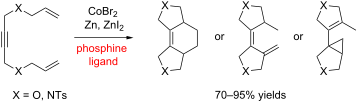
- cycloisomerization in the presence of the cobalt catalytic system CoBr2/phosphine ligand/Zn/ZnI2 giving cyclohexene, diene or cyclopropane structures depending on the type of the phosphine ligand. This unpredictable behaviour suggests that, although the availability of the cobalt catalytic system is appealing, the
- ]. In particular, cycloisomerization of enynes allows one to prepare compounds with exocyclic double bonds and cyclopropanes in a highly selective manner [5][6][7]. While catalytic transformations of enynes have been investigated in detail, there are only a few examples of similar reactions of dienynes
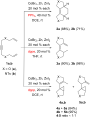
- catalytic system with other phosphine ligands, such as dppm, dppf, or BINAP, did not catalyze cycloisomerization of 1 into any products. In order to explain the formation of products 2–5 we proposed a possible mechanism (Scheme 3) in accordance with the generally accepted concepts [15][18]. The crucial step




Chiral cyclopentadienylruthenium sulfoxide catalysts for asymmetric redox bicycloisomerization
Beilstein J. Org. Chem. 2016, 12, 1136–1152, doi:10.3762/bjoc.12.110
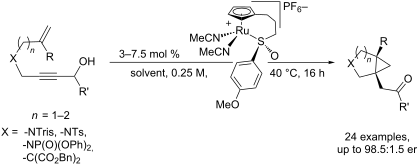
- alcohols revealed a matched/mismatched effect that was strongly dependent on the nature of the solvent. Keywords: asymmetric catalysis; [3.1.0] bicycles; [4.1.0] bicycles; cycloisomerization; 1,6-enyne; 1,7-enyne; ruthenium catalysis; sulfoxide; Introduction Due to their prevalence in natural products [1
- an atom- [5], step- [6], and redox-economical [7] class of reactions that are able to stitch together cyclic molecules quickly and efficiently. The very first enyne cycloisomerization reactions were reported by the Trost group while they were synthesizing substrates intended for thermal Alder–ene
- molecular architectures hold a particular interest to the chemical community, especially in the fields of natural product synthesis and drug design, researchers have made a significant effort to discover asymmetric variations of enyne cycloisomerization reactions [11][12]. Researchers have used a variety of




Recent advances in metathesis-derived polymers containing transition metals in the side chain
Beilstein J. Org. Chem. 2015, 11, 2747–2762, doi:10.3762/bjoc.11.296
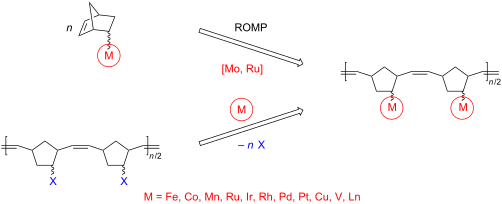
- allowed the intramolecular cycloisomerization of enynes with high yields and turnover numbers. Copper-containing polymers A copper(I) complex containing a norbornene substituted with the 2-(pyridin-2-yl)-1H-benzimidazole ligand, 44, developed by Il'icheva et al. [64], came to the attention of the


Nitro-Grela-type complexes containing iodides – robust and selective catalysts for olefin metathesis under challenging conditions
Beilstein J. Org. Chem. 2015, 11, 1823–1832, doi:10.3762/bjoc.11.198
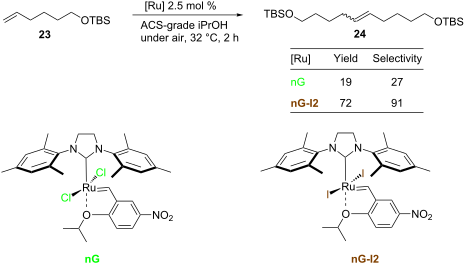
- to test a range of commercially available, classical ruthenium initiators in ACS grade solvents under air [31]. For this study we choose substrate 1, which is highly prone to non-metathesis reactions, namely isomerization and cycloisomerization. The result we found is that esters constitute


Consequences of the electronic tuning of latent ruthenium-based olefin metathesis catalysts on their reactivity
Beilstein J. Org. Chem. 2015, 11, 1458–1468, doi:10.3762/bjoc.11.158
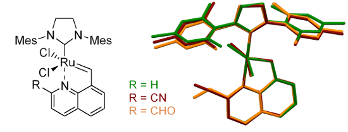
- RCM and a minor amount of the cycloisomerization product, the unmodified congener, which preferentially exists as its cis-dichloro isomer, shows a switched reactivity. The position of the equilibrium between the cis- and the trans-dichloro species was found to be the crucial factor governing the
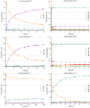
- interesting observation is that reactions catalyzed with 14 and 15 gave predominantly the RCM product (compound 17) accompanied by a minor amount of a cycloisomerization-derived compound 19. It is worth noting, that even after heating at 80 °C for 100 h the catalysts were still active, as can be assessed from
- the time/conversion plots (cf. Figure 5a and b). In contrast, the precatalyst 5a promoted predominantly cycloisomerization albeit conversion was poor (cf. Figure 5c). Because all transformations were very slow at 80 °C the next series of test reactions was conducted at 140 °C in xylenes as the solvent




Pd(OAc)2-catalyzed dehydrogenative C–H activation: An expedient synthesis of uracil-annulated β-carbolinones
Beilstein J. Org. Chem. 2015, 11, 1360–1366, doi:10.3762/bjoc.11.146
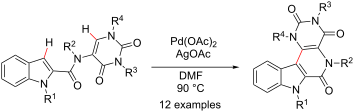
- -carbolinones have been developed [32][33][34][35][36], such as an intramolecular Heck reaction strategy of 2- and 3-iodoindoles for the synthesis of β- or γ-carbolinones by Beccalli et al. [32], AuCl3 and Pd-catalyzed cycloisomerization of indole-2-carboxamides to β-carbolinones [33][34][35], Pd-catalyzed




Building complex carbon skeletons with ethynyl[2.2]paracyclophanes
Beilstein J. Org. Chem. 2014, 10, 2013–2020, doi:10.3762/bjoc.10.209

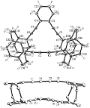
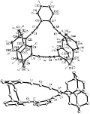
- and the planar building block 1,2-diethynylbenzene (1) yielded the chiral hetero dimer 22 as the main product. An attempt to prepare the biphenylenophane 27 from the triacetylene 24 by CpCo(CO)2-catalyzed cycloisomerization resulted in the formation of the cyclobutadiene Co-complex 26. Besides by
- in Scheme 5, offers itself for another coupling/cycloisomerization sequence which, in principle, could provide a hybrid molecule consisting of a [2.2]paracyclophane core and a biphenylene bridge, hydrocarbon 27 (Scheme 8). To prepare this new (and also chiral) cyclophane system we applied the
- which a planar triacetylene was subjected to CpCo(CO)2-mediated cycloisomerization [13]. Conclusion In conclusion, we have considerably extended the range of highly unsaturated carbon scaffolds by using ethynyl[2.2]paracyclophanes as substrates for the generation of new layered frameworks. The above




Visible-light photoredox catalyzed synthesis of pyrroloisoquinolines via organocatalytic oxidation/[3 + 2] cycloaddition/oxidative aromatization reaction cascade with Rose Bengal
Beilstein J. Org. Chem. 2014, 10, 1233–1238, doi:10.3762/bjoc.10.122
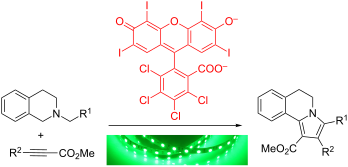
- type of compounds [22][23][24][25][26]. Recently, several metal mediated syntheses using a [3 + 2] cycloaddition reaction have been described in the literature. Porco Jr. et al. [27] described a silver-catalyzed cycloisomerization/dipolar cycloaddition for the synthesis of the pyrrolo[2,1-a


Olefin cross metathesis based de novo synthesis of a partially protected L-amicetose and a fully protected L-cinerulose derivative
Beilstein J. Org. Chem. 2014, 10, 1023–1031, doi:10.3762/bjoc.10.102
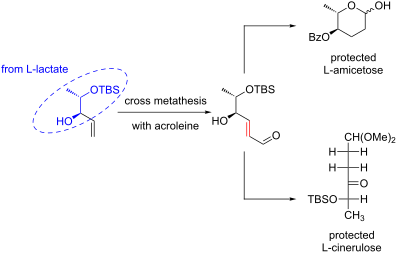
- sugar biosynthesis genes [5]. Comparatively few transition metal mediated or -catalyzed reactions have hitherto been used for the synthesis of 2,3,6-tridesoxy sugars such as amicetose. An example is the W-promoted cycloisomerization of lactaldehyde derived alkynols, which yields the glycal of amicetose


Allenylphosphine oxides as simple scaffolds for phosphinoylindoles and phosphinoylisocoumarins
Beilstein J. Org. Chem. 2014, 10, 996–1005, doi:10.3762/bjoc.10.99
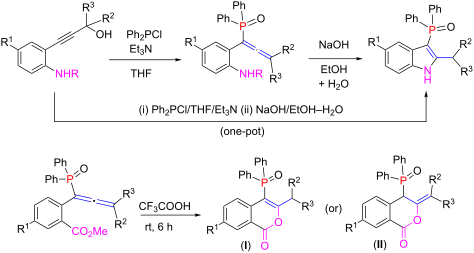
- , over the last decade, allenes have attained a prominent position in organic transformations like cycloaddition, cycloisomerization, base or metal-catalyzed reactions [5][6][7]. In particular, cyclization reaction of allenes has emerged as a valuable tool in developing different methods leading to




Silver and gold-catalyzed multicomponent reactions
Beilstein J. Org. Chem. 2014, 10, 481–513, doi:10.3762/bjoc.10.46
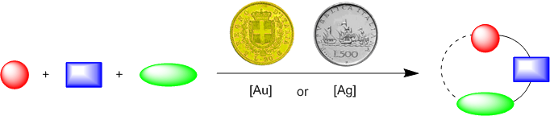
- mechanism. This part of the review is divided in sections related to the nature of the activated functionalities. Reaction involving activation of carbon–carbon multiple bonds. This section primarily discusses cycloisomerization reactions involving the addition of imines to silver-activated carbon–carbon
- -catalyzed MCRs involving imines in cycloisomerization reactions follow the main reaction pathway shown in Scheme 18. Starting from a γ-ketoalkyne [51] encompassed in a (hetero)aromatic framework, a condensation step with a suitable G–NH2 group (amine or hydrazine) provides the imine intermediate, which


Aminofluorination of 2-alkynylanilines: a Au-catalyzed entry to fluorinated indoles
Beilstein J. Org. Chem. 2014, 10, 449–458, doi:10.3762/bjoc.10.42
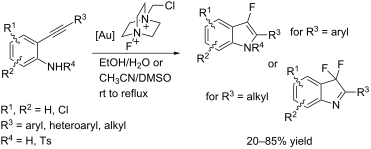
- Paris, UMR 8247, Ecole Nationale Supérieure de Chimie de Paris, Chimie ParisTech, 11 rue P. et M. Curie, F-75231 Paris Cedex 05, France 10.3762/bjoc.10.42 Abstract The scope and limitations of gold-catalyzed tandem cycloisomerization/fluorination reactions of unprotected 2-alkynylanilines to have
- wish to report herein a comprehensive study on gold-catalyzed tandem cycloisomerization/fluorination reactions to access 3,3-difluoro-2-aryl-3H-indoles and 3-fluoro-2-arylindoles, putting the stress on the scope and limitations of such systems. Results and Discussion Optimization of the catalytic
- ][46][47][48][49][50][51] and synthesized them together with new functionalized 2-alkynylanilines to evaluate the efficiency of the gold catalytic system. Scope and limitations of the catalytic system The prepared 2-substituted anilines were then engaged in the cycloisomerization/fluorination process


Boron-substituted 1,3-dienes and heterodienes as key elements in multicomponent processes
Beilstein J. Org. Chem. 2014, 10, 237–250, doi:10.3762/bjoc.10.19

- -component adducts were isolated in good yields up to 92%. A single diastereomer was detected with maleimides; the diastereoselectivity being lower with methyl acrylate and vinyl oxazolidinone (Scheme 7). A one-pot, palladium-mediated cycloisomerization of ene-ynes 5 was applied to the synthesis of the
- -phenylmaleimide and 4-phenyltriazoline-3,5-dione. Asymmetric synthesis of a α-hydroxyalkylcyclohexane. Tandem [4 + 2]-cycloaddition/allylboration of 3-silyloxy- and 4-alkoxy-dienyl boronates. Metal-mediated cycloisomerization/Diels–Alder reaction/allylboration sequence. Cobalt-catalyzed Diels–Alder/allylboration


Recent applications of the divinylcyclopropane–cycloheptadiene rearrangement in organic synthesis
Beilstein J. Org. Chem. 2014, 10, 163–193, doi:10.3762/bjoc.10.14
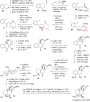
- cycloheptadiene 265 via 264 in good yields. Further contributions to the topic have been put forward by the group of Echavarren [207] and Gung [208]. Cycloisomerization involving DVCPR Iwasawa and coworkers [209] discovered a cyclopropanation/DVCPR sequence of alkyne-substituted silyl enol ethers (for example 274
- 278) could be accessed. The selective formation of annulated bicycle 278 in preference of the possible bridged variant underlined the prefered reactivity of their enyne system. Gagosz and coworkers [211] recently showed that the cycloisomerization of enynes can be catalyzed by gold(I) catalysts. In a
- towards the total synthesis of salvileucalin B (292, see Scheme 35) isolated from the plant Salvia leucantha [213]. Starting from enantiopure trialkyne 282, desilylation was affected using TBAF, followed by ruthenium-catalyzed cycloisomerization [214] and cleavage of the chiral auxiliary to obtain




Gold(I)-catalyzed 6-endo hydroxycyclization of 7-substituted-1,6-enynes
Beilstein J. Org. Chem. 2013, 9, 2242–2249, doi:10.3762/bjoc.9.263
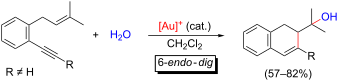
- ; Introduction The cycloisomerization reactions of enynes catalyzed by gold complexes are a powerful tool for accessing complex products from rather simple starting materials under soft and straightforward conditions [1][2][3][4]. In this context, 1,6-enynes have been extensively studied, mainly by Echavarren
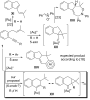
- for the initial experiments (Scheme 4). Its reaction with (Ph3P)AuNTf2, reported by Gagosz and co-workers as a very active catalyst for the cycloisomerization of closely related 7-aryl-1,6-enynes [35], gave rise to a ca. 3:1 mixture of dihydronaphthalene derivative 2a and tetracyclic compound 3a along
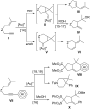
- -catalyzed cycloisomerization of these substrates. The new oxygen-functionalized dihydronaphthalene derivatives have been synthesized in high yields. Gold(I)-catalyzed reactions of 1,6-enynes. Cyclization of o-(alkynyl)-(3-methylbut-2-enyl)benzenes 1. Previous work and proposed pathways. Synthesis of o



Gold(I)-catalyzed hydroarylation reaction of aryl (3-iodoprop-2-yn-1-yl) ethers: synthesis of 3-iodo-2H-chromene derivatives
Beilstein J. Org. Chem. 2013, 9, 2120–2128, doi:10.3762/bjoc.9.249
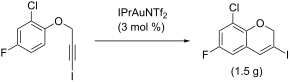
- a variety of functional groups and, interestingly, it is compatible with the presence of strong electron-withdrawing groups attached to the arene. The overall transformation can be termed as a new example of a migratory cycloisomerization and, formally, it involves well-blended 1,2-iodine shift and
- other hand, migratory cycloisomerization are important processes in contemporary catalysis [41]. In this context, our group is interested in C–H functionalization reactions of arenes involving propargylic derivatives [42]. Furthermore, the influence of different gold(I) catalysts over the outcome of the
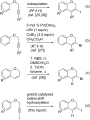
- accomplish a reaction manifold earlier recognized in the synthesis of regioisomeric halogenated phenanthrenes, but they are using two different metals [45]. Catalytic cycloisomerization reactions of heteroatom-substituted alkynes that take place without heteroatom migration are known [46][47][48]. On this



An approach towards azafuranomycin analogs by gold-catalyzed cycloisomerization of allenes: synthesis of (αS,2R)-(2,5-dihydro-1H-pyrrol-2-yl)glycine
Beilstein J. Org. Chem. 2013, 9, 1936–1942, doi:10.3762/bjoc.9.229
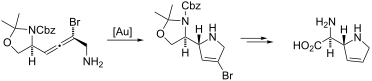
- Jorg Erdsack Norbert Krause Organic Chemistry, Dortmund University of Technology, Otto-Hahn-Strasse 6, D-44227 Dortmund, Germany 10.3762/bjoc.9.229 Abstract The synthesis of (αS,2R)-(2,5-dihydro-1H-pyrrol-2-yl)glycine (22, normethylazafuranomycin) by the gold-catalyzed cycloisomerization of α
- , removal of the double bond, or change of the relative configuration [14][16]. Likewise, carbafuranomycin (1b) showed insufficient biological activity [17]. In 2007, we reported a synthesis of furanomycin derivatives by gold-catalyzed endo-selective cycloisomerization of α-hydroxyallenes [19]. This method
- -catalyzed cycloisomerization of various protected or unprotected α-aminoallenes affords 2,5-dihydropyrroles [29][30][31][32][38][39]. Due to the difference in biological activity of furanomycin (1a) and carbafuranomycin (1b), we became interested in the synthesis of derivatives of the (so far unknown


Gold(I)-catalyzed formation of furans from γ-acyloxyalkynyl ketones
Beilstein J. Org. Chem. 2013, 9, 1774–1780, doi:10.3762/bjoc.9.206
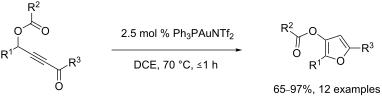
- -acyloxyalkynyl ketones were efficiently converted into highly substituted furans with 2.5 mol % of triflimide (triphenylphosphine)gold(I) as a catalyst in dichloroethane at 70 °C. Keywords: alkynyl ketones; cycloisomerization; furans; gold-catalysis; 1,2-migration; Introduction Furans are an important class of
- latter have already been described to rearrange into furans by using copper catalysts. Indeed, Gevorgyan et al. showed that the combination of copper(I) chloride and triethylamine catalyzed the 1,2-migration/cycloisomerization of γ-acyloxyalkynyl ketones in dimethylacetamide (DMA) at 130 °C (Scheme 2
- the crude residue was purified by silica gel flash chromatography (pentane/Et2O). Gold(I) or gold(III)-catalyzed furan syntheses with or without nucleophiles. Copper(I)-catalyzed 1,2-migration/cycloisomerization of γ-acyloxyalkynyl ketones. Mechanistic hypothesis for gold(I)-catalyzed conversion of γ


Inter- and intramolecular enantioselective carbolithiation reactions
Beilstein J. Org. Chem. 2013, 9, 313–322, doi:10.3762/bjoc.9.36

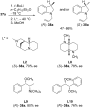
- 10) [40]. The stereochemical outcome is explained assuming that the (−)-sparteine-mediated enantioselective deprotonation leads to an (S)-configurated (α-carbamoyloxy)alkyllithium intermediate 26. Then, the cycloisomerization occurs through a syn addition to the π-bond to give a stabilized
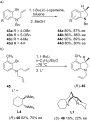
- enantioselectivity. The addition of TMEDA increases the rate of racemization, resulting in an inversion of diastereoselectivity to obtain 36, albeit in racemic form [44]. The enantioselective cycloisomerization of achiral organolithiums in the presence of a chiral ligand has been reported with aryllithium reagents





Tandem aldehyde–alkyne–amine coupling/cycloisomerization: A new synthesis of coumarins
Beilstein J. Org. Chem. 2013, 9, 180–184, doi:10.3762/bjoc.9.21

- , pyrrolidine and salicylaldehydes led to a concomitant cycloisomerization followed by hydrolysis of the resultant vinyl ether to afford coumarins in a cascade process. The reaction proceeded through exclusive 6-endo-dig cyclization and is compatible with halo and keto groups giving coumarins in good to
- moderate yields. Keywords: A3 coupling; cooperative catalysis; coumarin synthesis; cycloisomerization; transition-metal catalysts; Introduction An alkyne, an aldehyde and an amine coupling, referred to as A3 coupling [1], has been found as an efficient method for C–N and C–C bond formation that results
- , cobalt, iridium and iron. Similarly, cycloisomerization of alkynols and alkynamines has also been an attractive approach for the synthesis of various known and new heterocyclic frameworks [2][3][4][5][6][7][8][9][10][11][12][13][14][15][16][17][18][19][20][21][22]. Various alkynophilic catalysts such as


The chemistry of bisallenes
Beilstein J. Org. Chem. 2012, 8, 1936–1998, doi:10.3762/bjoc.8.225
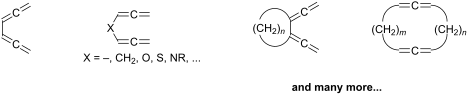
- steps (high step economy). Keywords: alicyclic; bisallenes; cyclic; cycloadditions; cycloisomerization; isomerization; molecular complexity; step economy; Table of Contents Introduction Review Acyclic conjugated bisallenes 1.1 Synthesis of hydrocarbons 1.2 Synthesis of functionalized systems 1.3
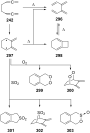
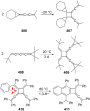
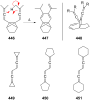
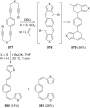
- the direct cycloisomerization product of the bisallene, hydrocarbon 220, and the symmetrical dimer 221 are isolated. In the presence of the mixed ligand complex Ni(COD)(PPh3) a mixture of 220 and 221 is produced. The metalations of bisacetylenic and bisallenic hydrocarbons already referred to (Section
















Iridium-catalyzed intramolecular [4 + 2] cycloadditions of alkynyl halides
Beilstein J. Org. Chem. 2012, 8, 1765–1770, doi:10.3762/bjoc.8.201
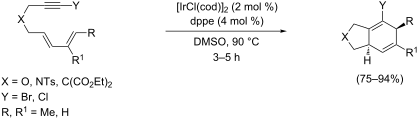
- , including homogeneous hydrogenation [1][2], C–H activation [3][4][5], asymmetric ring-opening reactions [6], and a variety of cycloisomerizations [7][8][9][10], and cycloadditions [11][12][13][14][15][16][17][18][19][20]. Traditionally these types of cycloisomerization and cycloaddition reactions are


Synthesis of a novel chemotype via sequential metal-catalyzed cycloisomerizations
Beilstein J. Org. Chem. 2012, 8, 1338–1343, doi:10.3762/bjoc.8.153

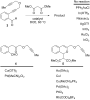
- cycloisomerizations of diynyl o-benzaldehyde substrates to access novel polycyclic cyclopropanes are reported. The reaction sequence involves initial Cu(I)-mediated cycloisomerization/nucleophilic addition to an isochromene followed by diastereoselective Pt(II)-catalyzed enyne cycloisomerization. Keywords: chemical
- diversity; cycloisomerization; cyclopropane; diyne; isochromene; π-acid; Introduction Our laboratory has an ongoing interest in discovering transformations that afford novel chemotypes [1][2][3][4]. To this end, we have developed a reaction screening paradigm that enables the discovery of new reaction
- ). The chemotypes discovered in initial pilot studies have been further developed into library scaffolds and identified as biologically interesting structures [6]. Herein, we report the expanded utility of alkynyl o-benzaldehydes through a sequential metal-catalyzed cycloisomerization process to afford a




On the proposed structures and stereocontrolled synthesis of the cephalosporolides
Beilstein J. Org. Chem. 2012, 8, 1287–1292, doi:10.3762/bjoc.8.146
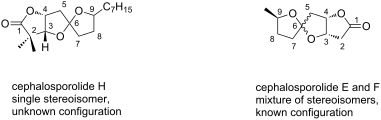
- internal alkyne 6, which was submitted to gold-catalyzed cycloisomerization [33] to afford spiroketals 7a and 7b (the silyl ether is concomitantly hydrolyzed) as a 1:1 mixture of isomers. Exposure of this mixture to zinc chloride promoted isomerization to provide 7a in >20:1 dr. TEMPO oxidation then
- completed the synthesis of 1, the reported structure of cephalosporolide H. The opposite spiroketal isomer 1a was prepared from 6 by palladium-catalyzed cycloisomerization (steric control), desilylation and TEMPO oxidation. In neither case did the characterization data match that of the natural material
- alkyne 5 with (S)-1,2 epoxynonane. Gold-catalyzed cycloisomerization (with desilylation) provided spiroketal diols 10a and 10b in a 32:68 ratio and in 89% total yield. Major spiroketal 10b could be converted to 10a in 15:1 dr by zinc-catalyzed isomerization. Both isomers (10a and 10b) were independently





