


Search results
Search for "olefination" in Full Text gives 150 result(s) in Beilstein Journal of Organic Chemistry.
Recent advancements in iodide/phosphine-mediated photoredox radical reactions
- Tinglan Liu,
- Yu Zhou,
- Junhong Tang and
- Chengming Wang
Beilstein J. Org. Chem. 2023, 19, 1785–1803, doi:10.3762/bjoc.19.131
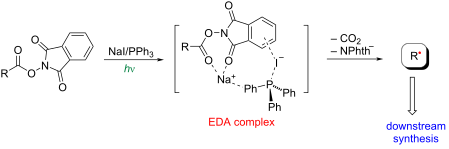
- NaI/PPh3 catalysis. Decarboxylative alkenylation mediated by NaI/PPh3 catalysis. NaI-mediated photoinduced α-alkenylation of Katritzky salts 7. n-Bu4NI-mediated photoinduced decarboxylative olefination. Proposed mechanism of the n-Bu4NI-mediated photoinduced decarboxylative olefination

Graphical Abstract

Scheme 1: Photocatalytic decarboxylative transformations mediated by the NaI/PPh3 catalyst system.

Scheme 2: Proposed catalytic cycle of NaI/PPh3 photoredox catalysis.

Scheme 3: Decarboxylative alkenylation of redox-active esters by NaI/PPh3 catalysis.

Scheme 4: Decarboxylative alkenylation mediated by NaI/PPh3 catalysis.

Scheme 5: NaI-mediated photoinduced α-alkenylation of Katritzky salts 7.

Scheme 6: n-Bu4NI-mediated photoinduced decarboxylative olefination.

Scheme 7: Proposed mechanism of the n-Bu4NI-mediated photoinduced decarboxylative olefination.

Scheme 8: Photodecarboxylative alkylation of redox-active esters with diazirines.

Scheme 9: Photoinduced iodine-anion-catalyzed decarboxylative/deaminative C–H alkylation of enamides.

Scheme 10: Photocatalytic C–H alkylation of coumarins mediated by NaI/PPh3 catalysis.

Scheme 11: Photoredox alkylation of aldimines by NaI/PPh3 catalysis.

Scheme 12: Photoredox C–H alkylation employing ammonium iodide.

Scheme 13: NaI/PPh3/CuBr cooperative catalysis for photocatalytic C(sp3)–O/N cross-coupling reactions.
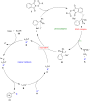
Scheme 14: Proposed mechanism of NaI/PPh3/CuBr cooperative catalysis for photocatalytic C(sp3)–O/N cross-coupl...

Scheme 15: Photocatalytic decarboxylative [3 + 2]/[4 + 2] annulation between enynals and γ,σ-unsaturated N-(ac...

Scheme 16: Proposed mechanism for the decarboxylative [3 + 2]/[4 + 2] annulation.

Scheme 17: Decarboxylative cascade annulation of alkenes/1,6-enynes with N-hydroxyphthalimide esters.

Scheme 18: Decarboxylative radical cascade cyclization of N-arylacrylamides.

Scheme 19: NaI/PPh3-driven photocatalytic decarboxylative radical cascade alkylarylation.

Scheme 20: Proposed mechanism of the NaI/PPh3-driven photocatalytic decarboxylative radical cascade cyclizatio...

Scheme 21: Visible-light-promoted decarboxylative cyclization of vinylcycloalkanes.

Scheme 22: NaI/PPh3-mediated photochemical reduction and amination of nitroarenes.

Scheme 23: PPh3-catalyzed alkylative iododecarboxylation with LiI.

Scheme 24: Visible-light-triggered iodination facilitated by N-heterocyclic carbenes.

Scheme 25: Visible-light-induced photolysis of phosphonium iodide salts for monofluoromethylation.
Non-noble metal-catalyzed cross-dehydrogenation coupling (CDC) involving ether α-C(sp3)–H to construct C–C bonds
- Hui Yu and
- Feng Xu
Beilstein J. Org. Chem. 2023, 19, 1259–1288, doi:10.3762/bjoc.19.94
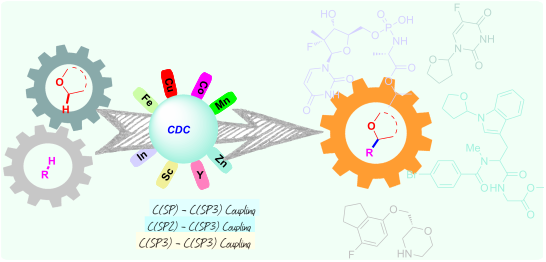
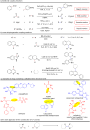
- oxidative olefination of simple ethers might undergo the following three successive steps: (1) the formation of an α-carbon-centered radical A from simple ethers, (2) addition of the α-carbon-centered radical to olefins generating radical B. This step is one of the classical transformations of radicals and
- ether α-C–H bond. In the presence of Cu(II), the C(sp2)–C(sp3) coupling of pyridine N-oxides and coumarins with cyclic ethers could be achieved under mild conditions (Scheme 13) [63][64]. These reactions do not all follow the reaction mechanism of the oxidative olefination of simple ethers. The role of

Graphical Abstract
Scheme 1: Research progress of coupling reactions and active compounds containing α-C(sp3)-functionalized eth...

Scheme 2: Transition-metal-catalyzed CDC pathways.

Scheme 3: CDC of active methylene compounds in the α-C(sp3) position of ethers.

Scheme 4: InCl3/Cu(OTf)2/NHPI co-catalyzed CDC reaction.

Scheme 5: CDC of cyclic benzyl ethers with aldehydes.
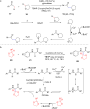
Scheme 6: Cu-catalyzed CDC of (a) unactivated C(sp3)–H ethers with simple ketones and (b) double C(sp3)−H fun...
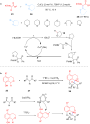
Scheme 7: Cu-catalyzed CDC of C(sp3)–H/C(sp3)–H bonds.

Scheme 8: Cu-catalyzed synthesis of chiral 2-substituted tetrahydropyrans.

Scheme 9: CDC of thiazole with cyclic ethers.

Scheme 10: Cu(I)-catalyzed oxidative alkenylation of simple ethers.

Scheme 11: Cross-dehydrogenation coupling of isochroman C(sp3)–H bonds with anisole C(sp2)–H bonds.

Scheme 12: Pd(OAc)2/Cu(OTf)2-catalyzed arylation of α-C(sp3)–H bonds of ethers.
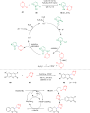
Scheme 13: Cu-catalyzed C(sp3)–H/C(sp2)–H activation strategies to construct C(sp3)–C(sp2) bonds.

Scheme 14: Cu(I)-catalyzed C(sp2)–H alkylation.
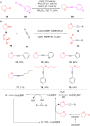
Scheme 15: Cu-catalyzed C(sp3)–H/C(sp)–H activation to construct C(sp3)–C(sp) bonds (H2BIP: 2,6-bis(benzimidaz...

Scheme 16: Fe-catalyzed CDC reaction pathways.

Scheme 17: Fe2(CO)9-catalyzed functionalization of C–H bonds.

Scheme 18: Ligand-promoted Fe-catalyzed CDC reaction of N-methylaniline with ethers.

Scheme 19: Fe-catalyzed CDC of C(sp3)–H/C(sp3)–H bonds.

Scheme 20: Fe-catalyzed hydroalkylation of α,β-unsaturated ketones with ethers.

Scheme 21: Solvent-free Fe(NO3)3-catalyzed CDC of C(sp3)–H/C(sp2)–H bonds.

Scheme 22: Alkylation of disulfide compounds to afford tetrasubstituted alkenes.

Scheme 23: Fe-catalyzed formation of 1,1-bis-indolylmethane derivatives.

Scheme 24: Alkylation of coumarins and flavonoids.

Scheme 25: Direct CDC α-arylation of azoles with ethers.

Scheme 26: CDC of terminal alkynes with C(sp3)–H bonds adjacent to oxygen, sulfur or nitrogen atoms.

Scheme 27: Alkylation of terminal alkynes.

Scheme 28: Co-catalyzed functionalization of glycine esters.
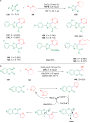
Scheme 29: Co-catalyzed construction of C(sp2)–C(sp3) bonds.

Scheme 30: Co-catalyzed CDC of imidazo[1,2-a]pyridines with isochroman.

Scheme 31: Co-catalyzed C–H alkylation of (benz)oxazoles with ethers.

Scheme 32: Cobalt-catalyzed CDC between unactivated C(sp2)–H and C(sp3)–H bonds.

Scheme 33: MnO2-catalyzed CDC of the inactive C(sp3)-H.

Scheme 34: Oxidative cross-coupling of ethers with enamides.

Scheme 35: Ni(II)-catalyzed CDC of indoles with 1,4-dioxane.

Scheme 36: Chemo- and regioselective ortho- or para-alkylation of pyridines.

Scheme 37: Asymmetric CDC of 3,6-dihydro-2H-pyrans with aldehydes.

Scheme 38: CDC of heterocyclic aromatics with ethers.

Scheme 39: Indium-catalyzed alkylation of DHPs with 1,3-dicarbonyl compounds.

Scheme 40: Rare earth-metal-catalyzed CDC reaction.

Scheme 41: Visible-light-driven CDC of cycloalkanes with benzazoles.

Scheme 42: Photoinduced alkylation of quinoline with cyclic ethers.

Scheme 43: Photocatalyzed CDC reactions between α-C(sp3)–H bonds of ethers and C(sp2)–H bonds of aromatics.
Radical ligand transfer: a general strategy for radical functionalization
- David T. Nemoto Jr,
- Kang-Jie Bian,
- Shih-Chieh Kao and
- Julian G. West
Beilstein J. Org. Chem. 2023, 19, 1225–1233, doi:10.3762/bjoc.19.90
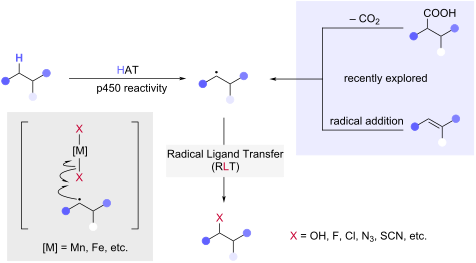
- elimination-like pathway to afford unsaturated C–C bonds in the presence of copper(II) sulfate, presumably via competitive RPC to the carbocation followed by E1 olefination. Kochi also demonstrated that RLT can be combined with other radical generation strategies to enable new, non-biomimetic reactions to be

Graphical Abstract

Scheme 1: Overview of the RLT mechanism in nature and in literature. I: The radical rebound mechanism in cyto...

Scheme 2: Areas of recent work on RLT development and application in catalysis. I: Reported RLT pathways ofte...

Scheme 3: The incorporation of RLT catalysis in ATRA photocatalysis. I: The reported method is compatible wit...

Scheme 4: Pioneering and recent work on decarboxylative functionalization involving a posited RLT pathway. I:...

Scheme 5: Our lab reported decarboxylative azidation of aliphatic and benzylic acids. I: The reaction proceed...
Photoredox catalysis harvesting multiple photon or electrochemical energies
- Mattia Lepori,
- Simon Schmid and
- Joshua P. Barham
Beilstein J. Org. Chem. 2023, 19, 1055–1145, doi:10.3762/bjoc.19.81

Graphical Abstract

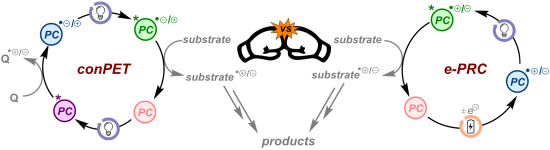
Figure 1: Oxidative and reductive activations of organic compounds harvesting photoredox catalysis.

Figure 2: General catalytic cycles of radical ion conPET (left) and radical ion e-PRC (right).
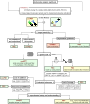
Figure 3: “Beginner’s guide”: comparison between advantages, capacities, and prospectives of conPET and PEC.
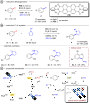
Figure 4: A) conPET reductive dehalogenation of aryl halides with PDI. B) Reductive C–H arylation with pyrrol...
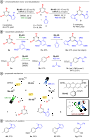
Figure 5: A) Chromoselective mono- and disubstitution or polybrominated pyrimidines with pyrroles. B) Sequent...

Figure 6: A) Synthesis of pyrrolo[1,2-a]quinolines. B) Synthesis of ullazines.

Figure 7: A) Reductive phosphorylation of aryl halides via conPET. B) Selected examples from the substrate sc...
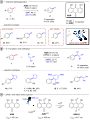
Figure 8: A) Reductive dehalogenation of aryl halides via conPET and selected examples from the substrate sco...
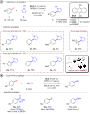
Figure 9: A) Reductive C–H arylation of aryl halides via conPET (top) and selected examples from the substrat...
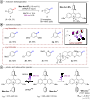
Figure 10: A) Reductive hydrodehalogenation of aryl halides with Mes-Acr-BF4. B) Selected examples from the su...
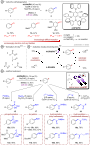
Figure 11: A) Reductive hydrodechlorination of aryl chlorides with 4-DPAIPN. B) Proposed formation of CO2•−. C...
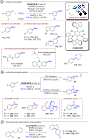
Figure 12: A) Reductive conPET borylation with 3CzEPAIPN (top) and selected examples from the substrate scope ...

Figure 13: Scale-up of conPET phosphorylation with 3CzEPAIPN.
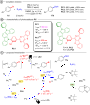
Figure 14: A) Borylation of 1d. B) Characteristics and structure of PC1 with green and red parts showing the l...
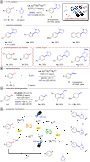
Figure 15: A) Reductive C–H arylation scope with polysulfide conPET (top) and selected examples from the subst...

Figure 16: Scale-up of A) C–H arylation and B) dehaloborylation with polysulfide photocatalysis in continuous-...

Figure 17: A) Formation of [Ir1]0 and [Ir2]0 upon PET between [Ir1]+ and Et3N. B) Mechanism of multi-photon ta...

Figure 18: A) Reductive hydrodehalogenation of aryl halides via multi-photon tandem photocatalysis. B) Selecte...

Figure 19: A) Carbonylative amidation of aryl halides in continuous flow. B) Selected examples from the substr...
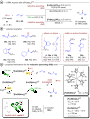
Figure 20: A) General scheme for reductive (RQ) and oxidative quenching (OQ) protocols using [FeIII(btz)3](PF6)...
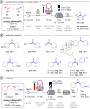
Figure 21: A) Carbonylative amidation of alkyl iodides with [IrIII(ppy)2(dtbbpy)]PF6. B) Selected examples fro...
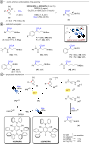
Figure 22: A) Carboxylative C–N bond cleavage in cyclic amines. B) Selected examples from the substrate scope....
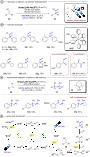
Figure 23: A) Formal reduction of alkenes to alkanes via transfer hydrogenation. B) Selected examples from the...
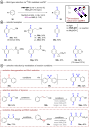
Figure 24: A) Birch-type reduction of benzenes with PMP-BPI. B) Selected examples from the substrate scope (sc...

Figure 25: Proposed mechanism of the OH− mediated conPET Birch-type reduction of benzene via generation of sol...

Figure 26: Reductive detosylation of N-tosylated amides with Mes-Acr-BF4. B) Selected examples from the substr...
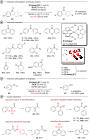
Figure 27: A) Reductive detosylation of N-tosyl amides by dual PRC. B) Selected examples from the substrate sc...

Figure 28: A) Mechanism of the dual PRC based on PET between [Cu(dap)2]+ and DCA. B) Mechanism of the dual PRC...
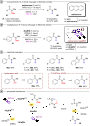
Figure 29: A) N–O bond cleavage in Weinreb amides with anthracene. B) N–O bond cleavage in Weinreb amides rely...
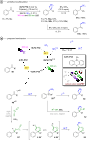
Figure 30: A) Pentafluorosulfanylation and fluoride elimination. B) Mechanism of the pentafluorosulfanylation ...
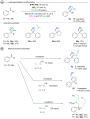
Figure 31: A) α-Alkoxypentafluorosulfanylation (top) and selected examples from the substrate scope (bottom). ...
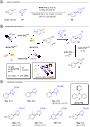
Figure 32: A) Oxidative amination of arenes with azoles catalyzed by N-Ph PTZ. B) Selected examples from the s...

Figure 33: A) C(sp3)–H bond activation by HAT via chloride oxidation by *N-Ph PTZ•+. B) Proposed mechanism for...

Figure 34: A) Recycling e-PRC C–H azolation of electron-rich arenes with pyrazoles using Mes-Acr+ as a photoca...

Figure 35: A) Radical ion e-PRC direct oxidation of unactivated arenes using TAC+ as an electro-activated phot...

Figure 36: A) Radical ion e-PRC direct oxidation of unactivated arenes using TPA as an electro-activated photo...

Figure 37: Proposed mechanism (top) and mode of preassembly (bottom).

Figure 38: A) Possible preassemblies of reactive (left) vs unreactive (right) arenes. B) Calculated spin densi...
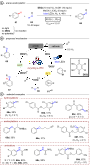
Figure 39: A) Recycling e-PRC C(sp2 )–H acetoxylation of arenes using DDQ as a photocatalyst. B) Proposed cata...

Figure 40: Gram scale hydroxylation of benzene in a recirculated flow setup.
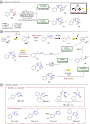
Figure 41: A) Radical ion e-PRC vicinal diamination of alkylarenes using TAC+ as an electro-activated photocat...
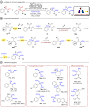
Figure 42: A) Sequential oxygenation of multiple adjacent C–H bonds under radical ion e-PRC using TAC+ as an e...

Figure 43: A) Enantioselective recycling e-PRC cyanation of benzylic C–H bonds using ADQS as photocatalyst. B)...

Figure 44: Proposed tandem mechanism by Xu and co-workers.
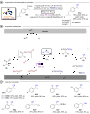
Figure 45: A) Enantioselective recycling e-PRC decarboxylative cyanation using Cu(acac)2, Ce(OTf)3 and a box l...

Figure 46: A) Enantioselective recycling e-PRC benzylic cyanation using Cu(MeCN)4BF4, box ligand and anthraqui...

Figure 47: A) Radical ion e-PRC acetoxyhydroxylation of aryl olefins using TAC+ as an electro-activated photoc...

Figure 48: Selected examples from the substrate scope.

Figure 49: Photoelectrochemical acetoxyhydroxylation in a recirculated flow setup.
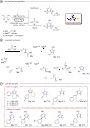
Figure 50: A) Radical ion e-PRC aminooxygenation of aryl olefins using TAC+ as an electro-activated photocatal...
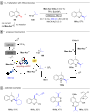
Figure 51: A) Recycling e-PRC C–H alkylation of heteroarenes with organic trifluoroborates using Mes-Acr+ as p...

Figure 52: A) Recycling e-PRC decarboxylative C–H alkylation of heteroarenes using CeCl3·7H2O as catalyst. B) ...

Figure 53: A) Recycling e-PRC decarboxylative C–H alkylation of heteroarenes using Fe(NH4)2(SO4)2·6H2O as cata...
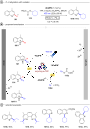
Figure 54: A) Recycling e-PRC C–H alkylation of heteroarenes with alkyl oxalates and 4CzIPN as photocatalyst. ...
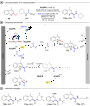
Figure 55: A) Recycling e-PRC decarboxylative C–H carbamoylation of heteroarenes using 4CzIPN as photocatalyst...
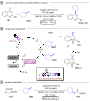
Figure 56: A) Photoelectrochemical HAT-mediated hydrocarbon activation via the chlorine radical. B) Proposed m...

Figure 57: A) Selected examples from the substrate scope. B) Gram and decagram scale semi-continuous flow PEC ...

Figure 58: A) Photoelectrochemical HAT-mediated dehydrogenative coupling of benzothiazoles with aliphatic C–H ...

Figure 59: A) Photoelectrochemical HAT activation of ethers using electro-activated TAC+ as photocatalyst. B) ...

Figure 60: Selected examples from the substrate scope.
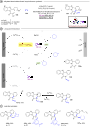
Figure 61: A) Photoelectrochemical HAT-mediated synthesis of alkylated benzimidazo-fused isoquinolinones using...

Figure 62: A) Decoupled photoelectrochemical cerium-catalyzed oxydichlorination of alkynes using CeCl3 as cata...

Figure 63: Proposed decoupled photoelectrochemical mechanism.

Figure 64: A) Decoupled photoelectrochemical ring-opening bromination of tertiary cycloalkanols using MgBr2 as...

Figure 65: A) Recycling e-PRC ring-opening functionalization of cycloalkanols using CeCl3 as catalyst. B) Prop...

Figure 66: Selected examples from the substrate scope of the PEC ring-opening functionalization.

Figure 67: A) Radical ion e-PRC reduction of chloro- and bromoarenes using DCA as catalyst and various accepto...
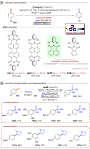
Figure 68: A) Screening of different phthalimide derivatives as catalyst for the e-PRC reduction of aryl halid...

Figure 69: Screening of different organic catalysts for the e-PRC reduction of trialkylanilium salts.

Figure 70: A) e-PRC reduction of phosphonated phenols and anilinium salts. B) Selected examples from the subst...

Figure 71: A) ConPET and e-PRC reduction of 4-bromobenzonitrile using a naphthalene diimide (NDI) precatalyst ...

Figure 72: A) Radical ion e-PRC reduction of phosphinated aliphatic alcohols with n-BuO-NpMI as catalyst. B) C...

Figure 73: Selected examples from the substrate scope.

Figure 74: A) Recycling e-PRC reductive dimerization of benzylic chlorides using a [Cu2] catalyst. B) Proposed...

Figure 75: A) Decoupled photoelectrochemical C–H alkylation of heteroarenes through deamination of Katritzky s...

Figure 76: Proposed mechanism by Chen and co-workers.
Pyridine C(sp2)–H bond functionalization under transition-metal and rare earth metal catalysis
- Haritha Sindhe,
- Malladi Mounika Reddy,
- Karthikeyan Rajkumar,
- Akshay Kamble,
- Amardeep Singh,
- Anand Kumar and
- Satyasheel Sharma
Beilstein J. Org. Chem. 2023, 19, 820–863, doi:10.3762/bjoc.19.62
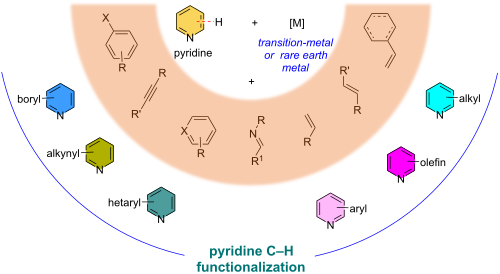
- Heck cross-coupling [69][70]. However, researchers have developed various methods for the transition-metal-catalyzed C(sp2)–H olefination using various types of alkenes as coupling partners [71][72][73]. This part of the review covers reports for the alkenylation of pyridine with terminal alkynes
- strong coordination of the pyridyl N-atom with Pd in the presence of a bidentate ligand was reported by Yu and co-workers [83]. They showcased the C3-selective olefination of pyridines using 1,10-phenanthroline, a bis-dentate ligand that weakens the coordination of the Pd catalyst with the pyridyl N-atom
- % yield. Further, Shi and co-workers reported the rhodium-catalyzed directed C–H olefination of pyridines using different directing groups in 2013 [88] (Scheme 20a) and 2014 [89] (Scheme 20c), respectively. In the former study, under optimized conditions of [RhCp*Cl2]2 (5 mol %), AgSbF6 (20 mol %) in DCE

Graphical Abstract

Figure 1: Representative examples of bioactive natural products and FDA-approved drugs containing a pyridine ...

Scheme 1: Classical and traditional methods for the synthesis of functionalized pyridines.

Scheme 2: Rare earth metal (Ln)-catalyzed pyridine C–H alkylation.

Scheme 3: Pd-catalyzed C–H alkylation of pyridine N-oxide.

Scheme 4: CuI-catalyzed C–H alkylation of N-iminopyridinium ylides with tosylhydrazones (A) and a plausible r...
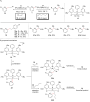
Scheme 5: Zirconium complex-catalyzed pyridine C–H alkylation.

Scheme 6: Rare earth metal-catalyzed pyridine C–H alkylation with nonpolar unsaturated substrates.

Scheme 7: Heterobimetallic Rh–Al complex-catalyzed ortho-C–H monoalkylation of pyridines.

Scheme 8: Mono(phosphinoamido)-rare earth complex-catalyzed pyridine C–H alkylation.

Scheme 9: Rhodium-catalyzed pyridine C–H alkylation with acrylates and acrylamides.

Scheme 10: Ni–Al bimetallic system-catalyzed pyridine C–H alkylation.

Scheme 11: Iridium-catalyzed pyridine C–H alkylation.
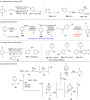
Scheme 12: para-C(sp2)–H Alkylation of pyridines with alkenes.

Scheme 13: Enantioselective pyridine C–H alkylation.

Scheme 14: Pd-catalyzed C2-olefination of pyridines.

Scheme 15: Ru-catalyzed C-6 (C-2)-propenylation of 2-arylated pyridines.
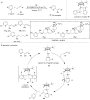
Scheme 16: C–H addition of allenes to pyridines catalyzed by half-sandwich Sc metal complex.

Scheme 17: Pd-catalyzed stereodivergent synthesis of alkenylated pyridines.

Scheme 18: Pd-catalyzed ligand-promoted selective C3-olefination of pyridines.

Scheme 19: Mono-N-protected amino acids in Pd-catalyzed C3-alkenylation of pyridines.

Scheme 20: Amide-directed and rhodium-catalyzed C3-alkenylation of pyridines.

Scheme 21: Bimetallic Ni–Al-catalyzed para-selective alkenylation of pyridine.

Scheme 22: Arylboronic ester-assisted pyridine direct C–H arylation.
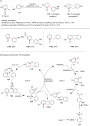
Scheme 23: Pd-catalyzed C–H arylation/benzylation with toluene.

Scheme 24: Pd-catalyzed pyridine C–H arylation with potassium aryl- and heteroaryltrifluoroborates.

Scheme 25: Transient activator strategy in pyridine C–H biarylation.
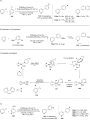
Scheme 26: Ligand-promoted C3-arylation of pyridine.

Scheme 27: Pd-catalyzed arylation of nicotinic and isonicotinic acids.

Scheme 28: Iron-catalyzed and imine-directed C–H arylation of pyridines.

Scheme 29: Pd–(bipy-6-OH) cooperative system-mediated direct pyridine C3-arylation.

Scheme 30: Pd-catalyzed pyridine N-oxide C–H arylation with heteroarylcarboxylic acids.

Scheme 31: Pd-catalyzed C–H cross-coupling of pyridine N-oxides with five-membered heterocycles.

Scheme 32: Cu-catalyzed dehydrative biaryl coupling of azine(pyridine) N-oxides and oxazoles.

Scheme 33: Rh(III)-catalyzed cross dehydrogenative C3-heteroarylation of pyridines.

Scheme 34: Pd-catalyzed C3-selective arylation of pyridines.
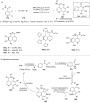
Scheme 35: Rhodium-catalyzed oxidative C–H annulation of pyridines to quinolines.
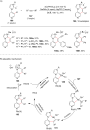
Scheme 36: Rhodium-catalyzed and NHC-directed C–H annulation of pyridine.

Scheme 37: Ni/NHC-catalyzed regio- and enantioselective C–H cyclization of pyridines.

Scheme 38: Rare earth metal-catalyzed intramolecular C–H cyclization of pyridine to azaindolines.

Scheme 39: Rh-catalyzed alkenylation of bipyridine with terminal silylacetylenes.

Scheme 40: Rollover cyclometallation in Rh-catalyzed pyridine C–H functionalization.

Scheme 41: Rollover pathway in Rh-catalyzed C–H functionalization of N,N,N-tridentate chelating compounds.

Scheme 42: Pd-catalyzed rollover pathway in bipyridine-6-carboxamides C–H arylation.
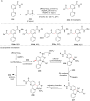
Scheme 43: Rh-catalyzed C3-acylmethylation of bipyridine-6-carboxamides with sulfoxonium ylides.

Scheme 44: Rh-catalyzed C–H functionalization of bipyridines with alkynes.

Scheme 45: Rh-catalyzed C–H acylmethylation and annulation of bipyridine with sulfoxonium ylides.

Scheme 46: Iridium-catalyzed C4-borylation of pyridines.

Scheme 47: C3-Borylation of pyridines.

Scheme 48: Pd-catalyzed regioselective synthesis of silylated dihydropyridines.
Combretastatins D series and analogues: from isolation, synthetic challenges and biological activities
- Jorge de Lima Neto and
- Paulo Henrique Menezes
Beilstein J. Org. Chem. 2023, 19, 399–427, doi:10.3762/bjoc.19.31
- coupling reaction. Thus, the olefination reaction of aldehyde 15 with phosphonate 23, followed by the reduction of the obtained ester 24 using DIBAL led to the alcohol 25. The latter was submitted to the reaction with carboxylic acid 26 under Mitsunobu conditions [30], giving the corresponding ester 27 in
- ] between halide 37 and phenol 38 leading to the formation of diaryl ether 39, which was subjected to a regioselective iodination reaction to give compound 40. Conversion of the nitrile in compound 40 into the corresponding aldehyde 41 followed by Z-selective Still–Gennari olefination gave the cis α,β
- proved to be important for the selectivity of the reaction, where significant cleavage of the benzyl group resulted when ethanol was the solvent of choice. Subsequent ester hydrolysis gave compound 112 (Scheme 22) [55]. In parallel, a Still–Gennari olefination using aldehyde 52 lead to the cis-alkene 113

Graphical Abstract

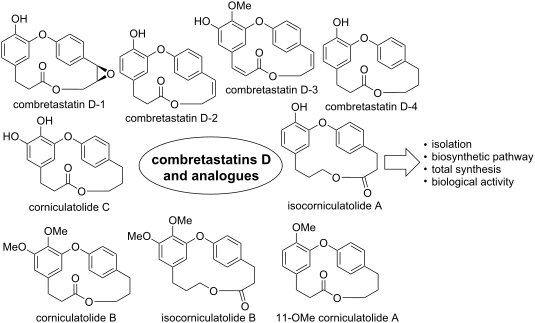
Figure 1: Structures of some members of the combretastatin D series, corniculatolides, and isocorniculatolide...

Scheme 1: Biosynthetic pathway proposed by Pettit and co-workers.
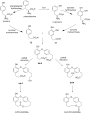
Scheme 2: Biosynthetic pathway towards corniculatolides or isocorniculatolides proposed by Ponnapalli and co-...

Scheme 3: Retrosynthetic approaches.

Scheme 4: Attempt of total synthesis of 2 by Boger and co-workers employing the Mitsunobu approach [27].

Scheme 5: Total synthesis of combretastatin D-2 (2) reported by Boger and co-workers employing an intramolecu...

Scheme 6: Formal synthesis of combretastatin D-2 (2) by Deshpande and co-workers using the Mitsunobu conditio...

Scheme 7: Total synthesis of combretastatin D-2 (2) by Rychnovsky and Hwang [36].

Scheme 8: Divergent synthesis of (±)-1 form combretastatin D-2 (2) by Rychnovsky and Hwang [36].

Scheme 9: Enantioselective synthesis of 1 by Rychnovsky and Hwang employing Jacobsen catalyst [41].

Scheme 10: Synthesis of fragment 57 by Couladouros and co-workers [43,45].

Scheme 11: Formal synthesis of compound 2 by Couladouros and co-workers [43,45].

Scheme 12: Synthesis of fragment 66 by Couladouros and co-workers [44,45].

Scheme 13: Synthesis of fragment 70 by Couladouros and co-workers [44,45].

Scheme 14: Synthesis of fragment 77 by Couladouros and co-workers [44,45].

Scheme 15: Synthesis of combretastatins 1 and 2 by Couladouros and co-workers [44,45].

Scheme 16: Formal synthesis of compound 2 by Gangakhedkar and co-workers [48].

Scheme 17: Synthesis of fragment 14 by Cousin and co-workers [50].

Scheme 18: Synthesis of fragment 91 by Cousin and co-workers [50].

Scheme 19: Formal synthesis of compound 2 by Cousin and co-workers [50].

Scheme 20: Synthesis of 2 diolide by Cousin and co-workers [50].

Scheme 21: Synthesis of combretastatin D-4 (4) by Nishiyama and co-workers [54].

Scheme 22: Synthesis of fragment 112 by Pettit and co-workers [55].

Scheme 23: Synthesis of fragment 114 by Pettit and co-workers [55].

Scheme 24: Attempt to the synthesis of compound 2 by Pettit and co-workers [55].

Scheme 25: Synthesis of combretastatin-D2 (2) starting from isovanilin (80) by Pettit and co-workers [55].

Scheme 26: Attempted synthesis of combretastatin-D2 (2) derivatives through an SNAr approach [55].

Scheme 27: Synthesis of combretastatin D-4 (4) by Pettit and co-workers [55].

Scheme 28: Synthesis of combretastatin D-2 (2) by Harras and co-workers [57].

Scheme 29: Synthesis of combretastatin D-4 (4) by Harras and co-workers [57].

Scheme 30: Formal synthesis of combretastatin D-1 (1) by Harras and co-workers [57].

Scheme 31: Synthesis of 11-O-methylcorniculatolide A (5) by Raut and co-workers [69].

Scheme 32: Synthesis of isocorniculatolide A (7) and O-methylated isocorniculatolide A 8 by Raut and co-worker...

Scheme 33: Synthesis of isocorniculatolide B (10) and hydroxyisocorniculatolide B 175 by Kim and co-workers [71].

Scheme 34: Synthesis of compound 9, 178, and 11 by Kim and co-workers [71].

Scheme 35: Synthesis of combretastatin D-2 prodrug salts [55].

Figure 2: ED50 values of the combretastatin D family against murine P388 lymphocytic leukemia cell line (appr...

Figure 3: IC50 of compounds against α-glucosidase [19].
Total synthesis of grayanane natural products
- Nicolas Fay,
- Rémi Blieck,
- Cyrille Kouklovsky and
- Aurélien de la Torre
Beilstein J. Org. Chem. 2022, 18, 1707–1719, doi:10.3762/bjoc.18.181
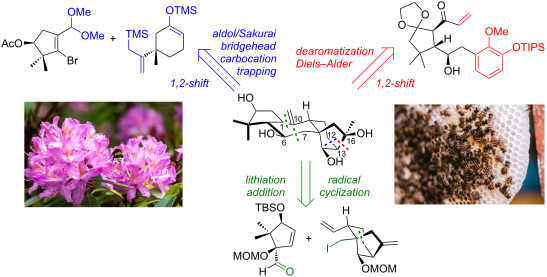
- opening of the epoxide (15%). From 41 having the correct tetracyclic skeleton, a transient protection followed by Petasis olefination, deprotection, selenide-mediated α,β-dehydrogenation and Mukaiyama oxidation afforded an advanced intermediate 42 bearing most of the target’s functionalities. A sequence
- compound 60 was employed to form an α,β-epoxyketone intermediate which underwent SmI2 reduction at −78 °C, giving access to the desired syn diastereomer with good selectivity (dr = 8.5:1). The free alcohol was then protected with an ethoxymethyl ether (EOM). Finally, Peterson olefination, stereoselective

Graphical Abstract

Figure 1: General structure of grayanane natural products.

Scheme 1: Grayanane biosynthesis.
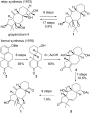
Scheme 2: Matsumoto’s relay approach.

Scheme 3: Shirahama’s total synthesis of (–)-grayanotoxin III.

Scheme 4: Newhouse’s syntheses of fragments 25 and 29.

Scheme 5: Newhouse’s total synthesis of principinol D.

Scheme 6: Ding’s total synthesis of rhodomolleins XX and XXII.

Scheme 7: First key step of Luo’s strategy.

Scheme 8: Luo’s total synthesis of grayanotoxin III.

Scheme 9: Synthesis of principinol E and rhodomollein XX.

Scheme 10: William’s synthetic effort towards pierisformaside C.

Scheme 11: Hong’s synthetic effort towards rhodojaponin III.

Scheme 12: Recent strategies for grayanane synthesis.
Recent advances in the asymmetric phosphoric acid-catalyzed synthesis of axially chiral compounds
- Alemayehu Gashaw Woldegiorgis and
- Xufeng Lin
Beilstein J. Org. Chem. 2021, 17, 2729–2764, doi:10.3762/bjoc.17.185
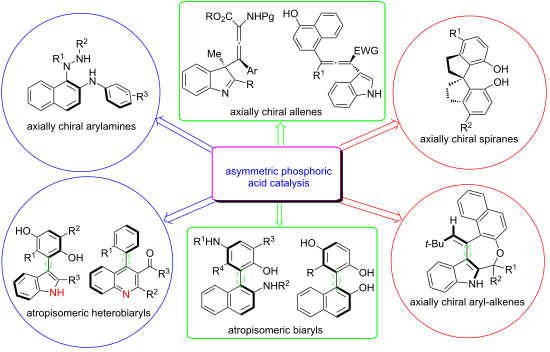
- (Brønsted acidity/basicity, hydrogen-bonding units, and counter-anions toward metals) [48][49]. In 2019, Shi, Lin, and co-workers achieved an enantioselective synthesis of axially chiral quinoline-derived biaryl atropisomers via Pd-catalyzed C–H olefination of 8-phenylquinoline (11) using a novel chiral
- spirophosphoric acid (CPA 4). A wide range of quinoline-derived biaryls 13 with various substituents was synthesized in good to excellent yields (up to 99%) with excellent enantioselectivities (up to 98% ee) (Scheme 5). A working model for the origin of enantioselectivity in C–H olefination was provided by
- density functional theory calculations [46]. Recently, Shi, Lin and co-workers reported the atroposelective synthesis of axially chiral biaryls by Pd(II)-catalyzed free amine-directed atroposelective C–H olefination using chiral spirophosphoric acid CPA 5 as an efficient ligand and Ag2CO3 as the oxidant

Graphical Abstract

Figure 1: Representative examples of axially chiral biaryls, heterobiaryls, spiranes and allenes as ligands a...
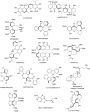
Figure 2: Selected examples of axially chiral drugs and bioactive molecules.

Figure 3: Axially chiral functional materials and supramolecules.

Figure 4: Important chiral phosphoric acid scaffolds used in this review.

Scheme 1: Atroposelective aryl–aryl-bond formation by employing a facile [3,3]-sigmatropic rearrangement.

Scheme 2: Atroposelective synthesis of axially chiral biaryl amino alcohols 5.

Scheme 3: The enantioselective reaction of quinone and 2-naphthol derivatives.

Scheme 4: Enantioselective synthesis of multisubstituted biaryls.

Scheme 5: Enantioselective synthesis of axially chiral quinoline-derived biaryl atropisomers mediated by chir...

Scheme 6: Pd-Catalyzed atroposelective C–H olefination of biarylamines.

Scheme 7: Palladium-catalyzed directed atroposelective C–H allylation.

Scheme 8: Enantioselective synthesis of axially chiral (a) aryl indoles and (b) biaryldiols.

Scheme 9: Asymmetric arylation of indoles enabled by azo groups.

Scheme 10: Proposed mechanism for the asymmetric arylation of indoles.
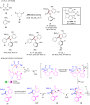
Scheme 11: Enantioselective synthesis of axially chiral N-arylindoles [38].

Scheme 12: Enantioselective [3 + 2] formal cycloaddition and central-to-axial chirality conversion.

Scheme 13: Organocatalytic atroposelective arene functionalization of nitrosonaphthalene with indoles.

Scheme 14: Proposed reaction mechanism for the atroposelective arene functionalization of nitrosonaphthalenes.

Scheme 15: Asymmetric construction of axially chiral naphthylindoles [65].

Scheme 16: Enantioselective synthesis of axially chiral 3,3’-bisindoles [66].

Scheme 17: Atroposelective synthesis of 3,3’-bisiindoles bearing axial and central chirality.

Scheme 18: Enantioselective synthesis of axially chiral 3,3’-bisindoles bearing single axial chirality.

Scheme 19: Enantioselective reaction of azonaphthalenes with various pyrazolones.
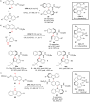
Scheme 20: Enantioselective and atroposelective synthesis of axially chiral N-arylcarbazoles [73].

Scheme 21: Atroposelective cyclodehydration reaction.

Scheme 22: Atroposelective construction of axially chiral N-arylbenzimidazoles [78].

Scheme 23: Proposed reaction mechanism for the atroposelective synthesis of axially chiral N-arylbenzimidazole...

Scheme 24: Atroposelective synthesis of axially chiral arylpyrroles [21].

Scheme 25: Synthesis of axially chiral arylquinazolinones and its reaction pathway [35].
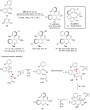
Scheme 26: Synthesis of axially chiral aryquinoline by Friedländer heteroannulation reaction and its proposed...

Scheme 27: Povarov cycloaddition–oxidative chirality conversion process.

Scheme 28: Atroposelective synthesis of oxindole-based axially chiral styrenes via kinetic resolution.

Scheme 29: Synthesis of axially chiral alkene-indole frame works [45].

Scheme 30: Proposed reaction mechanism for axially chiral alkene-indoles.

Scheme 31: Atroposelective C–H aminations of N-aryl-2-naphthylamines with azodicarboxylates.

Scheme 32: Synthesis of brominated atropisomeric N-arylquinoids.

Scheme 33: The enantioselective syntheses of axially chiral SPINOL derivatives.

Scheme 34: γ-Addition reaction of various 2,3-disubstituted indoles to β,γ-alkynyl-α-imino esters.

Scheme 35: Regio- and stereoselective γ-addition reactions of isoxazol-5(4H)-ones to β,γ-alkynyl-α-imino ester...

Scheme 36: Synthesis of chiral tetrasubstituted allenes and naphthopyrans.

Scheme 37: Asymmetric remote 1,8-conjugate additions of thiazolones and azlactones to propargyl alcohols.

Scheme 38: Synthesis of chiral allenes from 1-substituted 2-naphthols [107].
The ethoxycarbonyl group as both activating and protective group in N-acyl-Pictet–Spengler reactions using methoxystyrenes. A short approach to racemic 1-benzyltetrahydroisoquinoline alkaloids
- Marco Keller,
- Karl Sauvageot-Witzku,
- Franz Geisslinger,
- Nicole Urban,
- Michael Schaefer,
- Karin Bartel and
- Franz Bracher
Beilstein J. Org. Chem. 2021, 17, 2716–2725, doi:10.3762/bjoc.17.183
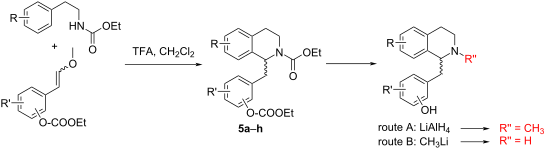
- ethyl chloroformate/Et3N, followed by Wittig olefination with an ylide generated from (methoxymethyl)triphenylphosphonium chloride and LDA to give the enol ethers as E/Z mixtures. N-Phenethyl carbamates were obtained from benzaldehydes via Henry reaction with nitromethane, followed by zinc dust

Graphical Abstract

Figure 1: Prominent synthetic approaches to 1-benzyltetrahydroisoquinolines: Bischler–Napieralski, Pictet–Spe...

Figure 2: Structures of N-methylcoclaurine (1) and the ten 1-benzyl-1,2,3,4-tetrahydroisoquinoline alkaloids ...

Figure 3: Two routes using N- and O-alkoxycarbonylated building blocks for the synthesis of phenolic N-methyl...

Figure 4: Structures of the building blocks A1–A4 (N-ethoxycarbonyl phenethylamines) and B1–B3 (ω-methoxystyr...
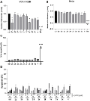
Figure 5: Biological activity. Antiproliferative effects of the 1-benzyltetrahydroisoquinoline alkaloids in A...
Recent advances in the tandem annulation of 1,3-enynes to functionalized pyridine and pyrrole derivatives
- Yi Liu,
- Puying Luo,
- Yang Fu,
- Tianxin Hao,
- Xuan Liu,
- Qiuping Ding and
- Yiyuan Peng
Beilstein J. Org. Chem. 2021, 17, 2462–2476, doi:10.3762/bjoc.17.163
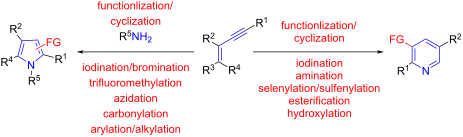
- functionalized pyridine and pyrrole derivatives from easily available 1,3-enynes. Therefore, the significant challenges will focus on the following aspects in the future: i) development of more functionalizations of pyridines and pyrroles (such as fluorination, trifluoromethylthiolation, olefination

Graphical Abstract

Scheme 1: Ag/I2-mediated electrophilic annulation of 2-en-4-ynyl azides 1.

Scheme 2: The proposed mechanism of Ag-catalyzed aza-annulation.

Scheme 3: The proposed mechanism of I2-mediated aza-annulation.

Scheme 4: Copper-catalyzed amination of (E)-2-en-4-ynyl azides 1.
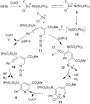
Scheme 5: The proposed mechanism of copper-catalyzed amination.

Scheme 6: The derivatization of sulfonated aminonicotinates.

Scheme 7: Copper-catalyzed chalcogenoamination of (E)-2-en-4-ynyl azides 1.

Scheme 8: The possible mechanism of chalcogenoamination.

Scheme 9: The derivatization of 5‑selenyl- and 5-sulfenyl-substituted nicotinates.

Scheme 10: The tandem reaction of nitriles, Reformatsky reagents, and 1,3-enynes.

Scheme 11: Nickel-catalyzed [4 + 2]-cycloaddition of 3-azetidinones with 1,3-enynes.

Scheme 12: Electrophilic iodocyclization of 2-nitro-1,3-enynes to pyrroles.

Scheme 13: Electrophilic halogenation of 2-trifluoromethyl-1,3-enynes to pyrroles.

Scheme 14: Copper-catalyzed cascade cyclization of 2-nitro-1,3-enynes with amines.

Scheme 15: Tandem cyclization of 2-nitro-1,3-enynes, Togni reagent II, and amines.

Scheme 16: Tandem cyclization of 2-nitro-1,3-enynes, TMSN3, and amines.

Scheme 17: Cascade cyclization of 6-hydroxyhex-2-en-4-ynals to pyrroles.

Scheme 18: Au/Ag-catalyzed oxidative aza-annulation of 1,3-enynyl azides.

Scheme 19: The plausible mechanism of Au/Ag-catalyzed oxidative aza-annulation.

Scheme 20: Synthesis of 2-tetrazolyl-substituted 3-acylpyrroles from enynals.

Scheme 21: CuH-catalyzed coupling reaction of 1,3-enynes and nitriles to pyrroles.

Scheme 22: The mechanism of CuH-catalyzed coupling of 1,3-enynes and nitriles to pyrroles.
Strategies for the synthesis of brevipolides
- Yudhi D. Kurniawan and
- A'liyatur Rosyidah
Beilstein J. Org. Chem. 2021, 17, 2399–2416, doi:10.3762/bjoc.17.157
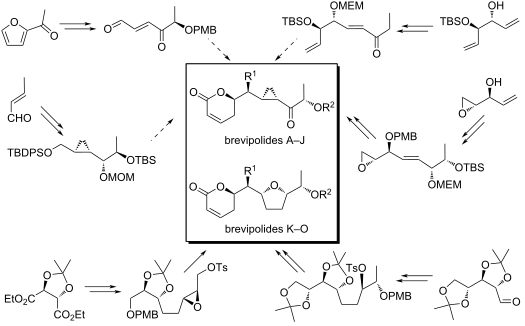
- through Horner–Wardsworth–Emmons olefination of the known precursors 111 and 112, which are prepared from ᴅ-mannitol and ʟ-lactic acid methyl ester, respectively. The synthesis commenced with the reaction between aldehyde 111 and phosphonate ester 112 using Ba(OH)2·8H2O to provide the unsaturated ketone
- ) asymmetric dihydroxylation and epoxidation; 3) asymmetric hydrogenation; 4) Horner–Wadsworth–Emmons olefination; and 5) cyclopropanation, which are summarized in Table 4, including the overall yields and the number of steps required. This work is expected to provide useful information for researchers to

Graphical Abstract

Figure 1: Structures of brevipolides A–O (1 – 15).

Scheme 1: Retrosynthetic analysis of brevipolide H (8) by Kumaraswamy.

Scheme 2: Attempt to synthesize brevipolide H (8) by Kumaraswamy. (R,R)-Noyori cat. = RuCl[N-(tosyl)-1,2-diph...

Scheme 3: Attempt to synthesize brevipolide H (8) by Kumaraswamy (continued).

Scheme 4: Retrosynthetic analysis of brevipolide H (8) by Hou.

Scheme 5: Synthesis ent-brevipolide H (ent-8) by Hou.

Scheme 6: Retrosynthetic analysis of brevipolide H (8) by Mohapatra.

Scheme 7: Attempt to synthesize brevipolide H (8) by Mohapatra.

Scheme 8: Attempt to synthesize brevipolide H (8) by Mohapatra (continued). (+)-(IPC)2-BCl = (+)-B-chloro-dii...

Scheme 9: Retrosynthetic analysis of brevipolide H (8) by Hou.

Scheme 10: Synthesis of brevipolide H (8) by Hou.

Scheme 11: Retrosynthetic analysis of brevipolide M (13) by Sabitha.

Scheme 12: Synthesis of brevipolide M (13) by Sabitha.

Scheme 13: Retrosynthetic analysis of brevipolides M (13) and N (14) by Sabitha.

Scheme 14: Synthesis of brevipolides M (13) and N (14) by Sabitha.
Preparation of mono-substituted malonic acid half oxyesters (SMAHOs)
- Tania Xavier,
- Sylvie Condon,
- Christophe Pichon,
- Erwan Le Gall and
- Marc Presset
Beilstein J. Org. Chem. 2021, 17, 2085–2094, doi:10.3762/bjoc.17.135

- widespread applications being aldol or Mannich-type addition reactions with carbonyl compounds and imines, respectively [4], and Galat olefination reactions of aldehydes [5][6][7]. Nevertheless, these developments have been mostly described with unsubstituted MAHOs, and the use of mono-substituted MAHOs

Graphical Abstract

Scheme 1: Main routes to SMAHOs.

Scheme 2: Preparation of α-halo-MAHOs.

Scheme 3: Preparation of SMAHOs from Meldrum's acid.

Scheme 4: Saponification of substituted malonates.

Scheme 5: Scope of the mono-esterification of substituted malonic acids. adr = 1:1.
Fritsch–Buttenberg–Wiechell rearrangement of magnesium alkylidene carbenoids leading to the formation of alkynes
- Tsutomu Kimura,
- Koto Sekiguchi,
- Akane Ando and
- Aki Imafuji
Beilstein J. Org. Chem. 2021, 17, 1352–1359, doi:10.3762/bjoc.17.94
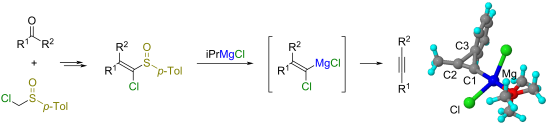
- olefination of 4,4'-dimethoxybenzophenone with methoxy(trimethylsilyl)methyl p-tolyl sulfide, and oxidation of the resulting 1-methoxyvinyl p-tolyl sulfide with mCPBA (Scheme 3b) [17]. The 1-chlorovinyl p-tolyl sulfoxides 2e–g were prepared through a one-pot procedure (Scheme 3c) [15]. The HWE reagent was

Graphical Abstract

Scheme 1: Synthesis of alkynes from carbonyl compounds through one-carbon homologation.
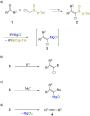
Scheme 2: Reactions of magnesium alkylidene carbenoids 3, generated from sulfoxides 2 and iPrMgCl.
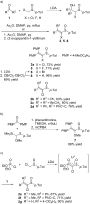
Scheme 3: Synthesis of sulfoxides 2 and 5–8 from carbonyl compounds 1.

Scheme 4: Reaction of sulfoxides 5 and 6 with isopropylmagnesium chloride.

Scheme 5: Reaction of sulfoxide 2c with isopropylmagnesium chloride.

Scheme 6: Reaction of 13C-labeled sulfoxides [13C]-(E)-2e and [13C]-(Z)-2e with iPrMgCl.

Scheme 7: A plausible reaction mechanism for the formation of alkynes 4. a) 1,2-Rearrangement readily takes p...

Figure 1: Optimized geometries of reactant (E)-3e, transition state (E)-3e‡, and product 4e·MgCl2 for the FBW...
The preparation and properties of 1,1-difluorocyclopropane derivatives
- Kymbat S. Adekenova,
- Peter B. Wyatt and
- Sergazy M. Adekenov
Beilstein J. Org. Chem. 2021, 17, 245–272, doi:10.3762/bjoc.17.25
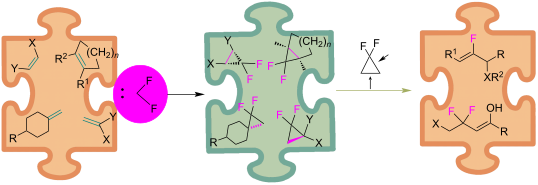
- Ph3P+CF2−, which was used for the Wittig olefination of aldehydes and ketones. However, heating PDFA in nonpolar solvents (e.g., xylene at 90 °C) favors the dissociation of the ylide to release difluorocarbene which is able to effect the cyclopropanation of alkenes [34]. Trimethylsilyl

Graphical Abstract

Scheme 1: Synthesis of 1,1-difluoro-2,3-dimethylcyclopropane (2).

Scheme 2: Cyclopropanation via dehydrohalogenation of chlorodifluoromethane.

Scheme 3: Difluorocyclopropanation of methylstyrene 7 using dibromodifluoromethane and zinc.

Scheme 4: Synthesis of difluorocyclopropanes from the reaction of dibromodifluoromethane and triphenylphosphi...

Scheme 5: Generation of difluorocarbene in a catalytic two-phase system and its addition to tetramethylethyle...

Scheme 6: The reaction of methylstyrene 7 with chlorodifluoromethane (11) in the presence of a tetraarylarson...

Scheme 7: Pyrolysis of sodium chlorodifluoroacetate (12) in refluxing diglyme in the presence of alkene 13.

Scheme 8: Synthesis of boron-substituted gem-difluorocyclopropanes 16.

Scheme 9: Addition of sodium bromodifluoroacetate (17) to alkenes.

Scheme 10: Addition of sodium bromodifluoroacetate (17) to silyloxy-substituted cyclopropanes 20.

Scheme 11: Synthesis of difluorinated nucleosides.

Scheme 12: Addition of butyl acrylate (26) to difluorocarbene generated from TFDA (25).

Scheme 13: Addition of difluorocarbene to propargyl esters 27 and conversion of the difluorocyclopropenes 28 t...

Scheme 14: The generation of difluorocyclopropanes using MDFA 30.

Scheme 15: gem-Difluorocyclopropanation of styrene (32) using difluorocarbene generated from TMSCF3 (31) under...

Scheme 16: Synthesis of a gem-difluorocyclopropane derivative using HFPO (41) as a source of difluorocarbene.

Scheme 17: Cyclopropanation of (Z)-2-butene in the presence of difluorodiazirine (44).

Scheme 18: The cyclopropanation of 1-octene (46) using Seyferth's reagent (45) as a source of difluorocarbene.

Scheme 19: Alternative approaches for the difluorocarbene synthesis from trimethyl(trifluoromethyl)tin (48).

Scheme 20: Difluorocyclopropanation of cyclohexene (49).

Scheme 21: Synthesis of difluorocyclopropane derivative 53 using bis(trifluoromethyl)cadmium (51) as the diflu...

Scheme 22: Addition of difluorocarbene generated from tris(trifluoromethyl)bismuth (54).

Scheme 23: Addition of a stable (trifluoromethyl)zinc reagent to styrenes.

Scheme 24: The preparation of 2,2-difluorocyclopropanecarboxylic acids of type 58.

Scheme 25: Difluorocyclopropanation via Michael cyclization.

Scheme 26: Difluorocyclopropanation using N-acylimidazolidinone 60.

Scheme 27: Difluorocyclopropanation through the cyclization of phenylacetonitrile (61) and 1,2-dibromo-1,1-dif...

Scheme 28: gem-Difluoroolefins 64 for the synthesis of functionalized cyclopropanes 65.

Scheme 29: Preparation of aminocyclopropanes 70.

Scheme 30: Synthesis of fluorinated methylenecyclopropane 74 via selenoxide elimination.

Scheme 31: Reductive dehalogenation of (1R,3R)-75.

Scheme 32: Synthesis of chiral monoacetates by lipase catalysis.

Scheme 33: Transformation of (±)-trans-81 using Rhodococcus sp. AJ270.

Scheme 34: Transformation of (±)-trans-83 using Rhodococcus sp. AJ270.

Scheme 35: Hydrogenation of difluorocyclopropenes through enantioselective hydrocupration.

Scheme 36: Enantioselective transfer hydrogenation of difluorocyclopropenes with a Ru-based catalyst.

Scheme 37: The thermal transformation of trans-1,2-dichloro-3,3-difluorocyclopropane (84).

Scheme 38: cis–trans-Epimerization of 1,1-difluoro-2,3-dimethylcyclopropane.

Scheme 39: 2,2-Difluorotrimethylene diradical intermediate.

Scheme 40: Ring opening of stereoisomers 88 and 89.

Scheme 41: [1,3]-Rearrangement of alkenylcyclopropanes 90–92.

Scheme 42: Thermolytic rearrangement of 2,2-difluoro-1-vinylcyclopropane (90).

Scheme 43: Thermal rearrangement for ethyl 3-(2,2-difluoro)-3-phenylcyclopropyl)acrylates 93 and 95.

Scheme 44: Possible pathways of the ring opening of 1,1-difluoro-2-vinylcyclopropane.

Scheme 45: Equilibrium between 1,1-difluoro-2-methylenecyclopropane (96) and (difluoromethylene)cyclopropane 97...

Scheme 46: Ring opening of substituted 1,1-difluoro-2,2-dimethyl-3-methylenecyclopropane 98.

Scheme 47: 1,1-Difluorospiropentane rearrangement.

Scheme 48: Acetolysis of (2,2-difluorocyclopropyl)methyl tosylate (104) and (1,1-difluoro-2-methylcyclopropyl)...

Scheme 49: Ring opening of gem-difluorocyclopropyl ketones 106 and 108 by thiolate nucleophiles.

Scheme 50: Hydrolysis of gem-difluorocyclopropyl acetals 110.

Scheme 51: Ring-opening reaction of 2,2-difluorocyclopropyl ketones 113 in the presence of ionic liquid as a s...

Scheme 52: Ring opening of gem-difluorocyclopropyl ketones 113a by MgI2-initiated reaction with diarylimines 1...

Scheme 53: Ring-opening reaction of gem-difluorocyclopropylstannanes 117.

Scheme 54: Preparation of 1-fluorovinyl vinyl ketone 123 and the synthesis of 2-fluorocyclopentenone 124. TBAT...

Scheme 55: Iodine atom-transfer ring opening of 1,1-difluoro-2-(1-iodoalkyl)cyclopropanes 125a–c.

Scheme 56: Ring opening of bromomethyl gem-difluorocyclopropanes 130 and formation of gem-difluoromethylene-co...

Scheme 57: Ring-opening aerobic oxidation reaction of gem-difluorocyclopropanes 132.

Scheme 58: Dibrominative ring-opening functionalization of gem-difluorocyclopropanes 134.

Scheme 59: The selective formation of (E,E)- and (E,Z)-fluorodienals 136 and 137 from difluorocyclopropyl acet...

Scheme 60: Proposed mechanism for the reaction of difluoro(methylene)cyclopropane 139 with Br2.

Scheme 61: Thermal rearrangement of F2MCP 139 and iodine by CuI catalysis.

Scheme 62: Synthesis of 2-fluoropyrroles 142.

Scheme 63: Ring opening of gem-difluorocyclopropyl ketones 143 mediated by BX3.

Scheme 64: Lewis acid-promoted ring-opening reaction of 2,2-difluorocyclopropanecarbonyl chloride (148).

Scheme 65: Ring-opening reaction of the gem-difluorocyclopropyl ketone 106 by methanolic KOH.

Scheme 66: Hydrogenolysis of 1,1-difluoro-3-methyl-2-phenylcyclopropane (151).
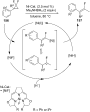
Scheme 67: Synthesis of monofluoroalkenes 157.

Scheme 68: The stereoselective Ag-catalyzed defluorinative ring-opening diarylation of 1-trimethylsiloxy-2,2-d...

Scheme 69: Synthesis of 2-fluorinated allylic compounds 162.

Scheme 70: Pd-catalyzed cross-coupling reactions of gem-difluorinated cyclopropanes 161.

Scheme 71: The (Z)-selective Pd-catalyzed ring-opening sulfonylation of 2-(2,2-difluorocyclopropyl)naphthalene...

Figure 1: Structures of zosuquidar hydrochloride and PF-06700841.

Scheme 72: Synthesis of methylene-gem-difluorocyclopropane analogs of nucleosides.

Figure 2: Anthracene-difluorocyclopropane hybrid derivatives.

Figure 3: Further examples of difluorcyclopropanes in modern drug discovery.
Progress in the total synthesis of inthomycins
- Bidyut Kumar Senapati
Beilstein J. Org. Chem. 2021, 17, 58–82, doi:10.3762/bjoc.17.7
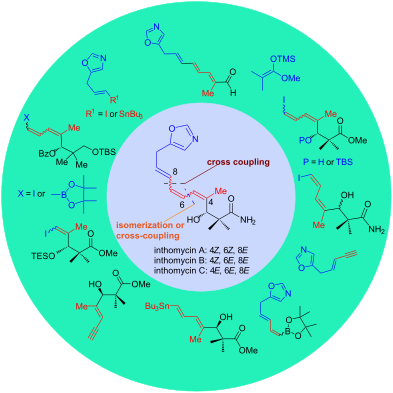
- followed by immediate TBS ether formation produced (+)-110a in 82% yield over 2 steps. Wittig olefination of (+)-110a with phosphonate 111 furnished the desired (E)-(+)-112a, which was then converted into Hatakeyama’s enynol (−)-82b using a four-step sequence to complete the formal synthesis of inthomycin

Graphical Abstract

Figure 1: The inthomycins A–C (1–3) and structurally closely related compounds.

Figure 2: Syntheses of inthomycins A–C (1–3).
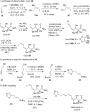
Scheme 1: The first total synthesis of racemic inthomycin A (rac)-1 by Whiting.

Scheme 2: Moloney’s synthesis of the phenyl analogue of inthomycin C ((rac)-3).
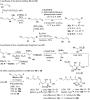
Scheme 3: Moloney’s synthesis of phenyl analogues of inthomycins A (rac-1) and B (rac-2).

Scheme 4: The first total synthesis of inthomycin B (+)-2 by R. J. K. Taylor.

Scheme 5: R. J. K. Taylor’s total synthesis of racemic inthomycin A (rac)-1.
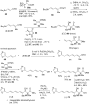
Scheme 6: The first total synthesis of inthomycin C ((+)-3) by R. J. K. Taylor.

Scheme 7: The first total synthesis of naturally occurring inthomycin C ((–)-3) by Ryu et al.

Scheme 8: Preparation of E,E-iododiene (+)-84 and Z,E- iododiene 85a.

Scheme 9: Hatakeyama’s total synthesis of inthomycin A (+)-1 and inthomycin B (+)-2.

Scheme 10: Hatakeyama’s total synthesis of inthomycin C ((–)-3).

Scheme 11: Maulide’s formal synthesis of racemic inthomycin C ((rac)-3).
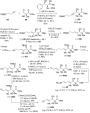
Scheme 12: Hale’s synthesis of dienylstannane (+)-69 and enyne (+)-82b intermediates.

Scheme 13: Hale’s total synthesis of inthomycin C ((+)-3).

Scheme 14: Hale and Hatakeyama’s resynthesis of (3R)-inthomycin C (−)-3 Mosher esters.

Scheme 15: Reddy’s formal syntheses of inthomycin C (+)-3 and inthomycin C ((−)-3).

Scheme 16: Synthesis of the cross-metathesis precursors (rac)-118 and 121.

Scheme 17: Donohoe’s total synthesis of inthomycin C ((−)-3).

Scheme 18: Synthesis of dienylboronic ester (E,E)-128.

Scheme 19: Synthesis of the alkenyl iodides (Z)- and (E)-130.

Scheme 20: Burton’s total synthesis of inthomycin B ((+)-2).

Scheme 21: Burton’s total synthesis of inthomycin C ((−)-3).

Scheme 22: Burton’s total synthesis of inthomycin A ((+)-1).

Scheme 23: Synthesis of common intermediate (Z)-(+)-143a.

Scheme 24: Synthesis of (Z)-and (E)-selective fragments (+)-145a–c.

Scheme 25: Kim’s total synthesis of inthomycins A (+)-1 and B (+)-2.

Scheme 26: Completion of total synthesis of inthomycin C ((–)-3) by Kim.
All-carbon [3 + 2] cycloaddition in natural product synthesis
- Zhuo Wang and
- Junyang Liu
Beilstein J. Org. Chem. 2020, 16, 3015–3031, doi:10.3762/bjoc.16.251
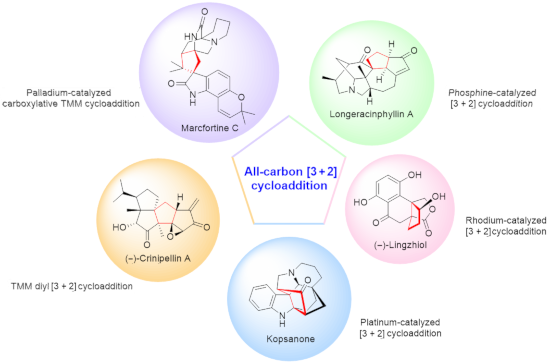
- -ketophosphonate 89 in 86% yield (Scheme 6A) [41]. Hydrogenation of 89 followed by an intramolecular Horner–Wadsworth–Emmons olefination produced hexacyclic enone 90 in 91% yield over two steps. The conversion of enone 90 to longeracinphyllin A (10) was achieved in three steps. The syntheses of daphenylline (11

Graphical Abstract

Figure 1: Highly-substituted five-membered carbocycle in biologically significant natural products.

Figure 2: Natural product synthesis featuring the all-carbon [3 + 2] cycloaddition. (Quaternary carbon center...

Scheme 1: Representative natural product syntheses that feature the all-carbon [3 + 2] cyclization as the key...
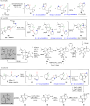
Scheme 2: (A) An intramolecular trimethylenemethane diyl [3 + 2] cycloaddition with allenyl diazo compound 38...
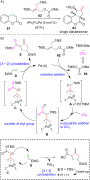
Scheme 3: (A) Palladium-catalyzed intermolecular carboxylative TMM cycloaddition [36]. (B) The proposed mechanism....

Scheme 4: Natural product syntheses that make use of palladium-catalyzed intermolecular [3 + 2] cycloaddition...
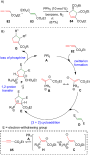
Scheme 5: (A) Phosphine-catalyzed [3 + 2] cycloaddition [17]. (B) The proposed mechanism.

Scheme 6: Lu’s [3 + 2] cycloaddition in natural product synthesis. (A) Synthesis of longeracinphyllin A (10) [41]...

Scheme 7: (A) Phosphine-catalyzed [3 + 2] annulation of unsymmetric isoindigo 100 with allene in the preparat...
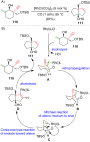
Scheme 8: (A) Rhodium-catalyzed intracmolecular [3 + 2] cycloaddition [49]. (B) The proposed catalytic cycle of t...

Scheme 9: Total synthesis of natural products reported by Yang and co-workers applying rhodium-catalyzed intr...

Scheme 10: (A) Platinum(II)-catalyzed intermolecular [3 + 2] cycloaddition of propargyl ether 139 and n-butyl ...

Scheme 11: (A) Platinum-catalyzed intramolecular [3 + 2] cycloaddition of propargylic ketal derivative 142 to ...

Scheme 12: (A) Synthesis of phyllocladanol (21) features a Lewis acid-catalyzed formal intramolecular [3 + 2] ...

Scheme 13: The recent advances of [3 + 2] annulation in natural product synthesis. (A) The preparation of melo...
Syntheses of spliceostatins and thailanstatins: a review
- William A. Donaldson
Beilstein J. Org. Chem. 2020, 16, 1991–2006, doi:10.3762/bjoc.16.166

- silyl ether-protected 2-hydroxypropanals 15a and 15b via literature procedures [10], followed by the application of the Still–Gennari Z-selective Horner–Wadsworth–Emmons olefination [11]. Koide’s group [12][13] reported that the asymmetric addition of the enyne 16 to acetaldehyde in the presence of zinc
- Kitahara’s synthesis [8][9], the Wittig olefination of 24, followed by a catalytic hydrogenation, removal of the dimethylaminal protecting group, and lactonization gave 25 as a mixture of diastereomers (Scheme 2). The further transformation of 25 afforded the dihydropyran 26, which upon catalytic
- ] was followed by a 3-O-vinylation. A thermal 3,3-sigmatropic Claisen rearrangement of 62 gave the cis-2,6-disubstituted dihydropyran 63, which upon sequential Wittig olefination with 2-(triphenylphosporanylidene)propanal and then methylenetriphenylphosphorane yielded the diene 64. The removal of the di

Graphical Abstract

Figure 1: Structures of spliceostatins/thailanstatins.

Scheme 1: Synthetic routes to protected (2Z,4S)-4-hydroxy-2-butenoic acid fragments.

Scheme 2: Kitahara synthesis of the (all-cis)-2,3,5,6-tetrasubstituted tetrahydropyran.
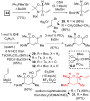
Scheme 3: Koide synthesis of (all-cis)-2,3,5,6-tetrasubstituted tetrahydropyran.
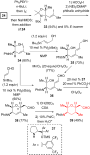
Scheme 4: Nicolaou synthesis of the (all-cis)-2,3,5,6-tetrasubstituted tetrahydropyran.
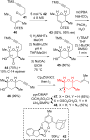
Scheme 5: Jacobsen synthesis of the (all-cis)-2,3,5,6-tetrasubstituted tetrahydropyran.
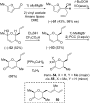
Scheme 6: Unproductive attempt to generate the (all-cis)-tetrahydropyranone 50.

Scheme 7: Ghosh synthesis of the C-7–C-14 (all-cis)-tetrahydropyran segment.

Scheme 8: Ghosh’s alternative route to the (all-cis)-tetrahydropyranone 50.

Scheme 9: Alternative synthesis of the dihydro-3-pyrone 58.
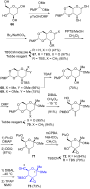
Scheme 10: Kitahara’s 1st-generation synthesis of the C-1–C-6 fragment of FR901464 (1).

Scheme 11: Kitahara 1st-generation synthesis of the C-1–C-6 fragment of FR901464 (1).

Scheme 12: Nimura/Arisawa synthesis of the C-1-phenyl segment.

Scheme 13: Ghosh synthesis of the C-1–C-6 fragment of FR901464 (1) from (R)-glyceraldehyde acetonide.

Scheme 14: Jacobsen synthesis of the C-1–C-7 segment of FR901464 (1).
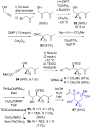
Scheme 15: Koide synthesis of the C-1–C-7 segment of FR901464 (1).
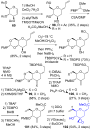
Scheme 16: Ghosh synthesis of the C-1–C-5 segment 102 of thailanstatin A (7).

Scheme 17: Nicolaou synthesis of the C-1–C-9 segments of spliceostatin D (9) and thailanstatins A (7) and B (5...

Scheme 18: Ghosh synthesis of the C-1–C-6 segment 115 of spliceostatin E (10).

Scheme 19: Fragment coupling via Wittig and modified Julia olefinations by Kitahara.

Scheme 20: Fragment coupling via cross-metathesis by Koide.

Scheme 21: The Ghosh synthesis of spliceostatin A (4), FR901464 (1), spliceostatin E (10), and thailanstatin m...

Scheme 22: Arisawa synthesis of a C-1-phenyl analog of FR901464 (1).

Scheme 23: Jacobsen fragment coupling by a Pd-catalyzed Negishi coupling.

Scheme 24: Nicolaou syntheses of thailanstatin A and B (7 and 5) and spliceostatin D (9) via a Pd-catalyzed Su...

Scheme 25: The Ghosh synthesis of spliceostatin G (11) via Suzuki–Miyaura coupling.
Selective preparation of tetrasubstituted fluoroalkenes by fluorine-directed oxetane ring-opening reactions
- Clément Q. Fontenelle,
- Thibault Thierry,
- Romain Laporte,
- Emmanuel Pfund and
- Thierry Lequeux
Beilstein J. Org. Chem. 2020, 16, 1936–1946, doi:10.3762/bjoc.16.160
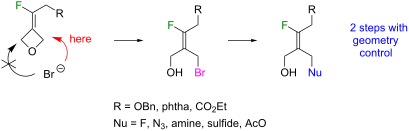
- olefination of a protected 1,3-dihydroxypropanone (Figure 3). However, the selective introduction of functional groups is not possible in these diols as the two hydroxy groups present similar chemical reactivity. Other approaches are available for a selective preparation of monofluoroalkenes including
- olefination or defluorination reactions or a sigmatropic rearrangement, but these approaches are limited and do not allow the synthesis of tetrasubstituted fluoroalkenes with good control of their geometry [18][19][20][21]. In order to develop a selective synthesis for tetrasubstituted fluoroalkenes we
- through an olefination reaction with benzothiazoyl sulfones (Scheme 1) [22]. With these fluoroalkylidene-oxetanes in hands, we studied the selectivity of ring-opening reactions with heteroatom nucleophiles in order to access tetrasubstituted fluoroalkenes. A control of the geometry of these reactions

Graphical Abstract

Figure 1: Representative fluorinated nucleos(t)ides and acyclonucleotides.

Figure 2: Acyclonucleotides as nucleotide surrogates.

Figure 3: Olefination approaches and ring-opening of oxetane derivatives.

Scheme 1: Preparation of fluoroakylidene-oxetanes and their ring-opening reactions.

Scheme 2: Synthesis of benzyloxy-substituted fluoroethylidene-oxetane derivative 8.

Scheme 3: Effect of the medium on the selective formation of derivative 10.

Scheme 4: Mechanism for the formation of dihydrofuran 10.

Scheme 5: Mechanism for the formation of unsaturated lactones 14 and 15.

Scheme 6: Opening reaction of ethyl 2-(oxetanyl-3-idene)acetate (16).

Scheme 7: Functionalization of bromomethyllactone 15 and its analogues.

Scheme 8: Functionalization by substitution reaction of the bromide E-1d vs ring-opening reaction of the oxet...

Scheme 9: Preparation of tetrasubstituted fluoroalkenes.
When metal-catalyzed C–H functionalization meets visible-light photocatalysis
- Lucas Guillemard and
- Joanna Wencel-Delord
Beilstein J. Org. Chem. 2020, 16, 1754–1804, doi:10.3762/bjoc.16.147

- described the combination of rhodium and photoredox catalysis for the direct C–H ortho-olefination of arylamides (Figure 7) [74]. The procedure was performed under air at 80 °C and turned out to be efficient using a low loading of a Ru-based photosensitizer. A broad range of DGs could be installed on the
- -functionalization viewpoint, thus furnishing a large panel of compounds in excellent to good yields. This C–H olefination of arenes was performed under aerobic conditions in order to reoxidize the photocatalyst (Figure 8). Interestingly, the desired products were also delivered while using a stoichiometric amount
- merging C–H activation with photoredox catalysis to allow in situ reoxidation of the metal catalyst. In 2015, a procedure combining ruthenium C–H activation of phenols derivatives bearing a pyridine moiety as DG and photoredox catalysis was disclosed (Figure 9) [75]. This ortho-olefination was performed

Graphical Abstract

Figure 1: Concept of dual synergistic catalysis.

Figure 2: Classification of catalytic systems involving two catalysts.

Figure 3: General mechanism for the dual nickel/photoredox catalytic system.

Figure 4: General mechanisms for C–H activation catalysis involving different reoxidation strategies.

Figure 5: Indole synthesis via dual C–H activation/photoredox catalysis.

Figure 6: Proposed mechanism for the indole synthesis via dual catalysis.

Figure 7: Oxidative Heck reaction on arenes via the dual catalysis.

Figure 8: Proposed mechanism for the Heck reaction on arenes via dual catalysis.

Figure 9: Oxidative Heck reaction on phenols via the dual catalysis.

Figure 10: Proposed mechanism for the Heck reaction on phenols via dual catalysis.

Figure 11: Carbazole synthesis via dual C–H activation/photoredox catalysis.

Figure 12: Proposed mechanism for the carbazole synthesis via dual catalysis.

Figure 13: Carbonylation of enamides via the dual C–H activation/photoredox catalysis.

Figure 14: Proposed mechanism for carbonylation of enamides via dual catalysis.

Figure 15: Annulation of benzamides via the dual C–H activation/photoredox catalysis.

Figure 16: Proposed mechanism for the annulation of benzamides via dual catalysis.

Figure 17: Synthesis of indoles via the dual C–H activation/photoredox catalysis.

Figure 18: Proposed mechanism for the indole synthesis via dual catalysis.

Figure 19: General concept of dual catalysis merging C–H activation and photoredox catalysis.

Figure 20: The first example of dual catalysis merging C–H activation and photoredox catalysis.

Figure 21: Proposed mechanism for the C–H arylation with diazonium salts via dual catalysis.

Figure 22: Dual catalysis merging C–H activation/photoredox using diaryliodonium salts.

Figure 23: Direct arylation via the dual catalytic system reported by Xu.

Figure 24: Direct arylation via dual catalytic system reported by Balaraman.

Figure 25: Direct arylation via dual catalytic system reported by Guo.

Figure 26: C(sp3)–H bond arylation via the dual Pd/photoredox catalytic system.

Figure 27: Acetanilide derivatives acylation via the dual C–H activation/photoredox catalysis.

Figure 28: Proposed mechanism for the C–H acylation with α-ketoacids via dual catalysis.

Figure 29: Acylation of azobenzenes via the dual catalysis C–H activation/photoredox.

Figure 30: C2-acylation of indoles via the dual C–H activation/photoredox catalysis.

Figure 31: Proposed mechanism for the C2-acylation of indoles with aldehydes via dual catalysis.

Figure 32: C2-acylation of indoles via the dual C–H activation/photoredox catalysis.

Figure 33: Perfluoroalkylation of arenes via the dual C–H activation/photoredox catalysis.

Figure 34: Proposed mechanism for perfluoroalkylation of arenes via dual catalysis.

Figure 35: Sulfonylation of 1-naphthylamides via the dual C–H activation/photoredox catalysis.

Figure 36: Proposed mechanism for sulfonylation of 1-naphthylamides via dual catalysis.

Figure 37: meta-C–H Alkylation of arenes via visible-light metallaphotocatalysis.

Figure 38: Alternative procedure for meta-C–H alkylation of arenes via metallaphotocatalysis.

Figure 39: Proposed mechanism for meta-C–H alkylation of arenes via metallaphotocatalysis.

Figure 40: C–H borylation of arenes via visible-light metallaphotocatalysis.

Figure 41: Proposed mechanism for C–H borylation of arenes via visible-light metallaphotocatalysis.

Figure 42: Undirected C–H aryl–aryl cross coupling via dual gold/photoredox catalysis.

Figure 43: Proposed mechanism for the undirected C–H aryl–aryl cross-coupling via dual catalysis.

Figure 44: Undirected C–H arylation of (hetero)arenes via dual manganese/photoredox catalysis.

Figure 45: Proposed mechanism for the undirected arylation of (hetero)arenes via dual catalysis.

Figure 46: Photoinduced C–H arylation of azoles via copper catalysis.

Figure 47: Photo-induced C–H chalcogenation of azoles via copper catalysis.

Figure 48: Decarboxylative C–H adamantylation of azoles via dual cobalt/photoredox catalysis.

Figure 49: Proposed mechanism for the C–H adamantylation of azoles via dual catalysis.

Figure 50: General mechanisms for the “classical” (left) and Cu-free variant (right) Sonogoshira reaction.

Figure 51: First example of a dual palladium/photoredox catalysis for Sonogashira-type couplings.

Figure 52: Arylation of terminal alkynes with diazonium salts via dual gold/photoredox catalysis.

Figure 53: Proposed mechanism for the arylation of terminal alkynes via dual catalysis.

Figure 54: C–H Alkylation of alcohols promoted by H-atom transfer (HAT).

Figure 55: Proposed mechanism for the C–H alkylation of alcohols promoted by HAT.

Figure 56: C(sp3)–H arylation of latent nucleophiles promoted by H-atom transfer.

Figure 57: Proposed mechanism for the C(sp3)–H arylation of latent nucleophiles promoted by HAT.

Figure 58: Direct α-arylation of alcohols promoted by H-atom transfer.

Figure 59: Proposed mechanism for the direct α-arylation of alcohols promoted by HAT.

Figure 60: C–H arylation of amines via dual Ni/photoredox catalysis.

Figure 61: Proposed mechanism for the C–H arylation of amines via dual Ni/photoredox catalysis.

Figure 62: C–H functionalization of nucleophiles via excited ketone/nickel dual catalysis.

Figure 63: Proposed mechanism for the C–H functionalization enabled by excited ketones.

Figure 64: Selective sp3–sp3 cross-coupling promoted by H-atom transfer.

Figure 65: Proposed mechanism for the selective sp3–sp3 cross-coupling promoted by HAT.

Figure 66: Direct C(sp3)–H acylation of amines via dual Ni/photoredox catalysis.

Figure 67: Proposed mechanism for the C–H acylation of amines via dual Ni/photoredox catalysis.

Figure 68: C–H hydroalkylation of internal alkynes via dual Ni/photoredox catalysis.

Figure 69: Proposed mechanism for the C–H hydroalkylation of internal alkynes.

Figure 70: Alternative procedure for the C–H hydroalkylation of ynones, ynoates, and ynamides.

Figure 71: Allylic C(sp3)–H activation via dual Ni/photoredox catalysis.

Figure 72: Proposed mechanism for the allylic C(sp3)–H activation via dual Ni/photoredox catalysis.

Figure 73: Asymmetric allylation of aldehydes via dual Cr/photoredox catalysis.

Figure 74: Proposed mechanism for the asymmetric allylation of aldehydes via dual catalysis.

Figure 75: Aldehyde C–H functionalization promoted by H-atom transfer.

Figure 76: Proposed mechanism for the C–H functionalization of aldehydes promoted by HAT.

Figure 77: Direct C–H arylation of strong aliphatic bonds promoted by HAT.

Figure 78: Proposed mechanism for the C–H arylation of strong aliphatic bonds promoted by HAT.

Figure 79: Direct C–H trifluoromethylation of strong aliphatic bonds promoted by HAT.

Figure 80: Proposed mechanism for the C–H trifluoromethylation of strong aliphatic bonds.
Facile synthesis of 7-alkyl-1,2,3,4-tetrahydro-1,8-naphthyridines as arginine mimetics using a Horner–Wadsworth–Emmons-based approach
- Rhys A. Lippa,
- John A. Murphy and
- Tim N. Barrett
Beilstein J. Org. Chem. 2020, 16, 1617–1626, doi:10.3762/bjoc.16.134
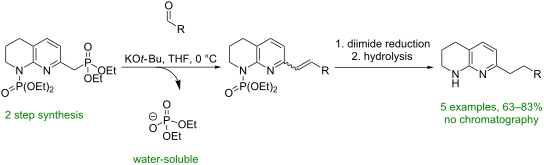
- inhibitors based on the tripeptide sequence Arg–Gly–Asp (RGD) are potential therapeutics for the treatment of idiopathic pulmonary fibrosis (IPF). Herein, we describe an expeditious three-step synthetic sequence of Horner–Wadsworth–Emmons olefination, diimide reduction, and global deprotection to synthesise
- of base (6 equiv) was required to overcome stalling of the olefination process. Reduction to compound 16 using benzenesulfonyl hydrazide (generating diimide in situ) proceeded in 80% yield and was followed by single-pot carbamate and phosphonate deprotection to afford arginine mimetic 6 in 86% yield
- purification by chromatography on silica. This, combined with the formation of phosphoramidate 13 in 94% yield, represented a marked improvement to the initial one-pot diphosphorylation (Scheme 7). Contrary to reports using 2-methylquinolines, tandem phosphorylation and olefination was not possible [15]. When

Graphical Abstract
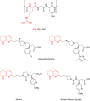
Figure 1: The Arg–Gly–Asp tripeptide sequence and examples of tetrahydro-1,8-naphthyridine-containing integri...

Scheme 1: Commonly used synthetic routes to tetrahydro-1,8-naphthyridine moieties by hydrogenation of saturat...

Scheme 2: Previous synthetic route to fluoropyrrolidine 6 utilising a Wittig reaction and the novel, higher y...

Scheme 3: Synthesis of phosphoramidate 9 from tetrahydro-1,8-naphthyridine 8. Conditions: s-BuLi (3 equiv), d...

Scheme 4: Mono- and diphosphorylation of tetrahydro-1,8-naphthyridine 11. Conditions: (i) s-BuLi (2 equiv), d...

Scheme 5: Synthesis of amine 6 from phosphonate 7 and aldehyde 5. Conditions: (i) T3P® (50% w/w in DCM, 3 equ...

Scheme 6: Monodeuteration of 13 as observed by 1H and 13C NMR. Conditions: s-BuLi (3 equiv), THF, −42 °C, 20 ...

Scheme 7: Sequential diphosphorylation of tetrahydronaphthyridine 11. Conditions: (i) iPrMgCl (1.5 equiv), TH...

Scheme 8: Possible mechanistic pathways for the formation of dimer 28. Conditions: KOt-Bu, THF, 1 h, 68% yiel...

Scheme 9: Alkylation of phosphoramidate 13 by iodide 29 to afford compound 30 and byproducts alcohol 31 and d...
Combining enyne metathesis with long-established organic transformations: a powerful strategy for the sustainable synthesis of bioactive molecules
- Valerian Dragutan,
- Ileana Dragutan,
- Albert Demonceau and
- Lionel Delaude
Beilstein J. Org. Chem. 2020, 16, 738–755, doi:10.3762/bjoc.16.68
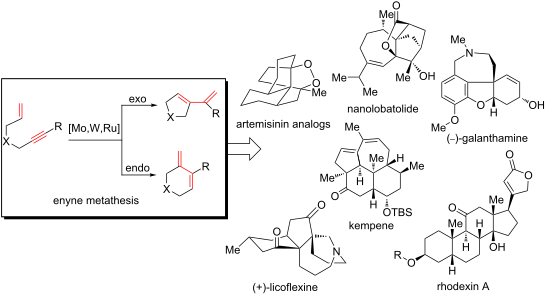
- of the dienic compound through a Suzuki–Miyaura coupling and Julia–Kocienski olefination, followed by a Yamaguchi lactonization, and an asymmetric epoxidation in the presence of (+)-diethyl tartrate, conveniently produced (−)-amphidinolide K (4, Scheme 7). In a remarkable work, Trost et al. [72
- dienyne precursors in three steps, from (S)- and (R)-citronellal, through a diastereoselective Michael addition, chemoselective dibromoolefination, and a one-pot Wittig olefination/alkyne-bond formation. The enantiopure dienynes were then converted into the enantiomeric hydroazulenes in 53% and 55% yield

Graphical Abstract

Scheme 1: Intramolecular (A) and intermolecular (B) enyne metathesis reactions.

Scheme 2: Ene–yne and yne–ene mechanisms for intramolecular enyne metathesis reactions.

Scheme 3: Metallacarbene mechanism in intermolecular enyne metathesis.
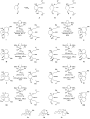
Scheme 4: The Oguri strategy for accessing artemisinin analogs 1a–c through enyne metathesis.

Scheme 5: Access to the tetracyclic core of nanolobatolide (2) via tandem enyne metathesis followed by an Eu(...

Scheme 6: Synthesis of (−)-amphidinolide E (3) using an intermolecular enyne metathesis as the key step.

Scheme 7: Synthesis of amphidinolide K (4) by an enyne metathesis route.

Scheme 8: Trost synthesis of des-epoxy-amphidinolide N (5) [72].

Scheme 9: Enyne metathesis between the propargylic derivative and the allylic alcohol in the synthesis of the...

Scheme 10: Synthetic route to amphidinolide N (6a).

Scheme 11: Synthesis of the stereoisomeric precursors of amphidinolide V (7a and 7b) through alkyne ring-closi...

Scheme 12: Synthesis of the anthramycin precursor 8 from ʟ-methionine by a tandem enyne metathesis–cross metat...

Scheme 13: Synthesis of (−)‐clavukerin A (9) and (−)‐isoclavukerin A (10) by an enyne metathesis route startin...

Scheme 14: Synthesis of (−)-isoguaiene (11) through an enyne metathesis as the key step.

Scheme 15: Synthesis of erogorgiaene (12) by a tandem enyne metathesis/cross metathesis sequence using the sec...

Scheme 16: Synthesis of (−)-galanthamine (13) from isovanilin by an enyne metathesis.

Scheme 17: Application of enyne metathesis for the synthesis of kempene diterpenes 14a–c.

Scheme 18: Synthesis of the alkaloid (+)-lycoflexine (15) through enyne metathesis.

Scheme 19: Synthesis of the AB subunits of manzamine A (16a) and E (16b) by enyne metathesis.

Scheme 20: Jung's synthesis of rhodexin A (17) by enyne metathesis/cross metathesis reactions.

Scheme 21: Total synthesis of (−)-flueggine A (18) and (+)-virosaine B (19) from Weinreb amide by enyne metath...

Scheme 22: Access to virgidivarine (20) and virgiboidine (21) by an enyne metathesis route.

Scheme 23: Enyne metathesis approach to (−)-zenkequinone B (22).

Scheme 24: Access to C-aryl glycoside 23 by an intermolecular enyne metathesis/Diels–Alder cycloaddition.

Scheme 25: Synthesis of spiro-C-aryl glycoside 24 by a tandem intramolecular enyne metathesis/Diels–Alder reac...

Scheme 26: Pathways to (−)-exiguolide (25) by Trost’s Ru-catalyzed enyne cross-coupling and cross-metathesis [94].
Regioselectively α- and β-alkynylated BODIPY dyes via gold(I)-catalyzed direct C–H functionalization and their photophysical properties
- Takahide Shimada,
- Shigeki Mori,
- Masatoshi Ishida and
- Hiroyuki Furuta
Beilstein J. Org. Chem. 2020, 16, 587–595, doi:10.3762/bjoc.16.53
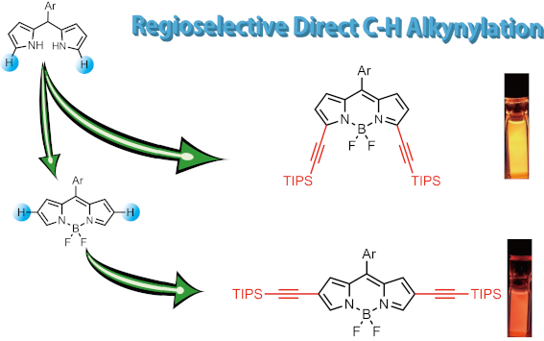
- extensively developed to tune the optoelectronic properties [21]. Therefore, the development of more efficient and shorter step synthetic methods for the BODIPY derivatives, such as direct C–H functionalizations (e.g., arylation [22][23][24][25][26][27][28], annulation [29], olefination [30], styrylation [31

Graphical Abstract
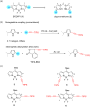
Figure 1: (a) Chemical structures of BODIPY (1) and dipyrromethane (2). (b) C–C bond forming alkynylations of...

Scheme 1: Synthesis of α-ethynyl-substituted BODIPY derivatives 3a and 4a.

Scheme 2: Synthesis of β-ethynyl-substituted BODIPY derivatives 5a and 5b and β,β'-diethynyl-substituted comp...

Figure 2: Top and front views of the crystal structures of (a) 4a and (b) 6b with 50% thermal ellipsoid proba...

Figure 3: Partial 1H NMR spectra of (a) 1a, (b) 3a, (c) 4a, (d) 5a, and (e) 6a recorded in CDCl3 at 298 K. As...
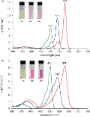
Figure 4: UV–vis absorption spectra of the BODIPY derivatives, (a) 1a (green), 3a (blue), 4a (red), and (b) 1a...
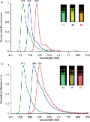
Figure 5: Fluorescence spectra of BODIPY derivatives. (a) 1a (green), 3a (blue), 4a (red) and (b) 1a (green), ...
Recent developments in photoredox-catalyzed remote ortho and para C–H bond functionalizations
- Rafia Siddiqui and
- Rashid Ali
Beilstein J. Org. Chem. 2020, 16, 248–280, doi:10.3762/bjoc.16.26
- bonds. C–H olefination Weinreb amide C–H olefination: Photoredox catalysts carry the reactions forward with high regioselectivity, good functional group tolerance, and with or without an external oxidant at low temperatures. However, without photoredox catalysts, the earlier syntheses suffered from the
- dependence on external oxidants and harsh reaction conditions [83][84]. In this context, in 2014, Fabry et al. reported the use of novel dual photoredox catalytic systems made up of photoredox catalyst 11 and a rhodium catalyst to carry out the Weinreb amide C–H olefination shown in Scheme 1 [85]. By using
- 22 upon coordination with the carbonyl oxygen atom of the amide group. The complex 22 then coordinated to the acrylate product 23, which rearranged to 24, and the β-hydride elimination of 24 yielded the desired olefinated product 21. C–H olefination of phenolic ethers: Based on Ackermann and co

Graphical Abstract

Figure 1: List of photoredox catalysts used for C–H bond functionalizations.

Figure 2: List of metal-based photoredox catalysts used in this review article.

Figure 3: Jablonski diagram.

Figure 4: Photoredox catalysis via reductive or oxidative pathways. D = donor, A = acceptor, S = substrate, P...
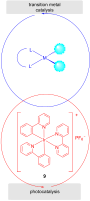
Figure 5: Schematic representation of the combination of photoredox catalysis and transition metal catalysis.

Scheme 1: Weinreb amide C–H olefination.

Figure 6: Mechanism for the formation of 21 from 19 using photoredox catalyst 11.

Scheme 2: C–H olefination of phenolic ethers.

Scheme 3: Decarboxylative acylation of acetanilides.

Figure 7: Mechanism for the formation of 30 from acetanilide derivatives.

Scheme 4: Synthesis of fluorenone derivatives by intramolecular deoxygenative acylation of biaryl carboxylic ...

Figure 8: Mechanism for the photoredox-catalyzed synthesis of fluorenone derivatives.

Scheme 5: Synthesis of benzothiazoles via aerobic C–H thiolation.

Figure 9: Plausible mechanism for the construction of benzothiazoles from benzothioamides.

Scheme 6: Synthesis of benzothiazoles via oxidant-free C–H thiolation.
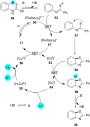
Figure 10: Mechanism involved in the synthesis of benzothiazoles via oxidant-free C–H thiolation.

Scheme 7: Synthesis of indoles via C–H cyclization of anilides with alkynes.

Scheme 8: Preparation of 3-trifluoromethylcoumarins via C–H cyclization of arylpropiolate esters.

Figure 11: Mechanistic pathway for the synthesis of coumarin derivatives via C–H cyclization.

Scheme 9: Monobenzoyloxylation without chelation assistance.

Figure 12: Plausible mechanism for the formation of 71 from 70.

Scheme 10: Aryl-substituted arenes prepared by inorganic photoredox catalysis using 12a.

Figure 13: Proposed mechanism for C–H arylations in the presence of 12a and a Pd catalyst.

Scheme 11: Arylation of purines via dual photoredox catalysis.

Scheme 12: Arylation of substituted arenes with an organic photoredox catalyst.

Scheme 13: C–H trifluoromethylation.

Figure 14: Proposed mechanism for the trifluoromethylation of 88.

Scheme 14: Synthesis of benzo-3,4-coumarin derivatives.

Figure 15: Plausible mechanism for the synthesis of substituted coumarins.

Scheme 15: Oxidant-free oxidative phosphonylation.

Figure 16: Mechanism proposed for the phosphonylation reaction of 100.

Scheme 16: Nitration of anilines.

Figure 17: Plausible mechanism for the nitration of aniline derivatives via photoredox catalysis.

Scheme 17: Synthesis of carbazoles via intramolecular amination.

Figure 18: Proposed mechanism for the formation of carbazoles from biaryl derivatives.

Scheme 18: Synthesis of substituted phenols using QuCN.

Figure 19: Mechanism for the synthesis of phenol derivatives with photoredox catalyst 8.

Scheme 19: Synthesis of substituted phenols with DDQ (5).
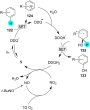
Figure 20: Possible mechanism for the generation of phenols with the aid of photoredox catalyst 5.

Scheme 20: Aerobic bromination of arenes using an acridinium-based photocatalyst.

Scheme 21: Aerobic bromination of arenes with anthraquinone.

Figure 21: Proposed mechanism for the synthesis of monobrominated compounds.

Scheme 22: Chlorination of benzene derivatives with Mes-Acr-MeClO4 (2).

Figure 22: Mechanism for the synthesis of 131 from 132.

Scheme 23: Chlorination of arenes with 4CzIPN (5a).

Figure 23: Plausible mechanism for the oxidative photocatalytic monochlorination using 5a.

Scheme 24: Monofluorination using QuCN-ClO4 (8).

Scheme 25: Fluorination with fluorine-18.

Scheme 26: Aerobic amination with acridinium catalyst 3a.

Figure 24: Plausible mechanism for the aerobic amination using acridinium catalyst 3a.
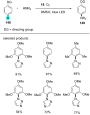
Scheme 27: Aerobic aminations with semiconductor photoredox catalyst 18.

Scheme 28: Perfluoroalkylation of arenes.

Scheme 29: Synthesis of benzonitriles in the presence of 3a.

Figure 25: Plausible mechanism for the synthesis of substituted benzonitrile derivatives in the presence of 3a....
Synthesis of 3-alkenylindoles through regioselective C–H alkenylation of indoles by a ruthenium nanocatalyst
- Abhijit Paul,
- Debnath Chatterjee,
- Srirupa Banerjee and
- Somnath Yadav
Beilstein J. Org. Chem. 2020, 16, 140–148, doi:10.3762/bjoc.16.16
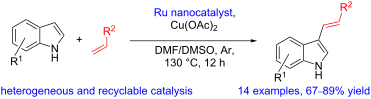
- ]. Noël and co-workers reported the C3–H olefination of indoles using Pd(OAc)2 as a catalyst and molecular oxygen as the oxidant under continuous flow conditions [29]. Jia et al. reported the synthesis of 3-alkenylindoles using Pd(OAc)2 as the catalyst and MnO2 as the oxidant under ball milling conditions

Graphical Abstract

Figure 1: Biologically and medicinally important 3-alkenylindoles.
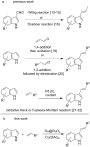
Scheme 1: a) Previous and b) present work related to the synthesis of 3-alkenylindoles.

Scheme 2: Substrate scope for the C–H alkenylation of the indoles 1. Reaction conditions: 1 (1 mmol), 2 (2 mm...
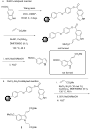
Scheme 3: a) Three-phase test to determine a homogeneous or heterogeneous catalytic mechanism of action for t...

Scheme 4: Probable catalytic mechanism for the transformation of 1a by the RuNC.
1,5-Phosphonium betaines from N-triflylpropiolamides, triphenylphosphane, and active methylene compounds
- Vito A. Fiore,
- Chiara Freisler and
- Gerhard Maas
Beilstein J. Org. Chem. 2019, 15, 2603–2611, doi:10.3762/bjoc.15.253

- alkylidene phosphoranes which in turn may undergo Wittig olefination with elimination of Ph3P=O [1][5]. Recently, a study of the tributylphosphane-catalyzed reaction of ethyl 2-butynoate and ethanol by in-situ ESIMS and NMR techniques has been published [6], and mechanistic aspects of trialkylphosphane

Graphical Abstract

Scheme 1: Stable betaines I–IV.

Scheme 2: Reactions of N-triflyl-propiolamides 1 with N- and P-nucleophiles. Tf = SO2CF3.

Scheme 3: Synthesis of betaines 3 by a three-component reaction. N-triflylpropiolamides 1: R = Ph (a), 4-Cl-C6...

Figure 1: Phosphonium betaines 3 prepared. An E:Z ratio of 100:0 means that only the E-isomer was observed in...

Scheme 4: Unexpected synthesis of E-3o.

Scheme 5: Betaines 3 from propiolic acid chlorides.

Scheme 6: Two mechanistic scenarios for the formation of betaines 3.

Figure 2: Solid-state structure of E-3a (ORTEP plot), two symmetry-independent molecules in the triclinic uni...

Figure 3: Solid-state structure of E-3b·CH2Cl2 (ORTEP plot); CH2Cl2 solvate molecule not shown.

Figure 4: Solid-state structure of E-3e·H2O·CH2Cl2 (ORTEP plot). The CH2Cl2 solvate molecule is disordered. H...

Figure 5: Solid-state structure of Z-3e (ORTEP plot).

Scheme 7: Resonance structures describing the bonding in 1,2-oxaphospholes/1,5-betaines 8.



