Search results
Search for "saponification" in Full Text gives 112 result(s) in Beilstein Journal of Organic Chemistry.
Preparation of mono-substituted malonic acid half oxyesters (SMAHOs)
Beilstein J. Org. Chem. 2021, 17, 2085–2094, doi:10.3762/bjoc.17.135

- intermediate Meldrum acid. Both these transformations are characterized by their simplicity and efficiency, allowing a straightforward access to SMAHOs from cheap starting materials. Keywords: alkylation; esterification; malonate; saponification; SMAHO; Introduction Malonic acid half oxyesters (MAHOs), also
- MAHOs [24][25][26][27]; and a Michael addition for 3'-oxoalkyl-substituted MAHOs [28]. As studied by Niwayama [29], the hydrolysis step is generally achieved by saponification using alcoholic KOH (or NaOH) [30][31][32][33][34][35][36], but other selective cleavages of one ester group are possible [37
- synthetic routes. Results and Discussion Substituent modification – alkylation/saponification route Based on the literature precedents, it appeared logical to start the preparation of SMAHOs by the alkylation of a malonate derivative followed by a monosaponification of the resulting diester. This strategy


Selective synthesis of α-organylthio esters and α-organylthio ketones from β-keto esters and sodium S-organyl sulfurothioates under basic conditions
Beilstein J. Org. Chem. 2021, 17, 234–244, doi:10.3762/bjoc.17.24
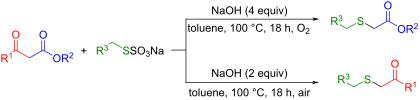
- role in the selective formation of 3, but the exact operation of O2 during this process remains unclear at this stage. A tentative pathway for the formation of compound 4 is proposed in Scheme 5. It is well documented that with a dilute amount of base, ester hydrolysis followed by saponification takes


Decarboxylative trifluoromethylthiolation of pyridylacetates
Beilstein J. Org. Chem. 2021, 17, 229–233, doi:10.3762/bjoc.17.23
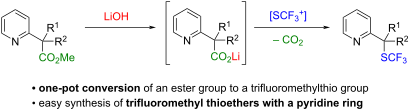
- achieved using N-(trifluoromethylthio)benzenesulfonimide as the electrophilic trifluoromethylthiolation reagent. The reaction afforded the corresponding trifluoromethyl thioethers in good yield. Furthermore, the preparation of lithium pyridylacetates by saponification of the corresponding methyl esters and
- lithium pyridylacetates undergo decarboxylative fluorination upon treatment with an electrophilic fluorination reagent to afford fluoromethylpyridines under catalyst-free conditions. Furthermore, we demonstrated the one-pot synthesis of fluoromethylpyridines from methyl pyridylacetates by saponification
- trifluoromethylthiolated product at all, despite complete saponification of the methyl ester. Conclusion In conclusion, we demonstrated the decarboxylative trifluoromethylthiolation of lithium 2- and 4-pyridylacetates to synthesize pyridine derivatives with a trifluoromethylthio group at a tertiary carbon center adjacent


Progress in the total synthesis of inthomycins
Beilstein J. Org. Chem. 2021, 17, 58–82, doi:10.3762/bjoc.17.7
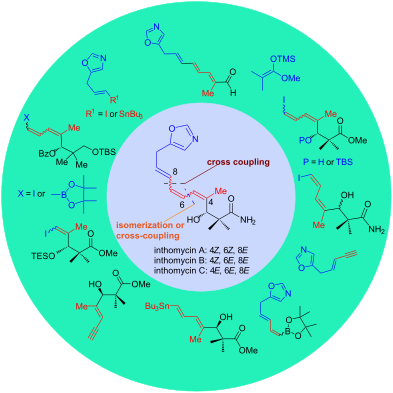
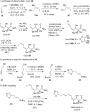
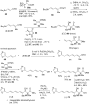
- . Stille coupling of (Z,Z)-(rac)-62 with vinyl iodide 48 in the presence of Pd(CH3CN)2Cl2 in DMF proceeded smoothly to give the corresponding ester (triene isomerization was less than 20% during coupling), which was then converted into acid derivative (rac)-63 by saponification. Finally, the acid
- derivative (rac)-63 was subjected to undergo acetylation, acid chloride formation, and quenching with ammonium hydroxide to produce amide derivative (rac)-64 in 70% yield. Finally, saponification of acetate (rac)-64 using lithium hydroxide gave racemic inthomycin A ((rac)-1) in 14% overall yield (Scheme 5









Synthesis and characterization of S,N-heterotetracenes
Beilstein J. Org. Chem. 2020, 16, 2636–2644, doi:10.3762/bjoc.16.214

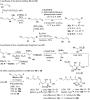
- -substituted thienopyrrole 26, saponification to carbonic acid 27, and subsequent Cu-mediated decarboxylation in quinoline resulted in thienopyrrole 28 in more than 80% yield over three steps. Lithiation of 28 with n-BuLi and reaction with TIPS chloride selectively occurred at the thiophene α-position to give


Design and synthesis of a bis-macrocyclic host and guests as building blocks for small molecular knots
Beilstein J. Org. Chem. 2020, 16, 2314–2321, doi:10.3762/bjoc.16.192
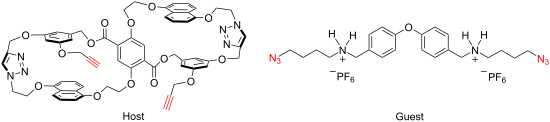
- ) was the linking step, and ester saponification was the cutting step. A potential problem with this approach was that the macrocycles were highly flexible and thus they might adopt a closed conformation hindering the necessary threading step. The flexible tails made the compounds soluble, but also
- alkyne–azide click cycloaddition as the linking step, and ester saponification as the cutting step [13][21] (Supporting Information File 1). The target trefoil knot using host 1 and guest 2 is shown in Figure 2c. The binding event during the double-threading step was modeled after previous literature
- 13 which was identical to the material made by the route outlined in Scheme 2. The new route from 6 to 13 proved superior, as the yield for the two-steps improved dramatically from <8% to 71%. Saponification of diester 13 to diacid 15 was achieved in moderate-to-good yields (67–90%) and the 1H NMR


Synthesis of monophosphorylated lipid A precursors using 2-naphthylmethyl ether as a protecting group
Beilstein J. Org. Chem. 2020, 16, 1955–1962, doi:10.3762/bjoc.16.162
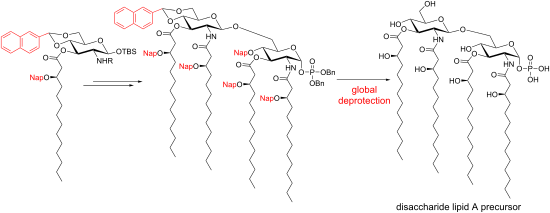
- -naphthaldehyde, trimethylsilyl trifluoromethanesulfonate (TMSOTf), and triethylsilane (Et3SiH) [17][19]. On a 10 g scale, the protected methyl ester 6 could be purified by recrystallization followed by filtration to remove the major byproduct 2-methylnaphthalene. Subsequent saponification of the methyl ester 6


Microwave-assisted synthesis of 2-substituted 4,5,6,7-tetrahydro-1,3-thiazepines from 4-aminobutanol
Beilstein J. Org. Chem. 2020, 16, 32–38, doi:10.3762/bjoc.16.5
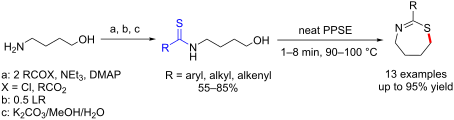
- -thiobenzoylaminobutanol in 62% yield [57], and the second one is not applicable to N-thioaroyl derivatives [58]. Thus, a diacylation–thionation–saponification sequence [59] was implemented (Table 1), and the individual steps optimized using 4-aminobutanol and benzoyl chloride as the starting materials. The diacylation
- conversion to the desired product. Saponification of the less reactive isobutyryl and pivaloyl derivatives 2l,m required the use of a stronger base, longer reaction times and higher temperature (10% NaOH, reflux, 4 h). The overall output of the optimized sequence (Table 1, last column) ranged from 69 to 85


Synthesis of aryl-substituted thieno[3,2-b]thiophene derivatives and their use for N,S-heterotetracene construction
Beilstein J. Org. Chem. 2019, 15, 2678–2683, doi:10.3762/bjoc.15.261
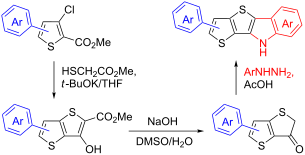
- of 5- or 4-aryl-3-chlorothiophene-2-carboxylates, respectively, with methyl thioglycolate in the presence of potassium tert-butoxide. The saponification of the resulting esters, with decarboxylation of the intermediating acids, gave the corresponding thieno[3,2-b]thiophen-3(2H)-ones. The latter
- toluene/ethanol mixture (1:1, v/v), or pure toluene for compounds 3f,g,i. Next, we performed saponification of esters 3a–k by their treatment with an excess of sodium hydroxyde in an aqueous DMSO solution at 120 °C for 3 hours, where the intermediating acids underwent decarboxylation to give thieno[3,2-b
- yields of products 4 because of their partial degradation. Therefore, to neutralize the reaction mixtures, we used one equivalent of sulfuric acid relative to the alkali salt used for saponification. The resulting precipitates were then isolated by filtration, and thoroughly washed with water. As a



Photochromic diarylethene ligands featuring 2-(imidazol-2-yl)pyridine coordination site and their iron(II) complexes
Beilstein J. Org. Chem. 2019, 15, 2428–2437, doi:10.3762/bjoc.15.235
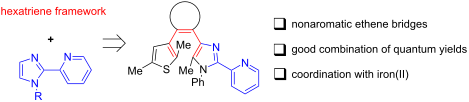
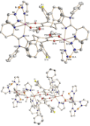
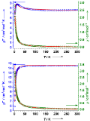
- a cyclopentene bridge with 51% yield. Robinson-type reaction [37] of ethyl 4-(2,5-dimethylthiophen-3-yl)-3-oxobutanoate and chalkone 5 resulted in cyclohexenone derivative 6 (57% yield). The saponification/decarboxylation of 6 gave cyclohexenone 7. Thus, the previously developed methodology was


Mono- and bithiophene-substituted diarylethene photoswitches with emissive open or closed forms
Beilstein J. Org. Chem. 2019, 15, 2344–2354, doi:10.3762/bjoc.15.227
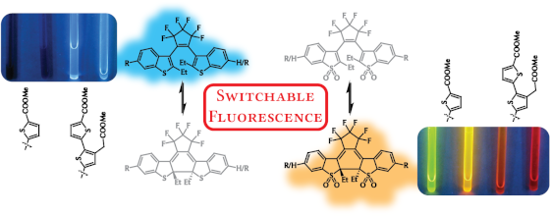
- closed form (formed by handling in the lab not fully protected from light) were detected by HPLC (Figure S33 in Supporting Information File 1). The constitution, structures, and purities of the final products were confirmed by HRMS, 1H and 19F NMR spectroscopy, as well as analytical HPLC. Saponification
- atmosphere, an emulsion of the starting compounds, Pd2(dba)3, P(Cy)3 stock solution, and aqueous K2CO3 in THF (see Supporting Information File 1 for details). Saponification of methyl ester groups in tetraester SyTh2 leading to tetracarboxylic acid SyTh2-H. Optical properties of the photochromic DAEs (in


A review of the total syntheses of triptolide
Beilstein J. Org. Chem. 2019, 15, 1984–1995, doi:10.3762/bjoc.15.194
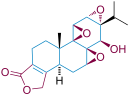
- corresponding carboxylic acid followed by hydrogenolysis with H2/Pd-C led in spontaneous lactonization to give the key butenolide 66. Oxidation of 66 with CrO3/AcOH–H2O, followed by saponification and reduction afforded known benzyl alcohol 46 (19% from 66). Then, phenol 46 was converted to the corresponding


N-(1-Phenylethyl)aziridine-2-carboxylate esters in the synthesis of biologically relevant compounds
Beilstein J. Org. Chem. 2019, 15, 1722–1757, doi:10.3762/bjoc.15.168

- ]. The aziridine ring opening with acetic acid and saponification led to the formation of (S)-101. Protection of the vicinal aminohydroxy fragment as an oxazolidin-2-one provided (R)-104 which after selective debenzylation produced (R)-102. The synthesis of N-acetyl-3-phenylserinol ((1R,2R)-105) was
- cleavage of the aziridine ring occurred regiospecifically at the N–C3 bond (benzylic position) to provide N-Boc-ᴅ-phenylalaninol ((R)-118) after saponification. When mesylation of (2S,1'R/S,1''R)-28 was followed by LiAlH4 reduction the aziridine (2R,1'R)-119 was produced from which the acetate (2R,1'R)-120
- hydrogenation followed by saponification converted 178 into (2S,3S)-N-Boc-3-hydroxy-2-hydroxymethylpyrrolidine (2S,3S)-179, one of the simplest members of the iminosugar family. Reaction of aziridine 4-methoxyphenyl esters either (2R,1′S)-5e or (2S,1′S)-5e with vinylene carbonate at 280 °C gave a mixture of


An azobenzene container showing a definite folding – synthesis and structural investigation
Beilstein J. Org. Chem. 2019, 15, 1534–1544, doi:10.3762/bjoc.15.156
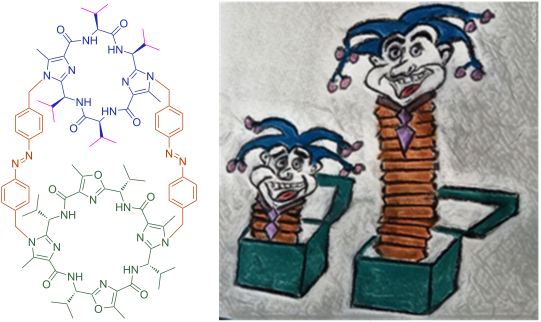
- steps according to a known procedure (Scheme 1) [51]. Therefore, the imidazole-containing acid 6 was reacted with the free amine 7 using pentafluorophenyl diphenylphosphinate (FDPP) as coupling reagent resulting in the formation of amide 8. After saponification of the methyl ester and removal of the Boc


Solid-phase synthesis of biaryl bicyclic peptides containing a 3-aryltyrosine or a 4-arylphenylalanine moiety
Beilstein J. Org. Chem. 2019, 15, 761–768, doi:10.3762/bjoc.15.72
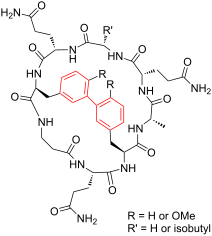
- saponification of the methyl ester. Boc-Tyr(3-B(OH)2,Me)-OH was coupled using DIPCDI and Oxyma in DMF for 3 h. An aliquot of the linear resin 7 was cleaved to provide H-Tyr(3-B(OH)2,Me)-Ala-Gln-Gly-Gln-Phe(4-I)-βAla-Gln-OpNB in 57% purity, which was characterized by mass spectrometry. Resin 7 was then subjected




Synthesis of the polyketide section of seragamide A and related cyclodepsipeptides via Negishi cross coupling
Beilstein J. Org. Chem. 2019, 15, 577–583, doi:10.3762/bjoc.15.53
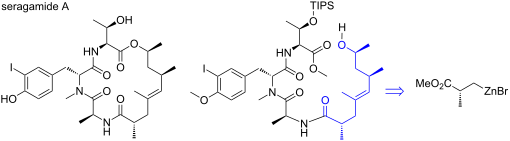
- with literature data we converted 7 to the free carboxylic acid carrying a TBS-protected hydroxy group at C8 by silylation with TBSOTf/2,6-lutidine, followed by saponification with LiOH. To investigate whether polyketide 7 could be coupled in an unprotected form with the peptide fragment of seragamide
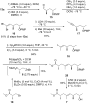
- quantitative yield, albeit as mixtures of inseparable diastereomers (4:1), as consequence of the optical impurity of 22. Only when following the coupling order shown in Scheme 5, high yields could be obtained. The labile carboxylic acid 29 was formed by saponification of methyl ester 7 (LiOH, H2O/MeOH) and
- scale, desilylation of 31 (TBAF) was a spot-to-spot conversion. Saponification of both the silylated and desilylated methyl esters with LiOH was possible, as long as very mild acidic conditions were applied on work-up. However, macrocyclisation of the TIPS-protected or the desilylated acid did not occur




Synthesis of nonracemic hydroxyglutamic acids
Beilstein J. Org. Chem. 2019, 15, 236–255, doi:10.3762/bjoc.15.22
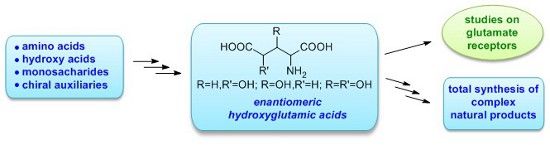
- . Intermediary diacid was first esterified with diazomethane, then the isopropylidene acetal was hydrolyzed, and diester saponification gave N-Boc-protected compound (2S,3R)-35. Via ketopinic acid functionalized 2(3H)-oxazolones When oxazolone 36 derived from (R)-(−)-ketopinic acid was reacted with bromine and


Unnatural α-amino ethyl esters from diethyl malonate or ethyl β-bromo-α-hydroxyiminocarboxylate
Beilstein J. Org. Chem. 2018, 14, 2853–2860, doi:10.3762/bjoc.14.264
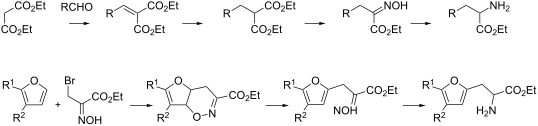
- of 53. As reported [30], alkylation of diethyl malonate (4) with 2-(bromomethyl)-1,3-dioxolane (50) gave the diester 51. A controlled saponification led to the mono acid 52 and its reaction with diphenylphosphoryl azide [31][32][33] gave 16% of the target aminoester 53 upon treatment with


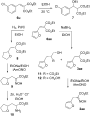
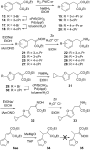

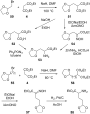
Synergistic approach to polycycles through Suzuki–Miyaura cross coupling and metathesis as key steps
Beilstein J. Org. Chem. 2018, 14, 2468–2481, doi:10.3762/bjoc.14.223
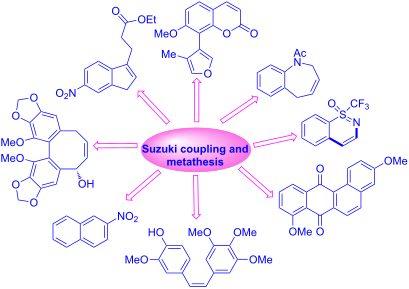
- derivative 134 was realized in the presence of a Pd(OAc)2 catalyst with the aid of the ligand cataCXium A (135) to generate the macrocyclic product 136. Eventually, synthesis of MK-6325 (141) was achieved by adopting saponification followed by amidation (Scheme 20). Conclusion In this review, we have


Novel unit B cryptophycin analogues as payloads for targeted therapy
Beilstein J. Org. Chem. 2018, 14, 1281–1286, doi:10.3762/bjoc.14.109
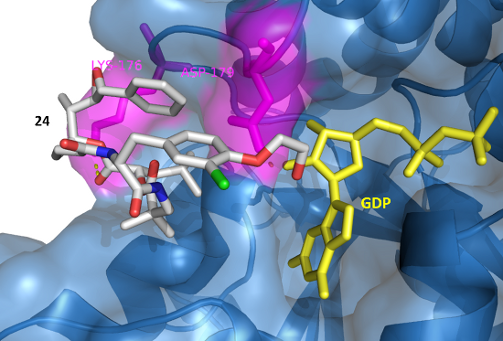
- with 6 or 9 gave 11 and 12, again in satisfactory yields (81–85%). Saponification of the ester moiety in 11 and 12 that was formed concomitantly with the O-alkylation in the previous reaction provided Boc-protected modified units B 13 and 14 in 76 and 90% yield, respectively. The synthesis of units C–D


Recent progress in the racemic and enantioselective synthesis of monofluoroalkene-based dipeptide isosteres
Beilstein J. Org. Chem. 2017, 13, 2637–2658, doi:10.3762/bjoc.13.262
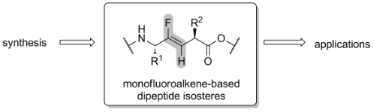
- final saponification gave the monofluoroalkene-based dipeptide isostere 61. Finally, Fürstner’s group developed the silver-mediated fluorination of functionalized alkenylstannanes to access monofluoroalkenes [42]. Hydrostannation of the N-protected ynamines 62 followed by electrophilic fluorination with


Synthesis of ergostane-type brassinosteroids with modifications in ring A
Beilstein J. Org. Chem. 2017, 13, 2326–2331, doi:10.3762/bjoc.13.229
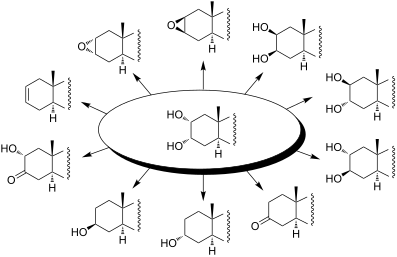
- epibrassinolide (2) into the corresponding Δ2-steroids. The first route comprised the selective protection of the side chain diol in 1 and 2 through exhaustive acetylation followed by saponification of the intermediate tetraacetates under controlled conditions [14]. Next, a Corey–Winter reaction [15] of the


The chemistry and biology of mycolactones
Beilstein J. Org. Chem. 2017, 13, 1596–1660, doi:10.3762/bjoc.13.159


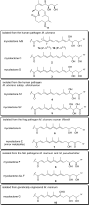


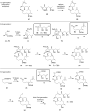


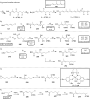


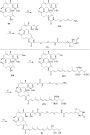

Total synthesis of elansolids B1 and B2
Beilstein J. Org. Chem. 2017, 13, 1280–1287, doi:10.3762/bjoc.13.124
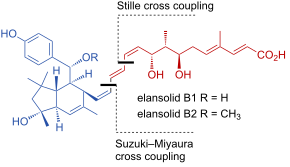
- saponification of all ester groups in the presence of isopropanol successfully yielded elansolid B1 (2). When isopropanol was exchanged by methanol, elansolid B2 (3) was generated. Its formation can be rationalized by formation of the intermediate p-methide quinone which selectively trapped methanol, exclusively


Automating multistep flow synthesis: approach and challenges in integrating chemistry, machines and logic
Beilstein J. Org. Chem. 2017, 13, 960–987, doi:10.3762/bjoc.13.97
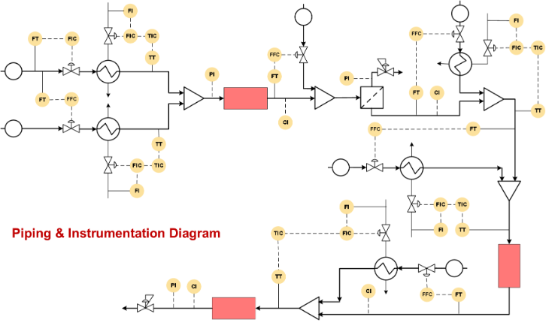
- and carried further saponification of the ester intermediate in another tubular reactor at 90 °C and 1 min residence time. The entire process is carried out at 200 psi pressure and the yield of the target product ibuprofen is reported to be 83%. This report has been among the most eye-popping works in