Search results
Search for "RCM" in Full Text gives 106 result(s) in Beilstein Journal of Organic Chemistry.
The direct oxidative diene cyclization and related reactions in natural product synthesis
Beilstein J. Org. Chem. 2016, 12, 2104–2123, doi:10.3762/bjoc.12.200
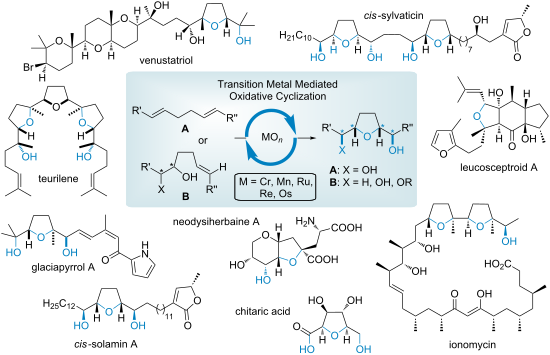
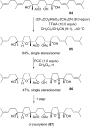
- ) and then successfully connected in a silicon-tethered ring closing metathesis (RCM) [98] to provide the main backbone of cis-sylvaticin (40). Moreover, in 2009, Brown and co-workers reported on a short synthesis of the non-adjacent bis-THF core of cis-sylvaticin (40) making use of a permanganate


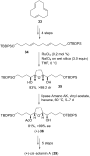
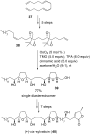




Bridgehead vicinal diallylation of norbornene derivatives and extension to propellane derivatives via ring-closing metathesis
Beilstein J. Org. Chem. 2016, 12, 1877–1883, doi:10.3762/bjoc.12.177
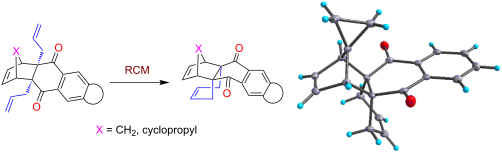
- ring-closing metathesis (RCM) [24][25][26][27][28][29][30][31][32]. Whereas, the diallyl derivative 2 can be derived from a readily available Diels–Alder (DA) adduct 3 through an allylation sequence. Results and Discussion Installation of two C–C bonds to generate quaternary centers in a
- %) by using our earlier reported method [38]. Next, diallyl compound 2a on RCM using Grubbs first generation (G-I) catalyst in CH2Cl2 at room temperature (rt) gave the desired propellane derivative 1a (61%) along with a minor amount of quinone derivative 4 (17%) (Scheme 1). The formation of quinone 4
- can be explained on the basis that compound 2a underwent rDA and RCM in one-pot. Here, the compound 2a didn’t undergo RRM because a metallacyclobutane cannot be formed between the allyl and norbornene double bonds due to structural constraint [39] and moreover, we didn’t observe any ring-opening


Towards the total synthesis of keramaphidin B
Beilstein J. Org. Chem. 2016, 12, 1096–1100, doi:10.3762/bjoc.12.104
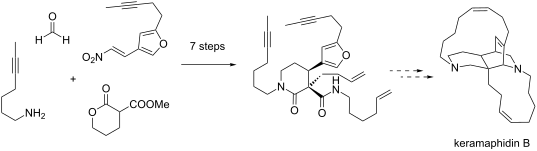
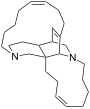
- intermolecular Diels–Alder reaction and a double late stage RCM reaction to close the two macrocyclic rings; albeit the last stage afforded 1 in 1% yield after separation of various oligomeric byproducts [4]. Our group has had a long-standing research program dedicated towards the total syntheses of the
- wish to report our preliminary synthetic efforts towards the stereoselective synthesis of the heavily functionalised piperidine core of keramaphidin B (1). Results and Discussion Our overall synthetic strategy is presented in Figure 2. We envisaged that a late stage alkyne RCM reaction of 2 and cis
- -selective hydrogenation of the internal alkyne would present an efficient method for the synthesis of the 13-membered ring. The synthesis of the 11-membered ring could be achieved by a Z-selective alkene RCM reaction [5] to afford spirocyclic bislactam 4 from metathesis precursor 5. Bisalkene 5 could in



Enantioselective carbenoid insertion into C(sp3)–H bonds
Beilstein J. Org. Chem. 2016, 12, 882–902, doi:10.3762/bjoc.12.87
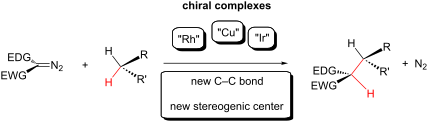
- metathesis (RCM) [68]. The insertion of the rhodium carbenoids derived from vinyl diazoacetate into the C(sp3)–H bonds of the alkenylcarbamates 97a–d yields two reaction products (Table 10). The major one (99a–d) was the result of the cyclopropanation reaction of the double bond present in 97a–d. The minor
- . Cyclopropanation/Insertion rhodium carbenoid reactions into C(sp3)–H reported by Pavlyuk and coworkers. Syntheses of N-heterocycles by RCM reported by Pavlyuk and coworkers. Acknowledgements We thank the Brazilian National Research Council (CNPq, Gran Nos. 477418/2013-9), the Brazilian Coordination for the


Effective immobilisation of a metathesis catalyst bearing an ammonium-tagged NHC ligand on various solid supports
Beilstein J. Org. Chem. 2016, 12, 5–15, doi:10.3762/bjoc.12.2
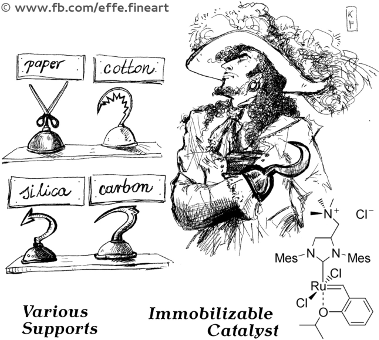
- on activated carbon (8-C*) we were eager to test its catalytic properties. A model ring-closing metathesis (RCM) reaction leading to product 10 (Scheme 2) was used to check the influence of temperature and concentration on the activity of 8 on the solid support. We observed that the use of higher
- CH2Cl2 solution with c-hexane, can provide solid catalyst 8 as a fine powder exhibiting activity in RCM comparable with that observed for immobilised 8-C*. The morphology of the obtained materials is presented in Figure 4. Next, we aimed to test the activity of the obtained heterogenised 8 in the model
- RCM of 9. The results are presented in Figure 5. The efficiency of 8 supported on cotton-viscose wool and on filter paper (8-cotton and 8-paper) was only slightly lower than that one of unsupported catalyst 8-powder. These non-expensive supports, however, are very attractive due to the exceptional


New metathesis catalyst bearing chromanyl moieties at the N-heterocyclic carbene ligand
Beilstein J. Org. Chem. 2015, 11, 2795–2804, doi:10.3762/bjoc.11.300
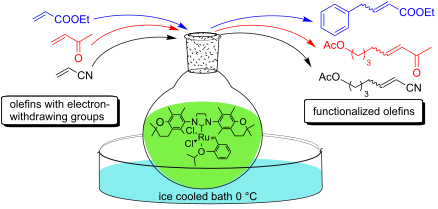
- catalyst bearing a modified N-heterocyclic carbene ligands is reported. The new catalyst contains an NHC ligand symmetrically substituted with chromanyl moieties. The complex was tested in model CM and RCM reactions. It showed very high activity in CM reactions with electron-deficient α,β-unsaturated
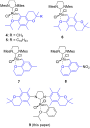
- the above-mentioned moieties. The ruthenium complexes 4–6 (Figure 2) that we reported earlier appeared to be the so-called dormant catalysts. Their activity in RCM reactions was low at room temperature and higher at elevated temperature [21]. In catalyst 7 the chelating oxygen atom was provided by the
- . Moreover, in the CM of allyloxybenzene and hex-5-enyl acetate, the yield with 9 was almost twice higher than that obtained for 1 or 2 (entry 4, Table 2). In the model RCM, the activity of catalyst 9 was slightly lower than that of commercial complexes, supposedly due to steric reasons (Table 3). The




Synthesis of Xenia diterpenoids and related metabolites isolated from marine organisms
Beilstein J. Org. Chem. 2015, 11, 2521–2539, doi:10.3762/bjoc.11.273
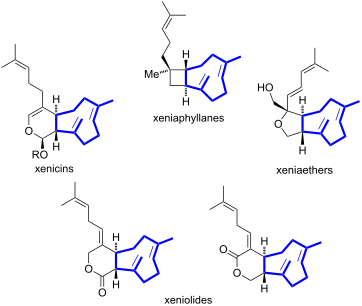
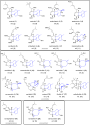
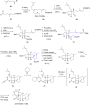
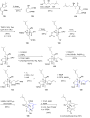
- . Different strategies for the construction of E- or Z-cyclononenes have been reported to date and common reactions are summarized in Scheme 3. Transition metal-catalyzed ([M] = Ru, Mo, W) ring-closing metathesis (RCM) reactions of 1,10-dienes A can be employed for the synthesis of cyclononenes. The E/Z







Copper-catalyzed asymmetric conjugate addition of organometallic reagents to extended Michael acceptors
Beilstein J. Org. Chem. 2015, 11, 2418–2434, doi:10.3762/bjoc.11.263
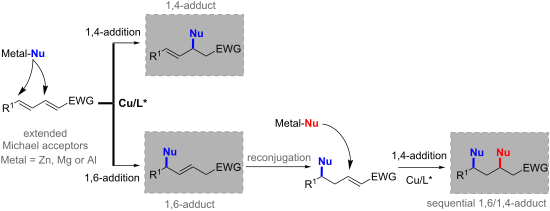
- ring closing metathesis to afford the bicyclic product 53. Finally, the RCM of the 1,4-adduct resulting from the addition of 3-butenylmagnesium bromide yielded the spiro compound 54. Interestingly, the conversion of bicyclic compound 40 catalyzed by the same system also occurred selectively in the 4


Beyond catalyst deactivation: cross-metathesis involving olefins containing N-heteroaromatics
Beilstein J. Org. Chem. 2015, 11, 2223–2241, doi:10.3762/bjoc.11.241
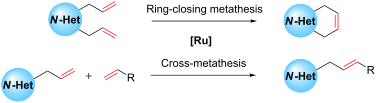
- allow the use of primary and secondary amines in ring-closing metathesis (RCM) and cross-metathesis (CM), and one of them is the transformation of amines into carbamates, amides or sulfonamides [27][28][29]. As an alternative, metathesis reactions can be performed with olefins possessing ammonium salts
- deactivation caused by amino derivatives will be first presented and discussed. RCM and CM involving alkenes possessing N-heteroaromatics will be then successively examined [38]. Review Mechanistic insights into amine-induced catalyst deactivation Recently, intensive studies dealing with ruthenium catalyst
- liberated through ligand exchange on the methylidene 2 (Scheme 5). To complete their study, the authors examined the influence of the amines on the GII-catalyzed RCM of diene 13 [45]. In the presence of amines a–c, decomposition was observed and CH3PCy3+Cl− was generated. Interestingly, in the presence of


Ru complexes of Hoveyda–Grubbs type immobilized on lamellar zeolites: activity in olefin metathesis reactions
Beilstein J. Org. Chem. 2015, 11, 2087–2096, doi:10.3762/bjoc.11.225
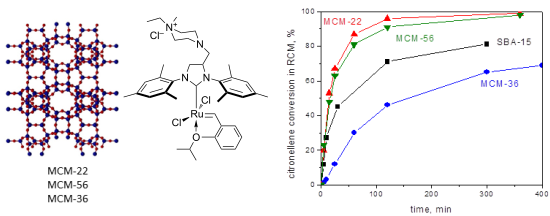
- −) and their immobilization on silica, and mesoporous molecular sieves MCM-41 and SBA-15 [21]. XPS analysis revealed that complexes were attached to the surface by non-covalent interactions and both cationic and anionic parts were present on the surface. The hybrid catalysts prepared were active in RCM
- of 1,7-octadiene and (−)-β-citronellene; HGIIN+Cl− on SBA-15 (HGIIN+Cl−/SBA-15) was the most active (TON up to 16000 in RCM of citronellene). HGIIN+Cl−/SBA-15 proved its versatility in RCM, enyne metathesis, metathesis of methyl oleate, and cross-metathesis of electron deficient methyl acrylate with
- article we discuss the immobilization of HGIIN+Cl− and HGIIN+PF6− (Figure 1) on zeolitic supports having MWW structure: MCM-22 (three-dimensional), MCM-56 (unilamellar), and MCM-36 (pillared) and the activity of corresponding catalysts (i) in RCM of (−)-β-citronellene and N,N-diallyl-2,2,2


Olefin metathesis in air
Beilstein J. Org. Chem. 2015, 11, 2038–2056, doi:10.3762/bjoc.11.221
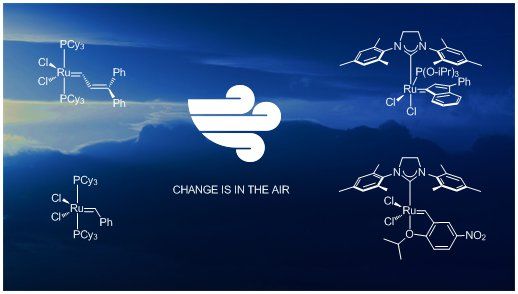
- been made to render catalysts more stable and yet more functional group tolerant. This review summarizes the major developments concerning catalytic systems directed towards water and air tolerance. Keywords: air stability; catalysis; olefin metathesis; RCM; ROMP; ruthenium; Introduction Transition
- -workers synthesized the first well-defined ruthenium(II) complex (5, Scheme 2) bearing a carbene moiety, able to perform ring-opening metathesis polymerization (ROMP) reactions of low-strained olefins [34][35] and ring-closing metathesis (RCM) reactions of functionalized dienes [36]. In the solid state
- the Grubbs’ 2nd generation catalyst. The increased stability of 17 is due to the unsaturated backbone of the NHC; the steric bulkiness on the metal center is improved and the σ-donating ability is increased compared to other NHCs. These were the first ruthenium-based catalysts able to perform RCM




Hexacoordinate Ru-based olefin metathesis catalysts with pH-responsive N-heterocyclic carbene (NHC) and N-donor ligands for ROMP reactions in non-aqueous, aqueous and emulsion conditions
Beilstein J. Org. Chem. 2015, 11, 1960–1972, doi:10.3762/bjoc.11.212
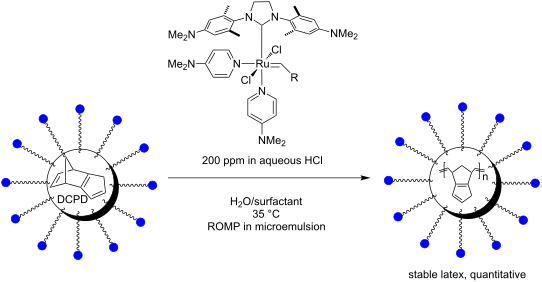
- (ROMP) and ring closing metathesis (RCM) reactions with standard substrates. The ROMP with complex 11 is accelerated in the presence of two equiv of H3PO4, but is reduced as soon as the acid amount increased. The metathesis of phenylthiomethylidene catalysts 9 and 12 is sluggish at room temperature, but
- their ROMP can be dramatically accelerated at 60 °C. Complexes 11 and 12 are soluble in aqueous acid. They display the ability to perform RCM of diallylmalonic acid (DAMA), however, their conversions are very low amounting only to few turnovers before decomposition. However, both catalysts exhibit
- closing metathesis (RCM) activities in organic and aqueous solvents, as well as their use in the first near-quantitative ROMP procedure in microemulsion to produce stable latexes from DCPD and DCPD/COE mixtures. Results and Discussion Catalyst syntheses We have previously reported olefin metathesis


Recent applications of ring-rearrangement metathesis in organic synthesis
Beilstein J. Org. Chem. 2015, 11, 1833–1864, doi:10.3762/bjoc.11.199
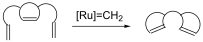
- (ROM)/ring-closing metathesis (RCM) in a one-pot operation to generate complex targets. RRM delivers complex frameworks that are difficult to assemble by conventional methods. The noteworthy point about this type of protocol is multi-bond formation and it is an atom economic process. In this review, we
- decades have changed the landscape of organic synthesis. Armed with these advances, olefin metathesis has become a staple in retrosynthesis. Metathesis protocols such as ring-closing metathesis (RCM), cross-metathesis (CM), and enyne metathesis (EM) have gained popularity in the synthesis of complex
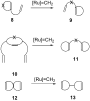
- molecules. Ring-rearrangement metathesis (RRM) involves a tandem process, where the ring-opening metathesis (ROM) and the RCM sequence occur in tandem to generate complex end products (Figure 2). Several demanding structures related to natural products and non-natural products were synthesized by RRM




Nitro-Grela-type complexes containing iodides – robust and selective catalysts for olefin metathesis under challenging conditions
Beilstein J. Org. Chem. 2015, 11, 1823–1832, doi:10.3762/bjoc.11.198
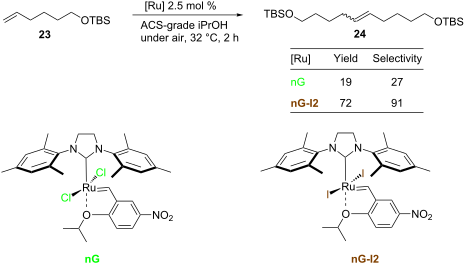
- Iodide-containing nitro-Grela-type catalysts have been synthesized and applied to ring closing metathesis (RCM) and cross metathesis (CM) reactions. These new catalysts have exhibited improved efficiency in the transformation of sterically, non-demanding alkenes. Additional steric hindrance in the
- - analogues of HII, but no improvement was noted [13][14][15]. Moreover, the presence of iodide ligands reduced initiation rates for Hoveyda second generation complex bearing iodides (HII-I2) in ring-closing metathesis (RCM). Similarly, Schrodi and colleagues did not find any advantages for halide exchanged
- ) and quantified by 1H NMR. In order to determine the differences in the initiation rate between the new and parent complexes, we ran the RCM of diethyl diallylmalonate (DEDAM) in toluene (C0DEDAM 0.2 M) at a relatively low temperature (18 °C) with only 0.15 mol % of the catalyst (Figure 2). The nG-I2


Grubbs–Hoveyda type catalysts bearing a dicationic N-heterocyclic carbene for biphasic olefin metathesis reactions in ionic liquids
Beilstein J. Org. Chem. 2015, 11, 1632–1638, doi:10.3762/bjoc.11.178
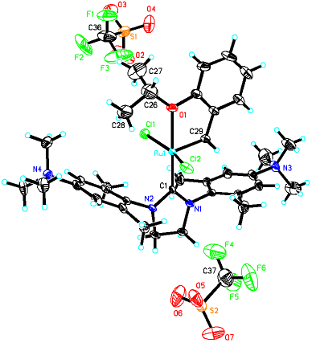
- activity of Ru-2 compared to standard Grubbs- and Grubbs–Hoveyda catalysts. Thus, Ru-2 delivers only turn-over numbers well below 100 in the biphasic ring-closing metathesis (RCM) of 1,7-octadiene, diethyl diallylmalonate and N,N-diallyl p-toluoenesulfonamide using [BDMIM+][BF4−] as IL and toluene as the
- as the organic solvent. While Ru-2 showed low RCM activity, it turned out to be active in ROMP reactions of strained cyclic olefins like norbornenes, 7-oxanorbornenes, norbornadiene and cis-cyclooctene allowing for the synthesis of the corresponding polymers with unprecedented low metal contamination
- analysis of Ru-2, results for biphasic RCM. Acknowledgements Financial support provided by the Deutsche Forschungsgemeinschaft (DFG, grant no. BU 2174/8-1) is gratefully acknowledged.



Latent ruthenium–indenylidene catalysts bearing a N-heterocyclic carbene and a bidentate picolinate ligand
Beilstein J. Org. Chem. 2015, 11, 1541–1546, doi:10.3762/bjoc.11.169
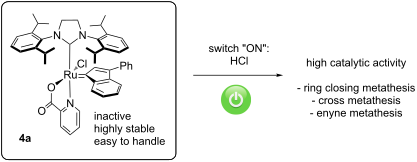
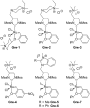
- -diisopropylphenyl)imidazolidin-2-ylidene) demonstrated excellent latent behaviour in ring closing metathesis (RCM) reaction and could be activated in the presence of a Brønsted acid. The versatility of the catalyst 4a was subsequently demonstrated in RCM, cross-metathesis (CM) and enyne metathesis reactions
- handle and to operate (Figure 2). Consistent with its stability in solution, the latent catalyst 4a appeared totally inactive at room temperature (<1% conversion after 24 h at 297 K), while catalytic activity was observed in the RCM of diethyl diallylmalonate (DEDAM) after addition of TFA. Several acid
- RCM of DEDAM [31]. The replacement of TFA by a weaker acid, acetic acid afforded a lower initiation rate and a conversion of only 40% was obtained after 5 h. On the other hand, hydrochloric acid outperformed TFA to complete the reaction in 10 min, as depicted in Figure 4. With the best conditions in


Ruthenium indenylidene “1st generation” olefin metathesis catalysts containing triisopropyl phosphite
Beilstein J. Org. Chem. 2015, 11, 1520–1527, doi:10.3762/bjoc.11.166
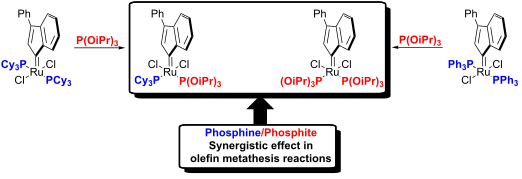
- polymerization on demand through use of a stimulus [35][36]. The use of this catalyst in the ring-closing metathesis (RCM) reaction gave excellent conversions of challenging substrates, even at low catalyst loadings. The high activity and robustness of cis-Caz-1 is derived from synergistic effects between the σ
- ring-closing metathesis (RCM) The reactivity of the mixed phosphine/phosphite complex 1 was first evaluated in the RCM of the easily cyclized diethyl diallylmalonate (4) (see Supporting Information File 1, section 2). The need for thermal activation for this pre-catalyst was clearly revealed by the low
- phosphine/phosphite 1 and phosphine-based Ind-I in the RCM of 4 (lines are visual aids and not curve fits). Synthesis of the mixed phosphine/phosphite complex 1. Synthesis of the bis-phosphite complex 2. Selected bond distances (Å) and angles (°) for 1, 2 and cis-Caz-1. Scope of the reaction employing 1 and


Design and synthesis of hybrid cyclophanes containing thiophene and indole units via Grignard reaction, Fischer indolization and ring-closing metathesis as key steps
Beilstein J. Org. Chem. 2015, 11, 1514–1519, doi:10.3762/bjoc.11.165

- containing polar functional groups [1]. As part of a major program aimed at developing new and intricate strategies to cyclophanes [2][3][4][5][6][7][8][9][10], we envisioned various building blocks [11] by ring-closing metathesis (RCM) as a key step [12][13][14][15][16][17][18][19][20][21][22][23][24][25
- cyclophanes the development of powerful and general synthetic methods is highly desirable. Herein, we report a new approach to thiophene- and indole-containing hybrid cyclophane derivatives via Grignard addition, Fischer indolization and RCM as key steps. Strategy The retrosynthetic strategy to the target
- cyclophane 1 containing the thiophene and indole moieties is shown in Figure 1. Here, we conceived thiophene-containing diolefin 3 as a possible synthon to assemble the target molecule 1 via 2. Route A involves an RCM of 3 followed by Fischer indolization of 2 (Figure 1). Alternatively, Fischer indolization


Synthesis of a tricyclic lactam via Beckmann rearrangement and ring-rearrangement metathesis as key steps
Beilstein J. Org. Chem. 2015, 11, 1503–1508, doi:10.3762/bjoc.11.163
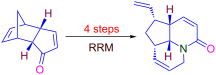
- metathetic transformations such as ring-closing metathesis (RCM) and ring-opening metathesis (ROM). The RRM has emerged as a powerful tool in organic synthesis because of its ability to transform simple starting materials into complex targets involving an ingenious design. The retrosynthetic strategy to the


Tandem cross enyne metathesis (CEYM)–intramolecular Diels–Alder reaction (IMDAR). An easy entry to linear bicyclic scaffolds
Beilstein J. Org. Chem. 2015, 11, 1486–1493, doi:10.3762/bjoc.11.161
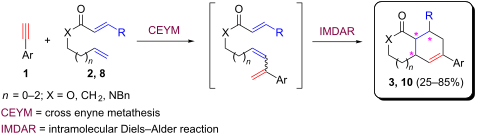
- bearing two different olefin units one being an α,β-unsaturated moiety, the tandem CM–IMDAR protocol would initiate on the electronically neutral olefin. Furthermore, those dienes could undergo an intramolecular cyclization (RCM) promoted by the ruthenium carbene that would compete with the desired
- the ring closing metathesis (RCM) of 2a), and unreacted 2a. The isolated yield of 3a was improved to 57% by increasing the reaction time to 48 hours (Table 1, entries 2 and 3). An extended reaction time (72 h) led to a drop in the final yield (Table 1, entry 4). In all cases variable amounts of 4a
- fact, together with the successful formation of the desired bicycle 3a, indicates that the CEYM between 1a and 2a is faster than the RCM of 2a, and also that the intramolecular Diels–Alder process is more favoured once the triene unit is formed. Different ratios of substrates 1a:2a did not improve the


Consequences of the electronic tuning of latent ruthenium-based olefin metathesis catalysts on their reactivity
Beilstein J. Org. Chem. 2015, 11, 1458–1468, doi:10.3762/bjoc.11.158
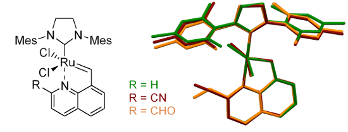
- Arabia 10.3762/bjoc.11.158 Abstract Two ruthenium olefin metathesis initiators featuring electronically modified quinoline-based chelating carbene ligands are introduced. Their reactivity in RCM and ROMP reactions was tested and the results were compared to those obtained with the parent unsubstituted
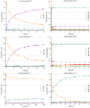
- compound. The studied complexes are very stable at high temperatures up to 140 °C. The placement of an electron-withdrawing functionality translates into an enhanced activity in RCM. While electronically modified precatalysts, which exist predominantly in the trans-dichloro configuration, gave mostly the
- RCM and a minor amount of the cycloisomerization product, the unmodified congener, which preferentially exists as its cis-dichloro isomer, shows a switched reactivity. The position of the equilibrium between the cis- and the trans-dichloro species was found to be the crucial factor governing the




Spiro annulation of cage polycycles via Grignard reaction and ring-closing metathesis as key steps
Beilstein J. Org. Chem. 2015, 11, 1367–1372, doi:10.3762/bjoc.11.147
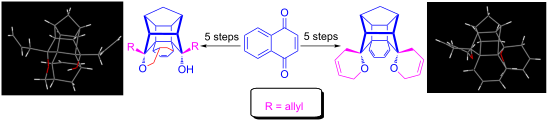
- -closing metathesis (RCM) are considered as viable options. The retrosynthetic analysis to the target bis-spiro-cage compound 7 is shown in Figure 2. The target compound 7 could be obtained from O-allylation of the Grignard addition product 11 followed by the two-fold RCM sequence. The required cage dione
- Claisen rearrangement and RCM as key steps [21][30]. Here, we have prepared the cage dione 10 by the known route involving two atom-economic protocols such as Diels–Alder reaction and [2 + 2] photocycloaddition [42][43][44][45] (Scheme 1). Later, the hexacyclic cage dione 10 was subjected to a Grignard
- compound 16 (34.3%) (Scheme 4). Subsequently, the tetraallyl compound 15 was subjected to an RCM sequence with the aid of Grubbs’ first generation catalyst (G-I) in dry CH2Cl2. Surprisingly under these conditions the reaction was found to be sluggish. Therefore, various other reaction conditions were


Selected synthetic strategies to cyclophanes
Beilstein J. Org. Chem. 2015, 11, 1274–1331, doi:10.3762/bjoc.11.142
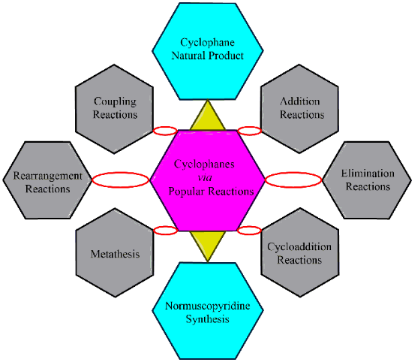
- agents in the presence of Cu(II). Fürstner and co-workers [72] have reported the total synthesis of natural products 22–24 by using a metathesis reaction [73][74][75][76][77][78][79][80][81][82] as the key step. The ring-closing metathesis (RCM) has been utilized for the synthesis of the turriane with a
- moderate yield. RCM of the diene derived from the dialdehyde 111 afforded the macrocyclic cyclophane 113 as a less strained product (Scheme 16). Sonogashira coupling: Wegner and co-workers [125] have reported the synthesis of cyclophanes 122a–c via Sonogoshira coupling [126] (Scheme 17). To this end, the
- subjected to the RCM with G-I (12) as a catalyst in CH2Cl2. Later, catalytic hydrogenation followed by deacetylation gave compound 141 (48%). Similarly, alkyne metathesis of compound 142 was carried out in the presence of Mo(CO)6 and 2-fluorophenol in chlorobenzene and heated under reflux to yield the


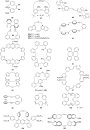


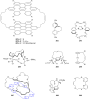


Hybrid macrocycle formation and spiro annulation on cis-syn-cis-tricyclo[6.3.0.02,6]undeca-3,11-dione and its congeners via ring-closing metathesis
Beilstein J. Org. Chem. 2015, 11, 1123–1128, doi:10.3762/bjoc.11.126

- based macrocycle 6 involving Fischer indolization and ring-closing metathesis (RCM). Various spiro-polyquinane derivatives have been assembled via RCM as a key step. Keywords: aza-polyquiananes; Fischer indolization; macrocycles; ring-closing metathesis; spiropolyquinanes; Introduction Design and
- ]. Also, based on Fischer indolization and ring-closing metathesis (RCM), we have developed a new strategy to indole-based propellane derivatives [57]. Here, the tricyclic dione 2 required was prepared starting with the Cookson’s dione 4 in two steps involving flash vacuum pyrolysis (FVP) and
- derivative 7 (Figure 3). The key steps involved here are: double Fischer indolization and RCM. To install the alkane chain connecting the two nitrogen atoms, we plan to use alkylation with allylbromide followed by RCM and hydrogenation protocols. It is known that a mono-indole derivative was obtained via


Further exploration of the heterocyclic diversity accessible from the allylation chemistry of indigo
Beilstein J. Org. Chem. 2015, 11, 481–492, doi:10.3762/bjoc.11.54
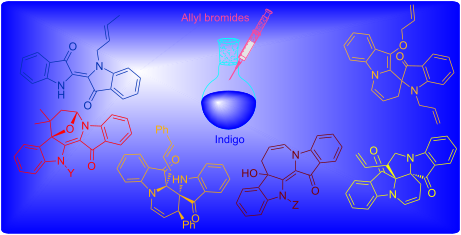
- ' reagent. This is not unexpected as there are reports of ruthenium-based species catalysing Claisen rearrangements [7] including a similar RCM–Claisen sequence in 2,2'-bis(allyloxy)-1,1'-binaphthyls and O,O'-(but-2-en-1,4-diyl) binaphthols [12][13]. Additionally, examples of C2 to C3 Claisen rearrangement
- heterocyclic skeleton not likely to be readily accessible by other means. As with all these reactions, the synthesis of 22 is repeatable, and given the reliability of outcome and complexity of this structure, a 26% yield is a reasonable achievement. Enhancement of the synthetic scope of the tandem RCM–Claisen