


Search results
Search for "TMSOTf" in Full Text gives 117 result(s) in Beilstein Journal of Organic Chemistry.
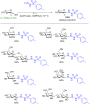
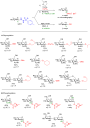
Synthesis of α-D-GalpN3-(1-3)-D-GalpN3: α- and 3-O-selectivity using 3,4-diol acceptors
Beilstein J. Org. Chem. 2018, 14, 2805–2811, doi:10.3762/bjoc.14.258
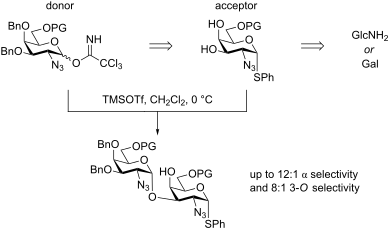
- precious” and recoverable acceptor 9, which, however, would result in lower yields when compared to glycosylations using excess of donor. In the initial experiment, using TMSOTf as the catalyst in CH2Cl2 at 0 °C, a pleasingly 8:1 3/4-O ratio and a 10:1 α/β-selectivity with a 57% isolated yield of the


Synthesis of eunicellane-type bicycles embedding a 1,3-cyclohexadiene moiety
Beilstein J. Org. Chem. 2018, 14, 2461–2467, doi:10.3762/bjoc.14.222
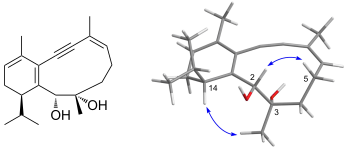
- , treatment of 25 with TiCl4/Zn did not lead to pinacol cyclization and we have evidence that the aldehyde group stayed in place and the keto group had been reduced. Installation of a TMS group at the tertiary alcohol moiety of 25 (TMSOTf, 2,6-lutidine) formed 26, which was simply reduced at the keto function





D-Fructose-based spiro-fused PHOX ligands: synthesis and application in enantioselective allylic alkylation
Beilstein J. Org. Chem. 2018, 14, 2082–2089, doi:10.3762/bjoc.14.182
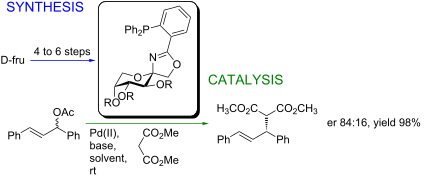
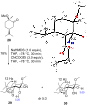
- small yields were obtained by the application of the Vangala protocol (activation of the carbohydrate with TMSOTf in toluene and different nitriles as nucleophiles; see Supporting Information File 1 for details). With slight modifications, however, (BF3·OEt2 as Lewis acid instead of TMSOTf and CH2Cl2 as




Glycosylation reactions mediated by hypervalent iodine: application to the synthesis of nucleosides and carbohydrates
Beilstein J. Org. Chem. 2018, 14, 1595–1618, doi:10.3762/bjoc.14.137
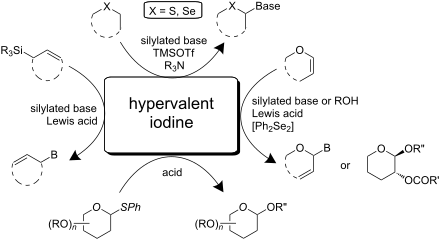
- under sila-Pummerer conditions [29][30]. We found that treatment of 12, obtained by oxidation of 11, with excess persilylated N4-acetylcytosine in the presence of TMSOTf as a Lewis acid gave an inseparable mixture of α- and β-anomers of 4’-thioDMDC derivatives 15 in good yield. Based on the study of the
- 28, by treating with 2,4-bis(trimethylsilyl)uracil (29) and excess diisopropylethylamine (DIPEA) in the presence of TMSOTf, gave 4’-thiouridine derivative 30 in a good yield. The reaction stereoselectively proceeded and resulted the predominant formation of the β-anomer due to steric hindrance of the
- subjected to the Pummerer-type glycosylation mediated by hypervalent iodine. Treatment of 36 with bis(trifluoroacetoxy)iodobenzene (PIFA) and uracil in the presence of trimethylsilyl trifluoromethanesulfonate (TMSOTf) and triethylamine gave a 5:1 mixture of 4’-thiouridine derivative 37 in 55% yield. The


[3 + 2]-Cycloaddition reaction of sydnones with alkynes
Beilstein J. Org. Chem. 2018, 14, 1317–1348, doi:10.3762/bjoc.14.113
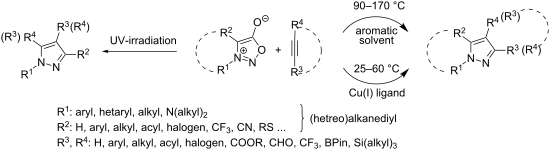
- different cycloaddition products. According to their original presumption some Lewis acids (TMSOTf < Zn(OAc)2 < MgBr2 < Cu(OTf)2) catalyzed the thermal reaction of phenylsydnone with phenylacetylene to give the expected 1,3-diphenylpyrazole in a ratio >10:1 over the 1,4-diphenyl isomer. Quantum calculations


A survey of chiral hypervalent iodine reagents in asymmetric synthesis
Beilstein J. Org. Chem. 2018, 14, 1244–1262, doi:10.3762/bjoc.14.107
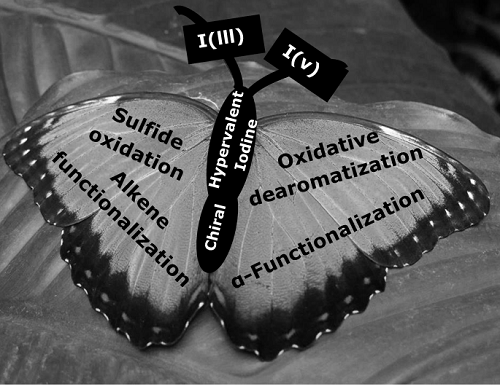
- formation and ring opening of aziridinium intermediate 58 elucidate the product formation in this transformation [51]. Wirth et al. successfully employed I(III) reagent 8b in combination with trimethylsilyltriflate (TMSOTf) for the stereoselective oxyamination of 59 to furnish isourea 60 with >99% ee



Synthetic avenues towards a tetrasaccharide related to Streptococcus pneumonia of serotype 6A
Beilstein J. Org. Chem. 2018, 14, 1095–1102, doi:10.3762/bjoc.14.95
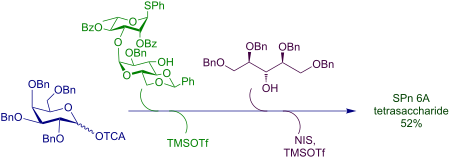
- trichloroacetimidate donors (6b, Table 1, entries 5 and 6, and 6c, entry 4); the TMSOTf mediated glycosylation in DCM/Et2O solvent (Table 1, entry 6) was found to be effective in case of donor 6b and acceptor 5 which generated the desired disaccharide 3a in high yield and exclusive α-anomeric selectivity (evidenced
- acceptor 4 in 93% yield. Glycosylation between donor 2 and acceptor 4 was achieved uneventfully in the presence of TMSOTf in dichloromethane/Et2O (4:1) to give the trisaccharide 21 in 70% yield. Successful glycosylation was also carried out between trisaccharide 21 and ribitol acceptor 7 in the presence of
- NIS and TMSOTf in dichloromethane at −20 °C to give the tetrasaccharide derivative 1 in 89% yield, thereby finishing the stepwise synthesis of SPn 6A tetrasaccharide 1 in the protected form (Scheme 4). Having standardized a stepwise synthesis of the tetrasaccharide 1 in the protected form we then


Hypervalent iodine-mediated Ritter-type amidation of terminal alkenes: The synthesis of isoxazoline and pyrazoline cores
Beilstein J. Org. Chem. 2018, 14, 1028–1033, doi:10.3762/bjoc.14.89
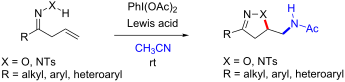
- -iodoxybenzoic acid) and DMP (Dess–Martin periodinane) (Table 1, entries 7 and 8) gave similar yields to the background reaction. Lastly, a Lewis acid screen (Table 1, entries 9–12) was performed. Among the tested Lewis acids, AlCl3, SnCl4, TiCl4, TMSOTf and BF3·Et2O, the latter was found to be the best choice


AuBr3-catalyzed azidation of per-O-acetylated and per-O-benzoylated sugars
Beilstein J. Org. Chem. 2018, 14, 682–687, doi:10.3762/bjoc.14.56
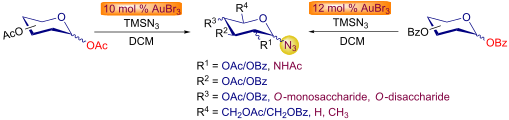
- ][44][45]. More commonly, glycosyl azides are synthesized from per-O-acetylated sugars using trimethylsilyl azide in the presence of a variety of Lewis acids such as SnCl4 [46], TiCl4 [47][48], BF3·OEt2 [49], TMSOTf [50][51], etc. However, at higher concentration Lewis acids can potentially lead to


Synthetic and semi-synthetic approaches to unprotected N-glycan oxazolines
Beilstein J. Org. Chem. 2018, 14, 416–429, doi:10.3762/bjoc.14.30
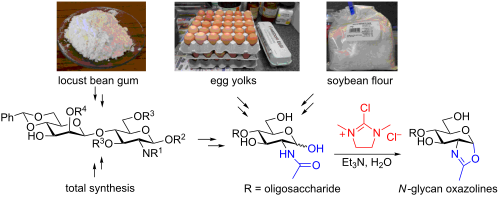
- enzymes has therefore become an area of significant interest over the past 15 years [35][36]. The synthesis of N-glycan oxazolines Formation of glycosyl oxazolines Glycosyl oxazolines of monosaccharides can be produced straightforwardly using strong Lewis acids (e.g., FeCl3, SnCl4, or TMSOTf) and a fully
- substrates leads to significant cleavage of interglycosidic linkages, and correspondingly low yields of products. However, two methods that are useful for the production of oligosaccharide oxazolines are treatment of the peracetylated sugar with either TMSOTf in dichloroethane [39], or with TMSBr, BF3·Et2O




Syn-selective silicon Mukaiyama-type aldol reactions of (pentafluoro-λ6-sulfanyl)acetic acid esters with aldehydes
Beilstein J. Org. Chem. 2018, 14, 373–380, doi:10.3762/bjoc.14.25

- trifluoromethanesulfonate (TMSOTf) and 1.5 equiv triethylamine (Et3N) in dichloromethane for 4 hours. Then the mixture was cooled down to 0 °C and 1 equiv of p-nitrobenzaldehyde and 0.3 equiv of TiCl4 were added under stirring. Stirring at room temperature was continued for 15 hours. Then the reaction was quenched by the
- yield, while the syn/anti-ratio was not changed (Table 1, entry 2). Elongation of the reaction time resulted in the formation of more side products, drop of aldol products’ yield and selectivity (Table 1, entry 3). A lower amount of TMSOTf (1.2 equiv) led to increased yield but lower selectivity (Table
- with benzaldehyde, p-nitro-, and p-methoxybenzaldehyde as described recently by Ponomarenko and Röschenthaler et al. [34]. Considering our earlier results [31] on TMSOTf-mediated Claisen-type rearrangements of SF5-acetates of allyl alcohols, we favor the initial formation of (Z)-enolates (ketene


Aminosugar-based immunomodulator lipid A: synthetic approaches
Beilstein J. Org. Chem. 2018, 14, 25–53, doi:10.3762/bjoc.14.3
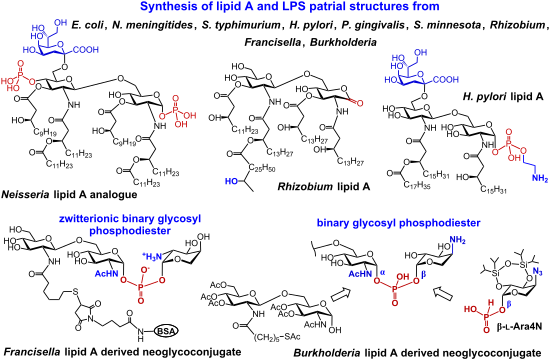
- reductive opening of benzylidene acetal using the borane−THF complex in the presence of Bu2BOTf. Regioselective TMSOTf-catalysed glycosylation of the diol 4 by the imidate donor 3 resulted in the formation of a single product, the β(1→6)-linked disaccharide 5. After the 2’-N-Fmoc group in 5 was removed with
- reductive opening of the benzylidene acetal to give the acceptor monosaccharide 63. NIS/TMSOTf-promoted glycosylation of 63 with glycosyl donor 64 furnished desired β(1→6) disaccharide which was subjected to treatment with hydrazine hydrate to remove the phthalimido group. Subsequent acylation of the




Ring-size-selective construction of fluorine-containing carbocycles via intramolecular iodoarylation of 1,1-difluoro-1-alkenes
Beilstein J. Org. Chem. 2017, 13, 2682–2689, doi:10.3762/bjoc.13.266
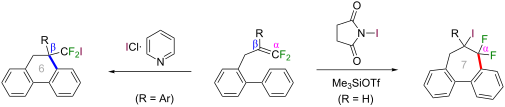
- -difluoroallyl)biphenyl (1a) as a model substrate. To generate a highly reactive, cationic iodine species, several iodine sources were used with acid or metal activators (Table 1, entries 1–3). Upon treatment with N-iodosuccinimide (NIS) and trimethylsilyl trifluoromethanesulfonate (TMSOTf) in a 1:1 mixed
- fluorine substituents in the three-membered iodonium intermediates. Since the combination of NIS and TMSOTf was found to be the best for an iodoarylation of 5, the reactions of a couple of 2-(3,3-difluoroallyl)biaryls 5 were examined under the same conditions (Scheme 4). The iodoarylation of


An efficient synthesis of 1,6-anhydro-N-acetylmuramic acid from N-acetylglucosamine
Beilstein J. Org. Chem. 2017, 13, 2631–2636, doi:10.3762/bjoc.13.261
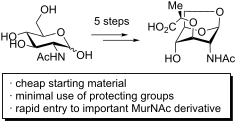
- -anhydroGlcNAc was carried out according to Tyrtysh et al. [12]. A suspension of 4 (203 mg, 1.0 mmol) in dichloromethane (10 mL) was treated with collidine (264 µL, 2.0 mmol) at room temperature. Trityl triflate (0.3 M in dichloromethane, 5 mL, generated freshly by mixing equimolar quantities of TMSOTf and TrOH


Phosphonic acid: preparation and applications
Beilstein J. Org. Chem. 2017, 13, 2186–2213, doi:10.3762/bjoc.13.219
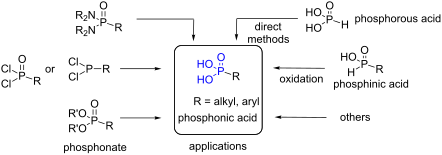
- nucleophilic halide anion is another feature of this reaction. Indeed the treatment of TMSOTf on a phosphonate did not induce the dealkylation likely due to the absence of nucleophilic species [161]. It is worth noticing that the nucleophilic attack of bromide only occurs on alkyl chains as exemplified by a


Preactivation-based chemoselective glycosylations: A powerful strategy for oligosaccharide assembly
Beilstein J. Org. Chem. 2017, 13, 2094–2114, doi:10.3762/bjoc.13.207
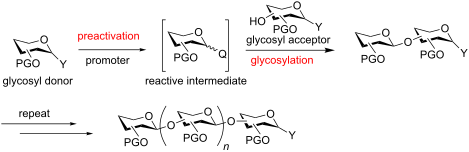
- of PhSeBr. PhSeBr could react with the remaining donor 4 for quantitative activation of 4. The addition of the acceptor to the reaction mixture upon donor preactivation afforded orthoester 6. The orthoester 6 was rearranged in situ with trimethylsilyl trifluoromethanesulfonate (TMSOTf) to
- disaccharide 7, which could be subjected to bromine-promoted glycosylation for further chain elongation. As an example, preactivation of a monosaccharide 8 with bromine was followed by the addition of a bifunctional disaccharide building block 10 and subsequent TMSOTf-promoted orthoester rearrangement
- /AgOTf [18], N-iodosuccinimide (NIS)/TMSOTf [18], dimethyl(methylthio)sulfonium triflate (DMTST) [18], 1-(benzenesulfinyl)piperidine (BSP)/Tf2O [18][19][49], S-(4-methoxyphenyl)benzene-thiosulfinate (MBPT)/Tf2O [50], Ph2SO/Tf2O [36][51], O,O-dimethylthiophosphonosulfenyl bromide (DMTPSB)/AgOTf [52], and



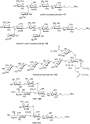


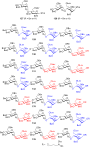


Intramolecular glycosylation
Beilstein J. Org. Chem. 2017, 13, 2028–2048, doi:10.3762/bjoc.13.201
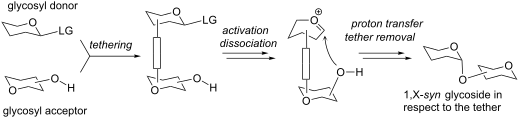
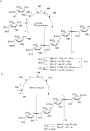
- intramolecular glycosylation, probably due to steric interactions. A glycine residue spacer was found necessary to separate the two rigid Hyp bound counterparts. Thus, glycosylation of conjugate 38 in the presence of NIS and TMSOTf resulted in the formation of the (1→4)-linked disaccharide 40 in 80% yield with
- obtained (Scheme 12). Following the NIS/TMSOTf-promoted glycosylation, macrocycle 50 was formed in 55% yield with exclusive α-stereoselectivity. Interestingly, when a similar template was attached to the O-2 position followed by glycosylation with the 3-hydroxy group, the reaction proceeded with high β


1,3-Dibromo-5,5-dimethylhydantoin as promoter for glycosylations using thioglycosides
Beilstein J. Org. Chem. 2017, 13, 1994–1998, doi:10.3762/bjoc.13.195
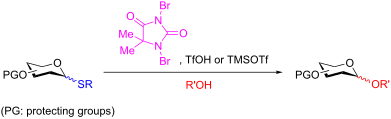
- trimethylsilyl trifluoromethanesulfonate (TMSOTf) were employed as co-promoters in solution or automated glycan assembly on solid phase. Keywords: automated glycan assembly; 1,3-dibromo-5,5-dimethylhydantoin; glycosylation; promoter; thioglycosides; Introduction Thioglycosides are versatile glycosylating
- modest yield (43%). When TfOH or TMSOTf (10 mol %) were added as co-promoter, the yield increased to more than 90% (Table 1, entries 2 and 3). Next, the amount of the reagent required for activation was studied (Table 1, entries 3–5). Substoichiometric amounts of DBDMH (0.7 equiv) in the presence of co
- oligosaccharides [20][47]. Ideally, stable and non-toxic reagents should be used on such instruments. The automated synthesis of disaccharide 16 served to assess the suitability of the DBDMH/TMSOTf activation system using functionalized resin 15 [48] as solid support (Scheme 1). After two coupling cycles with


Strategies toward protecting group-free glycosylation through selective activation of the anomeric center
Beilstein J. Org. Chem. 2017, 13, 1239–1279, doi:10.3762/bjoc.13.123

- anomeric center Davis and colleagues [51] developed a unique glycosylation strategy that employs a 4-bromobutanyl group as a self-activating aglycone on a mannose monomer (Scheme 13) which works even in the absence of any activating agent, such as TMSOTf. The synthesis of the self-activating donor proceeds
- very common and well-studied. Typical Lewis acids employed for anomeric activation are TMSOTf and BF3·Et2O (Scheme 14). The reactions proceed through an oxocarbenium ion that was very recently observed by NMR under cryogenic (−40 °C) conditions stabilized by the HF/SbF5 superacid [52]. The highly
- glycosides: A potentially attractive strategy for a 1,2-cis glycosylation has been described by Baker and colleagues [56] and employs the use of a deprotected thiol glycoside in the presence of a large excess of Lewis acid (TMSOTf) and N-iodosuccinimide (NIS). Although the stereoselectivity of the reaction




First total synthesis of kipukasin A
Beilstein J. Org. Chem. 2017, 13, 855–862, doi:10.3762/bjoc.13.86
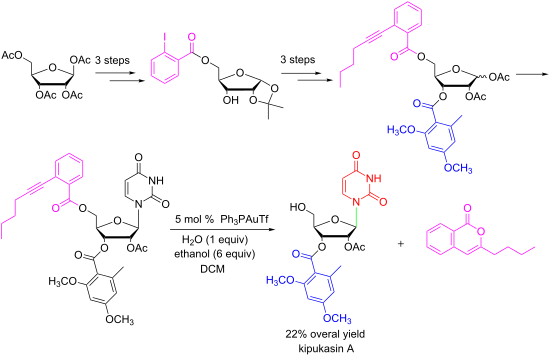
- , 2.2 mmol) in dry MeCN (15 mL) was added BSA (1.36 g, 6.7 mmol). The mixture was heated at 50 °C for 20 min. After cooled to room temperature, a solution of 16 (1.00 g, 1.7 mmol) in dry MeCN (5 mL) along with TMSOTf (1.30 g, 5.9 mmol) were added to the above reaction mixture at 0 °C. The solution was
- conditions: (a) I2, acetone, 0 °C to rt, 88%; (b) K2CO3, MeOH, rt, 93%; (c) 2-iodobenzoyl chloride, pyridine, −10 °C to rt, CH2Cl2, 80%; (d) 1-hexyne, PdCl2(PPh3)3, CuI, Et3N, THF, 50 °C , 78%; (e) 9, DMAP, Et3N, CH2Cl2, 0 °C to rt, 74%; (f) Ac2O, H2SO4, acetic acid, rt, 74%; (g) uracil, BSA, TMSOTf, MeCN


Total synthesis of a Streptococcus pneumoniae serotype 12F CPS repeating unit hexasaccharide
Beilstein J. Org. Chem. 2017, 13, 164–173, doi:10.3762/bjoc.13.19
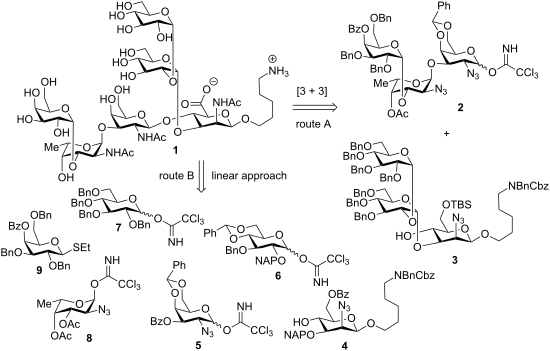
- + 3] approach (Scheme 1, route A) to the synthesis of the repeating unit hexasaccharide 36 (Scheme 7) was attempted. The union of trisaccharides 2 and 3 using TMSOTf in acetonitrile as the activator did not yield the desired hexasaccharide 36. Instead, trisaccharide acceptor 3 missing its C6 silyl
- 44. Considering a potential “mismatch” [38] between the thioglycoside glycosylating agent and the acceptor [39][40] we explored whether the glucosyl trichloroacetimidate donor 6 (Scheme 1) would be more suitable. Indeed, glycosylation of disaccharide 42 with building block 6 using TMSOTf as the
- basic conditions using methyl iodide in 32% yield over three steps [41]. Next, TMSOTf activation of fucosyl trichloroacetimidate 8 (Scheme 1) catalyzed the glycosylation of methyl uronate 48 to afford pentasaccharide 49 exclusively as the α-isomer by virtue of remote participation of the 3-O-acetate


Silyl-protective groups influencing the reactivity and selectivity in glycosylations
Beilstein J. Org. Chem. 2017, 13, 93–105, doi:10.3762/bjoc.13.12

- protective groups on the donor a TES-protected trichloroacetimidate of fucose, 4, was employed by Myers et al. [7] in order to have protective groups compatible with their synthesis of neocarzinostatin. It was found that optimal glycosylation was performed with TMSOTf as a catalyst at low temperature and


Synthesis of the C8’-epimeric thymine pyranosyl amino acid core of amipurimycin
Beilstein J. Org. Chem. 2016, 12, 1765–1771, doi:10.3762/bjoc.12.165
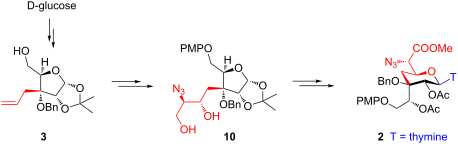
- (1.5:1) in good yield (Scheme 6). Glycosylation of 21 with bis-silylated 2-(N-acetylamino)-6-chloropurine under a variety of reaction conditions was found to be unsuccessful. However, glycosylation of 21 with bis(trimethylsilyl)thymine in the presence of TMSOTf in dichloromethane led to the






Rearrangements of organic peroxides and related processes
Beilstein J. Org. Chem. 2016, 12, 1647–1748, doi:10.3762/bjoc.12.162











Automated glycan assembly of a S. pneumoniae serotype 3 CPS antigen
Beilstein J. Org. Chem. 2016, 12, 1440–1446, doi:10.3762/bjoc.12.139
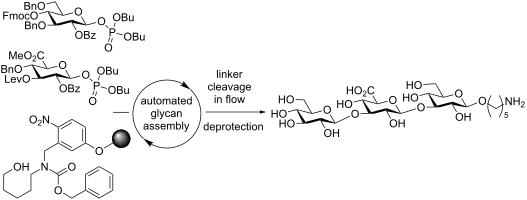
- ensure complete glycosylation of the nucleophile (Scheme 1). The glycosyl phosphate building blocks 1 and 2 were activated by stoichiometric amounts of TMSOTf (trimethylsilyl trifluoromethanesulfonate) at −30 °C and reacted at this temperature for 30 min. Then the temperature was raised to −15 °C and
- deletion sequences (7 and 8) were also detected. Glycosylations mediated by the strongly acidic activator TMSOTf were found to be neutral when exiting the reaction vessel. An incomplete removal of the strongly basic deprotection solutions would result in quenching of the next glycosylations. Indeed, test
- ), 254 nm. Attempted assembly of SP3 trisaccharide 5 using glycosyl phosphate building blocks 1 and 2. Reagents and conditions: a) 2 (3 equiv), TMSOTf, CH2Cl2, −30 °C (30 min) to −15 °C (30 min), n = 3; b) Et3N in DMF (10% v/v), 25 °C (15 min), n = 3; c) 1 (3 equiv), TMSOTf, CH2Cl2, −30 °C (30 min) to





