


Search results
Search for "aggregation" in Full Text gives 351 result(s) in Beilstein Journal of Organic Chemistry. Showing first 200.
Facile access to pyridinium-based bent aromatic amphiphiles: nonionic surface modification of nanocarbons in water
Beilstein J. Org. Chem. 2024, 20, 32–40, doi:10.3762/bjoc.20.5
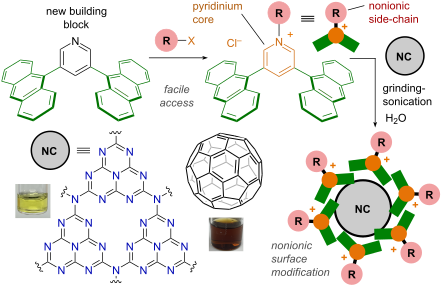
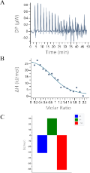
- surface properties of the aromatic micelles (PA-R)n and their host–guest composites including nanocarbons in water. The ZP of self-assembled nanoparticles evaluates their structural stability in solution against aggregation through electrostatic repulsion [25]. Solutions of the micelles in Milli-Q water




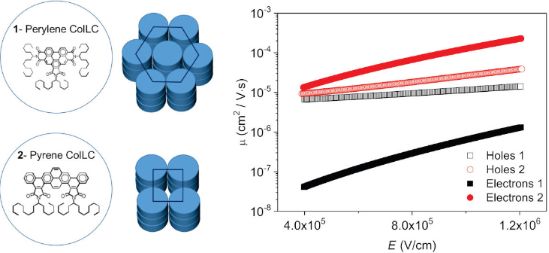
Charge carrier transport in perylene-based and pyrene-based columnar liquid crystals
Beilstein J. Org. Chem. 2023, 19, 1755–1765, doi:10.3762/bjoc.19.128
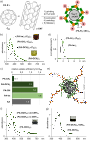
- -shifted in the film. These results indicate molecular π-stacking aggregation and excimer formation on the films [2]. The PL in film was obtained as a function of temperature (Figure 4). The observed reduction of the PL intensity on heating is expected for organic semiconductors due to self-quenching
- columnar hexagonal mesophase stable at room temperature, and compound 2 is pyrene-based crystalline with columnar rectangular order preserved at room temperature. Photoluminescence lifetime measurements indicated that molecular aggregation and π-stacking interactions dominate the photophysics of films


Trifluoromethylated hydrazones and acylhydrazones as potent nitrogen-containing fluorinated building blocks
Beilstein J. Org. Chem. 2023, 19, 1741–1754, doi:10.3762/bjoc.19.127
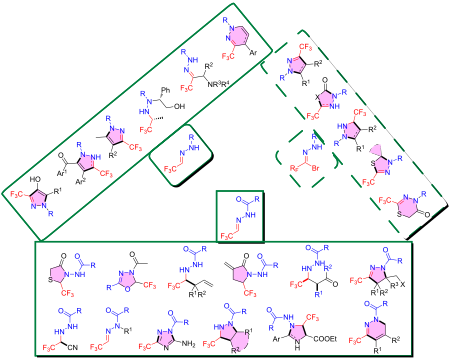
- oxidation/cyclization with NXS or Cu(OAc)2. Notably, some of the resultant CF3-substituted 1,6-dihydropyridazines exhibited aggregation-induced emission [102][103] (Scheme 16). The hydrocyanation of acylhydrazones is an important method for the preparation of α-hyrazino acids. Hu et al. reported a Lewis


Effects of the aldehyde-derived ring substituent on the properties of two new bioinspired trimethoxybenzoylhydrazones: methyl vs nitro groups
Beilstein J. Org. Chem. 2023, 19, 1713–1727, doi:10.3762/bjoc.19.125
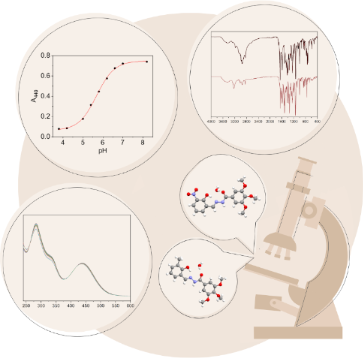
- first to establish the suitability of N-acylhydrazones as novel metallophores able to affect protein aggregation and/or oxidation enhanced by physiological metal–protein anomalous interactions related to Alzheimer's (AD) and Parkinson's (PD), as well as to prion diseases [27][28][29][30][31][32][33][34
- affect its pharmacological properties and metallophoric potential against copper(II) when compared to the unsubstituted counterpart. Nevertheless, the bioinspired compound was still able to reduce oxidative stress and affect the aggregation of the amyloid-β peptide, related to pathophysiological events




Quinoxaline derivatives as attractive electron-transporting materials
Beilstein J. Org. Chem. 2023, 19, 1694–1712, doi:10.3762/bjoc.19.124
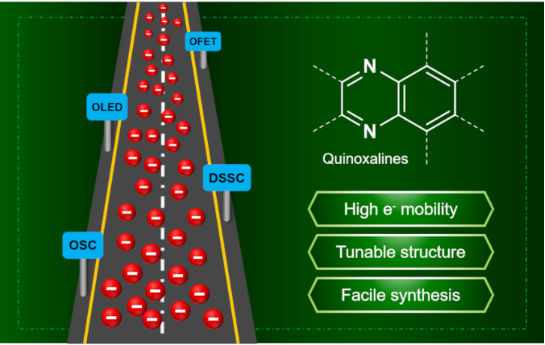
- importance of designing molecular structures that can overcome aggregation-related limitations and enhance charge transport properties in all-polymer solar cells (all-PSCs). The team incorporated twisted perylenediimide units into the polymeric backbone of (naphthalenediimide/quinoxaline)thieno[3,2-b
- ]thiophene in different ratios to produce three copolymers, Qx1a, Qx1b and Qx1c (Figure 2). This strategy reduced aggregation and improved the performance and stability of copolymers, with Qx1c achieving a PCE of 4.81% with PTB7-Th donor in an all-PSC device. Moreover, the broadened absorption band indicated
- limitations, as demonstrated by Elavarasan and colleagues. Their team synthesized TQT-C60 and anchored it to fullerene molecules (Figure 3) to prevent aggregation during thermal aging. The researchers found that TQT-C60 demonstrated enhanced morphological stability and thermal resistance compared to the




A deep-red fluorophore based on naphthothiadiazole as emitter with hybridized local and charge transfer and ambipolar transporting properties for electroluminescent devices
Beilstein J. Org. Chem. 2023, 19, 1664–1676, doi:10.3762/bjoc.19.122
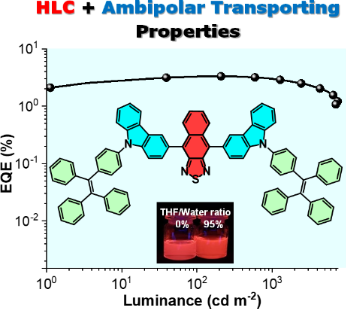
- aggregation-induced emission (AIE) luminogen. The experimental (solvatochromic and emission in THF/water mixtures studies) and theoretical investigations prove that TPECNz retains cooperative hybridized local and charge transfer (HLCT) and weak AIE features. Thanks to its D–A–D-type structure with a proper
- , respectively, providing well-balanced ambipolar characteristics. On the other hand, the attached 4-(1,2,2-triphenylvinyl)phenyl (TPE) moiety would induce aggregation-induced emission (AIE) as feature into the molecule. It was suspected that AIE would restrain the aggregation-caused quench (ACQ) and the energy
- , the molecule will demonstrate different degrees of aggregation since it can dissolve really well in THF but is insoluble in water, resulting in colloidal nanoaggregates being formed in solutions with high water contents. As shown in Figure 4a and 4b, in pure THF, TPECNz deep-red emission color with


A series of perylene diimide cathode interlayer materials for green solvent processing in conventional organic photovoltaics
Beilstein J. Org. Chem. 2023, 19, 1620–1629, doi:10.3762/bjoc.19.119
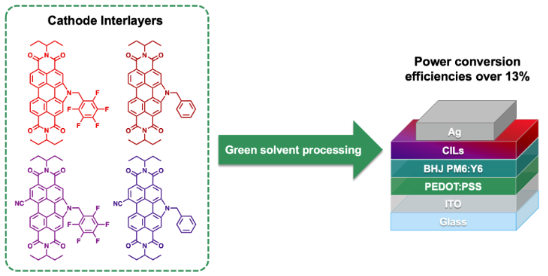
- group impacts the shape of the UV–visible film spectra, leading to ill-defined 0 → 0, 0 → 1, and 0 → 2 transitions, while those without a nitrile group exhibit well-defined 0 → 0 and 0 → 1 transitions. Complex aggregation of these compounds is evident, and no clear indication of H- or J-aggregation can


Synthesis of ether lipids: natural compounds and analogues
Beilstein J. Org. Chem. 2023, 19, 1299–1369, doi:10.3762/bjoc.19.96
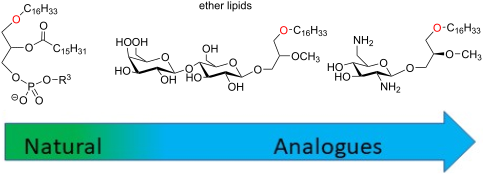
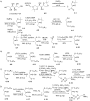
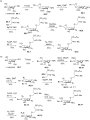
- ) produced successively the lyso derivative 10.8 and the acetylated compound 10.9. The suppression of the ether function in position sn-1 of PAF or its replacement by a thioether function were also reported in 1984 with the aim to identify new compounds that could modulate platelet aggregation or featuring
- deoxy-PAF 11.8. The biological evaluations of deoxy-PAF 11.8 have shown that it was less efficient than PAF to reduce blood pressure and to stimulate platelet aggregation [91]. The synthesis of the racemic sn-1-thio-PAF 12.8 was reported by Maffrand et al. in 1984 (Figure 12) [93]. The sequence starts
- these PAF-analogues (18.2b and 18.2d) were more efficient than PAF for platelet aggregation and for their ability to reduce hypertension. Heymans et al. reported in 1985 a series of PAF-analogues featuring a polar head group in which the phosphate function was replaced by an ether function (Figure 19






Exploring the role of halogen bonding in iodonium ylides: insights into unexpected reactivity and reaction control
Beilstein J. Org. Chem. 2023, 19, 1171–1190, doi:10.3762/bjoc.19.86
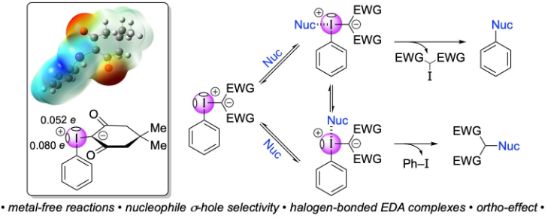
- increased stability. As the Lewis basic ortho-methoxy was engaged with the ylide’s stronger σ-hole, it likely resulted in weaker intermolecular interactions that diminished its aggregation ability and increased its solubility. However, the full impact of this ortho-methoxy group was unclear, as it could
- on the arene, these engaged with the ylide’s stronger σ-hole to block this site and diminish the ylide’s aggregation potential. However, intramolecular σ-hole blocking by halogen bond acceptors appears to be reversible, as these σ-holes do participate in reactions with extraneous Lewis basic







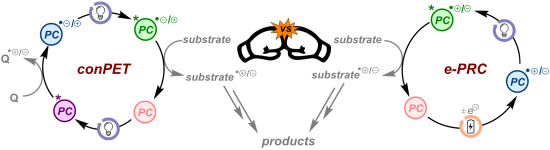
Photoredox catalysis harvesting multiple photon or electrochemical energies
Beilstein J. Org. Chem. 2023, 19, 1055–1145, doi:10.3762/bjoc.19.81

























Linker, loading, and reaction scale influence automated glycan assembly
Beilstein J. Org. Chem. 2023, 19, 1015–1020, doi:10.3762/bjoc.19.77
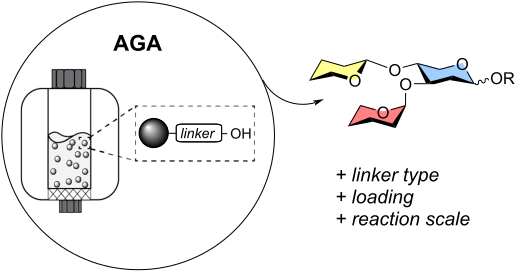
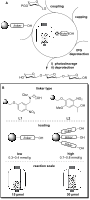
- low loading (0.1–0.2 mmol/g) being beneficial to avoid aggregation of long peptide sequences, and high loadings (0.4–0.5 mmol/g) advantageous for more efficient syntheses [21]. Herein, we systematically investigate how variations in linker type, resin loading, and reaction scale influence the
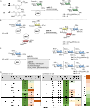
- ]. We wondered whether different glycan sequences were more sensitive to the linker structure. Less reactive donors might highlight differences in the linker nucleophilicity [25]. The aggregation of the growing glycan chains is conceivable to be connected to linker flexibility [18]. The efficiency of UV
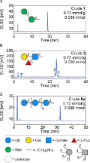
- cleavage is probably influenced by glycan structure, solubility, and aggregation tendency [26]. Lastly, purification of the protected glycan upon cleavage could be affected by the presence or absence of a linker. L1 or L2 were conjugated to Merrifield resins with initial loadings of 0.5 mmol/g and 1.0 mmol

pH-Responsive fluorescent supramolecular nanoparticles based on tetraphenylethylene-labelled chitosan and a six-fold carboxylated tribenzotriquinacene
Beilstein J. Org. Chem. 2023, 19, 635–645, doi:10.3762/bjoc.19.45
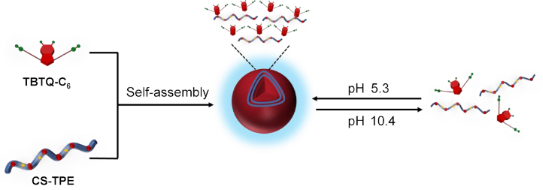
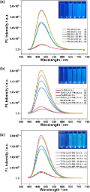
- , PR China 10.3762/bjoc.19.45 Abstract We synthesized a new tetraphenylethylene-modified chitosan bioconjugate, CS-TPE, that shows the aggregation-induced emission effect. It can self-assemble into fluorescent polymeric nanoparticles in an aqueous solution at pH 5.3 either alone or with the water
- , conventional fluorescent dyes exhibit aggregation-caused quenching (ACQ) when introduced into nanoparticles at high loads, resulting in poor fluorescence imaging quality. In recent years, tetraphenylethylene (TPE)-based dyes have been frequently used to overcome the ACQ problem due to their unique aggregation
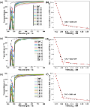
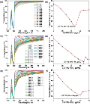
- TPE labelling degree. Self-assembly behavior of CS-TPE in water. To investigate the self-assembly behavior of CS-TPE in water, the critical aggregation concentrations (CACs) of CS-TPE were determined by measuring their optical transmittance at different concentrations (Figure S2, Supporting



Phenanthridine–pyrene conjugates as fluorescent probes for DNA/RNA and an inactive mutant of dipeptidyl peptidase enzyme
Beilstein J. Org. Chem. 2023, 19, 550–565, doi:10.3762/bjoc.19.40
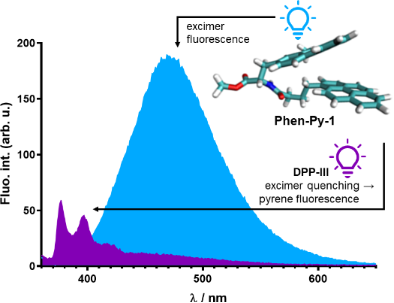
- decrease of UV–vis spectra upon heating up to 90 °C and a baseline increase indicated intermolecular stacking and aggregation of compounds, which was more pronounced for Phen-Py-2. Spectroscopic characterization data are given in the Table 1 and Supporting Information File 1, Figure S1. A linker between
- increasing back after cooling. That was probably caused by the temperature-induced unstacking and also by the aggregation of compounds. Compound Phen-Py-2 was more tended both to intramolecular stacking and aggregation. This compound lacked any significant responses upon eventual binding to ds




CuAAC-inspired synthesis of 1,2,3-triazole-bridged porphyrin conjugates: an overview
Beilstein J. Org. Chem. 2023, 19, 349–379, doi:10.3762/bjoc.19.29
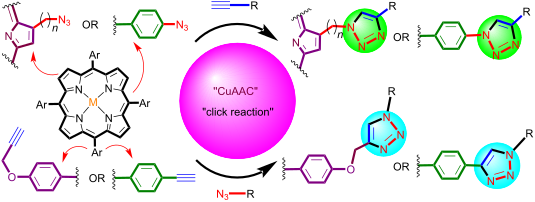
- other related molecules. Based on the collected data, the porphyrin complex 160 was found to show J-type aggregation in both polar and nonpolar solvents. In polar solvents, aggregation was induced by van der Waals interactions between H-cardanol moieties, while π–π stacking interactions between


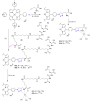


Improving the accuracy of 31P NMR chemical shift calculations by use of scaling methods
Beilstein J. Org. Chem. 2023, 19, 36–56, doi:10.3762/bjoc.19.4
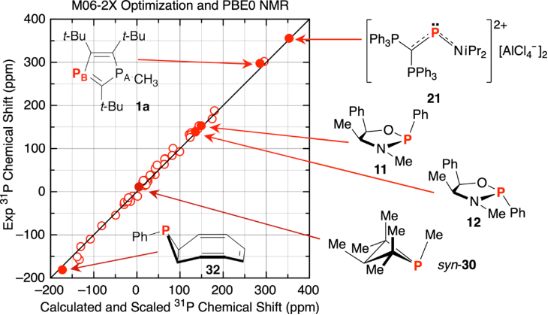
- complicated by water solvation, as well as ionization or aggregation of the phosphoric acid in water, and calculation as a gas-phase chemical shift is also unreasonable [51]. Because of these issues, other studies have used PH3 as an alternative theoretical reference standard [18][19], despite the fact that




Supramolecular approaches to mediate chemical reactivity
Beilstein J. Org. Chem. 2022, 18, 1463–1465, doi:10.3762/bjoc.18.152
- supramolecular nanostructures, displayed aggregation-induced emission (AIE) due to the restricted phenyl-ring rotation of m-TPEWP5 component. Inspired by natural photosynthesis and following an energy transfer process, the supramolecular nanorod assembly was employed as a nanoreactor for a photocatalytic
Computational model predicts protein binding sites of a luminescent ligand equipped with guanidiniocarbonyl-pyrrole groups
Beilstein J. Org. Chem. 2022, 18, 1322–1331, doi:10.3762/bjoc.18.137
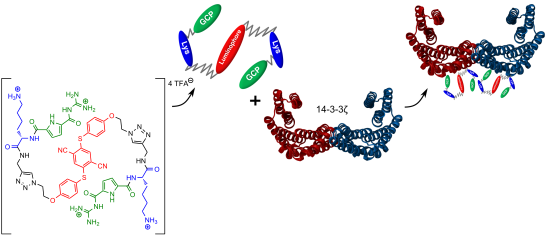
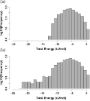
- interactions with other proteins. Here, we use a computational approach to predict the binding sites of the designed hybrid compound featuring aggregation-induced emission luminophores as a potential supramolecular ligand for 14-3-3ζ in the presence and absence of C-Raf peptides. Our results suggest that the
- novel luminophores tailor-made for different applications. One unique, promising class of compounds, the so-called aggregation-induced emitters (AIE) have been used for a wide range of applications, e.g., in OLEDs, liquid crystals [17], stimuli responses, bioassays, protein and ion detection or imaging
- [15][18]. In contrast to classical luminophores, these compounds typically show emission “on” behavior upon aggregation or binding, which can be explained by a restriction of motion. In this contribution, we designed a hybrid compound featuring AIE luminophores based on aromatic thioethers [19] as a




Ionic multiresonant thermally activated delayed fluorescence emitters for light emitting electrochemical cells
Beilstein J. Org. Chem. 2022, 18, 1311–1321, doi:10.3762/bjoc.18.136
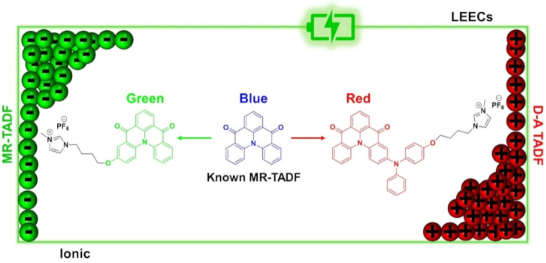
- films, the emission for both compounds are red-shifted and significantly quenched (Figure S28 in Supporting Information File 1); indeed, the ΦPL for the neat film of DiKTa-OBuIm is only 9% while we could not ascertain a reliable value for DiKTa-DPA-OBuIm. Severe aggregation-caused quenching of the



Thermally activated delayed fluorescence (TADF) emitters: sensing and boosting spin-flipping by aggregation
Beilstein J. Org. Chem. 2022, 18, 1177–1187, doi:10.3762/bjoc.18.122
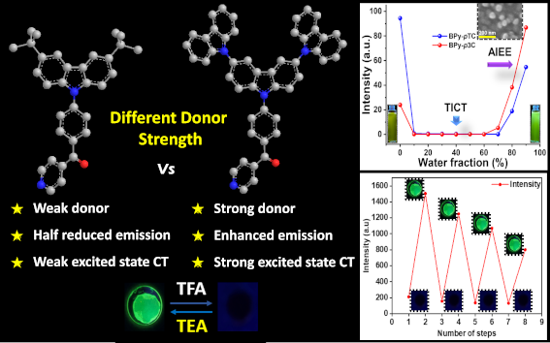
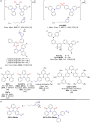
- was obtained for BPy-p3C due to the bulkier donor, leading to a more twisted D–A geometry than that of BPy-pTC. Hence, BPy-p3C exhibited aggregation-induced enhanced emission (AIEE) in a THF/water mixture. Interestingly, the singlet–triplet energy gap (ΔEST) was reduced for both compounds in the
- base fumes, etc. [10][11]. However, the fluorescence quantum yield of such emitters in the solid state is relatively low due to the aggregation-caused quenching (ACQ) effect [12][13][14] and limits practical applications. Hence, metal-free emitters with high photoluminescence quantum yield (PLQY) in
- metal-based emitters in organic light-emitting diode (OLED) devices [18]. Nevertheless, many TADF emitters suffer from quenching of the emission due to the aggregation-caused quenching effect [19][20]. The strong π–π-stacking interactions in the solid or aggregated state may lead to emission quenching


Introducing a new 7-ring fused diindenone-dithieno[3,2-b:2',3'-d]thiophene unit as a promising component for organic semiconductor materials
Beilstein J. Org. Chem. 2022, 18, 944–955, doi:10.3762/bjoc.18.94
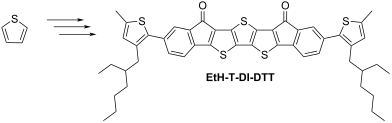
- compound, EtH-T-DI-DTT, consisting of seven, fused ring systems, with an electron-rich central DTT core, flanked by electron-withdrawing keto groups. Absorption studies in solution and in the solid state show strong aggregation of the molecules in films. EtH-T-DI-DTT shows excellent redox stability with


Heteroleptic metallosupramolecular aggregates/complexation for supramolecular catalysis
Beilstein J. Org. Chem. 2022, 18, 597–630, doi:10.3762/bjoc.18.62
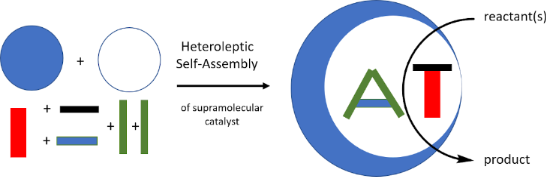
- heteromeric complexes by Issacs’ classification [32] of two main categories: (a) social self-sorting, which involves the assembly of different species, and (b) narcissistic self-sorting, which only involves aggregation of the same component. Over the past few years, a variety of social self-sorting protocols
- , introduced by Lehn, uses maximum site occupancy to afford heteroleptic aggregates [35]. While this principle is limited, the charge-separation approach by Stang is of much wider use [36]. Probably, most contributions in the literature, though, are based on using steric constraints in heteroleptic aggregation
- , since a variety of heteroleptic aggregation protocols have been developed by Schmittel [37] (for copper(I), zinc(II), cadmium(II), mercury(II) ions) and Yoshizawa/Fujita [38] (for palladium(II) ion) that involve pyridine-derived ligands. Highly innovative are the approaches for terpyridine-based


Syntheses of novel pyridine-based low-molecular-weight luminogens possessing aggregation-induced emission enhancement (AIEE) properties
Beilstein J. Org. Chem. 2022, 18, 580–587, doi:10.3762/bjoc.18.60
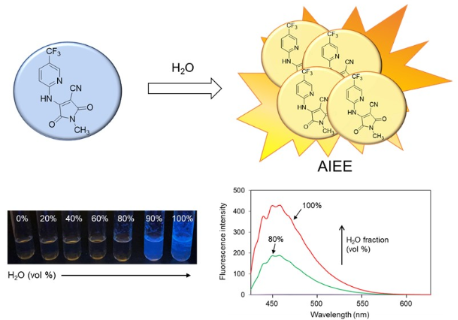
- photophysically and computationally. The photophysical studies revealed that all the synthesized compounds exhibited fluorescence in organic solvents, while N-methyl-4-((pyridin-2-yl)amino)-substituted maleimide derivatives 4a–e, which are based on an acceptor–donor–acceptor (A–D–A) system, exhibited aggregation
- -concentration solutions, and their emission efficiency, chromogenic properties, and light sensitivity decrease rapidly [5][6]. In recent years, contrary to conventional fluorescent compounds, aggregation-induced emission enhancement (AIEE)-based compounds that exhibit strong fluorescence in aggregate structures
- quenched due to aggregation-caused quenching (ACQ) [10]. Generally, the restriction of intermolecular π–π interactions in highly planar compounds plays a key role in aggregate structures exhibiting fluorescence [5][6][10]. In addition, intramolecular mechanisms, such as intramolecular rotation (RIR


Bioinspired tetraamino-bisthiourea chiral macrocycles in catalyzing decarboxylative Mannich reactions
Beilstein J. Org. Chem. 2022, 18, 486–496, doi:10.3762/bjoc.18.51
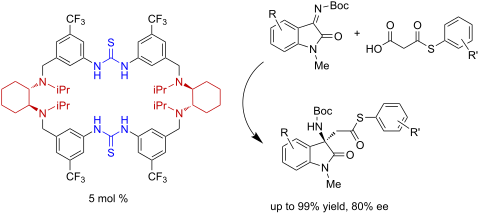
- out to be better. A suitable reaction concentration (0.1–0.2 M) was found to be important. A very high or low reaction concentration led to decreased stereoselectivity probably due to the existence of catalyst aggregation or background reactions (Table 3, entries 8–10). Substrate scope Having




Comparative study of thermally activated delayed fluorescent properties of donor–acceptor and donor–acceptor–donor architectures based on phenoxazine and dibenzo[a,j]phenazine
Beilstein J. Org. Chem. 2022, 18, 459–468, doi:10.3762/bjoc.18.48
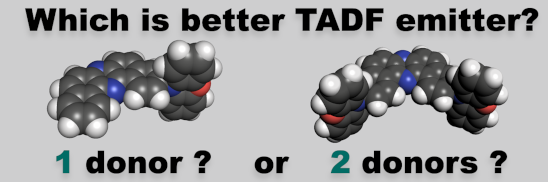
- ). The PL spectrum is similar to that in a CBP host matrix (vide infra). The compound 1 showed an aggregation-induced emission (AIE) behavior in a THF/water system, showing a more red-shifted emission peak at around λem = 600 nm when compared with the as-prepared solid state (Figure S2 in Supporting
- Information File 1). This indicates that in the as-prepared state and aggregation state the molecular stacking modes should be quite different from each other. Time-resolved spectroscopic analysis To investigate the delayed fluorescence behavior of the D–A compound 1, more detailed photophysical studies were


Tetraphenylethylene-embedded pillar[5]arene-based orthogonal self-assembly for efficient photocatalysis in water
Beilstein J. Org. Chem. 2022, 18, 429–437, doi:10.3762/bjoc.18.45
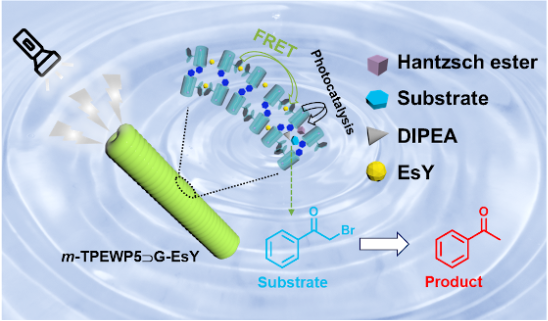
- supramolecular self-assembled nanosystem based on host–guest interactions between water-soluble tetraphenylethylene-embedded pillar[5]arene (m-TPEWP5) and ammonium benzoyl-ʟ-alaninate (G) in an aqueous medium. The obtained assembly of m-TPEWP5 and G showed aggregation-induced emission (AIE) via the blocking of
- photosynthesis and exhibited a high catalytic efficiency for the photocatalytic dehalogenation reaction of various bromoketone derivatives with good yields in short reaction time in water. Keywords: aggregation-induced emission; Förster resonance energy transfer; host–guest interaction; photocatalysis
- light irradiation. In addition, the AIE donor molecules allowed an ordered arrangement of the loaded negatively charged dye acceptor on the positively charged surface, which might avoid aggregation-caused quenching effects and produced better catalytic efficiency. These results revealed that the m


![[Graphic 5]](/bjoc/content/inline/1860-5397-18-45-i7.svg?max-width=637&scale=1.18182) G-EsY self-assembled photocat...
G-EsY self-assembled photocat...
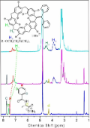


![[Graphic 15]](/bjoc/content/inline/1860-5397-18-45-i17.svg?max-width=637&scale=1.18182) G; (b) m-TPEWP5
G; (b) m-TPEWP5![[Graphic 16]](/bjoc/content/inline/1860-5397-18-45-i18.svg?max-width=637&scale=1.18182) G-EsY. [m-TPEWP5] = 1 × 10⁻⁴ M, [G] = 1 × 10⁻⁴ M, [EsY] = ...
G-EsY. [m-TPEWP5] = 1 × 10⁻⁴ M, [G] = 1 × 10⁻⁴ M, [EsY] = ...

![[Graphic 25]](/bjoc/content/inline/1860-5397-18-45-i27.svg?max-width=637&scale=1.18182) G donor assembly...
G donor assembly...

![[Graphic 43]](/bjoc/content/inline/1860-5397-18-45-i45.svg?max-width=637&scale=1.18182) G-EsY na...
G-EsY na...

![[Graphic 48]](/bjoc/content/inline/1860-5397-18-45-i50.svg?max-width=637&scale=1.18182) G-E...
G-E...



