Search results
Search for "enolate" in Full Text gives 278 result(s) in Beilstein Journal of Organic Chemistry. Showing first 200.
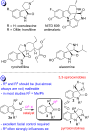
Asymmetric synthesis of a stereopentade fragment toward latrunculins
Beilstein J. Org. Chem. 2023, 19, 428–433, doi:10.3762/bjoc.19.32
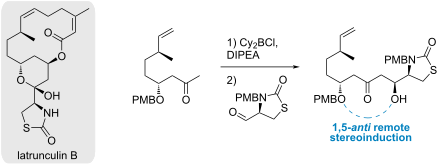
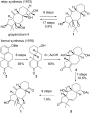
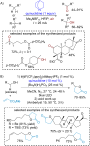
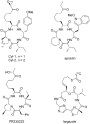
- oxidation in presence of DMP. The assembly of aldehyde 8 and methyl ketone 15 was envisaged through a stereoselective aldol reaction. After unsuccessful attempts of Mukaiyama aldol reactions with silyl enol ethers [28], we found that dicyclohexylboron enolate 20, made in situ from ketone 15 and Cy2BCl in




Group 13 exchange and transborylation in catalysis
Beilstein J. Org. Chem. 2023, 19, 325–348, doi:10.3762/bjoc.19.28
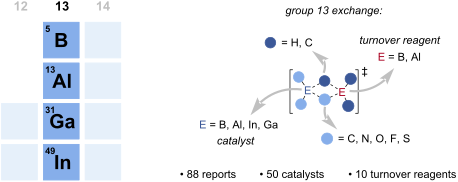
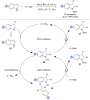
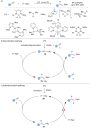
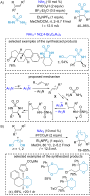
- -hydroboration of the enone 29 with H-B-9-BBN to give an O-B-9-BBN enolate 30. Electrophilic cyanation of the enolate 30 with NCTS 31, and elimination gave the β-ketonitrile 33 and TsN(Ph)-9-B-BBN 34, which underwent B‒N/B‒H transborylation with HBpin to regenerate the catalyst and give TsN(Ph)-Bpin 35 (Scheme 8
- fluoride 50 to give the ester 51 and FBpin (Scheme 11). The H-B-9-BBN-catalysed 1,4-hydroboration of enones with HBpin was shown by Thomas, including the subsequent functionalisation of the intermediate Bpin-enolate 52 (Scheme 12) [76]. The proposed mechanism began by 1,4-hydroboration of the enone 29 with
- H-B-9-BBN, followed by B‒O/B‒H transborylation with HBpin to give the Bpin-enolate 52 and regenerate H-B-9-BBN (Scheme 12). Isotopic labelling with DBpin and H10Bpin supported this proposal. Fontaine reported that boric acid could be used as a precatalyst for the BH3-catalysed hydroboration of










Strategies to access the [5-8] bicyclic core encountered in the sesquiterpene, diterpene and sesterterpene series
Beilstein J. Org. Chem. 2023, 19, 245–281, doi:10.3762/bjoc.19.23
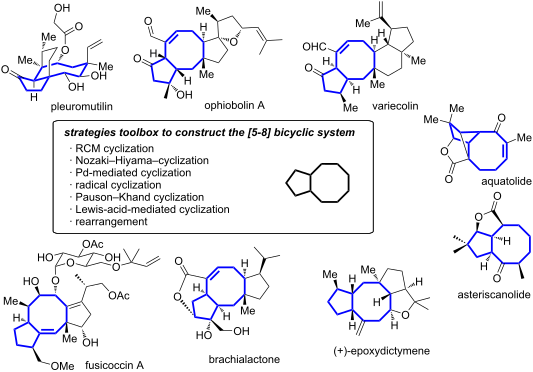
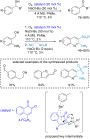
- )-SmIII enolate 147. The cyclooctane ring was then accessed through the (Z)-SmIII enolate aldol cyclization. The different organosamarium species generated during the cascade cyclization mechanism were hypothesized to drive the diastereoselectivity on each of the stereocenters created during the process


An accelerated Rauhut–Currier dimerization enabled the synthesis of (±)-incarvilleatone and anticancer studies
Beilstein J. Org. Chem. 2023, 19, 204–211, doi:10.3762/bjoc.19.19
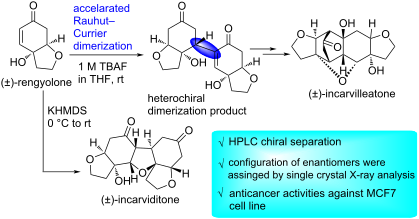
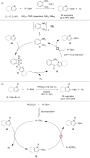
- accelerate the reaction. In conventional intermolecular RC reactions, the reaction proceeds by the intermolecular addition of a nucleophilic catalyst to the enone substrate to generate an enolate in the first step. In the second step the enolate ion attacks the other Michael acceptor at β-position in an
- outlined in Scheme 4. We proposed that (±)-rengyolone (3) undergoes a hydroxy-directed intermolecular conjugate addition [11][12][13][14][15] with another equivalent of (±)-rengyolone (3) (enone system) to highly selectively afford intermediate A. Via a rapid intramolecular Michael addition of enolate
- intermediate A tetrahydrofuran intermediate B with cis-fused ring systems is formed as seen in the existing literature [7]. A proton transfer of enolate moiety B yields another enolate C followed by the β-alkoxy elimination [17] of intermediate C to form intermediate D. The intermediate D on protonation leads


Synthetic study toward tridachiapyrone B
Beilstein J. Org. Chem. 2022, 18, 1741–1748, doi:10.3762/bjoc.18.183
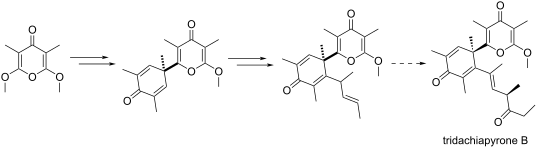
- deprotonation of 2-(α’-methoxy-γ-pyrone)-1,3-dithiane. The resulting vinylogous enolate intermediate was trapped with the electrophile 3, amounting to the one-pot preparation of compound 4, having a masked carbonyl function connecting both key fragments [27][28]. Isolated and characterized by Schmitz [17], the
- lithiocyclopentadiene and the enolate intercepted with an alkylating reagent to build the quaternary carbon of 6b (Scheme 2b). This one-pot procedure was reminiscent of our previous study describing the addition of an allylic carbanion, generated from allylstannane with n-BuLi, to 2 which was followed by the addition
- delocalized enolate intermediate 6a·Li. To that end, the addition of lithiocyclopentadiene to 2 was followed by the attendant quenching with a methylating reagent (MeI, Me2SO4, MeOTf) but a complex mixture of products was consistently obtained. To gather information on the reactivity of 6a·Li, the stabilized


Total synthesis of grayanane natural products
Beilstein J. Org. Chem. 2022, 18, 1707–1719, doi:10.3762/bjoc.18.181
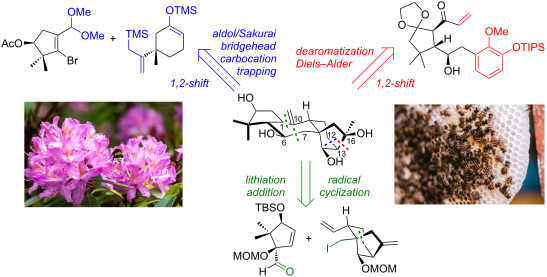
- proposes different disconnections. Newhouse identified a C1–C10 disconnection for a radical cyclization and a C6–C7 for an organolithium addition, allowing a convergent approach with A ring and C–D rings as key fragments. In this case, the bicyclo[3.2.1]octane is obtained by a Ni-catalyzed enolate/alkenyl




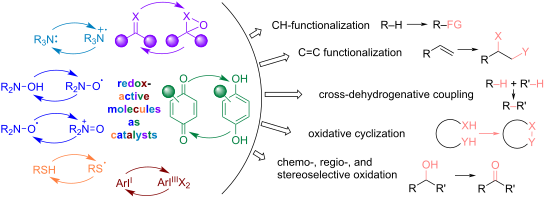
Redox-active molecules as organocatalysts for selective oxidative transformations – an unperceived organocatalysis field
Beilstein J. Org. Chem. 2022, 18, 1672–1695, doi:10.3762/bjoc.18.179
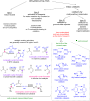
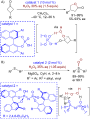
- ][72]. A recent achievement of the enantioselective hydroxylation of α‑aryl-δ-lactams by O2 is shown in Scheme 5 [73] as an example of such organocatalyzed reaction type. Triethyl phosphite is added to reduce a hydroperoxide, which is initially formed by the enolate oxidation with O2. In summary











Rhodium-catalyzed intramolecular reductive aldol-type cyclization: Application for the synthesis of a chiral necic acid lactone
Beilstein J. Org. Chem. 2022, 18, 1642–1648, doi:10.3762/bjoc.18.176
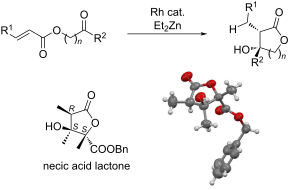
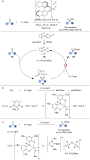
- the substrates through an η6 binding intermediate by DFT calculation [49]. Although another mechanism could not be denied in which a Z-enolate intermediate changes to an E-enolate under thermodynamic control, we propose the following mechanism on the basis of the above results (Scheme 3). The Rh–H
- complex 5 from [RhCl(cod)]2 and Et2Zn would generate predominantly the corresponding E-enolate 6 via 1,4-reduction, which is stabilized through η6 binding with benzene ring of the substrate. Subsequent transmetalation with zinc species 4 readily reacts with the carbonyl group to form the intramolecular C
- . eThe reaction was carried out using RhCl(PPh3)3 in THF at rt. Detection of metal-enolate and proposed mechanism of intramolecular cyclization. Synthetic route towards chiral necic acid lactone (2S,3S,4R)-2j. Conditions: a) CH3SO2NH2, AD-mix-β, t-BuOH, H2O. b) SO3·Py, Et3N, DMSO, CH2Cl2. c) DMAP, CH2Cl2


Synthetic study toward the diterpenoid aberrarone
Beilstein J. Org. Chem. 2022, 18, 1625–1628, doi:10.3762/bjoc.18.173
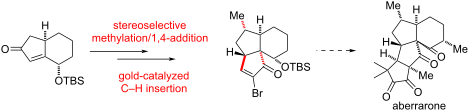
- through the corresponding lithium enolate occurred from the convex face of the bicyclic ring system [37]. After these two continuous stereocenters were successfully installed, the expected challenging all-carbon quaternary center at C1 was constructed utilizing the Nagata reagent (Et2AlCN). By using this


Oxa-Michael-initiated cascade reactions of levoglucosenone
Beilstein J. Org. Chem. 2022, 18, 1457–1462, doi:10.3762/bjoc.18.151
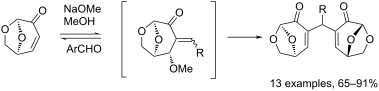
- product 6n was also isolated (Table 1, entry 17), analogous to that reported for the reaction of 1, furfural and hydroxide in water [16]. The isolation of 6n was attributed to a slow second conjugate addition of the enolate (the reaction of 6 and 8, Scheme 1), while 7 was formed via an endocyclic
- presumed to start with an oxa-Michael initiated aldol reaction promoted by a methoxide nucleophile giving enone 6 via enolate 8 (Scheme 1). A Rauhut–Currier-type reaction of 6 with the addition of another equivalent of 8, followed by a subsequent double β-elimination leads to the observed product 5. When


A one-pot electrochemical synthesis of 2-aminothiazoles from active methylene ketones and thioureas mediated by NH4I
Beilstein J. Org. Chem. 2022, 18, 1249–1255, doi:10.3762/bjoc.18.130
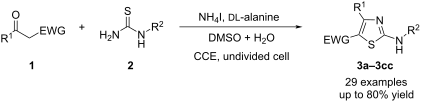
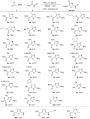
- can act as a bi-functional organocatalyst due to the existence of both Lewis base (NH2) and Brønsted acidic (COOH) sites. In the suggested mechanism, the carboxy group may polarize the carbonyl group of the active methylene ketone and the amino group as a Lewis base serves the formation of enolate to




Vicinal ketoesters – key intermediates in the total synthesis of natural products
Beilstein J. Org. Chem. 2022, 18, 1236–1248, doi:10.3762/bjoc.18.129
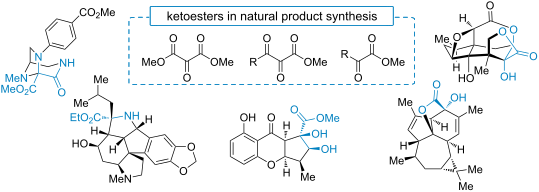
- species to the α-ketoester 15 (Scheme 3) [6]. The ketoester 15 was synthesized by a chiral pool approach starting from (+)-3-carene derived cycloheptenone 13 [7][8] and aldehyde 12 (accessible from (R)-Roche ester [9]) via the γ-lactone 14. The ketoester moiety was established by an enolate hydroxylation
- also be used in photochemical reactions, as shown by Gramain et al. in the synthesis of the pyrrolizidine alkaloid (rac)-isoretronecanol (69, Scheme 11) [26]. A Claisen condensation of the lithium enolate of N-acetylpyrrolidine (66) with diethyl oxalate gave the ketoester 67. Irradiation of compound 67


Electrogenerated base-promoted cyclopropanation using alkyl 2-chloroacetates
Beilstein J. Org. Chem. 2022, 18, 1116–1122, doi:10.3762/bjoc.18.114
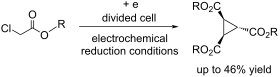
- reduction conditions of the solution containing 1 may generate an EGB, which reacts with 1 to produce anionic A. At the stage of the generation of the EGB, the reduction of 1 may generate an enolate ion such as E or F, which might serve as EGB, although other sources of EGBs cannot be denied [30][31
- -chloroacetates to cyclopropane derivatives has been developed. The reaction has been optimized, the scope and limitations have been investigated. Scale-up reactions were performed and satisfactory yields obtained. The generation of an EGB of the enolate ion from alkyl 2-chloroacetates is indicated. The current


Electrochemical hydrogenation of enones using a proton-exchange membrane reactor: selectivity and utility
Beilstein J. Org. Chem. 2022, 18, 1055–1061, doi:10.3762/bjoc.18.107
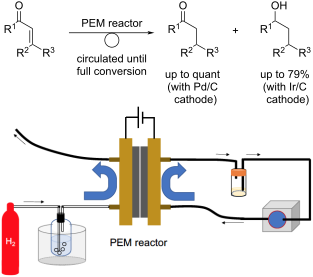
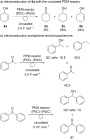
- electroreduction of 1a would afford 2a directly and not via 4a. Electroreduction of acetophenone did not proceed efficiently, and 42.5% (GC ratio) of acetophenone was recovered with ethylbenzene as a major reduced product (Scheme 4b). We assumed that the reduction would proceed via an enol or enolate intermediate





Electroreductive coupling of 2-acylbenzoates with α,β-unsaturated carbonyl compounds: density functional theory study on product selectivity
Beilstein J. Org. Chem. 2022, 18, 956–962, doi:10.3762/bjoc.18.95

- 2 and subsequent rearrangement to 3 are also discussed. In particular, the latter mechanism was studied using density functional theory (DFT) calculations and it was suggested that the ΔG for the cyclization step of an intermediate enolate anion determines the product selectivity. Results and
- Scheme 5. The first one is a radical addition of O-trimethylsilyl radical A, which is formed by a one-electron reduction of 1 and subsequent O-trimethylsilylation, to 2a and a following one-electron reduction of the resultant radical B to give enolate anion D (path a). The second one is an anionic
- -oxobutyl)phthalides 5 were produced as the sole products by the reaction of 1 with methyl vinyl ketone (2b). It was found by DFT calculations for the cyclization step of the intermediate enolate anions that the product selectivity was in good agreement with the free energy differences (∆G) in the


A trustworthy mechanochemical route to isocyanides
Beilstein J. Org. Chem. 2022, 18, 732–737, doi:10.3762/bjoc.18.73
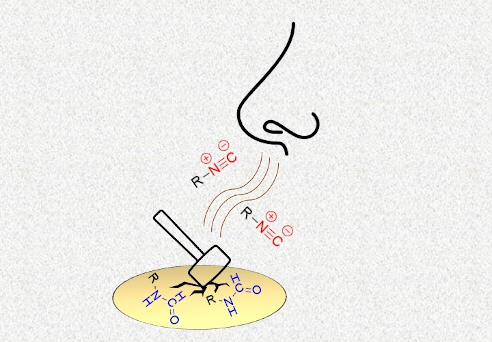
- attributed to their probable reaction mechanism where the nitrogen atom not only promotes the enolate derivative formation as already described in literature [33][34] but it may also generate a positively charged intermediate at the transition state [35], enhancing the nucleophilic substitution. Obviously
- (GC–MS analysis). Unexpectedly, the addition of Lewis acids, namely LiCl and BF3·Et2O, did not improve the enolate generation. The next step was searching the optimal conditions for a better conversion of 1f in 2f. These were found in the 1:2:7 ratios of the three components with the addition of 400


BINOL as a chiral element in mechanically interlocked molecules
Beilstein J. Org. Chem. 2022, 18, 508–523, doi:10.3762/bjoc.18.53
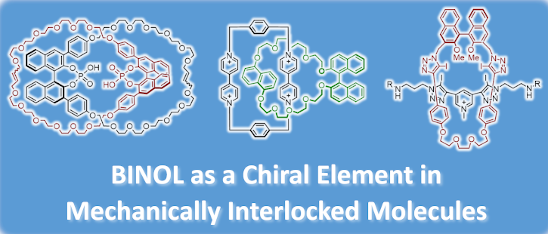
- then deprotonated by the amine to generate the enolate nucleophile. After the Michael addition, the anionic intermediate is protonated by the ammonium group to liberate the product. Although this cooperative catalysis is facilitated by the mechanical bond, the racemic background reaction only has a




Bioinspired tetraamino-bisthiourea chiral macrocycles in catalyzing decarboxylative Mannich reactions
Beilstein J. Org. Chem. 2022, 18, 486–496, doi:10.3762/bjoc.18.51
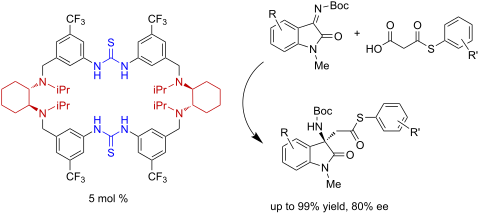
- , a plausible catalytic mechanism is represented in Figure 2. The MAHT substrate is deprotonated by one of the tertiary amine sites, and the formed enolate intermediate can be stabilized by hydrogen bonding-mediated ion-pair interaction within the macrocyclic cavity. The imine substrate is activated
- by one or both of the two thiourea sites through hydrogen bonding to accept the enolate attack. The chiral environment provided by the (S,S)-cyclohexanediamine part governed the face-selective attack and led to the R-configurated product. In the last step, the decarboxylation leads to the enolate of
- the thioester, which is more basic than the MAHT-enolate and can thus be protonated by the ammonium fragment in the macrocycle. This leads to the neutral product, which can easily escape from the macrocyclic cavity, releasing the macrocycle catalyst to enter the next catalytic cycle. As suggested by




Synthesis of 3,4,5-trisubstituted isoxazoles in water via a [3 + 2]-cycloaddition of nitrile oxides and 1,3-diketones, β-ketoesters, or β-ketoamides
Beilstein J. Org. Chem. 2022, 18, 446–458, doi:10.3762/bjoc.18.47

- , β-ketoesters or β-ketoamides are a commonly used 2-step route to 3,4,5-trisubstituted isoxazoles [24][25]. Xiao Zhou et al. recently reported a direct access to 3,4,5-trisubstituted isoxazoles via an enolate-mediated 1,3-dipolar cycloaddition of β-functionalized ketones with nitrile oxides using
- organocatalysts (Figure 1) [26][27]. This enolate-mediated cycloaddition, however, requires long reaction time in organic solvents at high temperatures. Our current work was inspired by a recent report by Kesornpun et al., in which a cycloaddition of nitrile oxides and alkenes or alkynes was carried out in 0.1 M

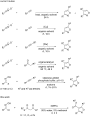


Organocatalytic asymmetric nitroso aldol reaction of α-substituted malonamates
Beilstein J. Org. Chem. 2022, 18, 217–224, doi:10.3762/bjoc.18.25

- using a silver-BINAP catalyst combination [25]. Later, the same group could successfully tune the catalytic system to control the regioselectivity in the addition of metal enolate to nitrosoarenes to achieve an α-hydroxyamination [26]. Since then, several groups have shown the use of metal-catalyzed
- thiourea moiety with the oxygen of the nitrosobenzene. The tertiary amine, present in the catalyst acts as a base in assisting the deprotonation of the highly acidic malonamate to generate the corresponding enolate. Subsequently, a face-selective nucleophilic addition of the enolate to nitroso selective


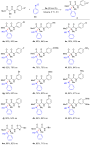


Synthesis and late stage modifications of Cyl derivatives
Beilstein J. Org. Chem. 2022, 18, 174–181, doi:10.3762/bjoc.18.19
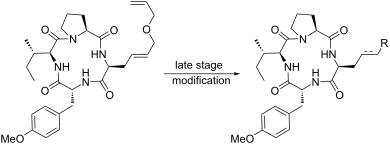
- , such as histone deacetylases. Keywords: chelated enolate; Claisen rearrangement; HDAC inhibitor; peptide; late stage modification; Introduction Among natural products, peptidic structures have entered the limelight due to their extraordinary biological activities [1]. Often found as secondary
- decided to take advantage of an asymmetric chelate enolate Claisen rearrangement, which should allow the stereoselective generation of the unusual amino acid, depending on the configuration of the chiral allylic alcohol used [41][42]. If a peptide Claisen rearrangement [43][44][45] is carried out with a
- usual conditions of an ester enolate Claisen rearrangement with zinc chloride as chelating metal gave the rearranged product in only 33% yield and a diastereomeric ratio of 93:7 (Table 1, entry 1). The reaction was kept at −45 °C overnight to suppress potential epimerization of the peptide. Generally

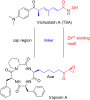


A two-phase bromination process using tetraalkylammonium hydroxide for the practical synthesis of α-bromolactones from lactones
Beilstein J. Org. Chem. 2021, 17, 2906–2914, doi:10.3762/bjoc.17.198
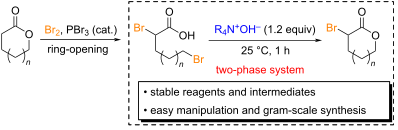
- -valerolactone (1a), has been limited. The main process for the bromination of δ-valerolactone (1a) was treating the lactone with lithium diisopropylamide (LDA) at −78 °C to first generate the corresponding enolate, trapping it with trimethylsilyl chloride (TMSCl) to form the enol silyl ether, followed by


α-Ketol and α-iminol rearrangements in synthetic organic and biosynthetic reactions
Beilstein J. Org. Chem. 2021, 17, 2570–2584, doi:10.3762/bjoc.17.172
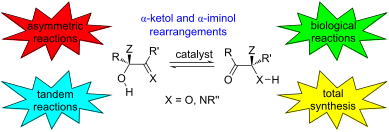
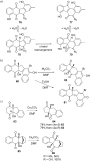
- -promoted steps, beginning with a vinylogous α-ketol rearrangement to 46. Following protonation of the enolate and addition of hydroxide to the carbonyl on the D ring, 47 rearranges with loss of chloride to give enedione 48. Base-catalyzed isomerization yields 44, which is apparently more stable despite the




Advances in mercury(II)-salt-mediated cyclization reactions of unsaturated bonds
Beilstein J. Org. Chem. 2021, 17, 2348–2376, doi:10.3762/bjoc.17.153
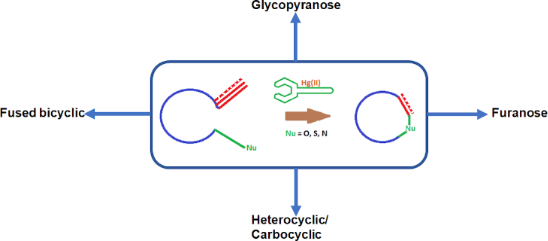
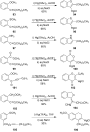
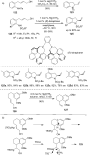
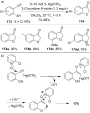
- temperature. It was an example of cycloisomerization of 2-ethynylaniline derivatives utilizing mild reaction conditions (Scheme 50) [110]. Rong et al. had demonstrated the Hg(II)-salt-catalyzed enolate umpolung reaction for the efficient synthesis of various 3-indolinones and 3-coumaranones 174. They had
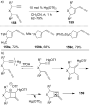
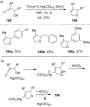
- Petasis–Ferrier-type cyclization, and finally nucleophilic addition of mercuric enolate to iminium results in the formation of azaspiro structure. Conclusion In conclusion, this review summarizes Hg(II)-salt-mediated cyclization reactions either for direct synthesis of cyclized products or as a part of












Base-free enantioselective SN2 alkylation of 2-oxindoles via bifunctional phase-transfer catalysis
Beilstein J. Org. Chem. 2021, 17, 2287–2294, doi:10.3762/bjoc.17.146
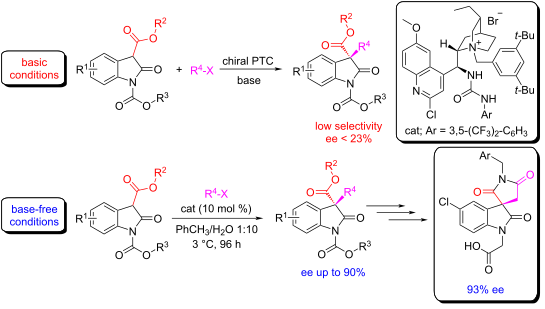
- ester moieties at C-3 have been shown to participate in enantioselective phase-transfer-catalysed alkylations promoted by ad-hoc designed quaternary ammonium salts derived from quinine bearing hydrogen-bond donating substituents. For the first time in such phase-transfer-catalysed enolate alkylations
- highly valuable synthetic building blocks [5][6][7][8][9][10][11][12]. Both pyrroloindolines 1 and spirooxindoles 2 are conceivably available from key 3,3-disubstituted intermediates 3, which could be prepared via an enantioselective SN2 alkylation involving enolate 3a (Figure 1B). The versatility of
- other hand, such electron-withdrawing groups, α to the reactive centre, dramatically changes the acidity of the substrate (and thus the reactivity of the enolate conjugate base) and as consequence its reactivity which can drastically impact the enantioselectivity in SN2 alkylation processes. In this