Search results
Search for "thiophene" in Full Text gives 267 result(s) in Beilstein Journal of Organic Chemistry. Showing first 200.
Copper-promoted C5-selective bromination of 8-aminoquinoline amides with alkyl bromides
Beilstein J. Org. Chem. 2024, 20, 155–161, doi:10.3762/bjoc.20.14
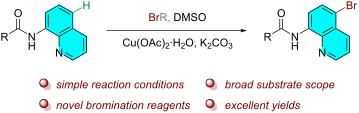
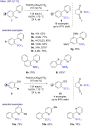
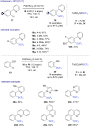
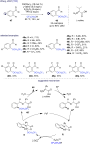
- trimethylgallic acid bearing multiple methoxy groups afforded the desired product 3ma in excellent yield (99%). Noteworthy to mention, substrates containing naphthalene, furan, and thiophene rings also efficiently underwent reaction leading to the quinoline C5-brominated products in excellent yields (3na–pa). In
- contrast, side products, substituted on the naphthalene, furan, or thiophene ring were not detected. This protocol was also compatible with linear, branched, and cyclic aliphatic acid-derived substrates (3qa–va). Surprisingly, small ring-containing substrates displaying significant ring strain were stable


Thienothiophene-based organic light-emitting diode: synthesis, photophysical properties and application
Beilstein J. Org. Chem. 2023, 19, 1849–1857, doi:10.3762/bjoc.19.137
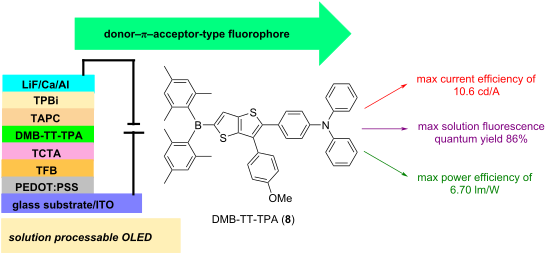
- triphenylamine as donor and dimesitylboron as acceptor linked through a thieno[3,2-b]thiophene (TT) π-conjugated linker bearing a 4-MeOPh group, was designed, synthesized, and fabricated as an emitter via a solution process for an organic light-emitting diode (OLED) application. DMB-TT-TPA (8) exhibited
- layers are composed of various aromatic π-conjugated small molecules/polymers including thiophene, anthracene, carbazole, and triphenylamine [9][10][11][12][13]. Thienothiophenes are two annulated thiophene rings having four isomers, among which the most widely used isomer is thieno[3,2-b]thiophene (TT
- ]thiophene (TT) core. The optical band gap (Eoptic) of DMB-TT-TPA (8) was calculated to be 2.52 eV from the onset wavelength of the absorption spectrum at 491 nm. The compound demonstrates high quantum efficiencies in the solid-state and in solution (THF) of 41 and 86%, respectively. The considerable quantum


Substituent-controlled construction of A4B2-hexaphyrins and A3B-porphyrins: a mechanistic evaluation
Beilstein J. Org. Chem. 2023, 19, 1832–1840, doi:10.3762/bjoc.19.135
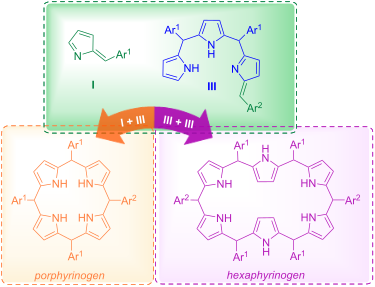
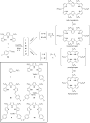
- , heteroaryl-bearing tosylimines were also tested. The thiophene-substituted tosylimine 2j gave hexaphyrin 4j in 17% yield and porphyrin 3j in 10% yield, whereas the indole-bearing tosylimine gave only A3B-porphyrins but no A4B2-hexaphyrin (Table 1, entries 10 and 11). Signals of trace amounts of A2B2-type



Quinoxaline derivatives as attractive electron-transporting materials
Beilstein J. Org. Chem. 2023, 19, 1694–1712, doi:10.3762/bjoc.19.124
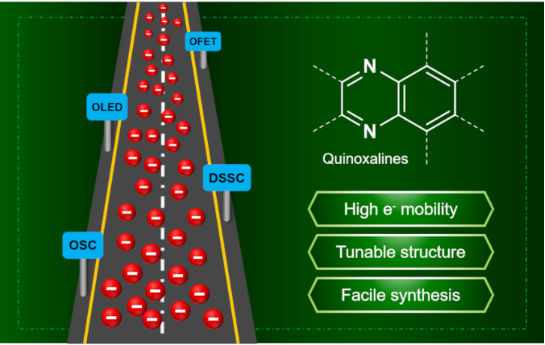
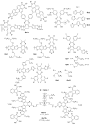
- based on Qxs is of significant interest in the field of organic electronics. A compelling indication of this potential is the remarkable achievements made by a relatively simple polymer, poly[(thiophene)-alt-(6,7-difluoro-2-(2-hexyldecyloxy)quinoxaline)] (PTQ10). PTQ10 has demonstrated impressive power
- ]thiophene in different ratios to produce three copolymers, Qx1a, Qx1b and Qx1c (Figure 2). This strategy reduced aggregation and improved the performance and stability of copolymers, with Qx1c achieving a PCE of 4.81% with PTB7-Th donor in an all-PSC device. Moreover, the broadened absorption band indicated
- to the Qx moiety of Qx29, producing a new NFA, Qx31, as well as the thiophene side chains of the p-type polymer PE61 to fine-tune the optoelectronic properties. The PCE of PE62:Qx31-based solar cells improved from 4.19 to 9.78% with a relatively high Voc of 1.09 V, and the PE61:Qx31-based devices




Sulfur-containing spiroketals from Breynia disticha and evaluations of their anti-inflammatory effect
Beilstein J. Org. Chem. 2023, 19, 1604–1614, doi:10.3762/bjoc.19.117
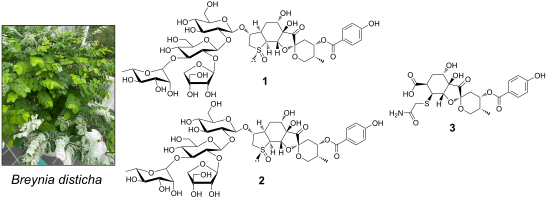
- behavior, suggesting that the steric configuration of the sulfoxide group and the structure of the sugar chain may not influence the anti-inflammatory effect. In contrast, compound 3 did not show anti-inflammatory activity, suggesting that a thiophene ring or a sulfoxide group in breynins is involved in



Radical chemistry in polymer science: an overview and recent advances
Beilstein J. Org. Chem. 2023, 19, 1580–1603, doi:10.3762/bjoc.19.116
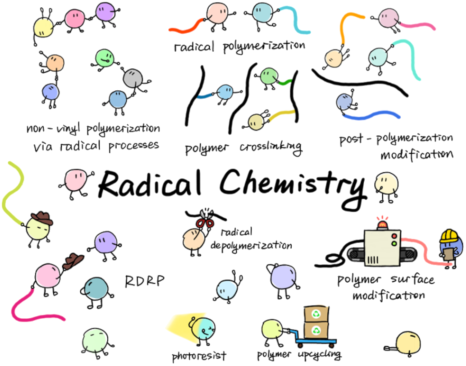
- catalyst to produce radicals at the 2- and 5-positions of thiophene and synthesized four types of poly(3-alkylthiophene)s (PATs) with different linking ways (Scheme 10). 2.2 Polymerization by thiol–ene chemistry The thiol–ene reaction (also called alkene hydrothiolation) is the anti-Markovnikov addition of




Visible-light-induced nickel-catalyzed α-hydroxytrifluoroethylation of alkyl carboxylic acids: Access to trifluoromethyl alkyl acyloins
Beilstein J. Org. Chem. 2023, 19, 1372–1378, doi:10.3762/bjoc.19.98
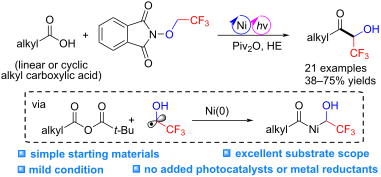
- carboxylic acid and pivalic anhydride than aryl bromide. The halides provided versatile synthetic handles for further transformations. Substrates bearing thiophene (3k) furan (3j) and other heterocycle (3l,m) moieties were also applicable to this reaction. This protocol allowed for the coupling of not only


Synthesis of substituted 8H-benzo[h]pyrano[2,3-f]quinazolin-8-ones via photochemical 6π-electrocyclization of pyrimidines containing an allomaltol fragment
Beilstein J. Org. Chem. 2023, 19, 778–788, doi:10.3762/bjoc.19.58
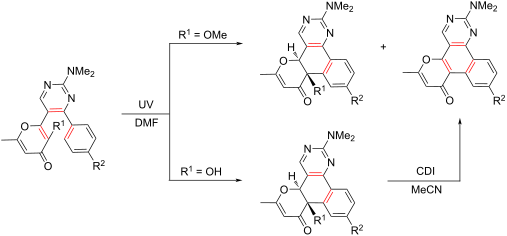
- photoreaction can be carried out for starting compounds with both donor and acceptor substituents in the aryl fragment. However, it is interesting to note that the UV irradiation of thiophene containing pyrimidines 9g and 10g leads to a complicated mixture of unidentified products. Probably, this is due to
- photochemical side processes involving the thiophene ring. Conclusion In summary we have developed an approach for the preparation of pyrimidines with an allomaltol fragment. The suggested method started with the synthesis of pyrimidines from the reaction of 2-(1-(dimethylamino)-3-oxo-3-arylprop-1-en-2-yl)-3


Synthesis of medium and large phostams, phostones, and phostines
Beilstein J. Org. Chem. 2023, 19, 687–699, doi:10.3762/bjoc.19.50
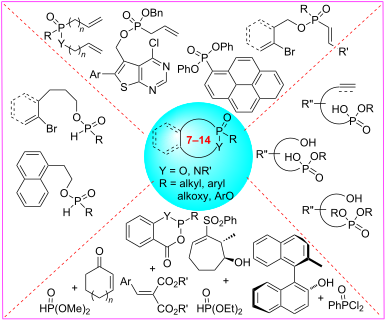
- derivatives were synthesized. Benzyl ((4-chloro-6-(4-methylphenyl)thieno[2,3-d]pyrimidin-5-yl)methyl) allylphosphonate (44) was prepared in 87% yield from 4-chloro-3-(chloromethyl)-2-(4-methylphenyl)benzo[b]thiophene (42) and benzyl hydrogen allylphosphonate (43) via alkylation in the presence of Cs2CO3 in
- from 3-bromobut-3-en-1-yl ethenyl(phenyl)phosphinate and 2-bromophenylmethyl alk-1-enylphosphinates. Synthesis of thieno[2,3-d]pyrimidine-fused 2-hydroxy-1,2-oxaphosphonane 2-oxide from benzyl hydrogen allylphosphonate and 4-chloro-3-(chloromethyl)-2-(4-methylphenyl)benzo[b]thiophene. Synthesis of 3


Transition-metal-catalyzed domino reactions of strained bicyclic alkenes
Beilstein J. Org. Chem. 2023, 19, 487–540, doi:10.3762/bjoc.19.38
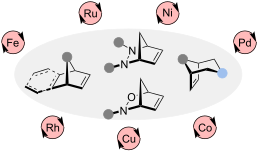
- C–H activation as well as its involvement in the dehydration process. This reaction proceeded smoothly with a variety of both EWGs and EDGs on the 2-phenylpyridine. Interestingly, when swapping the pyridine directing group for thiophene or furan, yields were improved although quinolinyl and





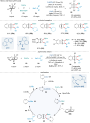


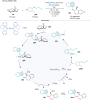


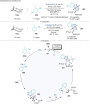


Transition-metal-catalyzed C–H bond activation as a sustainable strategy for the synthesis of fluorinated molecules: an overview
Beilstein J. Org. Chem. 2023, 19, 448–473, doi:10.3762/bjoc.19.35
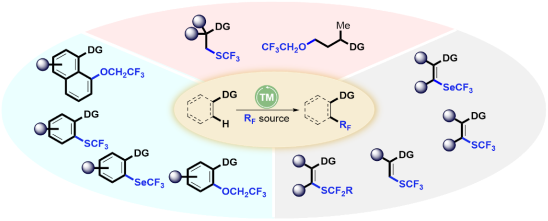
- aryl residue allowed the monofunctionalization to occur selectively. Also, amide 1g bearing a disubstituted arene was successfully functionalized in 59% yield. Finally, the difunctionalized thiophene derivative 2h was obtained in 56% yield. In 2016, Wang's group developed another methodology for the
- broad range of functional groups such as halogens, ester, aldehyde, cyano, and nitro (36c–g, 36–74% yield). It is noteworthy that a disubstituted compound 35j and a thiophene derivative 35k were also efficiently difluoromethylthiolated (36j and 36k, 72% and 65%, respectively). α-Substituted








Catalytic aza-Nazarov cyclization reactions to access α-methylene-γ-lactam heterocycles
Beilstein J. Org. Chem. 2023, 19, 66–77, doi:10.3762/bjoc.19.6

- to tolerate the presence of furan and thiophene rings where 2-furyl- and thienyl-substituted aza-Nazarov products 19i and 19j were isolated in 59 and 53% yields, and with a dr of 11:1 and 6:1, respectively. Inspired by the success of the thiophene-containing imine reactant, we also wanted to check
- the reactivity of a thiophene-fused dihydropyridine as a cyclic imine. The tricyclic α-methylene-γ-lactam product 19k was obtained in 40% yield and as single diastereomer. It should be noted that due to the low solubility of the imine substrate in CH3CN, this reaction was carried out in CH2Cl2 at 23


Synthetic study toward tridachiapyrone B
Beilstein J. Org. Chem. 2022, 18, 1741–1748, doi:10.3762/bjoc.18.183
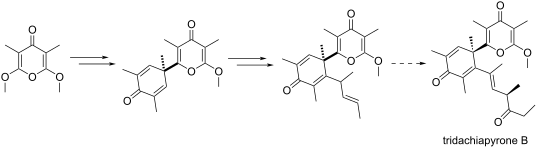
- screening of various organocopper reagents (prepared from MeLi, EtMgBr, ZnEt2 or AlMe3 and copper halide or thiophene-2-carboxylate (CuTC)) was conducted, to no avail. In most cases, the starting material was recovered without indication that the pyrone ring interacted instead with the reagent. To decrease


One-pot synthesis of 2-arylated and 2-alkylated benzoxazoles and benzimidazoles based on triphenylbismuth dichloride-promoted desulfurization of thioamides
Beilstein J. Org. Chem. 2022, 18, 1479–1487, doi:10.3762/bjoc.18.155

- thioamides bearing ortho-substituted aryl groups readily reacted to furnish the corresponding benzoxazoles 8h–j; further, the reaction with a thioamide bearing a thiophene ring gave the expected product 8k in excellent yield (96%). Moreover, thioamides bearing alkyl groups (R2 = cyclohexyl, methyl) reacted


B–N/B–H Transborylation: borane-catalysed nitrile hydroboration
Beilstein J. Org. Chem. 2022, 18, 1332–1337, doi:10.3762/bjoc.18.138
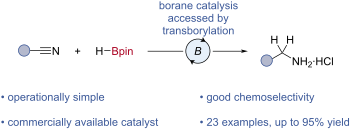
- comparable to the stoichiometric reactivity of boranes [32]. Nitriles containing heterocycles underwent hydroboration in moderate yield (52–58%), with furan and thiophene groups tolerated (1v, 1w). Furan-2-ylmethanamine hydrochloride 1v can be converted into furosemide, a diuretic on the WHO list of


Synthesis, optical and electrochemical properties of (D–π)2-type and (D–π)2Ph-type fluorescent dyes
Beilstein J. Org. Chem. 2022, 18, 1047–1054, doi:10.3762/bjoc.18.106
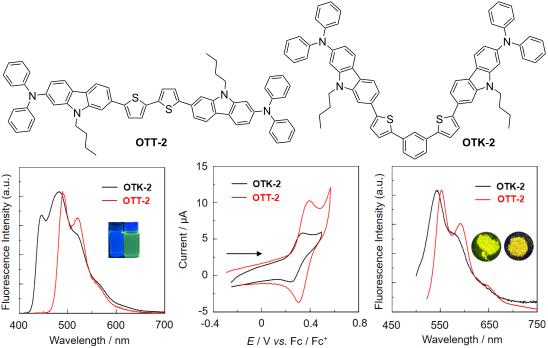
- with two (diphenylamino)carbazole-thiophene units as D (electron-donating group)–π (π-conjugated bridge) moiety and the (D–π)2Ph-type fluorescent dye OTK-2 with the two D–π moieties connected through a phenyl ring were derived by oxidative homocoupling of a stannyl D–π unit and Stille coupling of a
- dyes [10][11][12][13][21][22][27][28][32]. In our previous work [33], we have reported the synthesis, optical and electrochemical properties of the (D–π)2Ph-type fluorescent dye OTK-2 with two (diphenylamino)carbazole-thiophene units as D–π moiety connected through a phenyl ring (Scheme 1). The ICT
- ) of OTK-2. Semi-empirical MO calculations (PM5, INDO/S method) revealed that for OTK-2 both the HOMO and LUMO were mostly localized on the two (diphenylamino)carbazole-thiophene moieties. On the other hand, for OTT-2 both the HOMO and LUMO are delocalized over the whole molecule through the thiophene


Electrochemical vicinal oxyazidation of α-arylvinyl acetates
Beilstein J. Org. Chem. 2022, 18, 1026–1031, doi:10.3762/bjoc.18.103
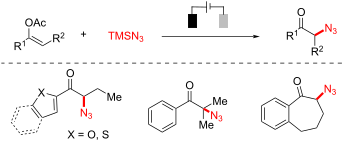
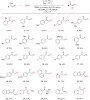
- ), chloro (16), and bromo (17), proceeded with the anticipated reactivity less efficiently (30–48% yields). The presence of other electron-withdrawing groups, such as CO2Me (18) and OCF3 (19), exhibited similar negative effects on the reaction yields. Naphthalene (20), thiophene (21), benzothiophene (22




Introducing a new 7-ring fused diindenone-dithieno[3,2-b:2',3'-d]thiophene unit as a promising component for organic semiconductor materials
Beilstein J. Org. Chem. 2022, 18, 944–955, doi:10.3762/bjoc.18.94
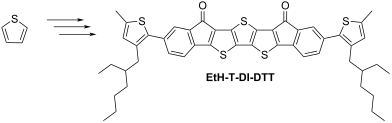
- 10.3762/bjoc.18.94 Abstract A novel π-conjugated molecule, EtH-T-DI-DTT is reported, which is fused, rigid, and planar, featuring the electron-rich dithieno[3,2-b:2’,3’-d]thiophene (DTT) unit in the core of the structure. Adjacent to the electron-donating DTT core, there are indenone units with electron
- effect on the charge mobilities [3]. Here, we report a novel conjugated molecule, EtH-T-DI-DTT (1, Figure 1), which is fused, rigid, and planar, having an electron-rich [19] dithieno[3,2-b:2’,3’-d]thiophene (DTT) motif and electron-withdrawing [20] indenone moieties to reduce the HOMO–LUMO gap due to the
- donor–acceptor interaction [21]. With this strategy, fusing those systems should lead to greater π-delocalisation [15][22]. Moreover, the fused core system is flanked by thiophene groups with ethylhexyl groups which impart solubility [5] in common organic solvents such as tetrahydrofuran, chloroform or


Synthesis of novel alkynyl imidazopyridinyl selenides: copper-catalyzed tandem selenation of selenium with 2-arylimidazo[1,2-a]pyridines and terminal alkynes
Beilstein J. Org. Chem. 2022, 18, 863–871, doi:10.3762/bjoc.18.87
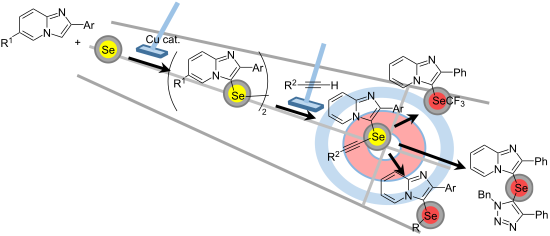
- % yields (Table 2, entries 1–4). The electronic nature of the substituents in the arylalkynes 3 did not affect the outcome of the reaction. For terminal alkynes 3f and 3g with a heteroaryl group such as thiophene (Table 2, entry 5) and the vinyl group (Table 2, entry 6), the coupling products 4af and 4ag


Post-synthesis from Lewis acid–base interaction: an alternative way to generate light and harvest triplet excitons
Beilstein J. Org. Chem. 2022, 18, 825–836, doi:10.3762/bjoc.18.83
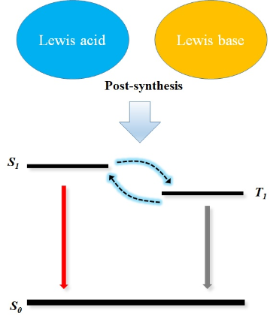
- determined from the optimized structures of compounds 21 and 22 (Figure 13a) by DFT suggest that pyridine is a better binding site than thiophene [43]. The effect of steric hindrance on the Lewis acid–base binding should not be ignored. If there is large steric hindrance of the Lewis basic molecules, it will


Thiophene/selenophene-based S-shaped double helicenes: regioselective synthesis and structures
Beilstein J. Org. Chem. 2022, 18, 809–817, doi:10.3762/bjoc.18.81
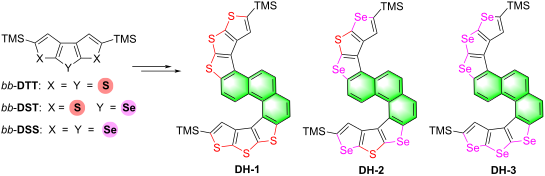
- Mengjie Wang Lanping Dang Wan Xu Zhiying Ma Liuliu Shao Guangxia Wang Chunli Li Hua Wang Engineering Research Center for Nanomaterials, Henan University, Kaifeng, 475004, China 10.3762/bjoc.18.81 Abstract 2,5-Di(trimethylsilanyl)dithieno[2,3-b:3′,2′-d]thiophene ((TMS)2-bb-DTT), 2,5-di
- (trimethylsilanyl)diseleno[2,3-b:3′,2′-d]thiophene ((TMS)2-bb-DST), and 2,5-di(trimethylsilanyl)diseleno[2,3-b:3′,2′-d] selenophene ((TMS)2-bb-DSS) were used as starting materials to synthesize three S-shaped double helicenes (i.e., DH-1, DH-2, and DH-3) through monobromination, formylation, the Wittig reaction
- ; selenophene; thiophene; Introduction Given their esthetically pleasing helical structures, inherent helical chirality, and extended π-conjugation, helicenes have attracted extensive research attention. Helicenes are generally divided into carbohelicenes and heterohelicenes. The rapid development of


Synthesis of 3,4,5-trisubstituted isoxazoles in water via a [3 + 2]-cycloaddition of nitrile oxides and 1,3-diketones, β-ketoesters, or β-ketoamides
Beilstein J. Org. Chem. 2022, 18, 446–458, doi:10.3762/bjoc.18.47

- of the reactants contained a Br, F, or CF3 group in the para-position or contained a thiophene ring (compounds 3b,c,h,i,k, and l). We also explored the reactions between phenyl hydroximoyl chlorides 1a–c and β-ketoesters 2g,h or β-ketoamides 2f,i under the optimized reaction conditions (DIPEA, 95



Menadione: a platform and a target to valuable compounds synthesis
Beilstein J. Org. Chem. 2022, 18, 381–419, doi:10.3762/bjoc.18.43


Flow synthesis of oxadiazoles coupled with sequential in-line extraction and chromatography
Beilstein J. Org. Chem. 2022, 18, 232–239, doi:10.3762/bjoc.18.27
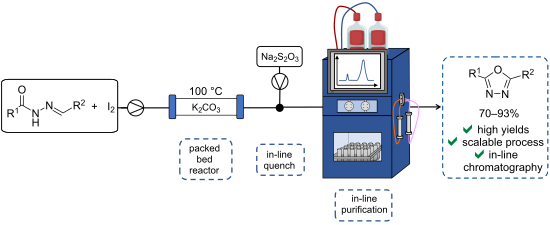
- aldehydes (Scheme 2) and subjected to the optimised flow conditions (Scheme 3). This resulted in full conversion of the substrate in all cases. Both thiophene and pyridine-containing substrates were well tolerated, with slightly higher yields observed in the case of the more electron-deficient CF3


Advances in mercury(II)-salt-mediated cyclization reactions of unsaturated bonds
Beilstein J. Org. Chem. 2021, 17, 2348–2376, doi:10.3762/bjoc.17.153
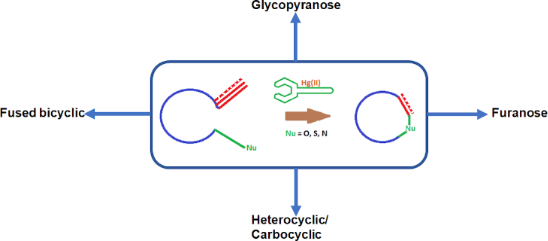
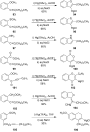
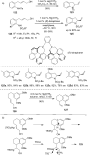
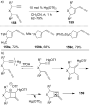
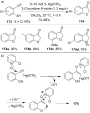
- insertion and then oxidation (Scheme 54). This methodology was later successfully utilized for the total synthesis of raloxifene and benzo[b]thiophene derivatives [115]. Cyclization involving allenes (>C=C=C<) Hg(II) triflate salts had also been successfully employed for the arylallene 181 cyclization by