


Search results
Search for "diketones" in Full Text gives 137 result(s) in Beilstein Journal of Organic Chemistry.
Isoxazole derivatives as new nitric oxide elicitors in plants
- Anca Oancea,
- Emilian Georgescu,
- Florentina Georgescu,
- Alina Nicolescu,
- Elena Iulia Oprita,
- Catalina Tudora,
- Lucian Vladulescu,
- Marius-Constantin Vladulescu,
- Florin Oancea and
- Calin Deleanu
Beilstein J. Org. Chem. 2017, 13, 659–664, doi:10.3762/bjoc.13.65
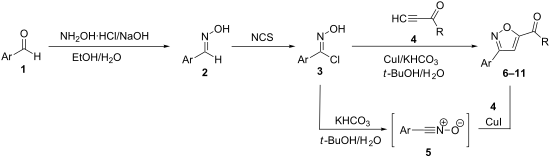
- synthetic approaches towards the isoxazole core include the reactions of hydroxylamine with aryl-β-diketones [20], α,β-unsaturated carbonyl compounds [21], or α,β-unsaturated nitriles [22], and 1,3-dipolar cycloaddition reactions between alkenes or alkynes and nitrile oxides [23][24][25]. Nitrile oxides are

Graphical Abstract

Scheme 1: Synthetic route to 3,5-disubstituted isoxazoles.
Synthesis of 1-indanones with a broad range of biological activity
- Marika Turek,
- Dorota Szczęsna,
- Marek Koprowski and
- Piotr Bałczewski
Beilstein J. Org. Chem. 2017, 13, 451–494, doi:10.3762/bjoc.13.48
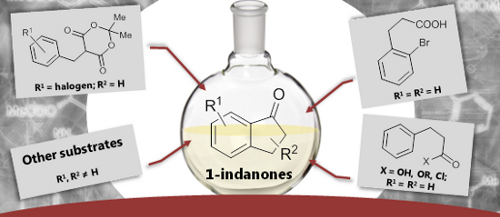
- papilloma virus type 11 (HPV11) inhibitors. These 1-indanones 99 have been synthesized using a N-heterocyclic carbene-catalyzed [4 + 1] annulation utilizing phthalaldehyde (97) and 1,2-diactivated Michael acceptors 98 (Scheme 31) [55][56]. 1.1.5 From ketones and 1,2-diketones: Another interesting approach

Graphical Abstract

Figure 1: Biologically active 1-indanones and their structural analogues.

Figure 2: Number of papers about (a) 1-indanones, (b) synthesis of 1-indanones.

Scheme 1: Synthesis of 1-indanone (2) from hydrocinnamic acid (1).

Scheme 2: Synthesis of 1-indanone (2) from 3-(2-bromophenyl)propionic acid (3).

Scheme 3: Synthesis of 1-indanones 5 from 3-arylpropionic acids 4.

Scheme 4: Synthesis of kinamycin (9a) and methylkinamycin C (9b).

Scheme 5: Synthesis of trifluoromethyl-substituted arylpropionic acids 12, 1-indanones 13 and dihydrocoumarin...

Scheme 6: Synthesis of 1-indanones 16 from benzoic acids 15.

Scheme 7: Synthesis of 1-indanones 18 from arylpropionic and 3-arylacrylic acids 17.

Scheme 8: The NbCl5-induced one-step synthesis of 1-indanones 22.

Scheme 9: Synthesis of biologically active 1-indanone derivatives 26.

Scheme 10: Synthesis of enantiomerically pure indatraline ((−)-29).

Scheme 11: Synthesis of 1-indanone (2) from the acyl chloride 30.

Scheme 12: Synthesis of the mechanism-based inhibitors 33 of coelenterazine.

Scheme 13: Synthesis of the indane 2-imidazole derivative 37.

Scheme 14: Synthesis of fluorinated PAHs 41.

Scheme 15: Synthesis of 1-indanones 43 via transition metal complexes-catalyzed carbonylative cyclization of m...

Scheme 16: Synthesis of 6-methyl-1-indanone (46).

Scheme 17: Synthesis of 1-indanone (2) from ester 48.

Scheme 18: Synthesis of benzopyronaphthoquinone 51 from the spiro-1-indanone 50.

Scheme 19: Synthesis of the selective endothelin A receptor antagonist 55.

Scheme 20: Synthesis of 1-indanones 60 from methyl vinyl ketone (57).

Scheme 21: Synthesis of 1-indanones 64 from diethyl phthalate 61.

Scheme 22: Synthesis of 1-indanone derivatives 66 from various Meldrum’s acids 65.

Scheme 23: Synthesis of halo 1-indanones 69.

Scheme 24: Synthesis of substituted 1-indanones 71.

Scheme 25: Synthesis of spiro- and fused 1-indanones 73 and 74.

Scheme 26: Synthesis of spiro-1,3-indanodiones 77.

Scheme 27: Mechanistic pathway for the NHC-catalyzed Stetter–Aldol–Michael reaction.

Scheme 28: Synthesis of 2-benzylidene-1-indanone derivatives 88a–d.

Scheme 29: Synthesis of 1-indanone derivatives 90a–i.

Scheme 30: Synthesis of 1-indanones 96 from o-bromobenzaldehydes 93 and alkynes 94.

Scheme 31: Synthesis of 3-hydroxy-1-indanones 99.

Scheme 32: Photochemical preparation of 1-indanones 103 from ketones 100.

Scheme 33: Synthesis of chiral 3-aryl-1-indanones 107.

Scheme 34: Photochemical isomerization of 2-methylbenzil 108.

Scheme 35: Synthesis of 2-hydroxy-1-indanones 111a–c.

Scheme 36: Synthesis of 1-indanone derivatives 113 and 114 from η6-1,2-dioxobenzocyclobutene complex 112.

Scheme 37: Synthesis of nakiterpiosin (117).

Scheme 38: Synthesis of 2-alkyl-1-indanones 120.

Scheme 39: Synthesis of fluorine-containing 1-indanone derivatives 123.

Scheme 40: Synthesis of 2-benzylidene and 2-benzyl-1-indanones 126, 127 from the chalcone 124.

Scheme 41: Synthesis of 2-bromo-6-methoxy-3-phenyl-1-indanone (130).

Scheme 42: Synthesis of combretastatin A-4-like indanones 132a–s.

Figure 3: Chemical structures of investigated dienones 133 and synthesized cyclic products 134–137.

Figure 4: Chemical structures of 1-indanones and their heteroatom analogues 138–142.

Scheme 43: Synthesis of 2-phosphorylated and 2-non-phosphorylated 1-indanones 147 and 148 from β-ketophosphona...

Scheme 44: Photochemical synthesis of 1-indanone derivatives 150, 153a, 153b.

Scheme 45: Synthesis of polysubstituted-1-indanones 155, 157.

Scheme 46: Synthesis of 1-indanones 159a–g from α-arylpropargyl alcohols 158 using RhCl(PPh3)3 as a catalyst.

Scheme 47: Synthesis of optically active 1-indanones 162 via the asymmetric Rh-catalyzed isomerization of race...

Scheme 48: Mechanism of the Rh-catalyzed isomerization of α-arylpropargyl alcohols 161 to 1-indanones 162.

Figure 5: Chemical structure of abicoviromycin (168) and its new benzo derivative 169.

Scheme 49: Synthesis of racemic benzoabicoviromycin 172.

Scheme 50: Synthesis of [14C]indene 176.

Scheme 51: Synthesis of indanone derivatives 178–180.

Scheme 52: Synthesis of racemic pterosin A 186.

Scheme 53: Synthesis of trans-2,3-disubstituted 1-indanones 189.

Scheme 54: Synthesis of 3-aryl-1-indanone derivatives 192.

Scheme 55: Synthesis of 1-indanone derivatives 194 from 3-(2-iodoaryl)propanonitriles 193.

Scheme 56: Synthesis of 1-indanones 200–204 by cyclization of aromatic nitriles.

Scheme 57: Synthesis of 1,1’-spirobi[indan-3,3’-dione] derivative 208.

Scheme 58: Total synthesis of atipamezole analogues 211.

Scheme 59: Synthesis of 3-[4-(1-piperidinoethoxy)phenyl]spiro[indene-1,1’-indan]-5,5’-diol hydrochloride 216.

Scheme 60: Synthesis of 3-arylindan-1-ones 219.

Scheme 61: Synthesis of 2-hydroxy-1-indanones 222.

Scheme 62: Synthesis of the 1-indanone 224 from the THP/MOM protected chalcone epoxide 223.

Scheme 63: Synthesis of 1-indanones 227 from γ,δ-epoxy ketones 226.

Scheme 64: Synthesis of 2-hydroxy-2-methylindanone (230).

Scheme 65: Synthesis of 1-indanone derivatives 234 from cyclopropanol derivatives 233.

Scheme 66: Synthesis of substituted 1-indanone derivatives 237.

Scheme 67: Synthesis of 7-methyl substituted 1-indanone 241 from 1,3-pentadiene (238) and 2-cyclopentenone (239...

Scheme 68: Synthesis of disubstituted 1-indanone 246 from the siloxydiene 244 and 2-cyclopentenone 239.

Scheme 69: Synthesis of 5-hydroxy-1-indanone (250) via the Diels–Alder reaction of 1,3-diene 248 with sulfoxid...

Scheme 70: Synthesis of halogenated 1-indanones 253a and 253b.

Scheme 71: Synthesis of 1-indanones 257 and 258 from 2-bromocyclopentenones 254.

Scheme 72: Synthesis of 1-indanone 261 from 2-bromo-4-acetoxy-2-cyclopenten-1-one (260) and 1,2-dihydro-4-viny...

Scheme 73: Synthesis of 1-indanone 265 from 1,2-dihydro-7-methoxy-4-vinylnaphthalene (262) and bromo-substitut...

Scheme 74: Synthesis of 1-indanone 268 from dihydro-3-vinylphenanthrene 266 and 4-acetoxy-2-cyclopenten-1-one (...

Scheme 75: Synthesis of 1-indanone 271 from phenylselenyl-substituted cyclopentenone 268.

Scheme 76: Synthesis of 1-indanone 272 from the trienone 270.

Scheme 77: Synthesis of the 1-indanone 276 from the aldehyde 273.

Scheme 78: Synthesis of 1-indanones 278 and 279.

Scheme 79: Synthesis of 1-indanone 285 from octa-1,7-diyne (282) and cyclopentenone 239.

Scheme 80: Synthesis of benz[f]indan-1-one (287) from cyclopentenone 239 and o-bis(dibromomethyl)benzene (286)....

Scheme 81: Synthesis of 3-methyl-substituted benz[f]indan-1-one 291 from o-bis(dibromomethyl)benzene (286) and...

Scheme 82: Synthesis of benz[f]indan-1-one (295) from the anthracene epidioxide 292.

Scheme 83: Synthesis of 1-indanone 299 from homophthalic anhydride 298 and cyclopentynone 297.

Scheme 84: Synthesis of cyano-substituted 1-indanone derivative 301 from 2-cyanomethylbenzaldehyde (300) and c...

Scheme 85: Synthesis of 1-indanone derivatives 303–305 from ketene dithioacetals 302.

Scheme 86: Synthesis of 1-indanones 309–316.

Scheme 87: Mechanism of the hexadehydro-Diels–Alder (HDDA) reaction.

Scheme 88: Synthesis of 1-indenone 318 and 1-indanones 320 and 321 from tetraynes 317 and 319.

Scheme 89: Synthesis of 1-indanone 320 from the triyn 319.

Scheme 90: Synthesis 1-indanone 328 from 2-methylfuran 324.

Scheme 91: Synthesis of 1-indanones 330 and 331 from furans 329.

Scheme 92: Synthesis of 1-indanone 333 from the cycloadduct 332.

Scheme 93: Synthesis of (S)-3-arylindan-1-ones 335.

Scheme 94: Synthesis of (R)-2-acetoxy-1-indanone 338.

Figure 6: Chemical structures of obtained cyclopenta[α]phenanthrenes 339.

Scheme 95: Synthesis of the benzoindanone 343 from arylacetaldehyde 340 with 1-trimethylsilyloxycyclopentene (...
Organofluorine chemistry: Difluoromethylene motifs spaced 1,3 to each other imparts facial polarity to a cyclohexane ring
- Mathew J. Jones,
- Ricardo Callejo,
- Alexandra M. Z. Slawin,
- Michael Bühl and
- David O'Hagan
Beilstein J. Org. Chem. 2016, 12, 2823–2827, doi:10.3762/bjoc.12.281
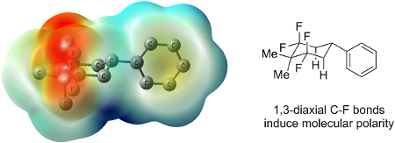
- conformation. To the best of our knowledge, 2,2,6,6-tetrafluorocyclohexanol is the only derivative containing this feature reported so far. It was prepared in an eight step synthesis [22]. At the outset we explored a more direct synthesis of this arrangement based on deoxofluorination of 1,3-diketones 5 with
- relationship. Results and Discussion The preparation of diketones 5a–c and bis-dithianes 6a–c was carried out by previously described methods. The dimethyl-diketone 5c was prepared by double methylation of 5b [25] (Scheme 2). Two different O-alkylated products 7 and 8 were also obtained as significant
- diketones 5a–c was explored with DAST or Deoxo-Fluor® (Scheme 3). When diketones 5a and 5b were treated with DAST or Deoxo-Fluor®, either neat or in DCM as a solvent, only complex and intractable products were obtained. These highly enolisable diketones [27][28] were incompatible with deoxyfluorination. In

Graphical Abstract

Figure 1: Selected fluorinated polar alicyclic scaffolds.

Scheme 1: Retrosynthetic plan to the preparation of 1,1,3,3-tetrafluorocyclohexane structures.

Scheme 2: Preparation of starting materials 5c and 6a–c.

Scheme 3: Deoxofluorination of diketones 5. Reagents and conditions: a) DAST, DCM, rt, overnight, 4a (traces)...

Scheme 4: Fluorodesulfurisation of bis-dithianes 6. Reagents and conditions: a) NIS, HF·Py, DCM, −78 °C to rt...

Figure 2: X-ray structure of compound 4c. The image shows two molecules stacked with the non-fluorine face po...

Figure 3: 1H NMR spectra of 4c. A) shows the spectrum in [2H8]-toluene, and B) shows the spectrum in chlorofo...

Figure 4: Electrostatic potential map for 4c calculated at the B3LYP/6-311G(d,p) level for an optimised struc...
Electron-transfer-initiated benzoin- and Stetter-like reactions in packed-bed reactors for process intensification
- Anna Zaghi,
- Daniele Ragno,
- Graziano Di Carmine,
- Carmela De Risi,
- Olga Bortolini,
- Pier Paolo Giovannini,
- Giancarlo Fantin and
- Alessandro Massi
Beilstein J. Org. Chem. 2016, 12, 2719–2730, doi:10.3762/bjoc.12.268
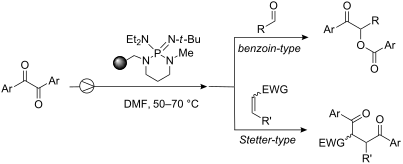
- heterogeneous continuous-flow procedure for the polarity reversal of aromatic α-diketones is presented. Propaedeutic batch experiments have been initially performed to select the optimal supported base capable to initiate the two electron-transfer process from the carbamoyl anion of the N,N-dimethylformamide
- examples, α-hydroxy ketones (benzoin reaction) and 1,4-diketones (Stetter reaction) [1][2][3][4]. The synthetic utility of the umpolung methodology has therefore spurred intensive research on process intensification through the heterogeneization of NHC catalysts [5][6][7][8][9] for facilitating the post
- -unsaturated acceptors [27][28][29]. Indeed, activation of aromatic α-diketones may occur through a double electron-transfer (ET) process triggered by the carbamoyl anion derived from N,N-dimethylformamide (DMF) solvent with catalytic base, which generates an enediolate anion as key reactive species of

Graphical Abstract

Figure 1: Electron-transfer initiated activation of α-diketones (background) and present study.

Scheme 1: Proposed dianionic pathway for the cross-benzoin-like reaction of benzils 1 with aldehydes 2 under ...

Scheme 2: Trapping experiment.

Figure 2: Conversion of the 1a/2a coupling in microreactor R5 operated for 150 h at 50 °C.
A new paradigm for designing ring construction strategies for green organic synthesis: implications for the discovery of multicomponent reactions to build molecules containing a single ring
- John Andraos
Beilstein J. Org. Chem. 2016, 12, 2420–2442, doi:10.3762/bjoc.12.236
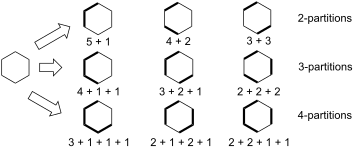
- traditional way this heterocycle is synthesized from urea, aldehydes, and 1,3-diketones. The method described in this work is quite general and can be applied to any monocyclic structure. The Supporting Information contains an atlas of target bond dissection maps applied to 27 kinds of heterocyclic structures
- 1,3-diketones, urea, and aldehydes. A full integer partitioning and target bond dissection mapping analysis for three-component couplings of this heterocycle, as shown in Figure 9, indicates that the chemical space consists of twelve [3 + 2 + 1], six [4 + 1 + 1], and two [2 + 2 + 2] possible

Graphical Abstract

Figure 1: Possible two-component couplings for various monocyclic rings frequently encountered in organic mol...

Figure 2: Possible three-component couplings for various monocyclic rings frequently encountered in organic m...

Figure 3: Possible four-component couplings for various monocyclic rings frequently encountered in organic mo...
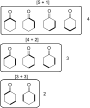
Figure 4: Permutations of two-component coupling patterns for synthesizing the cyclohexanone ring. Synthesis ...
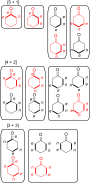
Figure 5: Permutations of two-component coupling patterns for synthesizing the cyclohexanone ring overlayed w...
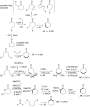
Scheme 1: Conjectured syntheses of cyclohexanone via [5 + 1] strategies.

Scheme 2: Conjectured syntheses of cyclohexanone via [4 + 2] strategies.

Scheme 3: Conjectured syntheses of cyclohexanone via [3 + 3] strategies.

Figure 6: Permutations of three-component coupling patterns for synthesizing the cyclohexanone ring. Synthesi...

Figure 7: Permutations of three-component coupling patterns for synthesizing the pyrazole ring via [2 + 2 + 1...

Scheme 4: Literature method for constructing the pyrazole ring via the A4 [2 + 2 + 1] strategy.
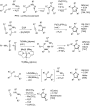
Scheme 5: Literature methods for constructing the pyrazole ring via the A5 [2 + 2 + 1] strategy.

Scheme 6: Literature methods for constructing the pyrazole ring via the A1 [2 + 2 + 1] strategy.

Scheme 7: Literature methods for constructing the pyrazole ring via the B4 [3 + 1 + 1] strategy.

Figure 8: Intrinsic green performance of documented pyrazole syntheses according to [2 + 2 + 1] and [3 + 1 + ...

Scheme 8: Conjectured reactions for constructing the pyrazole ring via the A2 and A3 [2 + 2 + 1] strategies.

Scheme 9: Conjectured reactions for constructing the pyrazole ring via the B1, B2, B3, and B4 [3 + 1 + 1] str...

Figure 9: Permutations of three-component coupling patterns for synthesizing the Biginelli ring adduct. Synth...
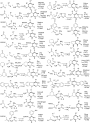
Scheme 10: Reported syntheses of the Biginelli adduct via the traditional [3 + 2 + 1] mapping strategy.
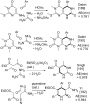
Scheme 11: Reported syntheses of the Biginelli adduct via new [3 + 2 + 1] mapping strategies.

Scheme 12: Reported syntheses of the Biginelli adduct via a new [2 + 2 + 1 + 1] mapping strategy.

Scheme 13: Conjectured syntheses of the Biginelli adduct via new [2 + 2 + 2] mapping strategies.

Scheme 14: Conjectured syntheses of the Biginelli adduct via new [3 + 2 + 1] mapping strategies.

Figure 10: Intrinsic green performance of documented Biginelli adduct syntheses according to [3 + 2 + 1] three...

Figure 11: Intrinsic green performance of newly conjectured Biginelli adduct syntheses according to [4 + 1 + 1...
Et3B-mediated and palladium-catalyzed direct allylation of β-dicarbonyl compounds with Morita–Baylis–Hillman alcohols
- Ahlem Abidi,
- Yosra Oueslati and
- Farhat Rezgui
Beilstein J. Org. Chem. 2016, 12, 2402–2409, doi:10.3762/bjoc.12.234
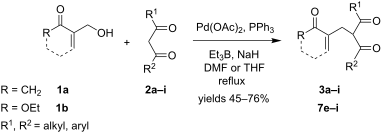
- of the MBH carboxylates with aliphatic 1,3-diketones in the presence of K2CO3. A drawback of these synthetic approaches is the need to first perform the acylation step of the corresponding allyl MBH alcohols. For this reason, we herein report an efficient direct method for the allylation of β
- acidity is relatively higher, led to a mixture of the mono- and bis-alkylation products 3c and 4c in 45 and 23% yields, respectively (Table 2, entries 1–3). Under the same conditions, the allylation of a variety of β-keto esters and β-diketones (Table 2, entries 4–9), in DMF at 80 °C, selectively gave the
- selected the acyclic alcohol 1b to react with stabilized carbanions derived from the β-keto esters 2e–f and β-diketones 2g–i in anhydrous THF using 1 equiv of NaH and 2 equiv of Et3B. Under these conditions, all these reactions worked well in refluxing THF, affording in 2 h the corresponding monoallylation

Graphical Abstract

Figure 1: Cyclic and acyclic MBH alcohols.

Scheme 1: Proposed catalytic cycle involving palladium catalysis for Et3B-promoted allylation of diethyl malo...

Scheme 2: Mechanistic pathway leading to the tricyclic compound 6j.

Figure 2: X-ray crystal structure of tricyclic compound 6j.
Rearrangements of organic peroxides and related processes
- Ivan A. Yaremenko,
- Vera A. Vil’,
- Dmitry V. Demchuk and
- Alexander O. Terent’ev
Beilstein J. Org. Chem. 2016, 12, 1647–1748, doi:10.3762/bjoc.12.162
- -catalyzed rearrangement of endoperoxide 242b containing an electron-withdrawing substituent leads to a product mixture of hydroxy ketone 244, and diketones 245 and 246 (Scheme 75) [353]. A further study [352] on the base-catalyzed rearrangements of substituted bicyclic endoperoxides showed that the pathway
- hand, endoperoxides 249a,b bearing electron-withdrawing groups (ester, acetyl) attached to the seven-membered ring are isomerized to diketones 250a,b (Scheme 77) [345]. The Kornblum–DeLaMare reaction of endoperoxide 251a containing an electron-withdrawing substituent at the bridge head atom lead to the
- -diketones 283 (Scheme 84) [359][360]. The Kornblum–DeLaMare rearrangement of 1,2-dioxenes 284 [361], 1,2-dioxanes 286 [362], and tert-butyl peroxides 288 [330][363] produces 1,4-dicarbonyl compounds 285, 287, and 289, respectively (Scheme 85). These compounds are versatile starting substrates for the

Graphical Abstract
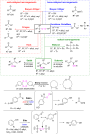
Figure 1: The named transformations considered in this review.

Scheme 1: The Baeyer–Villiger oxidation.

Scheme 2: The general mechanism of the peracid-promoted Baeyer–Villiger oxidation.

Scheme 3: General mechanism of the Lewis acid-catalyzed Baeyer–Villiger rearrangement.

Scheme 4: The theoretically studied mechanism of the BV oxidation reaction promoted by H2O2 and the Lewis aci...

Scheme 5: Proton movements in the transition states of the Baeyer–Villiger oxidation.

Scheme 6: The dependence of the course of the Baeyer–Villiger oxidation on the type of O–O-bond cleavage in t...
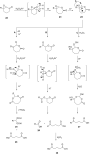
Scheme 7: The acid-catalyzed Baeyer–Villiger oxidation of cyclic epoxy ketones 22.

Scheme 8: Oxidation of isophorone oxide 29.

Scheme 9: Synthesis of acyl phosphate 32 from acyl phosphonate 31.

Scheme 10: Synthesis of aflatoxin B2 (36).

Scheme 11: The Baeyer–Villiger rearrangement of ketones 37 to lactones 38.

Scheme 12: Synthesis of 3,4-dimethoxybenzoic acid (40) via Baeyer–Villiger oxidation.

Scheme 13: Oxone transforms α,β-unsaturated ketones 43 into vinyl acetates 44.

Scheme 14: The Baeyer–Villiger oxidation of ketones 45 using diaryl diselenide and hydrogen peroxide.

Scheme 15: Baeyer–Villiger oxidation of (E)-2-methylenecyclobutanones.

Scheme 16: Oxidation of β-ionone (56) by H2O2/(BnSe)2 with formation of (E)-2-(2,6,6-trimethylcyclohex-1-en-1-...

Scheme 17: The mechanism of oxidation of ketones 58a–f by hydrogen peroxide in the presence of arsonated polys...

Scheme 18: Oxidation of ketone (58b) by H2O2 to 6-methylcaprolactone (59b) catalyzed by Pt complex 66·BF4.

Scheme 19: Oxidation of ketones 67 with H2O2 in the presence of [(dppb}Pt(µ-OH)]22+.

Scheme 20: The mechanism of oxidation of ketones 67 in the presence of [(dppb}Pt(µ-OH)]22+ and H2O2.

Scheme 21: Oxidation of benzaldehydes 69 in the presence of the H2O2/MeReO3 system.

Scheme 22: Oxidation of acetophenones 72 in the presence of the H2O2/MeReO3 system.

Scheme 23: Baeyer–Villiger oxidation of 2-adamantanone (45c) in the presence of Sn-containing mesoporous silic...

Scheme 24: Aerobic Baeyer–Villiger oxidation of ketones 76 using metal-free carbon.

Scheme 25: A regioselective Baeyer-Villiger oxidation of functionalized cyclohexenones 78 into a dihydrooxepin...

Scheme 26: The oxidation of aldehydes and ketones 80 by H2O2 catalyzed by Co4HP2Mo15V3O62.

Scheme 27: The cleavage of ketones 82 with hydrogen peroxide in alkaline solution.

Scheme 28: Oxidation of ketones 85 to esters 86 with H2O2–urea in the presence of KHCO3.

Scheme 29: Mechanism of the asymmetric oxidation of cyclopentane-1,2-dione 87a with the Ti(OiPr)4/(+)DET/t-BuO...

Scheme 30: The oxidation of cis-4-tert-butyl-2-fluorocyclohexanone (93) with m-chloroperbenzoic acid.

Scheme 31: The mechanism of the asymmetric oxidation of 3-substituted cyclobutanone 96a in the presence of chi...

Scheme 32: Enantioselective Baeyer–Villiger oxidation of cyclic ketones 98.

Scheme 33: Regio- and enantioselective Baeyer–Villiger oxidation of cyclic ketones 101.

Scheme 34: The proposed mechanism of the Baeyer–Villiger oxidation of acetal 105f.

Scheme 35: Synthesis of hydroxy-10H-acridin-9-one 117 from tetramethoxyanthracene 114.

Scheme 36: The Baeyer–Villiger oxidation of the fully substituted pyrrole 120.

Scheme 37: The Criegee rearrangement.

Scheme 38: The mechanism of the Criegee reaction of a peracid with a tertiary alcohol 122.

Scheme 39: Criegee rearrangement of decaline ethylperoxoate 127 into ketal 128.

Scheme 40: The ionic cleavage of 2-methoxy-2-propyl perester 129.

Scheme 41: The Criegee rearrangement of α-methoxy hydroperoxide 136.
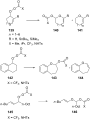
Scheme 42: Synthesis of enol esters and acetals via the Criegee rearrangement.

Scheme 43: Proposed mechanism of the transformation of 1-hydroperoxy-2-oxabicycloalkanones 147a–d.

Scheme 44: Transformation of 3-hydroxy-1,2-dioxolanes 151 into diketone derivatives 152.

Scheme 45: Criegee rearrangement of peroxide 153 with the mono-, di-, and tri-O-insertion.

Scheme 46: The sequential Criegee rearrangements of adamantanes 157a,b.

Scheme 47: Synthesis of diaryl carbonates 160a–d from triarylmethanols 159a–d through successive oxygen insert...

Scheme 48: The synthesis of sesquiterpenes 162 from ketone 161 with a Criegee rearrangement as one key step.

Scheme 49: Synthesis of trans-hydrindan derivatives 164, 165.

Scheme 50: The Hock rearrangement.

Scheme 51: The general scheme of the cumene process.

Scheme 52: The Hock rearrangement of aliphatic hydroperoxides.
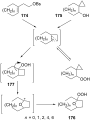
Scheme 53: The mechanism of solvolysis of brosylates 174a–c and spiro cyclopropyl carbinols 175a–c in THF/H2O2....

Scheme 54: The fragmentation mechanism of hydroperoxy acetals 178 to esters 179.

Scheme 55: The acid-catalyzed rearrangement of phenylcyclopentyl hydroperoxide 181.

Scheme 56: The peroxidation of tertiary alcohols in the presence of a catalytic amount of acid.

Scheme 57: The acid-catalyzed reaction of bicyclic secondary alcohols 192 with hydrogen peroxide.

Scheme 58: The photooxidation of 5,6-disubstituted 3,4-dihydro-2H-pyrans 196.

Scheme 59: The oxidation of tertiary alcohols 200a–g, 203a,b, and 206.

Scheme 60: Transformation of functional peroxide 209 leading to 2,3-disubstitued furans 210 in one step.

Scheme 61: The synthesis of carbazoles 213 via peroxide rearrangement.

Scheme 62: The construction of C–N bonds using the Hock rearrangement.

Scheme 63: The synthesis of moiety 218 from 217 which is a structural motif in the antitumor–antibiotic of CC-...

Scheme 64: The in vivo oxidation steps of cholesterol (219) by singlet oxygen.

Scheme 65: The proposed mechanism of the rearrangement of cholesterol-5α-OOH 220.

Scheme 66: Photochemical route to artemisinin via Hock rearrangement of 223.

Scheme 67: The Kornblum–DeLaMare rearrangement.

Scheme 68: Kornblum–DeLaMare transformation of 1-phenylethyl tert-butyl peroxide (225).

Scheme 69: The synthesis 4-hydroxyenones 230 from peroxide 229.

Scheme 70: The Kornblum–DeLaMare rearrangement of peroxide 232.

Scheme 71: The reduction of peroxide 234.

Scheme 72: The Kornblum–DeLaMare rearrangement of endoperoxide 236.

Scheme 73: The rearrangement of peroxide 238 under Kornblum–DeLaMare conditions.

Scheme 74: The proposed mechanism of rearrangement of peroxide 238.

Scheme 75: The Kornblum–DeLaMare rearrangement of peroxides 242a,b.

Scheme 76: The base-catalyzed rearrangements of bicyclic endoperoxides having electron-withdrawing substituent...

Scheme 77: The base-catalyzed rearrangements of bicyclic endoperoxides 249a,b having electron-donating substit...

Scheme 78: The base-catalyzed rearrangements of bridge-head substituted bicyclic endoperoxides 251a,b.

Scheme 79: The Kornblum–DeLaMare rearrangement of hydroperoxide 253.

Scheme 80: Synthesis of β-hydroxy hydroperoxide 254 from endoperoxide 253.

Scheme 81: The amine-catalyzed rearrangement of bicyclic endoperoxide 263.

Scheme 82: The base-catalyzed rearrangement of meso-endoperoxide 268 into 269.

Scheme 83: The photooxidation of 271 and subsequent Kornblum–DeLaMare reaction.

Scheme 84: The Kornblum–DeLaMare rearrangement as one step in the oxidation reaction of enamines.

Scheme 85: The Kornblum–DeLaMare rearrangement of 3,5-dihydro-1,2-dioxenes 284, 1,2-dioxanes 286, and tert-but...

Scheme 86: The Kornblum–DeLaMare rearrangement of epoxy dioxanes 290a–d.

Scheme 87: Rearrangement of prostaglandin H2 292.

Scheme 88: The synthesis of epicoccin G (297).

Scheme 89: The Kornblum–DeLaMare rearrangement used in the synthesis of phomactin A.

Scheme 90: The Kornblum–DeLaMare rearrangement in the synthesis of 3H-quinazolin-4-one 303.

Scheme 91: The Kornblum–DeLaMare rearrangement in the synthesis of dolabriferol (308).

Scheme 92: Sequential transformation of 3-substituted 2-pyridones 309 into 3-hydroxypyridine-2,6-diones 311 in...

Scheme 93: The Kornblum–DeLaMare rearrangement of peroxide 312 into hydroxy enone 313.

Scheme 94: The Kornblum–DeLaMare rearrangement in the synthesis of polyfunctionalized carbonyl compounds 317.

Scheme 95: The Kornblum–DeLaMare rearrangement in the synthesis of (Z)-β-perfluoroalkylenaminones 320.

Scheme 96: The Kornblum–DeLaMare rearrangement in the synthesis of γ-ketoester 322.

Scheme 97: The Kornblum–DeLaMare rearrangement in the synthesis of diterpenoids 326 and 328.

Scheme 98: The synthesis of natural products hainanolidol (331) and harringtonolide (332) from peroxide 329.

Scheme 99: The synthesis of trans-fused butyrolactones 339 and 340.

Scheme 100: The synthesis of leucosceptroid C (343) and leucosceptroid P (344) via the Kornblum–DeLaMare rearra...

Scheme 101: The Dakin oxidation of arylaldehydes or acetophenones.

Scheme 102: The mechanism of the Dakin oxidation.

Scheme 103: A solvent-free Dakin reaction of aromatic aldehydes 356.

Scheme 104: The organocatalytic Dakin oxidation of electron-rich arylaldehydes 358.

Scheme 105: The Dakin oxidation of electron-rich arylaldehydes 361.

Scheme 106: The Dakin oxidation of arylaldehydes 358 in water extract of banana (WEB).

Scheme 107: A one-pot approach towards indolo[2,1-b]quinazolines 364 from indole-3-carbaldehydes 363 through th...

Scheme 108: The synthesis of phenols 367a–c from benzaldehydes 366a-c via acid-catalyzed Dakin oxidation.

Scheme 109: Possible transformation paths of the highly polarized boric acid coordinated H2O2–aldehyde adduct 3...

Scheme 110: The Elbs oxidation of phenols 375 to hydroquinones.

Scheme 111: The mechanism of the Elbs persulfate oxidation of phenols 375 affording p-hydroquinones 376.

Scheme 112: Oxidation of 2-pyridones 380 under Elbs persulfate oxidation conditions.

Scheme 113: Synthesis of 3-hydroxy-4-pyridone (384) via an Elbs oxidation of 4-pyridone (382).

Scheme 114: The Schenck rearrangement.

Scheme 115: The Smith rearrangement.

Scheme 116: Three main pathways of the Schenck rearrangement.

Scheme 117: The isomerization of hydroperoxides 388 and 389.

Scheme 118: Trapping of dioxacyclopentyl radical 392 by oxygen.

Scheme 119: The hypothetical mechanism of the Schenck rearrangement of peroxide 394.

Scheme 120: The autoxidation of oleic acid (397) with the use of labeled isotope 18O2.

Scheme 121: The rearrangement of 18O-labeled hydroperoxide 400 under an atmosphere of 16O2.

Scheme 122: The rearrangement of the oleate-derived allylic hydroperoxides (S)-421 and (R)-425.

Scheme 123: Mechanisms of Schenck and Smith rearrangements.

Scheme 124: The rearrangement and cyclization of 433.

Scheme 125: The Wieland rearrangement.

Scheme 126: The rearrangement of bis(triphenylsilyl) 439 or bis(triphenylgermyl) 441 peroxides.

Scheme 127: The oxidative transformation of cyclic ketones.

Scheme 128: The hydroxylation of cyclohexene (447) in the presence of tungstic acid.

Scheme 129: The oxidation of cyclohexene (447) under the action of hydrogen peroxide.

Scheme 130: The reaction of butenylacetylacetone 455 with hydrogen peroxide.

Scheme 131: The oxidation of bridged 1,2,4,5-tetraoxanes.

Scheme 132: The proposed mechanism for the oxidation of bridged 1,2,4,5-tetraoxanes.

Scheme 133: The rearrangement of ozonides.

Scheme 134: The acid-catalyzed oxidative rearrangement of malondialdehydes 462 under the action of H2O2.

Scheme 135: Pathways of the Lewis acid-catalyzed cleavage of dialkyl peroxides 465 and ozonides 466.

Scheme 136: The mechanism of the transformation of (tert-butyldioxy)cyclohexanedienones 472.

Scheme 137: The synthesis of Vitamin K3 from 472a.

Scheme 138: Proposed mechanism for the transformation of 478d into silylated endoperoxide 479d.

Scheme 139: The rearrangement of hydroperoxide 485 to form diketone 486.

Scheme 140: The base-catalyzed rearrangement of cyclic peroxides 488a–g.

Scheme 141: Synthesis of chiral epoxides and aldols from peroxy hemiketals 491.

Scheme 142: The multistep transformation of (R)-carvone (494) to endoperoxides 496a–e.

Scheme 143: The decomposition of anthracene endoperoxide 499.

Scheme 144: Synthesis of esters 503 from aldehydes 501 via rearrangement of peroxides 502.

Scheme 145: Two possible paths for the base-promoted decomposition of α-azidoperoxides 502.

Scheme 146: The Story decomposition of cyclic diperoxide 506a.

Scheme 147: The Story decomposition of cyclic triperoxide 506b.

Scheme 148: The thermal rearrangement of endoperoxides A into diepoxides B.

Scheme 149: The transformation of peroxide 510 in the synthesis of stemolide (511).

Scheme 150: The possible mechanism of the rearrangement of endoperoxide 261g.

Scheme 151: The photooxidation of indene 517.

Scheme 152: The isomerization of ascaridole (523).

Scheme 153: The isomerization of peroxide 525.

Scheme 154: The thermal transformation of endoperoxide 355.

Scheme 155: The photooxidation of cyclopentadiene (529) at a temperature higher than 0 °C.

Scheme 156: The thermal rearrangement of endoperoxides 538a,b.

Scheme 157: The transformation of peroxides 541.

Scheme 158: The thermal rearrangements of strained cyclic peroxides.

Scheme 159: The thermal rearrangement of diacyl peroxide 551 in the synthesis of C4-epi-lomaiviticin B core 553....

Scheme 160: The 1O2 oxidation of tryptophan (554) and rearrangement of dioxetane intermediate 555.

Scheme 161: The Fe(II)-promoted cleavage of aryl-substituted bicyclic peroxides.

Scheme 162: The proposed mechanism of the Fe(II)-promoted rearrangement of 557a–c.

Scheme 163: The reaction of dioxolane 563 with Fe(II) sulfate.

Scheme 164: Fe(II)-promoted rearrangement of 1,2-dioxane 565.

Scheme 165: Fe(II) cysteinate-promoted rearrangement of 1,2-dioxolane 568.

Scheme 166: The transformation of 1,2-dioxanes 572a–c under the action of FeCl2.

Scheme 167: Fe(II) cysteinate-promoted transformation of tetraoxane 574.

Scheme 168: The CoTPP-catalyzed transformation of bicyclic endoperoxides 600a–d.

Scheme 169: The CoTPP-catalyzed transformation of epoxy-1,2-dioxanes.

Scheme 170: The Ru(II)-catalyzed reactions of 1,4-endoperoxide 261g.

Scheme 171: The Ru(II)-catalyzed transformation as a key step in the synthesis of elyiapyrone A (610) from 1,4-...

Scheme 172: Peroxides with antimalarial activity.

Scheme 173: The interaction of iron ions with artemisinin (616).

Scheme 174: The interaction of FeCl2 with 1,2-dioxanes 623, 624.

Scheme 175: The mechanism of reaction 623 and 624 with Fe(II)Cl2.

Scheme 176: The reaction of bicyclic natural endoperoxides G3-factors 631–633 with FeSO4.

Scheme 177: The transformation of terpene cardamom peroxide 639.
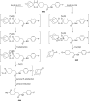
Scheme 178: The different ways of the cleavage of tetraoxane 643.

Scheme 179: The LC–MS analysis of interaction of tetraoxane 646 with iron(II)heme 647.

Scheme 180: The rearrangement of 3,6-epidioxy-1,10-bisaboladiene (EDBD, 649).

Scheme 181: Easily oxidized substrates.

Scheme 182: Biopathway of synthesis of prostaglandins.

Scheme 183: The reduction and rearrangements of isoprostanes.

Scheme 184: The partial mechanism for linoleate 658 oxidation.

Scheme 185: The transformation of lipid hydroperoxide.

Scheme 186: The acid-catalyzed cleavage of the product from free-radical oxidation of cholesterol (667).

Scheme 187: Two pathways of catechols oxidation.

Scheme 188: Criegee-like or Hock-like rearrangement of the intermediate hydroperoxide 675 in dioxygenase enzyme...

Scheme 189: Carotinoides 679 cleavage by carotenoid cleavage dioxygenases.
Multicomponent reactions: A simple and efficient route to heterocyclic phosphonates
- Mohammad Haji
Beilstein J. Org. Chem. 2016, 12, 1269–1301, doi:10.3762/bjoc.12.121
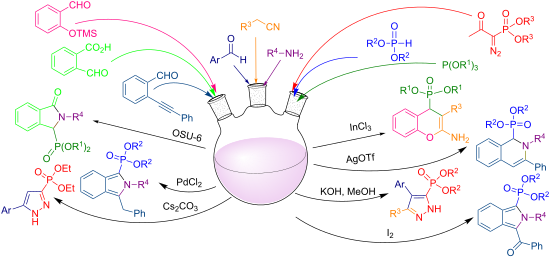
- carbonyl compounds such as β-diketones, β-keto thioesters, acetoacetamides and nitroacetone have been shown to participate in the classical Biginelli reaction [25], β-ketophosphonates 6 were found to be unreactive in similar conditions [26]. However, Yuan et al. developed a modified Biginelli condensation

Graphical Abstract

Scheme 1: The Biginelli condensation.

Scheme 2: The Biginelli reaction of β-ketophosphonates catalyzed by ytterbium triflate.

Scheme 3: Trimethylchlorosilane-mediated Biginelli reaction of diethyl (3,3,3-trifluoropropyl-2-oxo)phosphona...

Scheme 4: Biginelli reaction of dialkyl (3,3,3-trifluoropropyl-2-oxo)phosphonate with trialkyl orthoformates ...

Scheme 5: p-Toluenesulfonic acid-promoted Biginelli reaction of β-ketophosphonates, aryl aldehydes and urea.

Scheme 6: General Kabachnik–Fields reaction for the synthesis of α-aminophosphonates.

Scheme 7: Phthalocyanine–AlCl catalyzed Kabachnik–Fields reaction of N-Boc-piperidin-4-one with diethyl phosp...

Scheme 8: Kabachnik–Fields reaction of isatin with diethyl phosphite and benzylamine.

Scheme 9: Magnetic Fe3O4 nanoparticle-supported phosphotungstic acid-catalyzed Kabachnik–Fields reaction of i...

Scheme 10: The Mg(ClO4)2-catalyzed Kabachnik–Fields reaction of 1-tosylpiperidine-4-one.

Scheme 11: An asymmetric version of the Kabachnik–Fields reaction for the synthesis of α-amino-3-piperidinylph...

Scheme 12: A classical Kabachnik–Fields reaction followed by an intramolecular ring-closing reaction for the s...

Scheme 13: Synthesis of (S)-piperidin-2-phosphonic acid through an asymmetric Kabachnik–Fields reaction.

Scheme 14: A modified diastereoselective Kabachnik–Fields reaction for the synthesis of isoindolin-1-one-3-pho...

Scheme 15: A microwave-assisted Kabachnik–Fields reaction toward isoindolin-1-ones.

Scheme 16: The synthesis of 3-arylmethyleneisoindolin-1-ones through a Horner–Wadsworth–Emmons reaction of Kab...

Scheme 17: An efficient one-pot method for the synthesis of ethyl (2-alkyl- and 2-aryl-3-oxoisoindolin-1-yl)ph...

Scheme 18: FeCl3 and PdCl2 co-catalyzed three-component reaction of 2-alkynylbenzaldehydes, anilines, and diet...

Scheme 19: Three-component reaction of 6-methyl-3-formylchromone (75) with hydrazine derivatives or hydroxylam...

Scheme 20: Three-component reaction of 6-methyl-3-formylchromone (75) with thiourea, guanidinium carbonate or ...

Scheme 21: Three-component reaction of 6-methyl-3-formylchromone (75) with 1,4-bi-nucleophiles in the presence...

Scheme 22: One-pot three-component reaction of 2-alkynylbenzaldehydes, amines, and diethyl phosphonate.

Scheme 23: Lewis acid–surfactant combined catalysts for the one-pot three-component reaction of 2-alkynylbenza...

Scheme 24: Lewis acid catalyzed cyclization of different Kabachnik–Fields adducts.

Scheme 25: Three-component synthesis of N-arylisoquinolone-1-phosphonates 119.

Scheme 26: CuI-catalyzed three-component tandem reaction of 2-(2-formylphenyl)ethanones with aromatic amines a...

Scheme 27: Synthesis of 1,5-benzodiazepin-2-ylphosphonates via ytterbium chloride-catalyzed three-component re...

Scheme 28: FeCl3-catalyzed four-component reaction for the synthesis of 1,5-benzodiazepin-2-ylphosphonates.

Scheme 29: Synthesis of indole bisphosphonates through a modified Kabachnik–Fields reaction.

Scheme 30: Synthesis of heterocyclic bisphosphonates via Kabachnik–Fields reaction of triethyl orthoformate.

Scheme 31: A domino Knoevenagel/phospha-Michael process for the synthesis of 2-oxoindolin-3-ylphosphonates.

Scheme 32: Intramolecular cyclization of phospha-Michael adducts to give dihydropyridinylphosphonates.

Scheme 33: Synthesis of fused phosphonylpyrans via intramolecular cyclization of phospha-Michael adducts.

Scheme 34: InCl3-catalyzed three-component synthesis of (2-amino-3-cyano-4H-chromen-4-yl)phosphonates.

Scheme 35: Synthesis of phosphonodihydropyrans via a domino Knoevenagel/hetero-Diels–Alder process.

Scheme 36: Multicomponent synthesis of phosphonodihydrothiopyrans via a domino Knoevenagel/hetero-Diels–Alder ...

Scheme 37: One-pot four-component synthesis of 1,2-dihydroisoquinolin-1-ylphosphonates under multicatalytic co...

Scheme 38: CuI-catalyzed four-component reactions of methyleneaziridines towards alkylphosphonates.

Scheme 39: Ruthenium–porphyrin complex-catalyzed three-component synthesis of aziridinylphosphonates and its p...

Scheme 40: Copper(I)-catalyzed three-component reaction towards 1,2,3-triazolyl-5-phosphonates.

Scheme 41: Three-component reaction of acylphosphonates, isocyanides and dialkyl acetylenedicarboxylate to aff...

Scheme 42: Synthesis of (4-imino-3,4-dihydroquinazolin-2-yl)phosphonates via an isocyanide-based three-compone...

Scheme 43: Silver-catalyzed three-component synthesis of (2-imidazolin-4-yl)phosphonates.

Scheme 44: Three-component synthesis of phosphonylpyrazoles.

Scheme 45: One-pot three-component synthesis of 3-carbo-5-phosphonylpyrazoles.

Scheme 46: A one-pot two-step method for the synthesis of phosphonylpyrazoles.

Scheme 47: A one-pot method for the synthesis of (5-vinylpyrazolyl)phosphonates.

Scheme 48: Synthesis of 1H-pyrrol-2-ylphosphonates via the [3 + 2] cycloaddition of phosphonate azomethine yli...

Scheme 49: Three-component synthesis of 1H-pyrrol-2-ylphosphonates.

Scheme 50: The classical Reissert reaction.

Scheme 51: One-pot three-component synthesis of N-phosphorylated isoquinolines.

Scheme 52: One-pot three-component synthesis of 1-acyl-1,2-dihydroquinoline-2-phosphonates and 2-acyl-1,2-dihy...

Scheme 53: Three-component reaction of pyridine derivatives with ethyl propiolate and dialkyl phosphonates.

Scheme 54: Three-component reactions for the phosphorylation of benzothiazole and isoquinoline.

Scheme 55: Three-component synthesis of diphenyl [2-(aminocarbonyl)- or [2-(aminothioxomethyl)-1,2-dihydroisoq...

Scheme 56: Three-component stereoselective synthesis of 1,2-dihydroquinolin-2-ylphosphonates and 1,2-dihydrois...

Scheme 57: Diphosphorylation of diazaheterocyclic compounds via a tandem 1,4–1,2 addition of dimethyl trimethy...

Scheme 58: Multicomponent reaction of alkanedials, acetamide and acetyl chloride in the presence of PCl3 and a...

Scheme 59: An oxidative domino three-component synthesis of polyfunctionalized pyridines.

Scheme 60: A sequential one-pot three-component synthesis of polysubstituted pyrroles.

Scheme 61: Three-component decarboxylative coupling of proline with aldehydes and dialkyl phosphites for the s...

Scheme 62: Three-component domino aza-Wittig/phospha-Mannich sequence for the phosphorylation of isatin deriva...

Scheme 63: Stereoselective synthesis of phosphorylated trans-1,5-benzodiazepines via a one-pot three-component...

Scheme 64: One-pot three-component synthesis of phosphorylated 2,6-dioxohexahydropyrimidines.
Synthesis of highly functionalized 2,2'-bipyridines by cyclocondensation of β-ketoenamides – scope and limitations
- Paul Hommes and
- Hans-Ulrich Reissig
Beilstein J. Org. Chem. 2016, 12, 1170–1177, doi:10.3762/bjoc.12.112
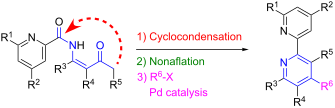
- Paul Hommes Hans-Ulrich Reissig Freie Universität Berlin, Institut für Chemie und Biochemie, Takustrasse 3, D-14195 Berlin, Germany 10.3762/bjoc.12.112 Abstract The scope of a flexible route to unsymmetrically functionalized bipyridines is described. Starting from 1,3-diketones 1a–e, the
- we reported on a new pyridine synthesis starting from symmetrically substituted 1,3-diketones 1a and 1b, respectively, that were converted into the corresponding β-ketoenamines and subsequently by N-acylation into β-ketoenamides such as 3a or 3b [1]. Their cyclocondensation followed by O-alkylation
- available in excellent yields from the 1,3-diketones 1a and 1b employing aqueous ammonia in the presence of silica gel [21]. Compound 2c was prepared from 1c in 87% yield with ammonium formate [22][23]. Interestingly, treatment of 1c with aqueous ammonia/silica gel failed to give 2c, deacetylation to 1

Graphical Abstract

Scheme 1: Synthesis of highly functionalized 2,2'-bipyridines 4a and 5b from symmetrical 1,3-diketones 1a and ...
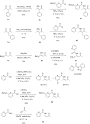
Scheme 2: Synthesis of β-ketoenamines 2c–e and of β-ketoenamides 3c–h.

Scheme 3: Synthesis of α-methoxy-β-ketoenamine 2i, its N-acylation to 3i and the reaction of β-ketoenamide 3a...

Scheme 4: Cyclizations of β-ketoenamide 3i leading to 2,2´-bipyridine derivative 4i or to the related 2-(2-py...

Scheme 5: Suzuki-couplings of 2,2'-bipyrid-4-yl nonaflates 5a and 5b to compounds 9 and 10.

Scheme 6: Palladium-catalyzed couplings of chloro-substituted 2,2'-bipyrid-4-yl nonaflate 5g leading to compo...
Supported bifunctional thioureas as recoverable and reusable catalysts for enantioselective nitro-Michael reactions
- José M. Andrés,
- Miriam Ceballos,
- Alicia Maestro,
- Isabel Sanz and
- Rafael Pedrosa
Beilstein J. Org. Chem. 2016, 12, 628–635, doi:10.3762/bjoc.12.61
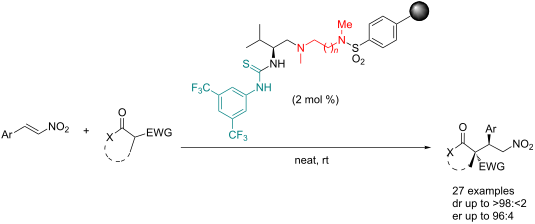
- -diketones. Reaction of nitrostyrenes with β-keto esters and β-dicarbonyl compounds. Reaction of nitrostyrenes with α-nitrocyclohexanone and ethyl α-nitropropionate. Screening of catalysts and optimization of the reaction conditions for the additions of diethyl malonate and ethyl 2-oxocyclopentanecarboxylate
- to β-nitrostyrene. Addition of malonates and β-diketones to nitrostyrenes catalyzed by IV and V. Reaction of nitrostyrenes with β-substituted cycloalkanones catalyzed by V. Reactions of nitrostyrenes with α-nitrocyclohexanone and ethyl α-nitropropionate. Supporting Information Supporting Information

Graphical Abstract

Figure 1: Parent and supported bifunctional thioureas used in this work.

Scheme 1: Reaction of nitrostyrene with diethyl malonate and 2-ethoxycarbonyl cyclopentanone.

Scheme 2: Reaction of nitrostyrenes with malonates and β-diketones.

Scheme 3: Reaction of nitrostyrenes with β-keto esters and β-dicarbonyl compounds.

Scheme 4: Reaction of nitrostyrenes with α-nitrocyclohexanone and ethyl α-nitropropionate.
C–H bond halogenation catalyzed or mediated by copper: an overview
- Wenyan Hao and
- Yunyun Liu
Beilstein J. Org. Chem. 2015, 11, 2132–2144, doi:10.3762/bjoc.11.230
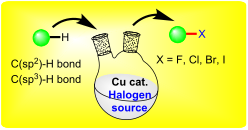
- practical application of these metal-free methods. The application of copper catalysts was found as effective solution to some of these problems. For example, Wu et al. [70] reported the efficient synthesis of α-iodoketals 76 and 77 via CuO-mediated selective mono-iodination of diketones 74 and

Graphical Abstract

Scheme 1: Copper-catalyzed C–H bond halogenation of 2-arylpyridine.

Scheme 2: ortho-Chlorination of 2-arylpridines with acyl chlorides.

Scheme 3: Copper-catalyzed chlorination of 2-arylpyridines using LiCl.

Scheme 4: Copper-catalyzed C–H halogenation of 2-arylpyridines using LiX.

Scheme 5: Copper-mediated selective C–H halogenations of 2-arylpyridine.

Scheme 6: Copper-catalyzed C–H o-halogenation using removable DG.

Scheme 7: Copper-catalyzed C–H halogenations using PIP as DG.

Scheme 8: Copper-catalyzed quinoline C–H chlorination.

Scheme 9: Copper-catalyzed arene C–H fluorination of benzamides.

Scheme 10: Copper-catalyzed arene C–H iodination of 1,3-azoles.

Scheme 11: Copper-catalyzed C–H halogenations of phenols.

Scheme 12: Proposed mechanism for the C–H halogenation of phenols.

Scheme 13: Copper-catalyzed halogenation of electron enriched arenes.

Scheme 14: Copper-catalyzed C–H bromination of arenes.

Scheme 15: CuI-mediated synthesis of iododibenzo[b,d]furans via C–H functionalization.

Scheme 16: Cu-Mn spinel oxide-catalyzed phenol and heteroarene halogenation.

Scheme 17: Copper-catalyzed halogenations of 2-amino-1,3thiazoles.

Scheme 18: Copper-mediated chlorination and bromination of indolizines.

Scheme 19: Copper-catalyzed three-component synthesis of bromoindolizines.

Scheme 20: Copper-mediated C–H halogenation of azacalix[1]arene[3]pyridines.

Scheme 21: Copper-mediated cascade synthesis of halogenated pyrrolones.

Scheme 22: Copper-mediated alkene C–H chlorination in spirothienooxindole.

Scheme 23: Copper-catalyzed remote C–H chlorination of alkyl hydroperoxides.
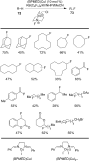
Scheme 24: Copper-catalyzed C–H fluorination of alkanes.
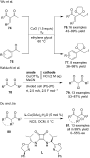
Scheme 25: Copper-catalyzed or mediated C–H halogenations of active C(sp3)-bonds.
Investigation on the reactivity of α-azidochalcones with carboxylic acids: Formation of α-amido-1,3-diketones and highly substituted 2-(trifluoromethyl)oxazoles
- Kandasamy Rajaguru,
- Arumugam Mariappan,
- Rajendran Suresh,
- Periasamy Manivannan and
- Shanmugam Muthusubramanian
Beilstein J. Org. Chem. 2015, 11, 2021–2028, doi:10.3762/bjoc.11.219
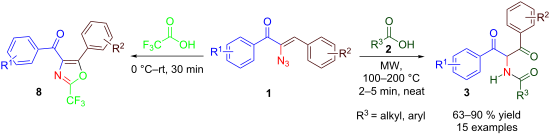
- Abstract The reaction of α-azidochalcones with carboxylic acids has been investigated resulting in the formation of α-amido-1,3-diketones under microwave irradiation via in situ formation of 2H-azirine intermediates. An interesting reaction is described wherein, with trifluoroacetic acid at lower
- temperature, it affords highly substituted 2-(trifluoromethyl)oxazoles. These flexible transformations proceed under solvent free conditions in good to excellent yields without any catalyst. Keywords: α-amido-1,3-diketones; α-azidochalcones; carboxylic acids; 2H-azirines; oxazoles; Introduction α
- various substituted benzoic acids 2d–g as well and the resultant α-amido-1,3-diketones 3k–o are obtained in moderate to good yields (Figure 3). The mechanism for the formation of α-amido-1,3-diketone 3 is given in Scheme 2. Initially, by thermolysis, α-azidochalcone undergoes denitrogenative decomposition

Graphical Abstract

Figure 1: Formation of substituted aziridine.

Figure 2: Various strategies for the formation of 2H-azirine.

Scheme 1: Attempted reaction for the synthesis of 3a.

Figure 3: Synthesis of α-amido-1,3-diketone (3a–o). Reaction conditions: α-azidochalcone 1 (1.0 equiv) and ca...

Scheme 2: Plausible mechanism.

Scheme 3: Attempted reaction with acid derivatives.

Scheme 4: Oxazole formation from 3.

Figure 4: Possible isomers for 7.

Scheme 5: Oxazole formation.

Figure 5: Synthesis of highly substituted 2-(trifluoromethyl)oxazoles (8a–e). Reaction conditions: α-azidocha...

Scheme 6: Mechanism for the formation of 8.
Design and synthesis of hybrid cyclophanes containing thiophene and indole units via Grignard reaction, Fischer indolization and ring-closing metathesis as key steps
- Sambasivarao Kotha,
- Ajay Kumar Chinnam and
- Mukesh E. Shirbhate
Beilstein J. Org. Chem. 2015, 11, 1514–1519, doi:10.3762/bjoc.11.165

- explored the alternative option to the target cyclophane 1 involving the bisindolization followed by RCM (Figure 1, Route B). To design aza-polyquinanes, we reported several bisindole derivatives starting with diketones under conditions of a low melting reaction mixture [38][39][40]. Based on this insight

Graphical Abstract

Figure 1: Retrosynthetic approach to hybrid cyclophane derivative 1.

Scheme 1: Attempted synthesis of thiophenophane derivative 2.

Scheme 2: Synthesis of hybrid cyclophane 1.

Figure 2: The molecular crystal structure of 1 with 50% probability [41].

Scheme 3: Attempted synthesis of thiophenophane derivative 2a.

Scheme 4: Synthesis of cyclophane 1a with a thiophene and an indole moiety.
An intramolecular C–N cross-coupling of β-enaminones: a simple and efficient way to precursors of some alkaloids of Galipea officinalis
- Hana Doušová,
- Radim Horák,
- Zdeňka Růžičková and
- Petr Šimůnek
Beilstein J. Org. Chem. 2015, 11, 884–892, doi:10.3762/bjoc.11.99

- the starting substrates A simple retrosynthesis of enaminones 3 leads to the corresponding β-diketones 4 accessible through Claisen condensation of 3-phenylpropionic ester 5 with the appropriate acetophenone 6 (Scheme 3). The synthesis of ester 5 was accomplished according to Scheme 4. The classic
- -Diketones 4 were obtained using tert-butoxide or tert-pentoxide mediated Claisen condensation of esters 5 with the appropriate acetophenones 6a–d (Scheme 5, step c). The substitution pattern on compounds 6 was chosen so that the final products 1 are the precursors for the synthesis of galipinine, galipeine
- -diketones 4 with ammonium surrogate (AcONH4 or NH4HCO3). The regioselectivity of the synthesis was checked by means of 2D 1H–13C HMBC (See Supporting Information File 1, page S69). The non-equivalence of NH2 protons together with the relatively high chemical shift of one resonance of the pair (δ ≈ 10 ppm

Graphical Abstract

Figure 1: Tetrahydroquinoline alkaloids of Galipea officinalis.

Scheme 1: Enaminone-based synthesis of (S)-cuspareine.

Scheme 2: The approaches to 2-aroylmethylidene-1,2,3,4-tetrahydroquinolines 1.

Scheme 3: The retrosynthetic analysis of the starting substrates for C–N cross-coupling.

Scheme 4: The synthesis of methyl 3-phenylpropionates. Conditions: (a) piperidine, PhCOOH, toluene, reflux 4 ...

Scheme 5: The synthesis of the starting β-enaminones. Conditions: (a) H2SO4, 65 °C, 46 h; (b) 1. t-BuOK/THF, ...

Figure 2: Ligands for C–N cross-coupling used in this work.

Figure 3: Deprotection of the hydroxy group in 1c to give the Galipein precursor 1e.

Figure 4: ORTEP (50% probability level) view for compound 1a. For selected parameters see Supporting Information File 1.
Bis(vinylenedithio)tetrathiafulvalene analogues of BEDT-TTF
- Erdal Ertas,
- İlknur Demirtas and
- Turan Ozturk
Beilstein J. Org. Chem. 2015, 11, 403–415, doi:10.3762/bjoc.11.46
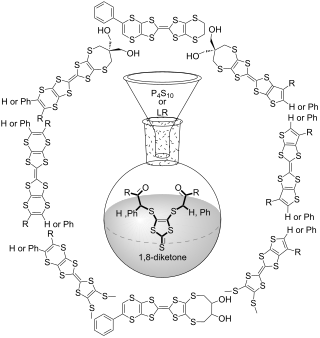
- Gebze-Kocaeli, Turkey 10.3762/bjoc.11.46 Abstract This review aims to give an overview of the current status of our research on the synthesis of π-electron donor bis(ethylenedithio)tetrathiafulvalene (BEDT-TTF, ET) analogues prepared from 1,8-diketones via a ring forming reaction. The new synthesized π
- molecules, obtained from 1,8-diketone ring closure reactions, and coupling reactions, published by our group. Review BVDT-TTF analogues from 1,8-diketones Bis(vinylenedithio)tetrathiafulvalene (BVDT-TTF) 4 (R = Ph, 4-CH3OC6H4, 4-BrC6H4, 4-CH3C6H4, 4-O2NC6H4, 2-thienyl) is a fully unsaturated analogue of
- produce 13 as a minor product through the intermediate 12 by the loss of elemental sulfur. The reaction of a series of 1,8-diketones with LR 15 or P4S10 was further explored in 2003 [53]. With both reactants, 1,4-dithiin 11 was obtained as a major and thiophene 13 as a minor product along with the side

Graphical Abstract

Figure 1: Chemical structure of the TTF analogues and TCNQ.

Figure 2: Oxidation states of TTF.

Figure 3: 1,4-Dithiin and thiophene fused TTF analogues from 1,8-diketone.

Scheme 1: Reaction mechanism of fused 1,4-dithiin and thiophene ring systems.

Scheme 2: Reaction conditions (i) LR, toluene, reflux, overnight; (ii) P4S10, toluene, reflux, 3 h.

Scheme 3: Proposed mechanism for side products.

Scheme 4: Reaction conditions (i) Hg(OAc)2, AcOH/CHCl3, rt, 1h; (ii) (EtO)3P, N2, 3 h, 110 °C.

Scheme 5: Reaction conditions (i) iPr2NEt, MEMCl, THF, rt, 12 h; (ii) LiAlH4, dry ether, rt, 24 h; (iii) tosy...

Scheme 6: Reagents and conditions (i) P4S10, toluene, reflux, dark, 3 h; (ii) P4S10, toluene, reflux, 3 h; (i...

Scheme 7: Reagents and conditions (i) Hg(OAc)2–AcOH, CHCl3, 3 h, rt; (ii) (EtO)3P, 110 °C, N2, 2 h.

Scheme 8: Charge transfer complex of 5,5',6,6'-tetraphenyl-2,2'-bi([1,3]dithiolo[4,5-b][1,4]dithiinylidene) 52...

Scheme 9: Reaction conditions (i) (EtO)3P, 110 °C, N2, 2 h.

Scheme 10: Reaction conditions (i) EtOH, reflux, overnight; (ii) diisopropylethylamine in CH2Cl2, room tempera...

Scheme 11: Reaction and conditions (i) P4S10, NaHCO3, toluene, reflux, 3 h; (ii) P4S10, p-TSA, toluene, reflux...
Azirinium ylides from α-diazoketones and 2H-azirines on the route to 2H-1,4-oxazines: three-membered ring opening vs 1,5-cyclization
- Nikolai V. Rostovskii,
- Mikhail S. Novikov,
- Alexander F. Khlebnikov,
- Galina L. Starova and
- Margarita S. Avdontseva
Beilstein J. Org. Chem. 2015, 11, 302–312, doi:10.3762/bjoc.11.35
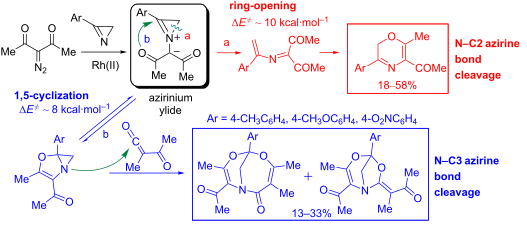
- 5-acyl-substituted 2H-1,4-oxazines. They could, in principle, be prepared from azirines and α-diazo ketones or 2-diazo-1,3-diketones via ring opening across the N–C2 bond in the intermediate azirinium ylides to form 2-azabuta-1,3-dienes and subsequent cyclization of the latter into 2H-1,4-oxazines
- the mechanism of trapping of dihydroazireno[2,1-b]oxazole intermediates by acetyl(methyl)ketene were investigated by the DFT method. Results and Discussion Rhodium(II) carbenoids generated from α-diazoketones or 2-diazo-1,3-diketones react with various nitrogen-containing compounds, such as amines [16
- generated by thermolysis of 2-diazo-1,3-diketones [12] or 5-arylfuran-2,3-diones [13]. Therefore, the presence of compounds 8f,g among the reaction products provides evidence for the formation of some amounts of acetyl(methyl)ketene (12) under the reaction conditions, which, in turn, gives us insight to the

Graphical Abstract

Scheme 1: Rh(II)-catalyzed synthesis of photochromic 2H-1,4-oxazines from 2H-azirines and α-diazo-β-ketoester...

Scheme 2: Rh(II)-catalyzed reaction of azirines 1a−g with diazo compounds 2a–c.

Figure 1: X-ray crystal structure of azadiene 3e.

Figure 2: X-ray crystal structures of compounds 6f and 7h.

Scheme 3: General scheme for the formation of compounds 4,6 and 7.

Scheme 4: Possible pathways for the formation of 6j and 7j from azirenooxazole 10j and ketene 12.

Figure 3: Energy profiles [DFT B3LYP/6-31+G(d,p), 357 K, 1,2-dichloroethane (PCM)] for the transformation of ...

Scheme 5: Rh2(Oct)4-catalyzed reaction of azirine 1g with diazo compound 2d in the presence of diazo compound ...

Scheme 6: Rh2(OAc)4-catalyzed reaction of azirine 1h with diazo compound 2c.

Figure 4: X-ray crystal structure of compound 17.

Scheme 7: Effect of the C5-substituent in the 2H-1,4-oxazine system on its photochromic activity.
The unexpected influence of aryl substituents in N-aryl-3-oxobutanamides on the behavior of their multicomponent reactions with 5-amino-3-methylisoxazole and salicylaldehyde
- Volodymyr V. Tkachenko,
- Elena A. Muravyova,
- Sergey M. Desenko,
- Oleg V. Shishkin,
- Svetlana V. Shishkina,
- Dmytro O. Sysoiev,
- Thomas J. J. Müller and
- Valentin A. Chebanov
Beilstein J. Org. Chem. 2014, 10, 3019–3030, doi:10.3762/bjoc.10.320
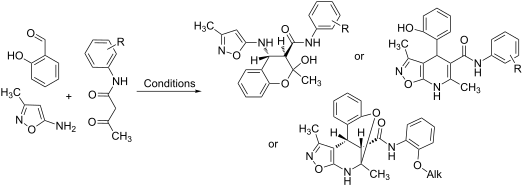
- of the compounds 4–6a through the intermediate 7 (pathway A) as for cyclic 1,3-diketones [13][25] was excluded because the latter does not react with amide 3a under any comparable conditions. Most likely the formation of chroman-3-carboxamide 4a proceeds through imine 8 (pathway B) since the reaction

Graphical Abstract

Scheme 1: Some three-component reactions involving N-aryl-3-oxobutanamides.

Scheme 2: Some Biginelli-type three-component condensations with salicylaldehyde.

Scheme 3: Three-component heterocyclization of 5-amino-3-methylisoxazole (1), salicylaldehyde (2) and N-(2-me...

Figure 1: The possible structure of an intermediate complex in reactions forming the heterocycles 6.

Scheme 4: Possible pathways for the three-component reaction of 5-amino-3-methylisoxazole (1), salicylaldehyd...

Figure 2: Alternative structures 5a and 5'a for dihydroisoxazolopyridine 5a and selected NOESY correlations.

Figure 3: Alternative structures 6a, 6'a and 6''a for compound 6a.

Figure 4: Selected data from NOESY experiments and relative stereochemistry of stereogenic centers at positio...
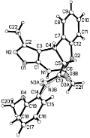
Figure 5: Molecular structure of compound 6a according to X-ray diffraction data.
(CF3CO)2O/CF3SO3H-mediated synthesis of 1,3-diketones from carboxylic acids and aromatic ketones
- JungKeun Kim,
- Elvira Shokova,
- Victor Tafeenko and
- Vladimir Kovalev
Beilstein J. Org. Chem. 2014, 10, 2270–2278, doi:10.3762/bjoc.10.236
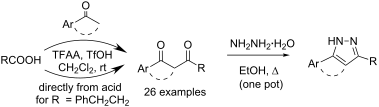
- application of the proposed protocol allowed for the synthesis of selected polysubstituted pyrazoles in a one-pot procedure directly from acids and ketones. Keywords: Claisen condensation; 1,3-diketones; heterocycles; triflic acid; trifluoroacetic acid anhydride; Introduction 1,3-Diketones represent one of
- synthesis of β-diketones from acids and ketones with an immediate activation of both carbonyl and methylene components in the course of the reaction. Herein, we would like to describe a direct and operationally simple TFAA/TfOH-mediated synthesis of 1,3-diketones from unmodified carboxylic acids and ketones
- (indanones, tetralone, acetophenones, 2-acetylthiophene and methyl benzyl ketone) with alkanoic acids RCOOH 1d–h (where R = 1-adamantylmethyl, neopentyl, isopropyl, methyl, phenyl) gave the corresponding β-diketones 3c–t in 37–86% yields (Table 2). In most cases reactions were carried out at the molar ratios

Graphical Abstract

Scheme 1: One-pot synthesis of diketone 3h from acids 1d and 1c.

Scheme 2: Scope and limitations.

Figure 1: The molecular structure of 4a.
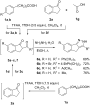
Scheme 3: One-pot synthesis of pyrazoles 6.
Derivatives of the triaminoguanidinium ion, 3. Multiple N-functionalization of the triaminoguanidinium ion with isocyanates and isothiocyanates
- Jan Szabo,
- Kerstin Karger,
- Nicolas Bucher and
- Gerhard Maas
Beilstein J. Org. Chem. 2014, 10, 2255–2262, doi:10.3762/bjoc.10.234
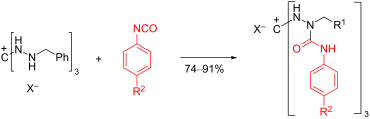
- 1,3-diketones follow condensation/cyclization pathways resulting in unsymmetrical N-heterocyclic products [14][15]. Azidation of TAG-Cl with two equivalents of sodium nitrite in water afforded the highly shock- and friction-sensitive (5-azido-1H-tetrazol-1-yl)carbonimidoyl diazide rather than the

Graphical Abstract

Scheme 1: Conditions: a) benzaldehyde, ethanol/water, reflux, 1 h, 96% yield; b) H2, Pd/C (10%), MeOH, rt, 48...

Scheme 2: Carbamoylation of 1,2,3-tris(benzylamino)guanidinium salts 3 and 5-OTs.

Figure 1: Solid-state structure of 7a·3CH3CN. Left: Molecular structure with numbering of atoms. Right: N–H··...

Scheme 3: Deprotonation of 7a to yield the neutral guanidine derivative 8.

Figure 2: Solid-state structure of 8. Thermal displacement ellipsoids are drawn at the 20% probability level....

Scheme 4: Sulfonylcarbamoylation of salt 3.

Figure 3: Hydrogen-bonded one-dimensional network of guanidine 8 in the solid state. The intramolecular N9···...

Scheme 5: Reaction of 1,2,3-trisbenzylaminoguanidinium chloride (3) with aryl isothiocyanates.

Figure 4: Solid-state structure of 10b. Thermal displacement ellipsoids are drawn at the 30% probability leve...

Scheme 6: Proposed mechanism of the formation of 10 and 11.
Chiral phosphines in nucleophilic organocatalysis
- Yumei Xiao,
- Zhanhu Sun,
- Hongchao Guo and
- Ohyun Kwon
Beilstein J. Org. Chem. 2014, 10, 2089–2121, doi:10.3762/bjoc.10.218
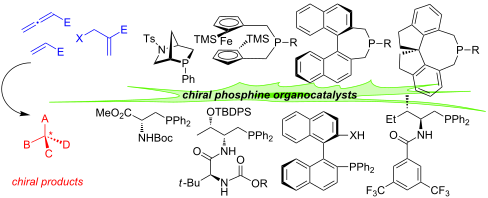
- excellent ee (up to 96%). In subsequent transformations, the β-lactone products underwent various ring opening reactions to provide very useful derivatives, such as 1,3-diketones and enol esters, with good diastereoselectivity. 2.12 Annulations through domino aza-MBH/Michael reactions Because

Graphical Abstract

Figure 1: Cyclic chiral phosphines based on bridged-ring skeletons.

Figure 2: Cyclic chiral phosphines based on binaphthyl skeletons.

Figure 3: Cyclic chiral phosphines based on ferrocene skeletons.

Figure 4: Cyclic chiral phosphines based on spirocyclic skeletons.

Figure 5: Cyclic chiral phosphines based on phospholane ring skeletons.

Figure 6: Acyclic chiral phosphines.

Figure 7: Multifunctional chiral phosphines based on binaphthyl skeletons.

Figure 8: Multifunctional chiral phosphines based on amino acid skeletons.

Scheme 1: Asymmetric [3 + 2] annulations of allenoates with electron-deficient olefins, catalyzed by the chir...

Scheme 2: Asymmetric [3 + 2] annulations of allenoate and enones, catalyzed by the chiral binaphthyl-based ph...

Scheme 3: Asymmetric [3 + 2] annulations of N-substituted olefins and allenoates, catalyzed by the chiral bin...

Scheme 4: Asymmetric [3 + 2] annulations of 2-aryl-1,1-dicyanoethylenes with ethyl allenoate, catalyzed by th...

Scheme 5: Asymmetric [3 + 2] annulations of 3-alkylideneindolin-2-ones with ethyl allenoate, catalyzed by the...

Scheme 6: Asymmetric [3 + 2] annulations of 2,6-diarylidenecyclohexanones with allenoates, catalyzed by the c...

Scheme 7: Asymmetric [3 + 2] annulations of allenoate with alkylidene azlactones, catalyzed by the chiral bin...

Scheme 8: Asymmetric [3 + 2] annulations of C60 with allenoates, catalyzed by the chiral phosphine B6.

Scheme 9: Asymmetric [3 + 2] annulations of α,β-unsaturated esters and ketones with an allenoate, catalyzed b...

Scheme 10: Asymmetric [3 + 2] annulations of exocyclic enones with allenoates, catalyzed by the ferrocene-modi...

Scheme 11: Asymmetric [3 + 2] annulations of enones with an allenylphosphonate, catalyzed by the ferrocene-mod...

Scheme 12: Asymmetric [3 + 2] annulations of 3-alkylidene-oxindoles with ethyl allenoate, catalyzed by the fer...

Scheme 13: Asymmetric [3 + 2] annulations of dibenzylideneacetones with ethyl allenoate, catalyzed by the ferr...

Scheme 14: Asymmetric [3 + 2] annulations of trisubstituted alkenes with ethyl allenoate, catalyzed by the fer...

Scheme 15: Asymmetric [3 + 2] annulations of 2,6-diarylidenecyclohexanones with allenoates, catalyzed by the f...

Scheme 16: Asymmetric [3 + 2] annulations of α,β-unsaturated ketones with ethyl allenoates, catalyzed by the f...

Scheme 17: Asymmetric [3 + 2] annulations of α,β-unsaturated esters with allenoates, catalyzed by the ferrocen...

Scheme 18: Asymmetric [3 + 2] annulations of alkylidene azlactones with allenoates, catalyzed by the chiral sp...

Scheme 19: Asymmetric [3 + 2] annulations of α-trimethylsilyl allenones and electron-deficient olefins, cataly...

Scheme 20: Asymmetric [3 + 2] annulations of α,β-unsaturated ketones with an allenone, catalyzed by the chiral...

Scheme 21: Asymmetric [3 + 2] annulations of cyclic enones with allenoates, catalyzed by the chiral α-amino ac...

Scheme 22: Asymmetric [3 + 2] annulations of arylidenemalononitriles and analogues with an allenoate, catalyze...

Scheme 23: Asymmetric [3 + 2] annulations of α,β-unsaturated esters with an allenoate, catalyzed by the chiral...

Scheme 24: Asymmetric [3 + 2] annulations of 3,5-dimethyl-1H-pyrazole-derived acrylamides with an allenoate, c...

Scheme 25: Asymmetric [3 + 2] annulations of maleimides with allenoates, catalyzed by the chiral phosphine H10....

Scheme 26: Asymmetric [3 + 2] annulations of α-substituted acrylates with allenoate, catalyzed by the chiral p...

Scheme 27: Asymmetric [3 + 2] annulation of an N-tosylimine with an allenoate, catalyzed by the chiral phosphi...

Scheme 28: Asymmetric [3 + 2] annulations of N-tosylimines with an allenoate, catalyzed by the chiral phosphin...

Scheme 29: Asymmetric [3 + 2] annulations of N-tosylimines with an allenoate, catalyzed by the chiral phosphin...

Scheme 30: Asymmetric [3 + 2] annulations of N-diphenylphosphinoyl aromatic imines with butynoates, catalyzed ...

Scheme 31: Asymmetric [3 + 2] annulations of N-tosylimines with allenylphosphonates, catalyzed by the chiral p...

Scheme 32: Asymmetric [3 + 2] annulation of an N-tosylimine with an allenoate, catalyzed by the chiral phosphi...

Scheme 33: Asymmetric [3 + 2] annulations of N-diphenylphosphinoyl aromatic imines with allenoates (top), cata...

Scheme 34: Asymmetric [3 + 2] annulation of N-diphenylphosphinoylimines with allenoates, catalyzed by the chir...

Scheme 35: Asymmetric [3 + 2] annulation of an azomethine imine with an allenoate, catalyzed by the chiral pho...

Scheme 36: Asymmetric [3 + 2] annulations between α,β-unsaturated esters/ketones and 3-butynoates, catalyzed b...

Scheme 37: Asymmetric intramolecular [3 + 2] annulations of electron-deficient alkenes and MBH carbonates, cat...

Scheme 38: Asymmetric [3 + 2] annulations of methyleneindolinone and methylenebenzofuranone derivatives with M...

Scheme 39: Asymmetric [3 + 2] annulations of activated isatin-based alkenes with MBH carbonates, catalyzed by ...

Scheme 40: Asymmetric [3 + 2] annulations of maleimides with MBH carbonates, catalyzed by the chiral phosphine ...

Scheme 41: A series of [3 + 2] annulations of various activated alkenes with MBH carbonates, catalyzed by the ...

Scheme 42: Asymmetric [3 + 2] annulations of an alkyne with isatins, catalyzed by the chiral phosphine F1.

Scheme 43: Asymmetric [4 + 2] annulations catalyzed by the chiral phosphine B1.

Scheme 44: Asymmetric [4 + 2] annulations catalyzed by the chiral phosphine H5.

Scheme 45: Asymmetric [4 + 2] annulations catalyzed by the chiral phosphines H13 and H12.

Scheme 46: Asymmetric [4 + 2] annulations catalyzed by the chiral phosphine H6.

Scheme 47: Kerrigan’s [2 + 2] annulations of ketenes with imines, catalyzed by the chiral phosphine B7.

Scheme 48: Asymmetric [4 + 1] annulations, catalyzed by the chiral phosphine G6.

Scheme 49: Asymmetric homodimerization of ketenes, catalyzed by the chiral phosphine F5 and F6.

Scheme 50: Aza-MBH/Michael reactions, catalyzed by the chiral phosphine G1.

Scheme 51: Tandem RC/Michael additions, catalyzed by the chiral phosphine H14.

Scheme 52: Intramolecular tandem RC/Michael addition, catalyzed by the chiral phosphine H15.

Scheme 53: Double-Michael addition, catalyzed by the chiral aminophosphine G9.

Scheme 54: Tandem Michael addition/Wittig olefinations, mediated by the chiral phosphine BIPHEP.

Scheme 55: Asymmetric Michael additions, catalyzed by the chiral phosphines H7, H8, and H9.

Scheme 56: Asymmetric γ-umpolung additions, catalyzed by the chiral phosphine A1.

Scheme 57: Asymmetric γ-umpolung additions, catalyzed by the chiral phosphines E2 and E3.

Scheme 58: Intramolecular γ-additions of hydroxy-2-alkynoates, catalyzed by the chiral phosphine D2.

Scheme 59: Intra-/intermolecular γ-additions, catalyzed by the chiral phosphine D2.

Scheme 60: Intermolecular γ-additions, catalyzed by the chiral phosphines B5 and B3.

Scheme 61: Intermolecular γ-additions, catalyzed by the chiral phosphines E6 and B4.

Scheme 62: Asymmetric allylic substitution of MBH acetates, catalyzed by the chiral phosphine G2.

Scheme 63: Allylic substitutions between MBH acetates or carbonates and an array of nucleophiles, catalyzed by...

Scheme 64: Asymmetric acylation of diols, catalyzed by the chiral phosphines E4 and E5.

Scheme 65: Kinetic resolution of secondary alcohols, catalyzed by the chiral phosphine E8 and E9.
Five-membered ring annelation in [2.2]paracyclophanes by aldol condensation
- Henning Hopf,
- Swaminathan Vijay Narayanan and
- Peter G. Jones
Beilstein J. Org. Chem. 2014, 10, 2021–2026, doi:10.3762/bjoc.10.210
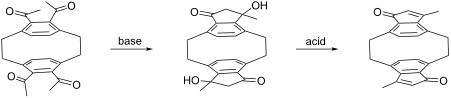
- , and also furnishes three dehydration products, the anti-configurated diketones 21–23, produced in a 1:3:1 ratio. Again the fully or partially conjugated isomers are deeply colored (intense yellow) and display absorption maxima at 389 and 358 nm, respectively (Scheme 6). For 21 yellow single crystals

Graphical Abstract

Scheme 1: [2.2]Paracyclophane derivatives with annelated alicyclic rings.

Scheme 2: The formation of the tetraketone 9 by a Diels–Alder addition.

Scheme 3: The possible structures of the aldols formed from 9.

Figure 1: Structure of 12·CDCl3 in the crystal. Ellipsoids represent 50% probability levels. Selected bond le...

Scheme 4: The mechanism of the aldol cyclization.

Scheme 5: Dehydration of the aldol 12.

Scheme 6: Dehydration of the aldol 15.

Figure 2: Structure of compound 21 in the crystal. Ellipsoids represent 50% probability levels. Selected bond...
A tandem Mannich addition–palladium catalyzed ring-closing route toward 4-substituted-3(2H)-furanones
- Jubi John,
- Eliza Târcoveanu,
- Peter G. Jones and
- Henning Hopf
Beilstein J. Org. Chem. 2014, 10, 1462–1470, doi:10.3762/bjoc.10.150
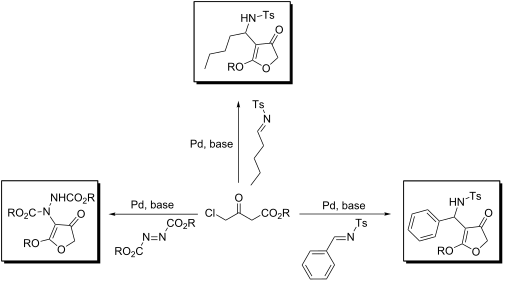
- [19][20][21][22][23][24][25][26]. Synthetic routes for the preparation of these compounds involve transformations of substituted α-hydroxy-1,3-diketones [15][17], substituted furans [27][28][29], cyclization of allenic hydroxyketones [30], transition metal-catalyzed strategies (Au [31][32][33], Pt [34

Graphical Abstract

Figure 1: Bioactive molecules I [19], II [26], III & IV [21,22] with 3(2H)-furanone moiety.

Scheme 1: Pd-catalyzed synthesis of 3(2H)-furanones from activated alkenes [40].

Scheme 2: Pd-catalyzed synthesis of 3(2H)-furanone from tosylimine 1a.

Figure 2: Generalisation with aromatic and aliphatic imines (reaction conditions: 1 (1.0 equiv), 2 (1.1 equiv...
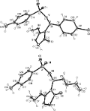
Figure 3: Thermal ellipsoid diagrams (50% probability levels) of 4-substituted-3(2H)-furanones 7 (above) and ...

Scheme 3: Mechanism of formation of the 3(2H)-furanone derivative from an imine.

Scheme 4: Pd-catalyzed synthesis of 3(2H)-furanone from diazoester 19a.

Figure 4: Generalisation with diazo esters (reaction conditions: 19 (1.0 equiv), 2 (1.1 equiv), Pd(PPh3)4 (5 ...

Scheme 5: Synthesis of aza-prostaglandin analogue.
Visible-light photoredox catalysis enabled bromination of phenols and alkenes
- Yating Zhao,
- Zhe Li,
- Chao Yang,
- Run Lin and
- Wujiong Xia
Beilstein J. Org. Chem. 2014, 10, 622–627, doi:10.3762/bjoc.10.53
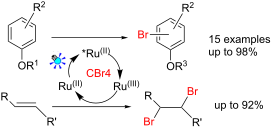
- the reaction, and the results are summarized in Scheme 3. The 1,2-dibromo products were obtained in moderate to high yields. With the success of the bromination of phenols and alkenes, we further focused on the complementary bromination of diketones and cyclization reactions. The treatment of
- (monitored by TLC). After the reaction was completed, the solvent was concentrated in vacuo. The residue was purified by flash column chromatography to give the final product. Bromination of diketones To a 10 mL round bottom flask equipped with a magnetic stir bar were added 5 (0.4 mmol), CBr4 (133 mg, 0.4
- situ generation of bromine. Synthesis of dibromophenol product 2b''. Scope of the photocatalytic bromination of alkenes. Bromination of diketones and cyclization reactions. Survey of the photocatalytic bromination reaction conditions. Scope of the photocatalytic bromination of phenols. Supporting

Graphical Abstract

Scheme 1: Strategy for in situ generation of bromine.

Scheme 2: Synthesis of dibromophenol product 2b''.

Scheme 3: Scope of the photocatalytic bromination of alkenes.

Scheme 4: Bromination of diketones and cyclization reactions.
Silver and gold-catalyzed multicomponent reactions
- Giorgio Abbiati and
- Elisabetta Rossi
Beilstein J. Org. Chem. 2014, 10, 481–513, doi:10.3762/bjoc.10.46
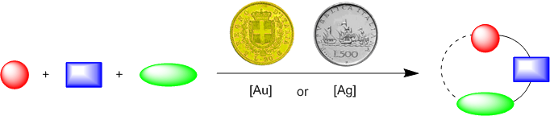
- several substituents and enolates 33 can be generated from methyl- or ethyl vinyl ketone, the corresponding α,β-unsaturated esters being unreactive. Enamines 34 arise from cyclic or linear C3–C5 ketones, acetophenones and β-diketones. It is noteworthy, that the reactions are highly regiospecific for

Graphical Abstract

Scheme 1: General reaction mechanism for Ag(I)-catalyzed A3-coupling reactions.

Scheme 2: A3-coupling reaction catalyzed by polystyrene-supported NHC–silver halides.

Figure 1: Various NHC–Ag(I) complexes used as catalysts for A3-coupling.

Scheme 3: Proposed reaction mechanism for NHC–AgCl catalyzed A3-coupling reactions.

Scheme 4: Liu’s synthesis of pyrrole-2-carboxaldehydes 4.

Scheme 5: Proposed reaction mechanism for Liu’s synthesis of pyrrole-2-carboxaldehydes 4.

Scheme 6: Gold-catalyzed synthesis of propargylamines 1.

Scheme 7: A3-coupling catalyzed by phosphinamidic Au(III) metallacycle 6.

Scheme 8: Gold-catalyzed KA2-coupling.

Scheme 9: A3-coupling applied to aldehyde-containing oligosaccharides 8.

Scheme 10: A3-MCR for the preparation of propargylamine-substituted indoles 9.

Scheme 11: A3-coupling interceded synthesis of furans 12.

Scheme 12: A3/KA2-coupling mediated synthesis of functionalized dihydropyrazoles 13 and polycyclic dihydropyra...

Scheme 13: Au(I)-catalyzed entry to cyclic carbamimidates 17 via an A3-coupling-type approach.

Scheme 14: Proposed reaction mechanism for the Au(I)-catalyzed synthesis of cyclic carbamimidates 17.

Figure 2: Chiral trans-1-diphenylphosphino-2-aminocyclohexane–Au(I) complex 20.

Scheme 15: A3-coupling-type synthesis of oxazoles 21 catalyzed by Au(III)–salen complex.

Scheme 16: Proposed reaction mechanism for the synthesis of oxazoles 21.

Scheme 17: Synthesis of propargyl ethyl ethers 24 by an A3-coupling-type reaction.

Scheme 18: General mechanism of Ag(I)-catalyzed MCRs of 2-alkynylbenzaldehydes, amines and nucleophiles.

Scheme 19: General synthetic pathway to 1,3-disubstituted-1,2-dihydroisoquinolines.

Scheme 20: Synthesis of 1,3-disubstituted-1,2-dihydroisoquinolines 29.

Scheme 21: Synthesis of 1,3-disubstituted-1,2-dihydroisoquinolines 35 and 36.

Scheme 22: Rh(II)/Ag(I) co-catalyzed synthesis of 1,3-disubstituted-1,2-dihydroisoquinolines 40.

Scheme 23: General synthetic pathway to 2-amino-1,2-dihydroquinolines.

Scheme 24: Synthesis of 2-amino-1,2-dihydroquinolines 47.

Scheme 25: Synthesis of tricyclic H-pyrazolo[5,1-a]isoquinoline 48.

Scheme 26: Synthesis of tricyclic H-pyrazolo[5,1-a]isoquinolines 48.

Scheme 27: Cu(II)/Ag(I) catalyzed synthesis of H-pyrazolo[5,1-a]isoquinolines 48.

Scheme 28: Synthesis of 2-aminopyrazolo[5,1-a]isoquinolines 53.

Scheme 29: Synthesis of 1-(isoquinolin-1-yl)guanidines 55.

Scheme 30: Ag(I)/Cu(I) catalyzed synthesis of 2-amino-H-pyrazolo[5,1-a]isoquinolines 58.

Scheme 31: Ag(I)/Ni(II) co-catalyzed synthesis of 3,4-dihydro-1H-pyridazino[6,1-a]isoquinoline-1,1-dicarboxyla...

Scheme 32: Ag(I) promoted activation of the α-carbon atom of the isocyanide group.

Scheme 33: Synthesis of dihydroimidazoles 65.

Scheme 34: Synthesis of oxazoles 68.

Scheme 35: Stereoselective synthesis of chiral butenolides 71.

Scheme 36: Proposed reaction mechanism for the synthesis of butenolides 71.

Scheme 37: Stereoselective three-component approach to pirrolidines 77 by means of a chiral auxiliary.

Scheme 38: Stereoselective three-component approach to pyrrolidines 81 and 82 by means of a chiral catalyst.

Scheme 39: Synthesis of substituted five-membered carbocyles 86.

Scheme 40: Synthesis of regioisomeric arylnaphthalene lactones.

Scheme 41: Enantioselective synthesis of spiroacetals 96 by Fañanás and Rodríguez [105].

Scheme 42: Enantioselective synthesis of spiroacetals 101 by Gong [106].

Scheme 43: Synthesis of polyfunctionalized fused bicyclic ketals 103 and bridged tricyclic ketals 104.

Scheme 44: Proposed reaction mechanism for the synthesis of ketals 103 and 104.

Scheme 45: Synthesis of β-alkoxyketones 108.

Scheme 46: Synthesis of N-methyl-1,4-dihydropyridines 112.

Scheme 47: Synthesis of tetrahydrocarbazoles 115–117.

Scheme 48: Plausible reaction mechanism for the synthesis of tetrahydrocarbazoles 115–117.

Scheme 49: Carboamination, carboalkoxylation and carbolactonization of terminal alkenes.

Scheme 50: Oxyarylation of alkenes with arylboronic acids and Selectfluor as reoxidant.

Scheme 51: Proposed reaction mechanism for oxyarylation of alkenes.

Scheme 52: Oxyarylation of alkenes with arylsilanes and Selectfluor as reoxidant.

Scheme 53: Oxyarylation of alkenes with arylsilanes and IBA as reoxidant.
Secondary amine-initiated three-component synthesis of 3,4-dihydropyrimidinones and thiones involving alkynes, aldehydes and thiourea/urea
- Jie-Ping Wan,
- Yunfang Lin,
- Kaikai Hu and
- Yunyun Liu
Beilstein J. Org. Chem. 2014, 10, 287–292, doi:10.3762/bjoc.10.25
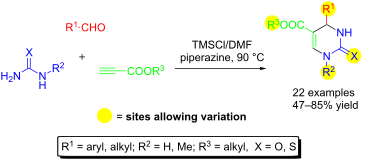
- ) [14] has been dominantly employed for DHPMs synthesis in both racemic [15][16][17][18] and asymmetric versions [19][20][21][22][23]. Despite of many recognized advantages of the Biginelli reaction, the product diversity suffered from limitations because β-ketoesters or 1,3-diketones are intrinsically

Graphical Abstract

Figure 1: Some DHPMs-based lead compounds.

Scheme 1: Regioselective 1,3-thiazines and DHPMs via aldehydes, ureas/thioureas and alkynes.

Scheme 2: Synthesis of enamino ester intermediate and its transformation to DHPM.

Scheme 3: Proposed reaction mechanism.



