


Search results
Search for "enantiomer" in Full Text gives 290 result(s) in Beilstein Journal of Organic Chemistry. Showing first 200.
Base-free enantioselective SN2 alkylation of 2-oxindoles via bifunctional phase-transfer catalysis
Beilstein J. Org. Chem. 2021, 17, 2287–2294, doi:10.3762/bjoc.17.146
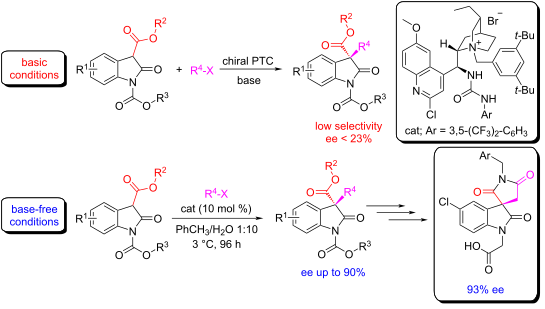
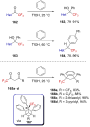
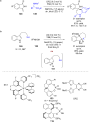
- of biological interest, as evidenced by the facile preparation of the (S)-enantiomer of a potent CRTH2 receptor antagonist. The importance of the 3,3-spirooxindole core and its access through enantioselective enolate alkylation. Substrate scope. aIsolated yield. bDetermined by CSP-HPLC. cValue in

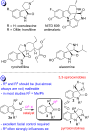


Halides as versatile anions in asymmetric anion-binding organocatalysis
Beilstein J. Org. Chem. 2021, 17, 2270–2286, doi:10.3762/bjoc.17.145
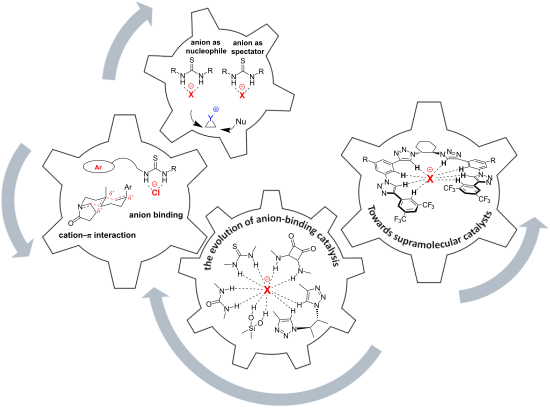
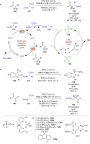
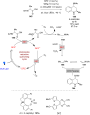
- the seleniranium ring. Through favorable cation–π interactions with the catalyst, the (S,S)-intermediate reacts faster than its opposing enantiomer, allowing for excellent yields up to 95% and high enantioselectivities up to 91% ee. In contrast to the previous example, in which the chloride anion was
- between the catalyst and the substrate, which exclusively stabilize the transition state that forms the major enantiomer. Furthermore, Gouverneur and co-workers established an enantioselective nucleophilic fluorination protocol using a chiral bis-urea catalyst 41 and CsF as an inorganic fluoride source

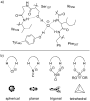


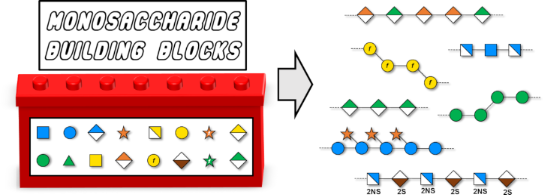
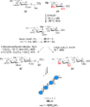
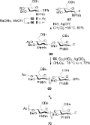
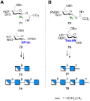
Progress and challenges in the synthesis of sequence controlled polysaccharides
Beilstein J. Org. Chem. 2021, 17, 1981–2025, doi:10.3762/bjoc.17.129










Total synthesis of ent-pavettamine
Beilstein J. Org. Chem. 2021, 17, 1440–1446, doi:10.3762/bjoc.17.99
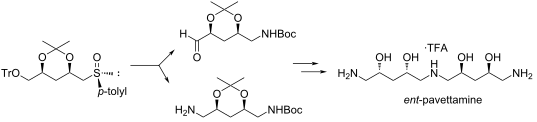
- first total synthesis of the enantiomer of pavettamine, ent-pavettamine. The symmetrical structure of the molecule allows for the synthesis of a common C5 fragment that can be divergently transformed into two synthons for later convergent coupling to furnish the target carbon framework. Based on the
- developing a route for the synthesis of enantiomer 2 by modification of the established protocol used for the synthesis of 1. The plan was that the alternative strategy would lead to an improvement in the overall yield whilst eliminating some of the troublesome steps. Results and Discussion The synthetic
- , when compared to our original pavettamine synthesis [1]. This opposite functionalization ensured that the enantiomer would result from the synthesis. For purposes of comparison between the original route and the route described here, our efforts commenced with the synthesis of the common C5 unit 4


N-tert-Butanesulfinyl imines in the asymmetric synthesis of nitrogen-containing heterocycles
Beilstein J. Org. Chem. 2021, 17, 1096–1140, doi:10.3762/bjoc.17.86

- -butanesulfinyl ketimine condensation (Scheme 2) [21]. Mechanism of addition of nucleophiles to N-sulfinyl imines The p-toluenesulfinamide 5 was first described by Davis and co-workers in a racemic form [22], and subsequently, the compound was prepared and isolated as a single enantiomer [23][24], becoming an
- Grignard reagents to chiral aldimine (RS)-74, and an intramolecular oxidative cyclization of aminoalcohols derivatives 76, are key steps of this approach. Both diastereoisomers of aldimines 74 (RS and SS) were prepared from ᴅ-malic acid and the corresponding enantiomer of tert-butanesulfinamide
- influence on it the configuration of the sulfur atom of the sulfinyl unit. This methodology was applied to the asymmetric synthesis of (−)-CP-99,994 (128), the enantiomer of a promising clinical agent which displays a variety of biological activities, including neurogenic inflammation, pain transmission


Kinetics of enzyme-catalysed desymmetrisation of prochiral substrates: product enantiomeric excess is not always constant
Beilstein J. Org. Chem. 2021, 17, 873–884, doi:10.3762/bjoc.17.73
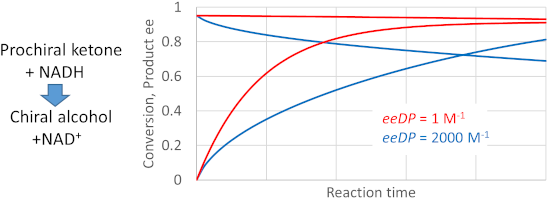
- the equilibrium constant where the enzymatic reaction was not completely irreversible [2]. A limitation of the enzymatic resolution is that the maximum yield of the desired enantiomer is the 50% contained in the starting racemate. This is one reason for the current greater interest in enzymatic
- desymmetrisation reactions, in which a prochiral substrate is used [3][4][5][6][7]. The reaction generates a new chiral centre, and the enzyme shows enantiospecifity in making predominantly one enantiomer as the product. In this case the yields of the favoured enantiomer can approach 100%. Some popular reactions
- favoured product are completely absent. In most of the applications the overall reaction is significantly reversible, with an equilibrium constant that is not enormously larger than 1. And in many cases there is a noticeable formation of the less favoured enantiomer, with product ee values of 0.98 or less


Synthetic reactions driven by electron-donor–acceptor (EDA) complexes
Beilstein J. Org. Chem. 2021, 17, 771–799, doi:10.3762/bjoc.17.67

- enantiomer to diastereomer. A plausible mechanism is shown in Scheme 19. In the presence of acid, EDA complex 52 is formed by ketene 48 and diamine 51. Then, the ground state 52 transforms into excited state 53 or into unproductive charge-transfer excited state 54 that can restore ground state 52 by BET


Menthyl esterification allows chiral resolution for the synthesis of artificial glutamate analogs
Beilstein J. Org. Chem. 2021, 17, 540–550, doi:10.3762/bjoc.17.48
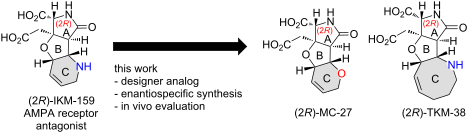
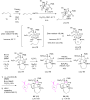
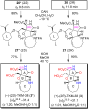
- Figure 1) [3][4], we found that 1) the (2R)-enantiomer is responsible for the neuroactivity and that 2) the activity is controlled by the structure of the ring C; the seven-membered azacyclic analog (2R)-TKM-107 (2) is moderately hypoactive, that is, it attenuates the voluntary movement of mice upon
- both enantiomers of MC-27, 4 and 4*, separately (see Figure 1 for the (2R)-enantiomer) and found that, as expected, the (2R)-enantiomer 4 is responsible for the neuroactivity (see above). Herein, we also report the enantiospecific synthesis and evaluation of the novel eight-membered azacyclic analog
- and Figure 2, were unambiguously determined later from crystallographic and spectroscopic studies of the 2R-derivative 9 (see below). Scheme 3 shows the synthesis of the (2R)-enantiomer of MC-27, 4. The deprotection of the PMB group of 9 (tR 11.5 min in Figure 2) by CAN proceeded smoothly at rt to








The synthesis of chiral β-naphthyl-β-sulfanyl ketones via enantioselective sulfa-Michael reaction in the presence of a bifunctional cinchona/sulfonamide organocatalyst
Beilstein J. Org. Chem. 2021, 17, 494–503, doi:10.3762/bjoc.17.43
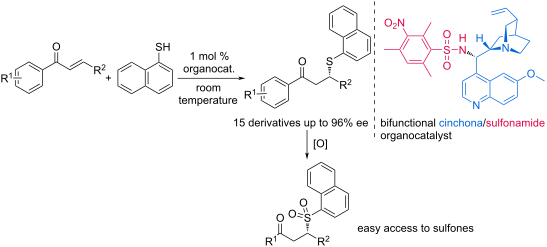
- the product 12a with a final ee of 62% (Table 2, entry 18). This unexpected phenomenon could be linked to an enthalpic factor that favors the formation of the major enantiomer at higher temperature, or due to a change in the reaction mechanism when the temperature was altered. The most enantioenriched


CF3-substituted carbocations: underexploited intermediates with great potential in modern synthetic chemistry
Beilstein J. Org. Chem. 2021, 17, 343–378, doi:10.3762/bjoc.17.32
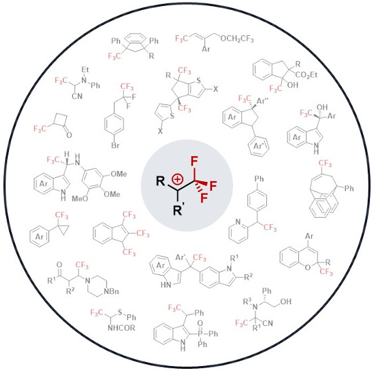
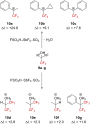
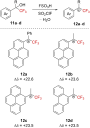
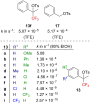
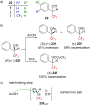
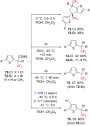
- occurred with 41% inversion (and 59% racemization, i.e., product 23f was obtained with an enantiomeric ratio of ca. 70:30 in favor of the (S)-enantiomer), while complete racemization was observed in more ionizing TFA or HFIP as the solvent (Figure 5b) [48]. These observations are in agreement with a

















Regioselective chemoenzymatic syntheses of ferulate conjugates as chromogenic substrates for feruloyl esterases
Beilstein J. Org. Chem. 2021, 17, 325–333, doi:10.3762/bjoc.17.30
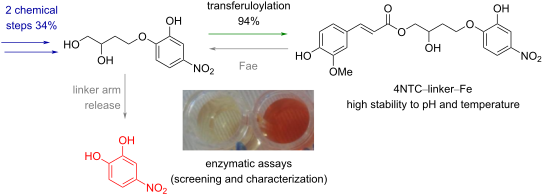
- solid. [α]D20 0 (c 2.0, CH3OH). The NMR data (CD3OD) of the racemate 11 were consistent with those previously reported for the pure (S)-enantiomer [37] ([α]D20 −52 (c 2.0, CH3OH)). (±)-4-O-(2-Hydroxy-4-nitrophenyl)-1-O-trans-feruloyl-1,2,4-butanetriol (12). The application of the general procedure for


Progress in the total synthesis of inthomycins
Beilstein J. Org. Chem. 2021, 17, 58–82, doi:10.3762/bjoc.17.7
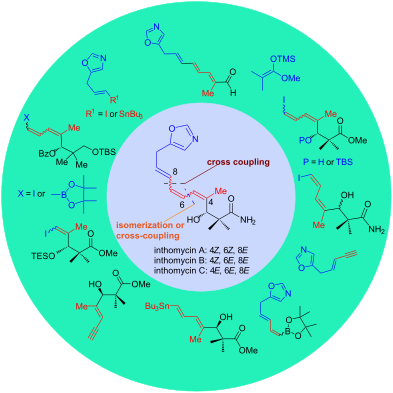
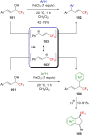
- asymmetric aldol reaction in the presence of oxazaborolidinone derivative 68 and silyl ketene acetal 53 to produce the required α-hydroxy ester (+)-11 in 50% yield and 76% ee ((R)-stereochemistry of the major enantiomer). A competitive reduction of 71 was also observed to produce alcohol 72 in 43% yield









Circularly polarized luminescent systems fabricated by Tröger's base derivatives through two different strategies
Beilstein J. Org. Chem. 2021, 17, 52–57, doi:10.3762/bjoc.17.6
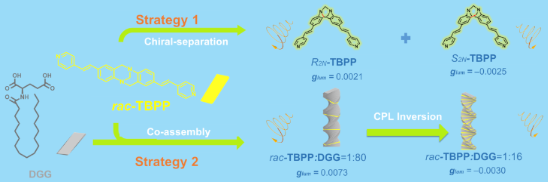
- DGG. In the CPL-active co-gels, noncovalent weak interactions might be formed between achiral fluorophores and a chiral gelator. So, the CPL emission of co-gels could be adjusted easily by external stimuli. The ᴅ-glutamic acid gelator DGG and its enantiomer LGG possess three hydrogen-bond sites, two


Recent progress in the synthesis of homotropane alkaloids adaline, euphococcinine and N-methyleuphococcinine
Beilstein J. Org. Chem. 2021, 17, 28–41, doi:10.3762/bjoc.17.4
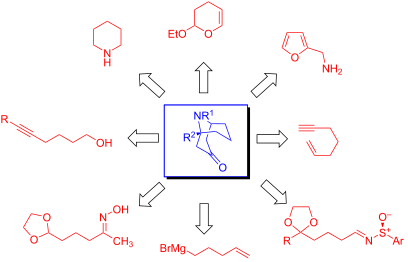
- NMR, 13C NMR, MS) were identical to those of the natural product, and the specific rotation [α]D28 −11.4 (c 0.7, CHCl3) comparable to that found in the literature {[α]D20 −13 (CHCl3), [17]}. Yu synthesis – 2009 Yu et al. prepared (−)-adaline (1) and the nonnatural enantiomer (−)-euphococcinine (2) in
- approach consisted of a 3,3-sigmatropic rearrangement to give an all-carbon quaternary center, a ring-closing alkene metathesis to give an 8-membered ring, and the use of a single enantiomer of p-menthane-3-carboxaldehyde to make two natural alkaloids of opposite configuration. Firstly, (+)-euphococcinine


Synthesis, crystal structures and properties of carbazole-based [6]helicenes fused with an azine ring
Beilstein J. Org. Chem. 2021, 17, 11–21, doi:10.3762/bjoc.17.2
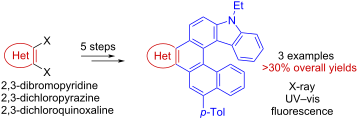
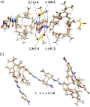
- embrace: π-deficient pyrazine ring of one enantiomer of 10a is located over the π-excessive pyrrole ring of another enantiomer (Figure 2a and Figure 2b). An intermolecular distance between the centroids of these rings was found to be equal to 3.74 Å making the π overlapping possible. In the case of
- helicene 10b, the enantiomeric molecules are aggregated into pairs differently: the pyrazine ring of one enantiomer is located over the E ring of another enantiomer and the distance between the layers is ca. 3.4 Å (Figure 2c and Figure 2d). The crystal packing of helicene 10c (Figure 2e) is peculiar: the



Chiral anion recognition using calix[4]arene-based ureido receptors in a 1,3-alternate conformation
Beilstein J. Org. Chem. 2020, 16, 2999–3007, doi:10.3762/bjoc.16.249
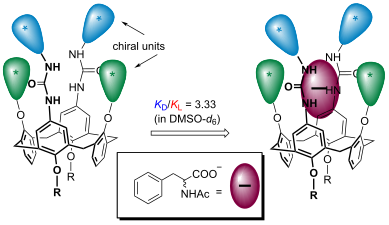
- series. Thus, the selectivity factor s = KL/KD for phenylalaninate was 1.06 for 7a and 1.11 for 7b, and similar values were also obtained for 8a (1.05) and 8b (1.04), using the ʟ-enantiomer in each case. The highest chiral discrimination (for an ʟ-enantiomer) was achieved for N-acetyl-ʟ-leucinate, with a




3-Acetoxy-fatty acid isoprenyl esters from androconia of the ithomiine butterfly Ithomia salapia
Beilstein J. Org. Chem. 2020, 16, 2776–2787, doi:10.3762/bjoc.16.228
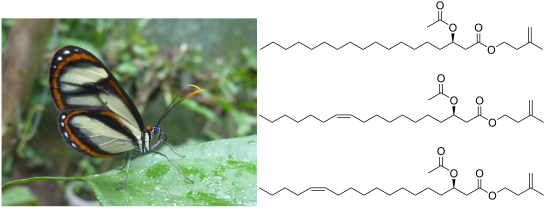
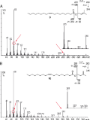
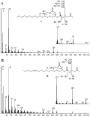
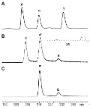
- -hydroxy-11-octadecenoate; Y: methyl 3-hydroxyoctadecanoate; E: (E)-isomer of (R)-25. The enantiomer (S,E)-25 elutes together with (R,Z)-25, indicated by the broader base of this peak in B compared to C. Pyrrolizidine alkaloid lycopsamine (1) and the putative pheromone compounds methyl hydroxydanaidoate (2





Nocarimidazoles C and D, antimicrobial alkanoylimidazoles from a coral-derived actinomycete Kocuria sp.: application of 1JC,H coupling constants for the unequivocal determination of substituted imidazoles and stereochemical diversity of anteisoalkyl chains in microbial metabolites
Beilstein J. Org. Chem. 2020, 16, 2719–2727, doi:10.3762/bjoc.16.222
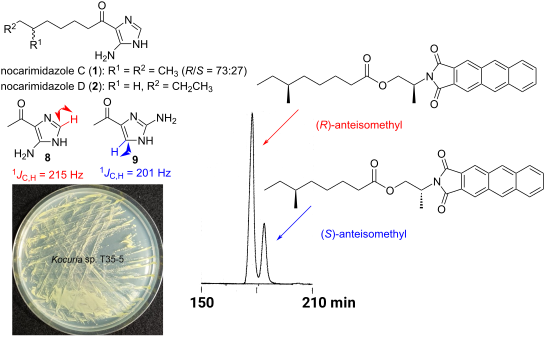
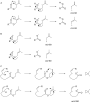
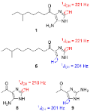
- -enantiomers with a ratio of 73:27, 4 is the pure (S)-enantiomer, and 5 is the (S)-enantiomer with 98% ee. The present study illustrates the diversity in the stereochemistry of anteiso branching in bacterial metabolites. Compounds 1−4 were moderately antimicrobial against Gram-positive bacteria and fungi, with
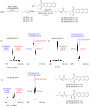
- (chromatographically equivalent to (R)-10-(R)-2A1P) and 184 min for (S)-10-(R)-2A1P, and nat-10-(R)-2A1P gave both peaks with the area ratio of 72.9:27.1 (Figure 4a). Therefore, 1 was confirmed as an enantiomeric mixture comprising 73% of the R- and 27% of the S-enantiomer. We also analyzed the absolute configuration
- -enantiomer (Figure 4b). Additionally, the same chiral analysis with bulbimidazole A (5) obtained in this study proved the enantiomeric ratio as R/S = 1.4:98.6 (Figure 4c). Nocarimidazole D (2) was isolated as a pale yellow amorphous solid. The molecular formula of 2 was deduced as C13H23N3O, 14 amu



Recent developments in enantioselective photocatalysis
Beilstein J. Org. Chem. 2020, 16, 2363–2441, doi:10.3762/bjoc.16.197
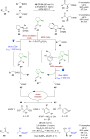
- used, then ent-236•+ can be deprotonated, and therefore racemised faster than 236•+, leading to a build-up of one enantiomer. This process initially achieved an er of 86:14, but with the inclusion of a complementary chiral HAT catalyst 237 and a radical scavenger (Ph3CH), the er could be improved to 96



























Hierarchically assembled helicates as reaction platform – from stoichiometric Diels–Alder reactions to enamine catalysis
Beilstein J. Org. Chem. 2020, 16, 2338–2345, doi:10.3762/bjoc.16.195
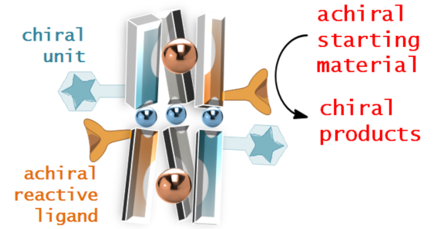
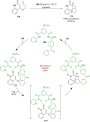
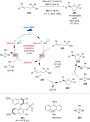
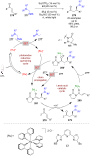
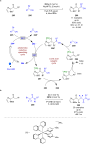
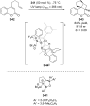
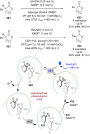
- rigidity as well as an aromatic residue. The enantioselectivity increased to 58% ee (Table 1). Besides the aromatic ligands, terpenyl-substituted ligands were investigated, too. The largest ligand 7-H2 with a cholesteryl moiety favored the opposite enantiomer, however, only with −8% ee in only 11% yield


Design and synthesis of a bis-macrocyclic host and guests as building blocks for small molecular knots
Beilstein J. Org. Chem. 2020, 16, 2314–2321, doi:10.3762/bjoc.16.192
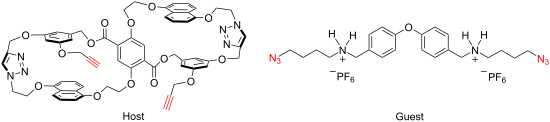
- trefoil knots have been prepared with an all-hydrocarbon example by the Itami group [7] and the synthesis of a single enantiomer by Leigh’s group [8]. Complexity has also been achieved with recent work showing that eight-crossing knots [9][10][11] and a nine-crossing composite knot can be synthesized [12


Reactions of 3-aryl-1-(trifluoromethyl)prop-2-yn-1-iminium salts with 1,3-dienes and styrenes
Beilstein J. Org. Chem. 2020, 16, 2064–2072, doi:10.3762/bjoc.16.173
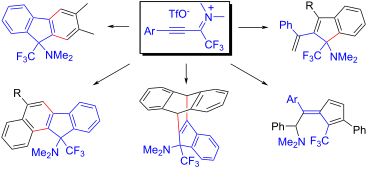
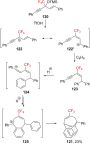
- ). Both the R and the S enantiomer are present in the acentric unit cell of the crystal (space group P21, Z = 4). Diels–Alder reaction of propyn-1-iminium salt 1a compared with the reported [29] reaction of 4-phenyl-1,1,1-trifluorobut-3-yn-2-one. Sequential Diels–Alder/intramolecular SE(Ar) reaction of


Syntheses of spliceostatins and thailanstatins: a review
Beilstein J. Org. Chem. 2020, 16, 1991–2006, doi:10.3762/bjoc.16.166

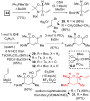
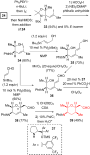
- catalysts, this group found that the intramolecular oxa-Michael addition using 20 mol % of the diarylprolinol organocatalyst 37 in the presence of benzoic acid gave 38. The use of the enantiomer of 37 gave the dihydropyran with the opposite configuration at C-11. The catalytic hydrogenation of 38 proceeded








Controlling the stereochemistry in 2-oxo-aldehyde-derived Ugi adducts through the cinchona alkaloid-promoted electrophilic fluorination
Beilstein J. Org. Chem. 2020, 16, 1963–1973, doi:10.3762/bjoc.16.163
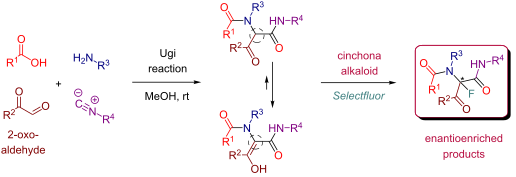
- another enantiomer of 12a (Table 3, entries 13–18) with the QD-promoted reaction affording the best ee value (Table 3, entry 13). Additionally, we tested N-fluorobenzenesulfonimide (NFSI) as an alternative fluorinating agent in a combination with DHQ-Bn and QD with the outcome being indistinguishable with
- fluorinations with QD and DHQD led to the reversed stereoselectivity as compared to the reactions with Q and DHQ. For the benzylamine-derived substrates 8a–c benzyl ether derivatives of cinchona alkaloids favored the formation of the same enantiomer of 12 as their free alcohol counterparts (e.g., both Q-Bn and
- Q favored the formation of the same enantiomer of 12). In contrast, for the substrates 8d–g derived from aromatic amines a reversed trend was observed. In case of 8d–g, benzyl ether derivatives of cinchona alkaloids favored the formation of the opposite enantiomer of 12 as compared to the one


Stereoselective Biginelli-like reaction catalyzed by a chiral phosphoric acid bearing two hydroxy groups
Beilstein J. Org. Chem. 2020, 16, 1875–1880, doi:10.3762/bjoc.16.155
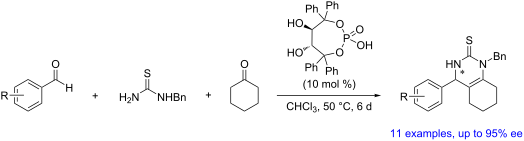
- activities [7][8]. For example, (S)-monastrol is 15-fold more effective in the inhibition of Eg 5 ATPase than its enantiomer, (R)-monastrol [9]. As more reports on the enantiospecific biological activity of DMPMs came to light, the development of an efficient and reliable asymmetric synthesis of enantiopure
- should be noted that the enantiomer self-disproportionation effect may take place during the purification by column chromatography especially in the case of products having strongly electronegative groups [25][26][27][28][29]. In particular, benzaldehyde (4a) and 3-bromobenzaldehyde (4c) gave products 5a





