


Search results
Search for "fluorescent" in Full Text gives 435 result(s) in Beilstein Journal of Organic Chemistry. Showing first 200.
New one-pot synthesis of 4-arylpyrazolo[3,4-b]pyridin-6-ones based on 5-aminopyrazoles and azlactones
Beilstein J. Org. Chem. 2023, 19, 1155–1160, doi:10.3762/bjoc.19.83
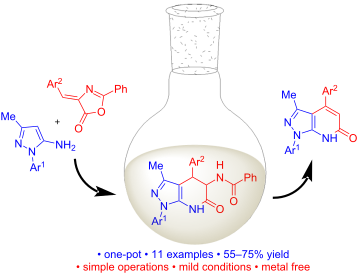
- ) under solvent-free conditions, through subsequent elimination of a benzamide molecule in a superbasic medium (t-BuOK/DMSO). The fluorescent properties of the synthesized compounds were studied. 4-Arylpyrazolo[3,4-b]pyridin-6-ones luminesce in the region of 409–440 nm with a quantum yield of 0.09–0.23
- -trimethoxyphenyl- (4e), 2-furyl- (4h) and 2-thienyl- (4i), the product yields are reduced to 55–60% (Scheme 2). All the compounds obtained are colorless crystalline substances. When dissolved, they produce colorless solutions exhibiting distinct fluorescent properties with blue emission when exposed to UV light


A fluorescent probe for detection of Hg2+ ions constructed by tetramethyl cucurbit[6]uril and 1,2-bis(4-pyridyl)ethene
Beilstein J. Org. Chem. 2023, 19, 864–872, doi:10.3762/bjoc.19.63
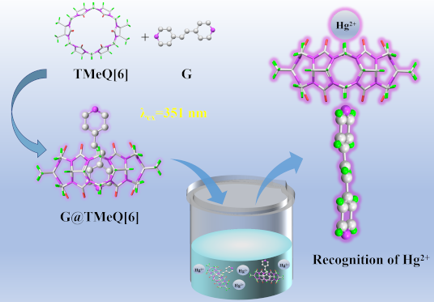
- cucurbit[6]uril (TMeQ[6]) and 1,2-bis(4-pyridyl)ethene (G) were used to construct a supramolecular fluorescent probe G@TMeQ[6]. The host–guest interaction between TMeQ[6] and G was investigated using 1H NMR spectroscopy, single-crystal X-ray diffraction and various experimental techniques. The results show
- that TMeQ[6] and G form an inclusion complex with a host–guest ratio of 1:1 and the equilibrium association constant (Ka) was 2.494 × 10⁴ M−1. The G@TMeQ[6] fluorescent probe can sensitively recognize Hg2+ ions by fluorescence enhancement. The linear range is 0.33 × 10⁻⁵–1.65 × 10⁻⁵ mol·L−1, R2
- = 0.9926, and the limit of detection is 4.12 × 10⁻⁸ mol·L−1. The fluorescent probe can be used to detect the concentration of Hg2+ ions in aqueous solution, and provides a theoretical basis for the development of new fluorescent probes for detecting heavy metal ions. Keywords: 1,2-bis(4-pyridyl)ethane


Strategies in the synthesis of dibenzo[b,f]heteropines
Beilstein J. Org. Chem. 2023, 19, 700–718, doi:10.3762/bjoc.19.51

- yield proved to be good to excellent and sterically hindered aryl rings were tolerated. This method was applied by Huang et al. [74] to prepare a series of fluorescent compounds in excellent yield. Copper- and nickel-catalysed arylation were reported as alternatives to the Pd-catalysed arylation of 1a


pH-Responsive fluorescent supramolecular nanoparticles based on tetraphenylethylene-labelled chitosan and a six-fold carboxylated tribenzotriquinacene
Beilstein J. Org. Chem. 2023, 19, 635–645, doi:10.3762/bjoc.19.45
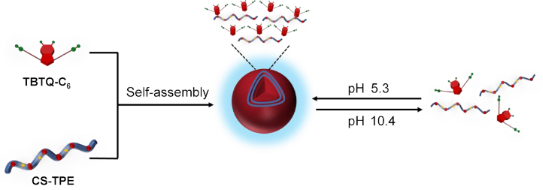
- , PR China 10.3762/bjoc.19.45 Abstract We synthesized a new tetraphenylethylene-modified chitosan bioconjugate, CS-TPE, that shows the aggregation-induced emission effect. It can self-assemble into fluorescent polymeric nanoparticles in an aqueous solution at pH 5.3 either alone or with the water
- based on TBTQ with fluorescent imaging modules that are stable in acidic environments and collapse/swell in alkaline environments. The development of nanoscale drug delivery systems equipped with synchronized fluorescent imaging modules has attracted significant interest in recent years. However
- , conventional fluorescent dyes exhibit aggregation-caused quenching (ACQ) when introduced into nanoparticles at high loads, resulting in poor fluorescence imaging quality. In recent years, tetraphenylethylene (TPE)-based dyes have been frequently used to overcome the ACQ problem due to their unique aggregation



Phenanthridine–pyrene conjugates as fluorescent probes for DNA/RNA and an inactive mutant of dipeptidyl peptidase enzyme
Beilstein J. Org. Chem. 2023, 19, 550–565, doi:10.3762/bjoc.19.40
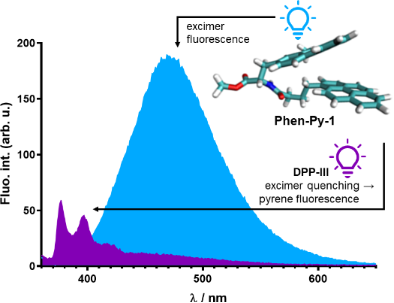
- RNA, single or double-stranded polynucleotides, particular base composition…) and signalize binding by specific spectroscopic response is of great importance [1][2]. Pyrene derivatives are among the earliest known fluorescent probes for biomolecules. These chromophores are often used due to their high
- sensitivity to the polarity of its surroundings. Similar as pyrenes, phenanthridines are also used as fluorescent probes, and their characteristics may be altered by various substituents appended to the aromatic core. The formation of excimers by two or more pyrenes is well known in the literature [4
- -dependent, and the flexibility of the linker can alter that [13]. Further, pyrene-guanidiniocarbonylpyrrole discriminated DNA and RNA by different spectroscopic (induced circular dichroism signal and fluorescent signal) responses [14]. Also, we recently reported a pyrene–quinoline conjugate molecule that




CuAAC-inspired synthesis of 1,2,3-triazole-bridged porphyrin conjugates: an overview
Beilstein J. Org. Chem. 2023, 19, 349–379, doi:10.3762/bjoc.19.29
- well as optical properties. Moreover, the versatility of coumarin hybrids finds numerous applications including fluorescent brightening agents [16], optical sensors [17], organic light emitting diodes [18][19], light harvesting materials [20] and fluorescent probes in biological imaging [21]. Therefore
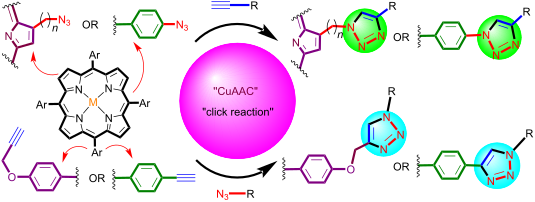
- many biological [24] as well as fluorescent properties [25]. Therefore, considering these properties of xanthone, we used a click chemistry protocol to prepare β-triazole-linked porphyrin-xanthone conjugates 23–27 and xanthone-bridged β-triazolobisporphyrin conjugates 28, 29 [26] (Scheme 3). Initially
- 124 in the presence of copper bromide and tris((1-benzyl-4-triazolyl)methyl)amine (TBTA) in DMSO/H2O to give a porphyrin-lantern (PL)-DNA sequence in 45% yield after cleavage and deprotection. These PL-DNA sequences were further used to construct strong and fluorescent G-wires that could be useful for




Sequential hydrozirconation/Pd-catalyzed cross coupling of acyl chlorides towards conjugated (2E,4E)-dienones
Beilstein J. Org. Chem. 2023, 19, 176–185, doi:10.3762/bjoc.19.17
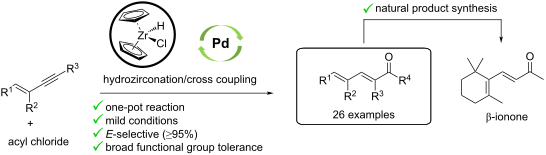
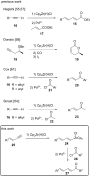
- displays pronounced cytotoxicity against two human cancer cell lines [1], epicocconone (2), a fluorescent compound from the fungus Epicoccum nigrum [2], β-ionone (3) from many plant-derived sources [3], epoxysorbicillinol (4) from the saltwater culture of the fungus Trichoderma longibrachiatum separated



Formal total synthesis of macarpine via a Au(I)-catalyzed 6-endo-dig cycloisomerization strategy
Beilstein J. Org. Chem. 2022, 18, 1589–1595, doi:10.3762/bjoc.18.169
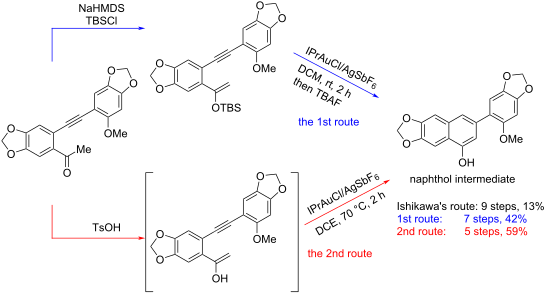
- -inflammatory [4][5][6][7][8], insecticidal, fungicidal, etc [9]. In addition to the above-mentioned activities, macarpine was also used as a DNA probe for flow cytometry and fluorescence microscopy due to its fluorescent properties [10]. Despite some research on the activities of macarpine had been performed


Microelectrode arrays, electrosynthesis, and the optimization of signaling on an inert, stable surface
Beilstein J. Org. Chem. 2022, 18, 1488–1498, doi:10.3762/bjoc.18.156
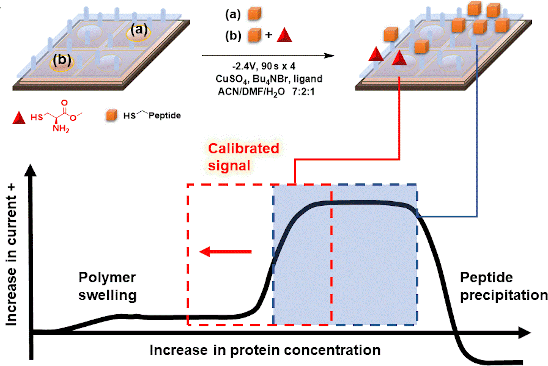
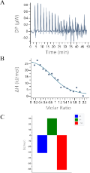
- peptides were placed on the array along with a fluorescent dye (LRSC, lissamine rhodamine) that was used to make sure the placement chemistry was working. The array used was coated with the borate ester diblock copolymer (Figure 2), and the peptides were attached to this polymer through a PEG-6 linker in
- . 4 cycles. Quantitative fluorescent study on variance of the polymer coating across the microelectrode surface. Purple represents blocks from the top region. Blue represents blocks from the center region. Orange represents blocks from the bottom region. An initial study and the comparison of an R6A


Mechanochemical synthesis of unsymmetrical salens for the preparation of Co–salen complexes and their evaluation as catalysts for the synthesis of α-aryloxy alcohols via asymmetric phenolic kinetic resolution of terminal epoxides
Beilstein J. Org. Chem. 2022, 18, 1416–1423, doi:10.3762/bjoc.18.147
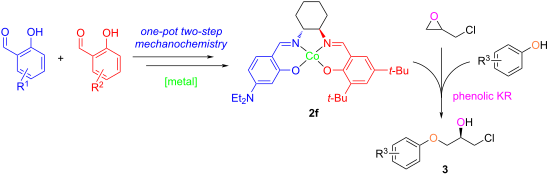
- addition, a Lewis basic NEt2 (‒N(CH2CH3)2) group was introduced to the salen scaffold to facilitate purification, enhance catalytic efficiency, and improve the thermal stability, as was shown in the synthesis of fluorescent probes [41][42]. The chelating effect of salen compounds 1 with different metals


Computational model predicts protein binding sites of a luminescent ligand equipped with guanidiniocarbonyl-pyrrole groups
Beilstein J. Org. Chem. 2022, 18, 1322–1331, doi:10.3762/bjoc.18.137
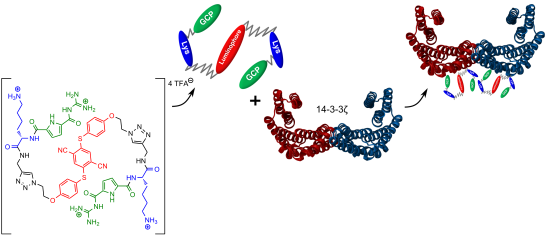
- overcome this issue is to use fluorescence emission as a read-out tool, such as an emission “on” or “off” behavior [15]. Selective and sensitive fluorescent ligands have been proven to be essential tools for the study of biological systems by biosensing and imaging [16]. There is an increasing demand for





Ionic multiresonant thermally activated delayed fluorescence emitters for light emitting electrochemical cells
Beilstein J. Org. Chem. 2022, 18, 1311–1321, doi:10.3762/bjoc.18.136
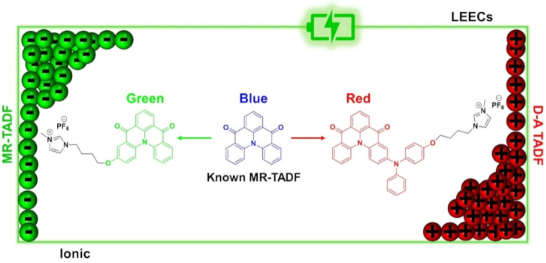
- ), Universidad de Valencia, C/Catedrático J. Beltrán 2, 46980 Paterna (Valencia), Spain School of Chemistry, University of Leeds, Woodhouse Lane, Leeds, UK 10.3762/bjoc.18.136 Abstract We designed and synthesized two new ionic thermally activated delayed fluorescent (TADF) emitters that are charged analogues of
- in organic light-emitting diodes (OLEDs), relatively little attention has been devoted to the design of ionic small molecule (SM) [13] organic emitters for LEECs. The majority of the reported SM emitters for LEECs are fluorescent in nature and so the internal quantum efficiency (IQE) of the device is
- limited to 25% [13]. Thermally activated delayed fluorescent (TADF) emitters are one class of purely organic materials that can harvest triplet excitons in electroluminescent (EL) devices through a triplet to singlet reverse intersystem crossing (RISC) upconversion process [14]. Indeed, OLEDs using TADF



Polymer and small molecule mechanochemistry: closer than ever
Beilstein J. Org. Chem. 2022, 18, 1225–1235, doi:10.3762/bjoc.18.128
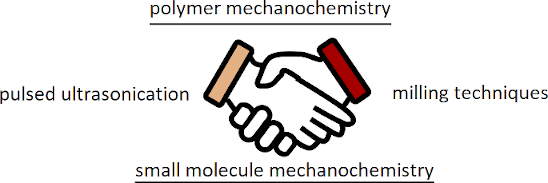
- fluorescent 9-fluorenone (3) via β-scission (Scheme 1b). To highlight the importance of the polymer network in the transduction of the mechanical stimulus to the mechanophore, the authors demonstrated that ball milling monomeric BMPF-OH at 30 Hz for 3 h only generated traces of 3 (1% after isolation


Synthesis, optical and electrochemical properties of (D–π)2-type and (D–π)2Ph-type fluorescent dyes
Beilstein J. Org. Chem. 2022, 18, 1047–1054, doi:10.3762/bjoc.18.106
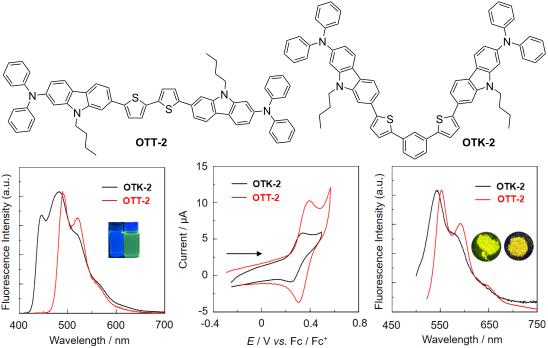
- Kosuke Takemura Kazuki Ohira Taiki Higashino Keiichi Imato Yousuke Ooyama Applied Chemistry Program, Graduate School of Advanced Science and Engineering, Hiroshima University, 1-4-1 Kagamiyama, Higashi-Hiroshima 739-8527, Japan 10.3762/bjoc.18.106 Abstract The (D–π)2-type fluorescent dye OTT-2
- with two (diphenylamino)carbazole-thiophene units as D (electron-donating group)–π (π-conjugated bridge) moiety and the (D–π)2Ph-type fluorescent dye OTK-2 with the two D–π moieties connected through a phenyl ring were derived by oxidative homocoupling of a stannyl D–π unit and Stille coupling of a
- band, but also intense fluorescence emission both in solution and the solid state. Keywords: (D–π)2 structure; fluorescence; fluorescent dyes; photoabsorption; redox properties; Introduction The design and development of a new type of organic fluorescent dyes have been of considerable scientific and


Electrochemical and spectroscopic properties of twisted dibenzo[g,p]chrysene derivatives
Beilstein J. Org. Chem. 2022, 18, 963–971, doi:10.3762/bjoc.18.96
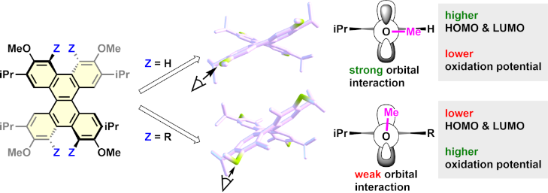
- , a strong photoluminescence was observed for DBC-H and DBC-Si. Keywords: DFT calculation; dibenzo[g,p]chrysenes; fluorescent compounds; oxidation; polycyclic aromatic hydrocarbon (PAH); twisted acenes; Introduction Polycyclic aromatic hydrocarbons (PAHs) have attracted interest as potential


Introducing a new 7-ring fused diindenone-dithieno[3,2-b:2',3'-d]thiophene unit as a promising component for organic semiconductor materials
Beilstein J. Org. Chem. 2022, 18, 944–955, doi:10.3762/bjoc.18.94
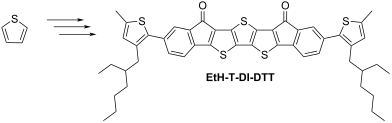
- (the basic unit of processors) [6], solar cells, and LEDs [7]. Inorganic compounds, e.g. III-V type inorganics are widely used, however, in recent years, organic molecules with semiconducting and fluorescent properties have emerged as an alternative with advantages such as solution processing [8][9][10


Morita–Baylis–Hillman reaction of 3-formyl-9H-pyrido[3,4-b]indoles and fluorescence studies of the products
Beilstein J. Org. Chem. 2022, 18, 926–934, doi:10.3762/bjoc.18.92
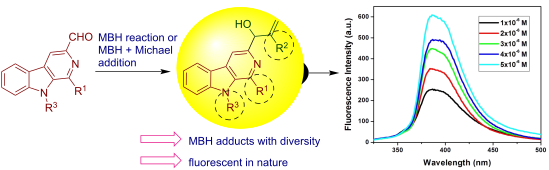
- . The present work is a step towards this and assimilates the results related to the exploration of 3-formyl-9H-β-carbolines for the synthesis of β-carboline C-3 substituted MBH adducts followed by evaluation of their fluorescent characteristic. The effect of contact time, solvent system, concentration
- relationships were concluded which are outlined in Figure 6. It was concluded from the structure–fluorescence activity relationships of C-3-substituted pyrido[3,4-b]indole derivatives that the products with o-bromophenyl substituent at R1 position (7cB and 7cE) were the most fluorescent derivatives among all
- . Also, substituted phenyl derivatives were more fluorescent than the dimethoxymethyl substituted derivatives 7aA–7aE. Further, it was observed that an ethyl substituent at N-9 position of β-carboline decreased the fluorescence intensity in 10eA–10eB than 7eD which is a N-unsubstituted derivative while


Post-synthesis from Lewis acid–base interaction: an alternative way to generate light and harvest triplet excitons
Beilstein J. Org. Chem. 2022, 18, 825–836, doi:10.3762/bjoc.18.83
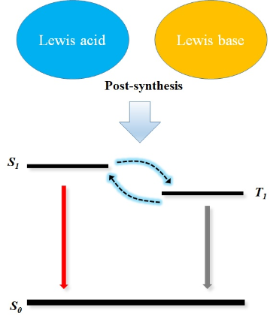
- Guangdong Province, Shantou University, Shantou 518060, People’s Republic of China Wuhan National Laboratory for Optoelectronics, Huazhong University of Science and Technology, Wuhan 430074, People’s Republic of China 10.3762/bjoc.18.83 Abstract The changes in absorption and emission of fluorescent
- fluorescent materials containing Lewis basic nitrogen heterocycles are more likely to provide the feasible band gap modulation. The essence of such phenomenon originates from Lewis acid–base coordination and adducts, which highly depends on the electron-accepting property of the Lewis acids. This
- are fluorescent compounds. Based on the spin statistics, the fluorescent emitters can only use singlet excitons for light generation [5]. In contrast, phosphorescent materials based on metal complexes could achieve a high internal quantum efficiency (IQE) up to 100% through intersystem crossing (ISC


Syntheses of novel pyridine-based low-molecular-weight luminogens possessing aggregation-induced emission enhancement (AIEE) properties
Beilstein J. Org. Chem. 2022, 18, 580–587, doi:10.3762/bjoc.18.60
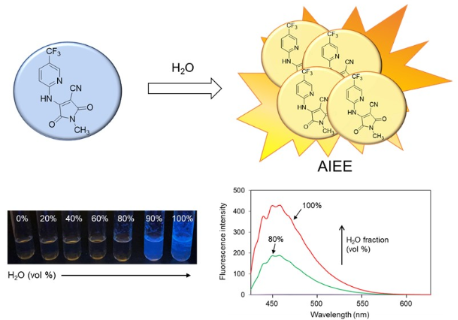
- the electronic nature of the compounds with and without AIEE properties. Keywords: acceptor–donor–acceptor; AIEE; low molecular weight; one-pot reaction; ((pyridin-2-yl)amino)maleimide; TD-DFT calculation; Introduction Fluorescent compounds have attracted considerable attention as functional
- -concentration solutions, and their emission efficiency, chromogenic properties, and light sensitivity decrease rapidly [5][6]. In recent years, contrary to conventional fluorescent compounds, aggregation-induced emission enhancement (AIEE)-based compounds that exhibit strong fluorescence in aggregate structures
- have been reported [7][8][9][10]. Because the aggregated state of AIEE-based compounds is affected by the external environment, these compounds have found use in clinical applications as chemical sensors or fluorescent probes [7][8][9][10]. Pyridine is a nitrogen-containing heterocyclic compound found


Comparative study of thermally activated delayed fluorescent properties of donor–acceptor and donor–acceptor–donor architectures based on phenoxazine and dibenzo[a,j]phenazine
Beilstein J. Org. Chem. 2022, 18, 459–468, doi:10.3762/bjoc.18.48
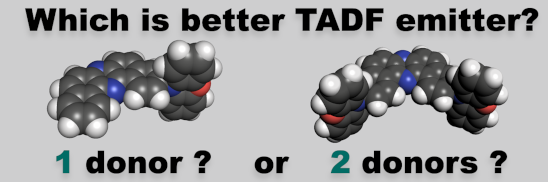
- efficiency (EQE) exceeds the theoretical maximum of those with prompt fluorescent emitters. Most importantly, comparative study of the D–A molecule and its D–A–D counterpart from the viewpoints of the experiments and theoretical calculations revealed the effect of the number of the electron donor on the
- thermally activated delayed fluorescent behavior. Keywords: charge-transfer; dibenzophenazine; donor–acceptor; organic light-emitting diodes; thermally activated delayed fluorescence; Introduction Thermally activated delayed fluorescence (TADF), which was firstly reported in 1961 by Parker and Hatchard [1
- achieved a good EQE up to 11%, which exceeds the theoretical maximum (ca. 5%) of prompt fluorescent emitter-based OLEDs. The additional donor gave a better EQE of the OLED device than that fabricated with the D–A compound, due to a less efficient TADF process. Taken together the experimental and


Menadione: a platform and a target to valuable compounds synthesis
Beilstein J. Org. Chem. 2022, 18, 381–419, doi:10.3762/bjoc.18.43
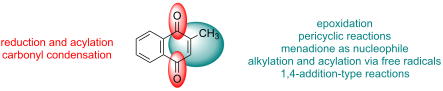
- source was made after preliminary studies demonstrated the occurrence of reactions with benzoquinones using the compact fluorescent lamp (Scheme 18). Reduction and acylation reactions Menadione reduction reactions are one of the most important types of reactions and are directly related to some of its


Four bioactive new steroids from the soft coral Lobophytum pauciflorum collected in South China Sea
Beilstein J. Org. Chem. 2022, 18, 374–380, doi:10.3762/bjoc.18.42
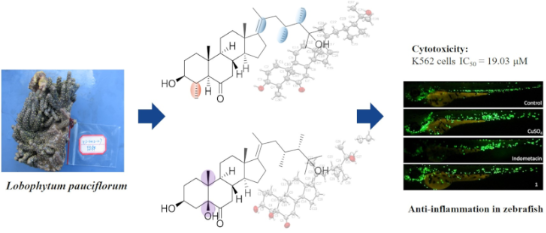
- value of 19.03 μM. The investigation of anti-inflammatory activities of lobophysterols E–H with classic transgenic fluorescent zebrafish models (Figure 5) showed that compound 1 exhibited moderate activity, with an inhibition rate of 32% (20 μM). Conclusion In conclusion, four new steroids
- were cultivated by Qilu University of Technology (Jinan, China). Transgenic zebrafish [Tg: zlyz-EGFP and Tg (vegfr2: GFP)] expressing enhanced green fluorescent protein (EGFP) was used in this article. The conditions of the maintenance complied with guidelines of the Organization for Economic Co


Recent developments and trends in the iron- and cobalt-catalyzed Sonogashira reactions
Beilstein J. Org. Chem. 2022, 18, 262–285, doi:10.3762/bjoc.18.31
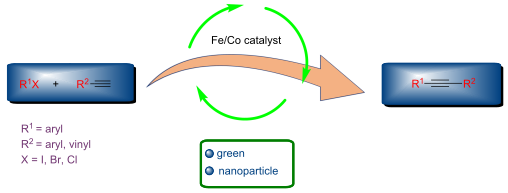
- ) moiety since it can easily undergo aggregation-induced emission enhancement (AIEE). The self-assembly of the HPB derivative resulted in the formation of fluorescent aggregates, which can act as a stabilizer or as a reactor for the development of α-Fe2O3 nanoparticles at room temperature. The catalytic
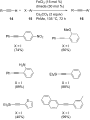
- , Balla and co-workers discussed the scope of the reaction by the utilization of in-situ generated α-Fe2O3 nanoparticles with several activated and unactivated halides (Scheme 13) [30]. They also examined the effect of concentration of fluorescent aggregates of HPB, i.e., the size of the generated




Anomeric 1,2,3-triazole-linked sialic acid derivatives show selective inhibition towards a bacterial neuraminidase over a trypanosome trans-sialidase
Beilstein J. Org. Chem. 2022, 18, 208–216, doi:10.3762/bjoc.18.24
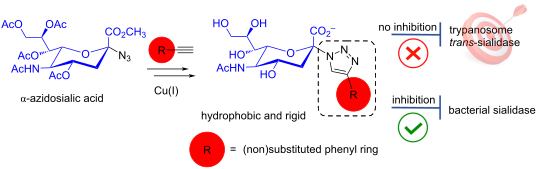
- , followed by addition of 0.5 mM MUNANA (20 μL, 0.1 mM final concentration) and incubated at 37 °C for 15 min. The fluorescent product released (MU) was measured with excitation and emission wavelengths of 360 and 460 nm, respectively. Neuraminidase (10 mU) assay was performed as described above without



First total synthesis of hoshinoamide A
Beilstein J. Org. Chem. 2021, 17, 2924–2931, doi:10.3762/bjoc.17.201
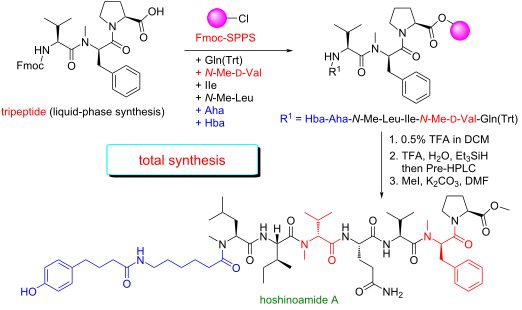
- hoshinoamide A and other highly methylated polypeptide analogues. Our strategy was also helpful to further study its antimalarial activity. Structure-and-activity and functional studies with the fluorescent-labeled analogs are currently under investigation in our lab. Experimental General experimental





