


Search results
Search for "free-radical" in Full Text gives 160 result(s) in Beilstein Journal of Organic Chemistry.
Syntheses, structures, and stabilities of aliphatic and aromatic fluorous iodine(I) and iodine(III) compounds: the role of iodine Lewis basicity
Beilstein J. Org. Chem. 2017, 13, 2486–2501, doi:10.3762/bjoc.13.246
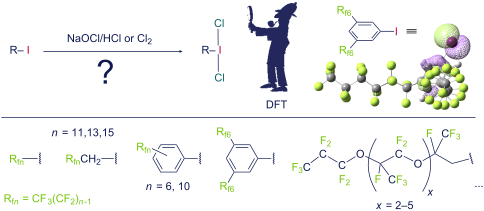
- commercialized [4]. Many research groups have described the syntheses of other types of fluorous alkyl [5][6][7][8] and aryl [9][10][11][12] iodides [13][14][15][16][17]. The former are ubiquitous by virtue of the large number of perfluoroalkyl iodides RfnI that have been shown to undergo free radical additions
- ) dichlorides for free radical chlorinations [25]. In this regard, phenyl iodine(III) dichloride (PhICl2) is an effective free radical chlorinating agent for hydrocarbons [26][27]. Importantly, the mechanism does not involve the liberation of Cl2, followed by the textbook sequence of steps. Rather, hydrogen
- degradation under free radical chlorination conditions. However, no reactions were observed when RfnI were treated with Cl2 or NaOCl/HCl. Nonetheless, perfluoroalkyl iodides RfnI (n = 6–8, 10, 12) can be oxidized using various recipes (e.g., 80% H2O2 in trifluoroacetic acid anhydride) to the iodine(III) bis



Solid-state studies and antioxidant properties of the γ-cyclodextrin·fisetin inclusion compound
Beilstein J. Org. Chem. 2017, 13, 2138–2145, doi:10.3762/bjoc.13.212
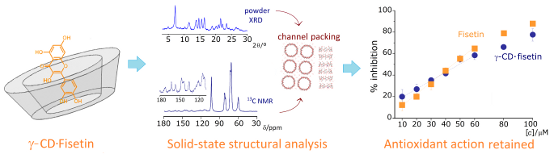
- activity Developed by Blois in 1958 [40], the DPPH assay determines the antioxidant activity of a test compound by using a commercially available stable free radical, DPPH· (2,2-diphenyl-1-picrylhydrazyl) that has a strong violet color. Upon reaction with an antioxidant, DPPH· is converted into the
- corresponding hydrazine (pale yellow in color), a reaction which can be monitored by UV–vis spectroscopy. As the kinetics of the reaction varies from sample to sample, the stabilization time for a complete reduction of the DPPH· free radical was determined. For all samples studied, the steady-state
- ’), 136.5 (C3), 125.7 (C1’), 120.9 (C6’), 114.7, 112.4 (C6, C10, C2’, C5’), 101.6 (C8). Antioxidant activity by the DPPH method. The radical-scavenging activity of fisetin and the γ-CD·fisetin inclusion compound were determined using the free radical 2,2-diphenyl-1-picrylhydrazyl (DPPH·) [45]. A volume of




Transition-metal-free synthesis of 3-sulfenylated chromones via KIO3-catalyzed radical C(sp2)–H sulfenylation
Beilstein J. Org. Chem. 2017, 13, 2017–2022, doi:10.3762/bjoc.13.199
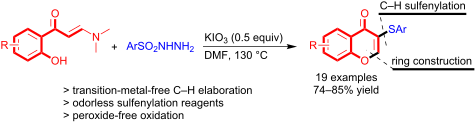
- chromones via domino chromone ring construction and C(sp2)–H bond sulfenylation have been achieved under transition-metal-free conditions by using KIO3 as the only catalyst. Keywords: C–H sulfenylation; chromones; domino reaction; free-radical; transition-metal-free; Introduction The C–S bond-forming
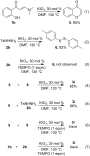
- that a free radical intermediate has also occurred in the generation of 6 (reaction 3, Scheme 3). The reactions of 5 with 6 and 2b were both found to yield the sulfenylated chromone 3i in excellent yield, respectively (reactions 4 and 5, Scheme 3). On the other hand, the reaction of 5 and 6 in the
- presence of TEMPO, however, provides only with trace amounts of 3i, supporting that products 3 are yielded via a free radical route (reaction 6, Scheme 3). In addition, the control reaction of 1b and 2b afforded also only trace amounts of product 3i in the presence of 1 equiv TEMPO (reaction 7, Scheme 3



Are boat transition states likely to occur in Cope rearrangements? A DFT study of the biogenesis of germacranes
Beilstein J. Org. Chem. 2017, 13, 1969–1976, doi:10.3762/bjoc.13.192
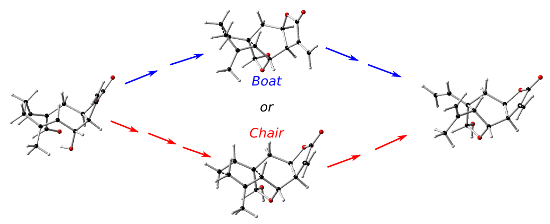
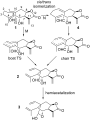
- , a chair conformation due to the higher energy of the boat conformation [2][7][10][11][12][13][14][15][16][17][18][19]. In this mechanism, the electron density of the TS is delocalized into the six carbon atoms [20][21][22]. However, if the diene contains free radical stabilizing groups, this



Synthesis of benzannelated sultams by intramolecular Pd-catalyzed arylation of tertiary sulfonamides
Beilstein J. Org. Chem. 2017, 13, 1932–1939, doi:10.3762/bjoc.13.187
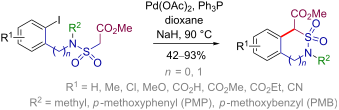
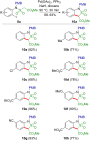
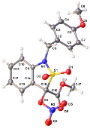
- the nitrooxy derivative 22, presumbaly via the corresponding benzyl-type free radical (Scheme 7). The structure of 22 was proven by single-crystal X-ray diffraction (Figure 2). According to a publication by Metz et al., a N-(4-methoxybenzyl) group can be removed from sultams by treatment with




Block copolymers from ionic liquids for the preparation of thin carbonaceous shells
Beilstein J. Org. Chem. 2017, 13, 1693–1701, doi:10.3762/bjoc.13.163
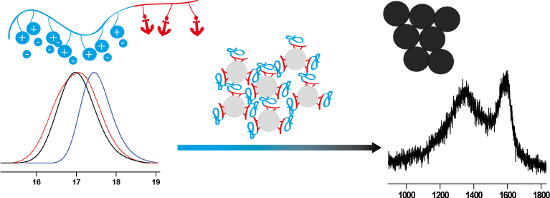
- are applied as catalytic membranes, thermotropic liquid crystals [12], polymer electrolytes, ionic conductive materials, CO2 absorbing materials, microwave absorbing materials and porous materials [4]. Most of these polymers were synthesized by free radical polymerization. There are just few reports


Oxidative dehydrogenation of C–C and C–N bonds: A convenient approach to access diverse (dihydro)heteroaromatic compounds
Beilstein J. Org. Chem. 2017, 13, 1670–1692, doi:10.3762/bjoc.13.162
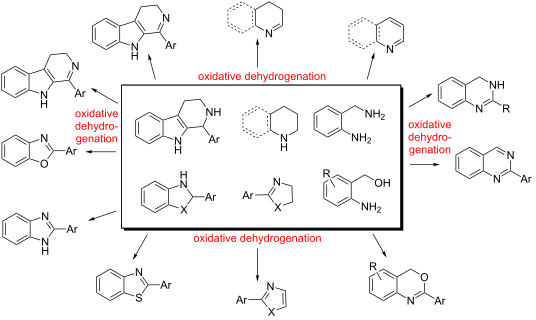
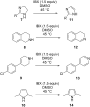
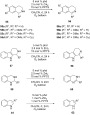
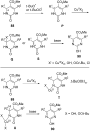
- reaction was facilitated at room temperature by N-hydroxyphthalimide (NHPI) and cobalt acetate (Co(OAc)2) as catalysts in acetonitrile (Scheme 20). The reaction followed a free radical mechanism as exemplified by the oxidative dehydrogenation of DHPs. The initial step involved the formation of the








One-pot synthesis of block-copolyrotaxanes through controlled rotaxa-polymerization
Beilstein J. Org. Chem. 2017, 13, 1310–1315, doi:10.3762/bjoc.13.127
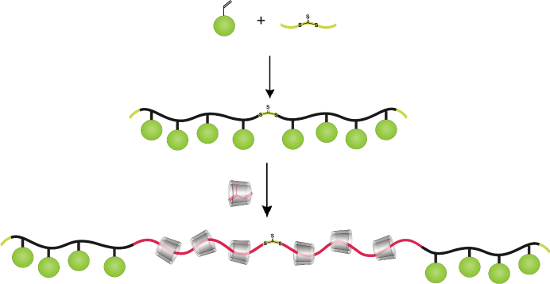
- , free radical copolymerization of a hydrophobic monomer, complexed in a host, with a stopper comonomer [24][25]. This latter has to be large enough to prevent the dissociation of the growing axis and the host, as it happens in the case of aqueous CD assisted homopolymerizations of hydrophobic monomers
- [26][27][28] including dienes [29]. This approach drastically widens the range of suitable hydrophobic polymeric axes, to all monomers being complexed in CD or hydrophilic CD derivatives. Up to now, rotaxa-polymerization was only performed via free radical reaction without control of the polymer chain


α-Acetoxyarone synthesis via iodine-catalyzed and tert-butyl hydroperoxide-mediateded self-intermolecular oxidative coupling of aryl ketones
Beilstein J. Org. Chem. 2017, 13, 1079–1084, doi:10.3762/bjoc.13.107

- outcome. 1-(Thiophen-2-yl)ethanone (1i), which has a heteroaryl functionality, gave 2i in 83% isolated yield. A series of control experiments were performed to clarify the reaction mechanism (Scheme 3). When the reactions were performed in the presence of an excess of the free-radical scavenger 2,2,6,6




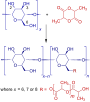
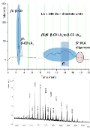
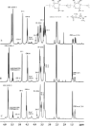
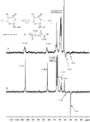
Cyclodextrins tethered with oligolactides – green synthesis and structural assessment
Beilstein J. Org. Chem. 2017, 13, 779–792, doi:10.3762/bjoc.13.77
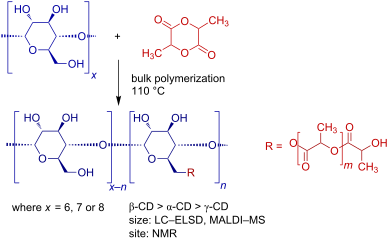
- available as commercial products, the modification with polymers is still under development [4][5]. So far, several polymerization reactions were used for CD modification, including free radical polymerization, reversible-deactivation radical polymerizations [5] as well as ring opening polymerizations (ROP




Highly reactive, liquid diacrylamides via synergistic combination of spatially arranged curing moieties
Beilstein J. Org. Chem. 2017, 13, 372–383, doi:10.3762/bjoc.13.40
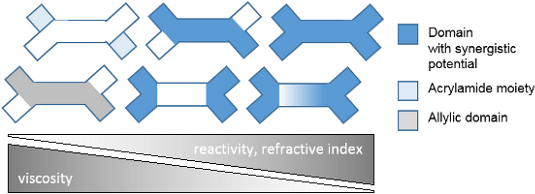
- ; Introduction The selection of suitable monomers is a critical step for any free-radical polymerization approach. Particularly for (in situ) photo-induced polymerizations, monomers should comprise sufficient solubility in a given matrix, moderate viscosity, matching refractive indices as well as an optimized
- ]. Yet, acrylamides are particularly affected by the solvent regarding propagation reaction in free radical polymerization, even more so, if water is present [21]. Factors such as hydrogen bonding, hydrogen abstraction and the overall electronic characteristics are crucial in the design of improved
- this type of crosslinkers highly attractive for a broad range of free radical (photo)polymerization applications, for example in the constantly growing medical device sector. Experimental Materials. Chemicals and reagents were purchased from Acros, Carl Roth, ChemPUR, Sigma-Aldrich, TCI or ABCR or have








Extrusion – back to the future: Using an established technique to reform automated chemical synthesis
Beilstein J. Org. Chem. 2017, 13, 65–75, doi:10.3762/bjoc.13.9
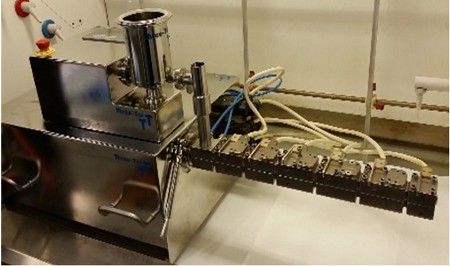
- , the most common transformation, involves the constant growth of a polymer chain where the ability to terminate the reaction is removed [14]. Again, there are several types of transformation including ionic polymerisation, ring opening metathesis, free radical and growth polycondensations [15]. All of
- . It must be noted, however, that the reaction reported by Höcker involves the use of s-BuLi, making the process more difficult, but still a greater throughput rate is obtained than that predicted by Meyer [20]. Free radical polymerisation involving deactivation polymerisation, iniferter polymerisation
- and reversible addition fragmentation chain transfer (RAFT) polymerisation, amongst others [21], has been studied extensively by extrusion to produce, for example, branched polypropylene, polyethylene and polylactide polymers. The process involves the production of a free radical at the end of an


Diastereoselective anodic hetero- and homo-coupling of menthol-, 8-methylmenthol- and 8-phenylmenthol-2-alkylmalonates
Beilstein J. Org. Chem. 2017, 13, 33–42, doi:10.3762/bjoc.13.5
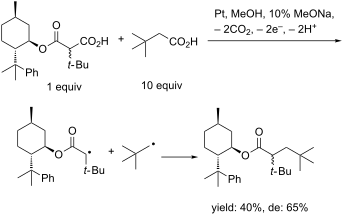
- ]. This finding points to a free radical or its reversible adsorption at the electrode. However, the latter pathway was ruled out by experiments of Utley et al. [48][49], when comparing the coupling of unsaturated and saturated carboxylic acids and the effect of adsorption. Ester 30a has been cleaved with




Synthesis and evaluation of anti-oxidant and cytotoxic activities of novel 10-undecenoic acid methyl ester based lipoconjugates of phenolic acids
Beilstein J. Org. Chem. 2017, 13, 26–32, doi:10.3762/bjoc.13.4
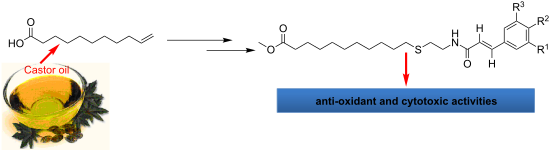
- of the prepared derivatives were studied by the well-established DPPH radical scavenging assay and also by studying the oxidation of linoleic acid using DSC. The DPPH radical is a commercially available stable free radical which is widely used to preliminarily determine the radical scavenging
- cinnamic acid derivative 3a. This could be due to the absence of a phenolic hydroxy group which is responsible for the anti-oxidant activity of most of the natural phytochemicals. Among all compounds, 3c was found to be the most efficient free radical scavenger which showed a value closest to the standard
- anti-oxidant, α-TP. Compounds 3d and 3e also showed free radical scavenging activity (FRSA) of 68% and 67%, respectively, whereas compound 3b showed only moderate activity with 30% FRSA. In another study, the ability of the prepared derivatives in inhibiting the oxidation of linoleic acid was studied


Radical polymerization by a supramolecular catalyst: cyclodextrin with a RAFT reagent
Beilstein J. Org. Chem. 2016, 12, 2495–2502, doi:10.3762/bjoc.12.244
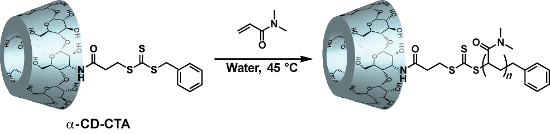
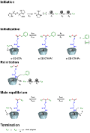
- permeation chromatography (GPC). The polymerization of DMA and AA mediated by α-CD-CTA gave polymers with similar molecular weights (12.8 and 14.8 kDa) and narrow distributions in good yields (85–88%) (Table 1, entries 2 and 5). In contrast, in the absence of α-CD-CTA, free radical polymerization with VA-044
- inhibiting the molecular recognition of α-CD, the inclusion complexation ratio between the monomer and α-CD-CTA was decreased, which lead to lower yields and higher molecular weight of the resulting polymers due to preceding free radical polymerization. In the reaction of AAm monomer, which has a low
- reaction, some of the polymer chains (Pn•) form dead chains through termination or irreversible chain transfer. However, the Mw/Mn of the polymer mediated by α-CD-CTA agents that the termination reaction is suppressed by α-CD-CTA compared to free radical polymerization. Conclusion We studied the radical


A new protocol for the synthesis of 4,7,12,15-tetrachloro[2.2]paracyclophane
Beilstein J. Org. Chem. 2016, 12, 2443–2449, doi:10.3762/bjoc.12.237
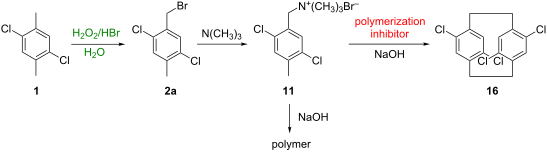
- bromides from substituted (4-methylbenzyl)bromides. Bromination of 2,5-dichloro-p-xylene (1) with H2O2–HBr. Visible-light induced free-radical bromination of substituted p-xylenes with H2O2–HBr. Synthesis of 4,7,12,15-tetrachloro[2.2]paracyclophane 16 from 11. Synthesis of substituted [2.2]paracyclophanes


Methylenelactide: vinyl polymerization and spatial reactivity effects
Beilstein J. Org. Chem. 2016, 12, 2378–2389, doi:10.3762/bjoc.12.232
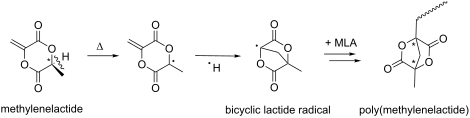
- Judita Britner Helmut Ritter Institute of Organic Chemistry and Macromolecular Chemistry, Heinrich-Heine-University, Universitätsstraße 1, 40225 Düsseldorf, Germany 10.3762/bjoc.12.232 Abstract The first detailed study on free-radical polymerization, copolymerization and controlled radical
- employing MLA as dienophile was described [3][4][5][6]. In a recent NMR study we demonstrated that, poly(MLA) prepared via free radical polymerization contains mainly isotactic units. Furthermore, we found that the polymer attached lactide rings react like activated esters and thus readily undergo
- -Michael additions on MLA were reported [11][12]. In this paper, we wish to present a kinetic study of free radical and controlled/living radical polymerization of MLA. The latter reactions were conducted via a reversible addition fragmentation chain transfer (RAFT) mechanism. We also investigated the


New furoisocoumarins and isocoumarins from the mangrove endophytic fungus Aspergillus sp. 085242
Beilstein J. Org. Chem. 2016, 12, 2077–2085, doi:10.3762/bjoc.12.196
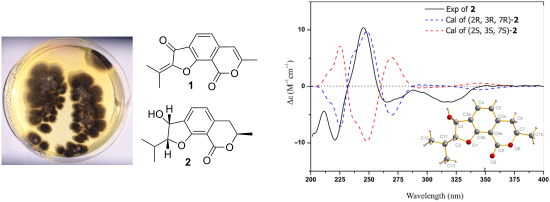
- epidermidis, Escherichia coli, Klebsiella pneumoniae, and Bacillus subtilis. None of the compounds was active at a concentration of 50 μg/mL. In the free radical scavenging assay using 2,2-diphenyl-1-picrylhydrazyl (DPPH), only compounds 1 and 3 exhibited weak activity with EC50 values of 125 and 130 μM


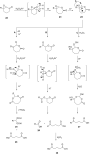
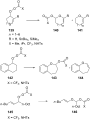
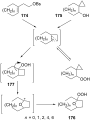
Rearrangements of organic peroxides and related processes
Beilstein J. Org. Chem. 2016, 12, 1647–1748, doi:10.3762/bjoc.12.162
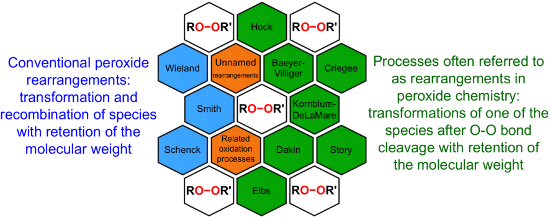
- agents and initiators for free-radical reactions both in industry and in laboratory. These compounds are produced and involved in various natural and biological processes and were explored extensively as antimalarial agents, anthelmintics, and anticancer drugs. Organic peroxides, such as alkyl
- Baeyer−Villiger oxidation and it is one of the methods for the synthesis of commercially important caprolactone from cyclohexanone with peracetic acid [55][56]. Autoxidation processes with formation of hydroperoxides and their subsequent free-radical transformations with generation of carbon- and oxygen
- ][109][110][111][112][113]. Organic peroxides are widely used as oxidants in oxidative coupling processes [114][115][116][117][118][119][120]. Industrial-scale production of readily available and efficient initiators of free radical polymerization and effective biologically active compounds promotes the









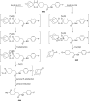


Synthesis of 2-oxindoles via 'transition-metal-free' intramolecular dehydrogenative coupling (IDC) of sp2 C–H and sp3 C–H bonds
Beilstein J. Org. Chem. 2016, 12, 1153–1169, doi:10.3762/bjoc.12.111
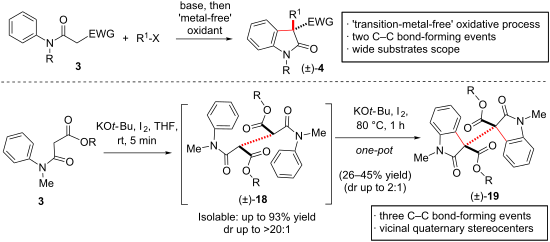
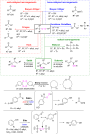
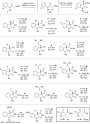
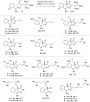
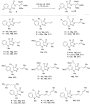
- equiv of NaOt-Bu [38][39]. In the same year, Taylor and co-workers independently reported synthesis of 2-oxindoles in the presence of Cu(OAc)2·H2O as oxidant (Scheme 1) [40][41][42][43][44]. Experimental evidence suggests involvement of a free-radical process in the addition of α-carbonylalkyl radicals





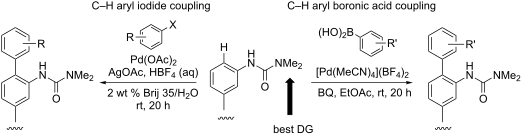
Cationic Pd(II)-catalyzed C–H activation/cross-coupling reactions at room temperature: synthetic and mechanistic studies
Beilstein J. Org. Chem. 2016, 12, 1040–1064, doi:10.3762/bjoc.12.99
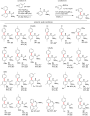
- traditional Suzuki–Miyaura coupling. It is used to control a range of plant pathogens in broadacre and horticultural crops (Scheme 6) [207]. Felpin and co-workers have reported its synthesis starting from aryldiazonium salts [208], while the Heinrich group has employed a free-radical biaryl cross-coupling of






Opportunities and challenges for direct C–H functionalization of piperazines
Beilstein J. Org. Chem. 2016, 12, 702–715, doi:10.3762/bjoc.12.70
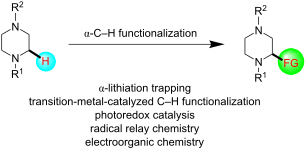
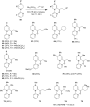
- method, despite its relatively low yield and selectivity, does offer a rapid way to access potential drug metabolites or analogs for further biological evaluations. Free radical approach In 1994, Undheim and co-workers developed a radical relay strategy, using a progression from an aryl radical to an α
- , et al. in 2013 [67]. Free radical approach by Undheim et al. in 1994 [68]. Anodic oxidation approach by Nyberg et al. in 1976 [70]. Acknowledgements We thank the Purdue University for financial support.




Amino-functionalized (meth)acryl polymers by use of a solvent-polarity sensitive protecting group (Br-t-BOC)
Beilstein J. Org. Chem. 2016, 12, 245–252, doi:10.3762/bjoc.12.26
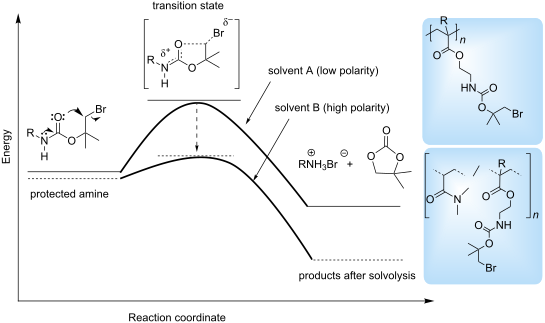
- )-amino-protected monomers 2-((1-bromo-2-methylpropan-2-yl)oxycarbonylamino)ethyl (meth)acrylate 3a,b. For this purpose, 2-isocyanatoethyl (meth)acrylate 1a,b was reacted with 1-bromo-2-methylpropan-2-ol (2a). The free radical polymerization of (Br-t-BOC)-aminoethyl (meth)acrylates 3a,b yielded poly((Br-t
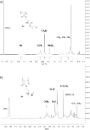
- , IR, GPC and DSC methods. The kinetics of the deprotection step was followed by 1H NMR spectroscopy. The solvent polarity and neighboring group effects on the kinetics of deprotection are discussed. Keywords: amino group protection; bromo-tert-butyloxycarbonyl; deprotection; free radical
- . Carpino [8][9][10] and a first practical application in peptide synthesis [11] this protecting group was quasi forgotten. In the present work we report new Br-t-Boc-protected (meth)acrylic monomers and their polymerization through free radical polymerization. The kinetics of Br-t-BOC solvolysis of the


Determination of formation constants and structural characterization of cyclodextrin inclusion complexes with two phenolic isomers: carvacrol and thymol
Beilstein J. Org. Chem. 2016, 12, 29–42, doi:10.3762/bjoc.12.5
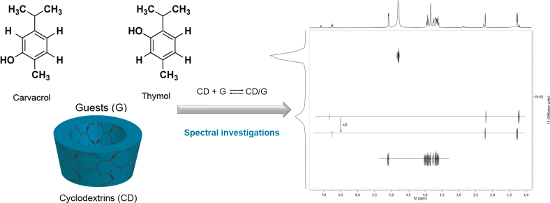
- 2 are described as potent free-radical scavengers [29]. Moreover, it is well accepted that a wide variety of essential oils possess important antioxidant activities due to their high content in 1 and 2 [50]. In this work, the effect of encapsulation on the antioxidant activity of 1 and 2 was




Copper-catalyzed intermolecular oxyamination of olefins using carboxylic acids and O-benzoylhydroxylamines
Beilstein J. Org. Chem. 2016, 12, 22–28, doi:10.3762/bjoc.12.4
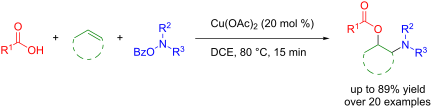
- olefins with a tethered amino or oxygen functionality has been achieved for the construction of a variety of 1,2-oxyamino products, using palladium [19][20], platinum [21], gold [22], copper [23][24][25][26], free-radical initiators [27][28][29], hypervalent iodine [30], and electrochemical oxidation [31





