Search results
Search for "regioselectivity" in Full Text gives 559 result(s) in Beilstein Journal of Organic Chemistry. Showing first 200.
Hypervalent iodine-catalyzed amide and alkene coupling enabled by lithium salt activation
Beilstein J. Org. Chem. 2024, 20, 1405–1411, doi:10.3762/bjoc.20.122

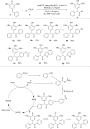
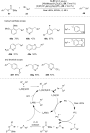
- simple lithium salts for hypervalent iodine catalyst activation. The activated hypervalent iodine catalyst allows the intermolecular coupling of soft nucleophiles such as amides onto electronically activated olefins with high regioselectivity. Keywords: amide coupling; hypervalent iodine catalysis
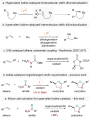
- α-phenylstyrene produced the respective oxazoline products with high regioselectivity and reasonable yields using iodoanisole as the catalyst precursor (Figure 3, products 24 and 25). The proposed catalytic cycle (Figure 4) begins with iodotoluene A which is oxidized by Selectfluor salt into the



Generation of alkyl and acyl radicals by visible-light photoredox catalysis: direct activation of C–O bonds in organic transformations
Beilstein J. Org. Chem. 2024, 20, 1348–1375, doi:10.3762/bjoc.20.119
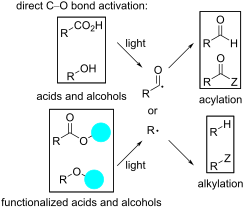
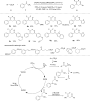
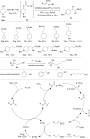
- using tertiary alkyl oxalates and aryl bromides (Scheme 10). This is achieved through the synergistic combination of photoredox and nickel catalysis. This approach facilitates the formation of diverse trisubstituted olefins with outstanding regioselectivity and syn-stereoselectivity. The proposed








Transition-metal-catalyst-free electroreductive alkene hydroarylation with aryl halides under visible-light irradiation
Beilstein J. Org. Chem. 2024, 20, 1327–1333, doi:10.3762/bjoc.20.116
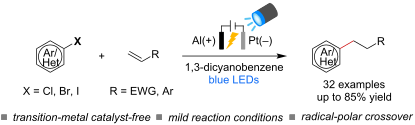
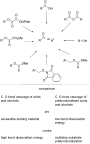
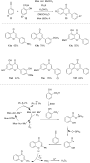
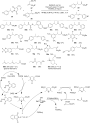
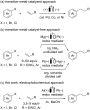
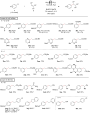
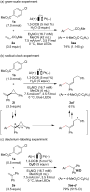
- high regioselectivity. Herein, we report the electroreductive hydroarylation of electron-deficient alkenes and styrene derivatives using (hetero)aryl halides under mild reaction conditions. Notably, the present hydroarylation proceeded with high efficiency under transition-metal-catalyst-free
- versatile building blocks in organic syntheses. To achieve this transformation with high efficiency and predictable regioselectivity, numerous efforts have been made to develop transition-metal-catalyzed reactions based on a C–H activation strategy [1][2][3][4] or the reductive coupling of aryl halides with


Domino reactions of chromones with activated carbonyl compounds
Beilstein J. Org. Chem. 2024, 20, 1256–1269, doi:10.3762/bjoc.20.108
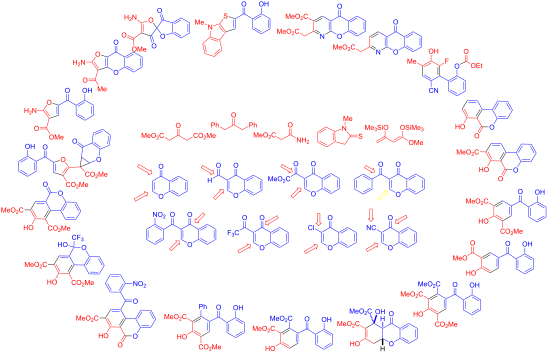
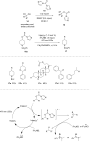
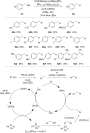
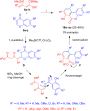
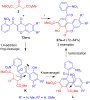
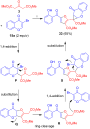
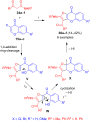
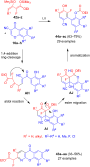
- carbonyl compounds, such as dimethyl acetone-1,3-dicarboxylate and 1,3-diphenylacetone, and with 1,3-bis(silyloxy)-1,3-butadienes, electroneutral equivalents of 1,3-dicarbonyl dianions, allow for a convenient synthesis of a great variety of products. The regioselectivity and course of the reaction depends
- of the substituent located at carbon C3 of the chromone moiety and also on the type of nucleophile employed. Keywords: cyclizations; 1,3-dicarbonyl compounds; domino reactions; heterocycles; regioselectivity; silyl enol ethers; Introduction Domino reactions (also called cascade or tandem reactions
- undergo cyclization reactions under mild conditions. In case of 1,3-diphenylacetone (4a) some activation of the methylene group is observed as well, because of benzylic stabilization. Dianions of 1,3-dicarbonyl compounds follow a different regioselectivity as compared to simple monoanions [6][7][8][9][10









Two-fold addition reaction of silylene to C60: structural and electronic properties of a bis-adduct
Beilstein J. Org. Chem. 2024, 20, 1179–1188, doi:10.3762/bjoc.20.100
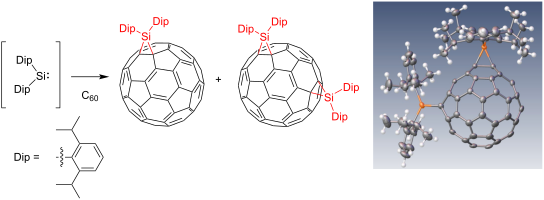
- results. To obtain some insight into regioselectivity, we performed density functional theory (DFT) calculations using the B3LYP/6-31G(d) method [45][46][47][48]. We first compared the relative stabilities of mono-adducts (Dip2SiC60) with 6,6-silirane (2a), 6,6-sila-fulleroid (2b), 5,6-silirane (2c), and
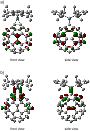
- difference except for the carbons adjacent to the addition site. Therefore, neither the double bond lengths nor the POAV values of 2a are regarded as affecting the regioselectivity. The frontier orbitals of 2a were then examined to elucidate the reactivity in the second silylene addition. The ground states
- charge densities are nearly zero on the cage carbon atoms except those adjacent to the addition site. The charge densities of 2a are regarded as affecting the regioselectivity. Thus, it is suggested that the regioselectivity in the silylene addition could not be estimated by the charge densities of 2a


Light on the sustainable preparation of aryl-cored dibromides
Beilstein J. Org. Chem. 2024, 20, 1076–1087, doi:10.3762/bjoc.20.95
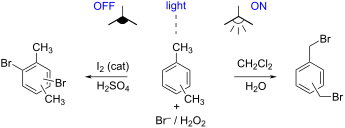
- considering the most atom-economical options, namely chlorine and bromine, the latter typically exhibits some advantages over the former. These include: (i) better regioselectivity in radical processes, attributed to the lower bond enthalpy of H–Br (88 kcal/mol) compared to H–Cl (103 kcal/mol) [17], (ii


Carbonylative synthesis and functionalization of indoles
Beilstein J. Org. Chem. 2024, 20, 973–1000, doi:10.3762/bjoc.20.87
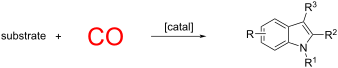
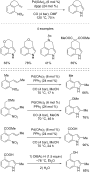
- reaction took place in the presence of Pd(OAc)2 (2 mol %), 1,10-phenantroline (4 mol %) under 1 bar of CO at 110 °C in DMF. After the right time, six products were isolated, while, in three cases, when the benzene ring was meta-substituted, a regioisomeric mixture was obtained. The regioselectivity was
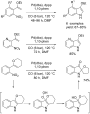
- starting from indoles and o-dibromoarenes as substrates [59]. In this tandem reaction, various symmetrical bromoarenes were utilized to eliminate the problem with regioselectivity. Two tests by using 2-bromo-5-methoxyphenyl triflate and 2-bromo-4-methoxyphenyl triflate were performed to evaluate the
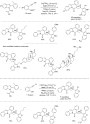
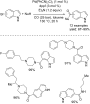
- regioselectivity of the process. The regioselectivity was good with a regioisomeric ratio of 95:5. All reactions took place in the presence of Pd(OAc)2 as catalyst, cataCXium as ligand, and K2CO3 as base. Besides, the authors proposed glyoxylic acid monohydrate as an environmentally friendly CO surrogate (Scheme












Synthesis and properties of 6-alkynyl-5-aryluracils
Beilstein J. Org. Chem. 2024, 20, 898–911, doi:10.3762/bjoc.20.80
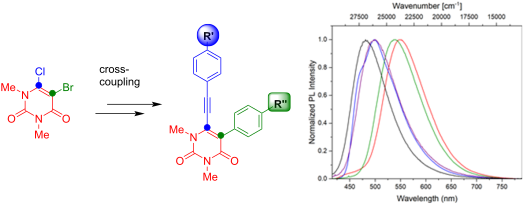
- -coupling; fluorescence; heterocycles; regioselectivity; Introduction Organic life is a complex interplay of many different building blocks. One of these building blocks is uracil. Discovered for the first time in 1901 by Alberto Ascoli, it is now known to be one of the four nucleobases of RNA [1]. It




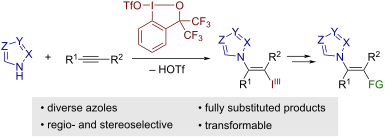
Three-component N-alkenylation of azoles with alkynes and iodine(III) electrophile: synthesis of multisubstituted N-vinylazoles
Beilstein J. Org. Chem. 2024, 20, 891–897, doi:10.3762/bjoc.20.79
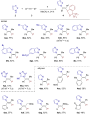
- , respectively. Tetrazole and 5-methyltetrazole both proved to be excellent substrates. Regardless of the presence or absence of the 5-substituent, they underwent preferential alkenylation at the N1 position over the N2 position with the identical regioselectivity of 7:3 (see 4ja and 4ka). Among other five



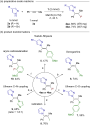
Advancements in hydrochlorination of alkenes
Beilstein J. Org. Chem. 2024, 20, 787–814, doi:10.3762/bjoc.20.72
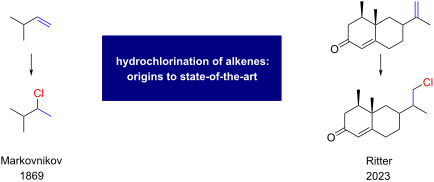
- , HCl gas was bubbled through neat alkene 1 for several hours, as depicted in Scheme 3A [35]. This example highlights an intriguing regioselectivity that might have been challenging to predict through a simple analysis of the stability of the corresponding cations. Alternatively, the HCl gas was bubbled
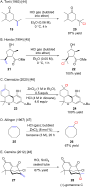
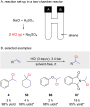
- alkenes (Scheme 17). Remarkably, various functional groups were well tolerated, and the product 114 was obtained with unexpectedly high regioselectivity. In 2022, Paquin and colleagues devised a practical hydrochlorination reaction, utilizing a mixture of methanesulfonic acid and hand-ground CaCl2 in
- the higher-substituted carbon atom to furnish intermediate species C. The irreversibility of the hydride addition and the regioselectivity thereof were supported by a deuterium labelling study with PhSiD3. The next steps involve homolytic cleavage of the cobalt–carbon bond to yield a carbon-centered






Chemoenzymatic synthesis of macrocyclic peptides and polyketides via thioesterase-catalyzed macrocyclization
Beilstein J. Org. Chem. 2024, 20, 721–733, doi:10.3762/bjoc.20.66
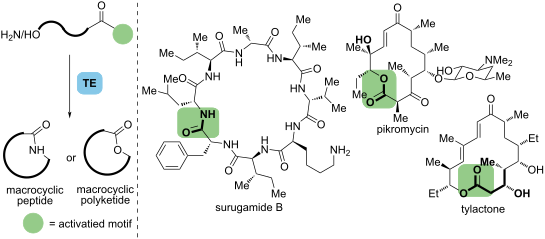
- . Developing more efficient and diverse macrocyclization strategies is urgently needed to overcome issues such as insufficient regioselectivity, intermolecular oligomerization, the overuse of protective groups, and other drawbacks [8]. In the biosynthetic logic, these natural products are produced by the large
- the current issues, such as insufficient regioselectivity, intermolecular oligomerization, and the overuse of protective groups. The biosynthetic studies demonstrated that thioesterase (TE) domains exhibit a high level of chemoselectivity and regioselectivity in late-stage macrocyclizations. This


Regioselective quinazoline C2 modifications through the azide–tetrazole tautomeric equilibrium
Beilstein J. Org. Chem. 2024, 20, 675–683, doi:10.3762/bjoc.20.61
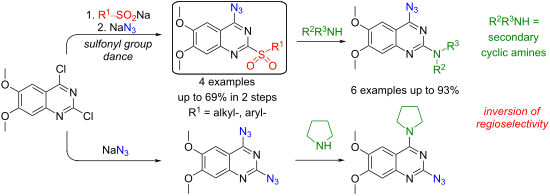
- hours without compromising selectivity. Although tetrabutylammonium azide (TBAA) is better soluble in DMSO than NaN3, practical challenges associated with its use led to the preference for NaN3. Confirmation of regioselectivity for the sulfonyl group dance products The regioselectivity and the structure
- , thioether substituents were installed in the presence of K2CO3. For alkylthiols, DMF was used, but arylthiols required milder conditions with MeOH and cooling to acquire regioselectivity to the C4 position which resulted in yields up to 91%. Oxidation with purified mCPBA (commercial mCPBA with 68% purity
- further optimized since the products were only needed for analytical purposes. Two different pyrrolidine-substituted derivatives were additionally synthesized to prove the regioselectivity of the sulfonyl group dance products (Scheme 8). Compound 16 was obtained in the C4-selective SNAr reaction between


Palladium-catalyzed three-component radical-polar crossover carboamination of 1,3-dienes or allenes with diazo esters and amines
Beilstein J. Org. Chem. 2024, 20, 661–671, doi:10.3762/bjoc.20.59
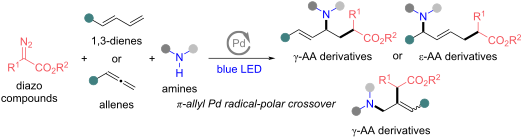
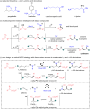
- temperature (rt), the desired unsaturated ε-AA derivative 4a was obtained in 75% isolated yield (Table 1, entry 1). Isolation and NMR analysis demonstrated that this model reaction provided amino acid 4a with good E-selectivity and excellent regioselectivity (E/Z = 91:9, 1,4-/1,2-addition >20:1). Control
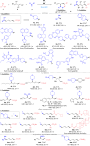
- , different alkylamines with various functional groups were evaluated under the optimized conditions, successfully delivering the corresponding 1,4-difunctionalized products in moderate to excellent yields (4a–k, 35–84%) with high regioselectivity. Some simple secondary amines including cyclic amines 3a, 3c
- next turned to evaluate the scope of 1,3-dienes. Although the regioselectivity control of allylic substitution can be attributed to many factors, it is agreed that steric hindrance generally is the primary factor affecting the regioselectivity of nucleophilic attack [54][55][56][57]. Monoalkyl



Synthesis of spiropyridazine-benzosultams by the [4 + 2] annulation reaction of 3-substituted benzoisothiazole 1,1-dioxides with 1,2-diaza-1,3-dienes
Beilstein J. Org. Chem. 2024, 20, 280–286, doi:10.3762/bjoc.20.29
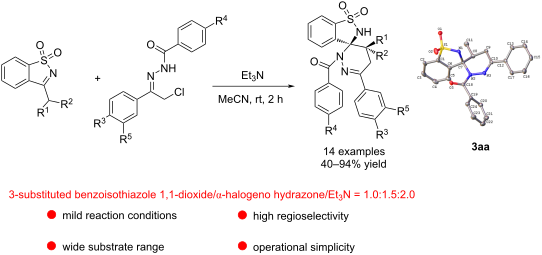
- regioselectivity. Comparision of previous work with this work. The effects of substituent groups on the [4 + 2] annulation reaction. Reaction conditions: 1 (1.0 mmol), 2 (1.5 mmol), Et3N (2.0 mmol), MeCN (10.0 mL), 25 °C, 2.0 h. Gram-scale synthesis of 3aa. The transformation of 3aa. The reaction mechanism of the




Unveiling the regioselectivity of rhodium(I)-catalyzed [2 + 2 + 2] cycloaddition reactions for open-cage C70 production
Beilstein J. Org. Chem. 2024, 20, 272–279, doi:10.3762/bjoc.20.28
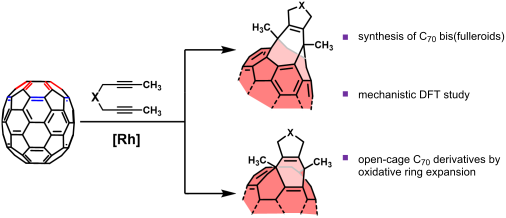
- holds significant promise for applications in the fields of medicinal chemistry, materials science, and photovoltaics. In this study, we investigate the regioselectivity of the rhodium(I)-catalyzed [2 + 2 + 2] cycloaddition reactions between diynes and C70 as a novel procedure for generating C70 bis
- (fulleroid) derivatives. The aim is to shed light on the regioselectivity of the process through both experimental and computational approaches. In addition, the photooxidation of one of the C–C double bonds in the synthesized bis(fulleroids) affords open-cage C70 derivatives having a 12-membered ring
- explore, both experimentally and computationally, the Rh-catalyzed intermolecular [2 + 2 + 2] cycloaddition reaction between diynes and C70 as a new procedure to generate C70 bis(fulleroids). We are particularly interested in the analysis of the regioselectivity of this [2 + 2 + 2] cycloaddition. Results


Nucleophilic functionalization of thianthrenium salts under basic conditions
Beilstein J. Org. Chem. 2024, 20, 257–263, doi:10.3762/bjoc.20.26
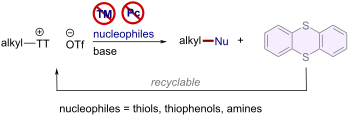
- regioselectivity. Significant advancements in the synthesis of arylthianthrenium salts have prompted a growing interest in their utilization as versatile precursors for the conversion of C–H bonds in arenes into C–C/X bonds through transition-metal-catalyzed cross-coupling processes [12][13][14][15][16][17][18][19



Copper-promoted C5-selective bromination of 8-aminoquinoline amides with alkyl bromides
Beilstein J. Org. Chem. 2024, 20, 155–161, doi:10.3762/bjoc.20.14
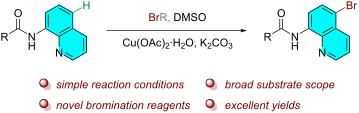
- , employing activated and unactivated alkyl bromides as the halogenation reagents without additional external oxidants. This method features outstanding site selectivity, broad substrate scope, and excellent yields. Keywords: aminoquinolines; C–H bromination; copper catalysis; regioselectivity; Introduction


Perspectives on push–pull chromophores derived from click-type [2 + 2] cycloaddition–retroelectrocyclization reactions of electron-rich alkynes and electron-deficient alkenes
Beilstein J. Org. Chem. 2024, 20, 125–154, doi:10.3762/bjoc.20.13
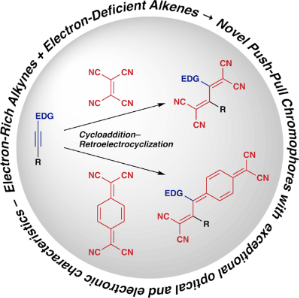
- in the form of degraded fragments), affording the TCBD products. A distinguishing feature of the [2 + 2] CA–RE reaction involving electron-rich alkynes and DCFs is the alternation of regioselectivity, which is contingent upon the specific substituents incorporated onto the cyclopentadienyl moiety of


Controlling the reactivity of La@C82 by reduction: reaction of the La@C82 anion with alkyl halide with high regioselectivity
Beilstein J. Org. Chem. 2023, 19, 1858–1866, doi:10.3762/bjoc.19.138

- , such as alkyl halides. In this study, the thermal reaction of the La@C2v-C82 anion with benzyl bromide derivatives 1 at 110 °C afforded single-bonded adducts 2–5 with high regioselectivity. The products were characterized by matrix-assisted laser desorption/ionization time-of-flight mass spectrometry
- benzyl bromide under photolytic conditions affords eight monoadducts [19]. Therefore, one-electron reduction and the subsequent thermal reaction of La@C2v-C82 were effective for its functionalization in terms of both regioselectivity and reactivity compared to the thermal and photoreactions of La@C2v-C82
- afforded the corresponding single-bonded adducts 2–5 with high regioselectivity. One-electron reduction of La@C2v-C82 increased its reactivity during thermal reaction relative to that of neutral La@C2v-C82. Structural analysis of the two major products indicated that the characteristic absorption features


N-Boc-α-diazo glutarimide as efficient reagent for assembling N-heterocycle-glutarimide diads via Rh(II)-catalyzed N–H insertion reaction
Beilstein J. Org. Chem. 2023, 19, 1841–1848, doi:10.3762/bjoc.19.136
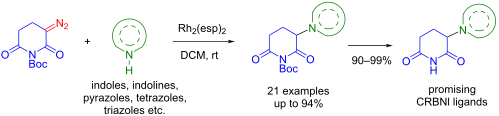
- regioselectivity of this reaction can be attributed to several factors, including steric hindrances to the attack of the nitrogen atom by the carbenoid. When reacting with tetrahydroquinoline (with insignificant steric shielding of the N-nucleophilic center), the product of N–H insertion 6x was obtained in good
- reaction with indazole, compound 6g, formed as a result of the attack of the carbenoid on the 2-N atom, was obtained. The regioselectivity of the reaction with 7-azaindazole was similar, however, the introduction of an additional basic nitrogen atom resulted in a significant increase in reaction time and a
- conversion of the NH-heterocycle, and the yields of target compounds 6n and 6o were slightly diminished. The single-crystal X-ray data verified the structure of product 6n. The data obtained on the regioselectivity of reactions with benzotriazoles are in agreement with those previously reported in the


Recent advancements in iodide/phosphine-mediated photoredox radical reactions
Beilstein J. Org. Chem. 2023, 19, 1785–1803, doi:10.3762/bjoc.19.131
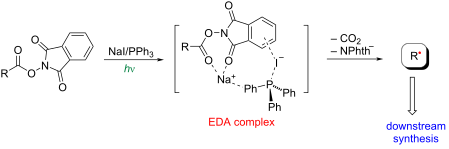
- ). Impressively, this transformation exhibited exceptional versatility, extending beyond coumarins to encompass other nitrogen-containing heterocycles, including quinoxalinones, with remarkable C-3 regioselectivity. The findings of this study significantly expanded the synthetic toolbox for accessing




Morpholine-mediated defluorinative cycloaddition of gem-difluoroalkenes and organic azides
Beilstein J. Org. Chem. 2023, 19, 1545–1554, doi:10.3762/bjoc.19.111
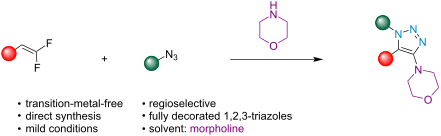
- azides and gem-difluoroalkenes in the presence of morpholine generates 1,5-disubstituted-1,2,3-triazoles with a pendant C-4 morpholine moiety. The regioselectivity of the triazole formation is dictated by morpholine preferentially making the first nucleophilic attack over azide at the α-position of gem
- with an organic azide. A relatively wide range of 1,4,5-trisubstituted-1,2,3-triazoles was obtained in 30–70% yields with high regioselectivity and modest functional group tolerability. This work demonstrates that gem-difluoroalkenes can serve as versatile fluorinated building blocks in lieu of alkynes


N-Sulfenylsuccinimide/phthalimide: an alternative sulfenylating reagent in organic transformations
Beilstein J. Org. Chem. 2023, 19, 1471–1502, doi:10.3762/bjoc.19.106
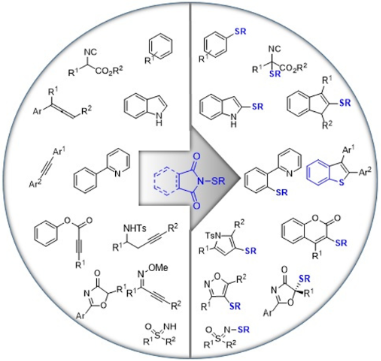
- performed at room temperature, no desired product was observed, and performing the reaction at 0 °C enhanced the regioselectivity but still in low yield. By further lowering the temperature to −60 °C the yield was increased. The authors suggested a possible mechanism for this organoselenium-catalyzed




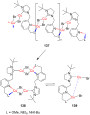
Application of N-heterocyclic carbene–Cu(I) complexes as catalysts in organic synthesis: a review
Beilstein J. Org. Chem. 2023, 19, 1408–1442, doi:10.3762/bjoc.19.102
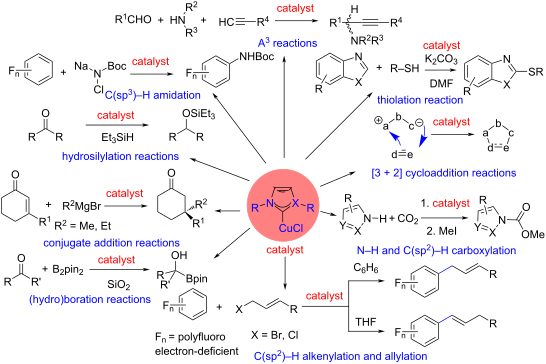
- reactive and difficult to isolate. The NHC–Cu complex also helps to control the regioselectivity and stereoselectivity of the reaction, which are of high importance in organic synthesis. Overall, the use of NHC–Cu complexes as catalysts for conjugate addition reactions offers a highly efficient and
- substrates and alkylboranes. Later in 2012, Hoveyda and co-worker [63] used chiral bidentate NHC–Cu complexes bearing sulfonates, which was critical to regioselectivity and resulted in high selectivity for the γ-position. Thus, allenyl-containing products were generated in up to 95% yield and 99:1 er. The
- (Scheme 61). Out of the three ligands, 154 the one incorporating a bulky trityl (–CPh3) group was found to be most effective giving the product in up to 99% yield. A low loading (2 mol %) of the catalyst was needed and the reactions occurred at rt. McQuade and co-workers observed that the regioselectivity








One-pot nucleophilic substitution–double click reactions of biazides leading to functionalized bis(1,2,3-triazole) derivatives
Beilstein J. Org. Chem. 2023, 19, 1399–1407, doi:10.3762/bjoc.19.101
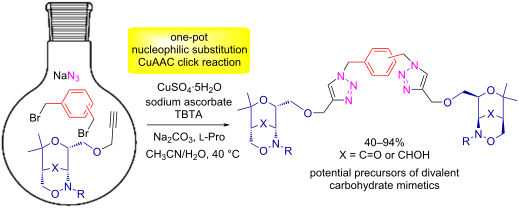
- ]). Mechanistic aspects of the CuAAC have been studied in detail [16][17]. Whereas the traditional 1,3-dipolar cycloaddition (Huisgen reaction) [18][19][20] of azides and alkynes requires often – but not always – relatively harsh conditions and proceeds with moderate regioselectivity only [21], the copper