


Search results
Search for "cyclohexane" in Full Text gives 294 result(s) in Beilstein Journal of Organic Chemistry. Showing first 200.
Nanangenines: drimane sesquiterpenoids as the dominant metabolite cohort of a novel Australian fungus, Aspergillus nanangensis
Beilstein J. Org. Chem. 2019, 15, 2631–2643, doi:10.3762/bjoc.15.256
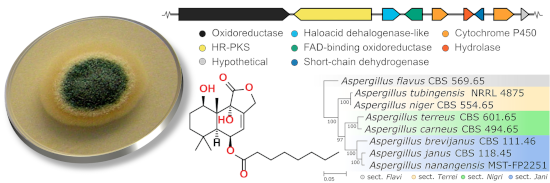
- structures of 4 and 9 have one. The cyclohexane rings of all molecules have chair conformations, the cyclohexene rings of all molecules have half-chair conformations, and the furan rings of all molecules have flattened envelope conformations. See Supporting Information File 1 for detailed methods. Genomics


Chiral terpene auxiliaries V: Synthesis of new chiral γ-hydroxyphosphine oxides derived from α-pinene
Beilstein J. Org. Chem. 2019, 15, 2493–2499, doi:10.3762/bjoc.15.242

- Adams catalyst was carried out in cyclohexane with 1 atm of hydrogen. The hydrogen pressure was increased to 10 atm for the reaction performed in an autoclave on a larger scale maintaining the high selectivity of hydrogen addition from the less hindered side of the molecule. (1R,2S,5R)-(+)-Verbanone (3


Azologization and repurposing of a hetero-stilbene-based kinase inhibitor: towards the design of photoswitchable sirtuin inhibitors
Beilstein J. Org. Chem. 2019, 15, 2170–2183, doi:10.3762/bjoc.15.214
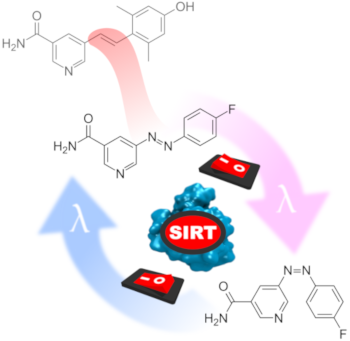
- reduced pressure. The formed precipitate was collected by filtration and recrystallized from EtOAc. The product was obtained as colourless crystals (0.55 g, 2.45 mmol, 49%): Rf = 0.25 (cyclohexane/THF 1:1); mp: 196.4 °C; 1H NMR (400 MHz, DMSO-d6) δ (ppm) 8.93 (d, J = 2.0 Hz, 1H), 8.90 (d, J = 2.1 Hz, 1H
- ) and dired over MgSO4. The solvent was evaporated under reduced pressure and the residue purified by silica gel column chromatography (cyclohexane/EtOAc 3:1). The product was obtained as orange solid (431 mg, 1.67 mmol, 42%): Rf = 0.52 (cyclohexane/EtOAc 3:1); mp: 103.6 °C; 1H NMR, H,H-COSY (400 MHz


1,2,3,4-Tetrahydro-1,4,5,8-tetraazaanthracene revisited: properties and structural evidence of aromaticity loss
Beilstein J. Org. Chem. 2019, 15, 2059–2068, doi:10.3762/bjoc.15.203
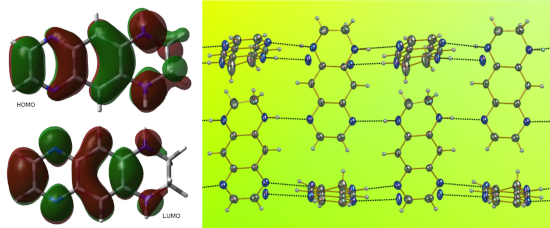
- hydroxide (1 M, 2 × 5 mL), then with water (10 mL), dried over magnesium sulfate, and evaporated. The crude product was purified by column chromatography on silica gel using cyclohexane/AcOEt (3:7) to furnish the titled product in 48% yield (348 mg) as a yellow solid. 1H NMR (CDCl3) δ 1.38 (s, 9H), 3.67 (t




Synthesis of 1-azaspiro[4.4]nonan-1-oxyls via intramolecular 1,3-dipolar cycloaddition
Beilstein J. Org. Chem. 2019, 15, 2036–2042, doi:10.3762/bjoc.15.200
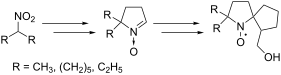
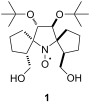
- hydrogens at positions 2 and 6 of the cyclohexane ring [22]. It has been reported that EPR spectra of pyrrolidine or imidazolidine nitroxides with pair(s) of geminal ethyl groups at α-carbon atoms may feature large doublet hyperfine splittings [23][24][25]. For imidazolidine nitroxides, these splittings



Tautomerism as primary signaling mechanism in metal sensing: the case of amide group
Beilstein J. Org. Chem. 2019, 15, 1898–1906, doi:10.3762/bjoc.15.185
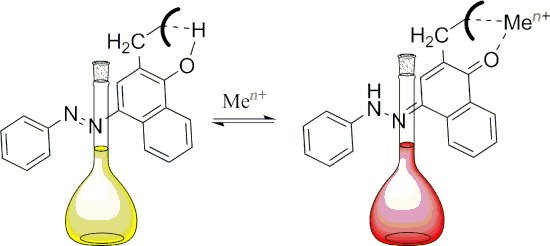
- solvent. However, the tautomeric equilibrium has not been switched fully to either of the tautomers in solution. For instance, the experimentally determined ΔG values at room temperature range from 1.42 kcal/mol, which corresponds to around 8% (in cyclohexane) or 10% (in methylcyclohexane/toluene) of the





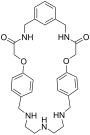
A heteroditopic macrocycle as organocatalytic nanoreactor for pyrroloacridinone synthesis in water
Beilstein J. Org. Chem. 2019, 15, 1505–1514, doi:10.3762/bjoc.15.152
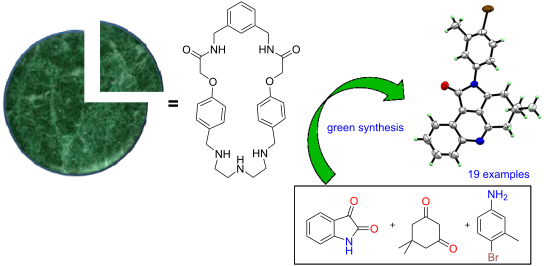
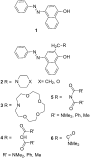
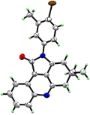
- the 4,5-dihydropyrrolo derivatives, we were interested to synthesize fully aromatic products by using C5–H containing cyclohexane-1,3-dione derivatives in place of dimedone. Thus, using cyclohexane-1,3-dione (5) or 5-phenylcyclohexane-1,3-dione (6) allowed the isolation of novel substituted pyrrolo





Remarkable effect of alkynyl substituents on the fluorescence properties of a BN-phenanthrene
Beilstein J. Org. Chem. 2019, 15, 1257–1261, doi:10.3762/bjoc.15.122
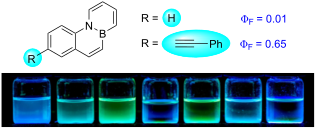
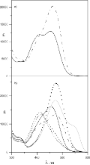
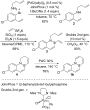
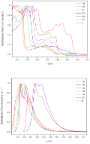
- BN-phenanthrenes 1 and 5 in cyclohexane (≈0.02 mM). Solutions of 1a–f and 5 (from left to right) under UV irradiation. Synthesis of Cl-substituted BN-phenanthrene 1b. Palladium-catalyzed cross-couplings of Cl-substituted BN-phenanthrene 1b. Pd-catalyzed Sonogashira reactions of Cl-substituted BN





Mechanochemical synthesis of hyper-crosslinked polymers: influences on their pore structure and adsorption behaviour for organic vapors
Beilstein J. Org. Chem. 2019, 15, 1154–1161, doi:10.3762/bjoc.15.112
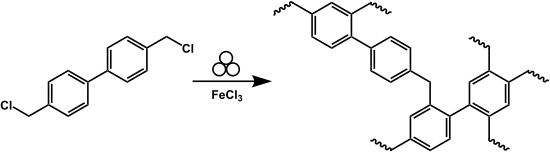
- sorption experiments with benzene and cyclohexane. Keywords: hyper-crosslinked polymers; mechanochemistry; microporous; solvent-free; vapor sorption; Introduction The widespread use of microporous materials in areas like gas storage, gas separation, and catalysis has led to the development of a wide
- . Recently, the advantage of HCP over various commonly available adsorbents in the selective liquid phase adsorption of least polar component in aqueous solution has been demonstrated [46][47]. Herein, the adsorption properties for the organic vapors benzene and cyclohexane are reported and the differences
- . In addition, cyclohexane vapour was measured in the same temperature range (Figure 6A). Over the whole relative pressure region a lower uptake is observed compared to the benzene vapour. In a similar fashion, but slightly weaker pronounced, an adsorption-desorption-hysteresis is found at higher


Strong hyperconjugative interactions limit solvent and substituent influence on conformational equilibrium: the case of cis-2-halocyclohexylamines
Beilstein J. Org. Chem. 2019, 15, 818–829, doi:10.3762/bjoc.15.79
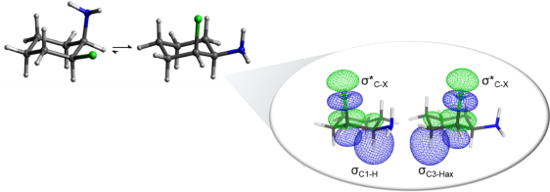
- preference for the ea conformer in cis-2-halocyclohexylamines, being strong enough to restrain the shift in the equilibrium due to other factors such as steric repulsion or solvent effects. Keywords: conformational equilibrium; cyclohexane derivatives; dynamic NMR; hyperconjugation; principal component
- halogen size. Instead, the equilibrium is influenced by solute–solvent hydrogen bonding with the hydroxy group. Besides the classical effects, interactions such as hyperconjugation has been pointed out as relevant in several studies involving cyclohexane derivatives [4][12][15][16][17][18][19][20]. Since
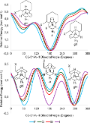
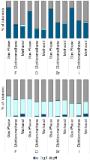
- the populations were 95, 94 and 91% for F, Cl and Br, respectively. These results clearly show that the equilibrium is non-sensitive to halogen size and solvent effects. A similar axial preference of cyclohexane halo derivatives was observed by Basso and co-workers in cis-2-halocyclohexanols [14], and




Conformational signature of Ishikawa´s reagent using NMR information from diastereotopic fluorines
Beilstein J. Org. Chem. 2019, 15, 506–512, doi:10.3762/bjoc.15.44
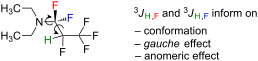
- the Ishikawa´s reagent was analyzed using NMR 3JH,F coupling constant data in different solvents, since the orientation of the diastereotopic fluorines relative to H-2 and F-2 changes with the medium. In nonpolar cyclohexane solvent, the preferred conformation experiences a weaker steric and
- solvent dependence of 3JH,F(pro-S/R), indicating that the conformational equilibrium of 1 changes on going from cyclohexane (nonpolar) to pyridine (polar) solution. According to the calculated molecular dipole moments for the possible conformers of 1 (Table 2), a significant interplay of conformers 1B and
- (pro-S) increases on going from C6D12 to C5D5N solution (from 3.53 Hz in cyclohexane solution to 6.00 Hz in pyridine solution), it follows that the above 1A conformation shifts toward 1C (Fpro-R anti in 1B and gauche in 1C relative to H-2, while Fpro-S is gauche in 1B and anti in 1C). The 3JF,F SSCC


Computational characterization of enzyme-bound thiamin diphosphate reveals a surprisingly stable tricyclic state: implications for catalysis
Beilstein J. Org. Chem. 2019, 15, 145–159, doi:10.3762/bjoc.15.15
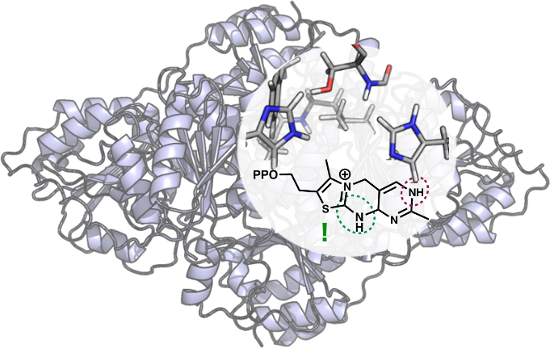
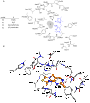
- ], cyclohexane dione hydrolase [38], oxalyl-CoA decarboxylase [39], DXP synthase [40] and transketolase [41][42]. It is surprising that almost none of these studies acknowledged that there is a second, albeit less well discussed, path for the ThDP cofactor, i.e., the formation of a tricyclic, dihydrothiachromine




Systematic synthetic study of four diastereomerically distinct limonene-1,2-diols and their corresponding cyclic carbonates
Beilstein J. Org. Chem. 2019, 15, 130–136, doi:10.3762/bjoc.15.13
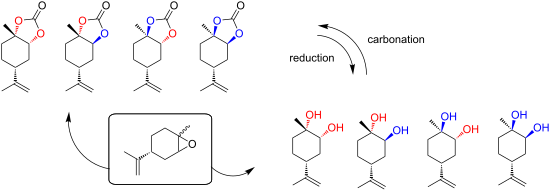
- when 2b is reacted with triphosgene. The conformation A is expected to be more stable because the isopropenyl group remains in the equatorial position on the cyclohexane ring. In this conformation, the remaining hydroxy group is located in the axial position and away from the carbonyl group of the
- signal a are observed for 1a–c. Conversely, the signal for 1d exhibits a small coupling constant (J < ca. 3 Hz), showing a largely singlet shape. For the former three LM5CCs, this means that the proton a locates at the axial position on the cyclohexane ring and interacts strongly with the neighbouring


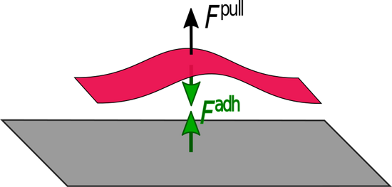
Adhesion, forces and the stability of interfaces
Beilstein J. Org. Chem. 2019, 15, 106–129, doi:10.3762/bjoc.15.12


Fabrication of supramolecular cyclodextrin–fullerene nonwovens by electrospinning
Beilstein J. Org. Chem. 2019, 15, 89–95, doi:10.3762/bjoc.15.10
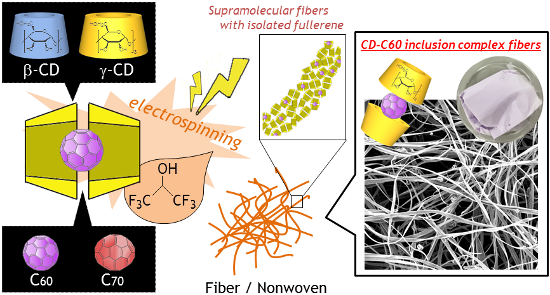
- C60 by filtration, the obtained purple solution shows the UV–vis absorption peaks (214, 260, 332, and 408 nm, Figure 2a). The spectrum agrees well with those of C60 in toluene or cyclohexane [21]. The absorption peaks increase as the sonication time increases until an equilibrium is reached after 24


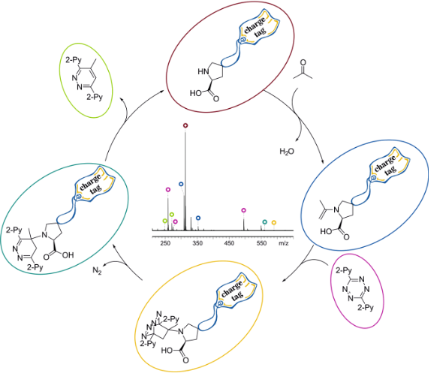
Mechanistic studies of an L-proline-catalyzed pyridazine formation involving a Diels–Alder reaction with inverse electron demand
Beilstein J. Org. Chem. 2019, 15, 30–43, doi:10.3762/bjoc.15.3
- volume ratios unless stated otherwise. Commercially available chemicals were used without prior purification. Solvents (cyclohexane, dichloromethane, ethyl acetate) were dried with standardized methods. Inert gas atmosphere reactions were performed under argon using standard Schlenk techniques and oven
- temperature. The solid was filtered off and washed with dichloromethane (10 mL) and dried in vacuo. 0.12 g of raw product were obtained and purified via column chromatography (ethyl acetate/cyclohexane 4:1, Rf = 0.91). 0.10 g of colorless solid were obtained. The protocol has been adapted from Wang et al. [55
- at reflux conditions for 3 h. The solvent was distilled of in vacuo at 40 °C. The raw product (0.65 g) was purified via column chromatography (cyclohexane/dichloromethane, 100:1, Rf = 0.23). A yellow solid was obtained (0.48 g). The protocol has been adapted from Wang et al. [55]. Yield: 0.48 g (1.65




6’-Fluoro[4.3.0]bicyclo nucleic acid: synthesis, biophysical properties and molecular dynamics simulations
Beilstein J. Org. Chem. 2018, 14, 3088–3097, doi:10.3762/bjoc.14.288
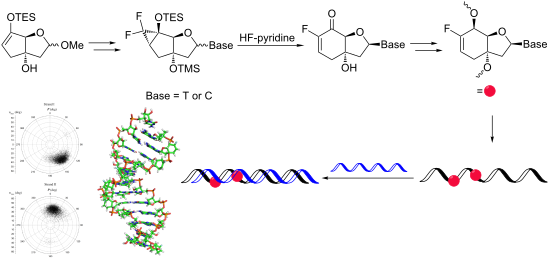
- analogs as building blocks for therapeutic oligonucleotides, we investigated the bc4,3-DNA as scaffold for the modification. The idea was to place the fluorine atom next to the internucleosidic linkage. Furthermore, an additional double bond in the cyclohexane ring was expected to rigidify the carbocyclic


Volatiles from the hypoxylaceous fungi Hypoxylon griseobrunneum and Hypoxylon macrocarpum
Beilstein J. Org. Chem. 2018, 14, 2974–2990, doi:10.3762/bjoc.14.277
- MgSO4. The solvent was removed under reduced pressure and the crude product was purified by column chromatography on silica gel (cyclohexane/ethyl acetate 5:1). The obtained product contained 29a and 29b as a mixture which was separated by HPLC (KNAUER Wissenschaftliche Geräte GmbH, Berlin, Azura
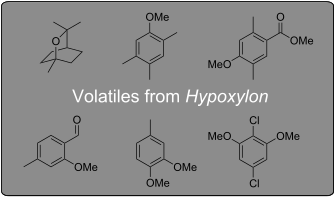
- . The crude product was purified by column chromatography on silica gel (cyclohexane/ethyl acetate 20:1). The pure products were obtained as pale yellow liquids. 2,4,5-Trimethylanisole (24). Yield: 5 mg (0.03 mmol, 32%). TLC (silica, cyclohexane/ethyl acetate 20:1): Rf = 0.48; 1H NMR (500 MHz, CDCl3
- -Trimethylanisole (24a). Yield: 6 mg (0.04 mmol; 36%). TLC (silica, cyclohexane/ethyl acetate 20:1): Rf = 0.31; 1H NMR (500 MHz, CDCl3, 298 K) δ (ppm) 6.82 (s, 2H, 2 × CH), 3.70 (s, 3H, CH3), 2.25 (s, 6H, 2 × CH3), 2.24 (s, 3H, CH3); 13C NMR (125 MHz, CDCl3, 298 K) δ (ppm) 154.9 (Cq), 133.2 (Cq), 130.6 (2 × Cq




Synthesis of α-D-GalpN3-(1-3)-D-GalpN3: α- and 3-O-selectivity using 3,4-diol acceptors
Beilstein J. Org. Chem. 2018, 14, 2805–2811, doi:10.3762/bjoc.14.258
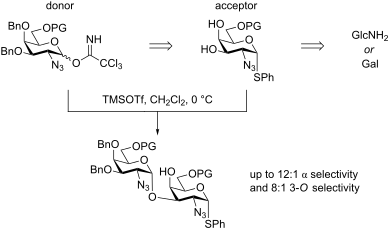
- -OTBDPS as protective group (1 in Scheme 1) and benzylation with freshly prepared Ag2O and BnBr in the solvent mixture CH2Cl2/cyclohexane 1:4 as described by Wang et al. [39], a 91% isolated yield of the migrated product, i.e., 3-O-Bn, 4-O-Bz, was obtained (Scheme 1). Following the apparent difference in


Copolymerization of epoxides with cyclic anhydrides catalyzed by dinuclear cobalt complexes
Beilstein J. Org. Chem. 2018, 14, 2779–2788, doi:10.3762/bjoc.14.255
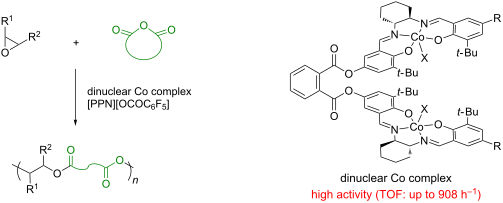
- copolymerization. The copolymerization of PO with other CAs was also tested to evaluate the scope. Cyclohexane dicarboxylic anhydride (CHDA) was successfully converted into the corresponding polyester with a TOF of 53 h−1 (Table 2, entry 5). The copolymerization with maleic anhydride (MA), a common CA in the


An overview on recent advances in the synthesis of sulfonated organic materials, sulfonated silica materials, and sulfonated carbon materials and their catalytic applications in chemical processes
Beilstein J. Org. Chem. 2018, 14, 2745–2770, doi:10.3762/bjoc.14.253
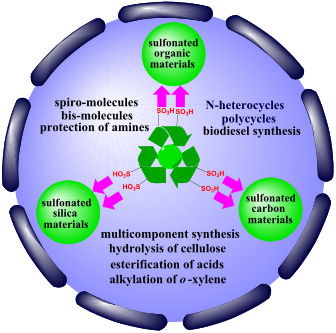
- and 37 from active carbonyl compounds (e.g., isatins 32, acenaphthoquinone (33), and aldehydes 38), a variety of C–H activated acids (cyclohexane-1,3-dione (20a), 5,5-dimethylcyclohexane-1,3-dione (20b), 2-naphthol (23), ethyl acetoacetate (34a), 4-hydroxycoumarin (34b), triacetic acid lactone (34c
- , catalyst 53 was utilized for the synthesis of 2H-indazolo[2,1-b]phthalazine-1,6,11(13H)-trione derivatives 55 via a one-pot, three-component reaction of phthalhydrazide (54), aldehydes 7, and dimedone (20) or cyclohexane-1,3-dione (for R3 = H, 20) under solvent-free conditions (Scheme 9). To check the




Non-native autoinducer analogs capable of modulating the SdiA quorum sensing receptor in Salmonella enterica serovar Typhimurium
Beilstein J. Org. Chem. 2018, 14, 2651–2664, doi:10.3762/bjoc.14.243
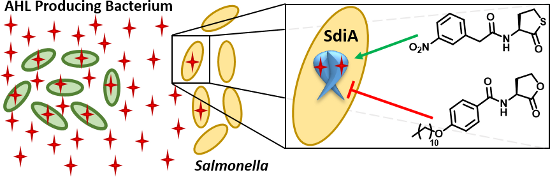
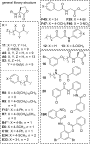
- head group to a phenyl or cyclohexane was not well tolerated; however, cyclopentane, thiolactones, and the alternative stereochemistry, D-lactone were generally tolerated. Interestingly, 1-octanoyl-rac-glycerol (23) showed no agonism in this reporter assay, suggesting it does not act as an AHL signal



Synthesis of eunicellane-type bicycles embedding a 1,3-cyclohexadiene moiety
Beilstein J. Org. Chem. 2018, 14, 2461–2467, doi:10.3762/bjoc.14.222
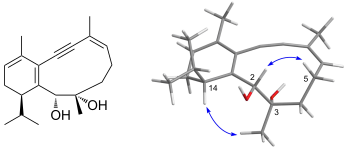
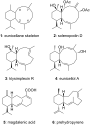
- reduction of non-cyclizing cyclohexane systems that were synthesized from limonene oxide. The title compounds and their synthetic precursors are prone to aromatization on contact with air oxygen. Attempted synthesis of cyclohexene-containing eunicellane bicycles by elimination of water from tertiary alkynyl
- would be the attack of triflinate as O-nucleophile at the cyclohexane carbon, followed by [2,3]-sigmatropic rearrangement [31]. Conclusion With the synthesis of the [8.4.0]bicycles 18 and 19 that contain a 1,3-cyclohexadiene partial structure, we have made progress towards the synthesis of a small group





Practical tetrafluoroethylene fragment installation through a coupling reaction of (1,1,2,2-tetrafluorobut-3-en-1-yl)zinc bromide with various electrophiles
Beilstein J. Org. Chem. 2018, 14, 2375–2383, doi:10.3762/bjoc.14.213
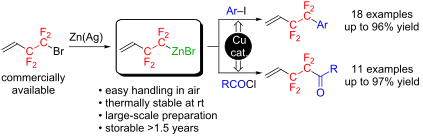
- the CF2CF2 unit between two cyclohexane rings caused significant enhancement in thermal stability in a liquid crystalline phase (Figure 1c) [11]. In addition to the development of a convenient access to CF2CF2-containing pyranoses [12], our group also showed that tricyclic mesogens with a CF2CF2


β-Hydroxy sulfides and their syntheses
Beilstein J. Org. Chem. 2018, 14, 1668–1692, doi:10.3762/bjoc.14.143
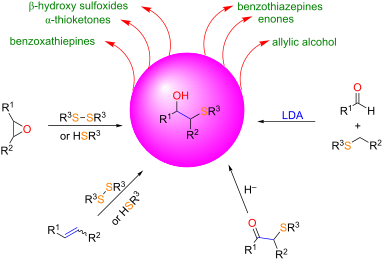
- retarded the reaction due to their tight coordination to the catalyst whilst non-polar solvents such as cyclohexane resulted in poor enantioselectivity probably due to coordination of the product β-hydroxy sulfide. The protocol was, however, limited to unsubstituted cyclohexene oxide, and as its greatest





