


Search results
Search for "diketone" in Full Text gives 142 result(s) in Beilstein Journal of Organic Chemistry.
Recent applications of the divinylcyclopropane–cycloheptadiene rearrangement in organic synthesis
Beilstein J. Org. Chem. 2014, 10, 163–193, doi:10.3762/bjoc.10.14
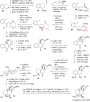
- , which underwent DVCPR under these conditions to give tetracycle 244 in 50% yield. Matsubara and coworkers [202] investigated the formation of cyclohepta-1,3-diones from 1,2-diketone starting materials. Treatment of 245 with bis(iodozincio)methane resulted in the formation of cis-divinylcyclopropane 246




Novel supramolecular affinity materials based on (−)-isosteviol as molecular templates
Beilstein J. Org. Chem. 2013, 9, 2821–2833, doi:10.3762/bjoc.9.317
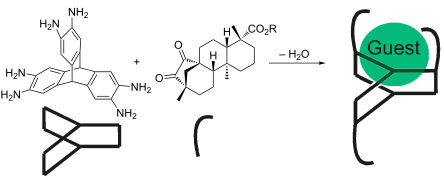
- , (−)-isosteviol can be oxidized under Riley conditions (Table 1, reaction conditions a: selenium dioxide/xylene) [62][63] to give the corresponding diketone 9 [66]. Subsequent esterification with 3,5-dinitrobenzylic chloride under basic conditions (Table 1, reaction conditions b for R = DNB) [67] proceeds with a
- carried out (Scheme 4). Again, both paths A and B lead to the formation of the desired PNB protected diketone 11. Esterification was achieved by reaction with 4-nitrobenzyl chloride and cesium carbonate in DMF (Table 1, reaction conditions b for R = PNB) [68]. Both sequences A and B proceed with similar
- ester substituent, the detour via protecting groups in the synthesis of alkylated triptycene 17 was subsequently avoided. Therefore, alkylated diketone 18 was synthesized, starting from (−)-isosteviol (Scheme 8). Since alkenes are known to participate in Riley oxidations as well, rendering allylic


Synthesis of indole-based propellane derivatives via Weiss–Cook condensation, Fischer indole cyclization, and ring-closing metathesis as key steps
Beilstein J. Org. Chem. 2013, 9, 2709–2714, doi:10.3762/bjoc.9.307
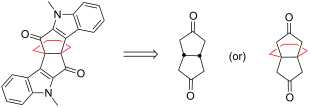
- diversification: (i) various aryl and heteroaryl fused indole derivatives can be assembled by choosing an appropriate hydrazine derivative, (ii) during the alkylation of diketone 2 [43] various unsaturated alkenyl fragments may be incorporated either in a symmetrical or in an unsymmetrical manner, (iii) various
- [3.3.0]octane-3,7-dione (1) [44][45][46][47][48][49][50] was subjected to twofold Fischer indole cyclization to generate the diindole derivative 6 by using 1-methy-1-phenylhydrazine (5) under HCl/EtOH reflux conditions. Next, SeO2 oxidation of 6 in 1,4-dioxane under reflux gave the known diketone 2
- (Scheme 1). Later, diketone 2 was treated with allyl bromide in the presence of NaH to afford the mono-allylated product 7 in 65% yield. The allyl group attacks the molecule from the sterically less hindered convex side. Since the alkylation step can be performed stepwise, symmetrical as well as


Ambient gold-catalyzed O-vinylation of cyclic 1,3-diketone: A vinyl ether synthesis
Beilstein J. Org. Chem. 2013, 9, 2537–2543, doi:10.3762/bjoc.9.288
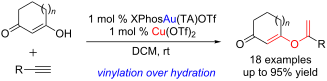
- access to various vinyl ethers. A catalytic amount of copper triflate was identified as the significant additive in promoting this transformation. Both aromatic and aliphatic alkynes are suitable substrates with good to excellent yields. Keywords: alkyne; copper salt; diketone; gold catalysis; vinyl
- different binding ability toward water activation, we wondered whether the intermolecular O-addition could be achieved through ligand tuning. In this report, we focus on the cyclic 1,3-diketone nucleophiles due to A) the transformation is challenging and has never been reported in the past, B) vinyl ether
- . However, the corresponding TA-Au complexes indicated significantly improved selectivity towards the diketone addition over the hydration (Table 1, entry 4). Finally, the application of the XPhos ligand and the corresponding TA-Au complex largely promoted this reaction, giving 3a in 85% yield with 12


An overview of the synthetic routes to the best selling drugs containing 6-membered heterocycles
Beilstein J. Org. Chem. 2013, 9, 2265–2319, doi:10.3762/bjoc.9.265
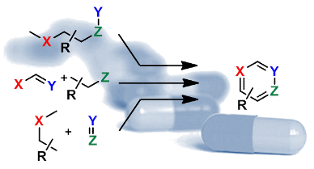
- substituted pyridines is the direct condensation of ammonia (or hydroxylamine) with a corresponding 1,5-diketone. Alternatively, ammonia (or an ammonium salt), an aldehyde and two equivalents of a 1,3-dicarbonyl compound can react via a classical Hantzsch dihydropyridine synthesis. Similarly unsymmetrical
- to the thiazolidinedione moiety as experienced using other reducing systems. As an aside the synthesis of 2-pyridones (i.e. 1.42) can be achieved via a number of methods. For example the classical Guareschi–Thorpe condensation in which cyanoacetamide reacts with a 1,3-diketone delivers highly


The chemistry of isoindole natural products
Beilstein J. Org. Chem. 2013, 9, 2048–2078, doi:10.3762/bjoc.9.243




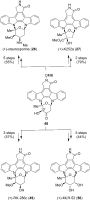


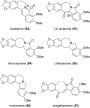


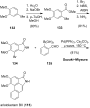


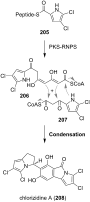


Mechanistic studies on the CAN-mediated intramolecular cyclization of δ-aryl-β-dicarbonyl compounds
Beilstein J. Org. Chem. 2013, 9, 1472–1479, doi:10.3762/bjoc.9.167
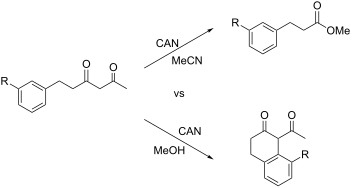
- obtain a better understanding of the impact of arene substitution on the intramolecular cyclization, DFT calculations were performed at UB3LYP/6-31G(d) level by using Gaussian 03/09 [28]. Previous research from our group has shown that the oxidation of the enol tautomer of a diketone initially forms a
- obtain the minima. For the aryl diketone radical, two conformers for the ketones were considered, one with the carbonyl groups syn to each other and the other with the carbonyl groups in the anti orientation. For every substrate, two transition structures were identified on the energy surface along the
- compared to the parent aryl diketone radical, and the rotational transition structure has a comparable barrier of 2.5 kcal/mol. While it is evident why electron-rich systems should more readily cyclize, the observed site selectivity in products 2g and 2j warranted further investigation. For these


Synthesis of the tetracyclic core of Illicium sesquiterpenes using an organocatalyzed asymmetric Robinson annulation
Beilstein J. Org. Chem. 2013, 9, 1135–1140, doi:10.3762/bjoc.9.126
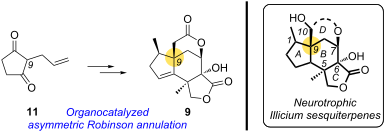
- represents an efficient route toward a diversity-oriented synthesis of several Illicium sesquiterpenes. The enantioselective entry to these molecules is based on an organocatalyzed asymmetric Robinson annulation that allows access to the enantiomerically enriched bicyclic motif 8 from achiral diketone 11
- enantioselectivity and short reaction time, we decided to pursue this conversion at 40 °C where we obtained an enantiomeric excess of 90% (70% yield after 14 days). The enantiomerically enriched Hajos–Wiechert-like diketone 8 (ee > 90%) was then subjected to a selective protection of the C-6 enone motif to yield


Tandem dinucleophilic cyclization of cyclohexane-1,3-diones with pyridinium salts
Beilstein J. Org. Chem. 2013, 9, 1119–1126, doi:10.3762/bjoc.9.124
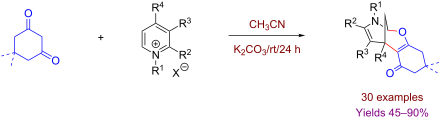
- pyridinium salt 2a should be used in a ratio of two to one. In addition, the optimization study showed the essential role of a non-nucleophilic base as well as that of the potassium cation. This optimization study afforded a general procedure and optimal reaction conditions: 2.0 mmol of diketone, 1.0 mmol of
- -diketone deprotonation and nucleophilic attack of potassium 3-oxocyclohex-1-enolate on pyridinium cation, which yields an intermediate with a new C–C bond, and this is a key stage in the reaction. The C–O bond formation can be excluded in the initial stage (see Supporting Information File 2 for the
- because this base is presumed to operate; it is formed from neutral carbonate when it deprotonates the cyclic diketone. However, the mechanism involving any other base should not differ significantly. A plausible mechanism is presented in Figure 2. After initial deprotonation of the diketone and formation




Substituent effect on the energy barrier for σ-bond formation from π-single-bonded species, singlet 2,2-dialkoxycyclopentane-1,3-diyls
Beilstein J. Org. Chem. 2013, 9, 925–933, doi:10.3762/bjoc.9.106
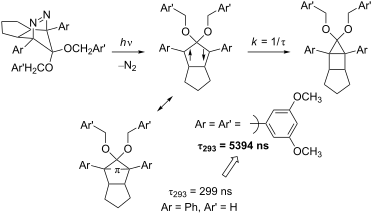
- cyclopentadienes, and followed by a hydrogenation reaction [30][31]. The synthesis of AZg (Ar = 3,5-dimethoxyphenyl, Ar’ = H) was performed from the corresponding 1,3-diketone 4 (Scheme 3b). 2,2-Dimethoxy-1,3-diarylpropane-1,3-dione 5g was prepared from 1,3-dione 4 (R = 3,5-dimethoxybenzene) according to the


Asymmetric synthesis of a highly functionalized bicyclo[3.2.2]nonene derivative
Beilstein J. Org. Chem. 2013, 9, 655–663, doi:10.3762/bjoc.9.74
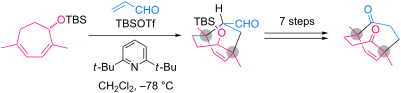
- -membered 25 was induced by treatment with NaNO2 in acetic acid [28][29], resulting in the formation of eight-membered 27 through the intermediary of 26. Finally, the desilylation of 27 with TBAF and the subsequent oxidation of the resultant hydroxy group delivered the symmetric diketone 1 in optically
- ; found, 331.2078. C2-symmetric diketone 1: TBAF (1.0 M in THF, 130 μL, 0.13 mmol) was added to a solution of 27 (13 mg, 42 μmol) in THF (0.9 mL) at room temperature. The reaction mixture was stirred for 1.5 h at room temperature and at 40 °C for 1.5 h. TBAF (1.0 M in THF, 83 μL, 83 μmol) was added again
- mL × 3). The combined organic layers were washed with brine (5 mL), dried over Na2SO4, filtered and concentrated. The residue was purified by flash column chromatography (silica gel 1 g, pentane/Et2O 5:1 to 2:1) to afford C2-symmetric diketone 1 (7.5 mg, 39 μmol) in 93% yield over two steps: crystal


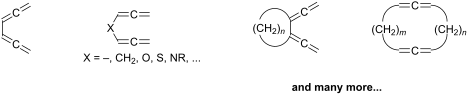
The chemistry of bisallenes
Beilstein J. Org. Chem. 2012, 8, 1936–1998, doi:10.3762/bjoc.8.225
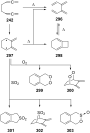
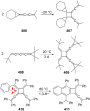
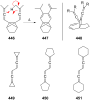
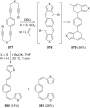
- reaction. In this case the diketone 107 was obtained by a Zn/Cu-couple-induced coupling reaction between excess phenacyl bromide (105) and the enyne 106 (Scheme 27) [83]. Besides 107 its diyne and propargylallene dimers were produced, requiring a chromatographic separation of the product mixture. The
















Organocatalytic asymmetric addition of malonates to unsaturated 1,4-diketones
Beilstein J. Org. Chem. 2012, 8, 1452–1457, doi:10.3762/bjoc.8.165
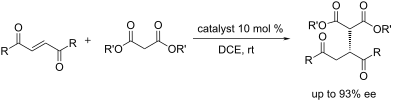
- catalysts were screened in the reaction of phenyl disubstituted unsaturated 1,4-diketone 1a with diethyl malonate (2a, Table 1). The reaction was run in DCE at room temperature in the presence of 10 mol % of catalyst with a five-fold excess of malonate. In all cases, the yields of the products were very
- ) was used. This did not influence the reaction time or the enantioselectivity, but afforded easier purification of the crude product. 1,4-Diketone 1a reacted smoothly with a variety of malonates 2a–2f, affording the products 3a–3f in high yields and with moderate to high stereoselectivities. In the
- -substituent of unsaturated 1,4-diketone 1 on the reaction was investigated (Table 3). Electron-withdrawing groups, such as bromo and nitro, (Table 3, entries 10 and 13) as well as the electron-donating methoxy group (Table 3, entry 7) led to an increase in stereoselectivity, but the reaction time was also


Two-directional synthesis as a tool for diversity-oriented synthesis: Synthesis of alkaloid scaffolds
Beilstein J. Org. Chem. 2012, 8, 850–860, doi:10.3762/bjoc.8.95
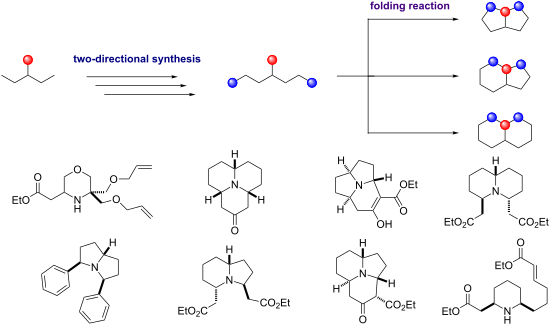
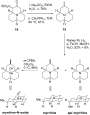
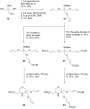
- % yield of the nitroketone. Two-directional synthesis of diketone 18 in this fashion did not prove to be feasible; however, it was achieved in good yield by Michael addition of the nitroketone anion to phenylvinylketone. Subjecting diketone 18 to H2 gas and Raney-nickel then reduced the nitro group and



Catalyst-free and solvent-free Michael addition of 1,3-dicarbonyl compounds to nitroalkenes by a grinding method
Beilstein J. Org. Chem. 2012, 8, 534–538, doi:10.3762/bjoc.8.61
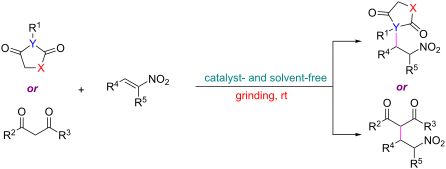
- method. Herein, we report a green protocol for the Michael addition of 1,3-dicarbonyl compounds to nitroalkenes under catalyst- and solvent-free conditions (Scheme 1). Utilizing this simple, rapid, low-cost and effective procedure, various nitro diketone derivatives were synthesized in high yields


Branching out at C-2 of septanosides. Synthesis of 2-deoxy-2-C-alkyl/aryl septanosides from a bromo-oxepine
Beilstein J. Org. Chem. 2012, 8, 522–527, doi:10.3762/bjoc.8.59

- methodology include the formation of vinyl halide, vinyl ether, diketone and diol intermediates, which are potential sites for varied types of functionalizations. While exploring such features, we undertook the preparation of septanoside derivatives that are branched out at C-2, so as to afford 2-deoxy-2-C
- oxygen at C-2 of oxyglycal I was retained throughout until the septanoside V was obtained. More importantly, vinyl halide III and diketone IV also form as intermediates of the reaction and these intermediates provide an avenue to expand the scope of the reaction sequence. In the present work, we


Syntheses and applications of furanyl-functionalised 2,2’:6’,2’’-terpyridines
Beilstein J. Org. Chem. 2012, 8, 379–389, doi:10.3762/bjoc.8.41
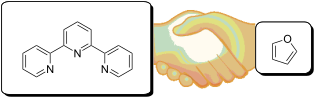
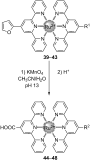
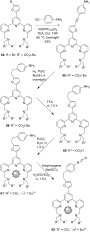
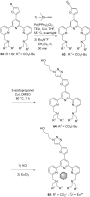
- synthesis starts with 6-carboxy-2-acetylpyridine (20), which is reacted with furfural (1), thus providing chalcone 21. This is then reacted with di-pyridinium salt 22 in the presence of ammonium acetate to afford quinquepyridine 23 (Scheme 4). Another possibility to access the key intermediate “1,5-diketone
- . Nevertheless, it was demonstrated that also asymmetric tpys are accessible via the 1,5-diketone pathway [31]. Michael addition of ethyl picolinoylacetate 29 to chalcone 30 affords diketone 31 in 60% yield. Reaction with ammonium acetate to effect ring closure did not yield a terpyridine, but instead





Synthesis and photooxidation of styrene copolymer bearing camphorquinone pendant groups
Beilstein J. Org. Chem. 2012, 8, 337–343, doi:10.3762/bjoc.8.37
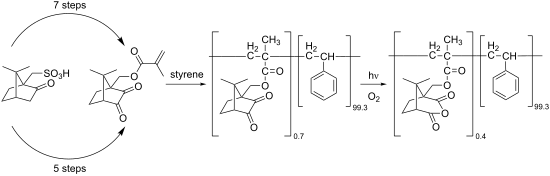
- formed in irradiated films of styrene copolymers with pendant BZ groups leads to crosslinking, only small molecular-weight changes in irradiated MCQ/S were observed. Keywords: camphorquinone; 1,2-diketone; (±)-10-methacryloyloxycamphorquinone; photooxidation; polystyrene; Introduction Camphorquinone


Sexithiophenes as efficient luminescence quenchers of quantum dots
Beilstein J. Org. Chem. 2011, 7, 1722–1731, doi:10.3762/bjoc.7.202
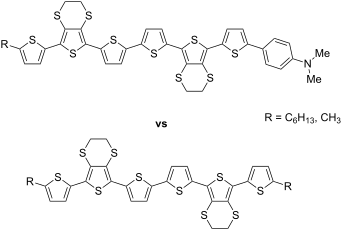
- ]dithiole-2-one (C) [30] To a solution of the diketone B (9.5 g, 26.8 mmol) in dichloromethane/glacial acetic acid (3:1 v/v, 200 mL), was added mercuric acetate (11.98 g, 37.6 mmol). The mixture was stirred at room temperature for 16 h and filtered through a silica plug (eluting with dichloromethane). The


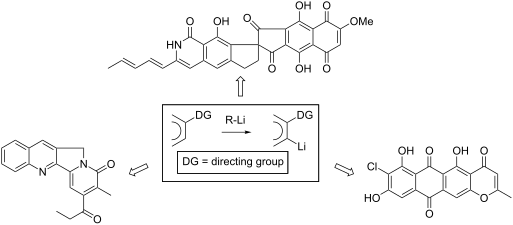
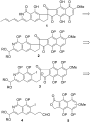
Directed aromatic functionalization in natural-product synthesis: Fredericamycin A, nothapodytine B, and topopyrones B and D
Beilstein J. Org. Chem. 2011, 7, 1475–1485, doi:10.3762/bjoc.7.171
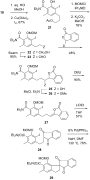
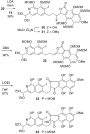
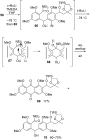
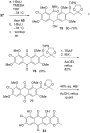
- as the sole product. The aldehyde underwent tandem addition of the anion of simple phthalide (a model for 20; prepared from the parent compound by deprotonation with LDA) and dehydration via mesylate 26 to provide 27, which upon reaction with EtOLi (EtOH + BuLi) in THF rearranged to diketone 28
- to 33 was complicated by the unexpected propensity of the diketone to react with atmospheric oxygen to form the corresponding 2-hydroxy derivative 34. This transformation was virtually instantaneous when the anion of 33 was exposed to the atmosphere, whereas 33 itself was completely hydroxylated in







Functionalization of heterocyclic compounds using polyfunctional magnesium and zinc reagents
Beilstein J. Org. Chem. 2011, 7, 1261–1277, doi:10.3762/bjoc.7.147
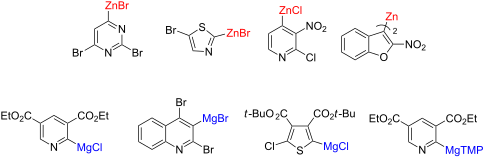
- reaction of the benzylic chloride 25 with zinc dust (1.5 equiv) and LiCl (1.5 equiv) in THF at 25 °C for 3.5 h provides the corresponding zinc reagent 26 in 68% yield. Its half-life at 25 °C is approximately two days. The copper(I)-mediated acylation of 26 provides the expected diketone 27 in 74% yield
- ketone are readily tolerated. Thus, the Boc-substituted benzophenone 130 reacts with TMP2Mg·2LiCl (1.1 equiv, −20 °C, 4 h) providing the expected aryl magnesium amide 131, which after a copper-mediated benzoylation leads to the 1,2,3-trisubstituted diketone 132 in 72% yield. This reagent allows a smooth


Continuous gas/liquid–liquid/liquid flow synthesis of 4-fluoropyrazole derivatives by selective direct fluorination
Beilstein J. Org. Chem. 2011, 7, 1048–1054, doi:10.3762/bjoc.7.120
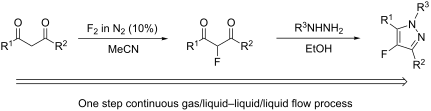
- Research & Development, Ramsgate Road, Sandwich, Kent, CT13 9NJ, UK 10.3762/bjoc.7.120 Abstract 4-Fluoropyrazole systems may be prepared by a single, sequential telescoped two-step continuous gas/liquid–liquid/liquid flow process from diketone, fluorine gas and hydrazine starting materials. Keywords
- /liquid–liquid/liquid synthesis of fluoropyrazoles from fluorine, hydrazine and diketone starting materials was constructed from nickel metal and narrow bore PTFE tubing as described previously [28][29] (Figure 1). Briefly, fluorine gas, diluted to 10% v/v solution in nitrogen was added via a mass flow
- controller to the microchannel through Input A, the diketone substrate dissolved in acetonitrile was added by a syringe pump into the microchannel via Input B and was made to react with fluorine while both these starting materials passed down the reactor channel in a ‘pipe flow’ regime, as observed in


Functionalization of anthracene: A selective route to brominated 1,4-anthraquinones
Beilstein J. Org. Chem. 2011, 7, 1036–1045, doi:10.3762/bjoc.7.118

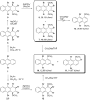
- stereochemistry. For example, although both hydroxy compounds obtained from hexabromides 2 and 3 [1] afforded epoxides 4 and 5 upon treatment with sodium methoxide (Scheme 1, Scheme 5), dihydroxy compound 17 produced olefinic compound 27, whose oxidation gave diketone 28. We also observed different reactivities




Toward an integrated route to the vernonia allenes and related sesquiterpenoids
Beilstein J. Org. Chem. 2011, 7, 937–943, doi:10.3762/bjoc.7.104
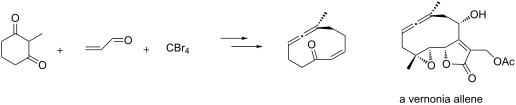
- prepare 24 by a direct and modular route. Scheme 3 depicts a concise route to 24 and 25. Beginning with the commercially available diketone 18, acid promoted Michael addition with acrolein gave aldehyde 19. A two step procedure, via 20, was employed to obtain the (Z)-bromoolefin 21. Initially, we examined
- -olefination products from diketone aldehyde 19. Computed torsion angles for potential C–C fragmentation substrates.a Supporting Information Supporting Information File 130: General experimental methods and analytical data, 1H and 13C NMR spectra of compounds 18–25 and computed structural coordinates for


Gold-catalyzed oxidation of arylallenes: Synthesis of quinoxalines and benzimidazoles
Beilstein J. Org. Chem. 2011, 7, 860–865, doi:10.3762/bjoc.7.98

- explorations focused on the reaction of 4-butylphenylallene (1a) (0.5 mmol) in the presence of a catalytic mixture of (Ph3P)AuCl (2 mol %), AgBF4 (8 mol %), and H2SO4 (0.5 mol %) in dioxane (1.0 mL) and water (10 mmol), at 60 °C for 24 h in air. This proceeded efficiently to form a 44:56 mixture of α-diketone
- -withdrawing fluoro or bromo substituent on the benzene ring also took place smoothly (Table 2, entries 5 and 6). Disubstituted allenes were also examined. Thus, the 1,3-disubstituted allene 1g, was oxidized to afford α-diketone 2g and aldehyde 3c in 35% and 32% yields, respectively (Table 2, entry 7
- oxidative transformation under the same reaction conditions. Having prepared a variety of α-diketones and aldehydes successfully, we then undertook the synthesis of quinoxalines and benzimidazoles (Scheme 2). Thus, the treatment of the corresponding mixture of α-diketone 2 and aldehyde 3 with benzene-1,2





