Search results
Search for "electronic effects" in Full Text gives 153 result(s) in Beilstein Journal of Organic Chemistry.
Transition-metal-catalyzed synthesis of phenols and aryl thiols
Beilstein J. Org. Chem. 2017, 13, 589–611, doi:10.3762/bjoc.13.58

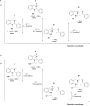
- predominantly occurred at the position ortho to the aniline group. A mechanism investigation showed that the different regioselectivity was controlled by steric and electronic effects. In 2015, Hong and co-workers developed a C–H hydroxylation protocol for flavones; their work is of importance because the


Selective and eco-friendly procedures for the synthesis of benzimidazole derivatives. The role of the Er(OTf)3 catalyst in the reaction selectivity
Beilstein J. Org. Chem. 2016, 12, 2410–2419, doi:10.3762/bjoc.12.235
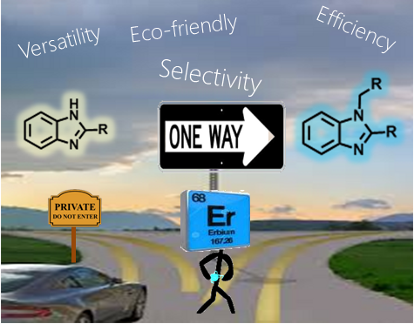
- show that the electronic effects of the substituents present in the aldehydes play a significant role in the reaction pathway. The 1,2-disubstituted benzimidazoles were obtained when electron-rich aldehydes were used, while 2-monosubstituted benzimidazoles were obtained from the reaction with electron


Experimental and theoretical investigations into the stability of cyclic aminals
Beilstein J. Org. Chem. 2016, 12, 2280–2292, doi:10.3762/bjoc.12.221
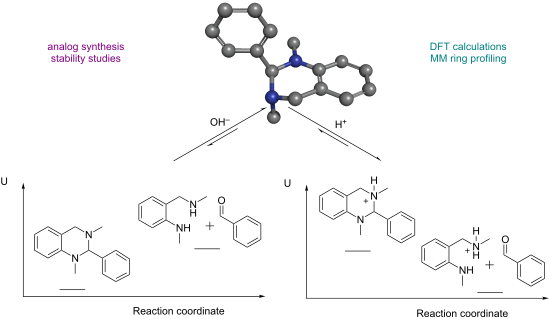
- investigations into their stability towards hydrolysis depending on the pH value are lacking. Results: A set of cyclic aminals was synthesized and their stability quantified by kinetic measurements. Steric and electronic effects were investigated by choosing appropriate groups. Both molecular mechanics (MM) and
- density functional theory (DFT) based studies were applied to support and explain the results obtained. Rapid decomposition is observed in acidic aqueous media for all cyclic aminals which occurs as a reversible reaction. Electronic effects do not seem relevant with regard to stability, but the magnitude





Stereo- and regioselectivity of the hetero-Diels–Alder reaction of nitroso derivatives with conjugated dienes
Beilstein J. Org. Chem. 2016, 12, 1949–1980, doi:10.3762/bjoc.12.184
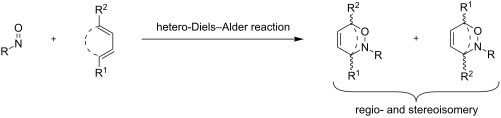
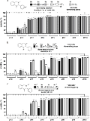
- ). Regiocontrol of the nitroso hetero-Diels–Alder reaction As discussed above, the nitroso hetero-Diels–Alder reaction can be highly regioselective due to the influences of diene substituents and electronic effects. However, reports on the specific regiocontrol of the reaction are rare. In general, the
- results from various electronic effects and the stereoselectivity can be influenced by the use of chiral dienes or dienophiles or the application of asymmetric catalysis. These methods, mainly the last one, take place in solution, while the solid-phase approaches described in the literature were not




Flow carbonylation of sterically hindered ortho-substituted iodoarenes
Beilstein J. Org. Chem. 2016, 12, 1503–1511, doi:10.3762/bjoc.12.147
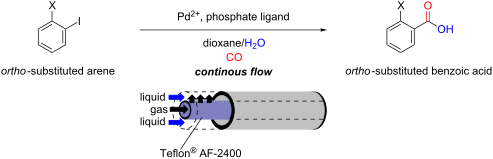
- and trifluoromethyl groups may be inferred (Scheme 4, 11, 13). A more pronounced decrease in yield was obtained for substrates 14 and 15 (Scheme 4, 63% and 60%, respectively) probably due to the larger size of these groups and as well as electronic effects (the more electron withdrawing
- substituents or electron-donating groups giving better yields (Scheme 4, compounds 17, 19–21) than the more electron-withdrawing CF3 group (Scheme 4, compound 18). In the case of 22 the attached aromatic ring introduces both the ortho substituted sterics and the electronic effects from the additional aromatic
- of ortho-substituted substrates giving moderate to good yields. Comparison of 22 with 32 also showed that the steric encumbrance on the ortho position has an effect on the yield even when other electronic effects are in place such as those coming from the additional aromatic ring attached. A scale-up


Catalytic asymmetric synthesis of biologically important 3-hydroxyoxindoles: an update
Beilstein J. Org. Chem. 2016, 12, 1000–1039, doi:10.3762/bjoc.12.98
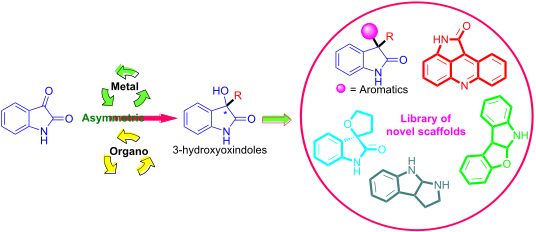
- -acetyl-2H-chromen-2-ones bearing an electron-withdrawing group gave the products in lower yields and with low ee values. In contrast, good reactivity and high enantioselectivity were observed for those with a electron-donating methoxy group probably due to the electronic effects. The final products




The synthesis of functionalized bridged polycycles via C–H bond insertion
Beilstein J. Org. Chem. 2016, 12, 985–999, doi:10.3762/bjoc.12.97
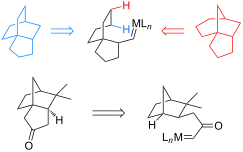
- that have found that heteroatoms accelerate C–H bond insertion at adjacent carbons. The Lee group performed further studies on the electronic effects of the oxygen on the rate of bond insertion, and concluded that the ability of the oxygen lone pair to align with the σ* orbital of the C–H bond targeted




Enantioselective carbenoid insertion into C(sp3)–H bonds
Beilstein J. Org. Chem. 2016, 12, 882–902, doi:10.3762/bjoc.12.87
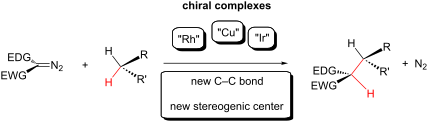
- efforts to better comprehend the scope of this catalytic system, especially on features concerning the BARF salt effect [43][44] and electronic effects on the aromatic rings of the chiral ligands [45]. In 2014, Maguire at al reported the syntheses of N-heterocycles by the enantioselective insertion of


Recent advances in C(sp3)–H bond functionalization via metal–carbene insertions
Beilstein J. Org. Chem. 2016, 12, 796–804, doi:10.3762/bjoc.12.78

- the targeted C–H bond. While secondary and tertiary C(sp3)–H bonds are favored toward the electron-deficient carbenic carbon center in terms of electronic effects, they are unfavored in terms of steric hindrance. The primary C(sp3)–H bonds operate in the opposite way. Further studies in this area will


Diradical reaction mechanisms in [3 + 2]-cycloadditions of hetaryl thioketones with alkyl- or trimethylsilyl-substituted diazomethanes
Beilstein J. Org. Chem. 2016, 12, 716–724, doi:10.3762/bjoc.12.71
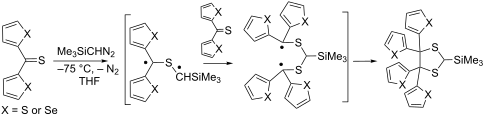
- presence of the Me or Me3Si groups in the S-methanide moiety. However, electronic effects resulting from the diradical nature of the intermediate thiocarbonyl ylides, can also play certain role. The same effect was observed in the case of diaryldiazomethanes used in reactions with aryl/hetaryl thioketones


Copper-mediated arylation with arylboronic acids: Facile and modular synthesis of triarylmethanes
Beilstein J. Org. Chem. 2016, 12, 496–504, doi:10.3762/bjoc.12.49
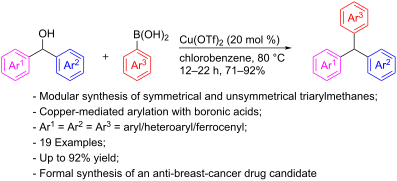
- towards electronic effects, the copper-mediated cross-coupling reaction is not very sensitive to steric crowding in the neighborhood of the reaction center. Next, we employed heteroaromatic boronic acids, such as furan-2-ylboronic acid (10i; Table 2, entry 8), thiophen-2-ylboronic acid (10j; Table 2


Hydroquinone–pyrrole dyads with varied linkers
Beilstein J. Org. Chem. 2016, 12, 89–96, doi:10.3762/bjoc.12.10
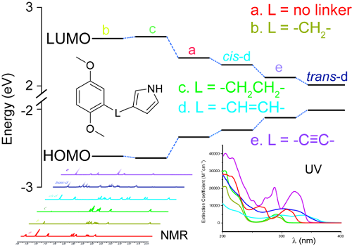
- of non-conjugated 3a and 3b closely resemble the sum of absorptions from the individual DMB and pyrrole spectra, indicating the absence of substantial electronic effects from the substituent. On the other hand, for the conjugated 3c, 3d and 1, a red shift is observed when compared to the individual


Lewis acid-promoted hydrofluorination of alkynyl sulfides to generate α-fluorovinyl thioethers
Beilstein J. Org. Chem. 2015, 11, 1902–1909, doi:10.3762/bjoc.11.205
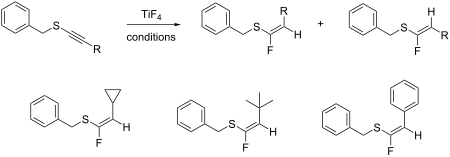
- always be detected (and not removed) from the desired product 2f. We were also interested in exploring the electronic effects of para-substitution of the phenyl group directly attached to the ethynyl moiety on the reaction outcome; thus we selected compounds 1g–j and reacted them under our


Stereochemistry of ring-opening/cross metathesis reactions of exo- and endo-7-oxabicyclo[2.2.1]hept-5-ene-2-carbonitriles with allyl alcohol and allyl acetate
Beilstein J. Org. Chem. 2015, 11, 1893–1901, doi:10.3762/bjoc.11.204

- , however, some electronic effects in 7-oxanorbornene should be also taken into consideration. Unexpectedly, the Z-selectivity predominated in most reactions catalyzed by [Ru]1 (see Table 1, entries 1–6, 10–15, and Table 2, entries 1–4). A two-fold excess of the Z isomer was observed in both groups of
- strained than D. On the other hand, an interaction of less bulky o-tolyl ligands with the ruthenium core in [Ru]5 causes an opposite selectivity (E preference). One can assume that the observed change in the E/Z selectivity resulted from chelating and electronic effects in postulated intermediates C and D


A comprehensive study of olefin metathesis catalyzed by Ru-based catalysts
Beilstein J. Org. Chem. 2015, 11, 1767–1780, doi:10.3762/bjoc.11.192
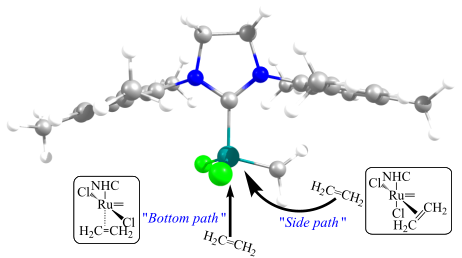
- , respectively. Steric effects have little influence on the absolute C2H4 binding energy, E of 3rd column in Table 2, since rather similar values are calculated for 2 and 5 (−18.6 and −19.1 kcal/mol, respectively). Differently, electronic effects influence the ability of the Ru atom to capture C2H4, particularly
- differentiation between the power of the three effects, steric, electronic and solvent, has turned out be a hazard to make predictions difficult. However the CF3 groups have become key to explain the electronic effects, as well as the t-Bu for steric effects. Steric effects owing to interaction between bulky NHC




First principle investigation of the linker length effects on the thermodynamics of divalent pseudorotaxanes
Beilstein J. Org. Chem. 2015, 11, 687–692, doi:10.3762/bjoc.11.78
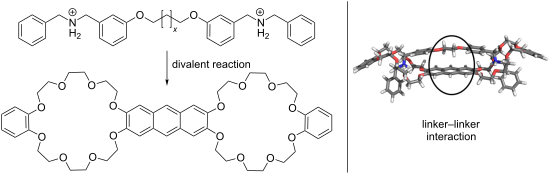
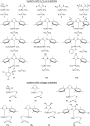
- linker shows an enhanced binding strength due to electronic effects, namely the dispersion interaction between the linkers from the guest and the host. For the longer linkers this ideal packing is not possible due to steric hindrance. Keywords: density functional theory (DFT); dispersion correction
- first principle calculations show clearly that this enhanced binding is due to electronic effects, namely the dispersion interaction of the two linkers. For the shortest linker this interaction results in a nearly ideal π–π stacking. For the two longer linkers ideal packing is not possible due to steric


Hydrogenation of unactivated enamines to tertiary amines: rhodium complexes of fluorinated phosphines give marked improvements in catalytic activity
Beilstein J. Org. Chem. 2015, 11, 622–627, doi:10.3762/bjoc.11.70
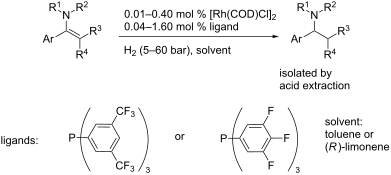
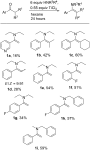
- as purification step, particularly if catalysts could be recycled, although that is likely to be challenging in moisture sensitive catalytic hydrogenation chemistry. The ligand electronic effects seem counter intuitive at first glance, but they support the finding by DFT calculations that enamine



Metal-free one-pot synthesis of 2-substituted and 2,3-disubstituted morpholines from aziridines
Beilstein J. Org. Chem. 2015, 11, 524–529, doi:10.3762/bjoc.11.59
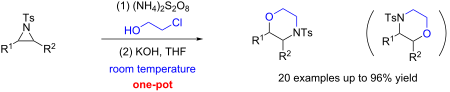
- -disubstituted aziridines (acyclic and/or cyclic ones), separable mixtures of regioisomers 3l,m and 4l,m were obtained arising from isomeric ring opening (Table 2, entries 12 and 13). We speculated that the observed regioselectivity might depend on the combined action of electronic effects and the position of


An unusually stable chlorophosphite: What makes BIFOP–Cl so robust against hydrolysis?
Beilstein J. Org. Chem. 2015, 11, 313–322, doi:10.3762/bjoc.11.36
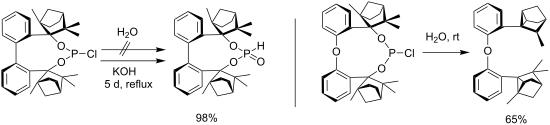
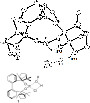
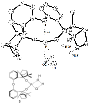
- ). This result demonstrates that steric and electronic effects can be used to render the inherently highly reactive and electrophilic phosphorus–halogen units essentially inert against nucleophilic reagents. The stability of BIFOP–Cl (and other phosphorus–halogen systems) against nucleophiles promotes its


Azirinium ylides from α-diazoketones and 2H-azirines on the route to 2H-1,4-oxazines: three-membered ring opening vs 1,5-cyclization
Beilstein J. Org. Chem. 2015, 11, 302–312, doi:10.3762/bjoc.11.35
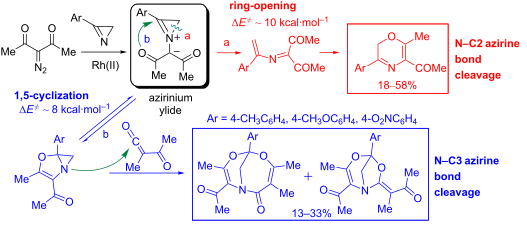
- depends on the electronic effects of the para substituents in the aryl group of 3-aryl-2H-azirine 1. The [3.2.1] adduct is preferably formed from azirines 1e,f with electron-donating substituents (Table 1, entries 7 and 8), while 3-(4-nitrophenyl)-2H-azirine (1g) provides the [4.3.1] adduct only (Table 1


Synthesis and biological evaluation of novel N-α-haloacylated homoserine lactones as quorum sensing modulators
Beilstein J. Org. Chem. 2014, 10, 2539–2549, doi:10.3762/bjoc.10.265
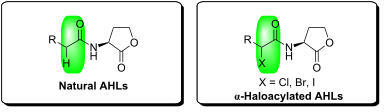
- affinity of AHL analogues with the cognate receptor [18]. However, the activity of the novel compounds is modulated by the steric and electronic effects induced by the larger halo substituents. Furthermore, the absence of antagonistic activity of the novel analogues and the retained QS activity of most of



Chiral phosphines in nucleophilic organocatalysis
Beilstein J. Org. Chem. 2014, 10, 2089–2121, doi:10.3762/bjoc.10.218
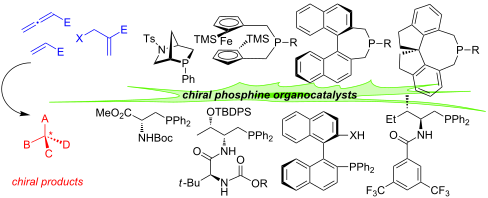
- the preparation of a wide array of cyclopentenes with two adjacent chiral centers, with good enantiomeric excesses and satisfactory to good regioselectivities. These transformations were slightly influenced by electronic effects. Notably, Fu et al. successfully applied this approach to construct
- to furnish a wide range of spirocyclopenteneoxindoles in moderate to excellent yields and ee's (Scheme 38). The yields and stereoselectivities were significantly influenced not by electronic effects but by aromatic interactions. Aryl-substituted MBH carbonates reacted smoothly to afford


An experimental and theoretical NMR study of NH-benzimidazoles in solution and in the solid state: proton transfer and tautomerism
Beilstein J. Org. Chem. 2014, 10, 1620–1629, doi:10.3762/bjoc.10.168
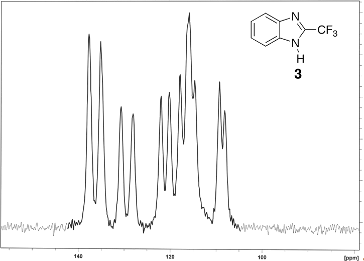
- the substituent at position 2 on the rate (roughly, CF3 and H, fast; CH2C6H5 and CH3, slow) is probably the consequence of steric and electronic effects; many years ago, we showed that intramolecular hydrogen bonds also affect the rate [34]. The calculated electrostatic potential minima associated to


The Ugi four-component reaction as a concise modular synthetic tool for photo-induced electron transfer donor-anthraquinone dyads
Beilstein J. Org. Chem. 2014, 10, 1006–1016, doi:10.3762/bjoc.10.100
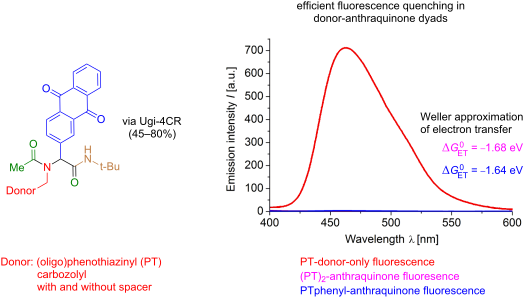
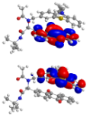
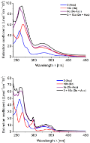
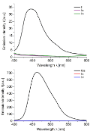
- reference systems 2, 3, and 10 clearly shows that the donor and anthraquinone moieties are essentially electronically decoupled in the electronic ground state. Therefore, in the electronic ground state the electronic effects should behave additively, i.e., as if the donors and anthraquinones were placed at




Aza-Diels–Alder reaction between N-aryl-1-oxo-1H-isoindolium ions and tert-enamides: Steric effects on reaction outcome
Beilstein J. Org. Chem. 2014, 10, 848–857, doi:10.3762/bjoc.10.81
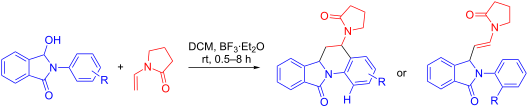
- been studied. In continuation of our efforts on the development of novel synthetic methodologies [27][28][29][30][31][32][33][34][35][36], we report herein a systematic study of steric and electronic effects of aryl substituents leading to substituted 6,6a-dihydroisoindolo[2,1-a]quinolin-11(5H)-ones