


Search results
Search for "ruthenium" in Full Text gives 283 result(s) in Beilstein Journal of Organic Chemistry. Showing first 200.
Synthesis of 1,2-divinylcyclopropanes by metal-catalyzed cyclopropanation of 1,3-dienes with cyclopropenes as vinyl carbene precursors
Beilstein J. Org. Chem. 2019, 15, 285–290, doi:10.3762/bjoc.15.25

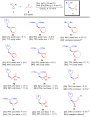
- importantly, with complete endo (syn) selectivity. The use of gold, platinum or ruthenium catalysts showed poorer results with respect to reaction yield and endo/exo (syn/anti) selectivity, as indicated in Scheme 2. Considering these results, the scope of the reaction with unbiased 1,3-dienes was next




Synthesis of nonracemic hydroxyglutamic acids
Beilstein J. Org. Chem. 2019, 15, 236–255, doi:10.3762/bjoc.15.22
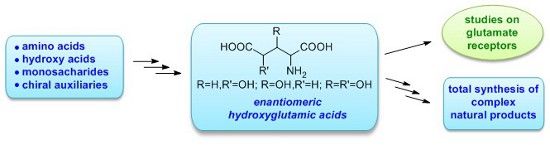
- intermediary 4-hydroxypyroglutamic acids would have become available. This can be readily accomplished with ruthenium(IV) oxide. Application of this reagent to the acetate of methyl N-Boc-4-hydroxyprolinate [(2S,4R)-79] gave the protected pyroglutamate 80 which was transformed into dimethyl N-Boc-4


Olefin metathesis in multiblock copolymer synthesis
Beilstein J. Org. Chem. 2019, 15, 218–235, doi:10.3762/bjoc.15.21

- multiblock copolymers with the possibility to introduce stimuli-responsive functionalities were obtained using a bimetallic ruthenium initiator [74]. The initiator allowed for the single-step fabrication of symmetrically end-functionalized telechelic polymers using ROMP and functional chain terminators
- (Scheme 7). In more detail, the synthesis included ROMP of NB octyl ester or NB by means of metal coordination using the obtained telechelic polymers methyl triglycol ester in the presence of the bimetallic ruthenium catalyst followed by the addition of an excess of either a Pd-containing chain terminator




Catalysis of linear alkene metathesis by Grubbs-type ruthenium alkylidene complexes containing hemilabile α,α-diphenyl-(monosubstituted-pyridin-2-yl)methanolato ligands
Beilstein J. Org. Chem. 2019, 15, 194–209, doi:10.3762/bjoc.15.19
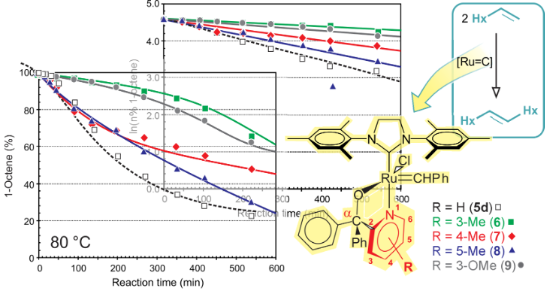
- in organic and polymer chemistry [1][2]. The development of metal alkylidene precatalysts based on ruthenium, starting with the so-called Grubbs 1 (1) and 2 (2) metal carbenes, played a major role to extend the versatility of the reaction including the application of these in industrial processes
- (Figure 1). Of course, the role of the so-called Schrock metal carbenes based on tungsten and molybdenum should not be ignored in the success story of the alkene metathesis reaction but it is not the focus of this article. The large number of ruthenium alkylidene precatalysts that has been developed is
- based on the design concepts illustrated in Scheme 1 [3]. The design concept C is of interest because of the potential hemilabile nature and latent metathesis activity of these complexes [4]. Of particular interest to us are the ruthenium alkylidene complexes containing the pyridinyl alcoholato


Ammonium-tagged ruthenium-based catalysts for olefin metathesis in aqueous media under ultrasound and microwave irradiation
Beilstein J. Org. Chem. 2019, 15, 160–166, doi:10.3762/bjoc.15.16
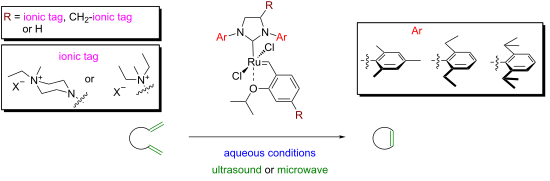
- -heterocyclic carbene (NHC) ligand were revealed. The presented methodology allows for preparation of a variety of polar and non-polar metathesis products under environmentally friendly conditions. Keywords: catalysis; green chemistry; microwave; N-heterocyclic carbene; olefin metathesis; ruthenium; ultrasound
- research on synthesis of catalysts for olefin metathesis and to expand the utility of ammonium-tagged ruthenium-based catalysts [69][70][71][72][73][74][75][76], herein we present the use of such catalysts for olefin metathesis in aqueous media promoted by microwave and ultrasound irradiation. Results and
- is in agreement with the known fact that in protic solvents ruthenium hydrides are formed leading to isomerisation byproducts [66]. Finally, we were pleased to see that the use of ultrasound or microwave irradiation were beneficial for the CM of alcohol 8 with methyl acrylate (10, Table 1, entries 5


Selective ring-opening metathesis polymerization (ROMP) of cyclobutenes. Unsymmetrical ladderphane containing polycyclobutene and polynorbornene strands
Beilstein J. Org. Chem. 2019, 15, 44–51, doi:10.3762/bjoc.15.4
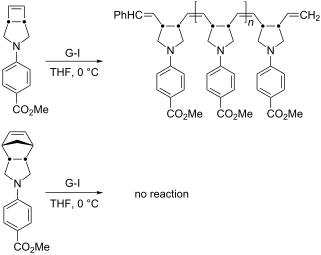
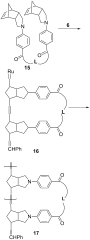
- metathesis reaction may involve a fourteen-electron ruthenium species as the active catalyst [38][39][40]. This active species might be stabilized when the reaction is carried out in polar solvent having weak coordination ability such as THF [41][42][43]. As mentioned above, the difference in reactivity
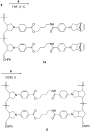
- norbornene derivatives. Accordingly, intermolecular metathesis reaction between two cyclobutene moieties would be favored over intramolecular ring-closing metathesis between a ruthenium carbene and the norbornene moiety. Polymer 14 was treated with 10 mol % 6 in DCM at rt to give 8 in 95% yield. The 1H NMR




Ruthenium-based olefin metathesis catalysts with monodentate unsymmetrical NHC ligands
Beilstein J. Org. Chem. 2018, 14, 3122–3149, doi:10.3762/bjoc.14.292
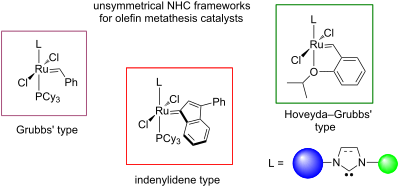
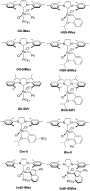
- Veronica Paradiso Chiara Costabile Fabia Grisi Dipartimento di Chimica e Biologia “Adolfo Zambelli”, Università di Salerno, Via Giovanni Paolo II 132, I-84084 Fisciano, Salerno, Italy 10.3762/bjoc.14.292 Abstract An overview on the catalytic properties of ruthenium complexes for olefin metathesis
- to the current state of research are discussed. Keywords: ligand design; olefin metathesis; ruthenium catalysts; selectivity; unsymmetrical N-heterocyclic carbenes; Introduction The transition metal-catalyzed olefin metathesis reaction is an indispensable synthetic tool for the construction of new
- carbon–carbon double bonds in various applications in both organic and polymer chemistry [1][2]. The great popularity of this methodology is mainly related to the development of well-defined ruthenium alkylidene catalysts with high air and moisture stability and functional group tolerance. Among them



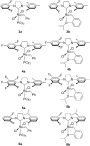


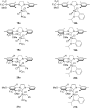






Cross metathesis-mediated synthesis of hydroxamic acid derivatives
Beilstein J. Org. Chem. 2018, 14, 3070–3075, doi:10.3762/bjoc.14.285

- presence of 2nd generation catalysts. Accordingly, CM between 1-decene (4, R = C7H15) and N-benzyloxyacrylamide 5 (Scheme 1) was attempted with Grubbs’ second generation catalyst [(1,3-bis(2,4,6-trimethylphenyl)-2-imidazolidinylidene)dichloro(phenylmethylene) (tricyclohexylphosphine)ruthenium, G-II]. After
- -isopropoxyphenylmethylene)ruthenium] (HG-II) was used under identical conditions. Hydrogenation of the later in the presence of Pd(OH)2/C proceeded uneventfully resulting in the saturation of the double bond as well as concommitant deprotection of the O-benzyl group. The one-pot CM-hydrogenation sequence using the same
- ruthenium catalyst has recently found applications [28][29][30]. However, similar attempts in our case, i.e., direct conversion of 4 + 5 → 7 proved to be problematic and conversion to the desired product was not observed under the attempted conditions. An intractable mixture of compounds was the result


Organometallic vs organic photoredox catalysts for photocuring reactions in the visible region
Beilstein J. Org. Chem. 2018, 14, 3025–3046, doi:10.3762/bjoc.14.282
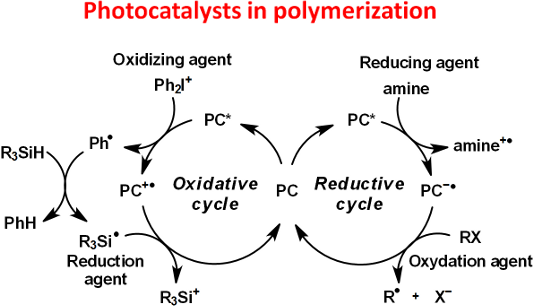
- -based complexes can be used into photoredox catalysis with suitable oxidation or reductive agents [37][38][39]. 2.1.1 The first generation of metal-based PCs: ruthenium and iridium complexes: The first generation of coordination compounds used for the photoredox catalysis comprises ruthenium and iridium
- probably the most studied Ru-based photoredox catalyst (abbreviation for ruthenium tris(2,2'-bipyridyl) dichloride; depicted in Scheme 2). The photochemical properties of this complex, commercially available, are gathered in Table 2. By irradiation of the ruthenium complex, there is a formation of a
- cycles can be observed with Ru(bpy)3. Other ruthenium complexes which can be used into photocatalytical cycles have been described in the literature and more particularly with other type of ligands. Modification of the ligands has an influence on the redox potentials and the lifetime of the excited



A tutorial review of stereoretentive olefin metathesis based on ruthenium dithiolate catalysts
Beilstein J. Org. Chem. 2018, 14, 2999–3010, doi:10.3762/bjoc.14.279
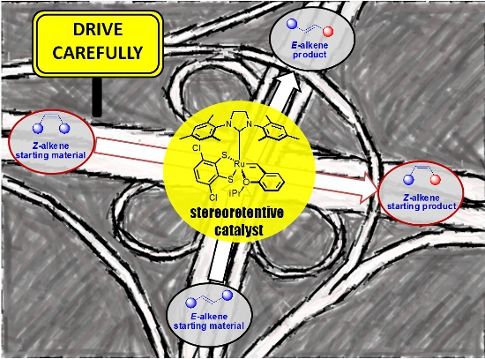
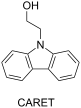
- Daniel S. Muller Olivier Basle Marc Mauduit Univ. Rennes, Ecole Nationale Supérieure de Chimie de Rennes, CNRS, ISCR – UMR 6226, F-35000 Rennes, France 10.3762/bjoc.14.279 Abstract Stereoretentive olefin metathesis based on ruthenium dithiolate complexes has become a very active field of research
- within the past years. This unique catalyst class is able to kinetically produce both Z- and E-alkenes in high stereochemical purity (typically >95:5) starting from stereochemically pure Z- or E-alkenes. The aim of this tutorial review is to organize the reported information concerning ruthenium
- dithiolate catalysts in a logic manner, thus providing an "operators handbook" for chemists who wish to apply this methodology in synthesis. Keywords: catalysis; olefin metathesis; ruthenium; stereoretentive; Review 1 Catalyst discovery and structure optimization from 2013–2018 In stereoretentive




Ring-closing-metathesis-based synthesis of annellated coumarins from 8-allylcoumarins
Beilstein J. Org. Chem. 2018, 14, 2991–2998, doi:10.3762/bjoc.14.278
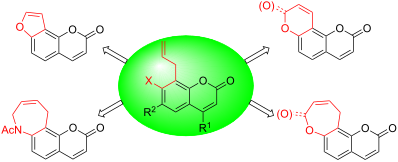
- metathesis; ruthenium; Introduction Naturally occurring coumarins and synthetic derivatives have attracted considerable attention, because many of these compounds are pharmacologically active [1][2][3][4]. Their activity profiles are quite diverse and range from anticoagulant via anti-infective, anticancer


The activity of indenylidene derivatives in olefin metathesis catalysts
Beilstein J. Org. Chem. 2018, 14, 2956–2963, doi:10.3762/bjoc.14.275
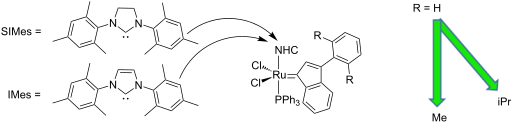
- ] developed well-defined homogeneous catalysts that the area truly blossomed. Using a metal carbene complex as a catalyst, making use of the Chauvin mechanism, olefin metathesis consists of the redistribution of two carbon–carbon double bonds [9]. The metal and its ligand environment in both ruthenium and
- molybdenum systems appear to confer the right environment that allows a productive alkene metathesis [10][11]. Little productive reactivity has been uncovered using other metals [12][13][14]. Apart from the metal, ruthenium-based olefin metathesis has seen several changes during the last decades, modifying
- modification of the available catalysts has been performed in order to increase the stability of the catalyst without losing any of its activity [19][20]. Although most of the olefin metathesis catalysts are based on ruthenium [21][22], because these are more stable to oxygen and moisture [23] than their


The influence of the cationic carbenes on the initiation kinetics of ruthenium-based metathesis catalysts; a DFT study
Beilstein J. Org. Chem. 2018, 14, 2872–2880, doi:10.3762/bjoc.14.266
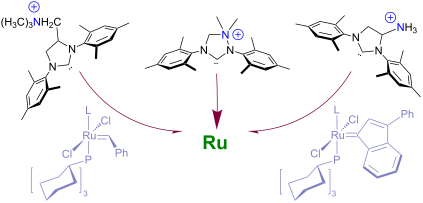
- a number of challenging catalytic reactions. In ruthenium-based metathesis catalysis they are often used as ammonium tags, to provide water-soluble, environment-friendly catalysts. In this work we performed computational studies on three cationic carbenes with the formal positive charge located at
- of metathesis results from the high stabilities and efficiencies of Ruthenium catalysts stabilised by NHC moieties. In this class of compounds NHC ligands, with the poor π-acceptor and strong σ-donor properties, stabilize the 14-electron ruthenium active species during the catalytic cycle [11][12
- catalysts the ammonium tag is relatively far from the carbene carbon atom chelating the ruthenium core. The reason behind such design was likely the low probability of the ammonium tag influencing the ruthenium core and therefore, having a potential negative effect on the efficiency and reaction rate of the


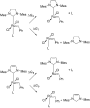

Olefin metathesis catalysts embedded in β-barrel proteins: creating artificial metalloproteins for olefin metathesis
Beilstein J. Org. Chem. 2018, 14, 2861–2871, doi:10.3762/bjoc.14.265
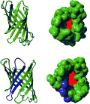
- and challenges and opportunities in this emerging field are shown from simple small-molecule transformations over ring-opening metathesis polymerizations to in vivo olefin metathesis. Keywords: artificial metalloprotein; β-barrel protein; metathease; olefin metathesis; ruthenium; Introduction Olefin
- three-fold increase in ruthenium content as compared to cells lacking the Sav variant (80,000 Ru atoms per cell and 29,000 Ru atoms per cell, respectively) [47]. This system was subjected to directed evolution. The twenty amino acid positions closest to the active site were saturated, and the best


Synthesis of a tyrosinase inhibitor by consecutive ethenolysis and cross-metathesis of crude cashew nutshell liquid
Beilstein J. Org. Chem. 2018, 14, 2737–2744, doi:10.3762/bjoc.14.252
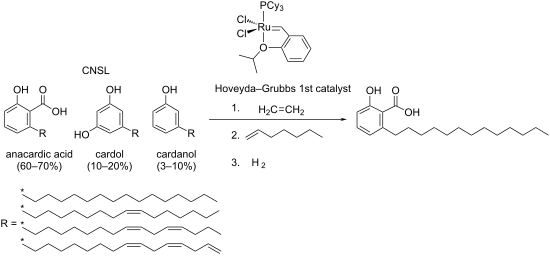
- , undergoes smooth ethenolysis only in dichloromethane as the solvent (Scheme 3). Using more sustainable solvents or no solvent at all, the reaction gave almost no turnover, regardless of the ruthenium catalyst employed. However, as a 1.1 M solution in dichloromethane, the unsaturated components of CNSL were
- Supporting Information File 1). In principle, these internal olefins can still undergo metathesis albeit with less activity, depending on the catalyst. It was possible to reduce the time of the reaction to 6 h with almost the same yield (Table 1, entry 11). We investigated various ruthenium catalysts in
- insignificantly better yields (Table 1, entry 18). It is known that ruthenium metathesis catalysts can be transformed in situ into an active hydrogenation catalyst [37][38]. We, thus added charcoal and methanol to the crude reaction mixture of the cross-metathesis and stirred the reaction for additional 2 h under


Photocatalyic Appel reaction enabled by copper-based complexes in continuous flow
Beilstein J. Org. Chem. 2018, 14, 2730–2736, doi:10.3762/bjoc.14.251
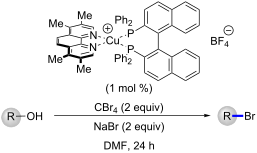
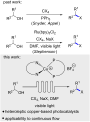
- promote the alcohol→halide conversion using low catalyst loadings of a ruthenium-based catalyst (Ru(bpy)3Cl2, 1 mol %) in the absence of PPh3 as a reductant (Figure 1) [8]. The method possesses numerous advantages (wide functional group tolerance, no formation of oxidized phosphine byproducts [9][10][11




Domino ring-opening–ring-closing enyne metathesis vs enyne metathesis of norbornene derivatives with alkynyl side chains. Construction of condensed polycarbocycles
Beilstein J. Org. Chem. 2018, 14, 2708–2714, doi:10.3762/bjoc.14.248
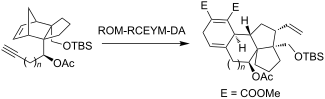
- Ritabrata Datta Subrata Ghosh School of Chemical Sciences, Indian Association for the Cultivation of Science, Jadavpur, Kolkata 700 032, India 10.3762/bjoc.14.248 Abstract The metathesis of norbornene derivatives with alkynyl side-chain with Grubbs’ ruthenium alkylidine as catalyst has been
- metathesis; natural products; polycarbocycles; Introduction The metathesis of norbornene derivatives having an alkene side-chain on the norbornene nucleus with Grubbs’ ruthenium catalysts has been extensively investigated. Generally the reaction proceeds through a domino process involving a ring opening of
- ether 7a in 92% yield. Two different paths can be invoked for metathesis of compound 7a. Metathesis initiation may occur by attack of the ruthenium alkylidene at the alkyne unit to produce the more substituted vinyl alkylidine intermediate 8a which may undergo concomitant ROM–RCM with the norbornene




Ring-opening metathesis of some strained bicyclic systems; stereocontrolled access to diolefinated saturated heterocycles with multiple stereogenic centers
Beilstein J. Org. Chem. 2018, 14, 2698–2707, doi:10.3762/bjoc.14.247
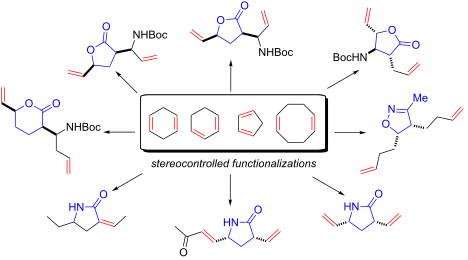
- Orgánica, Facultad de Farmàcia, Universidad de Valencia, Av. Vicente Andrés Estellés, s/n 46100 Valencia, Spain 10.3762/bjoc.14.247 Abstract Ring-opening metathesis (ROM) of various unsaturated, constrained bicyclic ring systems has been investigated with the use of commercial ruthenium-based catalysts
- opening of the heteroring, (Scheme 7). The process involves isomerization through olefin bond migration proceeding Z-selectively. Conclusion The ring-opening metathesis (ROM) of some ring-constrained, unsaturated bicyclic frameworks has been studied in the presence of commercially available ruthenium


Design and synthesis of C3-symmetric molecules bearing propellane moieties via cyclotrimerization and a ring-closing metathesis sequence
Beilstein J. Org. Chem. 2018, 14, 2537–2544, doi:10.3762/bjoc.14.230
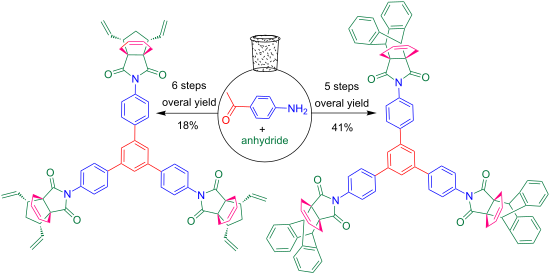
- considered an alternate route to synthesize compound 12. In this regard, we employed different ruthenium-based catalysts (Figure 2) and reaction conditions to obtain the ring-opening metathesis (ROM) product 13 from norbornene derivate 10. Under these conditions the starting material was not consumed
- of ruthenium-based catalysts used for ROM. Synthesis of the star-shaped norbornene derivative 11 via trimerization. Synthesis of the C3-symmetric molecule 15 bearing propellane moieties via trimerization and RCM. Synthesis of C3-symmetric molecule 21 bearing propellane moieties via trimerization and


Synthesis of dihydroquinazolines from 2-aminobenzylamine: N3-aryl derivatives with electron-withdrawing groups
Beilstein J. Org. Chem. 2018, 14, 2510–2519, doi:10.3762/bjoc.14.227
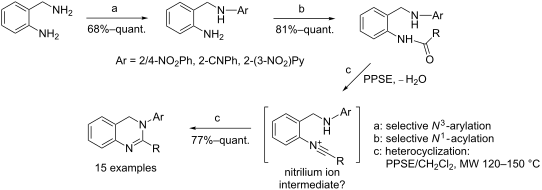
- , some ruthenium complexes bearing a 3,4-dihydroquinazoline ligand have been studied as hydrogenation-transfer catalysts, showing good to excellent activity for the reduction of ketones [17]. In the context of our research on heterocyclic amidine N-oxides [18][19][20][21][22], we recently prepared some


Synergistic approach to polycycles through Suzuki–Miyaura cross coupling and metathesis as key steps
Beilstein J. Org. Chem. 2018, 14, 2468–2481, doi:10.3762/bjoc.14.223
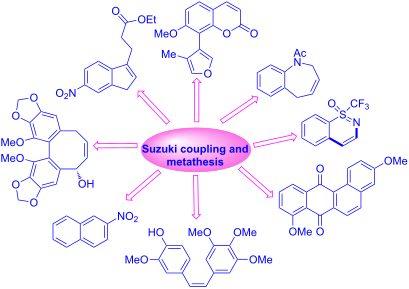
- and ruthenium impurities in minor amounts from the reaction mixture. This aspect is also important in the pharmaceutical industry [4][55]. Biography of the Authors Sambasivarao Kotha graduated with M.Sc. degree in Chemistry from the University of Hyderabad and obtained his Ph.D. in Organic Chemistry


Bioinspired cobalt cubanes with tunable redox potentials for photocatalytic water oxidation and CO2 reduction
Beilstein J. Org. Chem. 2018, 14, 2331–2339, doi:10.3762/bjoc.14.208
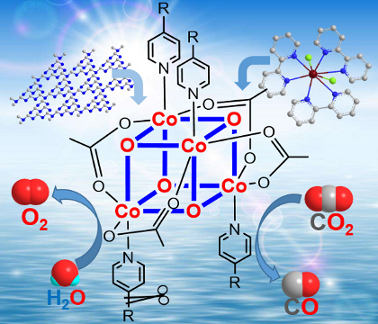
- . Besides the CO2 reduction performance of the molecular complexes was evaluated by cooperation with a ruthenium photosensitizer Ru(bpy)32+ (bpy = 2’,2-bipyridine) with visible light irradiation [61][62][63][64][65][66][67]. As shown in Figure 5b, the activity of the CO2 reaction is reduced with the


Coordination-driven self-assembly of discrete Ru6–Pt6 prismatic cages
Beilstein J. Org. Chem. 2018, 14, 2242–2249, doi:10.3762/bjoc.14.199
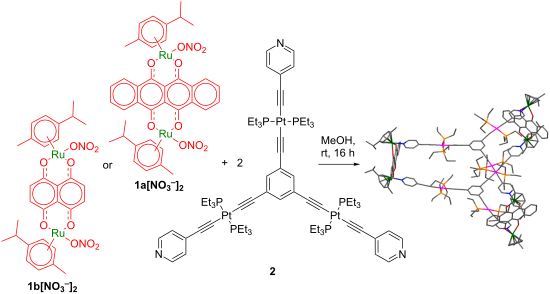
- –ruthenium(II) clips (1a(NO3)2 and 1b(NO3)2) and a tritopic platinum(II) metalloligand 2 has been performed in methanol at room temperature. The [3 + 2] hexanuclear cages 3a and 3b were isolated in good yields and characterized by well-known spectroscopic techniques including multinuclear NMR, mass
- spectrometry, UV–vis and infrared studies. Geometry optimization revealed the shapes and sizes of these hexanuclear prismatic cages. The combination of ruthenium and platinum metal center in a one-pot self-assembly reaction showcases the construction of aesthetically elegant heterometallic structures in
- supramolecular chemistry leading to the formation of a single major product. Keywords: arene–ruthenium(II); heterometallic cages; platinum metalloligand; self-assembly; supramolecular architectures; Introduction Coordination-driven self-assembly of discrete architectures has evolved as a unique protocol to


Coordination-driven self-assembly vs dynamic covalent chemistry: versatile methods for the synthesis of molecular metallarectangles
Beilstein J. Org. Chem. 2018, 14, 2027–2034, doi:10.3762/bjoc.14.178
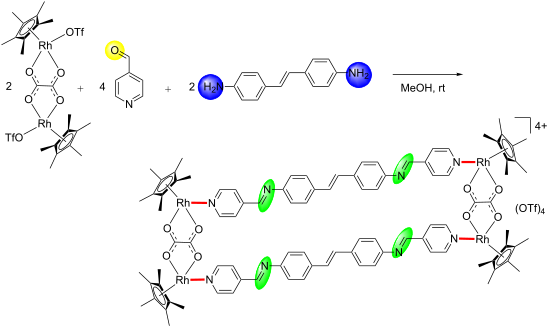
- cages based on half-sandwich ruthenium could be obtained in one-pot reactions from simple building blocks [38][39]. This finding prompted us to investigate whether condensation reactions between amines and 4-formylpyridine can be used simultaneously with coordination bond formation to construct


Graphitic carbon nitride prepared from urea as a photocatalyst for visible-light carbon dioxide reduction with the aid of a mononuclear ruthenium(II) complex
Beilstein J. Org. Chem. 2018, 14, 1806–1812, doi:10.3762/bjoc.14.153
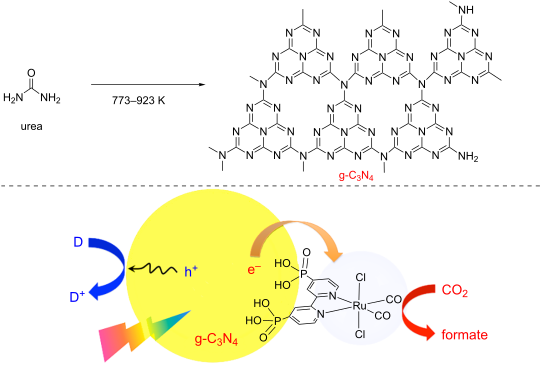
- filtrates were collected and concentrated to a volume of 30 mL. The amount of the ruthenium complex absorbed was calculated based on the UV–vis spectrum of the filtrate, using Equation 1: where Abefore and Aafter are the absorbance of the solution before and after the adsorption procedure, respectively, and





