


Search results
Search for "conjugate addition" in Full Text gives 168 result(s) in Beilstein Journal of Organic Chemistry.
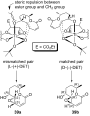
Garner’s aldehyde as a versatile intermediate in the synthesis of enantiopure natural products
Beilstein J. Org. Chem. 2013, 9, 2641–2659, doi:10.3762/bjoc.9.300
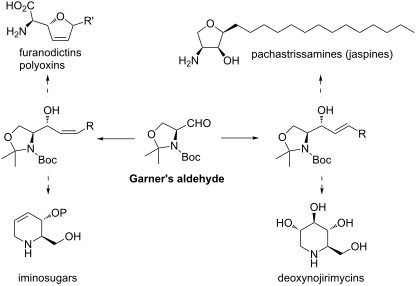
- conjugate addition [93], and a recent synthesis of lucentamycin A was achieved using this strategy [94]. Epoxidation of A leads to a highly functional intermediate C, which has been used in the synthesis of manzacidin B [95]. Among the plethora of olefination reactions, the Wittig [96][97] and Horner




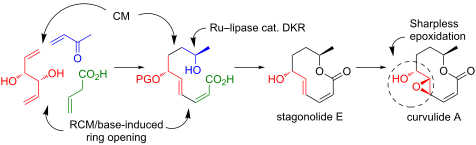
Bidirectional cross metathesis and ring-closing metathesis/ring opening of a C2-symmetric building block: a strategy for the synthesis of decanolide natural products
Beilstein J. Org. Chem. 2013, 9, 2544–2555, doi:10.3762/bjoc.9.289
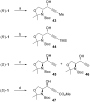
- co-solvent, together with toluene. Under these conditions, reproducible yields in the range between 67% and 78% were obtained (Table 2, entries 1–3). The alcohol is believed to protonate the Cu-enolate formed upon conjugate addition, resulting in the ketone and a Cu-alkoxide, which is then reduced






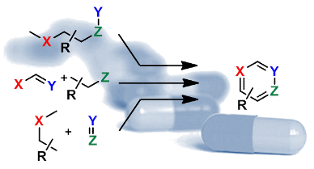
An overview of the synthetic routes to the best selling drugs containing 6-membered heterocycles
Beilstein J. Org. Chem. 2013, 9, 2265–2319, doi:10.3762/bjoc.9.265
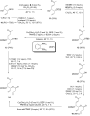
- noted that both enantiomers were required for physiological profiling at the discovery stage). Next, a 1,2-syn diastereoselective reduction of enaminoester 2.81 occurs with high diastereocontrol imposed by the convexed presentation of the substrate for the formal conjugate addition and subsequent


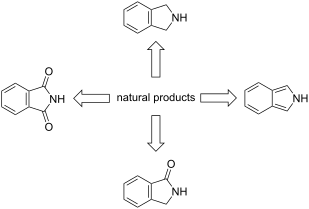
The chemistry of isoindole natural products
Beilstein J. Org. Chem. 2013, 9, 2048–2078, doi:10.3762/bjoc.9.243
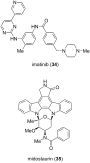
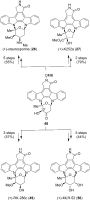
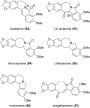
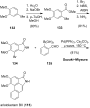
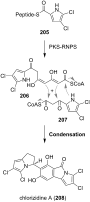
- diastereoselective synthesis of lactonamycinone (214) employing a Diels–Alder reaction [162][163]. In 2010, Tastuta completed the first total synthesis of lactonamycin (215) by using a sequential conjugate addition, a stereoselective glycosylation reaction and a Michael–Dieckmann-type cyclization [164]. The recently












The chemistry of amine radical cations produced by visible light photoredox catalysis
Beilstein J. Org. Chem. 2013, 9, 1977–2001, doi:10.3762/bjoc.9.234
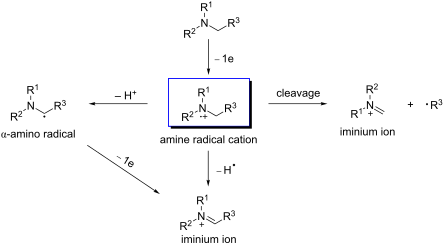
- conjugate addition reactions. Recently, the MacMillan group has nicely expanded the scope of the reactions to include addition of the radicals to aryl rings (Scheme 27) [100]. Using Ir(ppy)3 as the photocatalyst and a 26 W fluorescent light bulb as the light source, cyclic amines with a variety of ring




Synthesis and antibacterial activity of monocyclic 3-carboxamide tetramic acids
Beilstein J. Org. Chem. 2013, 9, 1899–1906, doi:10.3762/bjoc.9.224

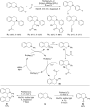
- pyroglutamates by a conjugate addition of amines [22]. Tautomerism Tautomerism in tricarbonyl 3-acyltetramate systems is known to be complex and strongly dependent on the identity of the side chain acyl group [23]. 3-Acyl (X = CH2) [10][24][25], 3-carboxamide (X = NH) [8][10] and 3-alkoxycarbonyl (X = O


Asymmetric allylic alkylation of Morita–Baylis–Hillman carbonates with α-fluoro-β-keto esters
Beilstein J. Org. Chem. 2013, 9, 1853–1857, doi:10.3762/bjoc.9.216
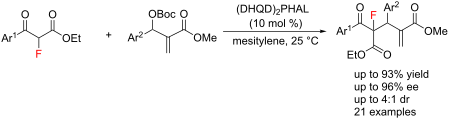
- conjugate addition and Mannich reaction of α-fluoro-β-ketoesters with excellent results [38][39][40]. Herein, we wish to report the first allylic alkylation of MBH carbonates with α-fluoro-β-ketoesters in excellent enantioselectivities and moderate diastereoselectivities, furnishing enantiopure fluorinated

Zinc–gold cooperative catalysis for the direct alkynylation of benzofurans
Beilstein J. Org. Chem. 2013, 9, 1763–1767, doi:10.3762/bjoc.9.204
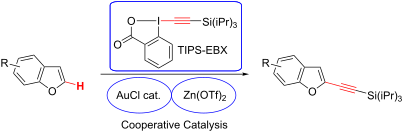
- reaction could proceed either via π-activation of the triple bond by the gold catalyst followed by conjugate addition of the benzofuran, α-elimination and 1,2-shift, or oxidative addition of TIPS-EBX (8) onto the gold catalyst (either at the Au(I) or Au(0) oxidation level) followed by electrophilic


Synthesis of the reported structure of piperazirum using a nitro-Mannich reaction as the key stereochemical determining step
Beilstein J. Org. Chem. 2013, 9, 1737–1744, doi:10.3762/bjoc.9.200
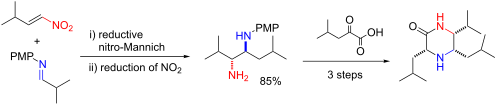
- available from a Henry reaction [50], imine 14 from the condensation of p-anisidine and isobutyraldehyde, and the process can easily be made asymmetric [45]. Conjugate addition of hydride to 13 and subsequent trapping of the nitronate anion with freshly prepared imine 14 in THF gave β-nitroamine 15 in 64


Gold-catalyzed intermolecular coupling of sulfonylacetylene with allyl ethers: [3,3]- and [1,3]-rearrangements
Beilstein J. Org. Chem. 2013, 9, 1724–1729, doi:10.3762/bjoc.9.198

- -substituted alkynes underwent an efficient intermolecular carboalkoxylation with allyl ethers via a tandem conjugate addition and a [3,3]-sigmatropic rearrangement [10][11][12]. Preliminary results in the above studies [5][9] have demonstrated that a polarizing effect of the sulfonyl substituent on the alkyne


A scalable synthesis of the (S)-4-(tert-butyl)-2-(pyridin-2-yl)-4,5-dihydrooxazole ((S)-t-BuPyOx) ligand
Beilstein J. Org. Chem. 2013, 9, 1637–1642, doi:10.3762/bjoc.9.187
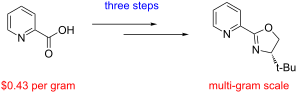
- ][6][7][8][9][10][11][12][13][14][15][16][17][18][19][20][21][22][23]. Recently, our laboratory reported the catalytic asymmetric conjugate addition of arylboronic acids to cyclic, β,β-disubstituted enones utilizing (S)-t-BuPyOx (1) as the chiral ligand (Figure 1) [24]. This robust reaction is


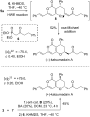
Bioinspired total synthesis of katsumadain A by organocatalytic enantioselective 1,4-conjugate addition
Beilstein J. Org. Chem. 2013, 9, 1601–1606, doi:10.3762/bjoc.9.182
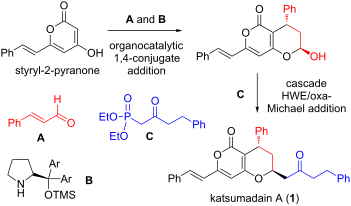
- neuraminidase (NA) inhibitor, was synthesized by using a bioinspired, organocatalytic enantioselective 1,4-conjugate addition of styryl-2-pyranone with cinnamaldehyde, followed by a tandem Horner–Wadsworth–Emmons/oxa Michael addition. Keywords: bioinspired synthesis; catalysis; katsumadain A; natural product
- ; organocatalytic 1,4-conjugate addition; Introduction 2-Pyranone is a privilege structure that is often present in natural products and pharmaceuticals, many of which exhibit diverse molecular architectures and biological profiles [1][2]. For example, katsumadain A (1) and B (2), which were isolated from Alpinia
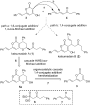
- the way for their application in further biomedical investigations. Biosynthetically, katsumadain A is assumed to be derived from styryl-2-pyranone 3 and alnustone (4) [9] through a 1,6-conjugate addition/oxa-Michael addition cascade reaction (path a, Scheme 1). Indeed, both 3 and 4 are known natural


A reductive coupling strategy towards ripostatin A
Beilstein J. Org. Chem. 2013, 9, 1533–1550, doi:10.3762/bjoc.9.175
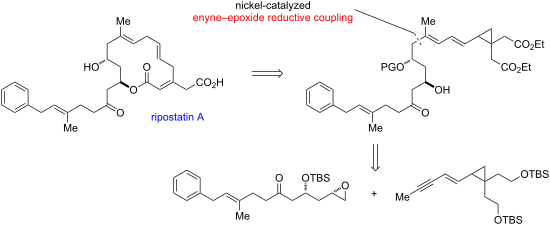
- the C13 hydroxy group via conjugate addition to the δ-hydroxy-α,β-enone 49 (Figure 5). Although the diastereoselectivity of this reaction using substrates with a chiral center at the hydroxy group had not been investigated in the published study, substitution at the carbinol position was reportedly


Methylidynetrisphosphonates: Promising C1 building block for the design of phosphate mimetics
Beilstein J. Org. Chem. 2013, 9, 991–1001, doi:10.3762/bjoc.9.114
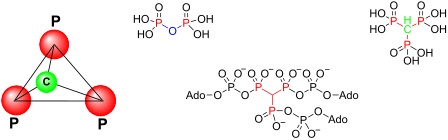
- 12a–f a three-step protocol including synthesis of alkylidene-1,1-bisphosphonates 11 from tetraethyl methylenebisphosphonate (10), phosphinylation and oxidation has been developed (Scheme 6) [26]. Propargyl-substituted trisphosphonate 15 was prepared by conjugate addition of sodium acetylide to


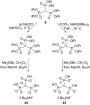
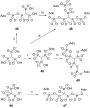

Diastereoselective synthesis of nitroso acetals from (S,E)-γ-aminated nitroalkenes via multicomponent [4 + 2]/[3 + 2] cycloadditions promoted by LiCl or LiClO4
Beilstein J. Org. Chem. 2013, 9, 838–845, doi:10.3762/bjoc.9.96
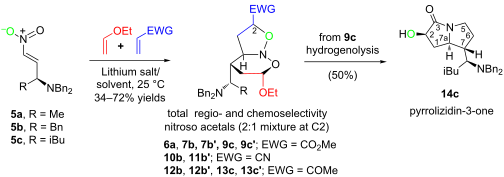
- besides conjugate addition [19] make them useful chiral building blocks for diastereoselective synthesis. Experimental General EtOH, MeOH, 2-propanol, toluene, LiClO4, LiCl, methyl vinyl ketone, ethyl vinyl ether, methyl acrylate and acrylonitrile were purchased from Aldrich, Acros or Merck and were used


A versatile and efficient approach for the synthesis of chiral 1,3-nitroamines and 1,3-diamines via conjugate addition to new (S,E)-γ-aminated nitroalkenes derived from L-α-amino acids
Beilstein J. Org. Chem. 2013, 9, 832–837, doi:10.3762/bjoc.9.95
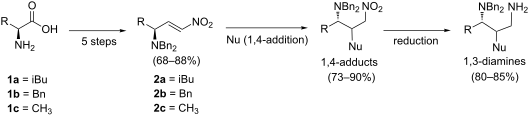
- yields of 68–88%. The conjugate addition of hydride, methoxide, nitronate and azide nucleophiles to 2a–c led to the corresponding chiral 1,3-nitroamines in 74–90% yield. The conjugate addition of cyanide anion to 2a,b was followed by HNO2 elimination affording chiral aminated acrylonitriles (73–98%). On
- derivatives by the use of chiral metal and organocatalysts [55][56]. In contrast, chiral 1,3-nitroamines, despite constituting direct precursors of chiral 1,3-diamines, are scarcely synthesized by conjugate addition of nitroalkanes to nitroalkenes. Chiral 1,3-diamines present extraordinary opportunities in
- analysis showed that the stereochemical integrity of 2 was preserved throughout the synthetic process. Next, the reactivity of the new chiral nitroalkenes was investigated with respect to the conjugate addition of hydride, nitronate, methoxide, cyanide, and azide anions in addition to benzylamine aiming to


Efficient synthesis of β’-amino-α,β-unsaturated ketones
Beilstein J. Org. Chem. 2013, 9, 486–495, doi:10.3762/bjoc.9.52

- nucleophilic addition reaction of Grignard reagents to N-carbamoyl β-amino Weinreb amides (Scheme 2) [18]. Conjugate addition of (R)-N-benzyl-N-methylbenzylamide to methyl cinnamate under basic conditions led to β–aminoester 5 with high diastereoselectivity (dr >94%) [11][12]. Subsequent transformation of the


Recent advances in transition-metal-catalyzed intermolecular carbomagnesiation and carbozincation
Beilstein J. Org. Chem. 2013, 9, 278–302, doi:10.3762/bjoc.9.34
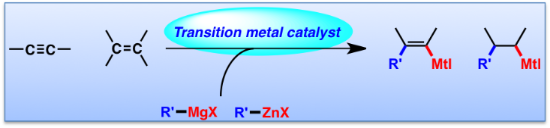
- bearing a directing group; (3) cyclopropenes; (4) unactivated alkynes or alkenes; and (5) substrates that have two carbon–carbon unsaturated bonds (allenes, dienes, enynes, or diynes). Review Carbomagnesiation and carbozincation of electron-deficient alkynes Since conjugate addition reactions of


Flow photochemistry: Old light through new windows
Beilstein J. Org. Chem. 2012, 8, 2025–2052, doi:10.3762/bjoc.8.229
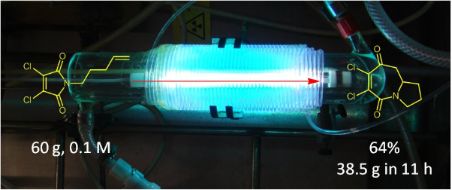


Automated three-component synthesis of a library of γ-lactams
Beilstein J. Org. Chem. 2012, 8, 1804–1813, doi:10.3762/bjoc.8.206
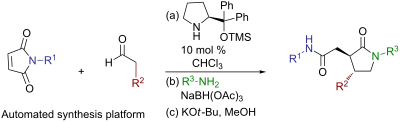
- protocol, we explored the use of various chiral amines in the conjugate addition reaction of propionaldehyde (2{1}) to N-phenylmaleimide (1{1}) (Table 1). Although the achiral pyrrolidine was found to be an efficient catalyst in the reaction [12], this led to a ~1:1 mixture of racemic succinimide


Synthesis and ring openings of cinnamate-derived N-unfunctionalised aziridines
Beilstein J. Org. Chem. 2012, 8, 1747–1752, doi:10.3762/bjoc.8.199
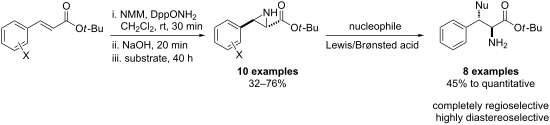
- agent. Conjugate addition of the ylide, followed by a ring-closure step affords the NH-aziridine. More recently, the methodology has been extended to α,β,γ,δ-unsaturated carbonyl compounds, with excellent regio- and diastereoselectivity [31]. Herein, we report the optimisation of our nucleophilic


Organocatalytic cascade aza-Michael/hemiacetal reaction between disubstituted hydrazines and α,β-unsaturated aldehydes: Highly diastereo- and enantioselective synthesis of pyrazolidine derivatives
Beilstein J. Org. Chem. 2012, 8, 1710–1720, doi:10.3762/bjoc.8.195
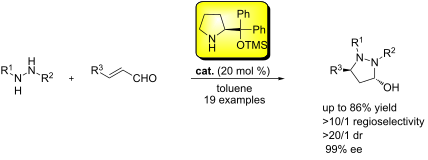
- of 2-pyrazolines using disubstituted hydrazines through an asymmetric conjugate addition followed by a deprotection–cyclization sequence [75]. Due to the importance of pyrazolidine derivatives in both organic and medicinal chemistry, we have become interested in developing an efficient


Organocatalytic tandem Michael addition reactions: A powerful access to the enantioselective synthesis of functionalized chromenes, thiochromenes and 1,2-dihydroquinolines
Beilstein J. Org. Chem. 2012, 8, 1668–1694, doi:10.3762/bjoc.8.191
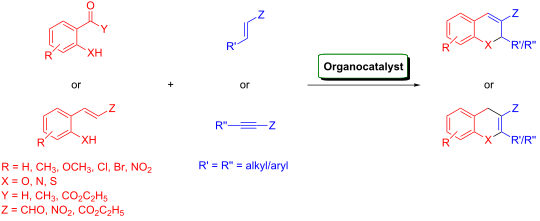
- most significant synthetic methods reported on chiral-amine-catalyzed tandem Michael conjugate addition of heteroatom-centered nucleophiles to α,β-unsaturated compounds followed by cyclization reactions for the enantioselective construction of functionalized chiral chromenes, thiochromenes and 1,2
- of 2-aminobenzaldehydes with acyclic α,β-unsaturated compounds The asymmetric organocatalytic Michael conjugate addition of an amine to an electron-deficient α,β-unsaturated system provides a unique reaction process because of the weaker nucleophilic character of the amine compared to a thiol or an
- with good yield (98%) and excellent ee (>96%) (Scheme 28). The reaction yield was dramatically improved in the presence of NaOAc and 4Å MS, without sacrificing enantioselectivity. The mechanistic study revealed that the conjugate-addition–aldol–dehydration sequence passes through the enamine






Cyclization of ortho-hydroxycinnamates to coumarins under mild conditions: A nucleophilic organocatalysis approach
Beilstein J. Org. Chem. 2012, 8, 1630–1636, doi:10.3762/bjoc.8.186
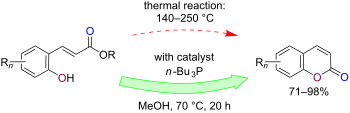
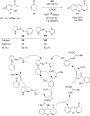
- containing 1, which is capable of undergoing a reversible conjugate addition to form an intermediate A devoid of an alkene functionality (Scheme 2). Rotation around the single bond to give B should be a fast process, and cyclization to a 2-chromanone C is then entropically favored. Eventually, the
- considered a strategy to perform a fast catalytic conjugate addition of a heteronucleophile to the starting material in order to speed up the overall cyclization reaction. Initial experiments with neutral thiols as nucleophiles were not successful. On the other hand, addition of a nucleophilic
- conjugate addition to 1, with generation of a tributylphosphonium salt (δ = +37 ppm) of the probable zwitterionic structure 5 (Scheme 3; for the 31P NMR spectrum see the Supporting Information File 1). Similar phosphonium phenolates are known to exist either as the zwitterionic (analogue to 5) or neutral


Organocatalytic asymmetric addition of malonates to unsaturated 1,4-diketones
Beilstein J. Org. Chem. 2012, 8, 1452–1457, doi:10.3762/bjoc.8.165
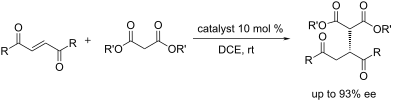
- enantiomer. From the synthetic point of view, the conjugate addition of the nucleophile is, at the same time, a formal umpolung reaction with respect to the other carbonyl group (Figure 1). Results and Discussion Catalyst screening As a part of our ongoing studies in organocatalysis [16][17][18][19] we
- , also afforded the product in good yield and selectivity (Table 3, entry 9). As the squaramide-type catalyst IX is known to be self-association-free [21], the increase in enantioselectivity at higher temperatures can be attributed to the thermodynamic control of the conjugate addition. At the same time





