


Search results
Search for "cycloadditions" in Full Text gives 259 result(s) in Beilstein Journal of Organic Chemistry. Showing first 200.
Synthesis and metal binding properties of N-alkylcarboxyspiropyrans
Beilstein J. Org. Chem. 2017, 13, 1542–1550, doi:10.3762/bjoc.13.154
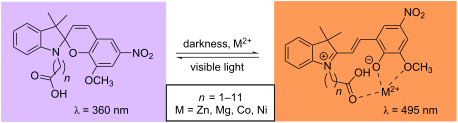
- previously reported [28]. Presumably, this reaction proceeds via azomethine ylid 6 (Scheme 3); analogous indolium ylids have been used synthetically in 1,3-dipolar cycloadditions [29] and mechanistic studies have been published on the related decarboxylation of pyridinium 2-carboxylates [30]. Fortunately, α




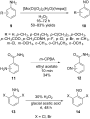
Switchable highly regioselective synthesis of 3,4-dihydroquinoxalin-2(1H)ones from o-phenylenediamines and aroylpyruvates
Beilstein J. Org. Chem. 2017, 13, 1350–1360, doi:10.3762/bjoc.13.132
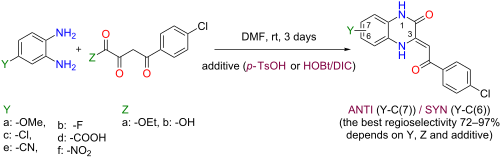
- cycloadditions performed by p-TsOH (Table 1, column 4). From the above experimental results, we have proved that the regioselectivity of the cyclocondensation depends on both (a) the different nucleophilicity of the two amines from o-phenylenediamines 11a–f and (b) the electrophilicity of the α-carbonyl in 12a


Strategies toward protecting group-free glycosylation through selective activation of the anomeric center
Beilstein J. Org. Chem. 2017, 13, 1239–1279, doi:10.3762/bjoc.13.123

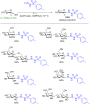
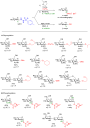
- conditions were feasible for the synthesis of glycosyl azides which are highly useful precursors for N-linked glycans [95] or Cu-catalyzed cycloadditions with alkynes (as shown above) [85]. By using tetrabutylammonium chloride and an amine base the highly reactive chlorinated intermediate forms that can be




Ultrasound-promoted organocatalytic enamine–azide [3 + 2] cycloaddition reactions for the synthesis of ((arylselanyl)phenyl-1H-1,2,3-triazol-4-yl)ketones
Beilstein J. Org. Chem. 2017, 13, 694–702, doi:10.3762/bjoc.13.68
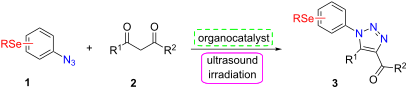
- short reaction times. In addition, this protocol was extended to β-keto esters, β-keto amides and α-cyano ketones. Selanyltriazoyl carboxylates, carboxamides and carbonitriles were synthesized in high yields at short times of reaction under very mild reaction conditions. Keywords: cycloadditions
- have been used for this cycloaddition reaction [20][21][22][23][24][25][26][27][28][29]. Organocatalytic approaches based on β-enamine–azide or enolate–azide cycloadditions have been employed to synthesize 1,2,3-triazole scaffolds [30][31][32]. Depending on the organocatalyst employed, different
- carbonyl compounds could successfully generate an enamine or an enolate, and these species react as dipolarophiles with organic azides in organocatalyzed 1,3-dipolar cycloadditions. Our research group has demonstrated β-enamine–azide cycloaddition reactions for the synthesis of selenium-functionalized


Unpredictable cycloisomerization of 1,11-dien-6-ynes by a common cobalt catalyst
Beilstein J. Org. Chem. 2017, 13, 639–643, doi:10.3762/bjoc.13.62
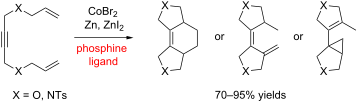
- formation of meta/para-products of Diels–Alder reactions [28][29][30][31][32], linear/branched products of hydrovinylation reactions [33][34], [2 + 2] cycloadditions vs Alder-ene reactions [35], E/Z isomerizations of alkenes [36][37] and other processes [38][39][40][41][42]. Herein, we report the




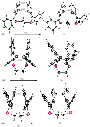
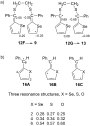
Dimerization reactions of aryl selenophen-2-yl-substituted thiocarbonyl S-methanides as diradical processes: a computational study
Beilstein J. Org. Chem. 2017, 13, 410–416, doi:10.3762/bjoc.13.44

- intermediate, delocalized diradical species. The influence of selenium as a ‘heavy atom’ for stabilization of this intermediate has been emphasized. Keywords: 1,3-dipolar cycloadditions; reaction mechanisms; reactive intermediates; thiocarbonyl S-methanides; thioketones; Introduction Thiocarbonyl S
- mechanisms in [3 + 2]-cycloadditions have intensively been studied [16] and recently, a computational study on their appearance in reactions of substituted acetylenes with nitrile oxides has been published [17]. Experimental The Gaussian 09 program system was used for all calculations [18]. The M06-2X


Diastereoselective anodic hetero- and homo-coupling of menthol-, 8-methylmenthol- and 8-phenylmenthol-2-alkylmalonates
Beilstein J. Org. Chem. 2017, 13, 33–42, doi:10.3762/bjoc.13.5
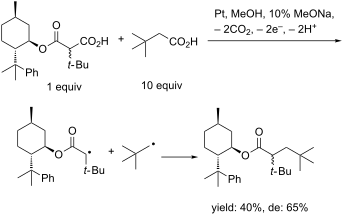
- as a chiral auxiliary [27] to control the stereochemistry in Diels–Alder reactions [28], [2 + 2]- and [3 + 2]-cycloadditions and asymmetric ene reactions [29]; furthermore, it has been applied in 1,4-cuprate additions [30], Grignard additions [31], in supramolecular chemistry [32] and in alkylation




Development of a continuous process for α-thio-β-chloroacrylamide synthesis with enhanced control of a cascade transformation
Beilstein J. Org. Chem. 2016, 12, 2511–2522, doi:10.3762/bjoc.12.246
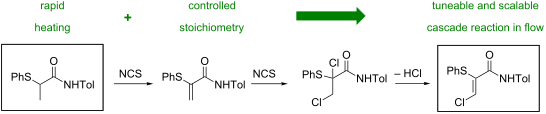
- ] and 1,3-dipolar cycloadditions [6][7][8][9], and oxidation of the sulfide group [10][11][12] are among a wide array of transformations which have been successfully applied to these compounds (Scheme 1). In order to fully exploit the synthetic potential of these β-chloroacrylamides, however, a means of




Sydnone C-4 heteroarylation with an indolizine ring via Chichibabin indolizine synthesis
Beilstein J. Org. Chem. 2016, 12, 2503–2510, doi:10.3762/bjoc.12.245
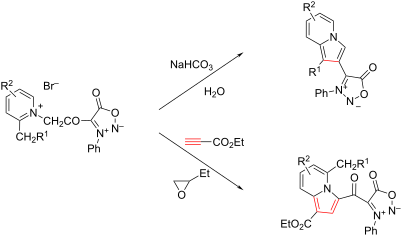
- products 12a–c with yields in the range of 41–52%. Bearing in mind that the formation of indolizines through Chichibabin synthesis and 1,3-dipolar cycloaddition reaction requires in both cases the formation of an intermediate pyridinium N-ylide, it is expected that in these cycloadditions a mixture of


Radical polymerization by a supramolecular catalyst: cyclodextrin with a RAFT reagent
Beilstein J. Org. Chem. 2016, 12, 2495–2502, doi:10.3762/bjoc.12.244
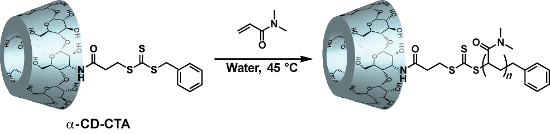
- , including hydrolysis reactions [10][11][12][13][14][15], C–H bond activation [34][35][36], olefin epoxidation [37][38][39], Diels–Alder reactions [40][41][42], 1,3-dipole cycloadditions [43][44], and polymerizations [45][46][47], among others. Selective substrate recognition and activation are essential


Construction of bis-, tris- and tetrahydrazones by addition of azoalkenes to amines and ammonia
Beilstein J. Org. Chem. 2016, 12, 2471–2477, doi:10.3762/bjoc.12.241
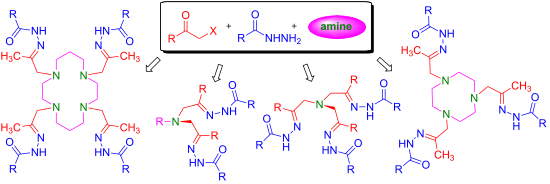
- 1 to ammonia (Table 2) have a special significance because the expected trishydrazones 11 are obvious analogs of tris(iminomethyl)amines widely used in the catalysis of azide–alkyne cycloadditions [29][30][31][32][34]. Furthermore, intramolecular cyclotrimerization of C=N bonds in trishydrozones




A new paradigm for designing ring construction strategies for green organic synthesis: implications for the discovery of multicomponent reactions to build molecules containing a single ring
Beilstein J. Org. Chem. 2016, 12, 2420–2442, doi:10.3762/bjoc.12.236
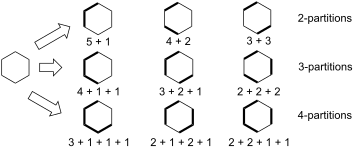
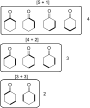
- - and 6-membered monocyclic rings are most commonly made by [2 + 2 + 1] and [3 + 2 + 1] cycloadditions where 57% and 76% of them, respectively, have a 100% chance of being intrinsically green from a design perspective. A survey of over 2000 MCRs used to synthesize specific types of heterocyclic rings
- consist algebraically of the same kinds of fragment elements; namely, two 2s and two 1s. The fourth entry in Figure 3 shows the visual distinction between partitioning a 6-membered ring via [2 + 2 + 1 + 1] and [2 + 1 + 2 + 1] cycloadditions. Similarly, [3 + 2 + 1 + 1] and [3 + 1 + 2 + 1] partitions for a
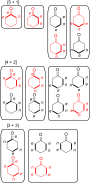
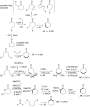
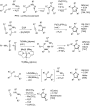
- strategies. The traditional mapping is shown in red and only 2 out of 18 novel mappings shown in blue have been reported recently. Scheme 10 shows the following literature examples of [3 + 2 + 1] cycloadditions following the traditional mapping (red structure shown in Figure 9): Biginelli [163][164][165








Combined experimental and theoretical studies of regio- and stereoselectivity in reactions of β-isoxazolyl- and β-imidazolyl enamines with nitrile oxides
Beilstein J. Org. Chem. 2016, 12, 2390–2401, doi:10.3762/bjoc.12.233

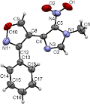
- 4i), respectively. The regio- and stereospecificity and the apparent reaction rate increase by the introduction of electron-withdrawing substituents into the benzonitrile oxide structure, allow to presume that the reaction of enamines with nitrile oxides can be described as 1,3-dipolar cycloadditions




Stereoselective synthesis of fused tetrahydroquinazolines through one-pot double [3 + 2] dipolar cycloadditions followed by [5 + 1] annulation
Beilstein J. Org. Chem. 2016, 12, 2204–2210, doi:10.3762/bjoc.12.211
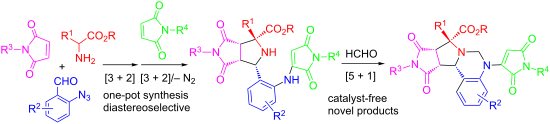
- using one-pot intermolecular or intramolecular [3 + 2] azomethine ylide cycloadditions [22][23][24][25][26][27] as the initial step followed by cyclization or cycloaddition reactions to form polycyclic scaffolds with skeleton, substitution, and stereochemistry diversities. Introduced in this paper is a
- , potassium channel, mPGES-1, and tubulin inhibitors, as well as the immunomodulatory drug thalidomide [28][29][30][31][32] (Figure 1). Results and Discussion Our initial effort was focused on the development of reaction conditions for the one-pot double [3 + 2] cycloadditions. The first [3 + 2] cycloaddition
- . Upon the completion of the reaction as monitored by LC–MS, the reaction mixture was concentrated and then isolated on a semi-preparative HPLC with a C18 column to afford purified product 1. Heterocyclic fragments in bioactive compounds. One-pot double [3 + 2] cycloadditions and denitrogenation for


Diels–Alder reactions in confined spaces: the influence of catalyst structure and the nature of active sites for the retro-Diels–Alder reaction
Beilstein J. Org. Chem. 2016, 12, 2181–2188, doi:10.3762/bjoc.12.208

- selectivity and atom economy. Moreover, Diels–Alder cycloadditions in combination with heterogeneous catalysts (i.e. doped-microporous materials) represent an interesting approach for the conversion of biomass feedstock into stable chemicals such as furfural derivatives, platform molecules which can be
- Diels–Alder reaction selectivity [28]. The DAR of cyclopentadiene with p-benzoquinone is a well-known example of cycloadditions, and some results can be found on the control of the selectivity to the different isomers. In homogeneous phase, equimolar amounts of diene and dienophile afford two isomers


The direct oxidative diene cyclization and related reactions in natural product synthesis
Beilstein J. Org. Chem. 2016, 12, 2104–2123, doi:10.3762/bjoc.12.200
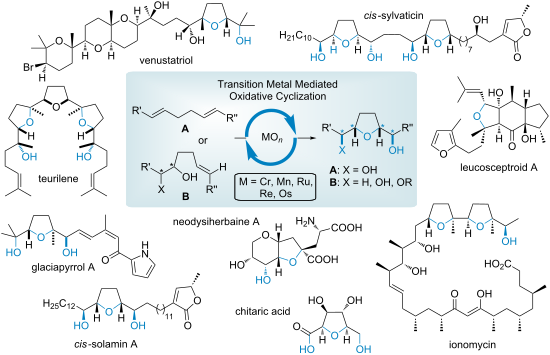
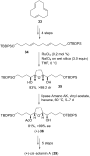
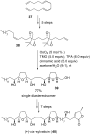
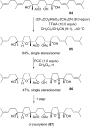
- , it was finally broadly accepted that the overall reaction is a result of two consecutive syn-stereospecific [3 + 2]-oxidative cycloadditions (cf. type A mechanism; Scheme 3) [9][10][11]. Therefore, the double bond geometry of each of the two reacting double bonds translates directly to the relative






Stereo- and regioselectivity of the hetero-Diels–Alder reaction of nitroso derivatives with conjugated dienes
Beilstein J. Org. Chem. 2016, 12, 1949–1980, doi:10.3762/bjoc.12.184
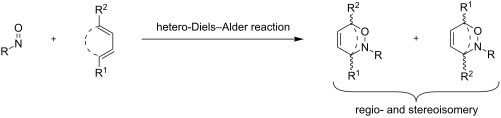
- reactions of acylnitroso compounds in [4 + 2] cycloadditions indicate several facts. The copper–oxazoline complex behaves as an excellent catalyst for the aerobic oxidation of acylhydroxamic acids. However, this system is useful only for hydroxamic acids containing a heteroatom between the aryl and carbonyl
- same rules as for solution-phase chemistry are valid whether the proximal or distal regioisomer is favored (Figure 5) [42][78]. In most cases, the regioselectivity of the cycloadditions in both the solid phase and in solution is the same for acyl and arylnitroso dienophiles. However, in some cases, the
- chiral dienes or dienophiles, and chiral catalysts and auxiliaries, as described below. Stereoselective control of nitroso hetero-Diels–Alder reactions by the use of chiral starting materials There are three different ways to achieve non-catalytic asymmetric hetero-Diels–Alder cycloadditions using chiral




A chiral analog of the bicyclic guanidine TBD: synthesis, structure and Brønsted base catalysis
Beilstein J. Org. Chem. 2016, 12, 1870–1876, doi:10.3762/bjoc.12.176
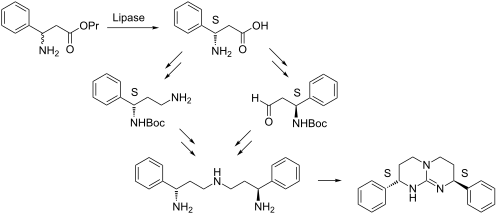
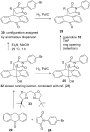
- successfully used as catalysts for anthrone maleimide cycloadditions [29][30][31][32][33][34][35]. In the presence of 10, dichloroanthrone 21 reacted with maleimides 22 and 23 to produce exclusively cycloadducts 26 and 27. In contrast, a mixture of 25 and 28 resulted from the reaction of anthrone 20 and N


A flow reactor setup for photochemistry of biphasic gas/liquid reactions
Beilstein J. Org. Chem. 2016, 12, 1798–1811, doi:10.3762/bjoc.12.170
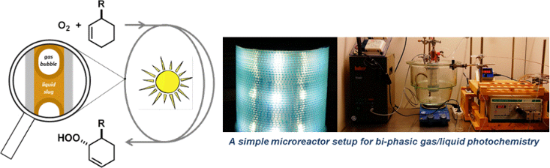
- alkylbenzenes [48] and [2 + 2]-cycloadditions with ethylene [49]. Results and Discussion Microreactor parts and setup When studying the numerous literature reports of applications of flow reactors to organic synthesis it became obvious that there are no simple and quick technical solutions to such endeavours


Experimental and theoretical insights in the alkene–arene intramolecular π-stacking interaction
Beilstein J. Org. Chem. 2016, 12, 1616–1623, doi:10.3762/bjoc.12.158
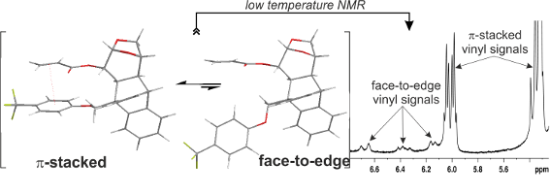
- room temperature, account for this explanation. With the aim to determine if the strength of the intramolecular π-stacking interaction can have any influence in the inductive capacity, we studied the Diels–Alder reaction of acrylates 6a,b with cyclopentadiene (Table 2). All cycloadditions were endo




Dinuclear thiazolylidene copper complex as highly active catalyst for azid–alkyne cycloadditions
Beilstein J. Org. Chem. 2016, 12, 1566–1572, doi:10.3762/bjoc.12.151
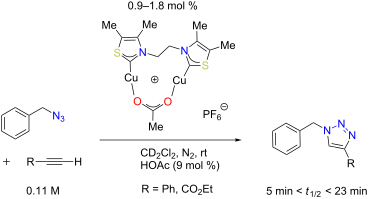
- [1][2][3]. In 2002, the research groups of Meldal and Sharpless independently discovered the strongly rate-enhancing effect of copper(I) salts for azide–alkyne cycloadditions. The 1,4-disubstituted 1,2,3-triazoles are formed exclusively with essentially quantitative conversion and under mild reaction


Stereodynamic tetrahydrobiisoindole “NU-BIPHEP(O)”s: functionalization, rotational barriers and non-covalent interactions
Beilstein J. Org. Chem. 2016, 12, 1453–1458, doi:10.3762/bjoc.12.141
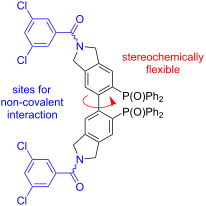
- -BIPHEPs” are a class of stereodynamic diphosphine ligands which are easily accessible via rhodium-catalyzed double [2 + 2 + 2] cycloadditions. This study explores the preparation of differently functionalized “NU-BIPHEP(O)” compounds, the characterization of non-covalent adduct formation and the


Development of chiral metal amides as highly reactive catalysts for asymmetric [3 + 2] cycloadditions
Beilstein J. Org. Chem. 2016, 12, 1447–1452, doi:10.3762/bjoc.12.140

- Yasuhiro Yamashita Susumu Yoshimoto Mark J. Dutton Shu Kobayashi Department of Chemistry, School of Science, The University of Tokyo, Hongo, Bunkyo-ku, Tokyo, Japan 10.3762/bjoc.12.140 Abstract Highly efficient catalytic asymmetric [3 + 2] cycloadditions using a chiral copper amide are reported
- developed asymmetric [3 + 2] cycloadditions [4][5][6][7][8] and asymmetric Mannich-type reactions [9] by using chiral silver or copper amides as catalysts. In these reactions, it has been revealed that the metal amides have higher activity than typical silver or copper acid/base catalysts, and that less
- reactive substrates react smoothly to afford the desired products in high yields with high stereoselectivities. Based on these results, it was considered that metal amide catalysts might also achieve high catalyst turnover. Here, we report chiral copper amide-catalyzed asymmetric [3 + 2] cycloadditions of


Synthesis of ferrocenyl-substituted 1,3-dithiolanes via [3 + 2]-cycloadditions of ferrocenyl hetaryl thioketones with thiocarbonyl S-methanides
Beilstein J. Org. Chem. 2016, 12, 1421–1427, doi:10.3762/bjoc.12.136
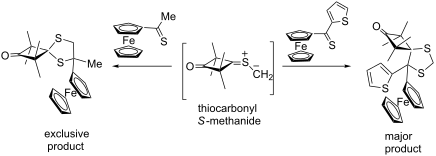
- 1,5-diradical as a key intermediate. The complete change of the reaction mechanism toward the concerted [3 + 2]-cycloaddition was observed in the reaction of a sterically crowded cycloaliphatic thiocarbonyl ylide with ferrocenyl methyl thioketone. Keywords: [3 + 2]-cycloadditions; 1,3-dithiolanes
- -tetrasubstituted 1,3-dithiolanes [6][7], cycloaliphatic S-methanides tend to form mixtures of both regioisomeric cycloadducts with the major component being the sterically more crowded isomer [7][8]. In a recent study, we proposed a diradical mechanism for the [3 + 2]-cycloadditions of thiocarbonyl S-methanides
- [3 + 2]-cycloadditions. The high reactivity of ferrocenyl thioketones is demonstrated by the fact that no products of competitive reactions, such as dimerization of the intermediate 1,3-dipole or 1,3-dipolar electrocyclizations, were observed. Based on these observations one can expect that


Multicomponent reactions: A simple and efficient route to heterocyclic phosphonates
Beilstein J. Org. Chem. 2016, 12, 1269–1301, doi:10.3762/bjoc.12.121
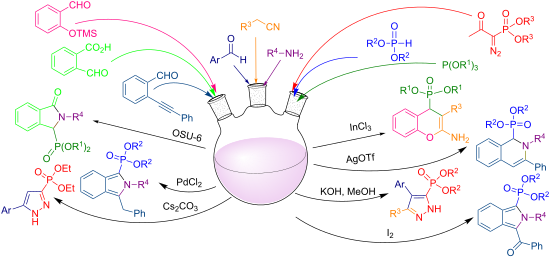
- azide–alkyne cycloadditions and various A3-coupling reactions are useful procedures in heterocyclic chemistry. However, several methods based on these protocols have also been developed for the synthesis of heterocyclic phosphonates. The 1,2-dihydroisoquinolin-1-ylphosphonates 172 were formed through a





