Search results
Search for "enantiomeric excess" in Full Text gives 187 result(s) in Beilstein Journal of Organic Chemistry.
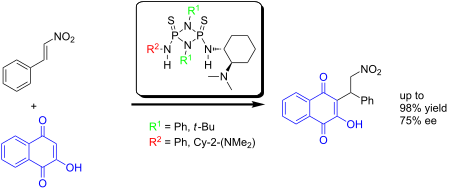
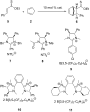
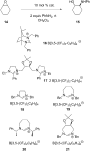
New hydrogen-bonding organocatalysts: Chiral cyclophosphazanes and phosphorus amides as catalysts for asymmetric Michael additions
Beilstein J. Org. Chem. 2014, 10, 224–236, doi:10.3762/bjoc.10.18
- quinine, gives modest yields (60%) albeit with low enantiomeric excess (13% ee). Lowering the reaction temperature with catalyst 4 results in a slightly higher enantiomeric excess (27% ee, Table 2), however the yield drops to only 30%. We anticipated an increase in enantioselectivity for the epimer 5 as
- motifs. Indeed cis-catalyst 14a exhibited an excellent efficacy with 98% isolated yield and a good enantioselectivity of up to 75% ee (Table 4). It is noteworthy, that the enantiomeric excess can easily be increased to >99% by recrystallization. While enantioselectivities with 14a are slightly higher in
- -hydroxynaphthoquinone to β-nitrostyrene. The open-chain triamide catalyst 7a performs with nearly quantitative yields (98%) and moderate enantiomeric excess of 51%, even at 2% catalyst loading (Table 2). Cyclodiphosphazane cis-14a shows the same efficiency with 98% isolated yields and an even improved enantiomeric


Recent applications of the divinylcyclopropane–cycloheptadiene rearrangement in organic synthesis
Beilstein J. Org. Chem. 2014, 10, 163–193, doi:10.3762/bjoc.10.14
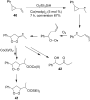
- kinetic resolution [156], albeit with unsatisfactory enantiomeric excess. The undesired enantiomer was then selectively cleaved using another enzyme with reversed selectivity to give enantiopure pyranone 181. Cyclopropanation was achieved using a Michael addition initiated ring closure yielding diester




Synthesis of five- and six-membered cyclic organic peroxides: Key transformations into peroxide ring-retaining products
Beilstein J. Org. Chem. 2014, 10, 34–114, doi:10.3762/bjoc.10.6
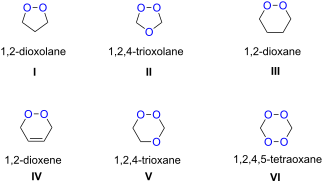
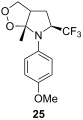
- -allyl-3-methyl-5-pentyl-1,2-dioxolane (136) in 47% yield (Scheme 31) [261]. The asymmetric peroxidation of methyl vinyl ketones 137a–e with 9-amino-9-deoxyepiquinine 138 and CCl3COOH afforded hydroxydioxolanes 139a–e with high enantiomeric excess (ee 94–95%) (Scheme 32) [262]. The Kobayashi synthesis of






A combined continuous microflow photochemistry and asymmetric organocatalysis approach for the enantioselective synthesis of tetrahydroquinolines
Beilstein J. Org. Chem. 2013, 9, 2457–2462, doi:10.3762/bjoc.9.284
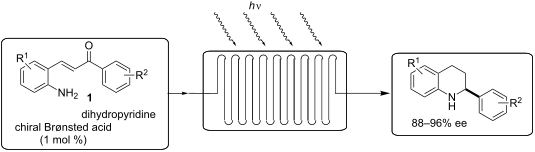
- isolated in 59% yield and 93% enantiomeric excess (Table 1, entry 1 vs entry 2). Improvement of the reaction yield shows the superior performance of the microflow reactor since the light penetration through the microchannels was significantly increased. A slight improvement of yield was achieved when the
- reaction was carried out at 55 °C (Table 1, entry 3). Noticeable improvement on the chemical yield was observed when the reaction was conducted at a lower concentration providing the product in 74% isolated yield and 94% enantiomeric excess (Table 1, entry 4 vs entry 3). Further decrease of the


Synthesis of the spiroketal core of integramycin
Beilstein J. Org. Chem. 2013, 9, 2446–2450, doi:10.3762/bjoc.9.282
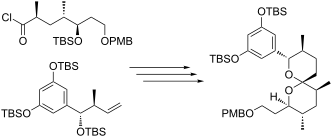
- ). Subsequent Leighton crotylation [7] using commercially available (R,R)-E-Crotyl-Mix was employed to introduce the two stereocenters at C25/C26 with anti-relationship in excellent yield and enatioselectivity. The enantiomeric excess of the crotylation product was estimated by esterification with (R)-α


A protecting group-free synthesis of the Colorado potato beetle pheromone
Beilstein J. Org. Chem. 2013, 9, 2374–2377, doi:10.3762/bjoc.9.273
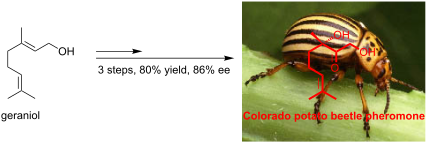
- ]. According to Sharpless et al. [18], 5 mol % of Ti(OiPr)4 and 7.5 mol % of DIPT were used, so at least 20% excess of tartrate ester in order to obtain the maximum enantiomeric excess. The use of freshly distilled DIPT and Ti(OiPr)4 was important to obtain consistently 88% ee. With epoxide (2R,3R)-4 at hand
- (2S,3R)-4, triol (2S,3S)-3 was obtained in high yield but a 6% loss in enantiomeric excess was observed (see Supporting Information File 1). Considering these disappointing results using nerol as the starting material, oxidation to (S)-1 was not performed. Conclusion In summary, we have developed an


Flow synthesis of phenylserine using threonine aldolase immobilized on Eupergit support
Beilstein J. Org. Chem. 2013, 9, 2168–2179, doi:10.3762/bjoc.9.254
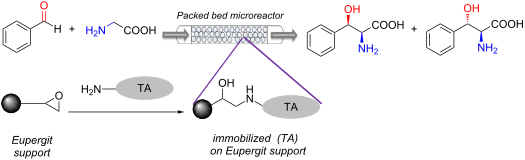
- which is related to the very short residence time distribution. In all cases 20% diastereomeric excess (de) and 99% enantiomeric excess (ee) were observed. A continuous run of the reactant solution was carried out for 10 hours in order to check enzyme stability at higher temperature. Stable operation
- mL of sample was collected and the reaction was terminated by adding a 30% trichloroacetic acid solution. Then, all samples were extracted with 2 mL of internal standard solution (1,3-dimethoxybenzene in ethyl acetate). The enantiomeric excess (ee) and the diasteriomeric excess (de) of phenylserine
- rate of 25 °C/min. The injector temperature was fixed at 250 °C and the detector temperature at 250 °C. Determination of enantiomeric excess (ee) and diastereomeric excess (de) Determination of the enantiomeric excess (ee) and the diastereomeric excess (de) was achieved by HPLC using a chiral column


Organocatalyzed enantioselective desymmetrization of aziridines and epoxides
Beilstein J. Org. Chem. 2013, 9, 1677–1695, doi:10.3762/bjoc.9.192
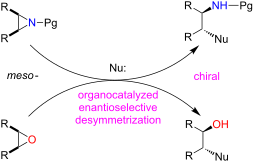
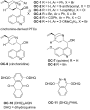
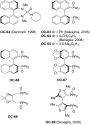
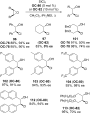
- -temperature was improved significantly from 25 to 68% ee. The highest enantiomeric excess of chlorohydrin (92% ee) was obtained by simple decreasing the reaction temperature to −78 °C. A series of substituted cis-stilbene oxides were desymmetrized in very good yield and high stereoselection, and the
- PINDOX OC-98 for the enantioselective ring-opening of cyclic meso-epoxides with SiCl4 to produce chlorohydrins in moderate to good enantiomeric excess (Scheme 21). The stereoselectivities are very sensitive to the ring size of the cyclic oxides. For example, when cyclohexene oxide was used as a substrate








Preparation of optically active bicyclodihydrosiloles by a radical cascade reaction
Beilstein J. Org. Chem. 2013, 9, 1326–1332, doi:10.3762/bjoc.9.149
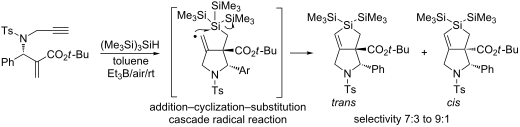
- enhanced the yield of 2a to 58% (Table 1, entry 3). The enantiomeric excess of trans-2a was estimated to be 95% by HPLC analysis, which was the same ee level of precursor 1a. Thus, no epimerization at the C3 chiral center occurred during the reaction. The stereoselectivity was improved to 8:2. The
- analyses using ChiralPak ID and IC (Table 2, entries 1, 2, and 4), the enantiomeric excesses of most of products 2 were high, and their original values were maintained (Table 2, entries 3, 5, 6, 8, and 9). Interestingly, significant epimerization occurred during the reaction of 1h; the enantiomeric excess


Synthesis of the tetracyclic core of Illicium sesquiterpenes using an organocatalyzed asymmetric Robinson annulation
Beilstein J. Org. Chem. 2013, 9, 1135–1140, doi:10.3762/bjoc.9.126
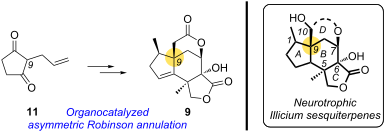
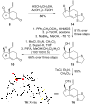
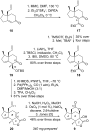
- enantioselectivity and short reaction time, we decided to pursue this conversion at 40 °C where we obtained an enantiomeric excess of 90% (70% yield after 14 days). The enantiomerically enriched Hajos–Wiechert-like diketone 8 (ee > 90%) was then subjected to a selective protection of the C-6 enone motif to yield


A versatile and efficient approach for the synthesis of chiral 1,3-nitroamines and 1,3-diamines via conjugate addition to new (S,E)-γ-aminated nitroalkenes derived from L-α-amino acids
Beilstein J. Org. Chem. 2013, 9, 832–837, doi:10.3762/bjoc.9.95
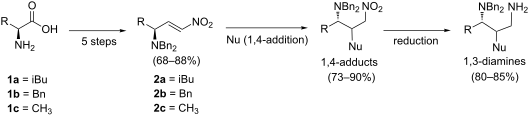
- the same route employed for (−)-2b and utilized as standard (Figure 1). The racemic nitroalkene (+/−)-2b showed a very good separation factor in the chromatograph chiral column used. Figure 1 shows that (−)-2b prepared from L-phenylalanine was enantiomerically pure (enantiomeric excess > 99%). HPLC


Synthesis of skeletally diverse alkaloid-like molecules: exploitation of metathesis substrates assembled from triplets of building blocks
Beilstein J. Org. Chem. 2013, 9, 775–785, doi:10.3762/bjoc.9.88
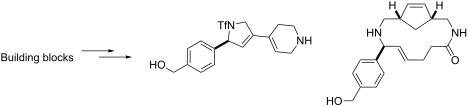
- , and the terminating building block 12b, were prepared by using established methods [14]. The enantiomeric excess (68% ee) of the hydroxy alcohol 11 was determined by conversion into the corresponding diastereomeric O-methyl mandelate esters. The terminating building blocks 12a and 13 were prepared by


Enantioselective reduction of ketoimines promoted by easily available (S)-proline derivatives
Beilstein J. Org. Chem. 2013, 9, 633–640, doi:10.3762/bjoc.9.71
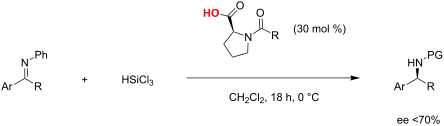
- modest to good yields. The N-formyl-L-proline (2) led to a racemic product in 21% yield, suggesting the importance of having a bulky group on the nitrogen atom. In order to validate our hypothesis, we also tested the N-Boc-L-proline methyl ester (3): the enantiomeric excess was 19% and the yield was 49
- , afforded the product with 36% yield and 70% enantiomeric excess. The presence of a hydroxy group on the scaffold of the catalyst (cat. 16, Table 2, entry 14) led to a racemic product, while the silyl ether derivative (17, Table 2, entry 15) promoted the reaction with good enantioselectivity, showing that
- comparison with literature data. N-(Phenyl)-1-phenylethanamine. This product was purified by flash column chromatography on silica gel with a 98:2 hexane/ethyl acetate mixture as eluent. 1H NMR (300 MHz, CDCl3) δ 7.23 (m, 7H), 6.61 (m, 3H), 4.48 (q, 1H), 1.53 (d, 3H). The enantiomeric excess was determined


Chemoenzymatic synthesis and biological evaluation of enantiomerically enriched 1-(β-hydroxypropyl)imidazolium- and triazolium-based ionic liquids
Beilstein J. Org. Chem. 2013, 9, 516–525, doi:10.3762/bjoc.9.56
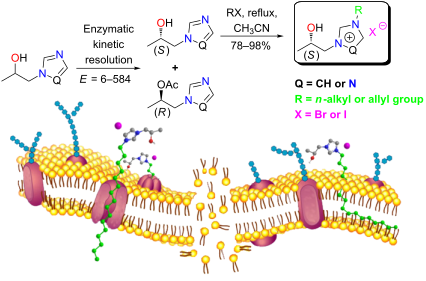
- after 30 h giving product (+)-6b in 90% ee (Table 2, entry 4), and after 49 h the stereochemical course reached 54% conversion yielding the slower reacting enantiomer (+)-5b with high enantiomeric excess (Table 2, entry 5, 98% ee). The highest optical purity for (+)-6b (90% ee) and the shortest reaction
- of enantiomers of 1-(1H-1,2,4-triazol-1-yl)propan-2-ol (±)-3b with various tested lipases was less efficient than that of (±)-3a. Resolution of (±)-3b proceeded with good yield, but the enantiomeric excess of the slower reacting enantiomer (alcohol (+)-5b) was less than 98%. The faster reacting ester


Efficient synthesis of β’-amino-α,β-unsaturated ketones
Beilstein J. Org. Chem. 2013, 9, 486–495, doi:10.3762/bjoc.9.52

- ester moiety to a Weinreb amide [18] followed by changing the nitrogen protecting group to a carbamate furnished the key intermediate 6, which could be further alkylated with Grignard reagents to give β’-amino protected α,β-enone 1 in good overall yield and high enantiomeric excess. As Grignard reagents


Inter- and intramolecular enantioselective carbolithiation reactions
Beilstein J. Org. Chem. 2013, 9, 313–322, doi:10.3762/bjoc.9.36

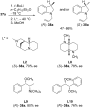
- secondary alkyllithiums to (E)- and (Z)-cinnamyl alcohols and amines 4 in the presence of stoichiometric or substoichiometric amounts of (−)-sparteine (L1) led to the corresponding alkylated products 5 in high enantiomeric excess (Scheme 2a). The chiral benzylic organolithium intermediates, which are
- stabilized by coordination with a Lewis-basic substituent, react with different electrophiles in a highly diastereoselective manner. On the other hand, when acetals derived from cinnamyl alcohols are used as substrates, cyclopropanes 6 can be obtained in high enantiomeric excess by warming the reaction
- closure and dehydration generates the substituted indoles 13 with high enantioselectivities (enantiomeric excess up to 86%) (Scheme 4). Different functional groups can be introduced at the C-2 position of the indoles by varying the electrophile [13][14]. The procedure has also been extended to the





Asymmetric synthesis of host-directed inhibitors of myxoviruses
Beilstein J. Org. Chem. 2013, 9, 197–203, doi:10.3762/bjoc.9.23
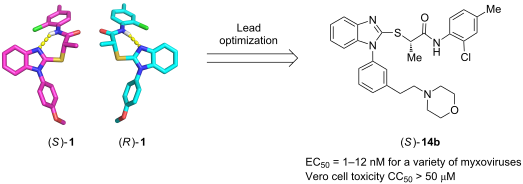
- known to limit racemization in peptide coupling reactions [16]. The enantiomeric excesses of the starting materials were ca. 95%. No erosion of stereochemistry in the products 12 was observed as determined by chiral HPLC. Recrystallization of 12 from ethanol did not increase the enantiomeric excess of
- enantiomeric excess. Isolating the potassium salt proved necessary, as attempts at preforming the potassium salt in dry DMF, followed by addition to the chiral α-bromoamide, led to ee’s of ca. 60%. Although both chiral acids are readily available from commercial sources, their enantiomeric excesses seem to be
- limited to ca. 95%. For these studies, ee’s >90% were sufficient; if material with higher enantiopurity is needed, we note that one recrystallization of (S)-1 from ethyl ether increases the enantiomeric excess from 94% to 97.4%. In an alternative approach that provides material with high enantiomeric


Asymmetric Brønsted acid-catalyzed aza-Diels–Alder reaction of cyclic C-acylimines with cyclopentadiene
Beilstein J. Org. Chem. 2012, 8, 1819–1824, doi:10.3762/bjoc.8.208
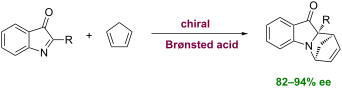
- and N-triflylphosphoramides 4–6 (Table 1) [33][34][35][36][37][38][39][40][41][42][43][44][45][46][47][48][49][50][51] as the catalysts. We were delighted to see that the reaction proceeded smoothly at different temperatures and that the product could be obtained with an enantiomeric excess of 8% ee
- -Diels–Alder reaction. From the different catalysts tested, phosphoric acid diester 4b, with the 2,4,6-triisopropylphenyl substituent in the 3,3’-position of the BINOL backbone, proved to be the best catalyst, and the product was obtained with an encouraging enantiomeric excess of 74% (Table 1, entry 3
- , when the reaction was carried out in a 2:1 mixture of hexane/toluene the product exhibited excellent enantioselectivity (Table 1, entry 13). Further improvement of selectivity was obtained by increasing the hexane/toluene ratio to 3:1, which delivered the product with an excellent enantiomeric excess


Imidazolinium and amidinium salts as Lewis acid organocatalysts
Beilstein J. Org. Chem. 2012, 8, 1798–1803, doi:10.3762/bjoc.8.205
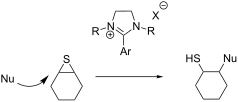
- transformed directly by anion metathesis to the salt 21. Conclusion It was possible to prepare new metal-free Lewis acids containing bis-imidazolinium cations and investigate the salts as organocatalysts. Although with enantiopure chiral salts no enantiomeric excess was observed, it was shown for the first





Enantioselective total synthesis of (R)-(−)-complanine
Beilstein J. Org. Chem. 2012, 8, 1695–1699, doi:10.3762/bjoc.8.192
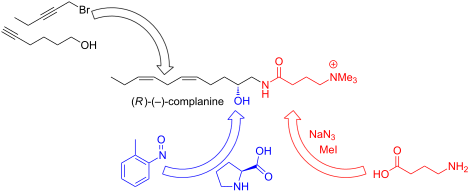
- ), 71.8 (C2), 127.1, 129.1 and 132.0 (C5H, C6H, C8H and C9H); HRMS–ESI [M + H]+ calcd for C11H21O2, 185.1542; found, 185.1539. Enantiomeric excess was determined by HPLC analysis (Chiralcel OD-H, hexane/2-propanol 95:5, 1.0 mL min−1): tR 14.7 min (minor), 15.4 (major). Structure of (R)-(−)-complanine


Organocatalytic tandem Michael addition reactions: A powerful access to the enantioselective synthesis of functionalized chromenes, thiochromenes and 1,2-dihydroquinolines
Beilstein J. Org. Chem. 2012, 8, 1668–1694, doi:10.3762/bjoc.8.191
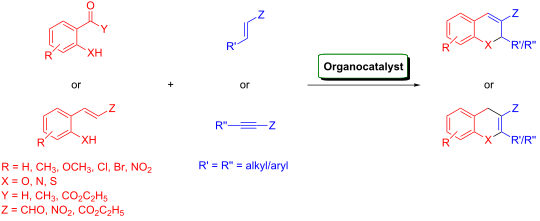
- organocatalysts with their percentage of conversion (% yield) and enantiomeric excess (ee) is presented in tabular form, and the best catalyst is used for the given individual scheme. Review 1 Organocatalytic oxa-Michael additions to access functionalized chromenes 1.1. Reactions of 2-hydroxybenzaldehydes with
- aromatic substituents at the C-2 position in up to 70% yield and 60% enantioselectivity in dichloromethane at room temperature, while C-2 aliphatic analogues were obtained in 90% enantiomeric excess, but with only 20% yield, under identical conditions. Taking the advantages of the above methodology
- and high enantiomeric excess of 4H-chromenes 6 with a wide range of substrates (Scheme 6). The potential of less well-explored alkynals as Michael acceptors was further explored, when Alemán et al. [48] in 2010 reported the synthesis of chiral 4-amino-4H-chromene 8 by reaction of salicyl-N-tosylimine


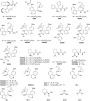


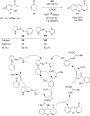


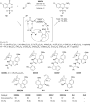
Synthesis and evaluation of new guanidine-thiourea organocatalyst for the nitro-Michael reaction: Theoretical studies on mechanism and enantioselectivity
Beilstein J. Org. Chem. 2012, 8, 1485–1498, doi:10.3762/bjoc.8.168
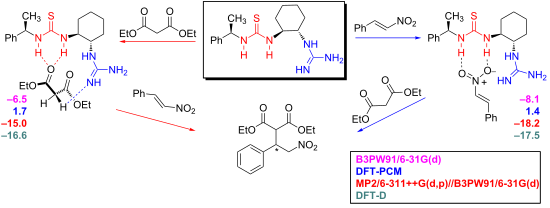
- particle size: 0.035–0.070 mm). NMR spectra were recorded on a Bruker Avance 300. FAB mass spectra were measured with a Micromass: ZabSpec. The enantiomeric excess of products was determined by chiral HPLC analysis in comparison with authentic racemic material. HPLC measurements were performed using


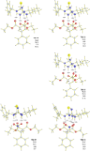
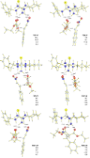

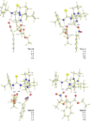
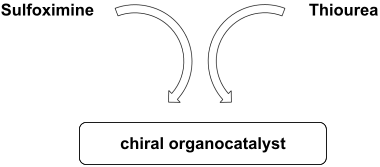
Synthesis of chiral sulfoximine-based thioureas and their application in asymmetric organocatalysis
Beilstein J. Org. Chem. 2012, 8, 1443–1451, doi:10.3762/bjoc.8.164
- essentially no effect on both yield and enantioselectivity (Table 1, entries 8 and 9). In previous studies it was found that the enantioselectivity in some thiourea-catalyzed reactions was dependent on the concentration of the substrates and that in several cases the enantiomeric excess could significantly be
- (urea) concentration from 0.25 mol/L to 0.025 mol/L caused a distinct improvement of the enantiomeric excess and the enantiomer ratio of the product 20 raised from 58:42 to 72:28 (Table 1, entry 6 vs entry 10). In addition, product 20 was isolated in a slightly better yield (92%). The attempt to reduce


Highly enantioselective access to cannabinoid-type tricyles by organocatalytic Diels–Alder reactions
Beilstein J. Org. Chem. 2012, 8, 1385–1392, doi:10.3762/bjoc.8.160
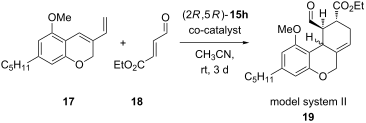
- organocatalytic Diels–Alder reactions to build up a tricyclic system. Herein, an asymmetric induction up to 96% enantiomeric excess was obtained by the use of imidazolidinone catalysts. This approach can be utilized to construct the tricyclic system in numerous natural products, in particular the scaffold of
- (model system II) 19 (Scheme 4, Table 4). Hydrochloric acid has been proven to be the best co-catalyst (Table 4, entry 1), providing cis-19 in good yield and with an enantiomeric excess of 96%. Even perchloric acid and trifluoroacetic acid gave high enantiomeric excesses but in much poorer yields (Table
- 4, entries 2 and 3). Using para-toluenesulfonic acid also afforded cis-19 in good yield, but its enantiomeric excess could not be determined (Table 4, entry 4). Trifluoromethanesulfonic acid as co-catalyst only led to decomposition (Table 4, entry 5). Under these optimized reaction conditions, we


Cyclodextrin nanosponge-sensitized enantiodifferentiating photoisomerization of cyclooctene and 1,3-cyclooctadiene
Beilstein J. Org. Chem. 2012, 8, 1305–1311, doi:10.3762/bjoc.8.149
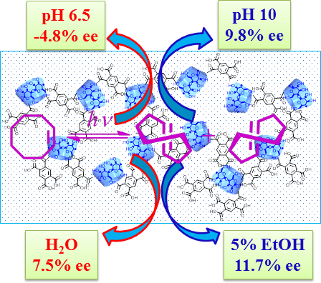
- enantioselectivities. Interestingly, the enantiomeric excess (ee) was a critical function of the solution pH. For instance, 3 gave (+)-1E in 4.4% ee at pH 1.9 but a doubled 9.0% ee at pH 10. The largest pH-induced ee change was observed for 5, which afforded (−)-1E in 4.8% ee at pH 6.5 but antipodal (+)-1E in 9.8% at