


Search results
Search for "ether" in Full Text gives 1416 result(s) in Beilstein Journal of Organic Chemistry. Showing first 200.
Rapid construction of tricyclic tetrahydrocyclopenta[4,5]pyrrolo[2,3-b]pyridine via isocyanide-based multicomponent reaction
Beilstein J. Org. Chem. 2024, 20, 1436–1443, doi:10.3762/bjoc.20.126
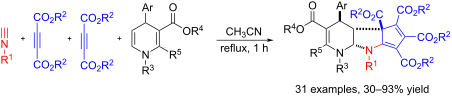
- one hour. After removing the solvent by rotatory evaporation at reduced pressure, the residue was subjected to column chromatography with a mixture of ethyl acetate and petroleum ether (v/v = 1:4) as eluent to give the pure product for analysis. Pentamethyl rel-(4R,4aR,4bS,8aS)-1-benzyl-8-cyclohexyl-4


Synthetic applications of the Cannizzaro reaction
Beilstein J. Org. Chem. 2024, 20, 1376–1395, doi:10.3762/bjoc.20.120
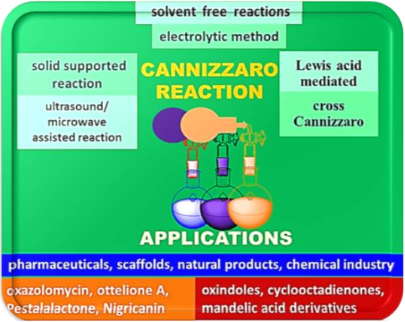
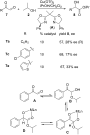
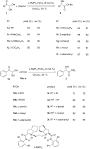
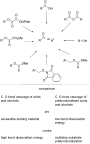
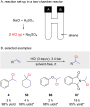
- Rouser et al. using an intramolecular Cannizzaro reaction to give the corresponding unsymmetrical acid–alcohol substituted crown ether derivatives 43–46. Good to excellent yields of the desymmetrized Cannizarro products 43–46 were obtained using Ba(OH)2 as the base, thus effecting efficient
- desymmetrization of crown ether dialdehydes (Scheme 17) [84]. Synthesis of natural products and pharmaceuticals Exploring intramolecular Cannizzaro reaction: The Cannizzaro reaction is a versatile synthetic tool with applications in the synthesis of natural products, fine chemicals, and pharmaceuticals. Its








Generation of alkyl and acyl radicals by visible-light photoredox catalysis: direct activation of C–O bonds in organic transformations
Beilstein J. Org. Chem. 2024, 20, 1348–1375, doi:10.3762/bjoc.20.119
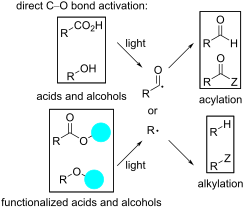
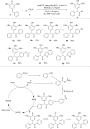
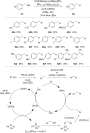
- presence of alkene, alkyne, halogen, and ether moieties. N-Boc-protected amines and esters also provided a good to excellent yield. Unfortunately, α,β-unsaturated carboxylic acids and aliphatic carboxylic acids were ineffective using this method. In 2024, Liu and co-workers [31] introduced a photocatalytic
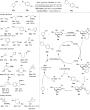
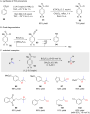
- radical cation 81 and Mes–Acr because of the favorable π–π stacking. Ethyl vinyl ether, which is the most nucleophilic molecule in the reaction, combined with radical cation 81 to form the oxonium radical 82, which could proceed in two directions: 1) β-elimination, yielding radical 83 and 2) photoinduced
- breakdown of ethyl vinyl ether and trapping of ethanol, yielding radical 84. To regenerate the photocatalyst, PhSSPh functioned as an oxidant. After protonation upon the β-elimination step, PhS− contributed a hydrogen atom to both 83 and 84, alongside regeneration of the HAT catalyst. Lastly, the acetal








Computation-guided scaffold exploration of 2E,6E-1,10-trans/cis-eunicellanes
Beilstein J. Org. Chem. 2024, 20, 1320–1326, doi:10.3762/bjoc.20.115

- family members in bacteria and plants [4], these diterpenoids have four main structural differences: the number and location of oxidized carbons, the absence or presence of transannular ether bridges, the configuration (cis or trans) of the bicyclic ring fusion, and the presence and configuration (E or Z


Sustainable tandem acylation/Diels–Alder reaction toward versatile tricyclic epoxyisoindole-7-carboxylic acids in renewable green solvents
Beilstein J. Org. Chem. 2024, 20, 1308–1319, doi:10.3762/bjoc.20.114
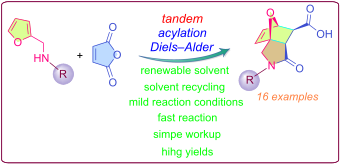
- precipitation with a hexane–ether mixture and was found to be of sufficient purity for spectroscopic analysis. If desired, the product can be crystallized from an EtOAc–MeOH mixture for further purification. On the other hand, compound 2a has also been previously investigated for its potential covalent prolyl
- transformations is the purification of the synthesized product, since these oils are non-volatile and non-polar. However, in this study, the choice of these materials as green solvents allows convenient isolation of the cycloadducts by precipitation followed by filtration with hexane or diethyl ether. Thus, IMDAF
- , the reaction mixture was cooled to room temperature and the desired product, 2a was precipitated after trituration with hexane. The obtained solid product was isolated by filtration under vacuum, washed with ether–hexane solvent mixture and dried at room temperature. If desired for further


Domino reactions of chromones with activated carbonyl compounds
Beilstein J. Org. Chem. 2024, 20, 1256–1269, doi:10.3762/bjoc.20.108
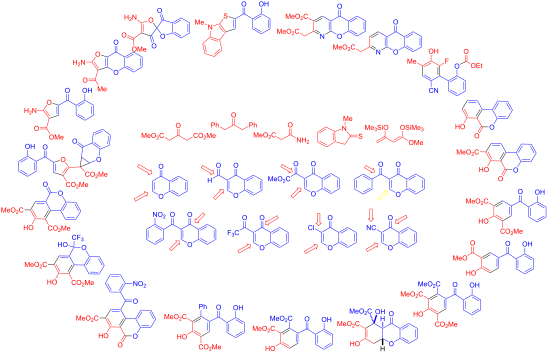
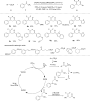
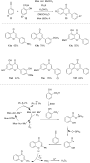
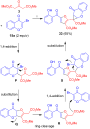
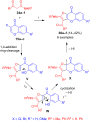
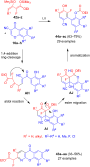
- two silyl enol ether moieties, can be regarded as masked dianions or electroneutral equivalents of 1,3-dicarbonyl dianions and react with the same regioselectivity [13][14][15][16][17][18][19][20][21][22]. Both free and masked dianions were studied extensively in my group for many years. 1,3-Bis
- (silyloxy)-1,3-butadienes are highly moisture sensitive compounds which can be prepared from the corresponding 1,3-dicarbonyl dianions in two steps. For example, diene 6a is available by silylation of 2 to give silyl enol ether 5 which is subsequently deprotonated by LDA and treated with









Competing electrophilic substitution and oxidative polymerization of arylamines with selenium dioxide
Beilstein J. Org. Chem. 2024, 20, 1221–1235, doi:10.3762/bjoc.20.105
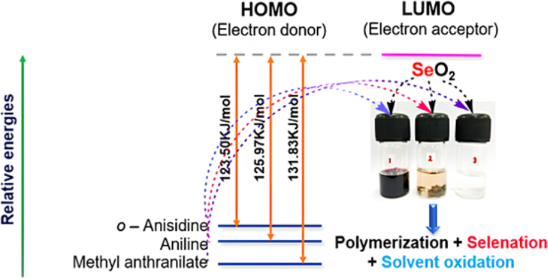
- dioxide (15 mmol, 1.66 g). The reaction mixture was stirred under a nitrogen atmosphere at 80 °C for 3 h. Before the solvent was evaporated at reduced pressure using a rotary evaporator, TLC was performed to verify completion of the reaction using 7:3 petroleum ether/ethyl acetate as the eluent. Upon
- in a different round-bottom flask, and the solvent was evaporated in a rotary evaporator. The resulting solid was dissolved in DCM, and silica gel was added to the DCM layer. This slurry was subjected to column chromatography on silica gel (100–200 mesh) using petroleum ether and ethyl acetate as
- solid. The filtrate was evaporated and column-chromatographed on silica gel (100–200 mesh) using petroleum ether and ethyl acetate as an eluent. The initial yellowish orange fraction containing N1,N2-bis(2-methoxyphenyl)oxalamide, collected with 22% ethyl acetate, was recrystallized from a chloroform


Kinetically stabilized 1,3-diarylisobenzofurans and the possibility of preparing large, persistent isoacenofurans with unusually small HOMO–LUMO gaps
Beilstein J. Org. Chem. 2024, 20, 1099–1110, doi:10.3762/bjoc.20.97
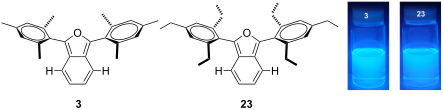
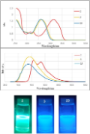
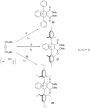
- product (23 mg). Finally, the crude product was purified by preparative TLC (petroleum ether/EtOAc 3:1) to give 27 as a yellow powdery solid (15 mg, 22%, 35% based on reacted 3, Scheme 8). Mp 180 °C (dec.); 1H NMR (700 MHz, CDCl3) δ 7.29 (m, 2H), 6.98 (m, 2H), 6.88 (s, 4H), 3.64 (s, 6H), 2.30 (s, 12H






Synthesis of 1,4-azaphosphinine nucleosides and evaluation as inhibitors of human cytidine deaminase and APOBEC3A
Beilstein J. Org. Chem. 2024, 20, 1088–1098, doi:10.3762/bjoc.20.96
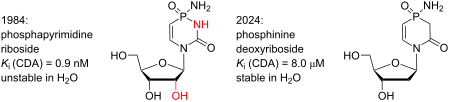
- dichlorophosphane 9 from commercially available PCl3 and ethyl vinyl ether using a previously published procedure [68]. Compound 9 reacted with 1 equiv of benzyl alcohol in absolute Et2O and pyridine at −78 °C, followed by quenching of the reaction mixture with H2O. This procedure provided phosphinate 10 in more


Light on the sustainable preparation of aryl-cored dibromides
Beilstein J. Org. Chem. 2024, 20, 1076–1087, doi:10.3762/bjoc.20.95
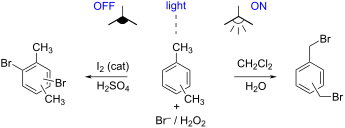
- ), brown solid, yield: 93%. Recrystallisation from hot petroleum ether gave the pure product. 1H NMR (400 MHz, 298 K, CDCl3) δ 7.37 (s, 2H), 2.19 (s, 6H) ppm. 1,2-Dibromo-4,5-bis(bromomethyl)benzene (1c): From 1b: chlorobenzene (4.0 mL) was used as the solvent instead of CH2Cl2 (1 mL). Brown solid, yield
- : 86%. From 1 (two-step, one pot): Brown solid, yield: 82%. Recrystallisation from hot hexane gave the pure product. White solid, 1H NMR (400 MHz, 298 K, CDCl3) δ 7.62 (m, 2H), 4.53 (s, 4H) ppm. 1,3-Bis(bromomethyl)benzene (2a): Petroleum ether (1.5 mL) was used as the solvent instead of CH2Cl2. The
- reaction mixture was kept at 5 °C instead of rt and time was extended by 15% (2 h 20 min for H2O2 dropping and 2 h after the addition). The title product was obtained as pale-yellow solid, yield: 73%. Recrystallisation from hot petroleum ether gave the pure product. White solid, 1H NMR (400 MHz, 298 K


Structure–property relationships in dicyanopyrazinoquinoxalines and their hydrogen-bonding-capable dihydropyrazinoquinoxalinedione derivatives
Beilstein J. Org. Chem. 2024, 20, 1037–1052, doi:10.3762/bjoc.20.92
- solvents were purchased from commercial sources and used without further purification unless otherwise specified. THF, ether, CH2Cl2, and DMF were degassed in 20 L drums and passed through two sequential purification columns (activated alumina; molecular sieves for DMF) under a positive argon atmosphere
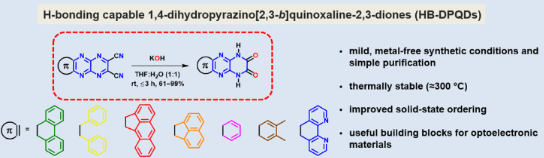
- KOH (1.87 g, 33.3 mmol) in water (50 mL). After completion, a yellow precipitate was observed which was filtered and washed with copious amounts of 1 N HCl and diethyl ether. The product 6b was then dried in vacuo to obtain pale yellow amorphous solid (1.15 g, 3.31 mmol, 99%). 1H NMR (500 MHz, DMSO-d6




Auxiliary strategy for the general and practical synthesis of diaryliodonium(III) salts with diverse organocarboxylate counterions
Beilstein J. Org. Chem. 2024, 20, 1020–1028, doi:10.3762/bjoc.20.90
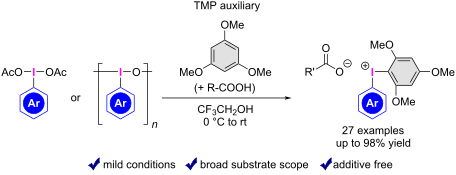
- % yield. It is worth noting that the products yielded by these protocols were easily separated as white amorphous solids by concentration and trituration of the obtained residue with diethyl ether. The color of the products indicates that the reactions proceeded without any signs of decomposition


Carbonylative synthesis and functionalization of indoles
Beilstein J. Org. Chem. 2024, 20, 973–1000, doi:10.3762/bjoc.20.87
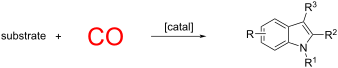
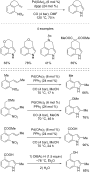
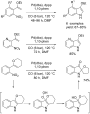
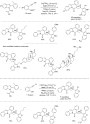
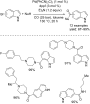
- of amides from 2-alkynylanilines by using TFBen (benzene-1,3,5-triyl triformate) as a CO source, Pd(OAc)2, DPEPhos (bis[(2-diphenylphosphino)phenyl] ether), and DIPEA (N,N-diisopropylethylamine) in MeCN. After 24 h, Pd(OAc)2 and AlCl3 were added to promote a selective cyclization reaction [14]. The
- the presence of Ni(dme)Cl2 (a nickel(II) chloride ethylene glycol dimethyl ether complex), dtbbpy (4,4-di-tert-butyl-2,2-dipyridyl), Zn(0) and ZnI2 in DMF at 120 °C [42] (Scheme 22). The nickel catalyst catalyzed the oxidative addition and CO insertion on aryl iodide compounds, while the Zn/ZnI2












Enhancing structural diversity of terpenoids by multisubstrate terpene synthases
Beilstein J. Org. Chem. 2024, 20, 959–972, doi:10.3762/bjoc.20.86
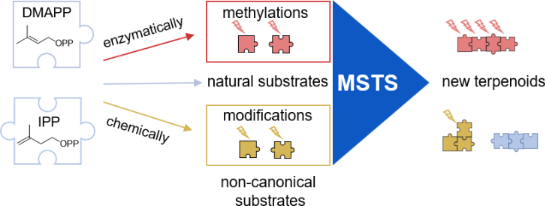
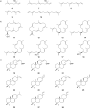
- the FPP cyclopropylmethyl analog 51 (Figure 4b) [44]. With FPP ether derivative 52, pentalenene synthase (PenA) and the Δ6-protoilludene synthases (Omp6/7) from Omphalotus olearius several new tetrahydrofurano terpenoids 53–58 were obtained, some of them accompanied with pronounced olfactoric
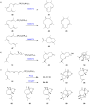
- synthase (CLS) from Cannabis sativa and 5-epi-aristolochene synthase (TEAS) from Nicotiana tabacum were incubated with 11 synthetic prenyl analogs with ether, thioether, alkyne, or phenyl groups, and six of them (60–65) were converted into several novel monoterpenoids 66–71 [46] (Figure 5). In addition to
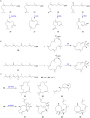
- substrates. a) Products of BcBOT2 using iso-FPPs 45–47. b) Biotransformation of 51 by BcBOT2. c) Products of two TSs PenA and Omp6/7 using FPP ether derivative 52. PenA generated compounds 53–57 and 59, whereas Omp6/7 produced 54–59. Biotransformation of noncanonical prenyl analogs 60–65 using two terpene






Enantioselective synthesis of β-aryl-γ-lactam derivatives via Heck–Matsuda desymmetrization of N-protected 2,5-dihydro-1H-pyrroles
Beilstein J. Org. Chem. 2024, 20, 940–949, doi:10.3762/bjoc.20.84
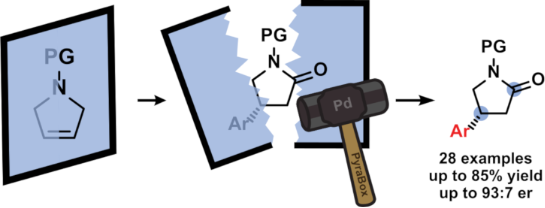
- neutral (4ab, 34% yield) and electron-withdrawing (4ac, 27% yield) ones, but no significant changes in the enantiomeric ratio were observed (Scheme 3). Despite the formation of the hemiaminal ether as the major product, the formation of a minor N-Boc pyrrole was also observed as a side-product. To
- products) were found to be somehow unstable when concentrated to dryness during work-up. We hypothesize that a possible cause of such instability might consist in the formation of a highly electrophilic iminium ion upon protonation of the hemiaminal ether by silica or glassware acidity and further
- methanolysis, the hemiaminal ether product 3 is formed. We hypothesize that the enantioselectivity-determining step consists of the migratory insertion of the aryl group bonded to palladium to the pyrroline. The steric effect of the t-Bu group favors the coordination of the pyrroline with the protecting group




One-pot Ugi-azide and Heck reactions for the synthesis of heterocyclic systems containing tetrazole and 1,2,3,4-tetrahydroisoquinoline
Beilstein J. Org. Chem. 2024, 20, 912–920, doi:10.3762/bjoc.20.81
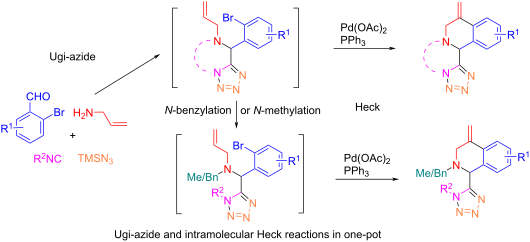
- at 40 °C for 24 h in a sealed vial. Upon completion of the reaction, the reaction mixture was filtered and evaporated under vacuum to give crude products 5a. Further purification was conducted by flash chromatography with 1:6 petroleum ether/EtOAc to afford 5a in 92% yields. The adduct was confirmed
- was purified by flash chromatography with 1:4 ethyl acetate/petroleum ether to afford product 6a. General procedure for the one-pot synthesis of tetrazole-containing 1,2,3,4-tetrahydroisoquinolines 6 A mixture of 2-bromobenzaldehyde 1 (1 mmol), allylamine hydrochloride (2, 1 mmol), trimethylsilyl
- (3 mL) was added 10 mol % of Pd(OAc)2, 20 mol % of PPh3, 2 equiv of K2CO3 and the mixture stirred for 3 h at 105 °C under N2 atmosphere. After aqueous work-up, the crude product was purified by flash chromatography with 1:3 ethyl acetate/petroleum ether to afford products 6. General procedure for the


Skeletal rearrangement of 6,8-dioxabicyclo[3.2.1]octan-4-ols promoted by thionyl chloride or Appel conditions
Beilstein J. Org. Chem. 2024, 20, 823–829, doi:10.3762/bjoc.20.74
- mixture of ketone 9e and the O-alkylated enol ether by-product, which was then reduced using NaBH4 to give alcohol 10e with 98:2 selectivity. Similarly, the reaction of 4-methoxybenzyl bromide and 2 gave ketone 9f in 35% yield without chromatography, and when reduced resulted in only a single alcohol
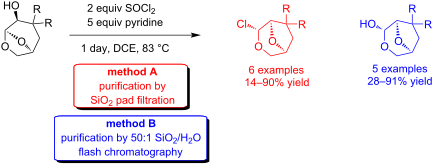
- chiral auxiliary 10a, and following a survey of conditions and isolation protocols, a 90% yield was obtained when 10a was heated in the presence of 2 equivalents of SOCl2 and 5 equivalents of pyridine in DCE. Flash chromatography of the chloroalkyl ether 11a resulted in significant loss due to hydrolysis
- skeletal rearrangement (vide infra). Inclusion of the soft-nucleophile allyltrimethylsilane in the reaction of 10b to trap potential oxocarbenium ion intermediates also resulted in a complex mixture. During the isolation of the chloroalkyl ether products 11a–f, it was apparent that hydrolysis occurred


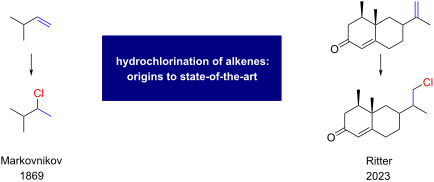
Advancements in hydrochlorination of alkenes
Beilstein J. Org. Chem. 2024, 20, 787–814, doi:10.3762/bjoc.20.72
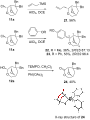
- through a solution of the alkene in diethyl ether at 0 °C or rt (Scheme 3B and 3C) [36]. Despite its effective reaction with styrene (3), the reaction displayed sluggish reactivity with 1-propenylbenzene (5). It is noteworthy, that the following HCl solutions are commercially available: 4.0 M in dioxane
- , 3.0 M in methanol, 3.0 M in 1-butanol, 2.0 M in diethyl ether, 3.0 M in cylopentyl methyl ether, 1.0 M in acetic acid. Terminal aliphatic alkenes, such as prop-1-ene (7) do not react with HCl gas at rt and pressures of 1 atm or less (Figure 3A) [37]. In contrast, higher pressures and temperatures
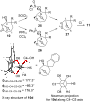
- ][49]. Using liquefied HCl gas, he predominantly obtained cis-30 for the hydrochlorination of 1,2-dimethylcyclohexene (29) (Table 1, entry 1), while solutions of HCl gas in ether favored trans-30 (Table 1, entry 2). A similar study, though with lower selectivities, had been conducted by Fahey earlier






Research progress on the pharmacological activity, biosynthetic pathways, and biosynthesis of crocins
Beilstein J. Org. Chem. 2024, 20, 741–752, doi:10.3762/bjoc.20.68
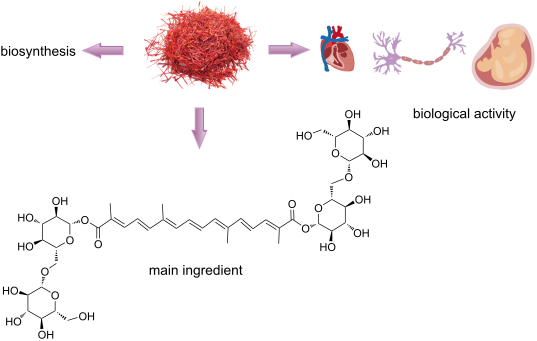
- are highly soluble in hot water but slightly soluble in anhydrous ethanol and ether. The presence of multiple conjugated double bonds in crocins makes them susceptible to degradation when exposed to certain conditions, such as high temperature, the presence of metal ions or light, certain pH values


SOMOphilic alkyne vs radical-polar crossover approaches: The full story of the azido-alkynylation of alkenes
Beilstein J. Org. Chem. 2024, 20, 701–713, doi:10.3762/bjoc.20.64
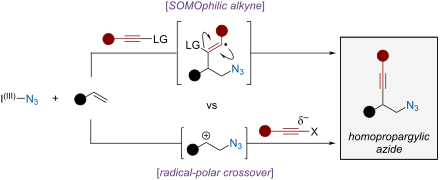
- , suppressed the reaction by reducing PhEBX (2) (Table 1, entry 6). Using diisopropyl ether as a milder donor had no effect on the reaction (Table 1, entry 7). Next, we tested reducing agents expected to react with the iodanyl radical. The addition of ʟ-ascorbic acid led to no improvement of yield and
- did not afford the homopropargylic azide (Table 3, entry 3). While alkynyl-BF3K salts are usually well soluble in acetone, carrying the reaction in this solvent only afforded traces of the product (Table 3, entry 4). Ethyl acetate or ether solvents such as dioxane and THF led to similar or slightly
- diasteroisomer was determined to be trans. Diyne 4l could be accessed in 44% yield from the exclusive 1,2-functionalization of the corresponding ene-yne. Crude NMR of the reaction did not show the presence of an allene product which could have been formed by a 1,4-functionalization. Enol ether could also be


Enhanced reactivity of Li+@C60 toward thermal [2 + 2] cycloaddition by encapsulated Li+ Lewis acid
Beilstein J. Org. Chem. 2024, 20, 653–660, doi:10.3762/bjoc.20.58
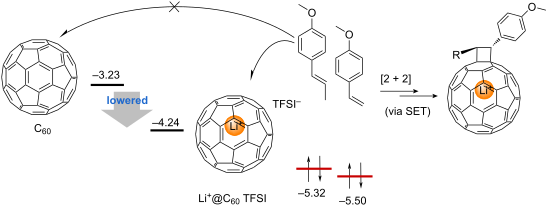
- . The resulting solid was washed with diethyl ether and dissolved in dichloromethane. The desired monoadduct Li+@C60{(4-MeOC6H4)CH=CHMe} TFSI− (5a, 6.9 mg, 6.0 µmol, 71%) was afforded from the solution by vapor-diffusion recrystallization with diethyl ether. 1H NMR (400 MHz, CD2Cl2) δ 2.23 (d, J = 6.9
- mM LiTFSI; column: Buckyprep (Nacalai tesque), ø 10 × (20 + 250) mm. The fraction containing Li+@C60{(4-MeOC6H4)CH=CH2} was concentrated under reduced pressure. The desired monoadduct Li+@C60{(4-MeOC6H4)CH=CH2} TFSI− (5b, 5.6 mg, 4.9 µmol, 53%) was afforded by precipitation with diethyl ether and




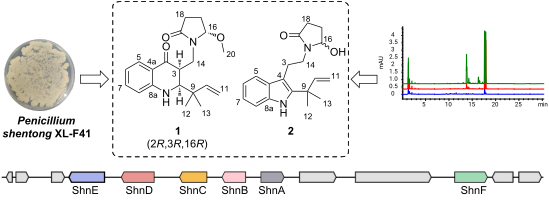
Chemical and biosynthetic potential of Penicillium shentong XL-F41
Beilstein J. Org. Chem. 2024, 20, 597–606, doi:10.3762/bjoc.20.52
- gradient of petroleum ether–ethyl acetate (PE–EA) and ethyl acetate–methanol (EA–MeOH) to yield 22 fractions (Fr.A–Fr.N) as determined by TLC analysis. Fraction Fr.J (62.32 mg) was further purified using silica gel column chromatography with a PE–EtOAc gradient to obtain nine subfractions (Fr.J1–Fr.J9




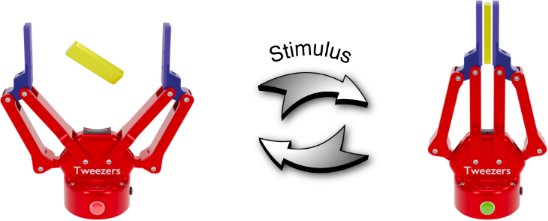
Switchable molecular tweezers: design and applications
Beilstein J. Org. Chem. 2024, 20, 504–539, doi:10.3762/bjoc.20.45
- podand unit adopts a cyclic conformation wrapping around the cation and brings the arms close to each other. The selectivity of the cation binding can be modulated by changing the chain length similarly to a crown ether (Figure 17). The cation can be removed by the addition of a better ligand such as a
- crown ether. The authors reported switchable tweezers bearing metalloporphyrin arms that can be switched by the addition of K+ and Na+ cations. The cation brings the porphyrins together and causes some dynamic fluorescence quenching from the iodine counter anion. The authors attributed the more
- cooperative catalytic effect of the two Cr(III) units. Control experiments without K+, or in the presence of competitive crown ether presented a reduced conversion rate and enantioselectivity, proving the conformation change in the reactivity of the system. Anion responsive tweezers The main types of anion


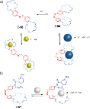


Ligand effects, solvent cooperation, and large kinetic solvent deuterium isotope effects in gold(I)-catalyzed intramolecular alkene hydroamination
Beilstein J. Org. Chem. 2024, 20, 479–496, doi:10.3762/bjoc.20.43
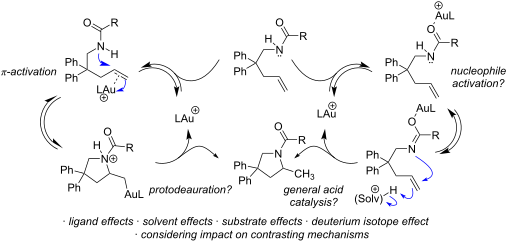
- faster the reaction. With a more strongly Bronsted acidic additive (acetic acid), rates are diminished with increasing additive. With a more polar non-protic additive (DMSO) the rate initially increases, then decreases with possible catalyst decomposition observed. Ether additives THF and dioxane have a
- behaves accordingly here [66]. Specific gold–oxygen interactions are typically not invoked in mechanistic discussions, though a gold alcohol complex has been proposed in silyl enol ether protonation [67]. Equilibrium studies by Maier et al. indicate that methanol is more weakly coordinating than alkynes







Pseudallenes A and B, new sulfur-containing ovalicin sesquiterpenoid derivatives with antimicrobial activity from the deep-sea cold seep sediment-derived fungus Pseudallescheria boydii CS-793
Beilstein J. Org. Chem. 2024, 20, 470–478, doi:10.3762/bjoc.20.42
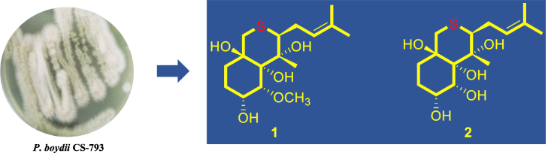
- H-12 and H-13 to C-10 and C-11 constructed the isopentenyl group. Further HMBC correlations from H-15 to C-1, C-7, and C-8 connected the cyclohexane ring and isopentenyl from C-1 and C-8 via the non-protonated carbon C-7. The assignment of the thio-ether bond between C-8 and C-14 was supported by
- concentrated under reduced pressure to give 123.6 g of an organic extract. The EtOAc extract was subjected to Si gel VLC (vacuum liquid chromatography) and fractionated using solvent mixtures of increasing polarity consisting of petroleum ether (PE) and EtOAc 20:1 to 1:1 and finally with CH2Cl2/MeOH 20:1 to 1
- CC on silica gel eluting with a CH2Cl2/MeOH gradient (from 200:1 to 100:1) and then by preparative TLC (plate: 20 × 20 cm, developing solvents: ether/acetone 2:1) to afford compound 4 (8.6 mg). Fr. 5.4 (538 mg) was separated by CC on Si gel and Sephadex LH-20 (MeOH), after that compounds 1 (12.5 mg





