


Search results
Search for "glycosylation" in Full Text gives 197 result(s) in Beilstein Journal of Organic Chemistry.
3α,5α-Cyclocholestan-6β-yl ethers as donors of the cholesterol moiety for the electrochemical synthesis of cholesterol glycoconjugates
Beilstein J. Org. Chem. 2015, 11, 162–168, doi:10.3762/bjoc.11.16
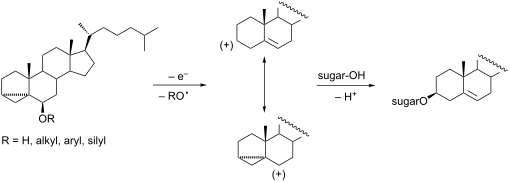
- derivatives show similar reactivities to those of previously studied 3α,5α-cyclocholestan-6β-thioethers. Keywords: cholesterol; electrochemical oxidation; glycosylation; i-cholesteryl ethers; i-steroids; Introduction We have recently elaborated an electrochemical method for the preparation of glycosides and
- an intermediate radical cation occurs, thus leading to a mesomerically stabilized homoallylic carbocation and a hydroxyl radical (Scheme 1) [2]. However, the glycosylation reaction was not very efficient due to competition between the sugar alcohol and cholesterol for the carbocation [3]. If
- alcohol under buffered conditions, while tert-butyldimethylsilyl ether 6h can be prepared by silylation of i-cholesterol 6a with TBDMSCl. Now we report the results of our study on the application of these ethers as cholesteryl donors in electrochemical glycosylation reactions. Results and Discussion The


A carbohydrate approach for the formal total synthesis of (−)-aspergillide C
Beilstein J. Org. Chem. 2014, 10, 3122–3126, doi:10.3762/bjoc.10.329
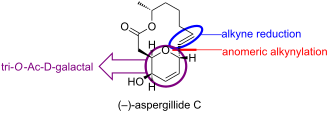
- Medicinal Chemistry & Pharmacology, CSIR-Indian Institute of Chemical Technology, Hyderabad, 500007, India 10.3762/bjoc.10.329 Abstract An enantioselective formal total synthesis of aspergillide C is accomplished using commercially available tri-O-acetyl-D-galactal employing a Ferrier-type C-glycosylation
- , utilizing a Trost hydrosilylation and protodesilylation as key reactions. Keywords: alkynylation; chiron approach; Ferrier-type C-glycosylation; macrolide; Introduction Aspergillides A, B and C (Figure 1) (three, novel, bicyclic, 14-membered macrolides with 2,6-cis or trans-fused di- or tetrahydropyan
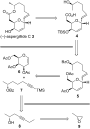
- retrosynthetic analysis, we envisaged that the macrolide 3 could be prepared from the seco acid 4 which can be easily accessed from 5 in five steps (Scheme 1). Compound 5, in turn, can be synthesized from commercially available tri-O-acetyl-D-galactal (6) and alkyne 7 through a Ferrier-type C-glycosylation




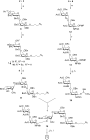
Synthesis of the pentasaccharide repeating unit of the O-antigen of E. coli O117:K98:H4
Beilstein J. Org. Chem. 2014, 10, 2724–2728, doi:10.3762/bjoc.10.287
- coli; glycosylation; lipopolysaccharide; O-antigen; pentasaccharide; Introduction Escherichia coli becomes an important human pathogen in recent years owing to the emergence of new pathogenic strains [1]. Several diseases, such as meningitis and sepsis [2], diarrhoeal outbreaks [3] and urinary tract
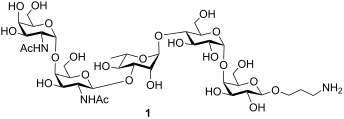
- pentasaccharide 1 has been synthesized as its 3-aminopropyl glycoside using a combination of sequential and [3 + 2] block glycosylation strategy. A trisaccharide acceptor 11 and a disaccharide trichloroacetimidate donor 14 were synthesized from the appropriately protected monosaccharide intermediates 2 [20], 3
- 2). Some of the notable features of this synthetic strategy are (a) application of iodonium ion mediated general glycosylation conditions; (b) nitrosyl tetrafluoroborate (NOBF4) mediated activation of glycosyl trichloroacetimidate donor; (c) the attachment of an aminopropyl linker at the anomeric


Galactan synthesis in a single step via oligomerization of monosaccharides
Beilstein J. Org. Chem. 2014, 10, 2658–2663, doi:10.3762/bjoc.10.279
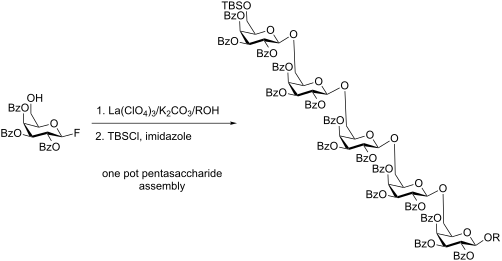
- : arabinogalactan protein; glycosyl fluoride; glycosylation; oligosaccharides; Introduction Despite numerous recent advances in the synthesis of complex oligosaccharides, unlike polypeptide or oligonucleotide assembly, their preparation remains far from a routine endeavor. The critical step in oligosaccharide
- assembly is the construction of the acetal or ketal glycosidic bond that links individual sugar residues together. The synthesis of an n-mer oligosaccharide generally requires at least n−1 separate glycosylation reactions, regardless of whether the molecule is assembled in a linear or convergent manner
- earlier attempt at the oligomerization of a 6-hydroxyglucosamine thioglycoside donor in the presence of an initiating primary alcohol resulted in a single glycosylation of the initiating alcohol to provide a glycoside product, and trace amounts of further oligomerization were detected in some cases [15


Expanding the scope of cyclopropene reporters for the detection of metabolically engineered glycoproteins by Diels–Alder reactions
Beilstein J. Org. Chem. 2014, 10, 2235–2242, doi:10.3762/bjoc.10.232
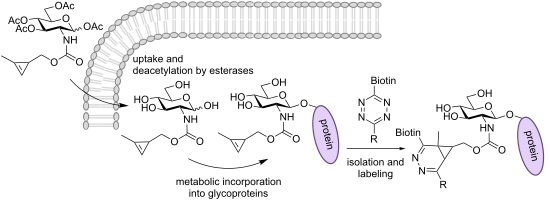
- target O-GlcNAcylated proteins. Conclusion In summary, we have shown that cyclopropene-labeled hexosamine derivatives Ac4GlcNCyoc (1) and Ac4GalNCyoc (2) can be used to monitor glycosylation of both cell-surface glycoconjugates and isolated, soluble glycoproteins. Whereas Ac4ManNCyoc (3) leads to



De novo macrolide–glycolipid macrolactone hybrids: Synthesis, structure and antibiotic activity of carbohydrate-fused macrocycles
Beilstein J. Org. Chem. 2014, 10, 2215–2221, doi:10.3762/bjoc.10.229
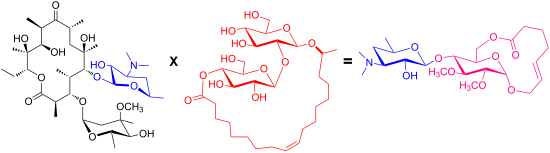
- . Glycosylation of an available hydroxy group on the macrocycle gave a hybrid macrolide with features common to erythromycin and sophorlipid macrolactone. Weak antibiotic activity (MICs <100 μg/mL) was observed for several of the compounds. Keywords: antibiotic; carbohydrate; exo-anomeric effect; macrolide


Convergent synthetic methodology for the construction of self-adjuvanting lipopeptide vaccines using a novel carbohydrate scaffold
Beilstein J. Org. Chem. 2014, 10, 1741–1748, doi:10.3762/bjoc.10.181
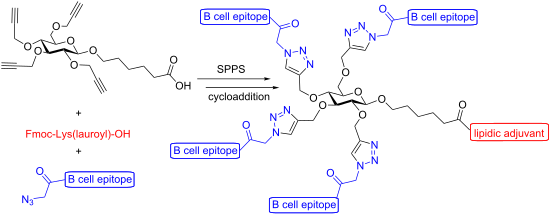
- responses [6]. Synthesis of carbohydrate carrier Tetra-O-acetyl-α-D-glucopyranosyl bromide (2) was prepared according to a literature procedure [22] and immediately used in the proceeding Koenigs–Knorr glycosylation of methyl 6-hydroxyhexanoate (3). Hydroxy ester 3 was synthesized in high yield (81%) by
- addition of a catalytic amount of H2SO4 to ε-caprolactone in methanol, according to Duffy et al. [23]. However, the procedure was optimized by decreasing the reaction time from 48 h to 30 minutes and purification by distillation was not required. The glycosylation was carried out by addition of silver(I
- ) oxide to a solution of glycosyl bromide 2 and hydroxy ester 3, which yielded a mixture of orthoester byproduct 4 and desired glycosylation product 5 (Scheme 2). A catalytic amount of trimethylsilyl trifluoromethanesulfonate (TMSOTf) was added to the mixture, which resulted in ring-opening of orthoester


Multicomponent reactions in nucleoside chemistry
Beilstein J. Org. Chem. 2014, 10, 1706–1732, doi:10.3762/bjoc.10.179
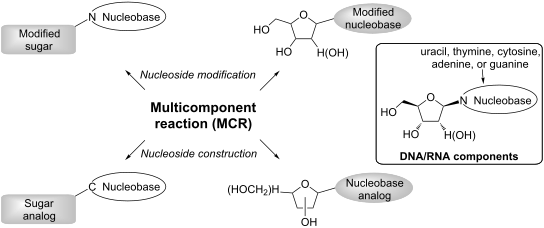
- opinion the method is worth noting since it represents an interesting extension of the Vorbrüggen N-glycosylation process. Thus, the reaction sequence leading to nucleosides 119 was initiated by the titanium(IV) chloride-promoted alkylation of 2,3-dihydrofurane 117 with ethyl pyruvate at −78 °C (1 hour


Concise total synthesis of two marine natural nucleosides: trachycladines A and B
Beilstein J. Org. Chem. 2014, 10, 1681–1685, doi:10.3762/bjoc.10.176
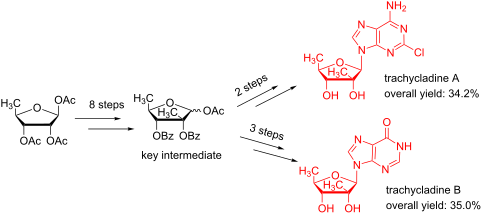
- perbenzylated 1-O-methyl-5-deoxyribofuranose. The enzyme adenylate deaminase (EC 3.5.4.6) was successfully applied to the chemoenzymatic synthesis of trachycladines B. Keywords: marine nucleosides; natural products; total synthesis; trachycladines A and B; Vorbrüggen glycosylation; Introduction Marine
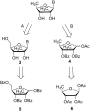
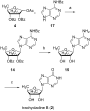
- ), nucleoside 3 could be synthesized by using 1,2,3,5-tetra-O-benzoyl-2-C-methyl-D-ribofuranose (5) as a carbohydrate acceptor by a Vorbrüggen glycosylation with the corresponding silylated nucleobases and a Lewis acid as a catalyst. As the key intermediate for the preparation of the anti-HCV nucleoside
- (unpublished results), the deoxygenation procedure of the C-5′ hydroxy group was accompanied by several undesired side reactions. Then we turned to synthetic route (B), which utilizes carbohydrate 4 as a Vorbrüggen glycosylation donor. Firstly, without the deoxygenation of the C-5′ hydroxy group at the late





Clicked and long spaced galactosyl- and lactosylcalix[4]arenes: new multivalent galectin-3 ligands
Beilstein J. Org. Chem. 2014, 10, 1672–1680, doi:10.3762/bjoc.10.175
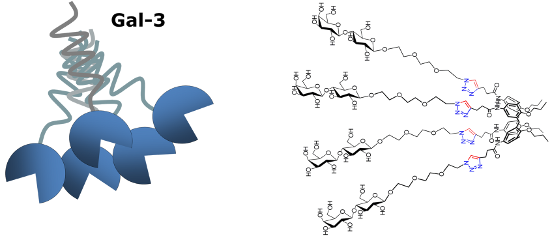
- ), which is very difficult to separate by flash chromatographic methods. On the other hand, the recently reported glycosylation reactions of lactose peracetate exploiting SnCl4 and CF3CO2Ag as promoters [46] gave compound 14 mainly as a β-anomer (α/β ratio 1:4) in 74% isolated yield. The subsequent


Expedient synthesis of 1,6-anhydro-α-D-galactofuranose, a useful intermediate for glycobiological tools
Beilstein J. Org. Chem. 2014, 10, 1651–1656, doi:10.3762/bjoc.10.172
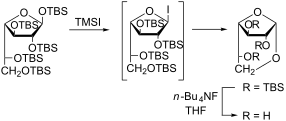
- more efficient alternative to existing methods. Results and Discussion In the framework of our project for the development of galactofuranosyl derivatives and glycosylation methods, we have reported the synthesis of per-O-TBS-β-D-galactofuranose (9), a convenient precursor of D-Galf units, and its
- glycosylation via the in situ generation of galactofuranosyl iodide 10 (Scheme 2) [32][33][34][35]. Galactofuranosyl iodides were not previously described, and 10 proved to be useful for the synthesis of several D-Galf-containing molecules (Scheme 2) [32]. The reported procedure consisted in the treatment of


Multivalent scaffolds induce galectin-3 aggregation into nanoparticles
Beilstein J. Org. Chem. 2014, 10, 1570–1577, doi:10.3762/bjoc.10.162
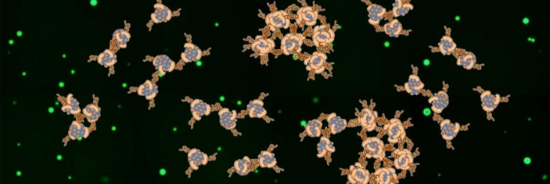
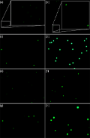
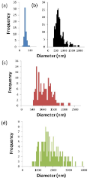
- ; galectin-3; glycodendrimers; multivalency; multivalent glycosylation; protein aggregation; Introduction The role of multivalency in biology is well established, and examples of this phenomenon abound [1]. The ability of multivalency to enhance weak interactions has been shown in a variety of
- and biological phenomena [27][28]. In this investigation, PAMAM dendrimers were functionalized using a methodology similar to previous literature [29]. Synthesis of β-lactoside derivative 1 was performed as shown in Scheme 1. Lewis acid facilitated glycosylation, which was directed by neighboring


Efficient routes toward the synthesis of the D-rhamno-trisaccharide related to the A-band polysaccharide of Pseudomonas aeruginosa
Beilstein J. Org. Chem. 2014, 10, 1488–1494, doi:10.3762/bjoc.10.153
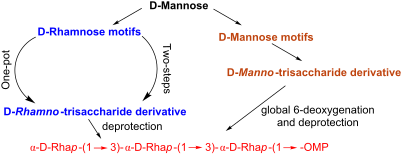
- allowed efficient access to the trisaccharide target via stepwise glycosylation as well as a one-pot glycosylation protocol. In a different approach, a 4,6-O-benzylidene D-manno-trisaccharide derivative was synthesized, which upon global 6-O-deoxygenation followed by deprotection generated the target D
- -rhamno-trisaccharide; deoxygenation on thioglycoside; multivalent glycosystems; one-pot sequential glycosylation; Pseudomonas aeruginosa; Introduction With the firm establishment of the critical roles played by oligosaccharides in diverse biological processes [1][2][3][4], the field of oligosaccharide
- , further optimization of the glycosylation protocol was achieved by carrying out the whole glycosylation process in one-pot leading to the target trisaccharide 9 in 79% yield (Scheme 3). In this case the disaccharide synthesis was set up as described previously, and then the second acceptor 7 was


Carbohydrate PEGylation, an approach to improve pharmacological potency
Beilstein J. Org. Chem. 2014, 10, 1433–1444, doi:10.3762/bjoc.10.147
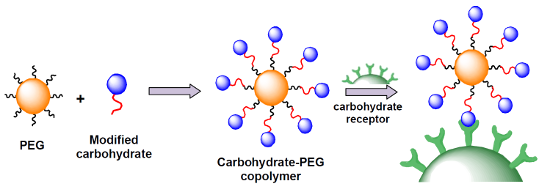
- pharmacokinetic properties of a protein, N-PEGylation may be used additively to N-glycosylation since both modifications stabilize the protein by different mechanisms [25]. Also, glutamine residues on intact or chimeric proteins can be combined with alkylamino-PEG derivatives by the use of a transglutaminase [26
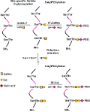
- is transferred to the glycan by a sialyltransferase. The serine or threonine residues in the O-glycosylation sites serve as acceptors for GalNAc using a convenient GalNAc transferase. This unit can be galactosylated by a galactosyltransferase and both, the monosaccharide and the disaccharide, may be
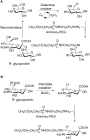
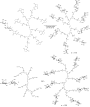
- chitosan derivative, adapted from [61]. Chitosan/PEG functionalized with a mannose at the distal end, adapted from [62]. Chemoenzymatic method for the preparation of PEG-CMP-SA, adapted from [32][33]. GlycoPEGylation by sequential in vitro, enzyme mediated, O-glycosylation followed by transfer of PEGylated







Design and synthesis of multivalent neoglycoconjugates by click conjugations
Beilstein J. Org. Chem. 2014, 10, 1325–1332, doi:10.3762/bjoc.10.134
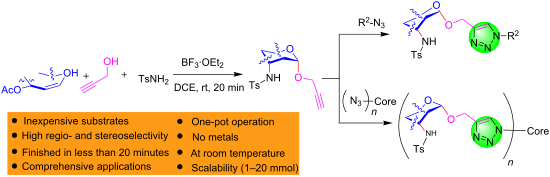
- hydroamination/glycosylation on glycal scaffolds has been developed to form propargyl 3-tosylamino-2,3-dideoxysugars in a one-pot manner. Subsequent construction of multivalent 3-tosylamino-2,3-dideoxyneoglycoconjugates with potential biochemical applications was presented herein involving click conjugations as
- /glycosylation of the glycal shown in Figure 1 [49][50][51][52][53]. Extending the synthetic utility of this protocol, herein, we wish to report the synthetic modification of α-GalNAc-linked glycopeptides to 3-tosylamino-2,3-dideoxyneoglycoconjugates via click conjugations (Figure 2). Given the success in using
- “click chemistry” in the glycosylation reactions, we aspired to apply the highly efficient triazole formation employing an azide 3 and a suitable alkyne appended to the 3-amino-2,3-dideoxysugars moiety 2 (Figure 3). In continuation of our previous work, herein we report a direct and reliable synthetic


Synthesis of zearalenone-16-β,D-glucoside and zearalenone-16-sulfate: A tale of protecting resorcylic acid lactones for regiocontrolled conjugation
Beilstein J. Org. Chem. 2014, 10, 1129–1134, doi:10.3762/bjoc.10.112
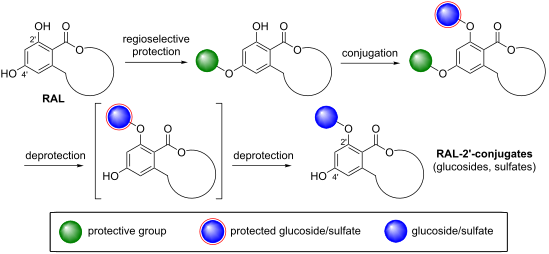
- natural product conjugates. Keywords: glycosylation; masked mycotoxins; resorcylic acid esters; sulfation; zearalenone; Introduction Resorcylic acid lactones (RALs, Figure 1), a compound class of benzannulated macrolides, are pharmacologically active secondary metabolites produced by a variety of
- glycosylation has been reported by Grabley et al. [14]. ZEN-14-sulfate (6, Figure 2A) was first isolated from F. graminearum-inoculated rice [15] and both, the glucoside 5 and the sulfate 6, were identified as ZEN metabolites in Arabidopsis thaliana [16]. These conjugates are easily hydrolyzed back to the
- -glucoside than ZEN-14-glucoside in barley roots [17]. We therefore intended to develop a synthetic method for regiocontrolled conjugation of ZEN. Basically, the RAL type moiety of ZEN contains two possible sites for glycosylation/sulfation, but due to the higher reactivity of the phenol group at position 14


Efficient carbon-Ferrier rearrangement on glycals mediated by ceric ammonium nitrate: Application to the synthesis of 2-deoxy-2-amino-C-glycoside
Beilstein J. Org. Chem. 2014, 10, 300–306, doi:10.3762/bjoc.10.27
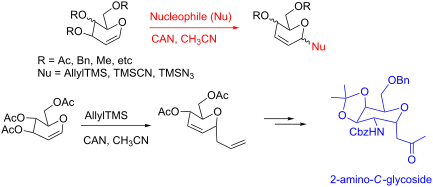
- glycosyl amino acids [52] to name but a few. Amongst the various reported methods to prepare these compounds [53][54][55], the most common method is via C-glycosylation of 2-aminosugars [56][57][58], which is challenging owing to the incompatibility of protic or Lewis acids with amino and amido


Convergent synthesis of a tetrasaccharide repeating unit of the O-specific polysaccharide from the cell wall lipopolysaccharide of Azospirillum brasilense strain Sp7
Beilstein J. Org. Chem. 2014, 10, 293–299, doi:10.3762/bjoc.10.26
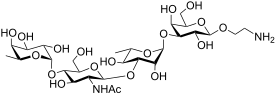
- protected monosaccharide intermediates in 42% overall yield in seven steps by using a [2 + 2] block glycosylation approach. Keywords: Azospirillum brasilense; glycosylation; lipopolysaccharide; plant growth-promoting bacteria (PGPB); tetrasaccharide; Introduction The intensive use of chemicals for the
- (e.g. a protein, a lipid or another aglycone) for biochemical applications. A stereoselective [2 + 2] block glycosylation of the disaccharide derivative 8 with the disaccharide thioglycoside 9 led to the formation of tetrasaccharide 10, which was finally deprotected to give the desired tetrasaccharide
- 1. A number of suitably functionalized monosaccharide intermediates 2, 3 [30], 4 [31], and 5 [32] were prepared from the reducing sugars by using literature reports. The application of a one-pot reaction sequence for the stereoselective glycosylation and the removal of the p-methoxybenzyl (PMB


The myxocoumarins A and B from Stigmatella aurantiaca strain MYX-030
Beilstein J. Org. Chem. 2013, 9, 2579–2585, doi:10.3762/bjoc.9.293

- O-methylation, glycosylation, prenylation, oxygenation and subsequent cyclization or dimerization events [34]. Nitrogen-bearing congeners are rather scarce, with the bacterial aminocoumarins, such as the gyrase inhibitor novobiocin, being the most well-known examples [35]. Despite the larger number


Synthesis of homo- and heteromultivalent carbohydrate-functionalized oligo(amidoamines) using novel glyco-building blocks
Beilstein J. Org. Chem. 2013, 9, 2395–2403, doi:10.3762/bjoc.9.276
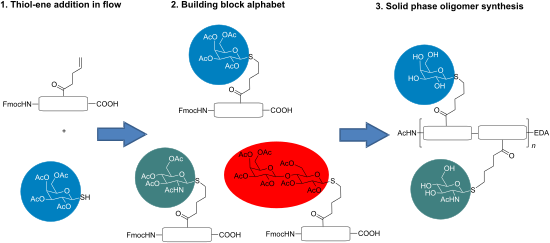
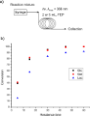
- heteromultivalent glycosylation patterns by combining building blocks presenting different mono- and disaccharides. Keywords: continuous flow; flow chemistry: flow synthesis; glycoligands; multivalency; photochemistry; solid-phase synthesis; thiol–ene; thioglycosides; Introduction Multivalent carbohydrate ligand
- resulting in three monodisperse, sequence-defined glycooligomers with different glycosylation patterns. The building-block approach for the synthesis of glycooligomers thus allows for the control of the ligand positioning as well as the straightforward introduction of defined sequences of different types of



Gold-catalyzed glycosidation for the synthesis of trisaccharides by applying the armed–disarmed strategy
Beilstein J. Org. Chem. 2013, 9, 2147–2155, doi:10.3762/bjoc.9.252
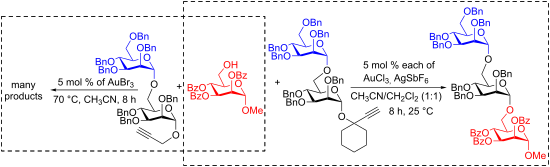
- two steps. The glycosylation between disaccharide 24 and disarmed aglycon 16 was performed under aforementioned conditions for a gold-catalyzed transglycosidation. Purification by conventional silica gel column chromatography enabled us to characterize the anticipated trisaccharide 25 (21%) along with


The chemistry of isoindole natural products
Beilstein J. Org. Chem. 2013, 9, 2048–2078, doi:10.3762/bjoc.9.243
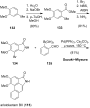
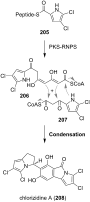
- of the putative tetracenomycin-like intermediate 210, the aldehyde 211 is reduced to the corresponding alcohol 212. Acetalization and introduction of the 1,2-cis-diol moiety furnishes 213. Sequential formation of the lactone and the isoindolinone generates 214. A final glycosylation step leads to
- diastereoselective synthesis of lactonamycinone (214) employing a Diels–Alder reaction [162][163]. In 2010, Tastuta completed the first total synthesis of lactonamycin (215) by using a sequential conjugate addition, a stereoselective glycosylation reaction and a Michael–Dieckmann-type cyclization [164]. The recently
- published total synthesis of lactonamycin (215) and lactonamycin Z (217) by Saikawa and Nakata is based on a late-stage glycosylation strategy (Scheme 29). This enables the specific variation of the sugar components and gives access to various lactonamycin derivatives [161]. Starting from alcohol 219, the












Synthesis of mucin-type O-glycan probes as aminopropyl glycosides
Beilstein J. Org. Chem. 2013, 9, 1867–1872, doi:10.3762/bjoc.9.218
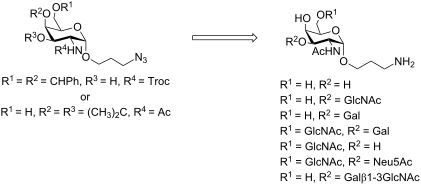
- . Keywords: glycosylation; mucin-type oligosaccharides; O-glycans; oligosaccharide synthesis; Introduction Mucins are heavily glycosylated glycoproteins that may be membrane-associated or secreted in gel form and play an important biological role in the respiratory and intestinal tracks [1][2][3]. Mucins
- help us understand the biological and disease implications of these glycosylation patterns at both molecular and functional levels. However, despite the need for functional studies of O-glycosylation patterns, there are comparatively few reported syntheses leading to the basic mucin-type cores [9][10
- versatile blockwise strategy was employed to prepare targets 2–4, whereby each glycosylation product yielded compounds that were either deprotected to give the final products or became the acceptor for the next glycosylation step. The synthesis started from orthogonally protected 3-chloropropyl-α-linked


Straightforward synthesis of a tetrasaccharide repeating unit corresponding to the O-antigen of Escherichia coli O16
Beilstein J. Org. Chem. 2013, 9, 1757–1762, doi:10.3762/bjoc.9.203
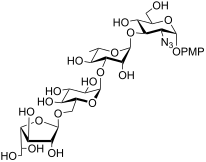
- achieved following a sequential glycosylation strategy. A minimum number of steps was used for the synthesis of the target compound involving a one-pot glycosylation and a protecting group manipulation. All intermediate reactions afford their products in high yield, and the glycosylation steps are
- stereoselective. Keywords: Escherichia coli; glycosylation; lipopolysaccharide; O-antigen; tetrasaccharide; Introduction Neonatal meningitis is a serious concern in developing countries [1]. The symptoms associated with this disease are unspecific and may ultimately lead to sepsis [2]. The common cause of the
- presented herein (Figure 2). Results and Discussion The target tetrasaccharide as its p-methoxyphenyl (PMP) glycoside was synthesized following a sequential glycosylation approach from the suitably functionalized monosaccharide intermediates 2 [13], 3 [14], 4 [15] and 5 [16]. These monosaccharide


Appel-reagent-mediated transformation of glycosyl hemiacetal derivatives into thioglycosides and glycosyl thiols
Beilstein J. Org. Chem. 2013, 9, 974–982, doi:10.3762/bjoc.9.112
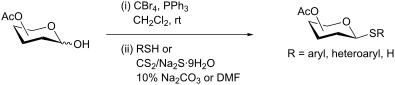
- carbonotrithioate. The reaction conditions are reasonably simple and yields were very good. Keywords: Appel reagent; carbon tetrabromide; glycosyl hemiacetal; glycosyl thiol; thioglycoside; triphenylphosphine; Introduction Thioglycosides (1-thiosugar) are widely used glycosyl donors in glycosylation reactions [1





