


Search results
Search for "host" in Full Text gives 514 result(s) in Beilstein Journal of Organic Chemistry. Showing first 200.
A heterobimetallic tetrahedron from a linear platinum(II)-bis(acetylide) metalloligand
Beilstein J. Org. Chem. 2020, 16, 2701–2708, doi:10.3762/bjoc.16.220
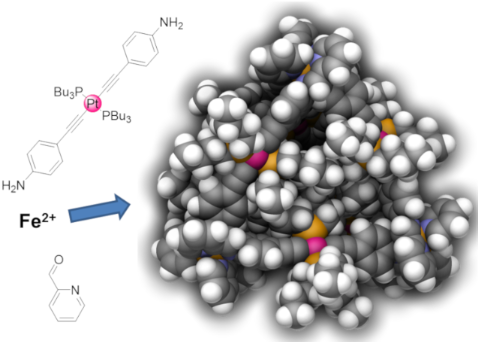
- obtain analogues cages in future work to explore the properties of these system in terms of their host–guest chemistry or their magnetic behavior. Experimental General All reagents and solvents were purchased from commercial sources and used as received without any further purification. NMR spectra were


Particle size effect in the mechanically assisted synthesis of β-cyclodextrin mesitylene sulfonate
Beilstein J. Org. Chem. 2020, 16, 2598–2606, doi:10.3762/bjoc.16.211
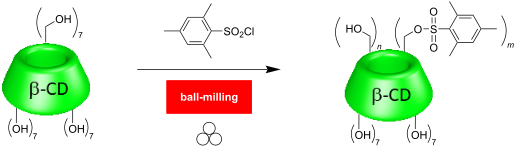
- to be a non-interactive guest towards the CD host [18], meaning that no inclusion compounds could be formed during the course of the reaction. Previous works dealing with this reaction showed that β-CDMts featuring a defined number of mesitylenesulfonate groups could be obtained selectively in




Water-soluble host–guest complexes between fullerenes and a sugar-functionalized tribenzotriquinacene assembling to microspheres
Beilstein J. Org. Chem. 2020, 16, 2551–2561, doi:10.3762/bjoc.16.207

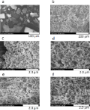
- hydrophobic effect and to host–guest π–π interactions. Hydrophobic surface simulations showed that TBTQ-(OG)6 and C60 forms an amphiphilic supramolecular host–guest complex, which further assembles to microspheres with diameters of 0.3–3.5 μm, as determined by scanning electron microscopy. Keywords
- : fullerenes; host–guest systems; microspheres; supramolecular chemistry; tribenzotriquinacene; Introduction In the field of supramolecular chemistry, host–guest association through noncovalent interactions is an interesting and exciting topic, especially for the encapsulation of various fullerenes, such as
- C60 and C70 [1][2][3][4][5]. It is generally accepted that good complexation of fullerenes requires host molecules with bowl or basket-like shapes, such as calixarenes [6], corannulenes [7][8][9][10], cyclodextrins [11][12][13], cyclotriveratrylenes [14][15][16], and similar macrocycles [17][18][19


![[Graphic 2]](/bjoc/content/inline/1860-5397-16-207-i3.svg?max-width=637&scale=1.18182) C60 [TBTQ-(OG)6: 50 μM; C60: 50 μM] and (b) TBTQ-(OG)6
C60 [TBTQ-(OG)6: 50 μM; C60: 50 μM] and (b) TBTQ-(OG)6 


NMR Spectroscopy of supramolecular chemistry on protein surfaces
Beilstein J. Org. Chem. 2020, 16, 2505–2522, doi:10.3762/bjoc.16.203
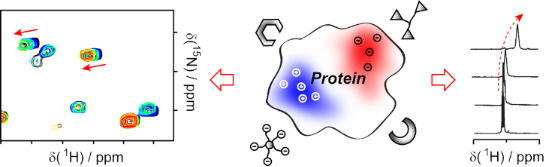
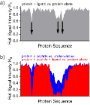
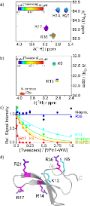
- -dimensional proton (1H) NMR spectra have been used to monitor the interactions between smaller molecules for a long time. The advantages comprise the use of non-isotope-labeled molecules and the fast acquisition time. Furthermore, both components - supramolecular host and guest - can in principle be monitored
- methylated lysine and arginine amino acids were determined using competitive 1H NMR titrations [49]. The supramolecular host is added to two competing guest molecules [85]. When the affinity for one of the guests is known, the affinity for the second guest can then be calculated from the relative amounts of



Host–guest interaction of cucurbit[8]uril with oroxin A and its effect on the properties of oroxin A
Beilstein J. Org. Chem. 2020, 16, 2332–2337, doi:10.3762/bjoc.16.194
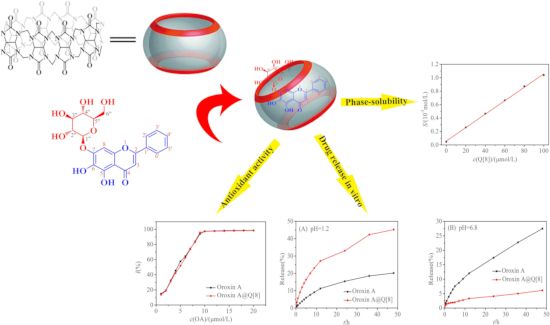
- Zhishu Zeng Jun Xie Guangyan Luo Zhu Tao Qianjun Zhang Key Laboratory of Macrocyclic and Supramolecular Chemistry of Guizhou Province, Guizhou University, No. 2708, South Section of Huaxi Avenue, Huaxi, Guiyang 550025, China 10.3762/bjoc.16.194 Abstract In this study, we investigated the host
- the inclusion compound with Q[8]. Keywords: cucurbit[8]uril; host–guest interaction; inclusion complex; oroxin A; properties; Introduction Cucurbit[n]urils (Q[n]s) are a family of macrocyclic cage compounds synthesized by the condensation of glycoluril and formaldehyde in a strong acidic solution [1
- ][2][3]. As a consequence of the specific structural features of Q[n]s, which have two hydrophilic “portals” decorated with partially negatively charged carbonyl groups and a hydrophobic cavity [4], cucurbit[n]urils are able to form host–guest complexes with a range of drugs [5][6][7]. These complexes


Design and synthesis of a bis-macrocyclic host and guests as building blocks for small molecular knots
Beilstein J. Org. Chem. 2020, 16, 2314–2321, doi:10.3762/bjoc.16.192
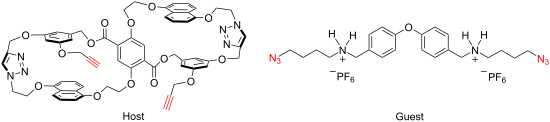
- molecular knots. The modular second-generation approach to small trefoil knots described herein involves electrostatic interactions between an electron-rich bis-macrocyclic host compound and electron-deficient guests in the threading step. The bis-macrocyclic host was synthesized in eight steps and 6.6
- . Keywords: alkynes; azides; host–guest; macrocycles; molecular knots; Introduction Macrocycles have played a central role in the development of molecular recognition, self-assembled molecular devices, and molecular topology [1][2][3][4][5][6]. For example, early work by Pedersen on crown ethers [1], Lehn
- ]. Herein the synthesis of a unique bis-macrocyclic host 1 is described (Figure 1). Host 1 was designed to be a second-generation building block in the thread–link–cut (TLC) approach to molecular knots [13]. The two 25-atom macrocycles are electron-rich and complementary to the electron-deficient guests bis


Styryl-based new organic chromophores bearing free amino and azomethine groups: synthesis, photophysical, NLO, and thermal properties
Beilstein J. Org. Chem. 2020, 16, 2282–2296, doi:10.3762/bjoc.16.189
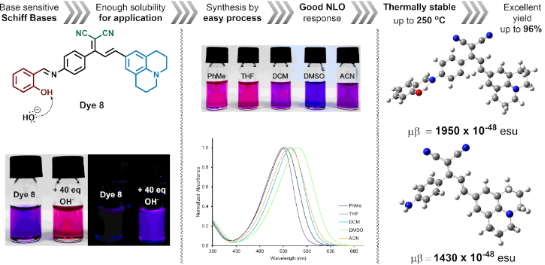
- amines led to the increase in the Stokes shift and a significant red shift between the absorption and the emission maxima. This was due to the varying electronic contributions to the host structure induced by the heterocyclic amino constituents [50][51][52] (Figure 4). Hydroxide anion sensing properties


The B & B approach: Ball-milling conjugation of dextran with phenylboronic acid (PBA)-functionalized BODIPY
Beilstein J. Org. Chem. 2020, 16, 2272–2281, doi:10.3762/bjoc.16.188
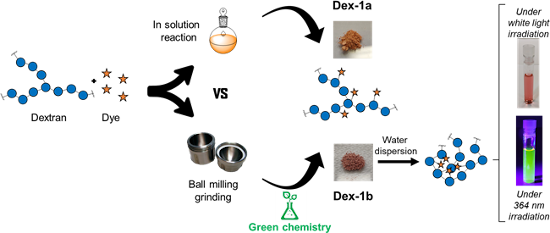
- nanoparticles, depending on the degree of substitution. For example, reaction of vicinal diols of dextran with hydrophobic PBA generates boronate esters, which form nanoparticles in water and are capable to host the anticancer drug doxorubicin [27]. In this report, the advantages of the milling process, such as


Tools for generating and analyzing glycan microarray data
Beilstein J. Org. Chem. 2020, 16, 2260–2271, doi:10.3762/bjoc.16.187
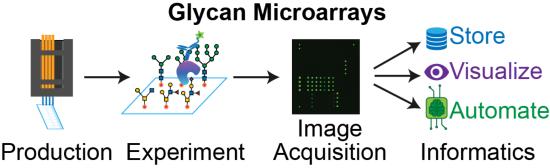
- methods of analysis which may be supported by some of these automated tools. 1. GlycoPattern: Status: Currently Unavailable – Transitioning to new host. Address: N/A. Description: GlycoPattern is a web based resource to support the analysis of glycan array data [42]. Under the hood, it utilizes the


Clustering and curation of electropherograms: an efficient method for analyzing large cohorts of capillary electrophoresis glycomic profiles for bioprocessing operations
Beilstein J. Org. Chem. 2020, 16, 2087–2099, doi:10.3762/bjoc.16.176
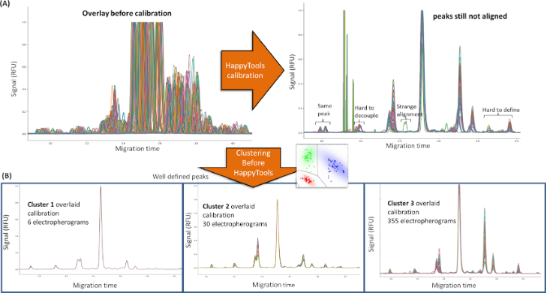
- of heterogeneity and is influenced by several factors including the host expression system and process parameters such as temperature shifts, pH, and the type of basal/feed media [7]. To understand how these environmental factors impact the glycosylation of a biologic, analytical methods are needed


Synthesis of monophosphorylated lipid A precursors using 2-naphthylmethyl ether as a protecting group
Beilstein J. Org. Chem. 2020, 16, 1955–1962, doi:10.3762/bjoc.16.162
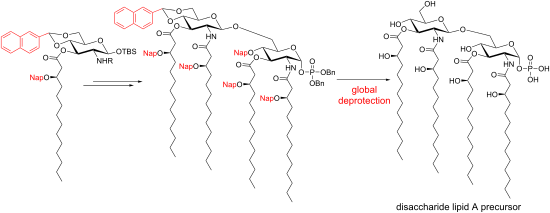
- continued rise of problematic bacterial infections. Notably, the LPS pathogenicity is almost entirely due to lipid A because it leads to immunostimulatory effects when LPS dissociates from bacterial membranes within a host [5]. While these immunostimulatory effects can be beneficial in the setting of


Design, synthesis and application of carbazole macrocycles in anion sensors
Beilstein J. Org. Chem. 2020, 16, 1901–1914, doi:10.3762/bjoc.16.157
- synthesis to access up to –[CH2]10– macrocycles or acyl halides to access up to –[CH2]14– macrocycles. Seventy-five receptor–anion complexes were modelled and studied with COSMO-RS, in addition to all free host molecules. In order to predict initial selectivity towards carboxylates, 1H NMR relative
- carboxylate anion will prove challenging. Secondly, the X-COO− group itself may become protonated under specific conditions. In this scenario, selectivity would be lost immediately. This puts restraints on the molecular design of the receptor molecule. The host molecule cannot include any functional groups
- attractive neutral host for anions [13]. It is formally a 16-membered ring, but for the above reasons no anion, not even F− fitted inside the ring – all bound anions reside on the surface of the ring [14]. Often in such cases, two receptors stack the guest molecule in a “sandwich” like manner, e.g., the




Synthesis of the tetrasaccharide repeating unit of the O-specific polysaccharide of Azospirillum doebereinerae type strain GSF71T using linear and one-pot iterative glycosylations
Beilstein J. Org. Chem. 2020, 16, 1700–1705, doi:10.3762/bjoc.16.141
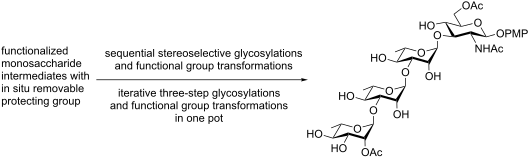
- Azospirillum rely on capsular and O-specific polysaccharides present in the bacteria cell wall [12]. Due to their structural orientation, cell-wall polysaccharides play a pivotal role in the initial stage of the host–microbes interactions and colonization of rhizobacteria in the plant roots [13]. Therefore, it


Synthesis of Streptococcus pneumoniae serotype 9V oligosaccharide antigens
Beilstein J. Org. Chem. 2020, 16, 1693–1699, doi:10.3762/bjoc.16.140
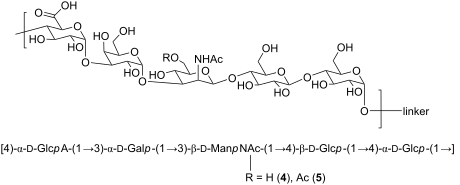
- are still of growing concern due to an increase in non-vaccine serotypes and the cost of implementing these expensive vaccines in national immunization programs [4][5][6]. CPS is an important bacterial virulence factor and is critical for the interaction with the host as it helps the bacteria to
- escape the host immune response [1][7]. These polysaccharides of SP consist of repeating units (RU) that range from di- to heptasaccharides that may be branched and/or charged [8]. Modifications such as O-acetylation, phosphorylation, and sulfation further increase CPS complexity. Many bacterial


Clickable azide-functionalized bromoarylaldehydes – synthesis and photophysical characterization
Beilstein J. Org. Chem. 2020, 16, 1683–1692, doi:10.3762/bjoc.16.139
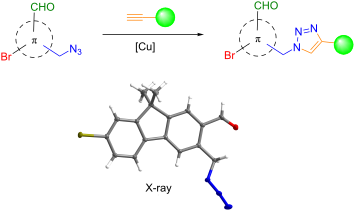
- non-radiative transitions can be achieved by the host–guest method [50][51][52] or by crystallization [53][54][55][56][57]. In difference to the liquid phase, the highly ordered packing and the restriction of molecular motions in the crystalline state favor a persistent luminescence. The promotion of


Antibacterial scalarane from Doriprismatica stellata nudibranchs (Gastropoda, Nudibranchia), egg ribbons, and their dietary sponge Spongia cf. agaricina (Demospongiae, Dictyoceratida)
Beilstein J. Org. Chem. 2020, 16, 1596–1605, doi:10.3762/bjoc.16.132
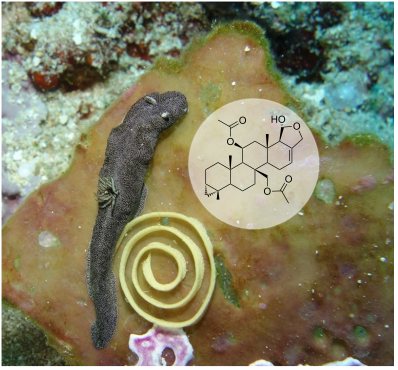
- [25]. Yet determining the origin and in vitro production of these metabolites is anything but trivial. Sponges are known to host complex symbiont communities, with up to 30–60% as microbial biomass [13][77]. These highly species-specific communities are most probably vertically transmitted [78] and



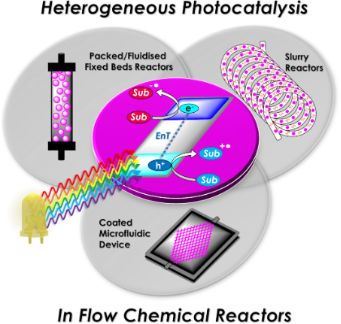
Heterogeneous photocatalysis in flow chemical reactors
Beilstein J. Org. Chem. 2020, 16, 1495–1549, doi:10.3762/bjoc.16.125
- moulds, which could not be achieved with the blue laser [50]. Heterogeneous upconversion systems are generally crystalline nanomaterials comprising a host matrix of typically NaYF4, doped with a mixture of lanthanide ions, which act as light-absorbing sensitisers (e.g., Yb3+) and energy-combining










4-Hydroxy-3-methyl-2(1H)-quinolone, originally discovered from a Brassicaceae plant, produced by a soil bacterium of the genus Burkholderia sp.: determination of a preferred tautomer and antioxidant activity
Beilstein J. Org. Chem. 2020, 16, 1489–1494, doi:10.3762/bjoc.16.124
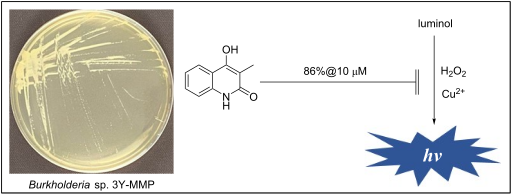
- in the host organisms. Keywords: antioxidant; Burkholderia sp; quinolone; soil bacterium; Zn2+ enrichment culture; Findings 4-Hydroxy-2(1H)-quinolone (3) is a unique structural motif mostly found in alkaloids from rutaceous plants (family Rutaceae) [1][2]. This motif has several tautomeric forms
- reactive oxygen species (ROS), is implemented in eukaryotic cells, including protists [32], as an innate immune response to deactivate foreign substances or as part of phagocytic digestion of internalized nutrients [33]. Pathogenic microbes are equipped with a multitude of strategies to circumvent host


Highly selective Diels–Alder and Heck arylation reactions in a divergent synthesis of isoindolo- and pyrrolo-fused polycyclic indoles from 2-formylpyrrole
Beilstein J. Org. Chem. 2020, 16, 1320–1334, doi:10.3762/bjoc.16.113
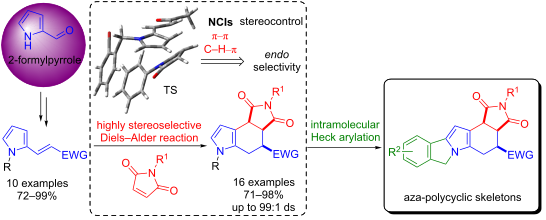
- stereoselective approaches of substrates and reagents or catalysts in a variety of processes. Examples include the substrate–enzyme recognition (the host–guest interaction) responsible for inducing pharmacological activity, the DNA-intercalation capable of generating biomolecular activity, molecular dynamics [63


[3 + 2] Cycloaddition with photogenerated azomethine ylides in β-cyclodextrin
Beilstein J. Org. Chem. 2020, 16, 1296–1304, doi:10.3762/bjoc.16.110
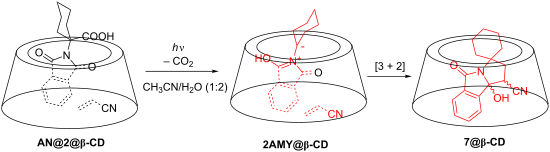
- the macrocyclic host affected the stereochemistry of the reaction. Moreover, we studied photodecarboxylation reactions initiated by the phthalimide chromophore [17][18][19] and applied them in cyclizations with memory of chirality [20] and diastereoselective peptide cyclizations [21
- . Irradiation of such a complex leads to decarboxylation and formation of the reactive intermediate, azomethine ylide, within the supramolecular host. The subsequent [3 + 2] cycloaddition within the inclusion complex gives heterocyclic cycloadducts, even though it is conducted in aqueous solvent in which ylides
- have short lifetimes. The reaction needs to be optimized for different substrates with the right choice of host size. However, the proof of principle provides a new idea for the development of supramolecular systems for the tuning of photochemical reactivity. Experimental General 1H and 13C NMR


Anthelmintic drug discovery: target identification, screening methods and the role of open science
Beilstein J. Org. Chem. 2020, 16, 1203–1224, doi:10.3762/bjoc.16.105
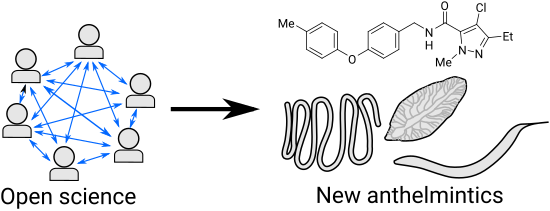
- schistosomiasis treatment is the effect which climate change may have on aquatic environments (and the intermediate freshwater snail host Biomphalaria glabrata) and therefore on the distribution of water-borne diseases like schistosomiasis [47]. Similarly to the STHs, the WHO 2020 target for schistosomiasis is
- and at low cost which enables high-throughput chemical and genetic screening studies. It is often difficult or impossible to undertake comparable studies on parasitic worms due to the challenges of maintaining parasitic worms outside their host, although rodent models are available for many classes of
- Genomic resources are important for target identification, particularly in the case of parasites, as the life stages found in the host are often difficult to obtain or culture, and few molecular tools are available. WormBase ParaSite [107] is an important central resource for helminth genomic data [108


Synthesis of novel multifunctional carbazole-based molecules and their thermal, electrochemical and optical properties
Beilstein J. Org. Chem. 2020, 16, 1066–1074, doi:10.3762/bjoc.16.93
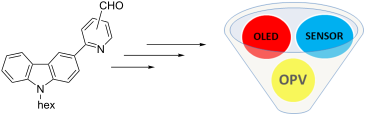
- synthesised solar cells (DSSCs) and sensors [1][2]. In OLEDs, carbazole derivatives are frequently used as host materials [3][4][5]. In this respect the most frequently used host materials are 1,3-bis(N-carbazolyl)benzene (mCP) [6] and polyvinylcarbazole (PVK) [7]. Carbazole derivatives, either just by


Aryl-substituted acridanes as hosts for TADF-based OLEDs
Beilstein J. Org. Chem. 2020, 16, 989–1000, doi:10.3762/bjoc.16.88
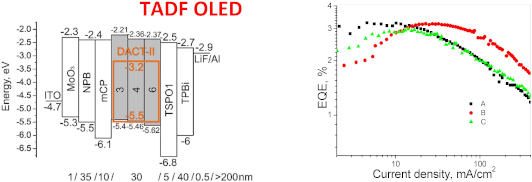
- demonstrated maximum external quantum efficiencies up to 3.2%. Keywords: acridan; hole mobility; host; OLED; thermally activated delayed fluorescence; Introduction Organic light emitting diodes (OLEDs) are perfect candidates for multicolor displays and for next generation energy saving large area-lighting
- are required [8]. Since the selection of suitable hosts is very important for achieving high OLED efficiencies, there was considerable interest in host compounds for TADF emitters in recent years [9][10]. The host compounds for TADF-based OLEDs must match a number of censorious requests. For example
- , high singlet and triplet energies (higher than those of the guest) are required for host compounds for qualifying host–guest energy transfer, thus implying restrict of the emissive excitons on the TADF emitters [11]. High glass-transition temperatures are also required for increasing the morphological


Reversible photoswitching of the DNA-binding properties of styrylquinolizinium derivatives through photochromic [2 + 2] cycloaddition and cycloreversion
Beilstein J. Org. Chem. 2020, 16, 111–124, doi:10.3762/bjoc.16.13
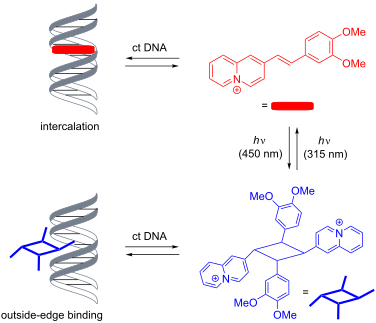
- an aggregation of the molecules along the DNA backbone at very high ligand concentrations. Nevertheless, the CD and LD spectroscopic data revealed at least some specific binding interactions of 4b with DNA that caused a distinct orientation of the aromatic units relative to the host DNA. In




The interaction between cucurbit[8]uril and baicalein and the effect on baicalein properties
Beilstein J. Org. Chem. 2020, 16, 71–77, doi:10.3762/bjoc.16.9
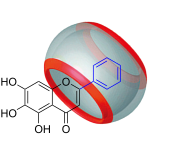
- Xiaodong Zhang Jun Xie Zhiling Xu Zhu Tao Qianjun Zhang Key Laboratory of Macrocyclic and Supramolecular Chemistry of Guizhou Province, Guizhou University, Guiyang 550025, China 10.3762/bjoc.16.9 Abstract The host–guest interactions between baicalein (BALE) and cucurbit[8]uril (Q[8]) and the
- corresponding properties of the inclusion complex were studied using 1H NMR, IR and UV–vis spectroscopy and DTA. The results showed that BALE forms an inclusion compound (1:1) with Q[8], and the properties of baicalein are changed by cucurbit[8]uril. Keywords: baicalein; cucurbit[8]uril; host–guest interaction
- compounds such as calixarenes, crown ethers and cyclodextrins, which can be used to form a stable inclusion complex with the drug, and improving the bioavailability of the drug [34][35]. Herein, we describe the results of the investigations of host–guest interactions between BALE and Q[8] in an aqueous





