


Search results
Search for "kinetics" in Full Text gives 382 result(s) in Beilstein Journal of Organic Chemistry. Showing first 200.
Architecture and synthesis of P,N-heterocyclic phosphine ligands
Beilstein J. Org. Chem. 2020, 16, 362–383, doi:10.3762/bjoc.16.35
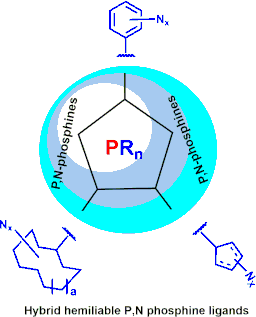
- solvents may substantially influence reaction kinetics and product formation [102]. Biricik et al. [98] reported the preparation of polydentate aminophosphine 111 through a condensation–elimination–aminolysis reaction (Scheme 21). Reactions performed in diethyl ether and toluene resulted in bisphosphine


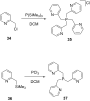


Chemical synthesis of tripeptide thioesters for the biotechnological incorporation into the myxobacterial secondary metabolite argyrin via mutasynthesis
Beilstein J. Org. Chem. 2019, 15, 2922–2929, doi:10.3762/bjoc.15.286
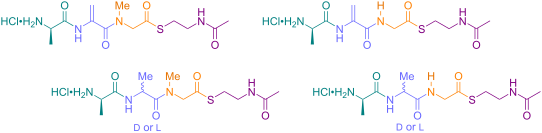
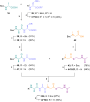
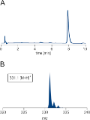
- kinetics under the standard conditions in the cultivation medium. The HPLC–MS analysis revealed a rather rapid degradation of the analysed mutasynthon, as after only 2 h of incubation time the majority was degraded and after 4 h of incubation almost complete degradation of the compound was observed



Arylisoquinoline-derived organoboron dyes with a triaryl skeleton show dual fluorescence
Beilstein J. Org. Chem. 2019, 15, 2612–2622, doi:10.3762/bjoc.15.254
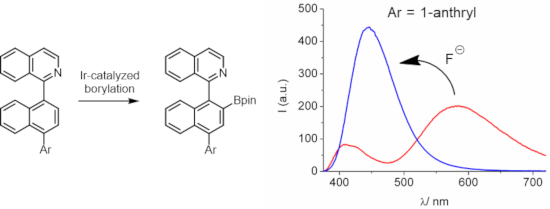
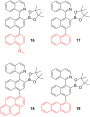
- acetonitrile (containing 0.4 vol % DMF as co-solvent). Transient absorption spectrum (600 ns delay) of dye 17 in nitrogen-purged acetonitrile on excitation at 308 nm. The inset shows the corresponding kinetics at 600 nm. Fluorescence titrations of the dyes (ca. 4–11 μM) with Bu4NF in acetonitrile. a) 16 (up to



Safe and highly efficient adaptation of potentially explosive azide chemistry involved in the synthesis of Tamiflu using continuous-flow technology
Beilstein J. Org. Chem. 2019, 15, 2577–2589, doi:10.3762/bjoc.15.251
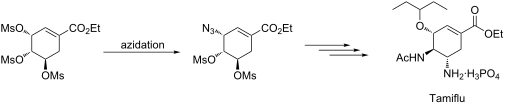
- % yield, respectively. Consequently, the reaction was strictly done at 0 °C and below. Therefore, the use of NaN3 in high equivalence (4 equiv) was to probably improve reaction kinetics at low temperatures. Karpf and Trussardi [9] reported the synthesis of azide 5 from mesyl shikimate 4 and NaN3 (1.1


In search of visible-light photoresponsive peptide nucleic acids (PNAs) for reversible control of DNA hybridization
Beilstein J. Org. Chem. 2019, 15, 2500–2508, doi:10.3762/bjoc.15.243
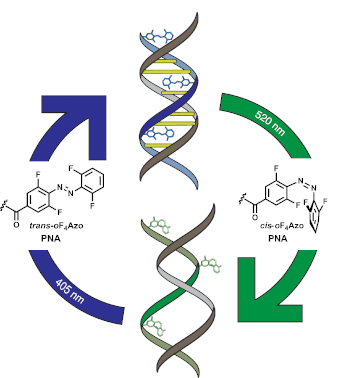
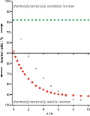
- %; Table 3, right) with faster kinetics (Figure 5B) without compromising the specificity of the system. More importantly, this new set up led to slightly higher differences between isomers and pointed out the dual-labelled probe 10 as the best one, which is consistent with the melting experiments (Table 2
- and Figure 3). Among the single mutated PNAs, those with lower TM, displayed the best performance in our kinetics studies (Figure 5B). Finally, in an attempt of gaining insight into the general low photoresponsivity, we performed CD (Figure S53, Supporting Information File 1) and UV–vis (Figures S54



Ultrafast processes triggered by one- and two-photon excitation of a photochromic and luminescent hydrazone
Beilstein J. Org. Chem. 2019, 15, 2438–2446, doi:10.3762/bjoc.15.236
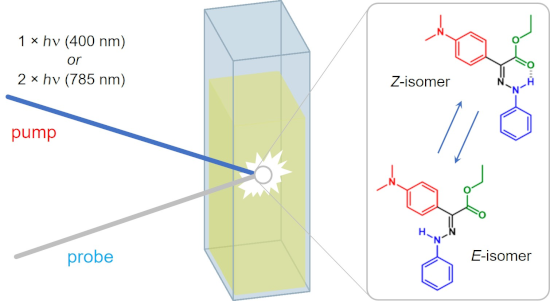
- even upon excitation at 350 nm, because of the induced E/Z photoisomerization process occurring within the experiment. Finally, the kinetics of the fluorescence decay of the Z-isomer has also been determined in acetonitrile, upon excitation at 400 nm, resulting in a lifetime of 479 ps (Figure S2
- evolution, also associated to the rise of a positive band at <380 nm, whose observation is precluded due to scattering in polar solvents, reveals the occurrence of Z/E isomerization, whose kinetics is thus similar in toluene and acetonitrile. In the latter solvent, the signal intensity then decreases on a
- 50 ps timescale and recovers almost completely in about 500 ps. In methanol, although the spectral evolution is qualitatively similar to that observed in acetonitrile, the kinetics associated with the detected spectral changes differ substantially. The initial evolution, corresponding to the recovery



Reversible switching of arylazopyrazole within a metal–organic cage
Beilstein J. Org. Chem. 2019, 15, 2398–2407, doi:10.3762/bjoc.15.232
- affected by their confinement to the surfaces of inorganic nanoparticles. Among other examples, the isomerization kinetics of azobenzene could be tuned by a factor of >5000 by the molecules with which it was co-adsorbed on gold nanoparticles [23], and donor–acceptor Stenhouse adduct (DASA) switches were
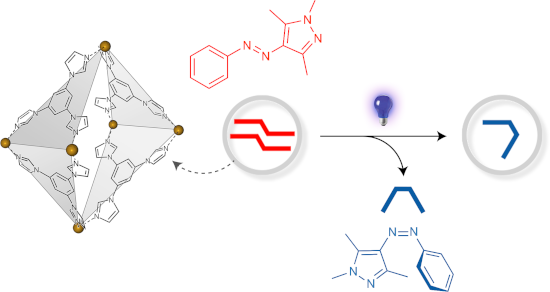
- once again featuring a single set of diffusion coefficients (Figure 7, right; D1 = 2.22 (±0.04) · 10−10 m2·s−1 and D2 = 2.04 (±0.08) · 10−10 m2·s−1). Finally, we were interested in how the presence of cage 2 affects the kinetics of the thermal back-isomerization of 1 (i.e., Z-1 → E-1 in the dark). This
- linear profile of the recovery suggests that the reaction obeys first-order kinetics, with a rate constant of 0.0975 h−1, corresponding to a thermal half-life of Z-1, τ1/2 ≈ 7.1 hours. This value of τ1/2 is surprisingly small vis-à-vis the previously reported [35] τ1/2 ≈ 10 days in acetonitrile. To


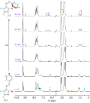
![[Graphic 1]](/bjoc/content/inline/1860-5397-15-232-i3.svg?max-width=637&scale=1.18182) 2 (500 MHz, D2O, 298 K).
2 (500 MHz, D2O, 298 K).




Excited state dynamics for visible-light sensitization of a photochromic benzil-subsituted phenoxyl-imidazolyl radical complex
Beilstein J. Org. Chem. 2019, 15, 2369–2379, doi:10.3762/bjoc.15.229
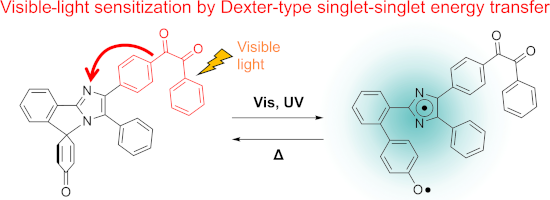
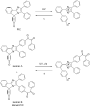
- isomer A accumulated by 8 shots are slightly fluctuated most probably because of the low signal-to-noise ratio, the decay kinetics do not change by repeated irradiation with UV-light pulses. It shows that both isomers generate the same biradical form by UV-light irradiation as shown in Scheme 1
- (355 nm). The difference may affect the ratio of isomer A and isomer B at the photostationary state (PSS) and initial relaxation kinetics at sub-picosecond time scales. Benzil was used for a reference sample. Figure 3a shows the time evolution of the transient absorption spectra of benzil in benzene



Mono- and bithiophene-substituted diarylethene photoswitches with emissive open or closed forms
Beilstein J. Org. Chem. 2019, 15, 2344–2354, doi:10.3762/bjoc.15.227
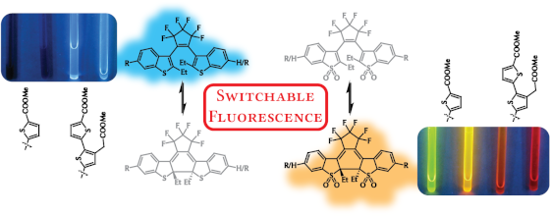
- open forms with rather low emission efficiency. The photoswitching kinetics was studied at several wavelengths with UV and visible light. New diarylethenes underwent ring-closure reactions by irradiation with UV light (365 nm, 405 nm), and the reversible ring-opening by irradiation with visible light
- example, Figures S26 and S38 in Supporting Information File 1). Emission properties of the CF’s were obtained from solutions at the PSS365 nm, with excitation at a wavelength at which the OF’s do not absorb (only the CF absorbs). The data on switching kinetics is given in Table 2 and discussed in the next
- nonemissive. This important property will be taken into account in the design of the future photoswitchable compounds with ratiometric fluorescence modulation. Switching kinetics Table 2 contains an overview of the most important parameters related to the switching kinetics. All compounds, except AsOTh2 and


Characterization of two new degradation products of atorvastatin calcium formed upon treatment with strong acids
Beilstein J. Org. Chem. 2019, 15, 2085–2091, doi:10.3762/bjoc.15.206
- stress tests on atorvastatin (and its salts), and an overview has been published by Sirén [5]. Hereby, atorvastatin was found to be sensitive to acidic, oxidative, photochemical and thermal stress. Acidic degradation of atorvastatin was reported to follow first order kinetics, but decomposition products




Genome mining in Trichoderma viride J1-030: discovery and identification of novel sesquiterpene synthase and its products
Beilstein J. Org. Chem. 2019, 15, 2052–2058, doi:10.3762/bjoc.15.202
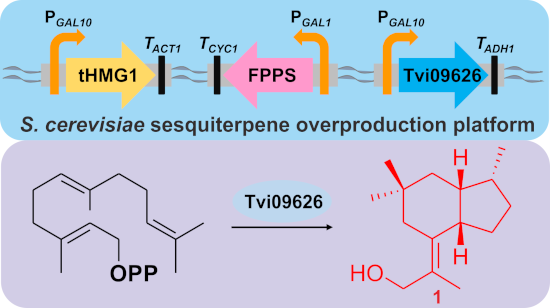
- dependency of Tvi09626 and its kinetics As reported previously, most terpene synthases are active in the presence of Mg2+ ions [8][37]. To test the Mg2+ dependency of Tvi09626, an in vitro assay was performed. The GC–MS analysis showed that in the presence of Mg2+, compound 1 can be obtained, whereas without
- Mg2+ or added EDTA (2.5 mM), compound 1 cannot be detected (Figure 5). This assay demonstrated that Tvi09626 was a Mg2+-dependent sesquiterpene synthase. In a kinetics analysis, the turnover rate (kcat) of the enzyme with FPP was (15 ± 0.3) × 10−2, which is similar to those of omp6 and omp7. Its



Synthesis of 1-azaspiro[4.4]nonan-1-oxyls via intramolecular 1,3-dipolar cycloaddition
Beilstein J. Org. Chem. 2019, 15, 2036–2042, doi:10.3762/bjoc.15.200
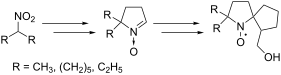
- 630090, Russian Federation Voevodsky Institute of Chemical Kinetics and Combustion SB RAS, Institutskaya 3, Novosibirsk 630090, Russian Federation 10.3762/bjoc.15.200 Abstract Sterically shielded nitroxides of the pyrrolidine series have shown the highest resistance to reduction. Here we report the
- synthesis of new pyrrolidine nitroxides from 5,5-dialkyl-1-pyrroline N-oxides via the introduction of a pent-4-enyl group to the nitrone carbon followed by an intramolecular 1,3-dipolar cycloaddition reaction and isoxazolidine ring opening. The kinetics of reduction of the new nitroxides with ascorbate were
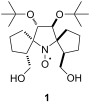
- results lead us to the assumption that symmetric structures with bulky substituents at positions 3 and 4 should be favoured for achieving higher resistance to reduction. Structure of nitroxide 1. Kinetics of the reduction of nitroxides 1 and 12a–c (0.3 mM) with ascorbate (50 mM) in 50 mM phosphate-citrate



Complexation of chiral amines by resorcin[4]arene sulfonic acids in polar media – circular dichroism and diffusion studies of chirality transfer and solvent dependence
Beilstein J. Org. Chem. 2019, 15, 1913–1924, doi:10.3762/bjoc.15.187
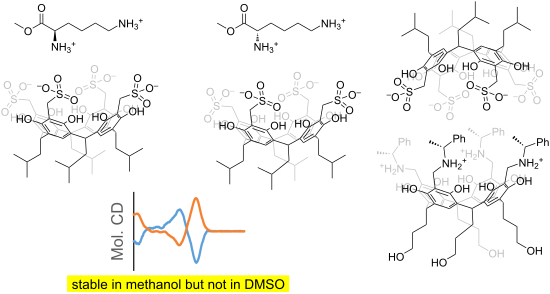
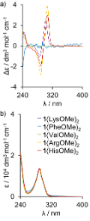
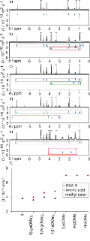
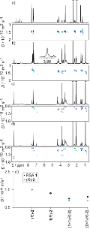
- quantitative. The kinetics of complex formation is fast on the NMR timescale. The complexes exhibit a high degree of ordering that is manifested by chirality transfer observed by diastereotopic splitting (Figure 6c, inset). In this case CD spectra are not diagnostic (CD bands are observed already for chiral
- fact, they reveal important information about the thermodynamic and kinetics of the complexation, that cannot be obtained based on standard 1H NMR titration (because there are no complexation-induced shifts). We rationalize these results assuming that in [1(R)-2]DMSO solution the complex partially




A heteroditopic macrocycle as organocatalytic nanoreactor for pyrroloacridinone synthesis in water
Beilstein J. Org. Chem. 2019, 15, 1505–1514, doi:10.3762/bjoc.15.152
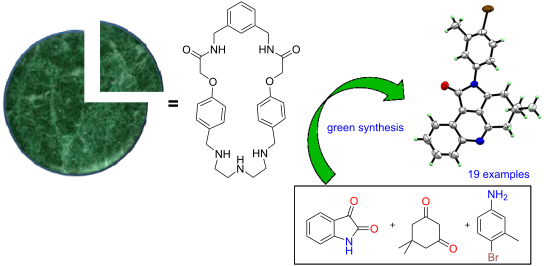
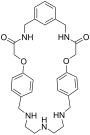
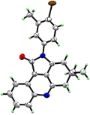
- screening of the kinetics of the reaction for the optimum time is shown in Figure 3. The best result was obtained at approximate 8 h and longer reaction times (up to 18 h), maintaining all reaction conditions unchanged, did not improve the yield. Thus, we converge that the BATA-MC as a nanoreactor provides





Diazocine-functionalized TATA platforms
Beilstein J. Org. Chem. 2019, 15, 1485–1490, doi:10.3762/bjoc.15.150
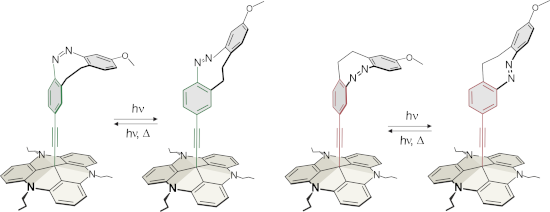
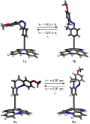
- to measure kinetics on surfaces [15]. The C–O stretching frequencies proved to be ideal reporter signals to determine the configuration and to measure kinetics in monolayers of azo-TATAs on surfaces. Results and Discussion To obtain information on preferred conformations of 1 and 2 in their cis and
- ) surfaces. Further studies will include IRRAS measurements to determine the trans→cis isomerization kinetics on Au(111) surfaces. Experimental For detailed experimental procedures, including NMR, UV–vis and MS spectra see Supporting Information File 1, chapters I–IV, for kinetic studies see Supporting



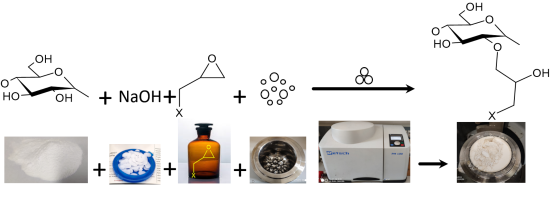
Reaction of oxiranes with cyclodextrins under high-energy ball-milling conditions
Beilstein J. Org. Chem. 2019, 15, 1448–1459, doi:10.3762/bjoc.15.145
- that of bead polymers in all cases. The adsorption of MO shows apparent first order kinetics, and the largest adsorption rates were accordingly found at the beginning of adsorption. The adsorption isotherm of insoluble β-CDP was recorded after 1 day and 2 weeks of equilibration. The adsorption isotherm


Efficiency Effsyn of complex syntheses as multicomponent reactions, its algorithm and calculations based on concrete criteria
Beilstein J. Org. Chem. 2019, 15, 1425–1433, doi:10.3762/bjoc.15.142
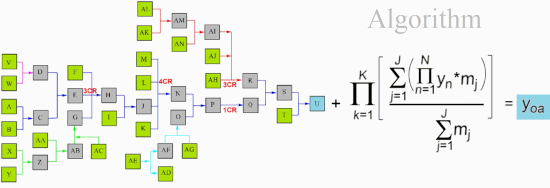
- . Time influences reactions via their kinetics and is therefore not a primary factor but a soft criterion. This can usually be greatly minimised during cost generation through clever time management of the synthesis planning and can essentially be treated here as a fixed cost. Table 1 indicates the major



Reversible end-to-end assembly of selectively functionalized gold nanorods by light-responsive arylazopyrazole–cyclodextrin interaction
Beilstein J. Org. Chem. 2019, 15, 1407–1415, doi:10.3762/bjoc.15.140
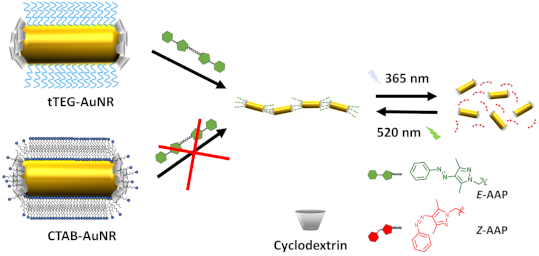
- advantage of the different ligand exchange kinetics of CTAB on the ends and the side of the particles [14][15]. CTAB serves as a capping agent in AuNR synthesis by the seed-mediated growth process and is essential for the anisotropic growth. Due to the different crystallographic environments on the particle
- is assumed by preliminary studies that the ligand exchange mainly emerges at the AuNR ends due to its high ligand exchange kinetics [10][15][16]. The addition of an excess of tTEG resulted in a negative surface charge (−32 mV) indicating a complete removal of CTAB from the gold surface. Furthermore


Efficient resolution of racemic crown-shaped cyclotriveratrylene derivatives and isolation and characterization of the intermediate saddle isomer
Beilstein J. Org. Chem. 2019, 15, 1339–1346, doi:10.3762/bjoc.15.133
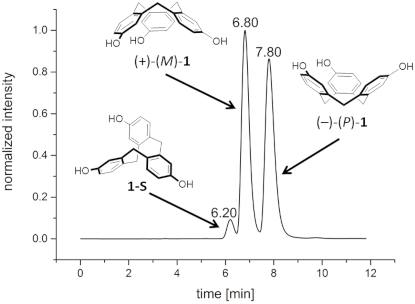
- kinetics. Although the presence of the in-between lying saddle isomer indicates a more complex kinetic, we decided, for the sake of comparability, to determine rate constants and energy barrier ΔG≠ for the racemization also with the assumption of first order kinetics (see Supporting Information File 1 for


Understanding the unexpected effect of frequency on the kinetics of a covalent reaction under ball-milling conditions
Beilstein J. Org. Chem. 2019, 15, 1226–1235, doi:10.3762/bjoc.15.120
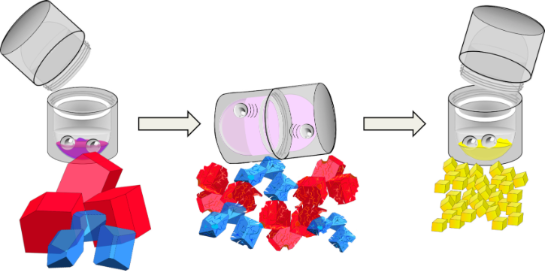
- Sciences, University of Cambridge, Downing Street, Cambridge CB2 3EQ, UK 10.3762/bjoc.15.120 Abstract We here explore how ball-mill-grinding frequency affects the kinetics of a disulfide exchange reaction. Our kinetic data show that the reaction progress is similar at all the frequencies studied (15–30 Hz
- grinding; grinding frequency; kinetics; mechanism; mechanochemistry; Introduction We describe here an unusual frequency-dependence in the induction period of a covalent reaction carried out using ball-mill grinding. We present a kinetic analysis indicating that this is due to the successive fracture of
- various kinetic treatments, an understanding of mechanochemical reaction dynamics remains largely elusive. While mechanochemical kinetics must obey the general principles of reactivity (collision, energy gain and relaxation), there remains a poorly understood, complex interplay between physical and


Insertion of [1.1.1]propellane into aromatic disulfides
Beilstein J. Org. Chem. 2019, 15, 1172–1180, doi:10.3762/bjoc.15.114
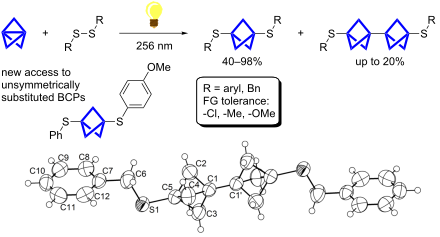
- about reaction kinetics. We acknowledge the support by two projects of the German Research Foundation, namely BR 1750/34-1 (use of the electronic lab notebook and repository Chemotion to disclose the herein described research data) and BR1750/40-1, JU2909/5-1 (service for the deposit of physical samples


Mechanochemical synthesis of hyper-crosslinked polymers: influences on their pore structure and adsorption behaviour for organic vapors
Beilstein J. Org. Chem. 2019, 15, 1154–1161, doi:10.3762/bjoc.15.112
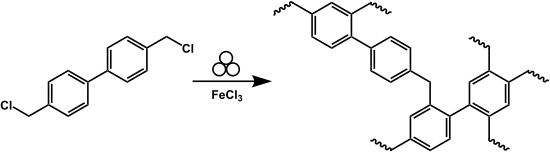
- and the resulting thermal and frictional stress of the material and reinforces our prior findings regarding the synthesis of porous polymers inside a ball mill [30][35]. Development of vessel pressure during the reaction In an attempt to track and understand the kinetics of the mechanochemical


Unexpected polymorphism during a catalyzed mechanochemical Knoevenagel condensation
Beilstein J. Org. Chem. 2019, 15, 1141–1148, doi:10.3762/bjoc.15.110
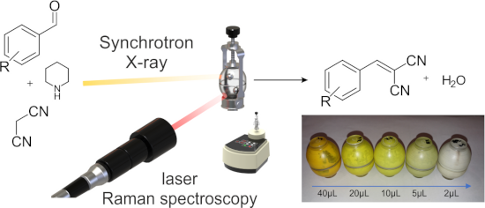
- ] in understanding reaction kinetics of these processes. Early insight into formation pathways was provided ex situ, in which the mechanical treatment was stopped, and powder removed for analysis [10][11]. More recently, further detail has been gained by monitoring mechanochemical transformations in


Precious metal-free molecular machines for solar thermal energy storage
Beilstein J. Org. Chem. 2019, 15, 1096–1106, doi:10.3762/bjoc.15.106
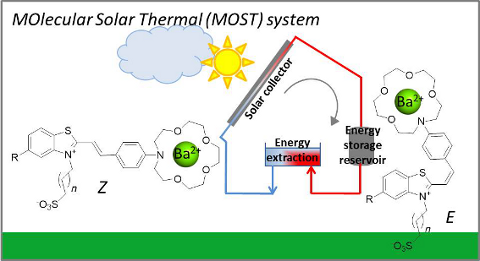
- which was found to be long enough to reach a photostationary state. The kinetics of the cis–trans thermal isomerization were studied by measuring the absorbance at a fixed wavelength in the dark as a function of time after irradiation stopped until the initial absorbance value before excitation was




Fabrication, characterization and adsorption properties of cucurbit[7]uril-functionalized polycaprolactone electrospun nanofibrous membranes
Beilstein J. Org. Chem. 2019, 15, 992–999, doi:10.3762/bjoc.15.97
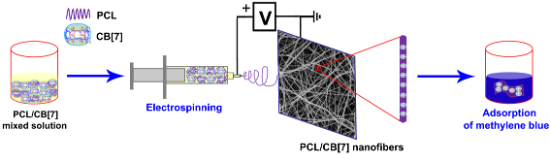
- of CB[7] even when the cavity is empty according to above DSC results. Various adsorption kinetics models were used to explain the adsorption mechanism and to determine the intrinsic adsorption kinetic constant. Usually, the pseudo-first-order model, pseudo-second-order model and intraparticle
- diffusion model are used to evaluate adsorption kinetics behavior (the equations of the three models are given in Supporting Information File 1). According to the experimental data, the adsorption kinetic data of PCL and PCL/CB[7] nanofibrous membranes fitting by the above three adsorption kinetics models
- confirm the pseudo-second-order kinetic of PCL/CB[7] nanofibrous membranes. Actually, the adsorption kinetics of the PCL/CB[7] nanofibrous membranes agree with those of calixarene-functionalized [20] and CD-functionalized [37] nanofibrous membranes. The adsorption isotherm of MB by nanofibrous membranes





