


Search results
Search for "nickel" in Full Text gives 246 result(s) in Beilstein Journal of Organic Chemistry. Showing first 200.
Fluorinated maleimide-substituted porphyrins and chlorins: synthesis and characterization
Beilstein J. Org. Chem. 2019, 15, 2704–2709, doi:10.3762/bjoc.15.263
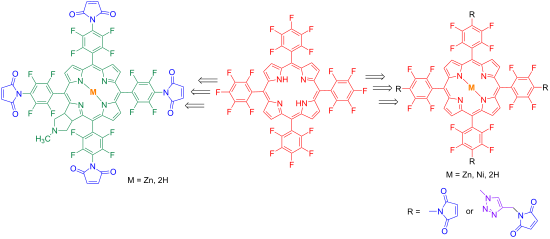
- 5,10,15,20-tetrakis(pentafluorophenyl)porphyrin (1) [35] was used as starting compound. The synthesis includes the metallation of the free base porphyrin 1 with an excess of zinc acetate or nickel acetate resulting in the corresponding porphyrin Zn(II) and Ni(II) complexes 2a [36] and 2b [37], respectively


Recent advances in transition-metal-catalyzed incorporation of fluorine-containing groups
Beilstein J. Org. Chem. 2019, 15, 2213–2270, doi:10.3762/bjoc.15.218
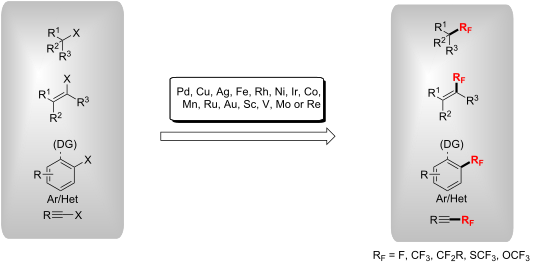
- different catalysts, such as palladium, copper, silver, iron, nickel, ruthenium, cobalt, etc. Palladium catalysis Palladium is a member of the nickel triad in the periodic table, and palladium complexes exist in three oxidation states, Pd(0), Pd(II), and Pd(IV). Straightforward interconversion between
- were thus obtained with good enantioselectivity. In the same year, Kim’s group [97] accomplished an efficient enantioselective electrophilic α-fluorination of various α-chloro-β-ketoesters catalyzed by chiral nickel complexes with good enantioselectivity (up to 99% ee). Notably, the chiral nickel
- -diamine complexes are air and moisture-stable (Scheme 49). In 2011, two nickel-catalyzed protocols for the enantioselective α-fluorination of β-ketoesters were reported separately. In van Leeuwen’s reaction, SPANamine derivatives were synthesized and applied as chiral ligands in the asymmetric α






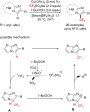


Recent advances on the transition-metal-catalyzed synthesis of imidazopyridines: an updated coverage
Beilstein J. Org. Chem. 2019, 15, 1612–1704, doi:10.3762/bjoc.15.165
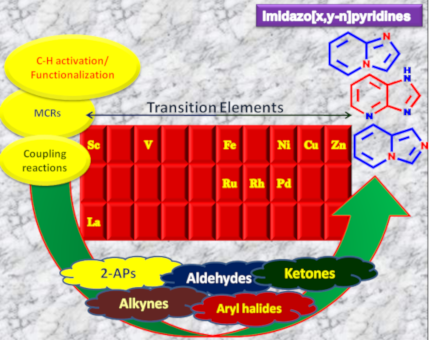
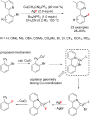
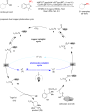
- used for functionalization/derivatization reactions compared to MCRs in the syntheses of IPs. The role of lanthanum/scandium/nickel/vanadium in synthetic chemistry The application of scandium complexes in organic chemistry has been very scarce due to their low availability and difficulties in
- –C bond formations, and ring opening reactions [83][84][85][86][87]. Along with these nickel and vanadium were also well known to catalyze a number of organic reactions. Recent reviews published on the catalytic applications of these metals in various forms have underlined the indispensable
- alcohols and asymmetric sulfide oxidation [91]. Diverse reactivity, cost efficiency and variable oxidation state [Ni(0)–Ni(IV)] associated with nickel led to remarkable developments in the field of catalytic applications [68]. Nickel catalysis involved cycloaddition, cyclization, C–H bond functionalization


Superelectrophilic carbocations: preparation and reactions of a substrate with six ionizable groups
Beilstein J. Org. Chem. 2019, 15, 1515–1520, doi:10.3762/bjoc.15.153
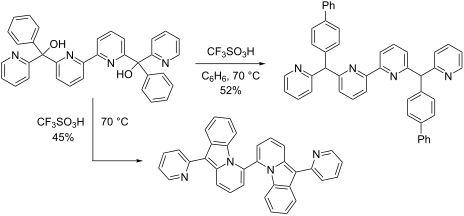
- benzaldehyde. A nickel-catalyzed procedure gives the dipyridyl intermediate 7 [13]. This is easily oxidized to the diketone 8 and reaction of this substance with 2-lithiopyridine gives the precursor 9. The diol 9 is a substrate with six ionizable groups. Upon ionization in superacidic CF3SO3H (triflic acid




One-pot activation–alkynylation–cyclization synthesis of 1,5-diacyl-5-hydroxypyrazolines in a consecutive three-component fashion
Beilstein J. Org. Chem. 2019, 15, 1360–1370, doi:10.3762/bjoc.15.136
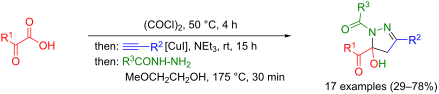
- (Figure 2) [26][27]. In addition, 1-acyl-5-hydroxypyrazolines are bidentate ligands for zinc complexes and by virtue of being ring tautomers of β-enolhydrazones they can also act as tridentate ligands for nickel [28] and tin [29][30] complexes. In contrast, dimethylzinc forms dimeric complexes where the 1


Synthesis of non-racemic 4-nitro-2-sulfonylbutan-1-ones via Ni(II)-catalyzed asymmetric Michael reaction of β-ketosulfones
Beilstein J. Org. Chem. 2019, 15, 1289–1297, doi:10.3762/bjoc.15.127
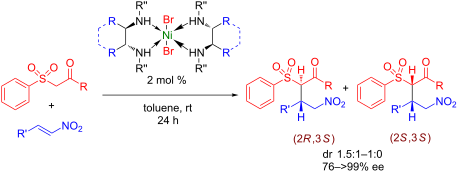
- ; Michael addition; nickel complexes; nitroalkenes; Introduction Sulfones are widely used in organic synthesis, particularly, in various reactions of C–C and C=C-bond formation [1][2][3][4]. The use of sulfones in Julia–Kocienski [1] and Ramberg–Bäcklund reactions [2] made this class of compounds




Mechanochemistry of supramolecules
Beilstein J. Org. Chem. 2019, 15, 881–900, doi:10.3762/bjoc.15.86
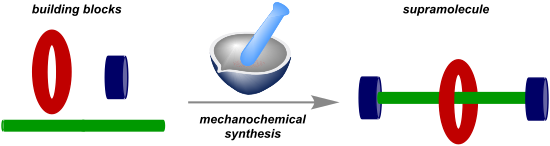
- example of a metal-directed self-assembly is shown [44]. The mixing of diacetyl and 2-aminoethanethiol led to a dynamic mixture of products including 1. The square-planar directing metal ion nickel(II) induces the formation of cyclic product 2 through a process called self-sorting [51][52][53
- ]. Subsequently, compound 2 underwent substitution with α,α’-dibromo-o-xylene to create the nickel(II) complex 3 [54]. In 2014, James and co-workers reported a one-pot two-step mechanochemical synthesis of metal complexes 7 (Figure 3). First, the salen-type ligand 6 was synthesized from o-hydroxybenzaldehyde (4


Coordination chemistry and photoswitching of dinuclear macrocyclic cadmium-, nickel-, and zinc complexes containing azobenzene carboxylato co-ligands
Beilstein J. Org. Chem. 2019, 15, 840–851, doi:10.3762/bjoc.15.81
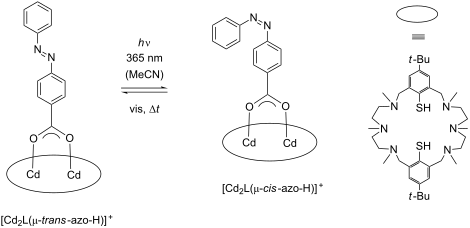
- with λ = 365 nm reveals a photoisomerization of the co-ligand from the trans to the cis form. Keywords: azobenzene carboxylates; cadmium; complexes; macrocyclic ligands; nickel; zinc; Introduction The macrocyclic N6S2 donor ligand H2L is an effective dinucleating ligand that supports a large number
- , 5) were obtained directly from stoichiometric complexation reactions between H2L·6HCl, Zn(OAc)2·2H2O, and the corresponding azobenzene carboxylate ion (prepared in situ from the free acid by deprotonation with NEt3 as a base) in methanol. The green-brown nickel (2, 4, 7 and 9) and red-orange colored
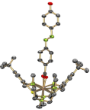
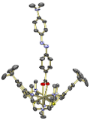
- distance between the two planes through the co-ligands amounts to 3.45 Å. Magnetic properties of nickel complexes The paramagnetic nickel complexes 2, 4, and 7 were further investigated by temperature dependent magnetic susceptibility measurements between 2 and 300 K in an applied external field of 0.5 T





Design, synthesis and spectroscopic properties of crown ether-capped dibenzotetraaza[14]annulenes
Beilstein J. Org. Chem. 2019, 15, 617–622, doi:10.3762/bjoc.15.57
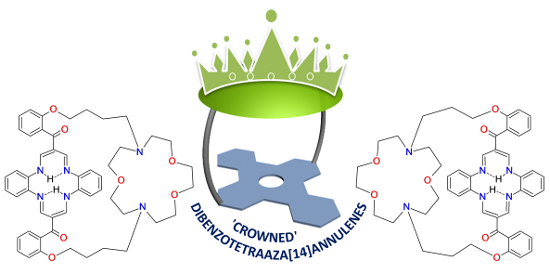
- ], little research has been undertaken regarding DBTAAs functionalized with crown ether moieties (see Figure 1). Kruse and Breitmaier [24] reported annulated DBTAA‘s containing benzo-15-crown-5 scaffolds fused with benzenoid rings of the macrocyclic core. Both nickel(II) and cobalt(II) complexes were
- prepared and their binding properties toward sodium and potassium ions were studied in addition to transition metals. Sakata et al. reported the syntheses and characterization of nickel(II), copper(II) [25] and oxovanadium(IV) [26] complexes of crown ether-annulated DBTAAs, which caused dimerization in the
- presence of alkali metal and ammonium ions. Sakata et al. reported the synthesis of peripherally functionalized DBTAAs with the two benzo-15-crown-5 scaffolds appended to the meso-benzoyl substituents [27]. Both crown ether-capped macrocycles in a form of free base and nickel(II) and cobalt(II) complexes


Synthesis of C3-symmetric star-shaped molecules containing α-amino acids and dipeptides via Negishi coupling as a key step
Beilstein J. Org. Chem. 2019, 15, 371–377, doi:10.3762/bjoc.15.33
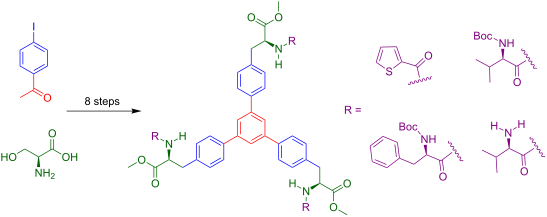
- electroluminescent devices [33]. To address these challenges, we [34] and others [35][36] have synthesized functionalized C3-symmetric molecules containing amino acids and peptides. The Negishi cross coupling [37][38] is a reliable synthetic method, which involves palladium or nickel-catalyzed coupling of organozinc


Thermophilic phosphoribosyltransferases Thermus thermophilus HB27 in nucleotide synthesis
Beilstein J. Org. Chem. 2018, 14, 3098–3105, doi:10.3762/bjoc.14.289
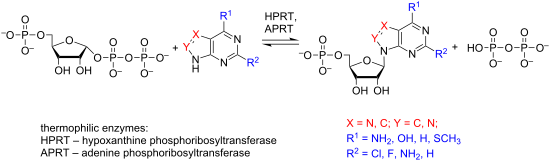
- , phenylmethylsulfonyl chloride, magnesium chloride, nickel sulfate, potassium dihydroorthophosphate, Ni-IDA sepharose, 5-phosphoribosyl-α-1-pyrophosphate and all bases (adenine, hypoxanthine, guanine, 2-chloroadenine, etc.) were purchased from Sigma-Aldrich (USA, MO). Bacterial strains: a) E. coli C3030 [MiniF lysY


Synthesis of aryl sulfides via radical–radical cross coupling of electron-rich arenes using visible light photoredox catalysis
Beilstein J. Org. Chem. 2018, 14, 2520–2528, doi:10.3762/bjoc.14.228
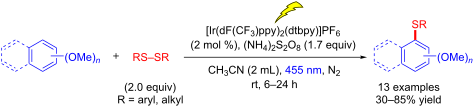
- triflates [8], and diazonium salts [9]. Typical metals used are palladium [10][11][12][13], copper [14][15][16][17][18][19][20][21], nickel [22][23][24], iron [25][26][27][28][29], cobalt [30][31][32], and rhodium [33][34]. Aryl sulfides are also synthesized by cross coupling of thiols and aryl Grignard


Chiral bisoxazoline ligands designed to stabilize bimetallic complexes
Beilstein J. Org. Chem. 2018, 14, 2002–2011, doi:10.3762/bjoc.14.175

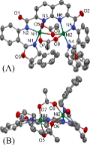
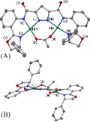
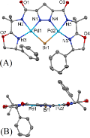
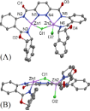
- , Florida 32611, USA 10.3762/bjoc.14.175 Abstract Chiral bisoxazoline ligands containing naphthyridine, pyridazine, pyrazole, and phenol bridging units were prepared and shown to form bimetallic complexes with various metal salts. X-ray crystal structures of bis-nickel naphthyridine-bridged, bis-zinc
- pyridazine-bridged, and bis-nickel as well as bis-palladium pyrazole-bridged complexes were obtained. Keywords: bimetallic complexes; bisoxazolines; chiral ligands; heterocycles; Introduction Metal-centered asymmetric catalysis most commonly relies on monometallic complexes of various chiral ligands, among
- was reported to form a bis-palladium complex with one equivalent of [(η3-C3H3)PdCl]2 [51]. Little is known about the complexing abilities of compounds 9 and 11 [49][52]. The naphthyridine-based ligand 10 forms a dinuclear complex with nickel(ΙΙ) acetate (Ni∙∙∙Ni distance = 3.132 Å). Compound 12







Synthesis of new p-tert-butylcalix[4]arene-based polyammonium triazolyl amphiphiles and their binding with nucleoside phosphates
Beilstein J. Org. Chem. 2018, 14, 1980–1993, doi:10.3762/bjoc.14.173
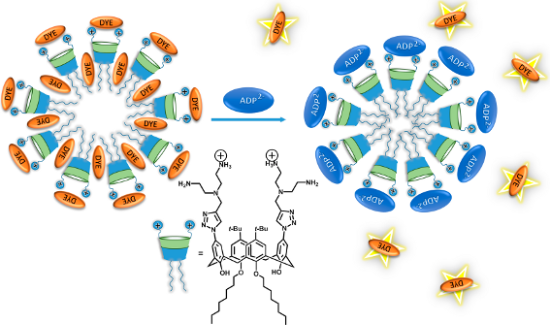
- instead of pyrophoric Raney nickel. Finally, a diazotization procedure with subsequent azide substitution [37][38] gave calix[4]arene azide derivatives 4 and 8. For the latter reaction a mixture of DMF/glacial acetic acid 3:1 was found to be the optimal solvent. The structures of macrocycles 4 and 8 were


Cobalt–metalloid alloys for electrochemical oxidation of 5-hydroxymethylfurfural as an alternative anode reaction in lieu of oxygen evolution during water splitting
Beilstein J. Org. Chem. 2018, 14, 1436–1445, doi:10.3762/bjoc.14.121
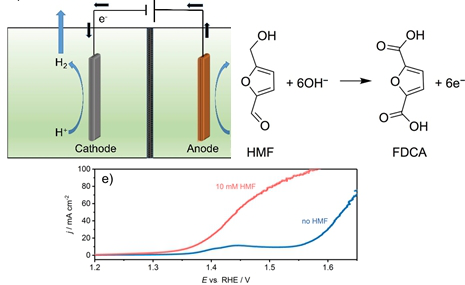
- with the same electrode. Electrolysis of HMF using a CoB modified nickel foam electrode at 1.45 V vs RHE achieved close to 100% selective conversion of HMF to FDCA at 100% faradaic efficiency. Keywords: alternative anode reaction; electrocatalysis; electrosynthesis; HMF oxidation; hydrogen evolution
- ]. Here, HMF was selectively converted to FDCA in NaOH (1.0 M) as electrolyte using a nickel oxide/hydroxide anode achieving a yield of 71% [25]. Strasser and Vuyyuru observed the degradation of HMF to humin type products in highly alkaline solutions and proposed a lower working pH value (<13) for
- [4]. The elaborate separation of TEMPO from FDCA appeared to be an additional disadvantage [24]. Recently, Sun and co-workers reported the electrochemical oxidation of HMF using various non-precious cobalt and nickel based bifunctional HER/OER water splitting electrocatalysts, namely CoP on copper



Synthesis of chiral 3-substituted 3-amino-2-oxindoles through enantioselective catalytic nucleophilic additions to isatin imines
Beilstein J. Org. Chem. 2018, 14, 1349–1369, doi:10.3762/bjoc.14.114

- complex to promote the enantioselective addition of methanol to N-Boc-isatin imines 3 [79]. As shown in Scheme 20, the use of a chiral nickel catalyst in situ generated from NiCl2 and the chiral bis(imidazolidine)pyridine ligand 56 promoted this reaction in toluene at room temperature in the presence of a
- enantioselectivities (up to 94% ee) by using chiral nickel and palladium complexes with imidazoline and pyridine-oxazoline ligands while the first additions of enaminones to isatin imines catalyzed by chiral phosphoric acids provided even higher enantioselectivities (up to 97% ee). In spite of these significant
- cinchona alkaloid-derived thiourea. Aza-Henry reaction of N-Boc-isatin imines with nitromethane catalyzed by a bifunctional guanidine. Domino addition/cyclization reaction of N-Boc-isatin imines with 1,4-dithiane-2,5-diol (53) catalyzed by a tertiary amine-squaramide. Nickel-catalyzed additions of methanol











High-yielding continuous-flow synthesis of antimalarial drug hydroxychloroquine
Beilstein J. Org. Chem. 2018, 14, 583–592, doi:10.3762/bjoc.14.45
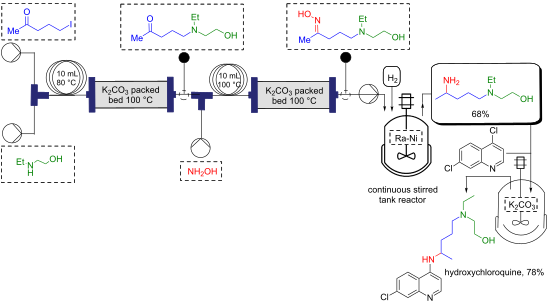
- prepare compound 6. It is well known that the direct one-step reductive amination of 6 to give 12 can be accomplished by simple heterogeneous reduction with H2/Raney-nickel [24]. However, THF is employed in all of our prior flow steps and is a poor choice as a solvent for the reductive amination step due
- to limited solubility of ammonia in THF. H2/Raney-nickel reductions are often carried out in alcoholic media where much higher concentrations of ammonia are achievable but would require a solvent exchange. There are many reports of continuous-flow chemistry methods for reductive amination of ketones
- heterogeneous reduction with H2/Raney-nickel. Therefore, we explored an alternate strategy: simple conversion of the ketone group of 6 to oxime 11, followed by reduction to give 5-(ethyl(2-hydroxyethyl)amino)-2-aminopentane (12). We have found H2/Raney-nickel efficiently reduces 11 to 12 with THF as the solvent


An alternative to hydrogenation processes. Electrocatalytic hydrogenation of benzophenone
Beilstein J. Org. Chem. 2018, 14, 537–546, doi:10.3762/bjoc.14.40
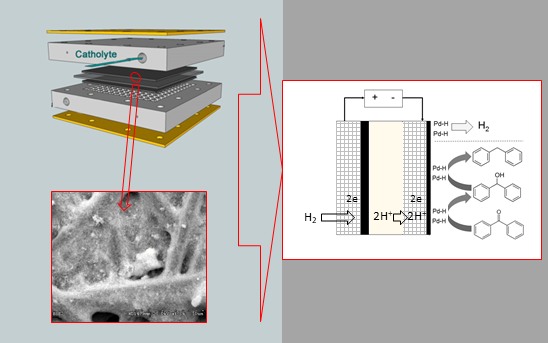
- important to note that, formation of “active hydrogen” is the main step in this process and hydrogen-active powder electrocatalysts such as Pd/C, Pt/C or Raney-nickel have been demonstrated as the optimal choice [16][17]. Moreover, the organic molecule adsorption rate must be faster than that one associated



Latest development in the synthesis of ursodeoxycholic acid (UDCA): a critical review
Beilstein J. Org. Chem. 2018, 14, 470–483, doi:10.3762/bjoc.14.33
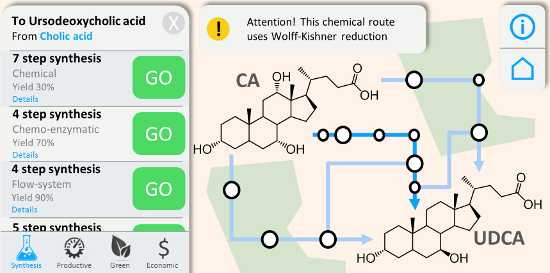
- mechanism for this step is analogous to the mechanism for ketal or acetal formation except sulphur replaces oxygen as the nucleophile attacking the carbonyl group. In a second step, the dithioketal is reduced to the corresponding methylene compound by hydrogenolysis in presence of Raney Nickel (actually


Continuous-flow retro-Diels–Alder reaction: an efficient method for the preparation of pyrimidinone derivatives
Beilstein J. Org. Chem. 2018, 14, 318–324, doi:10.3762/bjoc.14.20
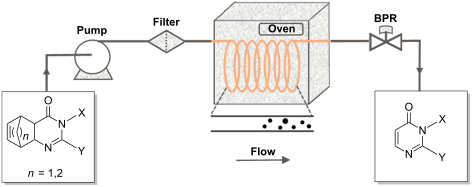
- the literature, a similar desulfurisation batch reaction was performed with nickel catalysis, in ethanol (EtOH)/water (2:1) solution [55][56][57]. Thus, thioxo derivative 8b was dissolved in this mixture, and the CF method was repeated. Desulfurisation of 8b, at 250 °C without adding any catalytic
- metal, provided tricyclic 15b in good yield (90%). Most probably, the reaction was catalyzed by nickel, a component of the 304 stainless steel reactor coil [58][59]. These results also underline the importance to select appropriate solvents and tubing [60][61] for thermally driven reactions. In support


The use of 4,4,4-trifluorothreonine to stabilize extended peptide structures and mimic β-strands
Beilstein J. Org. Chem. 2017, 13, 2842–2853, doi:10.3762/bjoc.13.276
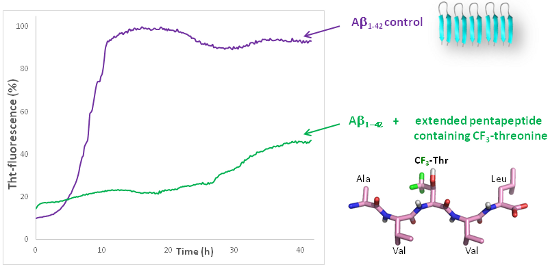
- in good yield starting from the N-benzylation of L-proline in the presence of KOH, then activation of the carboxylic acid functionality of 10 using SOCl2 at low temperature, followed by condensation with 2-aminobenzophenone (Scheme 2). Complexation of 11 with nickel nitrate and glycine under basic
- conditions gave the nickel Schiff base complex 12 in 71% yield as red crystals. The nucleophilic glycine equivalent 12 went through the aldol reaction with trifluoroacetaldehyde to give complex 13 in moderate yield (66%). Further hydrolysis of complex 13 led to the recovery of the chiral auxiliary 11 and




Synthesis and application of trifluoroethoxy-substituted phthalocyanines and subphthalocyanines
Beilstein J. Org. Chem. 2017, 13, 2273–2296, doi:10.3762/bjoc.13.224
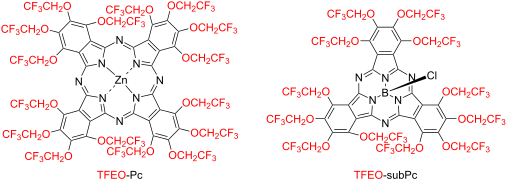
- sensors [51]. Due to the strong electronegativity of fluorine, the acidity of these pyrrole rings is increased in TFEO-H2Pc. For this reason, it is susceptible to deprotonation, whereas protonation hardly occurs. Trifluoroethoxy-substituted nickel phthalocyanine (TFEO-NiPc) and trifluoroethoxy-substituted








Phosphonic acid: preparation and applications
Beilstein J. Org. Chem. 2017, 13, 2186–2213, doi:10.3762/bjoc.13.219
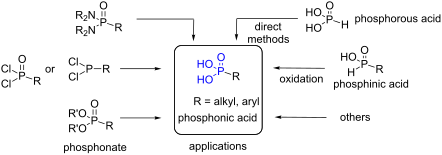
- 14, Figure 4), was assessed to complex indium [86] or terbium [87] with the aim to develop bone targeting and dosimetry. It was also employed to complex 89Y and applied as pH sensitive NMR probe [88], or as organic precursor of crystalline manganese, nickel [89] or lanthanide-containing hybrid


Synthesis of 2-aminosuberic acid derivatives as components of some histone deacetylase inhibiting cyclic tetrapeptides
Beilstein J. Org. Chem. 2017, 13, 2153–2156, doi:10.3762/bjoc.13.214

- chiral nickel complex among others. Moreover, many of these studies have also reported an elegant use of this unsaturated amino acid [19]. Our simple protocol involves the use of less sophisticated reagents and catalysts and the use of easily available starting materials; it proceeds in an overall yield


Solvent-free sonochemistry: Sonochemical organic synthesis in the absence of a liquid medium
Beilstein J. Org. Chem. 2017, 13, 1850–1856, doi:10.3762/bjoc.13.179
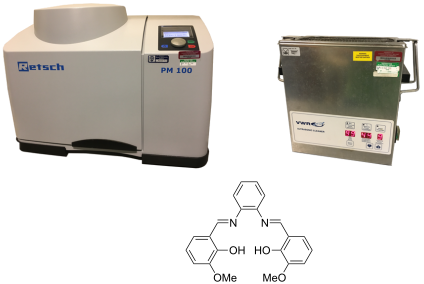
- ]. Metal catalysts are prepared by the sonication of metal halides (e.g., Pt and Pd – reduction of metal) in the presence of Li and THF [14][15]. Furthermore, the catalytic behaviour of catalysts such as Raney Nickel, has reportedly been increased solely due to the effect of using ultrasound [16]. Catalyst





