


Search results
Search for "proline" in Full Text gives 216 result(s) in Beilstein Journal of Organic Chemistry. Showing first 200.
1H-Imidazol-4(5H)-ones and thiazol-4(5H)-ones as emerging pronucleophiles in asymmetric catalysis
Beilstein J. Org. Chem. 2016, 12, 918–936, doi:10.3762/bjoc.12.90
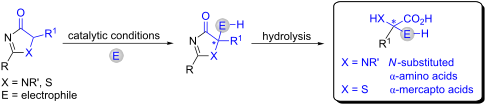
- (Scheme 2, compounds 13–15) proceeded with poor diastereocontrol but the results were improved by changing to catalyst C2 [62]. Nonetheless, in both cases the enantioselectivity for the major diastereomer was excellent. Finally, and starting from the corresponding bicyclic imidazolones, quaternary proline








Gold-catalyzed direct alkynylation of tryptophan in peptides using TIPS-EBX
Beilstein J. Org. Chem. 2016, 12, 745–749, doi:10.3762/bjoc.12.74
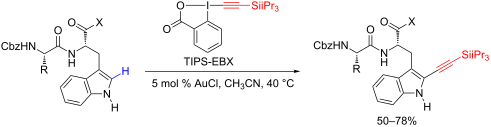
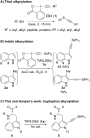
- other aromatic amino acids, such as phenylalanine or tyrosine (products 5c and 5d). Serine and proline containing dipeptides 5e and 5f could also be obtained in 64% and 53% yield, respectively. The reaction was therefore general for dipeptides bearing tryptophan at the C-terminus. On the other hand



cis–trans-Amide isomerism of the 3,4-dehydroproline residue, the ‘unpuckered’ proline
Beilstein J. Org. Chem. 2016, 12, 589–593, doi:10.3762/bjoc.12.57
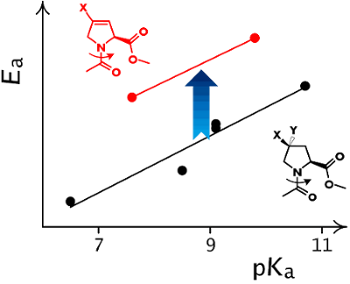
- Vladimir Kubyshkin Nediljko Budisa Institute of Chemistry, Technical University of Berlin, Müller-Breslau-Str., 10, 10623, Berlin, Germany 10.3762/bjoc.12.57 Abstract Proline (Pro) is an outstanding amino acid in various biochemical and physicochemical perspectives, especially when considering
- isomerism; fluorine; pKa; proline; Introduction The sole genetically encoded secondary amino acid proline (Pro, 1) is known for its unique properties in biological systems. In particular, Pro residues are often found in the s-cis peptidyl-Pro conformation, due to the low energy difference between the s
- reasons. However, it has also been reported that N-acylated pyroglutamic acid exhibits almost exclusively the s-trans amide conformation despite being formally a 5-substituted Pro [22]. The conformational preferences of the heterocyclic analogues of proline [23][24][25] and, in particular, pseudoprolines


The aminoindanol core as a key scaffold in bifunctional organocatalysts
Beilstein J. Org. Chem. 2016, 12, 505–523, doi:10.3762/bjoc.12.50
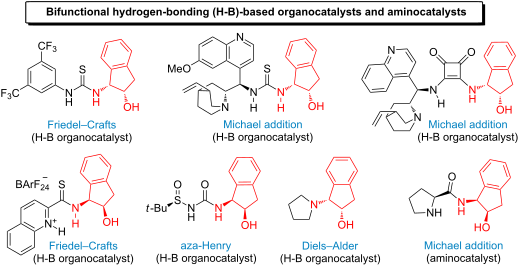
- incorporated into proline derivatives has been scarcely explored. Herein, the most representative and illustrative examples are compiled and this review will be mainly focused on the cases where the aminoindanol moiety confers bifunctionality to the organocatalysts. Keywords: aminocatalysis; 1,2-aminoindanol


(Thio)urea-mediated synthesis of functionalized six-membered rings with multiple chiral centers
Beilstein J. Org. Chem. 2016, 12, 462–495, doi:10.3762/bjoc.12.48
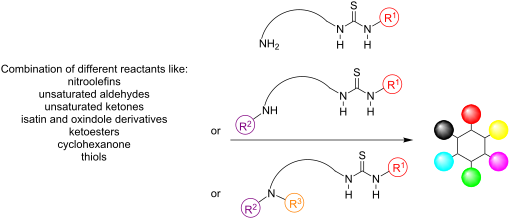
- of intermediates have been proposed to be the reactive intermediates in many reactions such as aldol, Michael, Mannich, and α-functionalization (α-chlorination, α-amination, α-fluorination) reactions. Proline-type organocatalysts are considered priviliged, because their corresponding enamines exist
- enolate of cyclohexanone. Two subsequent aldol reactions furnished the desired product. Miscellaneous thiourea-catalysts and catalytic systems promoting asymmetric transformations that lead to a six-membered ring The discovery of L-proline as an organocatalyst for the aldol reaction was of major
- importance and therefore many asymmetric reactions that could not be achieved, are now possible. There are many reactions catalyzed by L-proline, affording stereoselective products in high yields and enantiomeric excess, nevertheless there are many limitations. For that reason, it has emerged the need for


Diastereoselective Ugi reaction of chiral 1,3-aminoalcohols derived from an organocatalytic Mannich reaction
Beilstein J. Org. Chem. 2016, 12, 139–143, doi:10.3762/bjoc.12.15

- -Boc imines 2 and catalytic L-proline [29][30], followed by reduction of 3 and cleavage of the Boc group. This short and straightforward synthesis allows the introduction of 2 diversity inputs (R1 and Ar), whereas stereochemical diversity can also be explored using D-proline or different, anti


Recent advances in copper-catalyzed asymmetric coupling reactions
Beilstein J. Org. Chem. 2015, 11, 2600–2615, doi:10.3762/bjoc.11.280
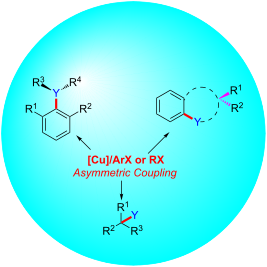
- et al. [39] has been the only example of this type of catalytic asymmetric coupling reaction. They reacted 2-halotrifluoroacetanilides with 2-methylacetoacetates under the catalysis of CuI/trans-4-hydroxy-L-proline and obtained the arylated products in good yields and enantioselectivities. In this


Diversity-oriented synthesis of analogues of the novel macrocyclic peptide FR-225497 through late stage functionalization
Beilstein J. Org. Chem. 2015, 11, 2487–2492, doi:10.3762/bjoc.11.270
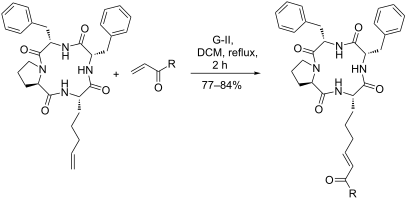
- the trapoxins 2 and 3 contain a 2-amino-8-oxo-9,10-epoxydecanoic acid (Aoe) as the unusual amino acid. The cyclic tetrapeptide scaffold represented by structure III is nearly identical to the compounds 2–4, the difference being in the D-proline/D-pipecolic acid segment. The difference may be


Cu(I)-catalyzed N,N’-diarylation of natural diamines and polyamines with aryl iodides
Beilstein J. Org. Chem. 2015, 11, 2297–2305, doi:10.3762/bjoc.11.250

- of diamines and spermine while the CuI/L-proline/EtCN system proved to be preferable for the diarylation of other tri- and tetraamines like spermidine, norspermidine and norspermine. Keywords: amination; aryl amines; aryl iodides; copper catalysis; polyamines; Introduction Natural diamines and
- iodides in the copper-catalyzed amination of di- and polyamines providing mainly N-monoaryl derivatives [31]. On the basis of our recent investigations, in order to obtain N,N’-diaryl derivatives, we employed the most suitable catalytic systems, CuI/L-proline (L1) and CuI/2-(isobutyryl)cyclohexanone (L2


Recent advances in copper-catalyzed C–H bond amidation
Beilstein J. Org. Chem. 2015, 11, 2209–2222, doi:10.3762/bjoc.11.240

- of o-halobenzamides 82 and (benzo)imidazoles 87 for the one-pot synthesis of (benzo)imidazoquinazolinones 88 under the catalysis of CuI and assistance of L-proline. A subsequent oxidation using molecular oxygen was required for the final formation of products. According to the results, the mechanism
- were disclosed by Wang et al. [80]. The synthesis using 92 and benzimidazoles 87 provided benzimidazole-fused cyclic sulfonamides 93. The reaction allowed the synthesis of various products with fair to high yields with the assistance of L-proline as ligand. The expected conversion took place also in




Nitro-Grela-type complexes containing iodides – robust and selective catalysts for olefin metathesis under challenging conditions
Beilstein J. Org. Chem. 2015, 11, 1823–1832, doi:10.3762/bjoc.11.198
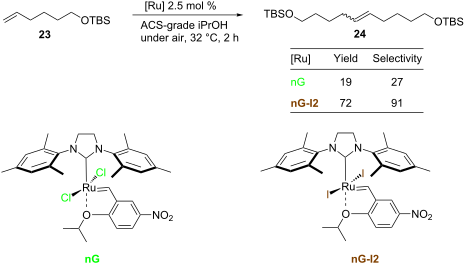
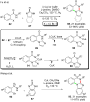
- . Thus, RCM with substrate 7 having one double bond terminally substituted with the phenyl ring as well as the formation of the trisubstituted heterocycle 9 proceeded better with chloride-containing catalysts. When proline derivative 10 was used, the diiodo catalysts performed better than nG but slightly


Fe(II)/Et3N-Relay-catalyzed domino reaction of isoxazoles with imidazolium salts in the synthesis of methyl 4-imidazolylpyrrole-2-carboxylates, its ylide and betaine derivatives
Beilstein J. Org. Chem. 2015, 11, 1732–1740, doi:10.3762/bjoc.11.189
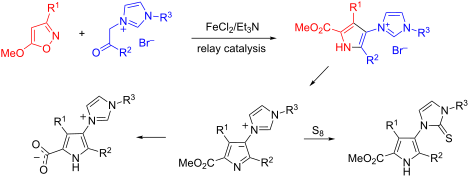
- complexes of pyrrole-2-carboxylic acid [23][24][25]. In some cases these complexes were prepared via dehydration of the corresponding proline complexes [25]. Substituted pyrrole-2-carboxylic acids as ligands of complexes are seldom used and are only exemplified by complexes of indole-2-carboxylic acid [26


An efficient synthesis of N-substituted 3-nitrothiophen-2-amines
Beilstein J. Org. Chem. 2015, 11, 1707–1712, doi:10.3762/bjoc.11.185
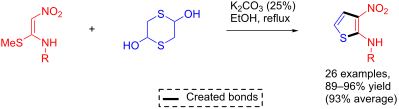
- , entry 5), pyridine (Table 1, entry 6), N,N-dimethylaminopyridine (DMAP, Table 1, entry 7), piperidine (Table 1, entry 8), L-proline (Table 1, entry 9), potassium carbonate (Table 1, entry 10), sodium carbonate (Table 1, entry 11) and caesium carbonate (Table 1, entry 12). After identifying potassium

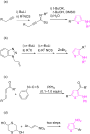


The synthesis of active pharmaceutical ingredients (APIs) using continuous flow chemistry
Beilstein J. Org. Chem. 2015, 11, 1194–1219, doi:10.3762/bjoc.11.134
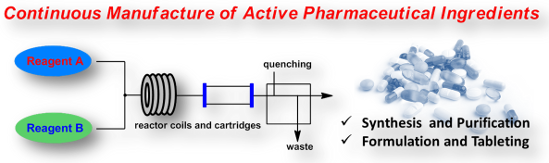
- POCl3 were mixed in a simple Teflon T-piece before entering a tubular reactor maintained at 22 °C (4.5 mL, tres = 30 s). Upon exiting this reactor the crude stream of the Vilsmeier reagent 76 was combined with a stream of amide 80 in DMF that was prepared in situ in a batch reactor from proline amide


Peptide–polymer ligands for a tandem WW-domain, an adaptive multivalent protein–protein interaction: lessons on the thermodynamic fitness of flexible ligands
Beilstein J. Org. Chem. 2015, 11, 837–847, doi:10.3762/bjoc.11.93
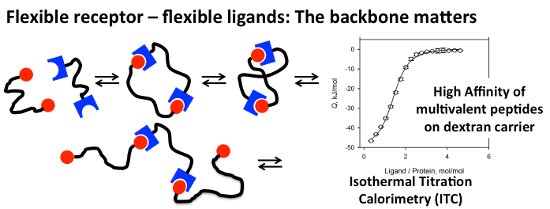
- tandem WW-domain of formin-binding protein (FBP21). Polymer carriers were conjugated with 3–9 copies of the proline-rich decapeptide GPPPRGPPPR-NH2 (P1). Binding of the obtained peptide–polymer conjugates to the tandem WW-domain was investigated employing isothermal titration calorimetry (ITC) to
- ; proline-rich peptide sequences; Introduction Multivalency is a general principle in nature for increasing the affinity and specificity of ligand–receptor interactions [1]. Multivalent binding is characterized by the cooperative, over-additive enhancement of binding affinities of ligands and receptors in
- architecture connected with a flexible linker the tandem WW-domains of the protein FBP21 were selected. FBP21 is a protein component of the spliceosome, the multiprotein complex in the nucleus of cells responsible for the processing of primary RNA-transcripts. The two WW domains of FBP21 bind to proline-rich


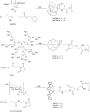


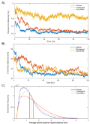

Multivalent polyglycerol supported imidazolidin-4-one organocatalysts for enantioselective Friedel–Crafts alkylations
Beilstein J. Org. Chem. 2015, 11, 730–738, doi:10.3762/bjoc.11.83
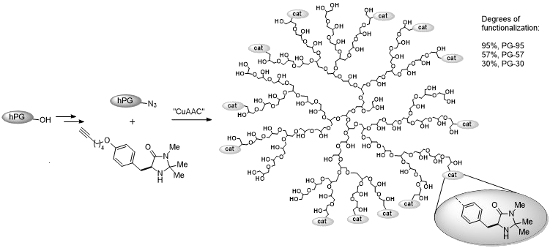
- supported catalyst has proven beneficial with regard to rate acceleration and increased selectivity due to formation of an aqueous microenvironment favored by the swelling properties of polymeric materials [43]. Particularly, in the case of dendritic proline derivatives [44][45][46] and N-alkylimidazole


Exploring monovalent and multivalent peptides for the inhibition of FBP21-tWW
Beilstein J. Org. Chem. 2015, 11, 701–706, doi:10.3762/bjoc.11.80
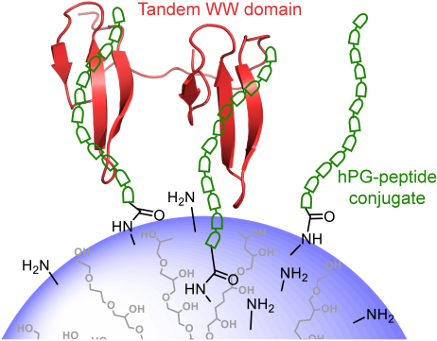
- which demonstrates that the new carrier provides a venue for the future inhibition of proline-rich sequence recognition by FBP21 during assembly of the spliceosome. Keywords: FBP21-tWW; isothermal titration calorimetry; multivalent polymers; polyglycerol peptide conjugates; proline-rich sequence
- proline–arginine-rich peptides in the core splicing protein SmB/B’ and the U2-associated protein SF3B4. The interaction of FBP21 with these proteins is conferred by two WW domains that are connected by a short, 8 amino acid long linker sequence. Multivalent recognition of the proline-rich sequences (PRS
- endothelial growth factor (VEGF). In the same study, the natural compound borrelidin was suggested to confer its splicing inhibition function by directly binding to the WW domains of FBP21 [6]. Here, we have taken a different approach to inhibit binding of FBP21-tWW to proline-rich sequences in the


Chemoselective O-acylation of hydroxyamino acids and amino alcohols under acidic reaction conditions: History, scope and applications
Beilstein J. Org. Chem. 2015, 11, 446–468, doi:10.3762/bjoc.11.51
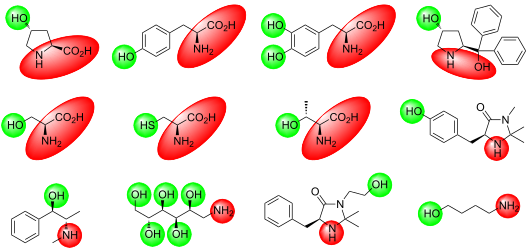
- -acetylhydroxyamino acids. They were in fact the first researchers to at all investigate compounds belonging to this class of amino acid derivatives. Under the mantra «acidity favors O-acylation, while alkalinity favors N-acylation», they accomplished this feat by treatment of hydroxy-L-proline, DL-serine, DL
- employed by others, as for example in the preparation of O-acetyl-DL-serine reported by Frankel, Cordova and Breuer in 1953 [11], and O-acetylhydroxy-L-proline by Kurtz, Fasman, Berger and Katchalski in 1958 [12]. However, other and perhaps more ad hoc procedures for the preparation of O-acetylhydroxyamino
- -L-proline, L-serine, DL-serine and L-threonine were all obtained directly in excellent purity in over 90% yield at >10 g scale. Early O-acylation of hydroxyamino acids in trifluoroacetic acid As narrated in the previous section, developments taking place from the early 1940s into the early 1960s had


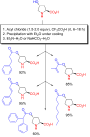


The Shono-type electroorganic oxidation of unfunctionalised amides. Carbon–carbon bond formation via electrogenerated N-acyliminium ions
Beilstein J. Org. Chem. 2014, 10, 3056–3072, doi:10.3762/bjoc.10.323
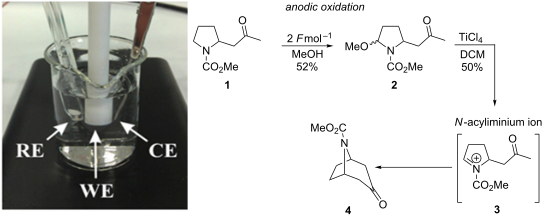
- ]. Constrained amino acid mimics such as 95 are important molecules as they display their functional group in a highly ordered way and can be used to mimic, for example, a proline residue of a natural peptide. The Moeller research group has also employed an electrosynthetic approach to the synthesis of a


(2R,1'S,2'R)- and (2S,1'S,2'R)-3-[2-Mono(di,tri)fluoromethylcyclopropyl]alanines and their incorporation into hormaomycin analogues
Beilstein J. Org. Chem. 2014, 10, 2844–2857, doi:10.3762/bjoc.10.302
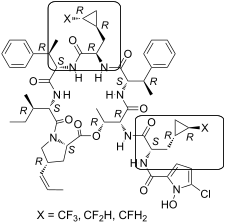
- with alkyl halides virtually yield single stereoisomers, in which the configuration of the newly formed stereogenic center at C-2 of the amino acid moiety is the same as that in the proline moiety of the chiral auxiliary in the starting material. In reactions of the enolate of this chiral glycine
- equivalent with aldehydes the situation is more complicated. The reaction of (S)-10 with acetaldehyde under strongly basic conditions led to the (R)-threonine complex 29 (inverse configuration relative to that of the proline moiety of (S)-10 due to epimerization on C-2), but when a weaker base such as
- by experimental tests [36]. The initially formed main product (R,R,R)-28 in the aldol reaction of acetaldehyde with 10 had the same configuration at C-2 as the proline unit in 10. The absolute configuration of this nickel(II) complex was determined by a single crystal X-ray structure analysis (see


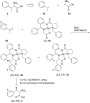


A simple copper-catalyzed two-step one-pot synthesis of indolo[1,2-a]quinazoline
Beilstein J. Org. Chem. 2014, 10, 2441–2447, doi:10.3762/bjoc.10.254
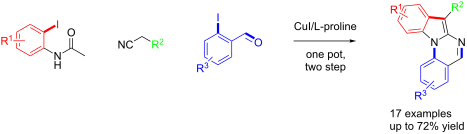
- 201203, P. R. China 10.3762/bjoc.10.254 Abstract A convenient CuI/L-proline-catalyzed, two-step one-pot method has been developed for the preparation of indolo[1,2-a]quinazoline derivatives using a sequential Ullmann-type C–C and C–N coupling. This protocol provides an operationally simple and rapid
- convenient method for the synthesis of 2-(trifluoromethyl)indoles by introducing the trifluoroacetyl group to activate the CuI/L-proline-catalyzed system [21]. Zhao [22] and Kobayashi [23] reported the synthesis of 2-amino-1H-indole derivatives using the same kind of copper-catalyzed system. Meanwhile, the
- copper catalysts were screened at 80 °C using L-proline as ligand, and K2CO3 as base in a mixed solvent of DMSO and H2O (volume ratio 1:1) (Table 1, entries 1–4). To our delight, the desired product 4a was obtained in 36% yield using CuI as catalyst and 50% yield with Cu2O (Table 1, entries 1 and 4


Indium-mediated allylation in carbohydrate synthesis: A short and efficient approach towards higher 2-acetamido-2-deoxy sugars
Beilstein J. Org. Chem. 2014, 10, 2230–2234, doi:10.3762/bjoc.10.231
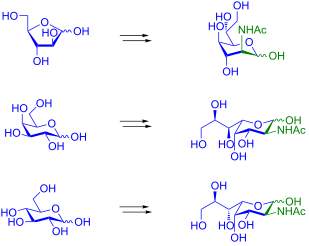
- -deoxyaldoses were treated with triethylamine (TEA) to yield α,β-unsaturated aldehydes 3a–c quantitatively. The aldehydes 3a–c were stereoselectively epoxidized by applying the conditions developed by Jørgenson et al [23][24][25]. The required amine catalyst was synthesized starting from L-proline following a
- the use of a chiral L-proline derived epoxidation catalyst. The introduction of nitrogen was achieved via a Tsuji–Trost-like azide opening of allylic epoxides. Although global deprotection proved to be cumbersome, we were able to develop a versatile reaction sequence to overcome this problem. The


Palladium-catalysed cyclisation of alkenols: Synthesis of oxaheterocycles as core intermediates of natural compounds
Beilstein J. Org. Chem. 2014, 10, 2077–2086, doi:10.3762/bjoc.10.216
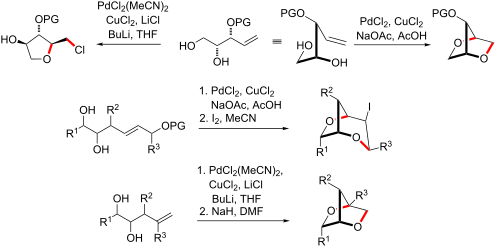
- 2 steps starting from the aldehyde 31 using the Yamamoto’s [33] sequential O-nitrosoaldol and Grignard addition process using different reagents (Scheme 4). Thus, L-proline-catalysed oxidation of 31 with 2-nitrosotoluene gave the optically pure O-selective nitrosoaldol product 32, which underwent a
- ; f) MeLi, Et2O, −78 °C, 1 h. TBDPSCl = tert-butyldiphenylsilyl chloride. Synthesis of substrates 33–35, 37. Reagents and conditions: a) lit. [33] L-proline (0.25 equiv), 2-nitrosotoluene, CHCl3, −18 °C; b) RMgCl, CeCl3·2LiCl, THF, −78 °C to rt, overnight; c) acetone, PTSA, 3 h, rt; d) OsO4 (0.01



A new charge-tagged proline-based organocatalyst for mechanistic studies using electrospray mass spectrometry
Beilstein J. Org. Chem. 2014, 10, 2027–2037, doi:10.3762/bjoc.10.211
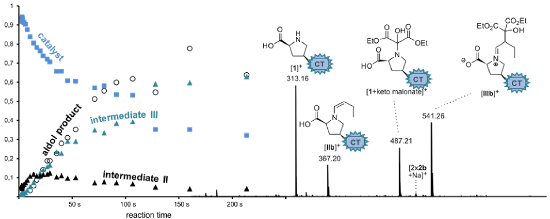
- J. Alexander Willms Rita Beel Martin L. Schmidt Christian Mundt Marianne Engeser University of Bonn, Kekulé-Institute of Organic Chemistry and Biochemistry, Gerhard-Domagk-Str. 1, D-53121 Bonn, Germany 10.3762/bjoc.10.211 Abstract A new 4-hydroxy-L-proline derivative with a charged 1
- -ethylpyridinium-4-phenoxy substituent has been synthesized with the aim of facilitating mechanistic studies of proline-catalyzed reactions by ESI mass spectrometry. The charged residue ensures a strongly enhanced ESI response compared to neutral unmodified proline. The connection by a rigid linker fixes the
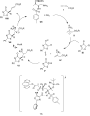
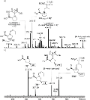
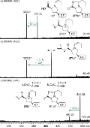
- charged proline catalyst has been tested in the direct asymmetric inverse aldol reaction between aldehydes and diethyl ketomalonate. Two intermediates in accordance with the List–Houk mechanism for enamine catalysis have been detected and characterized by gas-phase fragmentation. In addition, their



Multicomponent reactions in nucleoside chemistry
Beilstein J. Org. Chem. 2014, 10, 1706–1732, doi:10.3762/bjoc.10.179
- the reaction was performed with an excess (1.5 equiv) of methyl acetoacetate and methyl 3-aminocrotonate under L-proline-catalyzed conditions. In contrast to other catalysts tested (ytterbium triflate, D-proline, (S)-5-(pyrrolidin-2-yl)-1H-tetrazole, or (S)-1-(pyrrolidin-2-ylmethyl)pyrrolidine/TFA
- system), the catalytic effect of L-proline resulted in an increase in the reaction yield. Moreover, epimerization on the C-1 carbon atom of the starting aldehyde 88 was also suppressed. The latter effect was attributed to the preferential activation of methyl 3-aminocrotonate by L-proline via the
- formation of compounds 91 (Scheme 36) [110]. Regardless of the catalyst used, aldehyde 90 gave product 91 with a very high diastereomeric excess. Analogously to the reaction performed with aldehyde 90 in the presence of L-proline, aldehyde ent-90 gave compound ent-91 with the same diastereomeric excess





