Search results
Search for "protonation" in Full Text gives 478 result(s) in Beilstein Journal of Organic Chemistry. Showing first 200.
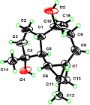
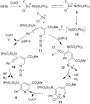
Understanding the competing pathways leading to hydropyrene and isoelisabethatriene
Beilstein J. Org. Chem. 2022, 18, 972–978, doi:10.3762/bjoc.18.97
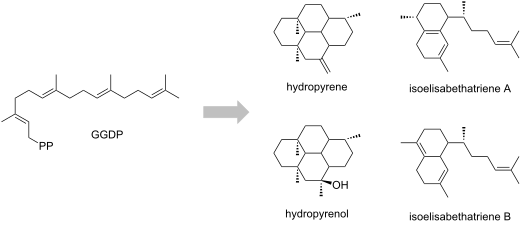
- any free energy barrier. The deprotonation and re-protonation steps are not included in our calculations. The overall exergonicity of this process which transforms four π-bonds to σ-bonds, with accompanying gains in intramolecular dispersion interactions, is −62.8 kcal/mol. IE pathway As described



Anti-inflammatory aromadendrane- and cadinane-type sesquiterpenoids from the South China Sea sponge Acanthella cavernosa
Beilstein J. Org. Chem. 2022, 18, 916–925, doi:10.3762/bjoc.18.91
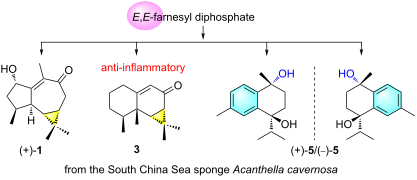
- -dimethylcyclopropyl unit [28]. Bicyclogermacrene (B) served as the branch point of aromadendrane cyclization and aristolane cyclization routes (Scheme 1, I). On one hand, the protonation on the double bond Δ1,10 of B initialized the aromadendrane cyclization, followed by 1,5-bond formation to yield carbocation
- ], which was further oxidized to afford 2. On the other hand, the aristolane cyclization route is started from protonation on Δ4,5 of B and followed by 5,10-cyclization to give maaliane-type carbocation intermediate F. Then, a successive transformation involving the concerted 1,2-hydride and 1,2-methyl






Synthetic strategies for the preparation of γ-phostams: 1,2-azaphospholidine 2-oxides and 1,2-azaphospholine 2-oxides
Beilstein J. Org. Chem. 2022, 18, 889–915, doi:10.3762/bjoc.18.90
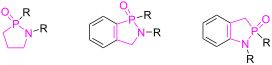
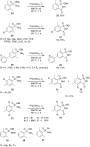
- performed a detailed investigation on the dearomatizing anionic cyclization of diphenyl-N-alkyl-N-benzylphosphinamides 107, 116, and 119 by treatment with sec-butyllithium and protonation with various alcohols (MeOH, iPrOH, t-BuOH), phenols (PhOH, 2-tert-butyl-4-methylphenol, and 2,6-di(tert-butyl)-4
- intramolecular nucleophilic dearomatization and protonation or electrophilic alkylation reactions, affording the corresponding dihydronaphthylene-fused γ-phosphinolactams 135–142. Methanol was used as the electrophile for protonation, while methyl iodide and allyl bromide were used as electrophiles for
- steric methanol as the electrophile because the protonation occurred at both the α- and γ-positions of the phenyl group in their diphenylphosphinamide moieties. However, only one pair of meso-bis(cyclohexadiene-fused γ-phosphinolactam)s 192 as major products and one pair of racemic diastereomeric bis








Cathodic generation of reactive (phenylthio)difluoromethyl species and its reactions: mechanistic aspects and synthetic applications
Beilstein J. Org. Chem. 2022, 18, 872–880, doi:10.3762/bjoc.18.88
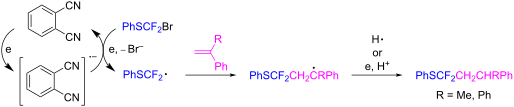
- , the radical intermediate C is further reduced to generate anion D followed by protonation to give products 4 and 6. Conclusion We have successfully carried out catalytic electrochemical reduction of bromodifluoromethyl phenyl sulfide using o-phthalonitrile as mediator to generate (phenythio


Palladium-catalyzed solid-state borylation of aryl halides using mechanochemistry
Beilstein J. Org. Chem. 2022, 18, 855–862, doi:10.3762/bjoc.18.86
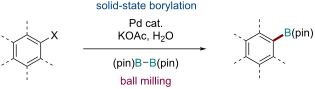
- various phosphine ligands [62] for this reaction (Table 1, entries 1–8). Interestingly, we found that tri-tert-butylphosphonium tetrafluoroborate (t-Bu3P·HBF4) provided the borylation product 3a in excellent yield (92%, Table 1, entry 1), with a small amount of the protonation product 4a (5%, entry 1




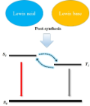
Post-synthesis from Lewis acid–base interaction: an alternative way to generate light and harvest triplet excitons
Beilstein J. Org. Chem. 2022, 18, 825–836, doi:10.3762/bjoc.18.83
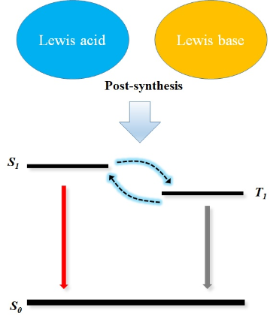
- . In 2002, Monkman reported the addition of camphor sulfonic acid (CSA) to the fluorescent polymer poly{2,5-pyridylene-co-1,4-[2,5-bis(2-ethylhexyloxy)]phenylene} (compound 1 in Figure 2) containing pyridine groups led to the protonation effect [26]. CSA has strong acidity and low volatility, which is
- feasible to be bound with pyridine groups. As shown in Figure 3a, the protonation by CSA resulted in a significant red-shift in the photoluminescence (PL) spectrum, which was similar to the cases caused by other Lewis acids such as methanesulfonic acid (MSA) and dichloracetic acid (DCA). Wang et al. used
- light, which confirmed that the emission was sensitive to BF3 concentration. Yang et al. used also TFA to shape the fluorescence emission based on the protonation effect between the dissociated H+ and the fluorescent material [32]. Lin et al. used the Lewis acids B(C6F5)3 and AlCl3 to regulate the


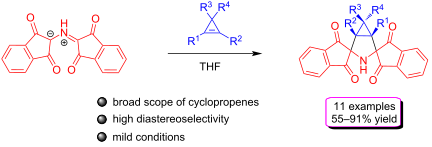
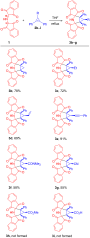
Synthesis of bis-spirocyclic derivatives of 3-azabicyclo[3.1.0]hexane via cyclopropene cycloadditions to the stable azomethine ylide derived from Ruhemann's purple
Beilstein J. Org. Chem. 2022, 18, 769–780, doi:10.3762/bjoc.18.77
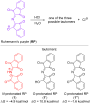
- during protonation of Ruhemann's purple. Although there was conclusive evidence of the structure of PRP (1) in the Grigg's study (proven by X-ray analysis) [27], we aimed to establish a stability order of tautomers on the basis of calculated relative values of the Gibbs free energy. Upon treatment of
- Ruhemann's purple with hydrochloric acid, three tautomers 1, 1', and 1'' may be theoretically formed, i.e., protonation could occur at the nitrogen atom, the oxygen atom or the carbon atom, respectively (Scheme 7). According to literature data [27], the nitrogen atom of Ruhemann's purple is considered to be






Heteroleptic metallosupramolecular aggregates/complexation for supramolecular catalysis
Beilstein J. Org. Chem. 2022, 18, 597–630, doi:10.3762/bjoc.18.62
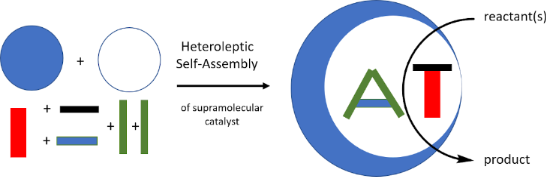
- )] (k298 = 32.2 kHz) move across the deck 82 and prevent binding of the protonated DABCO at the ZnPor binding sites. Use of the fuel acid 112 or 113 instead of applying the TFA/DBU acid/base combination leads initially to protonation of DABCO but due to the decarboxylation of 114 the resulting strong base


Syntheses of novel pyridine-based low-molecular-weight luminogens possessing aggregation-induced emission enhancement (AIEE) properties
Beilstein J. Org. Chem. 2022, 18, 580–587, doi:10.3762/bjoc.18.60
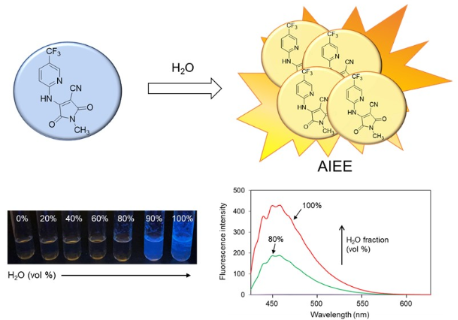
- completely quenched by the addition of an 0.1 M HCl solution to solutions of compounds 4a and 4e (Figure 3). This result indicated that the protonation of the secondary amine disrupted the intermolecular π–π interactions or planarity of compounds 4 (Figure 4), and the rigid structure in solution was involved
- fractions. Fluorescence spectral changes of (a) 4a (10−5 M, Exmax = 413 nm) and (b) 4e (10−5 M, Exmax = 415 nm) upon addition of 0.1 M HCl. Protonation of N-methyl-4-((pyridin-2-yl)amino)-substituted maleimides 4 by 0.1 M HCl. Frontier molecular orbitals and HOMO–LUMO energy gaps of compounds 3a, 4a, and 4e


Cs2CO3-Promoted reaction of tertiary bromopropargylic alcohols and phenols in DMF: a novel approach to α-phenoxyketones
Beilstein J. Org. Chem. 2022, 18, 420–428, doi:10.3762/bjoc.18.44
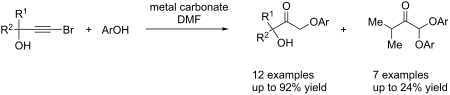
- leading to intermediate A, nucleophilic attack of phenolate at the less sterically hindered carbon of the above zwitterion A and subsequent protonation of anion B (Scheme 8). Based on these plausible mechanisms for the formation of phenoxyketones, it can be assumed that a decline of the Cs+ concentration


A resorcin[4]arene hexameric capsule as a supramolecular catalyst in elimination and isomerization reactions
Beilstein J. Org. Chem. 2022, 18, 337–349, doi:10.3762/bjoc.18.38
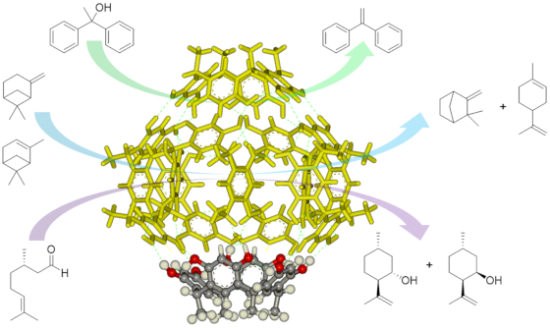
- promoting the protonation of the substrates leading to the formation of cationic intermediates that are stabilized within the cavity with consequent peculiar features in terms of acceleration and product selectivity. In all cases the catalytic activity displayed by the hexameric capsule is remarkable if
- all these reactions is the combination of its weak Brønsted acidity [42] that, by protonation of the substrate, leads to the formation of cationic species [43] and the stabilization of the latter through cation–π interactions [44] within the electron-rich aromatic cavity of the capsule, thus providing
- selectivity towards isopulegol with increasing the volume of the cavity. As a further investigation concerning other possible isomerization reactions involving protonation of the substrate, and formation of possible cationic intermediate species, we tested the menthone isomerization to isomenthone [53


Regioselectivity of the SEAr-based cyclizations and SEAr-terminated annulations of 3,5-unsubstituted, 4-substituted indoles
Beilstein J. Org. Chem. 2022, 18, 293–302, doi:10.3762/bjoc.18.33
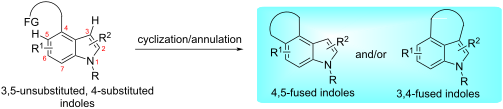
- 18 via a concerted protonation and C–C bond formation. Weakened dispersive interactions caused by a substituent or heteroatom resulted in low yields and reduced regioselectivities. In 2020, Li and Van der Eycken and co-workers reported the synthesis of densely functionalized, polycyclic azepino[5,4,3


Trichloroacetic acid fueled practical amine purifications
Beilstein J. Org. Chem. 2022, 18, 225–231, doi:10.3762/bjoc.18.26
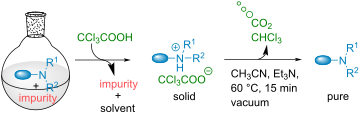
- cheap and simple acid enables a temporary protonation while time-controlled decarboxylation liberates volatile CO2 and chloroform as single waste (Scheme 2a). This strategy has been applied with success by the groups of Takata, Leigh, Kim and ours to time control different molecular switches ranging
- equilibrium supramolecular machinery through a temporary protonation returning to the initial state upon time [3][4][5]. While conceptually interesting, in terms of laboratory practicability, it would be desirable to have a faster release of the free amine. For this purpose, a small amount of volatile base
- yield (Scheme 3). This highlights the potential of this technique for organic synthesis. Conclusion To conclude, we have disclosed a new approach considerably limiting waste and operations necessary for amine purification. Taking advantage of a temporary protonation with TCA, the solid amine salts


Asymmetric organocatalytic Michael addition of cyclopentane-1,2-dione to alkylidene oxindole
Beilstein J. Org. Chem. 2022, 18, 167–173, doi:10.3762/bjoc.18.18
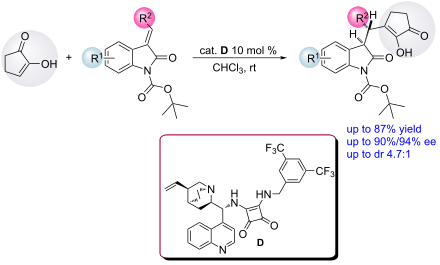
- afforded the same major diastereoisomer but opposite enantiomers (Scheme 3, 3q). The diastereoselectivities were similar for the isomers. Since the diastereoselectivity of the reaction was low, we attempted to increase the ratio of diastereoisomers via enolisation followed by diastereoselective protonation


The enzyme mechanism of patchoulol synthase
Beilstein J. Org. Chem. 2022, 18, 13–24, doi:10.3762/bjoc.18.2
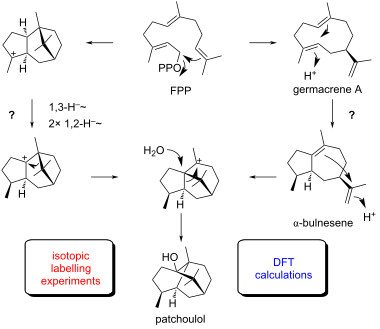
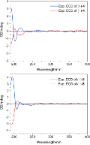
- reactivated by protonation for further cyclisation steps, while previously discussed intra- and intermolecular hydrogen transfers are not supported. Furthermore, the isolation of the new natural product (2S,3S,7S,10R)-guaia-1,11-dien-10-ol from patchouli oil is reported. Keywords: biosynthesis; DFT




Iron-catalyzed domino coupling reactions of π-systems
Beilstein J. Org. Chem. 2021, 17, 2848–2893, doi:10.3762/bjoc.17.196
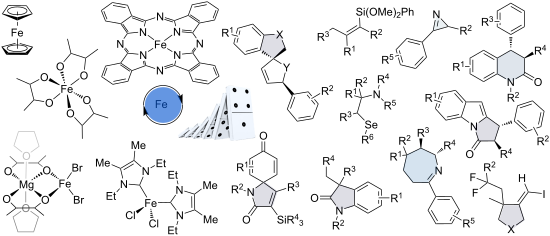
- Fürstner [62] and Plietker [63] showed iron catalysts were able to ring-open vinylcyclopropanes for monocarbofunctionalization terminating in protonation; however, Gutierrez demonstrated the resultant radical could undergo Fe-catalyzed cross-coupling reactions. The authors noted the reaction was tolerable
- synthesis of 3‐silylspiro[4,5]trienones 93 in good yield (Scheme 17) [95]. Compared to previously reported inter-/intramolecular CDC cascades, the authors were able to capture the post-cyclization aryl radical with the peroxide initiator rather than simply terminating the reaction with protonation. In terms













α-Ketol and α-iminol rearrangements in synthetic organic and biosynthetic reactions
Beilstein J. Org. Chem. 2021, 17, 2570–2584, doi:10.3762/bjoc.17.172
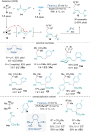
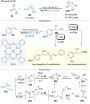
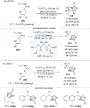
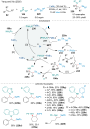
- -promoted steps, beginning with a vinylogous α-ketol rearrangement to 46. Following protonation of the enolate and addition of hydroxide to the carbonyl on the D ring, 47 rearranges with loss of chloride to give enedione 48. Base-catalyzed isomerization yields 44, which is apparently more stable despite the
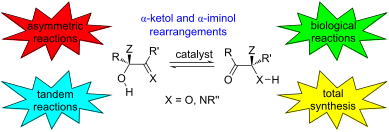
- , ring strain, or α-carbonyl group), α-iminols are typically less stable than their α-amino ketone products. In the presence of a Brønsted acid, protonation of the amine product can be used to drive the rearrangement to completion. Thus, favorable yields and stereoselectivities can be realized by first


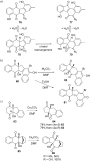


Silica gel and microwave-promoted synthesis of dihydropyrrolizines and tetrahydroindolizines from enaminones
Beilstein J. Org. Chem. 2021, 17, 2543–2552, doi:10.3762/bjoc.17.170
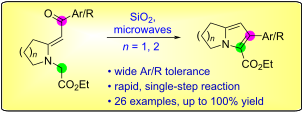
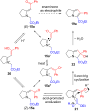
- . Nonetheless, use of the weaker acids seems to be crucial, since with strong acids the protonation to 20 appears not to be reversible, and direct cyclization of 20 to 19a cannot be occurring (cf. Table 1, entries 6–21). Secondly, the acid is also likely to facilitate enolization of the ester such that 5-exo
- appeared that, even in acetic acid at room temperature, protonation of 25a was virtually instantaneous and irreversible, as evinced by the formation of a baseline spot for the acetate salt. Since the analogous five-membered enaminones 15 form an obvious baseline salt spot only with strong protic acids but
- not with acetic acid, it appears that protonation of the pyrrolidine-based enaminones with this weak acid must be readily reversible. Thus the critical isomerization equilibrium postulated to be essential for pyrrolizine formation (see Scheme 3) appears not to operate to any appreciable extent with




Recent advances in the tandem annulation of 1,3-enynes to functionalized pyridine and pyrrole derivatives
Beilstein J. Org. Chem. 2021, 17, 2462–2476, doi:10.3762/bjoc.17.163
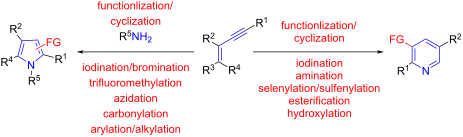
- standard conditions. The proposed catalytic cycle included aza-Michael addition of arylamines, Lewis acid copper(II)-catalyzed intramolecular 5-endo-dig cyclization, protonation, and oxidation to provide the final products, tetrasubstituted pyrroles 39. The introduction of a trifluoromethyl group into




Synthesis of 5-arylacetylenyl-1,2,4-oxadiazoles and their transformations under superelectrophilic activation conditions
Beilstein J. Org. Chem. 2021, 17, 2417–2424, doi:10.3762/bjoc.17.158
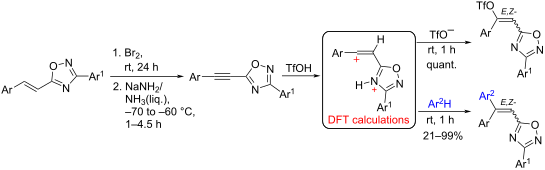
- ], it was shown by means of NMR spectroscopy and DFT calculation that the protonation of these oxadiazoles in Brønsted superacids TfOH and FSO3H gave reactive N,C-diprotonated species. The protonation of oxadiazoles 1 takes place at the nitrogen N4 and the α-carbon of the side chain C=C bond. One would
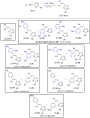
- expect the formation of similar dications at the protonation of acetylenyloxadiazoles 3 in Brønsted superacids (see Table 1). Table 1 contains data on DFT calculations of cations Aa–d (N-protonated forms) and Ba–d (N,C-diprotonated forms) derived at the protonation of oxadiazoles 3a–d. Charge
- delocalization, contribution of atomic orbital into LUMO, global electrophilicity indices ω [26][27], and Gibbs free energies of protonation reactions with hydroxonium ion (H3O+) ΔG298 were calculated. Big negative values of ΔG298 (−86.6 to −79.2 kJ/mol) of the first protonation step show that the formation of N


Advances in mercury(II)-salt-mediated cyclization reactions of unsaturated bonds
Beilstein J. Org. Chem. 2021, 17, 2348–2376, doi:10.3762/bjoc.17.153
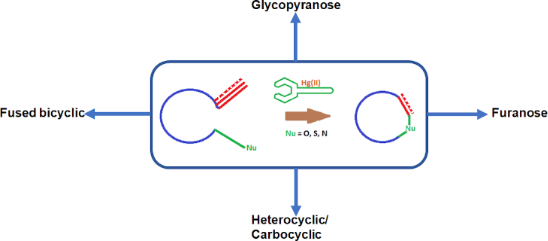
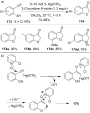
- derivative 127. The plausible mechanism for the formation of compound 127 proceeded consecutively with π-complex formation, Friedel–Crafts type addition, deprotonation, and finally protonation of alcohol for the elimination of water to get the final product [92]. A Hg(OTf)2-mediated cyclization was utilized












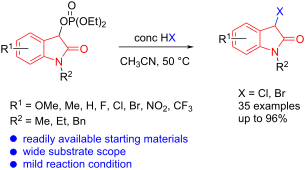
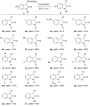
A novel methodology for the efficient synthesis of 3-monohalooxindoles by acidolysis of 3-phosphate-substituted oxindoles with haloid acids
Beilstein J. Org. Chem. 2021, 17, 2321–2328, doi:10.3762/bjoc.17.150
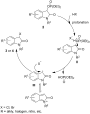
- -3-yl) phosphate 2 is activated by protonation with a haloid acid. Subsequently the phosphate leaving group is eliminated to generate the carbocation intermediate III, which is then followed by rapid combination with a nucleophilic halide ion to form a 3-monohalooxindoles 3 or 4. Conclusion In




Halides as versatile anions in asymmetric anion-binding organocatalysis
Beilstein J. Org. Chem. 2021, 17, 2270–2286, doi:10.3762/bjoc.17.145
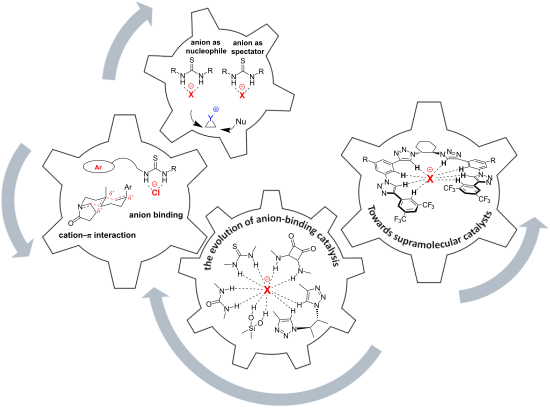
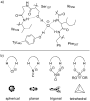
- example utilizing this strategy was provided by Jacobsen and co-workers for the desymmetrization of meso-aziridines 29. In their work, the bifunctional phosphinothiourea catalyst 31 promoted the C–N bond cleavage by hydrochloric acid upon initial protonation (Scheme 7) [55]. Subsequently, the catalyst



Chemical syntheses and salient features of azulene-containing homo- and copolymers
Beilstein J. Org. Chem. 2021, 17, 2164–2185, doi:10.3762/bjoc.17.139
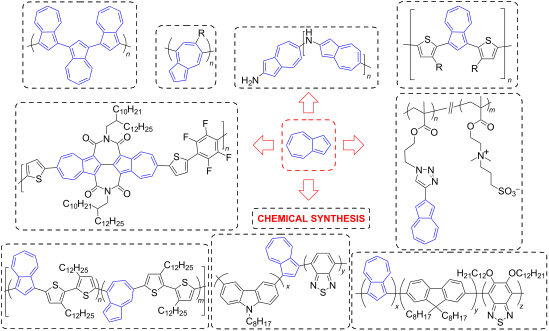
- -polyazulene 5 (417 nm) compared to azulene (1, 341 nm) supporting the presence of extended conjugation prevailing in the polymer. The absorption and EPR spectral patterns of 1,3-polyazulene 5 recorded in TFA and H2SO4 were contrasting to each other inferring the varied degree of protonation caused by these
- acids on the polymer backbone. The direct current (DC) conductivity of protonated and iodine-doped 1,3-polyazulene 5 (0.74 and 1.22 S/cm respectively) was significantly higher than its neutral form (<10−11 S/cm). The increased conductivity of 1,3-polyazulene 5 upon protonation can be attributed to the
- protonation of 17 and 18 by TFA resulted in a large red-shifted broad absorption band in the 500–900 nm region due to the formation of azulenium cations in the polymer backbone unlike the 1,3-polyazulene 5, which had no significant effect on its absorption spectrum upon protonation. The HOMO–LUMO gap for the




Development of N-F fluorinating agents and their fluorinations: Historical perspective
Beilstein J. Org. Chem. 2021, 17, 1752–1813, doi:10.3762/bjoc.17.123
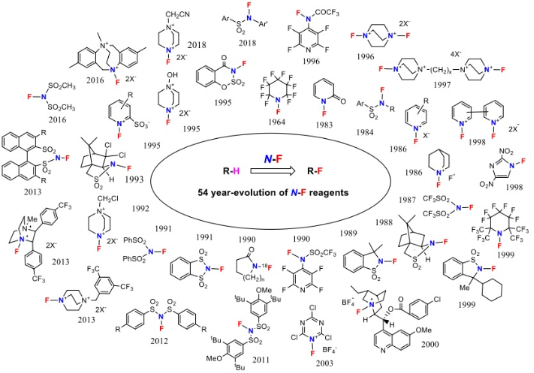
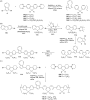
- effect of the 2-SO3H substituent formed by the protonation of the sulfonate anion in 18-2h. 1-19. 1-Fluoro-4-hydroxy-1,4-diazoniabicyclo[2.2.2]octane salts (NFTh) In 1995, Poss and Shia disclosed the synthesis and fluorination reactivity of 1-fluoro-4-hydroxy-1,4-diazoniabicyclo[2.2.2]octane bis