Search results
Search for "rhodium" in Full Text gives 198 result(s) in Beilstein Journal of Organic Chemistry.
Recent advances in C(sp3)–H bond functionalization via metal–carbene insertions
Beilstein J. Org. Chem. 2016, 12, 796–804, doi:10.3762/bjoc.12.78

- (Figure 1). Compared to Rh(II) catalysts, these coinage metal-based catalysts are generally less efficient in carbene-transfer reactions, thus requiring a high catalyst loading in general. However, this drawback is compensated by much lower cost of these metals than rhodium. In 2008, Pérez, Díaz-Requejo


Gold-catalyzed direct alkynylation of tryptophan in peptides using TIPS-EBX
Beilstein J. Org. Chem. 2016, 12, 745–749, doi:10.3762/bjoc.12.74
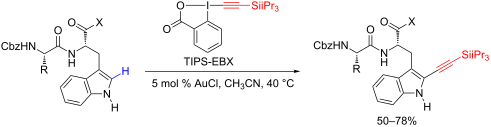
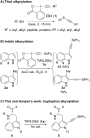
- . It has been achieved in the past for example by Francis and co-workers and Ball and co-workers using rhodium-catalyzed carbene-insertion reactions [21][22][23] or via direct C–H arylation [24][25][26][27][28][29]. If the installation of alkynes on peptides or proteins is desired, an indirect method



Opportunities and challenges for direct C–H functionalization of piperazines
Beilstein J. Org. Chem. 2016, 12, 702–715, doi:10.3762/bjoc.12.70
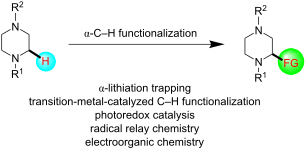
- six-membered ring [51]. As of yet only a few examples have been reported so far and are far from being general and practical; no enantioselective versions have been shown. Rhodium-catalyzed dehydrogenative carbonylation In 1997, Murai and co-workers reported a novel Rh-catalyzed α-C–H




Versatile deprotonated NHC: C,N-bridged dinuclear iridium and rhodium complexes
Beilstein J. Org. Chem. 2016, 12, 117–124, doi:10.3762/bjoc.12.13
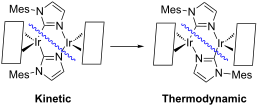
- , and PMe3 later confirm the H-T coordination as the thermodynamically preferred. It is envisaged the exchange of the metal, from iridium to rhodium, confirming here the innocence of the nature of the metal for such arrangements of the bridging ligands. Keywords: DFT; head-to-head; head-to-tail
- ; iridium; isomerization; N-heterocyclic carbene; rhodium; Introduction In the framework of organometallic chemistry, N-heterocyclic carbenes (NHC) centre a well stablished class of relatively new ligands since in 1991 Arduengo and collaborators isolated the first stable NHC of the imidazole type with
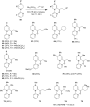
- 3H-H and 3H-T (where H-H = head-to-head and H-T = head-to-tail). By DFT calculations here we contribute in the understanding of the thermodynamics of the subsequent C,N-bridged dinuclear iridium and rhodium complexes [59], and the facility for the interconversion between these latter dimeric species


Recent advances in metathesis-derived polymers containing transition metals in the side chain
Beilstein J. Org. Chem. 2015, 11, 2747–2762, doi:10.3762/bjoc.11.296
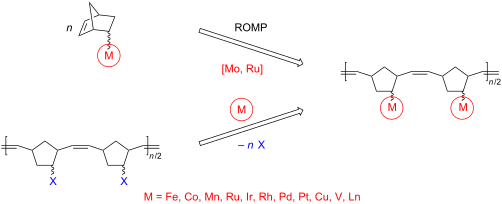
- -, osmium- and rhodium-containing polymers ROMP syntheses of homopolymers and block copolymers bearing bipyridine–ruthenium complexes starting from norbornene or oxanorbornene functionalized with Ru complexes have been reported by several authors [55][56]. In these investigations it was revealed that the Ru


Catalytic asymmetric formal synthesis of beraprost
Beilstein J. Org. Chem. 2015, 11, 2654–2660, doi:10.3762/bjoc.11.285
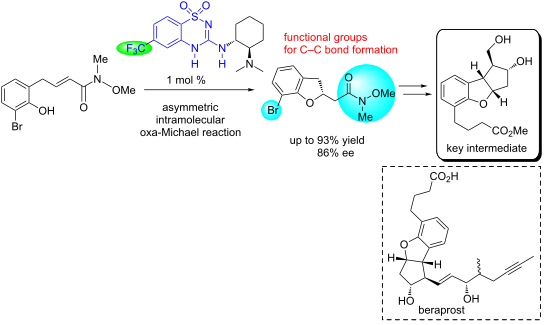
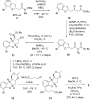
- -dimethylimidazolinium hexafluorophosphate (ADMP) [40][41][42] to give the diazoester 14. Rhodium catalysed C–H insertion [43][44] of 14 proceeded smoothly to furnish the tricyclic ketoester, which was found to be unstable to purification on column chromatography, presumably due to decomposition of the ketoester moiety



Rhodium, iridium and nickel complexes with a 1,3,5-triphenylbenzene tris-MIC ligand. Study of the electronic properties and catalytic activities
Beilstein J. Org. Chem. 2015, 11, 2584–2590, doi:10.3762/bjoc.11.278
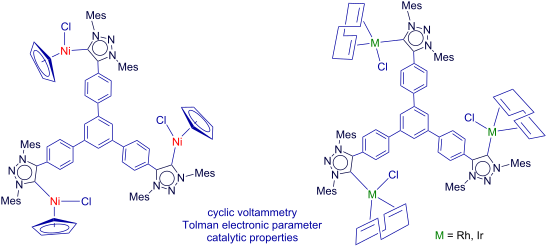
- , Portugal 10.3762/bjoc.11.278 Abstract The coordination versatility of a 1,3,5-triphenylbenzene-tris-mesoionic carbene ligand is illustrated by the preparation of complexes with three different metals: rhodium, iridium and nickel. The rhodium and iridium complexes contained the [MCl(COD)] fragments, while
- -NHC ligand. The electronic properties of the tris-MIC ligand were studied by cyclic voltammetry measurements. In all cases, the tris-MIC ligand showed a stronger electron-donating character than the corresponding NHC-based ligands. The catalytic activity of the tri-rhodium complex was tested in the
- addition reaction of arylboronic acids to α,β-unsaturated ketones. Keywords: arylation of unsaturated ketones; mesoionic carbenes; nickel; iridium; rhodium; Introduction Highly symmetrical poly-NHCs are a very interesting type of ligands, because they allow the preparation of a variety of supramolecular


Iron complexes of tetramine ligands catalyse allylic hydroxyamination via a nitroso–ene mechanism
Beilstein J. Org. Chem. 2015, 11, 2549–2556, doi:10.3762/bjoc.11.275
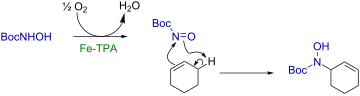
- ], manganese- [19][20][21], iron- [23][24], copper- [22][31], rhenium- [26], and rhodium- [27] based reagents. The recent resurgence of interest in the nitroso–ene reaction builds on earlier work by Sharpless, Nicolas, Jørgensen and others. Sharpless reported allylic amination of 2-methyl-2-hexene with N-(p


Synthesis of Xenia diterpenoids and related metabolites isolated from marine organisms
Beilstein J. Org. Chem. 2015, 11, 2521–2539, doi:10.3762/bjoc.11.273
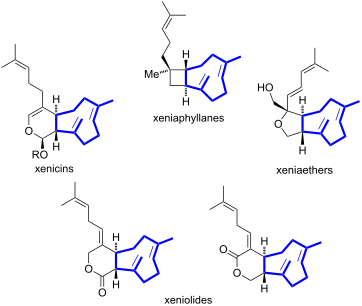
- iodide 97. The following palladium-catalyzed B-alkyl Suzuki–Miyaura cross coupling between the borane derived from alkene 98 and vinyl iodide 97 furnished a Z-configured alkene. Deprotection of the trimethylsilyl ether then afforded alcohol 99. A rhodium(II)-catalyzed O–H insertion reaction of the
- rhodium carbenoid derived from diazophosphonoacetate 100 and alcohol 99 afforded intermediate 101 which was treated with lithium diisopropylamide and aldehyde 102 to afford alkene 103 with high E-selectivity. The following asymmetric copper(II)-catalyzed Claisen rearrangement [55], which is postulated to







Synthesis of quinoline-3-carboxylates by a Rh(II)-catalyzed cyclopropanation-ring expansion reaction of indoles with halodiazoacetates
Beilstein J. Org. Chem. 2015, 11, 1944–1949, doi:10.3762/bjoc.11.210
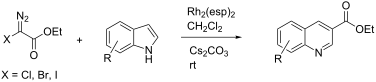
- reactions in our study start by cyclopropanation of the rhodium carbenoid to produce an indoline halocyclopropyl ester. The labile indoline intermediate then undergoes ring opening of the cyclopropane and elimination of H–X to form the quinoline structure (Scheme 3). We attempted to find support for the


Surprisingly facile CO2 insertion into cobalt alkoxide bonds: A theoretical investigation
Beilstein J. Org. Chem. 2015, 11, 1340–1351, doi:10.3762/bjoc.11.144
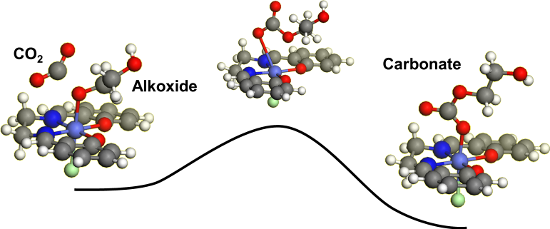
- cycloaddition. Direct catalytic carboxylation of aliphatic compounds and arenes by rhodium(I)– and ruthenium(II)–pincer complexes, respectively. Insertion of carbon dioxide into a metal–oxygen bond via a cyclic four-membered transition state. R is either an aliphatic or aromatic group. Facile CO2 uptake by zinc


Selected synthetic strategies to cyclophanes
Beilstein J. Org. Chem. 2015, 11, 1274–1331, doi:10.3762/bjoc.11.142
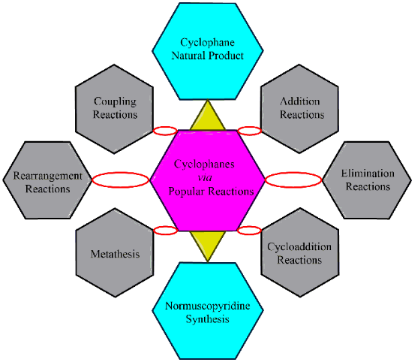
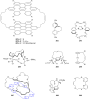
- applicable to synthesize various polyether-based cyclophanes. In this report, they have synthesized various polyether containing cyclophanes by a cross-cyclotrimerization catalyzed by a cationic rhodium(I)/H8-BINAP complex as a key step. The ether linked α,ω-diynes and dimethyl acetylenedicarboxylate were
- the application of a [2 + 2 + 2] cycloaddition sequence (Scheme 45). To this end, [2 + 2 + 2] cycloaddition of 1,10-diyne 274 was carried out with methyl propiolate (275) in the presence of a cationic rhodium(I)-(S)-BINAP complex (10 mol %) as a catalyst. The desired [2 + 2 + 2] cycloaddition was
- of the planar-chiral carba-paracyclophane 278 by using the cationic rhodium(I)/(S,S)-bdpp-catalyzed [2 + 2 + 2] cycloaddition of cyclic diyne 277 with terminal methyl propiolate (275) under high substrate concentration conditions (Scheme 46) [179]. Shibata and co-workers [180] have synthesized chiral






The synthesis of active pharmaceutical ingredients (APIs) using continuous flow chemistry
Beilstein J. Org. Chem. 2015, 11, 1194–1219, doi:10.3762/bjoc.11.134
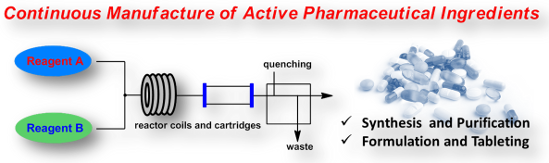
- key intermediate 83 at pilot-scale, a flow-based asymmetric hydrogenation was chosen as an economically more viable option compared to establishing a high-pressure batch process. As depicted in Scheme 14, solutions of the substrate 84 and a zinc triflate additive were combined with the rhodium


Hydrogenation of unactivated enamines to tertiary amines: rhodium complexes of fluorinated phosphines give marked improvements in catalytic activity
Beilstein J. Org. Chem. 2015, 11, 622–627, doi:10.3762/bjoc.11.70
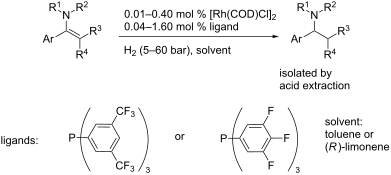
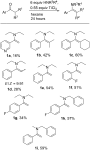
- faster using Rh complexes of electron-withdrawing phosphines. In this paper, we report how a range of enamines can be successfully hydrogenated in high yield using low levels of rhodium, including some very deactivated enamines that do not hydrogenate using conventional catalysts. Results and Discussion



Diastereoselective and enantioselective conjugate addition reactions utilizing α,β-unsaturated amides and lactams
Beilstein J. Org. Chem. 2015, 11, 530–562, doi:10.3762/bjoc.11.60
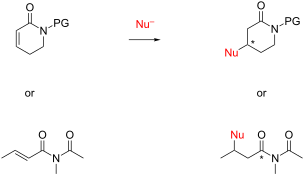
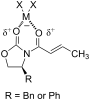
- pyrrolinones have only resulted in low yields and enantioselectivities. Compared to the number of existing methods for copper-catalyzed ECA reactions of α,β-unsaturated ketones and other substrates, there is definitely a need for additional research in this area. 2.2 Rhodium-catalyzed ECA reactions Unlike
- copper-catalyzed CA reactions, the analogous rhodium-catalyzed reactions have only been developed in the last couple of decades. In 1997, Miyaura and co-workers reported the first examples of rhodium being used in 1,4-addition reactions. In this report, they used a rhodium(I) catalyst to perform 1,4
- -additions of aryl- and alkenylboronic acids to α,β-unsaturated ketones [122]. One year later, Hayashi and Miyaura reported the asymmetric variant of this reaction [123]. Since the publication of these seminal papers, rhodium has been used extensively in ECA reactions [124][125][126][127][128][129][130][131




Ruthenium-catalyzed C–H activation of thioxanthones
Beilstein J. Org. Chem. 2015, 11, 431–436, doi:10.3762/bjoc.11.49

- compounds, we used the protocol of Murai et al. [19] to investigate the use of thioxanthones in this C–H-alkylation reaction (Scheme 2). For recent examples and reviews, also for related rhodium-catalyzed systems, see [24][25][26][27][28][29][30][31][32][33][34][35][36][37][38]. It should be noted that


Azirinium ylides from α-diazoketones and 2H-azirines on the route to 2H-1,4-oxazines: three-membered ring opening vs 1,5-cyclization
Beilstein J. Org. Chem. 2015, 11, 302–312, doi:10.3762/bjoc.11.35
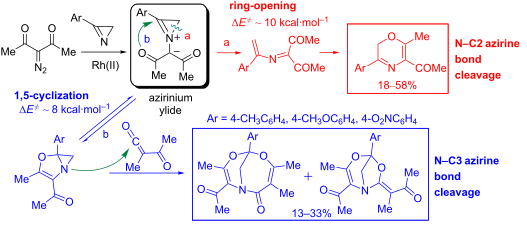
- , rhodium carbenoids derived from α-diazocarbonyl compounds transform 2H-azirines 1 to azirinium ylides 5 (Scheme 1) which undergo facile N–C2 bond cleavage to give 2-azabuta-1,3-dienes 3. Recently we showed that the use of α-diazo-β-ketoesters 2 in these reactions, which are finished by 1,6-cyclization of
- the mechanism of trapping of dihydroazireno[2,1-b]oxazole intermediates by acetyl(methyl)ketene were investigated by the DFT method. Results and Discussion Rhodium(II) carbenoids generated from α-diazoketones or 2-diazo-1,3-diketones react with various nitrogen-containing compounds, such as amines [16


Cross-dehydrogenative coupling for the intermolecular C–O bond formation
Beilstein J. Org. Chem. 2015, 11, 92–146, doi:10.3762/bjoc.11.13
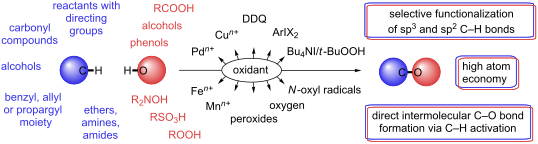
- = F (Scheme 3). The pyridine moiety served as the directing group in many works to accomplish the ortho-acyloxylation of arenes 4 giving products 5 (Table 1). The reactions were catalyzed by copper, palladium, or rhodium salts. Carboxylic acids or their salts, as well as aldehydes, methylarenes






Come-back of phenanthridine and phenanthridinium derivatives in the 21st century
Beilstein J. Org. Chem. 2014, 10, 2930–2954, doi:10.3762/bjoc.10.312

- (Scheme 1) [9], Bischler–Napieralski reactions [10], reduction of phenanthridones [11][12], free radical methodology, palladium/rhodium/iron-catalysed reactions, etc. One of the approaches to the large variety of 6-arylphenanthridine derivatives was the synthesis starting from benzotriazole derivatives of
- palladium nanoparticles, that were generated in situ in water with the elimination of acetone. One of the major issues is the preparation of polysubstituted phenanthridines, in particular asymmetrically positioned on one of phenyl side-rings. An intriguing approach over rhodium-catalysed alkyne [2 + 2 + 2


Synthesis of an organic-soluble π-conjugated [3]rotaxane via rotation of glucopyranose units in permethylated β-cyclodextrin
Beilstein J. Org. Chem. 2014, 10, 2800–2808, doi:10.3762/bjoc.10.297

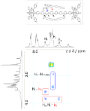
- capped this pseudo [3]rotaxane structure by reacting 24 with rhodium porphyrin complex 25 in chloroform to form fixed [3]rotaxane 26 in 17% isolated yield [28]. The structure of 26 was confirmed by 1H NMR analyses in CDCl3. The results suggest that 26 maintains a [3]rotaxane structure even in organic
- via complexation with rhodium porphyrin. Supporting Information Supporting Information File 422: Experimental and analytical data. Acknowledgements This research was supported by the Funding Program for JSPS Research Fellow, Next Generation World-Leading Researchers, and Grant-in-Aid for Scientific


Cyclodextrin-grafted polymers functionalized with phosphanes: a new tool for aqueous organometallic catalysis
Beilstein J. Org. Chem. 2014, 10, 2642–2648, doi:10.3762/bjoc.10.276
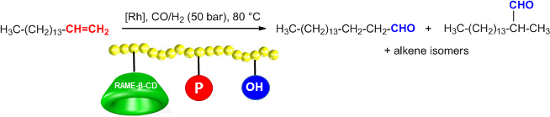
- into linear butyraldehyde using a rhodium catalyst immobilized in the aqueous phase by coordination of the famous water-soluble ligand TPPTS (trisodium salt of the trisulfonated triphenylphosphane) [2]. However, while propene is partially soluble in water, terminal alkenes containing more than 6 carbon


An integrated photocatalytic/enzymatic system for the reduction of CO2 to methanol in bioglycerol–water
Beilstein J. Org. Chem. 2014, 10, 2556–2565, doi:10.3762/bjoc.10.267
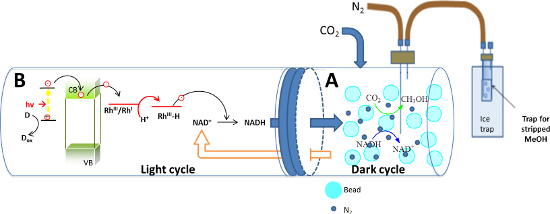
- ] [Cp*Rh(bpy)(H2O)]Cl2 [aquo(2,2’-bipyridine)(pentamethylcyclopentadienyl)]rhodium(III), where Cp* = pentamethylcyclopentadienyl. For comparison we have also used its iridium analog, with phenantroline as a bidentate N-ligand replacing bpy. Iridium showed interesting activity, comparable to that of Rh
- forming the enzymatically active, reduced 1,4-NADH. The purported mechanism, based on the rhodium complex, has been proposed elsewhere [16][23], and is shown in Equations 1–3. We have carried out dedicated experiments to confirm that such a mechanism holds in our conditions, and that the e–-transfer is
- thermodynamically and kinetically possible. This enables identification of the intermediates in the reaction pathway of the photocatalytic cycle based on [CrF5(H2O)]2−@TiO2 as an exciton generator and confirmation that the rhodium complex is an e−-transfer agent. The redox potential of the [Cp*Rh(bpy)H2O]2+/[Cp*Rh


Phosphinocyclodextrins as confining units for catalytic metal centres. Applications to carbon–carbon bond forming reactions
Beilstein J. Org. Chem. 2014, 10, 2388–2405, doi:10.3762/bjoc.10.249
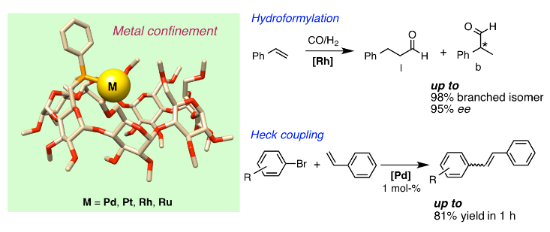
- -catalysed Mizoroki–Heck coupling reactions between aryl bromides and styrene on one hand, and the rhodium-catalysed asymmetric hydroformylation of styrene on the other hand. The inability of both chiral ligands to form standard bis(phosphine) complexes under catalytic conditions was established by high
- -pressure NMR studies and shown to have a deep impact on the two carbon–carbon bond forming reactions both in terms of activity and selectivity. For example, when used as ligands in the rhodium-catalysed hydroformylation of styrene, they lead to both high isoselectivity and high enantioselectivity. In the
- study dealing with the Mizoroki–Heck reactions, comparative tests were carried out with WIDEPHOS, a diphosphine analogue of HUGPHOS-2. Keywords: asymmetric hydroformylation; cyclodextrin; Heck reaction; homogeneous catalysis; palladium; phosphine; rhodium; Introduction Since the studies of Fu




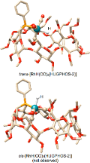


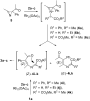
Isoxazolium N-ylides and 1-oxa-5-azahexa-1,3,5-trienes on the way from isoxazoles to 2H-1,3-oxazines
Beilstein J. Org. Chem. 2014, 10, 1896–1905, doi:10.3762/bjoc.10.197
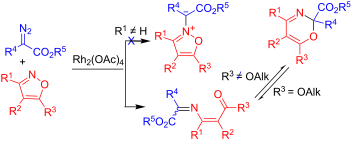
- diazo esters B involved an isoxazolium N-ylide intermediate C formed by an attack of the rhodium carbenoid onto the isoxazole nitrogen. Furthermore, ylide C could undergo either a 1,2-shift to directly generate oxazine E or a ring opening to 1-oxa-5-azahexa-1,3,5-triene D, followed by a 6π


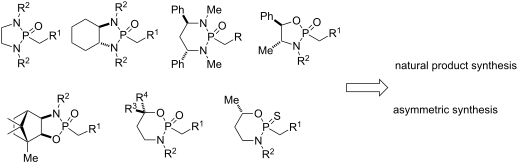
Application of cyclic phosphonamide reagents in the total synthesis of natural products and biologically active molecules
Beilstein J. Org. Chem. 2014, 10, 1848–1877, doi:10.3762/bjoc.10.195
- ). Azetidinone 72 was then formed through a rhodium-catalyzed intramolecular carbenoid insertion into the N–H bond as the first pivotal step of the synthesis. The next key step was to introduce the exocyclic double bond with control of the stereochemistry of the double bond. For that purpose, a variety of