


Search results
Search for "stereoisomer" in Full Text gives 174 result(s) in Beilstein Journal of Organic Chemistry.
Synthesis of new enantiopure poly(hydroxy)aminooxepanes as building blocks for multivalent carbohydrate mimetics
Beilstein J. Org. Chem. 2014, 10, 213–223, doi:10.3762/bjoc.10.17
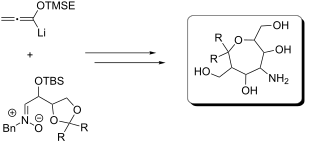
- -stereoisomer (with respect to C-3 of the 1,2-oxazine ring) was isolated after column chromatography. A product derived from the minor isomer of nitrone 3 was not detected and was apparently lost during the reaction or the purification. Since the stereogenic center of the 1,3-dioxolane ring is converted into an


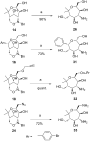
The regioselective synthesis of spirooxindolo pyrrolidines and pyrrolizidines via three-component reactions of acrylamides and aroylacrylic acids with isatins and α-amino acids
Beilstein J. Org. Chem. 2014, 10, 117–126, doi:10.3762/bjoc.10.8
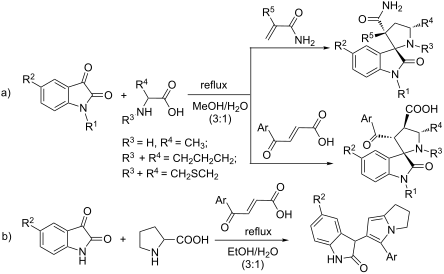
- the most reactive sites of the reagents. The reaction proceeds regioselectively with the addition of the most nucleophilic methylene group carbon of the azomethine ylide to the most electrophilic sites of the acrylamide and benzoylacrylic acid, which affords only one stereoisomer of cycloadducts 4 and


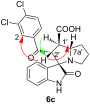


Plakilactones G and H from a marine sponge. Stereochemical determination of highly flexible systems by quantitative NMR-derived interproton distances combined with quantum mechanical calculations of 13C chemical shifts
Beilstein J. Org. Chem. 2013, 9, 2940–2949, doi:10.3762/bjoc.9.331
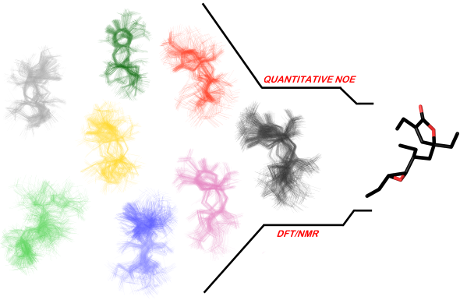
- coupling between vicinal protons H-15b–H-16 were chosen as the reference NOE for the 1D NOESY data set and the derived distance was adjusted for each stereoisomer in order to get the lowest MAE. To narrow the number of diastereoisomers, we initially analysed the relative configuration of C-7 and C-8, to
- polar and protic solvent such as methanol. Comparison of predicted 13C chemical shifts for 2a,b,e,f with the experimental values (Table 4) suggests the best fit with the experimental data for stereoisomer 2b. In particular, 2a presents a MAE more than twice the value found for 2b. The MAE of 2e is
- observed. The stereoisomer 2b shows all calculated 13C values falling in the proposed error limit of 2 ppm. For 2b, we observed a maximum error of 1.5 ppm. On the other hand, we found a |Δδ| of 2.5 ppm for 2f. Parallel with the MAE and |Δδ| analysis, we compared the calculated 13C chemical shifts with the


Total synthesis of the endogenous inflammation resolving lipid resolvin D2 using a common lynchpin
Beilstein J. Org. Chem. 2013, 9, 2762–2766, doi:10.3762/bjoc.9.310
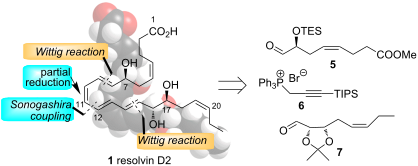
- stereoisomer analogues of RvD2 (1). Removal of the TIPS group with TBAF gave terminal alkyne 12. Alkyne 12 then underwent smooth hydrozirconation utilizing the procedure reported by Negishi [24] were ZrCp2HCl is generated in situ by reduction of ZrCp2Cl2 with DIBALH in THF. Iodinolysis of the zirconium species


Diastereoselectivity in the Staudinger reaction of pentafluorosulfanylaldimines and ketimines
Beilstein J. Org. Chem. 2013, 9, 2675–2680, doi:10.3762/bjoc.9.303

- , attempted separation by silica gel chromatography led to extensive decomposition. The product imine consisted of a single stereoisomer as determined by 19F NMR, tentatively assigned as the E-isomer. Similar to the formation of 1, it was easy to follow formation of the imine by 19F NMR with the resonance


Garner’s aldehyde as a versatile intermediate in the synthesis of enantiopure natural products
Beilstein J. Org. Chem. 2013, 9, 2641–2659, doi:10.3762/bjoc.9.300
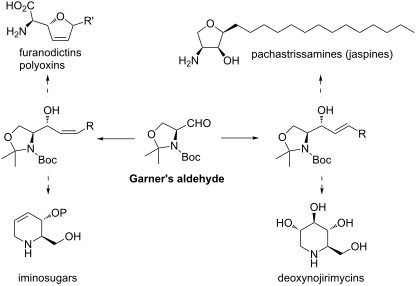
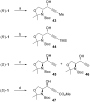
- detected, instead the syn-adduct 30 was obtained as the sole stereoisomer. By lowering the temperature to −40 °C and keeping the amount of reagents the same, the selectivity was inverted! Only the anti-adduct 29 was isolated. This change in selectivity was explained with two different transition states. At




New developments in gold-catalyzed manipulation of inactivated alkenes
Beilstein J. Org. Chem. 2013, 9, 2586–2614, doi:10.3762/bjoc.9.294
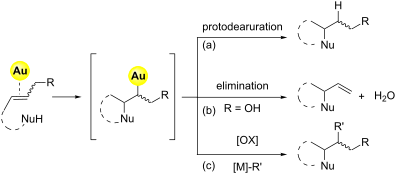
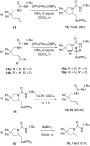
- diastereoselection (i.e. cis stereoisomer as the major product) was recorded in the case of hydroxymethyl derivative 43. The challenging task of direct hydroamination with simple amines was faced, by means of in situ protection of the basic functionality as an ammonium salt (Scheme 12) [48]. The best catalyst for








Synthetic scope and DFT analysis of the chiral binap–gold(I) complex-catalyzed 1,3-dipolar cycloaddition of azlactones with alkenes
Beilstein J. Org. Chem. 2013, 9, 2422–2433, doi:10.3762/bjoc.9.280
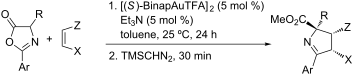
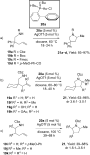
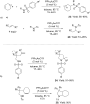
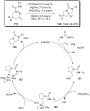
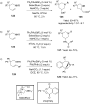
- is TS11exo (Figure 7), is in good agreement with the experimental results in which a high ee of the corresponding stereoisomer was observed. The formation of the enantiomer (TS11ent) was found to have an activation barrier of 4.5 kcal mol−1 higher in energy. That difference can be a consequence of
- compound 16 was identified (almost as unique diastereoisomer) in low chemical yield (<5%) together with two pyrrole derivatives 17 (only one stereoisomer), and 18. The last compound was formed by a retro-cycloaddition of the pyrroline 7aa with elimination of NMM, which was favoured by a prolonged heating




A concise enantioselective synthesis of the guaiane sesquiterpene (−)-oxyphyllol
Beilstein J. Org. Chem. 2013, 9, 2028–2032, doi:10.3762/bjoc.9.239
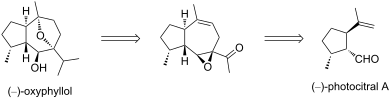
- completion of the synthesis of (−)-oxyphyllol (1) from 4. To our delight, a direct regio- and diastereoselective Co(II)-catalyzed hydration [12] of the olefin in 4 succeeded to give the required α-stereoisomer 3 in 58% isolated yield after chromatographic separation of the minor β-alcohol. Compared to the


An approach towards azafuranomycin analogs by gold-catalyzed cycloisomerization of allenes: synthesis of (αS,2R)-(2,5-dihydro-1H-pyrrol-2-yl)glycine
Beilstein J. Org. Chem. 2013, 9, 1936–1942, doi:10.3762/bjoc.9.229
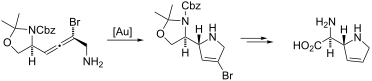
- . Fortunately, the correct stereoisomer was enriched at the stage of the dihydropyrrole 18 due to several purification steps. Desilylation of 15 with tetrabutylammonium fluoride trihydrate (94% yield) and conversion of 16 into the α-aminoallene 17 under Mitsunobu conditions (45% yield) [38][39][62] set the


Stereoselective synthesis of the C79–C97 fragment of symbiodinolide
Beilstein J. Org. Chem. 2013, 9, 1931–1935, doi:10.3762/bjoc.9.228
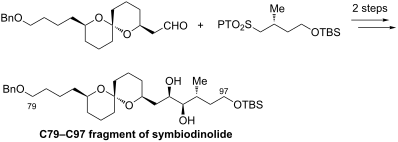
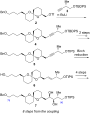
- protecting groups and subsequent stereoselective spiroacetalization were performed in one-pot with CSA in MeOH to provide spiroacetal 19 as a single stereoisomer [19][20]. The stereochemistry of 19 was elucidated by the observed NOE correlations between H-83 and H-91 as indicated by an arrow. The plausible




Diastereoselective radical addition to γ-alkyl-α-methylene-γ-butyrolactams and the synthesis of a chiral pyroglutamic acid derivative
Beilstein J. Org. Chem. 2013, 9, 1432–1436, doi:10.3762/bjoc.9.161
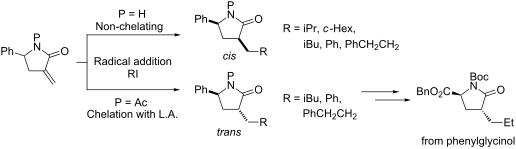
- pyroglutamic acid derivative 13 as a single stereoisomer (Scheme 3). Conclusion In this study, we investigated the cis- and trans-stereoselective radical additions to α-methylene-γ-alkyl- γ-lactams. Strong cis-selectivities were observed using various γ-substituents under non-chelating conditions. The


Lanostane- and cycloartane-type triterpenoids from Abies balsamea oleoresin
Beilstein J. Org. Chem. 2013, 9, 1333–1339, doi:10.3762/bjoc.9.150
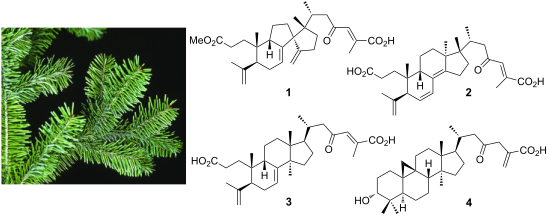
- ), 6 (δH 7.13) and 7 (δH 7.07), this suggested that the trans-stereoisomer was isolated instead of the cis-one (See Table 2 and Supporting Information File 1). This was further confirmed by NOESY correlation of H-24 to H-20 and H3-30, but not to H3-27. Consequently, the structure of 2 was determined as


Efficient regio- and stereoselective access to novel fluorinated β-aminocyclohexanecarboxylates
Beilstein J. Org. Chem. 2013, 9, 1164–1169, doi:10.3762/bjoc.9.130
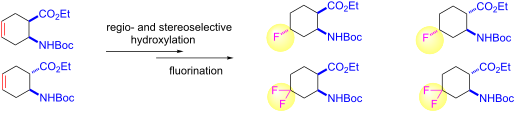
- stereoisomer of 5 (Scheme 3, Figure 4). It is noteworthy that in this latter case hydroxylated amino ester 14 could not be prepared by the alternative diastereoselective epoxidation and regioselective oxirane opening strategy: according to our previous results, the opening of epoxide 15 derived from 10
- proceeded via a trans-diaxial chair conformation with the nucleophile attack on C4, thereby providing the 5-hydroxylated derivative [57][60]. Next, hydroxylated cyclohexane amino ester 14 was converted with Deoxo-Fluor in CH2Cl2 at 0 °C to 4-fluorinated ethyl β-aminocyclohexanecarboxylate 16, a stereoisomer
- -difluorinated cyclohexane amino ester 18, a stereoisomer of 9 (Scheme 4). Conclusion In conclusion, a simple and convenient procedure has been developed for the introduction of one or two fluorine atoms onto the skeleton of either cis- or trans-β-aminocyclohexanecarboxylates. The synthetic concept involves




A facile, rapid, one-pot regio/stereoselective synthesis of 2-iminothiazolidin-4-ones under solvent/scavenger-free conditions
Beilstein J. Org. Chem. 2013, 9, 689–697, doi:10.3762/bjoc.9.78
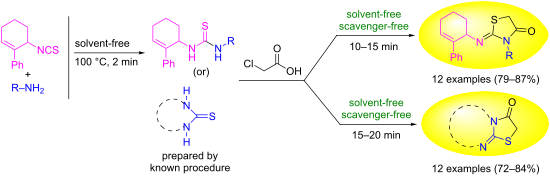
- obtained. Thus, the present investigation affording a single regioisomeric product exclusively is the first report wherein the allylic strains are noted to direct the high regioselectivity. Finally, the stereoselective formation of the (Z)-stereoisomer is also explicable based on allylic strain, which is


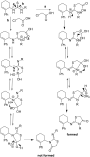


Asymmetric synthesis of a highly functionalized bicyclo[3.2.2]nonene derivative
Beilstein J. Org. Chem. 2013, 9, 655–663, doi:10.3762/bjoc.9.74
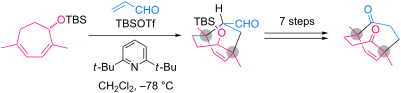
- to 3.4:1 by replacement of the solvent (Table 1, entries 4 and 5). Thus, we developed an effective method for synthesis of the requisite stereoisomer 8 by applying a TBSOTf-promoted Diels–Alder reaction [25][26]. Most importantly, the C4-stereocenter behaved as the control element to introduce the
- afforded 22 as a single stereoisomer, and the obtained 22 was oxidized with DMDO to provide α-hydroxy aldehyde 23 as a diastereomeric mixture (dr = 2.8:1). Compound 23 then reacted with benzyl hydroxylamine to produce oxime 24, LiAlH4-treatment of which led to 25. The regioselective ring expansion of seven


Some aspects of radical chemistry in the assembly of complex molecular architectures
Beilstein J. Org. Chem. 2013, 9, 557–576, doi:10.3762/bjoc.9.61

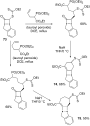
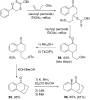
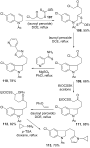
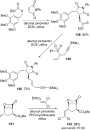
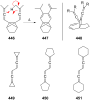
- replaced with various primary amines, one example being cyclopropylamine, which furnishes piperidine 129 as one stereoisomer. In the case of 1,2-diaminoethane, a further cyclisation is observed leading to bicyclic piperidine 130. All three components involved in this modular approach can be modified to

















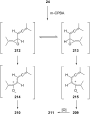


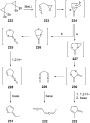


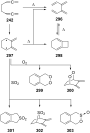


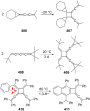






Iridium-catalyzed intramolecular [4 + 2] cycloadditions of alkynyl halides
Beilstein J. Org. Chem. 2012, 8, 1765–1770, doi:10.3762/bjoc.8.201
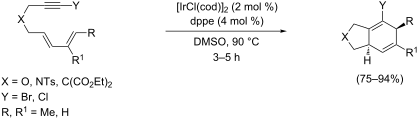
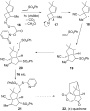
- single stereoisomer was formed, with the H at the ring junction and the R group anti to each other. The stereochemistry of the cycloadducts was assigned by comparison with spectral data from previous work. This stereochemistry is consistent with that of previously reported intramolecular [4 + 2


trans-2-(2,5-Dimethoxy-4-iodophenyl)cyclopropylamine and trans-2-(2,5-dimethoxy-4-bromophenyl)cyclopropylamine as potent agonists for the 5-HT2 receptor family
Beilstein J. Org. Chem. 2012, 8, 1705–1709, doi:10.3762/bjoc.8.194
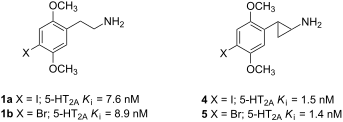
- successful in leading to compounds with high affinity at the 5-HT2 family of receptors; and the more potent stereoisomer of the cyclopropane analogues had the expected (−)-(1R,2S)-configuration. Screening for affinity at various serotonin receptor subtypes, however, revealed that the cyclopropane congeners
- in leading to compounds with high affinity at the 5-HT2 family of receptors; and the more potent stereoisomer of the cyclopropane analogues had the expected (−)-1R,2S-configuration. However, at appropriate doses, although (−)-4 and (−)-5 may be useful as tools to probe 5-HT2 receptor function, one


The preferred conformation of erythro- and threo-1,2-difluorocyclododecanes
Beilstein J. Org. Chem. 2012, 8, 1271–1278, doi:10.3762/bjoc.8.143
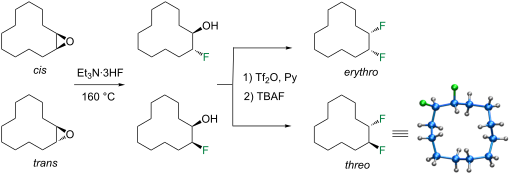
- hyperconjugative interactions with the anti-periplanar C–H bonds, similar to that found in 1,2-difluoroethane in the well know gauche effect [10][11]. On the other hand, the erythro stereoisomer 5a would have a C–F bond projecting into the ring in an endo manner, if the vicinal fluorines were edge/edge located
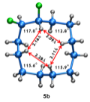
- . The structures and relative energies for the erythro 5a and threo 5b isomers are shown in Figure 6. These data indicate that the corner/edge conformers are more stable than the alternative edge/edge conformers for each stereoisomer. This is consistent with the conclusions from the experimental VT 19F
- NMR study. For the erythro stereoisomer 5a, three conformers I–III were considered. Conformers I and II each have a fluorine pointing into the ring (endo), and thus there is an increase in transannular ring strain, raising the energy of these conformers by 2.81 and 3.72 kcal·mol−1 respectively above




Stereoselective synthesis of trans-fused iridoid lactones and their identification in the parasitoid wasp Alloxysta victrix, Part II: Iridomyrmecins
Beilstein J. Org. Chem. 2012, 8, 1256–1264, doi:10.3762/bjoc.8.141
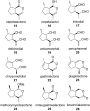
- ]. Actually, 18 was first identified in the defensive secretions of dolichoderine ants [25]. The same substance (or its enantiomer) has been found as a defensive compound of Nematine larvae [30] and in adults and larvae of the thrips Calloccithrips fuscipennis [31]. A stereoisomer of dolichodial
- – anisomorphal (19) – is a component of the defensive secretion of the walking stick Anisomorpha buprestoides [32], whilst a third stereoisomer – peruphasmal (20) – has been identified in another walking stick, Peruphasma schultei [33][34]. Recent investigations show that the qualitative and quantitative



Stereoselective synthesis of trans-fused iridoid lactones and their identification in the parasitoid wasp Alloxysta victrix, Part I: Dihydronepetalactones
Beilstein J. Org. Chem. 2012, 8, 1246–1255, doi:10.3762/bjoc.8.140
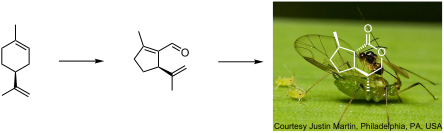
- upon intramolecular aldol condensation [25][26][27]. Subsequently, the aldehyde 15 was reduced to the allylic alcohol 19 with LiAlH4 and converted into the acetate 20 [28]. Hydroboration of 20 using disiamylborane proceeded with high stereoselectivity affording 16 as a single stereoisomer [17][28


Asymmetric total synthesis of smyrindiol employing an organocatalytic aldol key step
Beilstein J. Org. Chem. 2012, 8, 1112–1117, doi:10.3762/bjoc.8.123
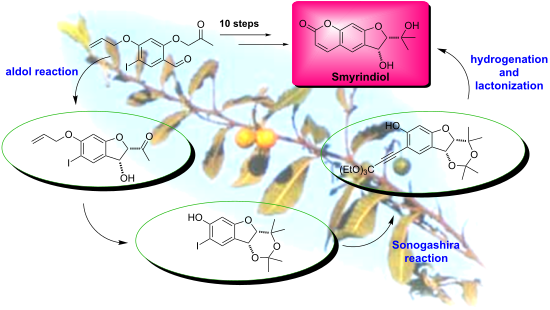
- ), the (S)-proline catalyzed 5-enolexo aldol key step of this synthesis could be performed in good yield (71%). To our delight, we found in this case an exceedingly high diastereo- (99%) and enantioselectivity (99%) for the aldol reaction, furnishing the aldol product 14 as a single stereoisomer. The


Control over molecular motion using the cis–trans photoisomerization of the azo group
Beilstein J. Org. Chem. 2012, 8, 1071–1090, doi:10.3762/bjoc.8.119
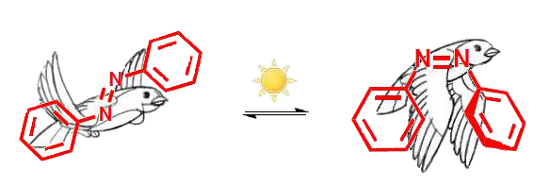
- define a specific orientation or conformation of each stereoisomer (trans or cis). Recently, Carreño et al. [132][133] synthesized different enantiomerically pure sulfinyl azobenzenes. The sulfinyl group is a key component in the design of a molecular sunflower, a device that by means of light can





