Search results
Search for "alkynes" in Full Text gives 518 result(s) in Beilstein Journal of Organic Chemistry. Showing first 200.
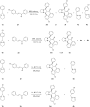
Selective and reversible 1,3-dipolar cycloaddition of 6-aryl-1,5-diazabicyclo[3.1.0]hexanes with 1,3-diphenylprop-2-en-1-ones under microwave irradiation
Beilstein J. Org. Chem. 2020, 16, 2679–2686, doi:10.3762/bjoc.16.218
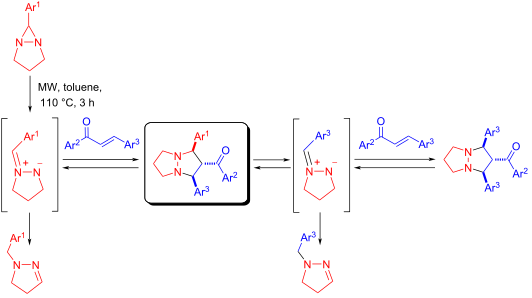
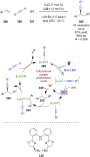
- ]. A wide range of pharmaceuticals, agrochemicals, and other biologically active compounds are prepared using different types of (3 + n) cycloadditions, mainly with alkenes and alkynes [3][4][5][6][7]. For example, N,N'-cyclic azomethine imines are precursors of biologically active bicyclic


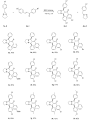


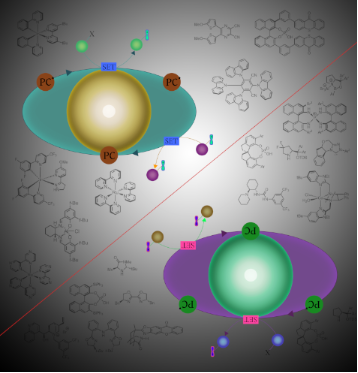
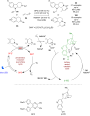
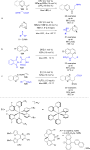
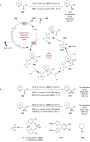
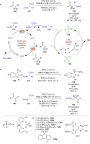
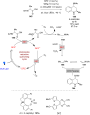
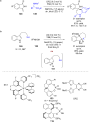
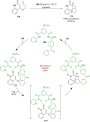
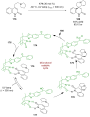
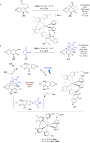
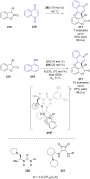
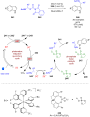
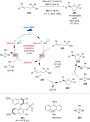
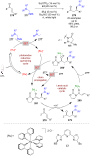
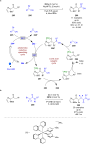
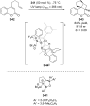
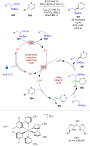
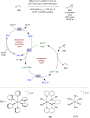
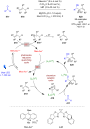
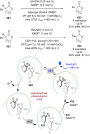
Recent developments in enantioselective photocatalysis
Beilstein J. Org. Chem. 2020, 16, 2363–2441, doi:10.3762/bjoc.16.197


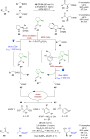
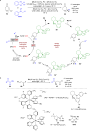

























Design and synthesis of a bis-macrocyclic host and guests as building blocks for small molecular knots
Beilstein J. Org. Chem. 2020, 16, 2314–2321, doi:10.3762/bjoc.16.192
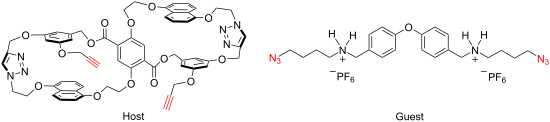
- . Keywords: alkynes; azides; host–guest; macrocycles; molecular knots; Introduction Macrocycles have played a central role in the development of molecular recognition, self-assembled molecular devices, and molecular topology [1][2][3][4][5][6]. For example, early work by Pedersen on crown ethers [1], Lehn


Regioselective cobalt(II)-catalyzed [2 + 3] cycloaddition reaction of fluoroalkylated alkynes with 2-formylphenylboronic acids: easy access to 2-fluoroalkylated indenols
Beilstein J. Org. Chem. 2020, 16, 2193–2200, doi:10.3762/bjoc.16.184
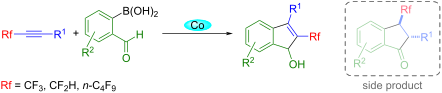
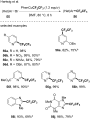
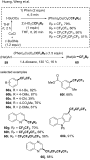
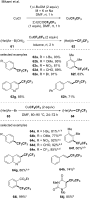
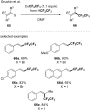
- Tatsuya Kumon Miroku Shimada Jianyan Wu Shigeyuki Yamada Tsutomu Konno Faculty of Molecular Chemistry and Engineering, Kyoto Institute of Technology, Matsugasaki, Sakyo-ku, Kyoto 606-8585, Japan 10.3762/bjoc.16.184 Abstract [2 + 3] cycloaddition reactions of fluorinated alkynes with 2
- best of our knowledge, there are no reports on the practical synthesis of disubstituted 2-fluoroalkylated indenols so far. Transition-metal-catalyzed carbocyclization reactions of alkynes with benzene derivatives having a leaving group X (X = Br, I, OTs, B(OH)2) have been widely considered as one of
- the most efficient and convenient protocols for the construction of various 2,3-disubstituted indene derivatives, such as indenols and indenamines (Scheme 1b) [23][24][25]. There have been numerous studies on the reaction with nonfluorinated alkynes under the influence of various transition metals




Efficient [(NHC)Au(NTf2)]-catalyzed hydrohydrazidation of terminal and internal alkynes
Beilstein J. Org. Chem. 2020, 16, 2080–2086, doi:10.3762/bjoc.16.175
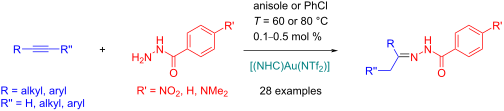
- alkynes (7a–j, 10 examples, 0.2–0.5 mol % [(NHC)Au(NTf2)], T = 60–80 °C) utilizing a complex with a sterically demanding bispentiptycenyl-substituted NHC ligand and the benign reaction solvent anisole, is reported. Keywords: alkyne; gold; homogeneous catalysis; hydrohydrazidation; NHC ligand
- ; Introduction Cationic gold complexes with weakly coordinating counterions (which are often considered to be solvent-separated ions) [1][2][3], render powerful catalysts for the transformation of organic substrates [4][5][6], specifically the reactions of alkynes with a variety of heteroatom nucleophiles
- % at 60 °C were required to obtain the respective addition product in yields of 66–93%. Internal alkynes were much less reactive and even at 12 mol % catalyst loading the reaction of 3-hexyne and PhCONHNH2 yielded the respective addition product in only 32% yield, with diphenylacetylene only 12% of the


Reactions of 3-aryl-1-(trifluoromethyl)prop-2-yn-1-iminium salts with 1,3-dienes and styrenes
Beilstein J. Org. Chem. 2020, 16, 2064–2072, doi:10.3762/bjoc.16.173
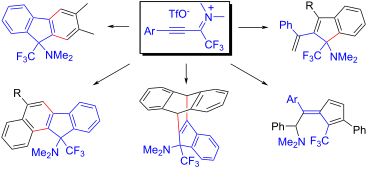
- cyclobutene and several cationic intermediates and mainly yield 2-(1-phenylvinyl)indenes. In a similar reaction cascade, a fulvene derivative was obtained with 1,4-diphenylbutadiene as the substrate. Keywords: alkynes; aromatic substitution; cyclization; cycloaddition; iminium salts; Introduction In recent
- presumably renders an ionic [2 + 2] cycloaddition pathway competitive with the Diels–Alder reaction. The few reported examples of cyclobutene formation from alkynes and unactivated 1,3-dienes include the sensitized photocycloaddition of phenylacetylene and DMBD [30] and the gold(I)-catalyzed reaction of
- concerted conrotatory process [47][48] would create a strained cis,trans-dihydrobenzo[8]annulene ring system. Cyclobutenes resulting from a [2 + 2] cycloaddition of electrophilic alkynes and alkenes under moderate thermal conditions have been isolated also from the reaction of CF3-free propyniminium salts


When metal-catalyzed C–H functionalization meets visible-light photocatalysis
Beilstein J. Org. Chem. 2020, 16, 1754–1804, doi:10.3762/bjoc.16.147

- photocatalyst. The strategy was utilized for the C–H bond annulation of benzamides with alkynes, furnishing isoquinolones, an important moiety in various natural products (Figure 15) [78]. The C–H activation step was assisted by an 8-quinolyl DG and occurred under an oxygen atmosphere at room temperature. A
- , pyrimidyl, and 7-azaindolyl were found to be compatible with this transformation. While symmetrical alkynes led to the desired products in moderate to good yields, the unsymmetrical ones afforded a mixture of products with very high regioselectivity, with the favored formation of cyclized compounds bearing
- performed under air at high temperatures. The coupling exhibited a broad substrate scope and the procedure tolerated a variety of even sensitive functional groups, including trifluoromethyl, ketone, or ester motifs. Unsymmetrical alkynes were also compatible, although the cyclization provided the desired


Clickable azide-functionalized bromoarylaldehydes – synthesis and photophysical characterization
Beilstein J. Org. Chem. 2020, 16, 1683–1692, doi:10.3762/bjoc.16.139
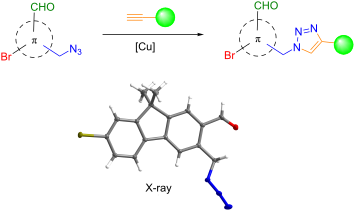
- cycloadditions with model alkynes. Besides two ortho- and para-bromo-substituted benzaldehydes, the azide functionalization of a fluorene-based structure will be presented. The copper(I)-catalyzed azide–alkyne cycloaddition (CuAAC) of the so-synthesized azide-functionalized bromocarbaldehydes with terminal
- alkynes, exhibiting different degrees of steric demand, was performed in high efficiency. Finally, we investigated the photophysical properties of the azide-functionalized arenes and their covalently linked triazole derivatives to gain deeper insight towards the effect of these covalent linkers on the
- reactions (CuAAC). For this, we treated the azide-functionalized luminophores with alkynes exhibiting different degrees of steric demand, including 1-decyne (29), phenylacetylene (30), 1-ethynyladamantane (31) and 1,3-di-tert-butyl-5-ethynylbenzene (32, see Scheme 5). All triazoles 33–44, based on the


Pauson–Khand reaction of fluorinated compounds
Beilstein J. Org. Chem. 2020, 16, 1662–1682, doi:10.3762/bjoc.16.138
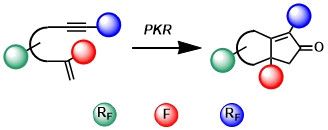
- that will be discussed in this review belongs to the fluorinated building blocks category. More specifically, the participation of fluorine-containing olefins and alkynes in the Pauson–Khand cyclization, with a special focus on the intramolecular version using fluorinated enynes, which will be
- the intramolecular version, the fluorine atom or fluorinated group can also form a part of the linker. The reaction yields are dependent on the degree of substitution, bulkiness, and electronic effects of the substituents of both the alkyne and alkene moieties. In general, electron-deficient alkynes
- are poor substrates for the PKR as they are deactivated in the cobalt-complexation step, and the highest yields are usually obtained with terminal alkynes. The scenario is similar in the case of fluorinated substrates, with the intramolecular version being much more developed than the intermolecular




Fluorohydration of alkynes via I(I)/I(III) catalysis
Beilstein J. Org. Chem. 2020, 16, 1627–1635, doi:10.3762/bjoc.16.135
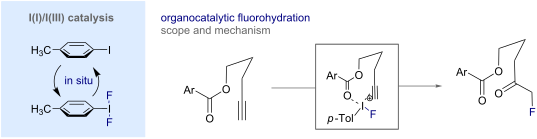
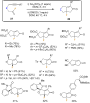
- -molecule catalysis. Herein, we disclose an intriguing example of substrate specificity that was observed whilst exploring catalysis-based routes to generate α-fluoroketones from terminal and internal alkynes under the auspices of I(I)/I(III) catalysis. Utilising p-TolI as an inexpensive organocatalyst with
- Selectfluor® and amine/HF mixtures, the formation of protected α-fluoroketones from simple alkynes was realised. Whilst the transient p-TolIF2 species generated in situ productively engaged with pentynyl benzoate scaffolds to generate the desired α-fluoroketone motif, augmentation or contraction of the linker
- fluorination of acetophenone derivatives was achieved using iodosylarenes and commercially available NEt3/HF 1:5 to generate the ArIF2 species in situ is also highly pertinent [39][40] (Figure 1A). Elegant reports describing the conversion of internal alkynes to α-fluoroketones via π-acid catalysis were also


Azidophosphonium salt-directed chemoselective synthesis of (E)/(Z)-cinnamyl-1H-triazoles and regiospecific access to bromomethylcoumarins from Morita–Baylis–Hillman adducts
Beilstein J. Org. Chem. 2020, 16, 1579–1587, doi:10.3762/bjoc.16.130
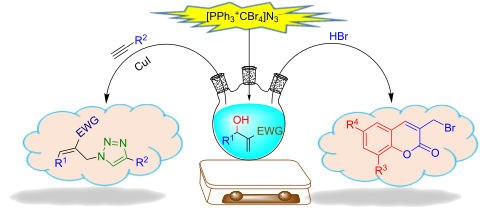
- for the synthesis of 3-(bromomethyl)coumarins. Literature-reported cycloaddition reactions of MBH acetates involving azides and alkynes [24][25][26][27][28]. Synthetic methodologies for triazolations of MBH adducts. a) Literature-reported indirect triazolation of MBH adducts [32][33]. b) This work




Photocatalyzed syntheses of phenanthrenes and their aza-analogues. A review
Beilstein J. Org. Chem. 2020, 16, 1476–1488, doi:10.3762/bjoc.16.123
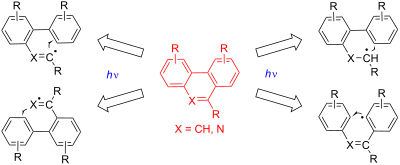
- occurring on a stilbene diazonium salt (e.g., 1.1+) with the intermediacy of an aryl radical [40]. Alternative strategies for the synthesis of phenanthrenes have been later reported, including the adoption of [4 + 2] benzannulations between biaryl derivatives and alkynes [41][42]. Scheme 2 illustrates one


An overview on disulfide-catalyzed and -cocatalyzed photoreactions
Beilstein J. Org. Chem. 2020, 16, 1418–1435, doi:10.3762/bjoc.16.118
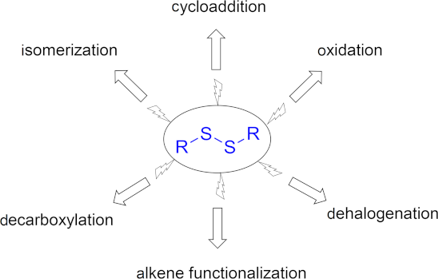
- used similar disulfide-catalyzed [3 + 2] cycloaddition reactions for the synthesis of polycyclic frameworks. The irradiation of vinylcyclopropanes with alkenes or alkynes in the presence of dibutyl disulfide afford the desired bi- or tricyclic products with 54–88% yield (Scheme 2) [6]. In 2014, Maruoka
- also catalyze the formation of four-membered ring intermediates between double or triple bonds and oxygen, and thus converting unsaturated hydrocarbons to carbonyl compounds. Regarding the oxidation of alkynes, Wang reported a method for preparing diaryl-1,2-diketones from diarylalkynes in the presence
- groups that contain heteroatoms. Ogawa and co-workers reported a class of efficient diboration reactions. Under light irradiation, disulfide was used as the photocatalyst to facilitate the addition of bis(pinacolato)diboron (B2pin2) to terminal alkynes [19], and the corresponding diboryl alkenes were






Photocatalysis with organic dyes: facile access to reactive intermediates for synthesis
Beilstein J. Org. Chem. 2020, 16, 1163–1187, doi:10.3762/bjoc.16.103
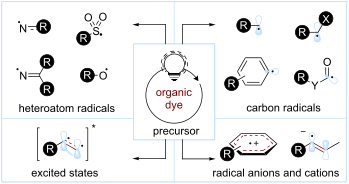
- alkynes. They can also perform atom abstractions, in particular HATs and halogen abstractions [66]. The generation of such species generally occurs through the homolytic cleavage of a peripheral σ bond [67][68]. In the majority of the cases, a leaving group is reduced and fragments to the aryl radical
- class of substrates that usually undergo a protonation to form C(sp3) radicals. Alkenyl or aryl radical ions are generally accessed through SET. The presence of electron-donating groups facilitates the oxidation of the precursor to the radical cations, while electron-poor alkynes and arenes can undergo
- reaction (Scheme 23) [100]. The alkynes 23.1 could be successfully converted to the vinyl sulfones 23.3 in the presence of the aryl sulfones 23.2 using eosin Y (OD13) as a photocatalyst. A tentative mechanism was proposed by the authors: under visible-light irradiation, the arylsulfinic acid could be





Palladium-catalyzed regio- and stereoselective synthesis of aryl and 3-indolyl-substituted 4-methylene-3,4-dihydroisoquinolin-1(2H)-ones
Beilstein J. Org. Chem. 2020, 16, 1084–1091, doi:10.3762/bjoc.16.95
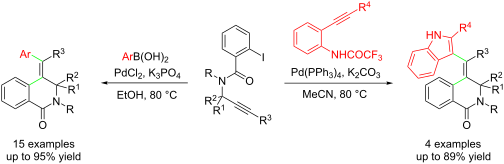
- antimetastatic agents [14]. Fittingly, the development of efficient strategies for their construction and peripheral functionalization represents still an active research area aimed to achieve structural diversity [15][16][17][18]. Carbometalations of alkynes constitute a powerful tool for the regio- and
- functionalized alkynes with boronic acids [32][33] prompted us to explore the palladium-catalyzed reaction of the readily available alkynyliodobenzamides 2 with boronic acids 3 as a viable route to the regio- and stereoselective synthesis of 4-alkylidene-3,4-dihydroisoquinolin-1(2H)-ones 3 (Scheme 1a). We are



Copper-based fluorinated reagents for the synthesis of CF2R-containing molecules (R ≠ F)
Beilstein J. Org. Chem. 2020, 16, 1051–1065, doi:10.3762/bjoc.16.92
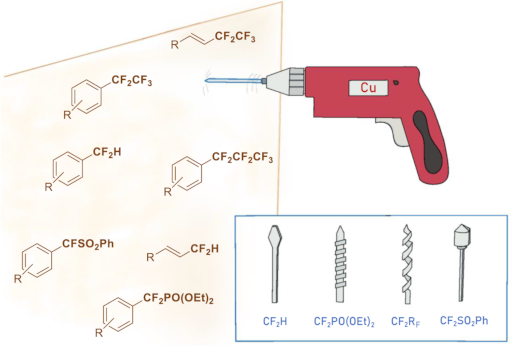
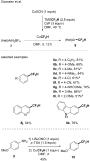
- functionalization of alkyl bromides, alkyl mesylates, aryldiazonium salts [43] as well as electron-rich arenes [44] (Scheme 4). In 2015, the group of Qing investigated the oxidative difluoromethylation reaction of terminal alkynes with TMSCF2H via a copper-mediated reaction [45]. Using a stoichiometric amount of
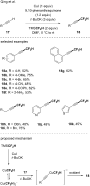
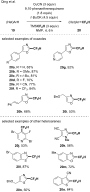
- CuI, in the presence of t-BuOK and 9,10-phenanthraquinone, the functionalization of a panel of (hetero)aromatic and aliphatic terminal alkynes was achieved (Scheme 5). A good functional group tolerance was observed as alkynes bearing a cyano, ester, bromo or amino group among others were suitable
- substrates. Based on 19F NMR studies, the authors suggested the following mechanism: first the in situ generation of a CuCF2H complex from TMSCF2H in equilibrium with the corresponding cuprate (Cu(CF2H)2−) occurred followed by the reaction with terminal alkynes under basic conditions. The resulting











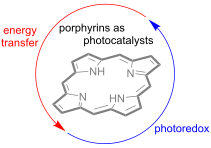
Recent applications of porphyrins as photocatalysts in organic synthesis: batch and continuous flow approaches
Beilstein J. Org. Chem. 2020, 16, 917–955, doi:10.3762/bjoc.16.83
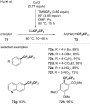
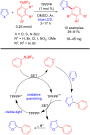
- ). For an oxidative quenching, the photoarylation of heteroarenes and alkynes with aryldiazonium salts, and the oxidative decarboxylative coupling between cinnamic acid and tetrahydrofuran also showed better results when NiTPP was used instead of eosin [32][33][34] (Scheme 10). Regarding protocols
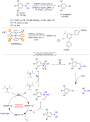
- hydration of terminal alkynes to ketones can be photocatalyzed by rhodium(III) tetrakis(p-sulfonylphenyl)porphyrin (RhIIITSPP) [37]. The coupling between RhIII(TSPP) and terminal alkynes produced the β-carbonylalkylrhodium porphyrin as a photoactive intermediate, whose irradiation produced the PhCOCH2
- tetrahydroquinolines by reductive quenching. Selenylation and thiolation of anilines. NiTPP as photoredox catalyst in oxidative and reductive quenching, in comparison with other photocatalysts. C–O bond cleavage of 1-phenylethanol using a cobalt porphyrin (CoTMPP) under visible light. Hydration of terminal alkynes by






Copper catalysis with redox-active ligands
Beilstein J. Org. Chem. 2020, 16, 858–870, doi:10.3762/bjoc.16.77
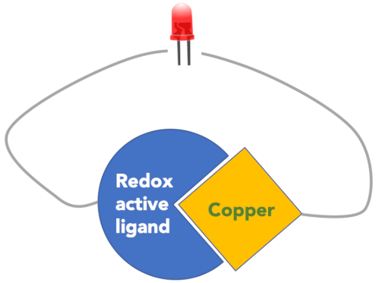
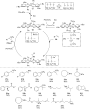
- wide variety of substrates including silyl enol ethers, heteroaromatics and alkynes using an electrophilic CF3+ source (8 or 9), opening new opportunities to access pharmaceutically relevant trifluoromethylated products under mild reaction conditions. The ligand-based SET step involved the



Recent advances in Cu-catalyzed C(sp3)–Si and C(sp3)–B bond formation
Beilstein J. Org. Chem. 2020, 16, 691–737, doi:10.3762/bjoc.16.67
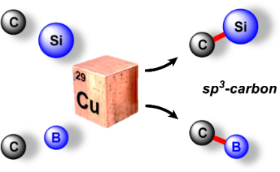
- decade later, Molander et al. made use of the same disilane as a source of the nucleophile for additions to α,β-unsaturated alkenes and alkynes as Michael acceptors bearing sulfones, nitriles, cyano, amido, and carboxyl ester groups to form β-silylated alkanes and alkenes in good to moderate yields [55
- , could be intercepted at the intermediate radical stage (149) with radical initiator TBHP present in excess, leading to silylated peroxy products 151–156. This approach was applied to different types of conjugated systems, including esters, ketones, amides, alkynes, etc. (Scheme 27). Kleeberg [64] et al
- bond formation Organoboron compounds are widely used in C–C and C–X (X = N, O) bond constructions. Straightforward methods for their synthesis involve the copper-catalyzed addition of organoboron compounds to alkynes, alkenes, and unsaturated carbonyl compounds, as well as the nucleophilic borylation


Cascade trifluoromethylthiolation and cyclization of N-[(3-aryl)propioloyl]indoles
Beilstein J. Org. Chem. 2020, 16, 657–662, doi:10.3762/bjoc.16.62
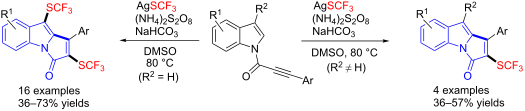
- the direct incorporation of the SCF3 group into organic compounds [9][10][11][12][13][14][15][16], such as alkynes, alkenes, arenes, and alkanes. Despite these impressive advances, there is a continued strong demand for new methods that enable the efficient synthesis of SCF3-containing compounds
- strategy in the synthesis of a series of CH2SCF3-substituted heterocycles. For the construction of SCF3-substituted cyclic compounds, normally proper alkynes are chosen as the substrates for cascade reactions [28][29][30][31][32]. In 2015, Wang developed an oxidative radical cyclization of aryl alkynoate


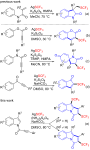


Copper-catalyzed O-alkenylation of phosphonates
Beilstein J. Org. Chem. 2020, 16, 611–615, doi:10.3762/bjoc.16.56

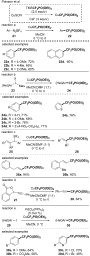
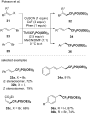
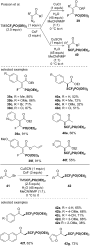
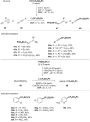
- counterparts has received less attention. Current methodologies for the synthesis of acyclic mixed enol phosphonates include the Perkow-type reaction between phosphonites and α-halocarbonyl compounds [11], the mercury-catalyzed addition of phosphonic acid monoesters to terminal alkynes [12][13] and multistep


A systematic review on silica-, carbon-, and magnetic materials-supported copper species as efficient heterogeneous nanocatalysts in “click” reactions
Beilstein J. Org. Chem. 2020, 16, 551–586, doi:10.3762/bjoc.16.52
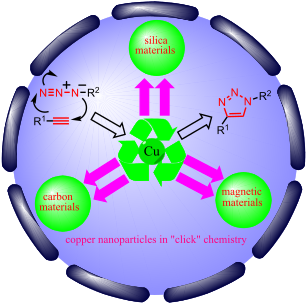
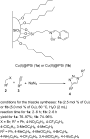
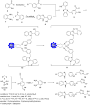
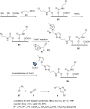
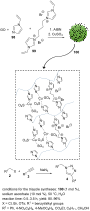
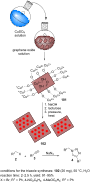
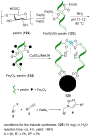
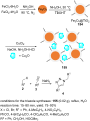
- oxidized to Cu(II) species. Without using a ligand or a reducing agent, Cu(II) can oxidize alkynes to produce an undesired byproduct. Active copper catalysts can be prepared by reducing copper(II) sources, oxidizing copper metal, comproportionation of Cu(II) and Cu(0), or combination of copper salts and
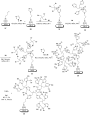
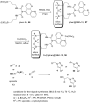
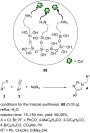
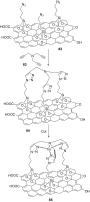
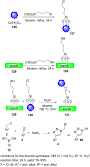
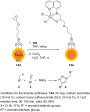
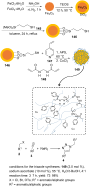
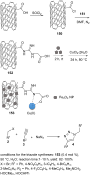
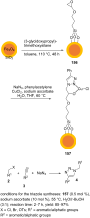
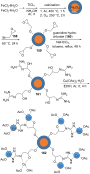
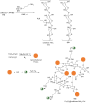
- -functionalized silica 46 was added to the mixture, and this was heated to reflux to generate the catalyst 48. Several organic halides or epoxides, nonactivated alkynes, and sodium azide were reacted in an aqueous medium to provide triazoles or β-hydroxytriazoles using 1.0 mol % catalyst loading at 25 °C
- reflux conditions for one day. The resulting powder was filtered off, washed with methanol, and dried. Finally, excess copper was removed by the Soxhlet extraction method (Scheme 9). The 1,3-dipolar reaction of organic alkynes, organic bromides (or aryldiazonium salts or epoxides), and sodium azide

















Controlling alkyne reactivity by means of a copper-catalyzed radical reaction system for the synthesis of functionalized quaternary carbons
Beilstein J. Org. Chem. 2020, 16, 502–508, doi:10.3762/bjoc.16.45
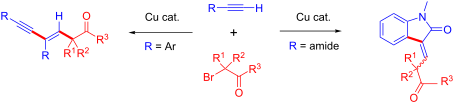
- ; Introduction Terminal alkynes are undoubtedly useful functional groups for organic synthesis, and they can undergo a variety of reactions [1]. The C–C triple bond of an alkyne is suitable for addition reactions, whereas the terminal hydrogen atom is a good target for cross-coupling by using Sonogashira and
- related coupling reactions [2][3][4]. Although there are many reports on alkyne transformations, one recent development in this area has been the reaction of alkynes with tertiary alkyl electrophiles to produce functionalized quaternary carbon atoms via addition [5][6][7][8][9][10] or coupling [11][12][13
- ][14][15][16]. Recently, we have prepared quaternary carbon centers via radical reactions by using α-bromocarbonyl compounds (a tertiary alkyl source) and olefins or heteroatoms in the presence of a copper catalyst [17][18][19]. During our studies, we found that combinations of alkynes and tertiary


Aerobic synthesis of N-sulfonylamidines mediated by N-heterocyclic carbene copper(I) catalysts
Beilstein J. Org. Chem. 2020, 16, 482–491, doi:10.3762/bjoc.16.43

- area, reporting on the synthesis of the first heteroleptic bis-NHC and mixed NHC/phosphine copper(I) complexes [20][21][22]. Interestingly, these new copper-based complexes have shown excellent activity in the [3 + 2] cycloaddition reaction of azides/sulfonyl azides and alkynes (Scheme 1, right) [22
- . Various terminal aryl/alkyl-substituted alkynes were investigated in the presence of tosyl azide and diisopropylamine (Scheme 4). Under standard conditions, good to excellent yields were obtained. The presence of functional groups in para-position of the aryl ring leads to a decrease of the conversion to
- substrate, solvent-free conditions lead to 78% isolated yield at 40 °C. Diynes were also investigated and excellent isolated yields were achieved (92% and 85% for 11j and 11k, respectively). Regarding the alkyl-alkynes, longer reactions times as well as higher temperature were required to reach high


Recent advances in photocatalyzed reactions using well-defined copper(I) complexes
Beilstein J. Org. Chem. 2020, 16, 451–481, doi:10.3762/bjoc.16.42
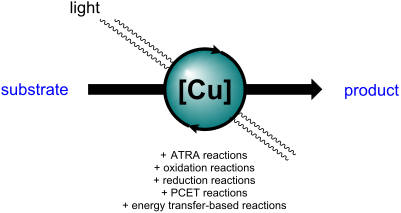
- alkynes. [Cu(I)(dap)2]Cl was found to be the best catalyst for this transformation proceeding upon irradiation at 530 nm (green LED, Scheme 6) [22]. Indeed, the comparison of this Cu catalyst with [Ru(bpy)3]Cl2 and Ir(ppy)3 clearly demonstrated the higher efficiency, good yield, selectivity, and excellent
- of the ligand iodide for DAP (path III). Another possibility was the trapping of the radical with the iodine ligand of the [Cu(II)] catalyst (path IV). In 2019, Reiser’s group described a chlorosulfonylation reaction of alkenes and alkynes with [Cu(I)(dap)2]Cl or [Cu(II)(dap)2]Cl2 under visible light
- chlorosulfonylation of terminal alkenes and alkynes using the previously developed copper-based photocatalyst (Scheme 19) [35]. The reaction was tolerant to a broad range of arylchlorosulfonyl derivatives when the reaction was carried out with styrene, including sterically hindered and heteroaromatic substrates