Search results
Search for "electron donor" in Full Text gives 184 result(s) in Beilstein Journal of Organic Chemistry.
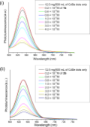
Charge-transfer interaction mediated organogels from 18β-glycyrrhetinic acid appended pyrene
Beilstein J. Org. Chem. 2013, 9, 2877–2885, doi:10.3762/bjoc.9.324
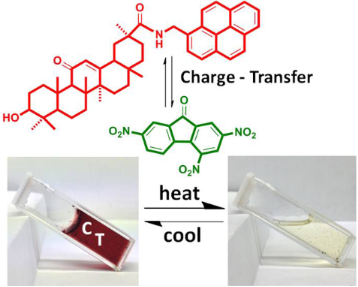
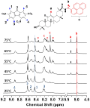
- ability of 2,3-dihydroxyiminooleanolic acid, adenineoleanolic acid conjugates as well as the fan-shaped C3 and molecular tweezers based on glycyrrhetinic acid [42][43][44]. In this paper, 18β-glycyrrhetinic acid–pyrene (GA-Pyrene, 3) as the electron donor, and 2,4,7-trinitrofluorenone (TNF, 4) as the




The chemistry of amine radical cations produced by visible light photoredox catalysis
Beilstein J. Org. Chem. 2013, 9, 1977–2001, doi:10.3762/bjoc.9.234
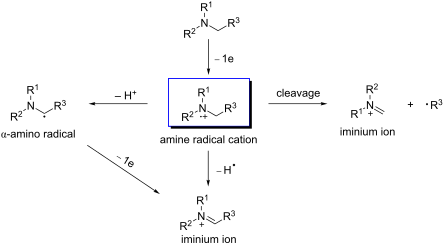
- organic molecules such as amines. The photoexcited state is both more oxidizing and more reducing than the ground state. It can be quenched reductively by accepting an electron from an electron donor or oxidatively by donating an electron to an electron acceptor. Amines are often used as an electron donor
- to reductively quench the photoexcited state while they are oxidized to amine radical cations. This single-electron transfer process was investigated intensively in the late 1970s and early 1980s because amines were used as a sacrificial electron donor in water splitting [31][32] and carbon dioxide
- reduction [33][34]. Since 2008, seminal works from MacMillan, Yoon, and Stephenson have reinvigorated the field of visible light photoredox catalysis [35][36][37][38][39][40][41][42]. The use of amines as both the electron donor and the substrate, rather than just the electron donor, has become a major




Computational study of the rate constants and free energies of intramolecular radical addition to substituted anilines
Beilstein J. Org. Chem. 2013, 9, 1620–1629, doi:10.3762/bjoc.9.185

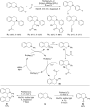
- addition reaction of 9 that has the most electrophilic radical center due to ester substitution. The more nucleophilic radicals 8 and 10 react slower than 1. The –OMe group in 10 is a better electron donor than the –Me group in 8, which should make it more nucleophilic and lead to a slower radical addition


An organocatalytic route to 2-heteroarylmethylene decorated N-arylpyrroles
Beilstein J. Org. Chem. 2013, 9, 1480–1486, doi:10.3762/bjoc.9.168
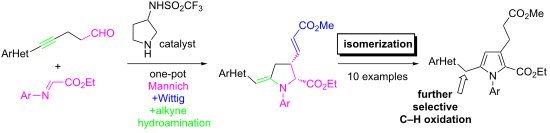
- preparation of N-arylpyrroles is an active field of investigation [5]. Depending on their substituents, N-arylpyrroles could also be electron donor/acceptor molecules with a dual fluorescence ability suggesting attractive optoelectronic applications [6][7]. If the N-arylation of pyrroles is possible by
- ideal for the preparation of electron donor/acceptor N-arylpyrroles as demonstrated in this study. In addition, we documented an efficient C–H oxidation of the bis(heteroaryl)methylene position promoted by CAN. Experimental General: 1H and 13C NMR spectra were recorded in deuterated chloroform on Bruker


True and masked three-coordinate T-shaped platinum(II) intermediates
Beilstein J. Org. Chem. 2013, 9, 1352–1382, doi:10.3762/bjoc.9.153
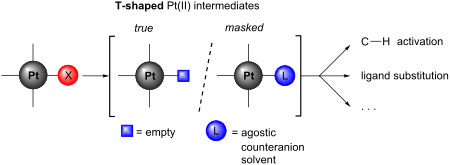
- blocked somehow to prevent undesirable contacts, and in most cases, bulky ligands are required to protect the empty coordination site. Strong electron-donor ligands also help stabilizing the formally 14-electron compounds. It is worthy of note that almost all of them are cationic. The first true T-shaped





Efficient Cu-catalyzed base-free C–S coupling under conventional and microwave heating. A simple access to S-heterocycles and sulfides
Beilstein J. Org. Chem. 2013, 9, 467–475, doi:10.3762/bjoc.9.50
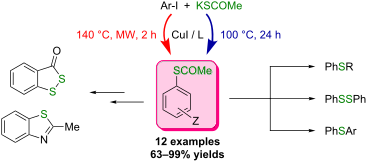
- . Electron-donor and electron-acceptor substituents are tolerated, and polysubstitution can also be successfully accomplished. Experimental Representative experimental procedures for the Cu-catalyzed base-free C–S coupling Method A: The reactions were carried out in a 10 mL two-necked Schlenk tube, equipped


Synthesis of SF5-containing benzisoxazoles, quinolines, and quinazolines by the Davis reaction of nitro-(pentafluorosulfanyl)benzenes
Beilstein J. Org. Chem. 2013, 9, 411–416, doi:10.3762/bjoc.9.43
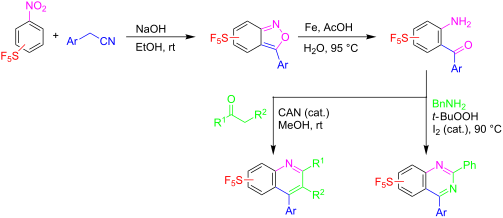
- arylacetonitriles to provide the SF5-containing benzisoxazoles. Good yields were obtained with arylacetonitriles containing the electron-neutral or electron-donor group, while those with the electron-acceptor group were found to be unreactive. Reductions of the benzisoxazoles gave ortho-aminobenzophenones in high
- with electron-donor groups were found to be unreactive [7]. Addition of 1.5 equiv of 6a and 3 to a solution of 10 equiv NaOH in ethanol produced a deep red–brown reaction mixture with the formation of a brown precipitate after a few minutes of stirring. After a further 15–30 minutes the precipitate
- amount of base and 6 were varied. Next, an investigation of the scope of the reaction was carried out. The presence of electron-donor groups on the benzene ring of 6 gave good yields of benzisoxazoles 7; however, the reaction with (4-chlorophenyl)acetonitrile (6b) provided only traces of 7b (no


Highly selective synthesis of (E)-alkenyl-(pentafluorosulfanyl)benzenes through Horner–Wadsworth–Emmons reaction
Beilstein J. Org. Chem. 2012, 8, 1185–1190, doi:10.3762/bjoc.8.131
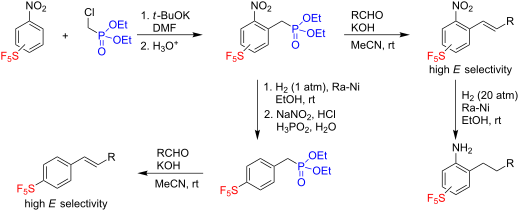
- unavailable, and the reaction in ortho-positions would give too strained a product. The formation of the cyclized side product is not restricted to compounds with an electron-donor substituent on the aromatic ring. Similarly to 8d, the cyclic product was detected by GCMS in diazotization of compound 8c


Control over molecular motion using the cis–trans photoisomerization of the azo group
Beilstein J. Org. Chem. 2012, 8, 1071–1090, doi:10.3762/bjoc.8.119
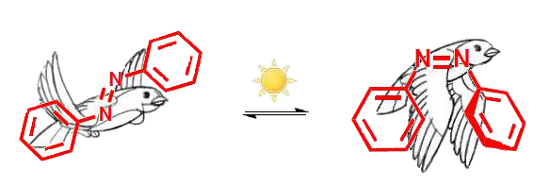
- type (o- or p-(X)–C6H4–N=N–Ar): The π→π* and n→π* bands are very close or collapsing in the UV–vis region. In this case, the azocompounds have electron-donor substituents (X) in the ortho or para positions (orange colour). Pseudo-stilbene type [(X)–C6H4–N=N–C6H4–(Y)]: The absorption band corresponding
- fluorescence emitted by the pyridinium salt free cyclophane. The azobenzene trans-10 is conveniently replaced with electron donor units, so that when it is associated, as azo-10∙11, the fluorescence is completely inhibited by charge-transfer interactions. The photoexcitation carried out by irradiation with


The effect of the formyl group position upon asymmetric isomeric diarylethenes bearing a naphthalene moiety
Beilstein J. Org. Chem. 2012, 8, 1018–1026, doi:10.3762/bjoc.8.114
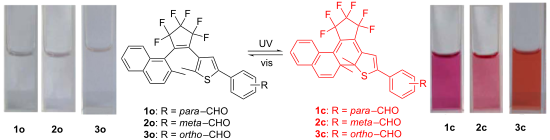
- fatigue resistance and thermal stability [2][36]. In general, the photochromic reactivity of diarylethenes mainly depends on heteroaryl groups and different electron-donor/acceptor substituents. The formyl group can be modified to form various chemical groups and it can also be connected with different


Hybrid super electron donors – preparation and reactivity
Beilstein J. Org. Chem. 2012, 8, 994–1002, doi:10.3762/bjoc.8.112
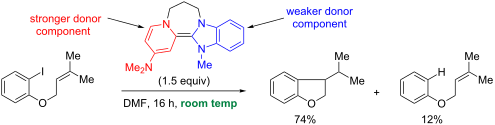
- motif, 6, which marks a weaker donor. To extend the capabilities of such reagents, we now set out to design the first neutral, organic ground-state donor that could, at room temperature, reduce aryl iodides to aryl radicals (thereby acting as a single-electron donor) as opposed to aryl anions. Hybrid
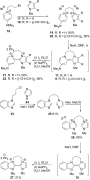
- bromide (16) [34] with N-methylimidazole (17) afforded disalt 19. Deprotonation with NaH (15 equiv) in DMF then afforded the electron donor 11 in situ; this was reacted with iodine to afford the oxidised diiodide salt, and this was subjected to anion exchange to afford the bis(hexafluorophosphate) salt 21
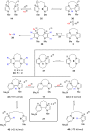
- ], and so its capability as an electron donor was tested. To test reactivity, donor 11 was prepared in situ and treated with the substrates 28 and 30 at room temperature (Scheme 2). Simple substrate 28 [35] was added to 11, prepared by adding disalt 19 (1.5 equiv) to excess sodium hydride (15 equiv). As






Thiophene-based donor–acceptor co-oligomers by copper-catalyzed 1,3-dipolar cycloaddition
Beilstein J. Org. Chem. 2012, 8, 683–692, doi:10.3762/bjoc.8.76

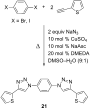
- electronic communication between the chromophores [21][22][23][31]. It has also been shown that a 1,2,3-triazole can act as a strong σ-electron donor [26] or as a weak π-electron acceptor [15]. In this study, we aimed at the combination of electron-rich (oligo)thiophenes as donors and electron-deficient




On the control of secondary carbanion structure utilising ligand effects during directed metallation
Beilstein J. Org. Chem. 2012, 8, 50–60, doi:10.3762/bjoc.8.5
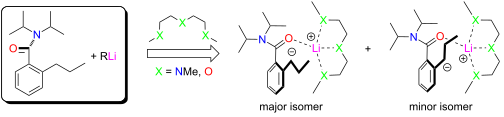
- ) (for 3-H) [23] or THF (for 4-H) [24] to yield 3/4-Lil·nL (n = 1, L = PMDTA; n = 3, L = THF). Notably, whereas the deptonation of 4-H in the presence of THF yielded the lateral lithiate as a tris(THF) solvate, the tridentate electron donor PMDTA was required to replicate this chemistry with 3-H


Imidazole as a parent π-conjugated backbone in charge-transfer chromophores
Beilstein J. Org. Chem. 2012, 8, 25–49, doi:10.3762/bjoc.8.4
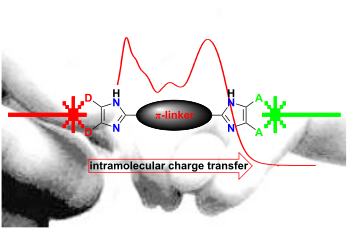
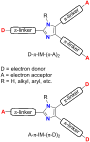
- -IM-(π-A)2 (16), A-π-IM-(π-D)2 (17), A-π-IM-(π-A)2 (18), and D-π-IM-(π-D)2 (19). 4,5-Bis(4-nitrophenyl)imidazole was utilized as a suitable acceptor moiety and was further modified with a thiophene π-linker as an auxiliary electron donor (20). These basic push–pull imidazoles were mainly investigated
- of the π-linker, particularly in chromophores 53–57, caused β enhancement up to 320 × 10−30 esu (Table 8). This clearly demonstrates the beneficial role of the thiophene as a polarizable unit and auxiliary electron donor. A combination of fused phenanthroline-imidazole acceptor moiety, N,N
- interest for materials chemists due to their unique and tunable properties. In general, the imidazole-derived chromophores may possess two Y-shaped arrangements: One electron donor at C2 and two electron acceptors at C4/C5 or vice versa. Hence, according to the C4/C5 substitution, the entire imidazole




Equilibrium constants and protonation site for N-methylbenzenesulfonamides
Beilstein J. Org. Chem. 2011, 7, 1732–1738, doi:10.3762/bjoc.7.203
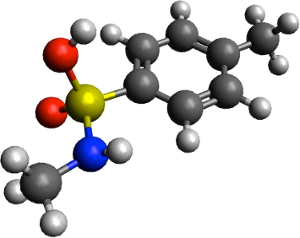
- -NO2 (3d), in aqueous sulfuric acid were studied at 25 °C by UV–vis spectroscopy. As expected, the values for the acidity constants are highly dependent on the electron-donor character of the substituent (the pKBH+ values are −3.5 ± 0.2, −4.2 ± 0.2, −5.2 ± 0.3 and −6.0 ± 0.3 for 3a, 3b, 3c and 3d
- , respectively). The solvation parameter m* is always higher than 0.5 and points to a decrease in the importance of solvation on the cation stabilization as the electron-donor character of the substituent increases. Hammett plots of the equilibrium constants showed a better correlation with the σ+ substituent
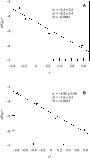
- occurs on the sulfonyl oxygen atom, as such a structure may present resonance with the electron-donor substituents (Scheme 2). The fact that pKBH+ correlates better with σ+ (R = 0.9913) than with σ (R = 0.9681) also indicates protonation on the oxygen atom (Figure 4). Nevertheless, the curvature of the σ



Sexithiophenes as efficient luminescence quenchers of quantum dots
Beilstein J. Org. Chem. 2011, 7, 1722–1731, doi:10.3762/bjoc.7.202
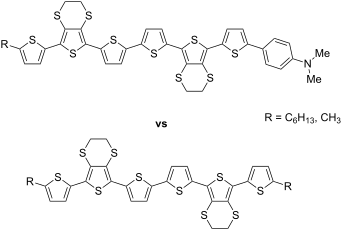
- perfluoroalkyl groups for n-type semiconductors [12][13]. Previously, we reported the synthesis and properties of alkyl end-capped oligothiophenes 2 (Figure 1), which incorporate the ethylene dithiothiophene (EDTT) unit, including their performance as the electron donor material in a bilayer photovoltaic device


Intramolecular hydroamination of alkynic sulfonamides catalyzed by a gold–triethynylphosphine complex: Construction of azepine frameworks by 7-exo-dig cyclization
Beilstein J. Org. Chem. 2011, 7, 951–959, doi:10.3762/bjoc.7.106
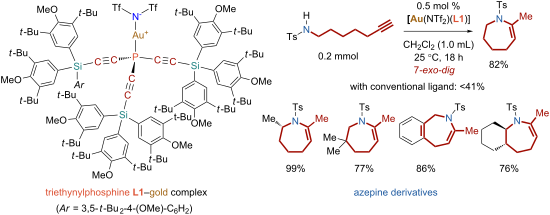
- triethynylphosphine L1 in electron-donor ability [58], was slightly more effective than PPh3, but was far less effective than L1 (Table 1, entry 12). Bulky and strongly electron-donating ligands such as X-Phos and IPr were as effective as the electron-deficient ligand P(OPh)3 (Table 1, entries 13 and 14). Accordingly


Recent advances in the development of alkyne metathesis catalysts
Beilstein J. Org. Chem. 2011, 7, 82–93, doi:10.3762/bjoc.7.12
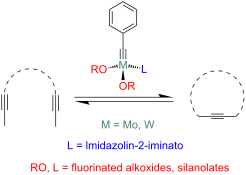
- towards early transition metals or metals in a higher oxidation state [53][54][55]. In recent years, our group has significantly expanded the use of these 2σ,4π-electron donor ligands in organometallic chemistry and homogeneous catalysis [56][57][58][59][60][61][62][63][64][65][66][67]. Their synthesis




Backbone tuning in indenylidene–ruthenium complexes bearing an unsaturated N-heterocyclic carbene
Beilstein J. Org. Chem. 2010, 6, 1120–1126, doi:10.3762/bjoc.6.128
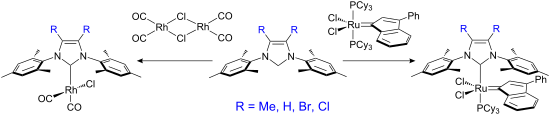
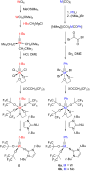
- complexes [26][27][28][29][30][31][32]. This method was initially developed by Tolman [33], using the average infrared frequency of CO in [Ni(CO)3L] complexes. This electronic parameter has become known as the Tolman electronic parameter (TEP) and has been used to quantify the electron donor ability of


Self-assembly and semiconductivity of an oligothiophene supergelator
Beilstein J. Org. Chem. 2010, 6, 1070–1078, doi:10.3762/bjoc.6.122
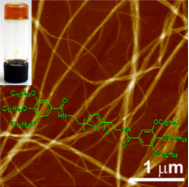
- concentration of 5 x 10⁻⁵ M. Studies on blends of T1 with PCBM The fullerene derivative [6,6]-phenyl-C61-butyric acid methyl ester (PCBM) is a well-known n-type semiconductor and its blends with various electron-donor materials have been extensively used in solar cell devices [24]. The morphology of the blend


Donor-acceptor substituted phenylethynyltriphenylenes – excited state intramolecular charge transfer, solvatochromic absorption and fluorescence emission
Beilstein J. Org. Chem. 2010, 6, 992–1001, doi:10.3762/bjoc.6.112
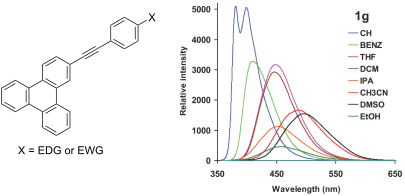
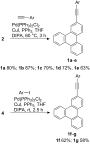
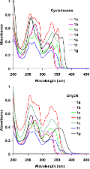
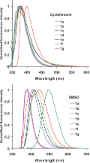
- Ritesh Nandy Sethuraman Sankararaman Department of Chemistry, Indian Institute of Technology Madras, Chennai 600036, India 10.3762/bjoc.6.112 Abstract Several 2-(phenylethynyl)triphenylene derivatives bearing electron donor and acceptor substituents on the phenyl rings have been synthesized. The
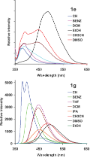
- show that the triphenylene chromophore can act either as an electron donor or as an electron acceptor in the ICT process, depending upon the nature of substituent on the phenyl ring. Derivatives 1e and 1g are potential candidates for use as solvent polarity probes. However, their performance is only




Differences between β-Ala and Gly-Gly in the design of amino acids-based hydrogels
Beilstein J. Org. Chem. 2010, 6, 973–977, doi:10.3762/bjoc.6.109
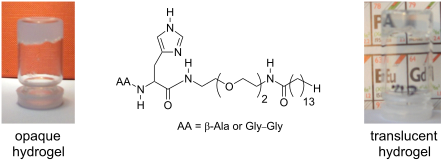
- including, NMR, FT-IR, scanning electron microscopy, SAXS/WAXS. Results and Discussion Molecular design A hydrogelator generally contains three functional domains: a hydrogen or electron donor and acceptor domain as the main organiser, a hydrophilic domain to adjust the solubility in water or in organic


Conjugated polymers containing diketopyrrolopyrrole units in the main chain
Beilstein J. Org. Chem. 2010, 6, 830–845, doi:10.3762/bjoc.6.92
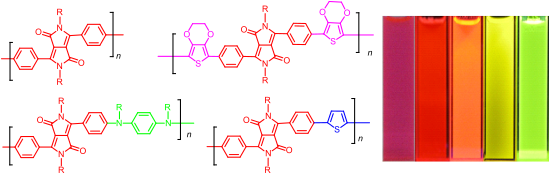
- visible exhibiting blue or dark green colours, small band gaps and high charge carrier mobilities. They are suitable as electron donor in bulk heterojunction solar cells with PC60BM or PC70BM as electron acceptors to give maximum power conversion efficiencies of about 5%. In field-effect transistors they




Structure and reactivity in neutral organic electron donors derived from 4-dimethylaminopyridine
Beilstein J. Org. Chem. 2010, 6, No. 73, doi:10.3762/bjoc.6.73
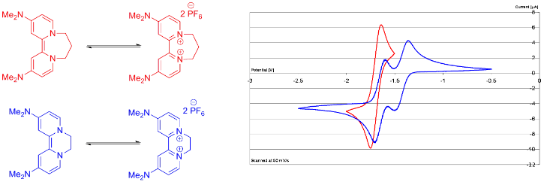
- at the 4 and 4′ positions led to only slight changes in the redox potentials. Keywords: dication; 4-DMAP; electron donor; electron transfer; radical cation; redox; reduction; Introduction Neutral organic compounds 1 and 4–10 (Figure 1) have attracted considerable attention as ground-state electron
- the conversion of an aryl radical to an aryl anion [39]. Whatever about the standard potentials, in practice, the formation of aryl anions is only observed when the electron donor has E1/2 = −1 V or is more negative [40]. In line with this, both the imidazole-derived donor 7 (E1/2 = −1.20 V vs SCE in
- the same potential (within 10 mV), so the increased flexibility does not benefit the two-electron donor 15 relative to 8. Taking the idea of flexible rotation between the two halves of the molecule to its limit, we prepared compound 20′ [27] (Figure 5) and determined its cyclic voltammetric behaviour


A stable enol from a 6-substituted benzanthrone and its unexpected behaviour under acidic conditions
Beilstein J. Org. Chem. 2009, 5, No. 31, doi:10.3762/bjoc.5.31
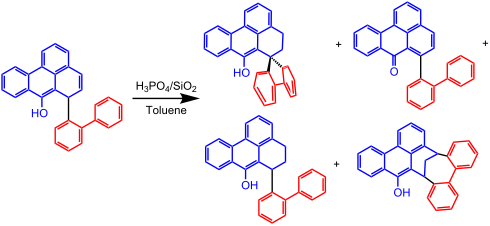
- derivatives have been shown to be efficient emitters for OLED applications [2]. In these devices, the benzanthrone moiety acts as an electron accepting group, whereas the diarylamine group functions as an electron donor. The reaction of 1 with various organometallic reagents was studied by Allen in the 1970s