Search results
Search for "hydrogen bonds" in Full Text gives 455 result(s) in Beilstein Journal of Organic Chemistry. Showing first 200.
Complexation of chiral amines by resorcin[4]arene sulfonic acids in polar media – circular dichroism and diffusion studies of chirality transfer and solvent dependence
Beilstein J. Org. Chem. 2019, 15, 1913–1924, doi:10.3762/bjoc.15.187
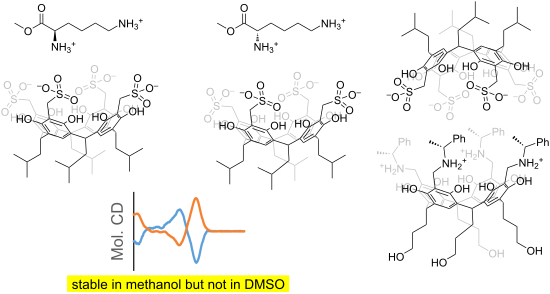
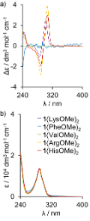
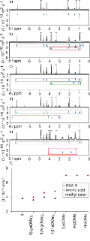
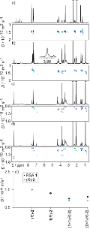
- nondirectional, while directional interactions (charged/neutral hydrogen bonds) are diminished by solvent competition. Numerous studies show that the most promising strategy for the formation of ordered complexes in polar media involves a combination of at least two types of interactions, one of which is usually
- conclusion comes from a comparison of complexes in methanol and DMSO. One would expect that due to the dual hydrogen bond donor/acceptor character of methanol this solvent should be more destructive to ion-pair complexes based on charged hydrogen bonds than DMSO that can only serve as a hydrogen bond




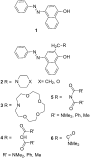
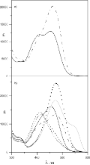
Tautomerism as primary signaling mechanism in metal sensing: the case of amide group
Beilstein J. Org. Chem. 2019, 15, 1898–1906, doi:10.3762/bjoc.15.185
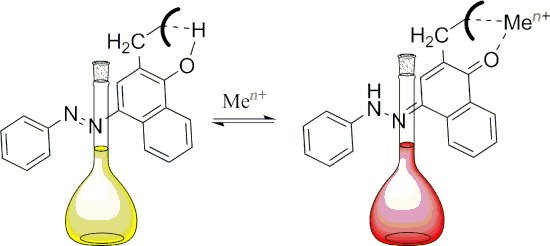
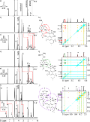
- exchange was especially developed to describe main-group thermochemistry and noncovalent interactions. It shows very good results in predicting the position of the tautomeric equilibria for compounds with intramolecular hydrogen bonds as well as describing the ground and excited state proton transfer





Halide metathesis in overdrive: mechanochemical synthesis of a heterometallic group 1 allyl complex
Beilstein J. Org. Chem. 2019, 15, 1856–1863, doi:10.3762/bjoc.15.181
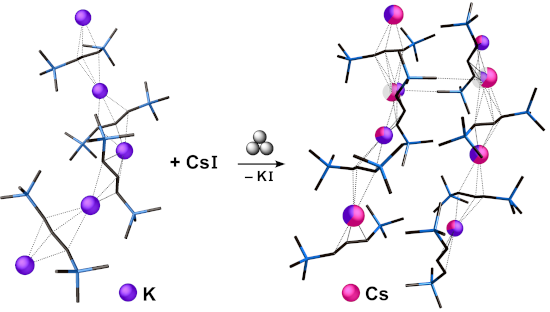
- Information File 1, Figure S3). Despite the gas-phase environment of the calculations, the distance between K+ and CH4 is 3.22 Å, a typical value for potassium–methyl interactions in the solid state, as is the ∆H° of almost 12 kJ mol−1, in the range of hydrogen bonds (Table 3, entries 1 and 2) [32]. The


Synthesis of a [6]rotaxane with singly threaded γ-cyclodextrins as a single stereoisomer
Beilstein J. Org. Chem. 2019, 15, 1829–1837, doi:10.3762/bjoc.15.177
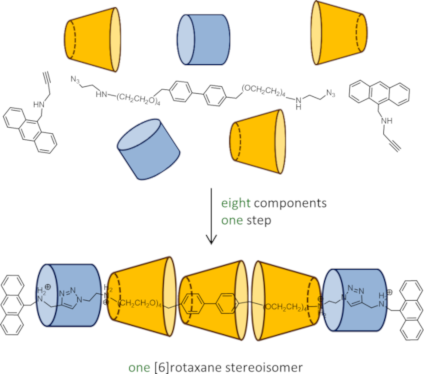
- between CB[6] and cyclodextrins via hydrogen bonds in rigid (pseudo)rotaxane systems has been previously reported [43][44][45][46][47][48]. The full occupancy of the axle by five macrocycles and the resulting close proximity of the macrocycles in 6R may hence resulted in similar interactions that

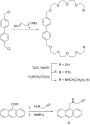

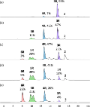


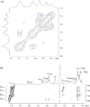

Complexation of 2,6-helic[6]arene and its derivatives with 1,1′-dimethyl-4,4′-bipyridinium salts and protonated 4,4'-bipyridinium salts: an acid–base controllable complexation
Beilstein J. Org. Chem. 2019, 15, 1795–1804, doi:10.3762/bjoc.15.173
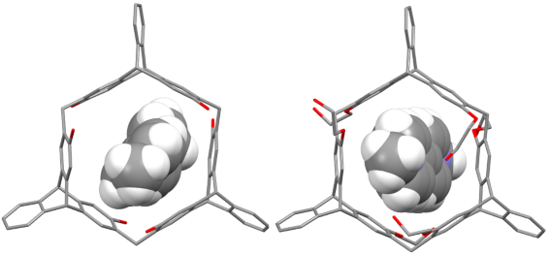
- between the proton of G1 and oxygen of H1 in the distance of 2.683 Å for G. Moreover, C-H···F hydrogen bonds between the two adjacent guests with the distances of 2.670 (H), 2.570 (I), 2.594 (J) and 1.981 Å (K), respectively, were observed. These multiple interactions play an important role in the
- H5 in the distance of 1.989 Å (R). In addition, C-H···F hydrogen bonds between the two adjacent guests with the distance of 2.420 (S), 2.474 (T) and 2.187 Å (U), respectively, are observed as well. These multiple intermolecular hydrogen-bonding interactions between the host and the guest might be the
- Information File 1, Figure S92). The calculation results revealed the C–H···π interactions between the protons on the pyridinium ring of G1 and the benzene ring units of the host H4 and C–H···O hydrogen bonds between the protons of the methyl group and pyridinium rings of G1 and the oxygen atom of H4 with


Water inside β-cyclodextrin cavity: amount, stability and mechanism of binding
Beilstein J. Org. Chem. 2019, 15, 1592–1600, doi:10.3762/bjoc.15.163
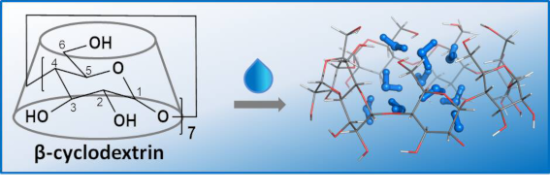
- “open” configuration the primary hydroxy groups do not participate in intramolecular hydrogen bond interactions. Relatively weak hydrogen bonds are formed between the secondary hydroxy groups in the wider/lower rim of the molecule. The calculations reveal that the “head–tail” arrangement of the narrow
- efficiency of the hydration process. For example, the β-CD dihydrate (Figure 3) containing two water molecules bridging the oppositely placed hydroxy groups from the upper belt thus increasing the number of hydrogen bonds, is characterized with a lower (i.e., more favorable) enthalpy of formation than other
- location. Inside the β-CD cavern a water cluster is formed by a stepwise consecutive coordination of water guests. The cluster is stabilized by a network of hydrogen bonds mostly between the water molecules themselves and interactions between water ligands and cyclodextrin walls. The general trends


Synthesis and conformational preferences of short analogues of antifreeze glycopeptides (AFGP)
Beilstein J. Org. Chem. 2019, 15, 1581–1591, doi:10.3762/bjoc.15.162
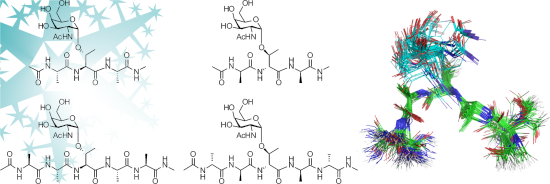
- antifreeze activity, as well as to clarify the influence of hydrogen bonds on the preferred conformation of the molecule. Model AFGP analogues were investigated by NMR in order to elucidate the stereochemical influence of the amino acid configuration on the three-dimensional structure of the glycopeptides. A
- , simplified AFGP analogues avoided overlapping of signals. Temperature coefficient of the amide protons The temperature coefficient factor of amide protons dδ/dT [ppb/K] is one of the parameters, which can be used to determine the existence of hydrogen bonds in peptide chains. The amide protons involved in
- side chain oxygen of Thr3. In case of peptide 3, due to weaker intramolecular hydrogen bonds combined with a high flexibility of the peptide main chain, the fixed orientation of the galactose ring is not observed (see Figure 3 and Figure 4). Such conclusion seems to be confirmed by the small value of


2,3-Dibutoxynaphthalene-based tetralactam macrocycles for recognizing precious metal chloride complexes
Beilstein J. Org. Chem. 2019, 15, 1460–1467, doi:10.3762/bjoc.15.146
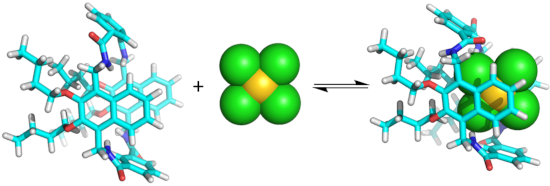
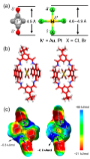
- the shrunken cavity caused by intramolecular hydrogen bonds in the latter tetralactam macrocycle. The binding of the isophthalamide-based macrocycle is mainly driven by hydrogen bonds and electrostatic interactions. This naphthalene-based macrocycle has similar binding affinities to all the three
- in the 1H NMR spectra of the two macrocycles. In particular, the NH protons of 2 (7.51 ppm) are located more downfield than that of 1 (6.08 ppm). This should be caused by the intramolecular hydrogen bonds with pyridine nitrogen atoms in 2 [35][36][37][38]. These hydrogen bonds make macrocycles 2 more
- , which may be caused by intramolecular hydrogen bonds, but the conformational interconversion should be fast as well for macrocycle 2 at room temperature, which is supported by only one set of sharp signals for the aromatic protons and the non-split and sharp signals of diastereotopic protons at the


Host–guest interactions between p-sulfonatocalix[4]arene and p-sulfonatothiacalix[4]arene and group IA, IIA and f-block metal cations: a DFT/SMD study
Beilstein J. Org. Chem. 2019, 15, 1321–1330, doi:10.3762/bjoc.15.131
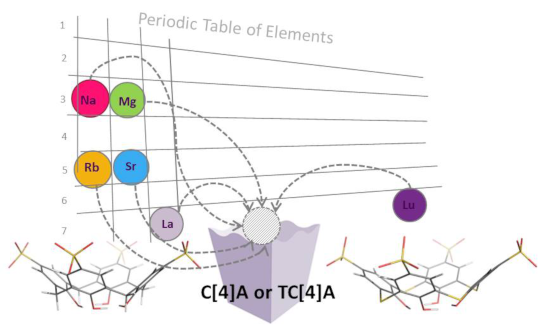
- with sulfonate groups. The optimized C[4]A and TC[4]A systems possess four-fold symmetry (Figure 1B). The four hydroxy groups surrounding the narrow rim (OH rim) are linked via hydrogen bonds in a tail–head arrangement. C[4]A and TC[4]A as first-shell ligands for IA/IIA/f-block metal cations The


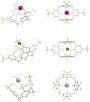

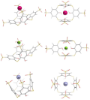


Molecular recognition using tetralactam macrocycles with parallel aromatic sidewalls
Beilstein J. Org. Chem. 2019, 15, 1086–1095, doi:10.3762/bjoc.15.105
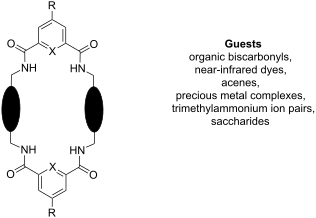
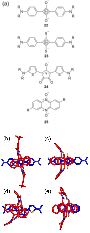
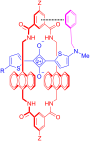
- acene guests Rotaxane template 18 in Scheme 2 is a squaraine dye whose central core has two oxygen atoms that can form hydrogen bonds with the tetralactam NH residues. Squaraine rotaxanes were first prepared by the Smith group in 2005 using the Leigh-type clipping method [44]. As a general trend the


Novel (2-amino-4-arylimidazolyl)propanoic acids and pyrrolo[1,2-c]imidazoles via the domino reactions of 2-amino-4-arylimidazoles with carbonyl and methylene active compounds
Beilstein J. Org. Chem. 2019, 15, 1032–1045, doi:10.3762/bjoc.15.101
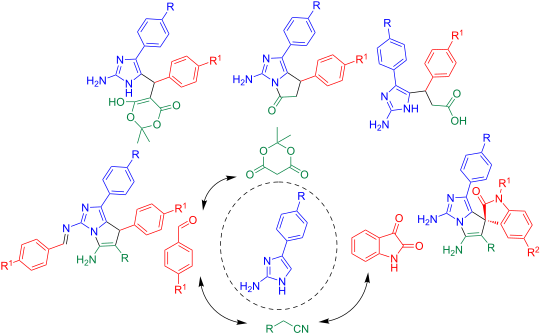
- take part in the formation of the hydrogen bonds were refined using the isotropic approximation as well as all hydrogen atoms in the structure 9i. Full-matrix least-squares refinement of the structures against F2 in anisotropic approximation for non-hydrogen atoms using 3879 (9i), 5051 (11b), 3968 (16a


Catalytic asymmetric oxo-Diels–Alder reactions with chiral atropisomeric biphenyl diols
Beilstein J. Org. Chem. 2019, 15, 955–962, doi:10.3762/bjoc.15.92
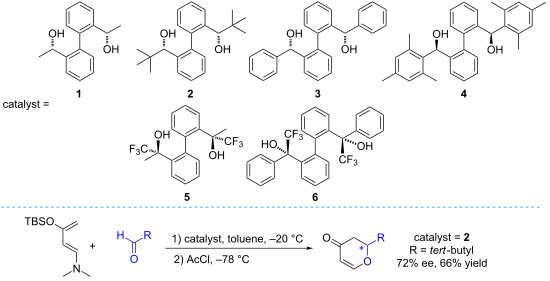
- hydroxy and NH units for hydrogen bonding activation, % ee and yields in oxo-DA reactions were found to be enhanced with increasing NH acidity, leading to stronger hydrogen bonds [32]. So, there is much room for further investigation and improvement with other hydrogen bonding organocatalysts. An earlier
- form strong hydrogen bonds could perform the same catalytic role in oxo-DA reactions as reported in the literature. Inspired by Rawal’s work on TADDOL and BAMOL organocatalysts, we, in this work, have adopted a similar reaction of Rawal’s diene with benzaldehyde as a starting point of our study and
- formation of the other atropisomer (P)-(S,S)-3 as a higher steric repulsion is generated during the close approach of two bulky phenyl peripheral substituents. The X-ray crystal structure also reveals that an alternative formation of intra- and intermolecular hydrogen bonds [intra- D(OH···O): 1.951(3) Å


Halogen bonding and host–guest chemistry between N-alkylammonium resorcinarene halides, diiodoperfluorobutane and neutral guests
Beilstein J. Org. Chem. 2019, 15, 947–954, doi:10.3762/bjoc.15.91
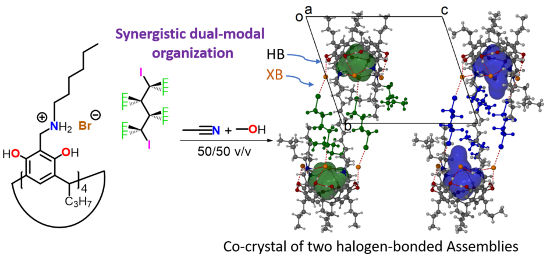
- Br− counterion with an RNB of 0.96 (Supporting Information File 1, Figure S2). MeOH-stabilized systems instead employ weak NH···O and OH···N hydrogen bonds (Supporting Information File 1, Figure S2). In both cases, the electron-rich environment of the cavity provides a negative electrostatic surface
- were positioned at the same level as the (HNH···Cl−)4 HB circle. The O···Cl− distances of 3.13(3) and 3.22(4) Å suggest OH···Cl− hydrogen bonds. Meanwhile, an OH···O hydrogen bond should also exist between the two water molecules with the O···O distance of 3.01(5) Å. It is surprising to find that the
- resorcinarene cavity below these water molecules is empty. It seems the electronegative surface of the cavity repels the water molecules and pushes them up (Figure 4). Besides the hydrogen bonds, each Cl− anion also donates electron density to one DIOFB molecule via a halogen bond with an average RXB of 0.88


An anomalous addition of chlorosulfonyl isocyanate to a carbonyl group: the synthesis of ((3aS,7aR,E)-2-ethyl-3-oxo-2,3,3a,4,7,7a-hexahydro-1H-isoindol-1-ylidene)sulfamoyl chloride
Beilstein J. Org. Chem. 2019, 15, 931–936, doi:10.3762/bjoc.15.89
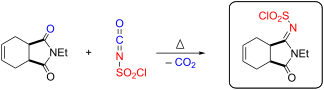
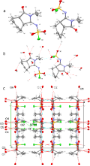
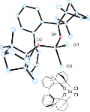
- for C10H13ClN2O3S, 276.7350; found, 277.0434. The dipolar intermediate formed in the reaction of CSI with olefins. (a) Molecular structure of racemic molecule 10 (asymmetric unit). Thermal ellipsoids are drawn at the 30% probability level. (b) Geometric parameter with H-bonded geometry. Hydrogen bonds




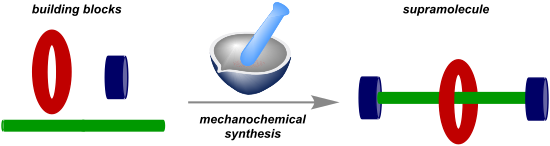
Mechanochemistry of supramolecules
Beilstein J. Org. Chem. 2019, 15, 881–900, doi:10.3762/bjoc.15.86
- the amides 47 (Figure 26). The development of sustainable methods for the activation of less-reactive undirected C(sp3)–H bonds is challenging however, highly desired in organic synthesis. Mal and co-workers also demonstrated that acidic C(sp3)–hydrogen bonds within a molecule could be used to control


Synthesis of 2H-furo[2,3-c]pyrazole ring systems through silver(I) ion-mediated ring-closure reaction
Beilstein J. Org. Chem. 2019, 15, 679–684, doi:10.3762/bjoc.15.62

- −127.5 to −128.0 ppm for N-1. The structure of 4d was investigated additionally by single crystal X-ray analysis (Figure 1) [39]. The asymmetric unit of the crystal consists of two molecules 4d(A) and 4d(B) held together by the weak CH···N type hydrogen bonds C19–H···N51 (C···N = 3.470(11) Å, H···N
- one plane, but the phenyl substituents are slightly turned in relation to this plane (Table 3). The molecules in the crystal are located in columns made up of asymmetric units held by hydrogen bonds (Figure 1b). Conclusion In conclusion, we have demonstrated a new, three-step synthetic route to 2H


Synthesis and fluorescent properties of N(9)-alkylated 2-amino-6-triazolylpurines and 7-deazapurines
Beilstein J. Org. Chem. 2019, 15, 474–489, doi:10.3762/bjoc.15.41
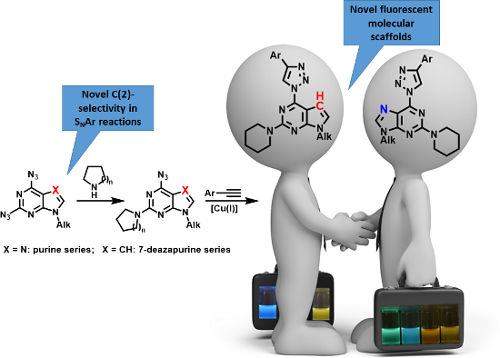
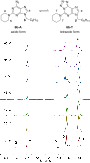
- as cell imaging tools [31][32], biosensors and sensors for detection of heavy metals [33]. The tendency of these structures to form hydrogen bonds, to respond to medium effects (solvatochromism) [34] and to certain impurities (e.g., coordination complexes with metal ions) make these compound classes




Synthesis of nonracemic hydroxyglutamic acids
Beilstein J. Org. Chem. 2019, 15, 236–255, doi:10.3762/bjoc.15.22
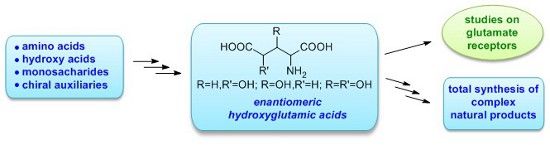
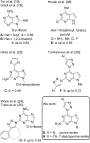
- groups capable for the formation of additional hydrogen bonds, both as donors and acceptors. The majority of synthetic strategies starts from natural products and relies on application of chirons having the required configuration at the carbon atom bonded to nitrogen (e.g., serine, glutamic and
- additional substituents, tuning the conformational flexibility of analogues and introducing groups capable of hydrogen bonding. Crystallographic data obtained for glutamate receptors [13][14][15] showed complex set of atoms interacting electrostatically and through hydrogen bonds and the conclusions from


Silanediol versus chlorosilanol: hydrolyses and hydrogen-bonding catalyses with fenchole-based silanes
Beilstein J. Org. Chem. 2019, 15, 167–186, doi:10.3762/bjoc.15.17
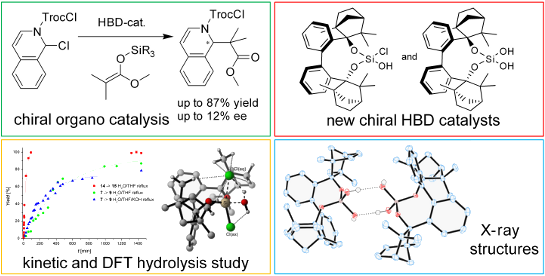
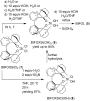
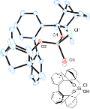
- kcal mol−1) and BIFOXSiCl(OH) (8) to BIFOXSi(OH)2 (9, Ea = 31.4 kcal mol−1) with high activation barriers, enforced by endo fenchone units. Crystal structure analyses of silanediol 9 with acetone show shorter hydrogen bonds between the Si–OH groups and the oxygen of the bound acetone (OH···O 1.88(3
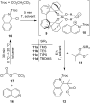
- % ee), reaction of 1-chloroisochroman (18) and silyl ketene acetals 11 (up to 85% yield and 5% ee), reaction of chromen-4-one (20) and silyl ketene acetals 11 (up to 98% yield and 4% ee). Keywords: hydrogen bonds; hydrolysis; ion pairs; organocatalysis; silanediol; Introduction Silanediols are
- alcohol group for single hydrogen bonds (CH3OH (11.88 kcal mol−1) vs SiH3OH (16.43 kcal mol−1), Table 4, entries 1 and 2), which is more acidic and inconsistent with the results of West et al. [73]. In case of double hydrogen bonds in the glyoxal based system, both are equally strong, because of a third








Ammonium-tagged ruthenium-based catalysts for olefin metathesis in aqueous media under ultrasound and microwave irradiation
Beilstein J. Org. Chem. 2019, 15, 160–166, doi:10.3762/bjoc.15.16
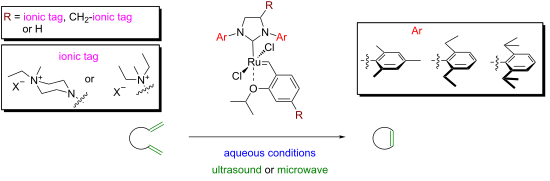
- surface area involved or on the electrostatic nature of the surface itself [81]. Additionally, the packing density of supramolecular clusters of water created by strong intermolecular hydrogen bonds may also play a key role. Indeed, various effects may be depending on the solubility of the reactants in


Computational characterization of enzyme-bound thiamin diphosphate reveals a surprisingly stable tricyclic state: implications for catalysis
Beilstein J. Org. Chem. 2019, 15, 145–159, doi:10.3762/bjoc.15.15
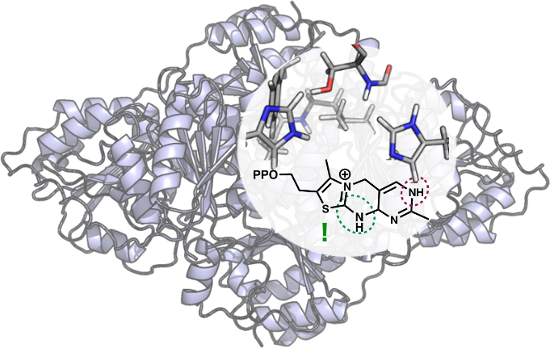
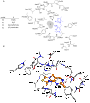
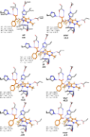
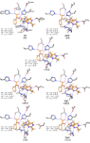
- the crystallographic water in model C, the presence of the substrate pushes the thiazolium ring somewhat towards the interior of the cavity. In all ThDP states the carboxylate of BF forms hydrogen bonds to the side chain hydroxy group and the backbone NH of Ser26, and to the Nε of His281 (Figure 5
- a source of additional interactions. In the AP and APH+ states, the hydroxy group forms hydrogen bonds with His70 and the exocyclic NH2. Support was lent to the validity of model E when superposition of the structure of the APH+ form on the structure of BFDC:(R)-mandelate complex (PDB 1MCZ) showed




Adhesion, forces and the stability of interfaces
Beilstein J. Org. Chem. 2019, 15, 106–129, doi:10.3762/bjoc.15.12


Synthesis, biophysical properties, and RNase H activity of 6’-difluoro[4.3.0]bicyclo-DNA
Beilstein J. Org. Chem. 2019, 15, 79–88, doi:10.3762/bjoc.15.9
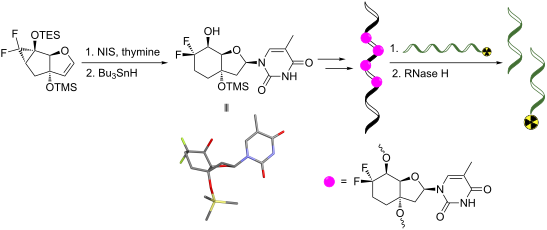
- . The reason for the stabilization is an increased strength of the Watson–Crick base pairing and base stacking interactions due to the electronic effects of the axially oriented 2’-fluorine atom [11][12]. Additionally, FC–H···O hydrogen bonds between the 2’-fluorine and the 4’-oxygen or 5’-oxygen of the


1,8-Bis(dimethylamino)naphthyl-2-ketimines: Inside vs outside protonation
Beilstein J. Org. Chem. 2018, 14, 2940–2948, doi:10.3762/bjoc.14.273
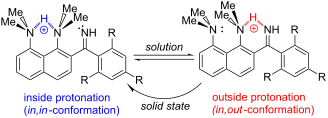
- function are additionally stabilised by hydrogen bonds with solvent molecules and thus the amount of b’ forms correlates with the proton accepting ability of the medium [11]. The gas phase calculations show that without any additional interaction with the medium, the forms protonated at the imino group are




Green synthesis of new chiral 1-(arylamino)imidazo[2,1-a]isoindole-2,5-diones from the corresponding α-amino acid arylhydrazides in aqueous medium
Beilstein J. Org. Chem. 2018, 14, 2923–2930, doi:10.3762/bjoc.14.271
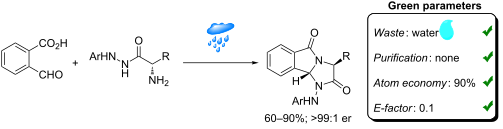
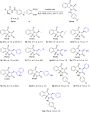
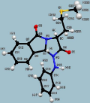
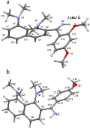
- observed with a total trans-diastereoselectivity controlled by intramolecular hydrogen bonds. Chemical structures of analogues. NOEs correlation showing the stereochemistry of the compound 5a. X-ray crystal structure of 5f shown at the 30% probability level. Strategy for the formation of 1-(arylamino)-1H