Search results
Search for "oxidants" in Full Text gives 228 result(s) in Beilstein Journal of Organic Chemistry. Showing first 200.
Iodoarene-catalyzed cyclizations of N-propargylamides and β-amidoketones: synthesis of 2-oxazolines
Beilstein J. Org. Chem. 2017, 13, 1823–1827, doi:10.3762/bjoc.13.177
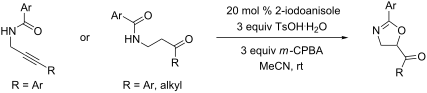
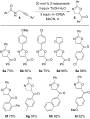
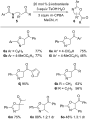
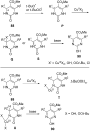
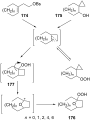
- propargylamides 4 (Scheme 5). In line with the results for the propargylamides, iodobenzene was an inferior pre-catalyst to 2-iodoanisole and other oxidants, acids and solvents led to lower yields of 6. The scope of this cyclization process was explored and different aromatic amide and ketone groups were well






Oxidative dehydrogenation of C–C and C–N bonds: A convenient approach to access diverse (dihydro)heteroaromatic compounds
Beilstein J. Org. Chem. 2017, 13, 1670–1692, doi:10.3762/bjoc.13.162
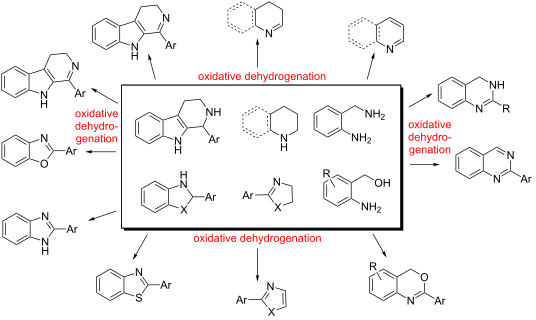
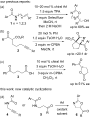
- acceptor) or via oxidative dehydrogenation in the presence of appropriate oxidants. In absence of hydrogen acceptors, post dehydrogenation the hydrogen is released as H2↑. Catalysts such as iridium pincer complexes, CuAl2O3, hydroxyapatite bound palladium and ruthenium hydride complexes have been harnessed
- dehydrogenation strategies have been reported lately. This review will discuss various techniques of oxidative dehydrogenation of nitrogen heterocycles via reagents, catalysts and also in the presence of stoichiometric oxidants or under aerobic conditions. Review Reagent-based approaches For the reagent-based
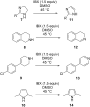
- oxidative dehydrogenation, a stoichiometric amount of oxidant is applied in the reaction that gets associated with the nitrogen and facilitates subsequent proton abstraction and elimination in the ring to afford the desired heteroaromatics. Various organic oxidants such as 2-iodoxybenzoic acid (IBX), 2,3








Development of a method for the synthesis of 2,4,5-trisubstituted oxazoles composed of carboxylic acid, amino acid, and boronic acid
Beilstein J. Org. Chem. 2017, 13, 1478–1485, doi:10.3762/bjoc.13.146
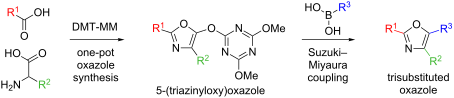
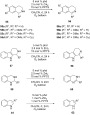
- , provided the corresponding 2,4,5-trisubstituted oxazoles in good yields. Furthermore, several functionalities, such as ethoxycarbonyl, formyl, and methylsulfanyl groups, which are sensitive to acids, bases, nucleophiles, electrophiles and oxidants, were able to tolerate these reaction conditions (Table 1


Urea–hydrogen peroxide prompted the selective and controlled oxidation of thioglycosides into sulfoxides and sulfones
Beilstein J. Org. Chem. 2017, 13, 1139–1144, doi:10.3762/bjoc.13.113
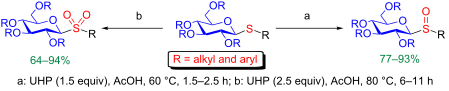
- controlled oxidation of thioglycosides to glycosyl sulfoxides and sulfones selectively by altering the reaction conditions. It is also observed that thioglycoside oxidation suffers from low yields, poor selectivity (i.e., sulfoxide vs sulfone), use of inconvenient reaction conditions and expensive oxidants

Isoxazole derivatives as new nitric oxide elicitors in plants
Beilstein J. Org. Chem. 2017, 13, 659–664, doi:10.3762/bjoc.13.65
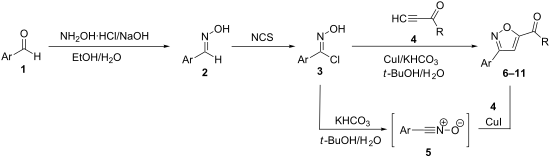
- situ by the oxidative dehydrogenation of aldoximes in the presence of various oxidants [26][27][28][29], or by the dehydrohalogenation of hydroxyiminoyl halides promoted by organic or inorganic bases [30][31][32]. A less used synthetic procedure involves the oxidative dehydration of primary nitro


Transition-metal-catalyzed synthesis of phenols and aryl thiols
Beilstein J. Org. Chem. 2017, 13, 589–611, doi:10.3762/bjoc.13.58

- ]. Rao and co-workers found that both biaryl ketone and aryl alkyl ketones could be regioselectively hydroxylated in satisfying yields. The reaction proceeded in TFA/TFAA in the presence of Pd(OAc)2 as catalyst and several type of oxidants including selectfluor, PhI(OAc)2 and K2S2O8, respectively (Scheme


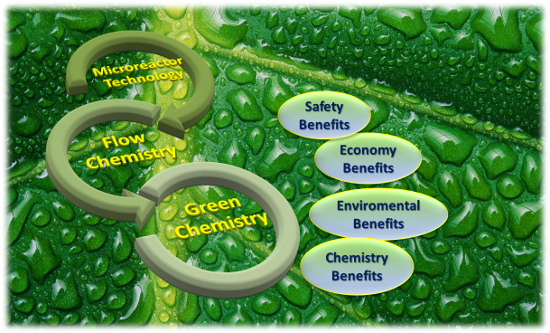
Contribution of microreactor technology and flow chemistry to the development of green and sustainable synthesis
Beilstein J. Org. Chem. 2017, 13, 520–542, doi:10.3762/bjoc.13.51
- reported a metal-free photocatalytic aerobic oxidation of thiols to disulfides under continuous-flow conditions [64]. Disulfides are useful molecules employed as drugs, anti-oxidants or pesticides as well as rubber vulcanizating agents [65]. Symmetric disulfides are generally obtained by oxidative coupling






Synthesis and evaluation of anti-oxidant and cytotoxic activities of novel 10-undecenoic acid methyl ester based lipoconjugates of phenolic acids
Beilstein J. Org. Chem. 2017, 13, 26–32, doi:10.3762/bjoc.13.4
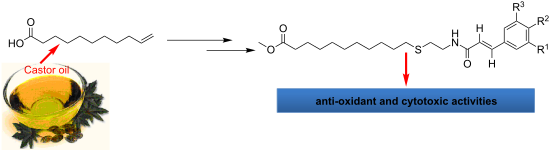
- derivatives have been assessed by their IC50 inhibitory values in the proliferation of MDA-MB231, SKOV3, MCF7, DU 145 and HepG2 cancer cell lines. Keywords: anticancer; anti-oxidants; caffeic acid; coumaric acid; ferulic acid; phenolic lipids; sinapic acid; undecenoic acid; Introduction Phenolic compounds
- potential of compounds. The results for the ability of the prepared compounds to scavenge the DPPH radical are shown in Table 1 along with reference anti-oxidants α-tocopherol (α-TP) and tert-butylhydroquinone (TBHQ). As can be seen, all synthesized derivatives exhibit radical scavenging ability except the
- , pure linoleic acid and linoleic acid containing the synthesized compounds were subjected to DSC analysis. The results of the assay are shown in Table 2 and α-TP and TBHQ were included as standard anti-oxidants. Pure linoleic acid showed an oxidative induction temperature (OIT) of 116 °C which was found


Copper-catalyzed asymmetric sp3 C–H arylation of tetrahydroisoquinoline mediated by a visible light photoredox catalyst
Beilstein J. Org. Chem. 2016, 12, 2636–2643, doi:10.3762/bjoc.12.260
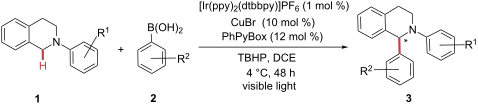
- developed the first direct sp3 C–H arylation of THIQ with arylboronic acids using a copper catalyst (Scheme 1) [30]. Oxygen gas and tert-butyl hydroperoxide (TBHP) were used as external oxidants, which gave moderate to good isolated yields (up to 75%). In addition, we demonstrated the first enantioselective




Diels–Alder reactions in confined spaces: the influence of catalyst structure and the nature of active sites for the retro-Diels–Alder reaction
Beilstein J. Org. Chem. 2016, 12, 2181–2188, doi:10.3762/bjoc.12.208

- are improved and selectivity is enhanced or modified [13]. In this regard, heterogeneous catalysis in general and zeolites in particular are remarkably efficient since they permit the replacement of toxic mineral acids and oxidants by easily recyclable catalysts [14]. One approach to improve yields


The direct oxidative diene cyclization and related reactions in natural product synthesis
Beilstein J. Org. Chem. 2016, 12, 2104–2123, doi:10.3762/bjoc.12.200
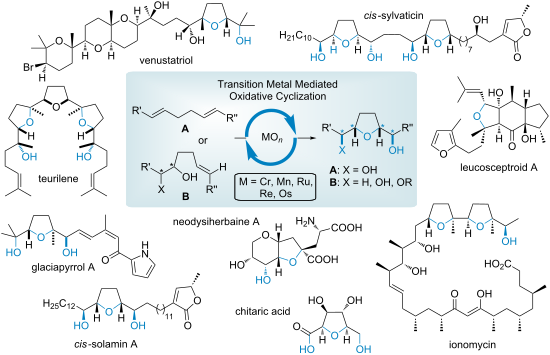
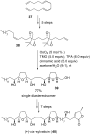
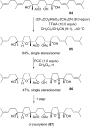
- fact, in these cases, mostly a trans-selectivity for the cyclization event is observed, due to the loose coordination. The most prominent oxidants to promote such type C reactions are Co(II) and Re(VII) complexes [27][28][29]. Reactions where a 5- and/or 6-(di)hydroxy group directs an oxidizing reagent






Stereo- and regioselectivity of the hetero-Diels–Alder reaction of nitroso derivatives with conjugated dienes
Beilstein J. Org. Chem. 2016, 12, 1949–1980, doi:10.3762/bjoc.12.184
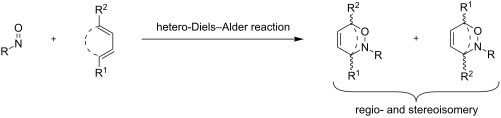
- ) [36]. The introduction of the nitroso group through the transformation of pendant functional groups includes the oxidation of primary amines [37][38][39][40][41] (Scheme 4) and hydroxamic acids [42][43][44] (Scheme 5) and the reduction of nitro compounds [45][46][47]. As oxidants for the amino group




Rearrangements of organic peroxides and related processes
Beilstein J. Org. Chem. 2016, 12, 1647–1748, doi:10.3762/bjoc.12.162
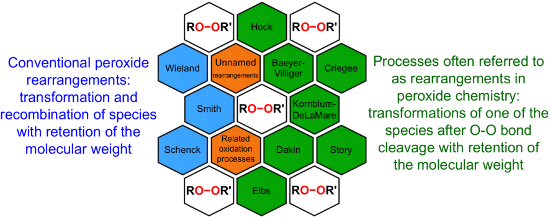
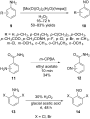
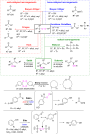
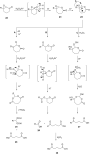
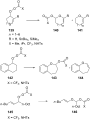
- ][109][110][111][112][113]. Organic peroxides are widely used as oxidants in oxidative coupling processes [114][115][116][117][118][119][120]. Industrial-scale production of readily available and efficient initiators of free radical polymerization and effective biologically active compounds promotes the









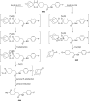


Towards potential nanoparticle contrast agents: Synthesis of new functionalized PEG bisphosphonates
Beilstein J. Org. Chem. 2016, 12, 1366–1371, doi:10.3762/bjoc.12.130
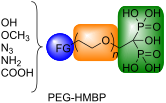
- one step has been performed. Thus, tested oxidants were the Jones reagent [22], potassium permanganate [23], with catalytic o-iodoxybenzoic acid (IBX) in oxone [24] and catalytic 2,2,6,6-tetramethyl-1-piperidinyloxy (TEMPO) with bis(acetoxy)iodobenzene (BAIB) [25]. The first two conditions led to a


Synthesis of 2-oxindoles via 'transition-metal-free' intramolecular dehydrogenative coupling (IDC) of sp2 C–H and sp3 C–H bonds
Beilstein J. Org. Chem. 2016, 12, 1153–1169, doi:10.3762/bjoc.12.111
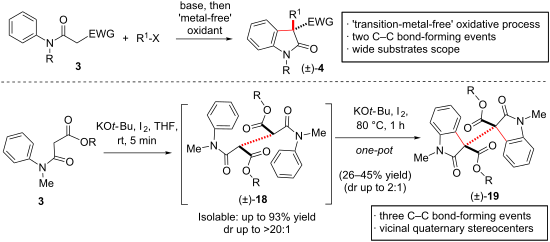
- -arylamido esters with alkyl halides followed by a dehydrogenative coupling. Experimental evidences indicated toward a radical-mediated path for this reaction. Keywords: C−H functionalization; intramolecular dehydrogenative coupling (IDC); iodine; N-iodosuccinimide; oxidants; 2-oxindoles; Introduction The
- article, we disclose the scope and limitations of 'transition-metal-free' IDC of Csp2-H and Csp3-H using iodine and N-iodosuccinimide (NIS) as oxidants. In addition, we have also demonstrated the synthetic utility of oxidative coupling products in the syntheses of 3-substituted-2-oxindoles, via a
- suitable solvent, potential bases, oxidants etc. yielded the desired product in good yields i.e. 85%, 88%, and 90% in THF, dioxane, and DMSO, respectively (Table 1, entries 3, 5, and 8). However, in non-polar aromatic solvents like xylene, benzene, and toluene, poor yields (43–49%, Table 1, entries 4, 6





Nucleic acids through condensation of nucleosides and phosphorous acid in the presence of sulfur
Beilstein J. Org. Chem. 2016, 12, 670–673, doi:10.3762/bjoc.12.67
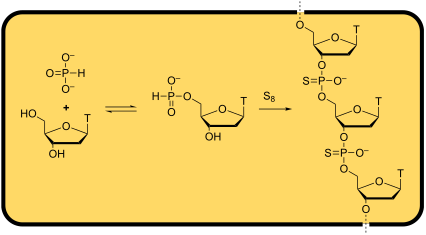
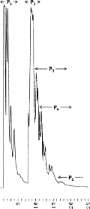
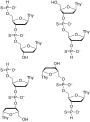
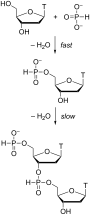
- polymerization. Proposed oxidants for prebiotic phosphite chemistry include H2O2 and Fe(III). The present paper describes the polymerization of thymidine and triethylammonium phosphite, with elemental sulfur acting as the oxidant. Up to pentameric oligonucleotides with internucleosidic phosphorothioate linkages



Mycothiol synthesis by an anomerization reaction through endocyclic cleavage
Beilstein J. Org. Chem. 2016, 12, 328–333, doi:10.3762/bjoc.12.35
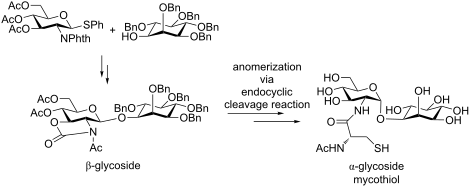
- mycobacteria for protection against foreign electrophilic agents such as oxidants, radicals, and drugs. In the detoxification pathway, MSH reacts with alkylating reagents and the resulting S-conjugates are subsequently cleaved at the amide bond by MSH S-conjugate amidase (Scheme 1) [4][5][6][7][8][9][10


Cascade alkylarylation of substituted N-allylbenzamides for the construction of dihydroisoquinolin-1(2H)-ones and isoquinoline-1,3(2H,4H)-diones
Beilstein J. Org. Chem. 2016, 12, 301–308, doi:10.3762/bjoc.12.32
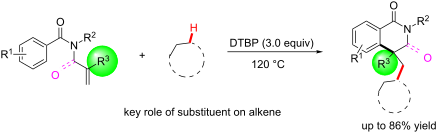
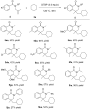
- -methylallyl)benzamide (4a) and cyclohexane (2a) as model compounds (Table 1). As shown in Table 1, we found that the reactions did not happen or gave only a trace amount of the desired product with K2S2O8, AIBN, BPO and TBHP as oxidants (Table 1, entries 1, 3–5). PhI(OAc)2 and DCP could be used as oxidants




Base metal-catalyzed benzylic oxidation of (aryl)(heteroaryl)methanes with molecular oxygen
Beilstein J. Org. Chem. 2016, 12, 144–153, doi:10.3762/bjoc.12.16
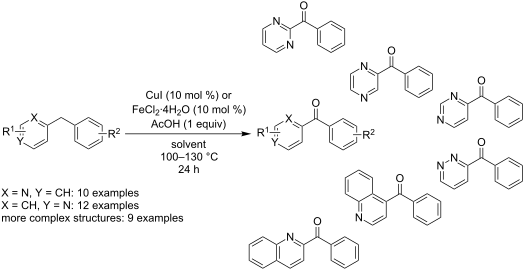
- use of (super)stoichiometric quantities of oxyanions of toxic metals like Mn(VII) and Cr(VI) [1][2]. The amount of waste these oxidants produce and limitations on their use by new legislation [3] has prompted scientists to search for more sustainable oxidation methods. The use of transition metal- or



Iron complexes of tetramine ligands catalyse allylic hydroxyamination via a nitroso–ene mechanism
Beilstein J. Org. Chem. 2015, 11, 2549–2556, doi:10.3762/bjoc.11.275
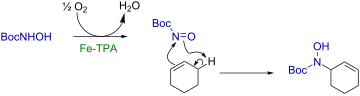
- ][24][25][26]. Several new developments in the related hetero-Diels–Alder reaction of acylnitroso species have also been reported recently [27][28][29][30]. These methodologies generally involve in situ generation of the acylnitroso species, achieved using a variety of oxidants including vanadium- [28


Star-shaped tetrathiafulvalene oligomers towards the construction of conducting supramolecular assembly
Beilstein J. Org. Chem. 2015, 11, 1596–1613, doi:10.3762/bjoc.11.175
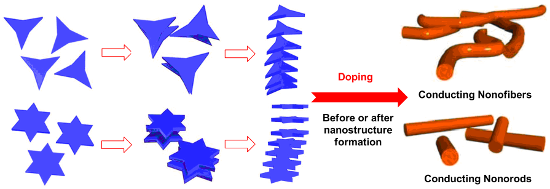
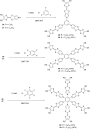
- produce supramolecular structures, and their TTF units stack face-to-face to form columnar structures using the fastener effect. Based on redox-active self-organizing supramolecular structures, conducting nanoobjects are constructed by doping of TTF oligomers with oxidants after the formation of such




Pd(OAc)2-catalyzed dehydrogenative C–H activation: An expedient synthesis of uracil-annulated β-carbolinones
Beilstein J. Org. Chem. 2015, 11, 1360–1366, doi:10.3762/bjoc.11.146
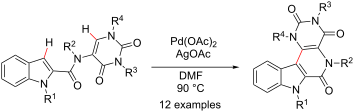
- % yield of 5a with 52% conversion of starting material. Increasing the temperature to 90 °C (Table 1, entry 2) afforded 63% yield of 5a with 80% conversion of 4a. Then different oxidants [Cu(OTf)2, PhI(OAc)2, K2S2O8, (NH4)2S2O8, p-benzoquinone (BQ), oxone, AgOAc, molecular oxygen] were examined under




A simple and efficient method for the preparation of 5-hydroxy-3-acyltetramic acids
Beilstein J. Org. Chem. 2015, 11, 323–327, doi:10.3762/bjoc.11.37
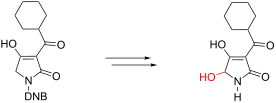
- were obtained when 3-phenyl-2-(phenylsulfonyl)oxaziridine (14) was employed, but product 15 from the concomitant reaction of bisenolate addition to N-sulfonimine byproduct was also isolated in 15% yield from this reaction. Some peroxide-based electrophilic oxidants (Table 1, entries 3–5) were also


Photovoltaic-driven organic electrosynthesis and efforts toward more sustainable oxidation reactions
Beilstein J. Org. Chem. 2015, 11, 280–287, doi:10.3762/bjoc.11.32
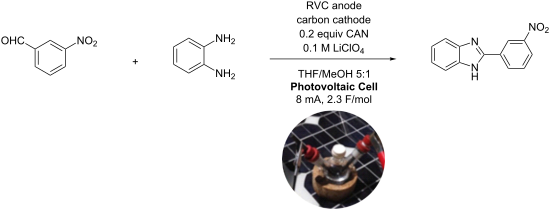
- oxidants [5]. In such experiments, the potential at the anode increases to a point where it matches the oxidation potential of the reduced chemical oxidant (Scheme 1). The reduced chemical oxidant is then oxidized in order to generate the active chemical oxidant. The chemical oxidant then performs the
- reason, the sunlight-driven oxidation reactions were extended to the recycling of chemical oxidants. Three examples are shown in Scheme 4 [12] where each was chosen for its unique feature related to the indirect electrochemical approach. In the first reaction (Scheme 4a), an asymmetric dihydroxylation
- oxidation strategies, which can be used to generate new carbon–carbon bonds, functionalize amides, and capitalize on the reagent-based selectivity associated with chemical oxidants. In all cases, the use of constant current electrolysis conditions allows the potential at the anode surface to be adjusted to


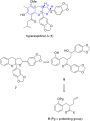
Synthesis of the furo[2,3-b]chromene ring system of hyperaspindols A and B
Beilstein J. Org. Chem. 2015, 11, 265–270, doi:10.3762/bjoc.11.29
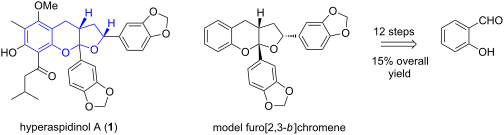
- antibacterial and antiviral activities, as well as inhibitory activity on thromboxane A2 and leukotriene D4 [4]. Acylphloroglucinols are known to act as anti-oxidants, by reducing hydroperoxides and hydrogen peroxide, thereby suppressing the formation of the reactive species [9]. The hyperaspidinols 1 and 2