Search results
Search for "selectivity" in Full Text gives 1368 result(s) in Beilstein Journal of Organic Chemistry. Showing first 200.
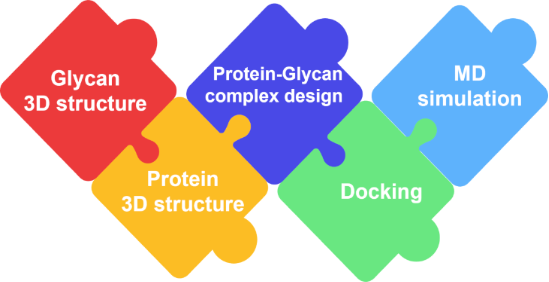
Computational toolbox for the analysis of protein–glycan interactions
Beilstein J. Org. Chem. 2024, 20, 2084–2107, doi:10.3762/bjoc.20.180


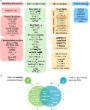
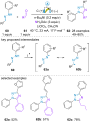
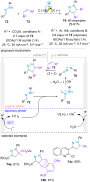
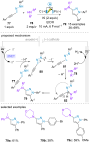
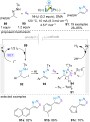
Multicomponent syntheses of pyrazoles via (3 + 2)-cyclocondensation and (3 + 2)-cycloaddition key steps
Beilstein J. Org. Chem. 2024, 20, 2024–2077, doi:10.3762/bjoc.20.178

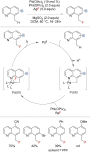
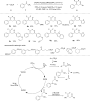
- phosphane ligands is crucial for the selectivity in this reaction. Suzuki coupling can also serve for the functionalization of iodochromones 55, which, as α,β-unsaturated ketones, undergo ring opening under the reaction conditions, followed by Michael addition–cyclocondensation. Xie et al. devised a method


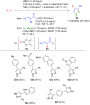


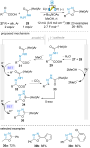
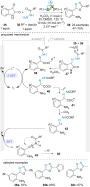
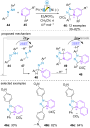
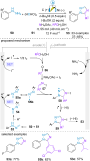
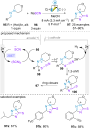
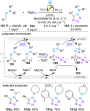
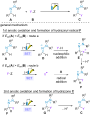
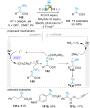
Harnessing the versatility of hydrazones through electrosynthetic oxidative transformations
Beilstein J. Org. Chem. 2024, 20, 1988–2004, doi:10.3762/bjoc.20.175
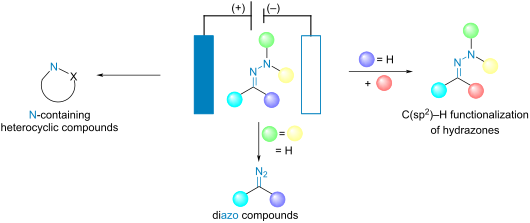
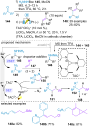
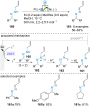
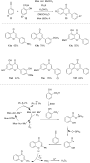
- reaction conditions to selectively oxidize the desired compound. In some cases, the use of an electromediatior such as an iodide anion helped in achieving the desired selectivity. In line with the continuing increasing interest for both electrosynthetic organic transformations and the chemistry of









Radical reactivity of antiaromatic Ni(II) norcorroles with azo radical initiators
Beilstein J. Org. Chem. 2024, 20, 1967–1972, doi:10.3762/bjoc.20.172
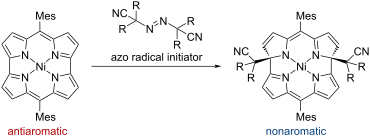
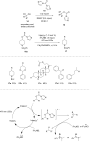
- presented. We also discuss the selectivity of the radical addition to Ni(II) norcorroles using DFT calculations. Results and Discussion Reactivity with azo radical initiators We selected 2,2'-azobis(isobutyronitrile) (AIBN) as a radical source. Ni(II) dimesitylnorcorrole 1 was treated with AIBN in refluxing


Regioselective alkylation of a versatile indazole: Electrophile scope and mechanistic insights from density functional theory calculations
Beilstein J. Org. Chem. 2024, 20, 1940–1954, doi:10.3762/bjoc.20.170
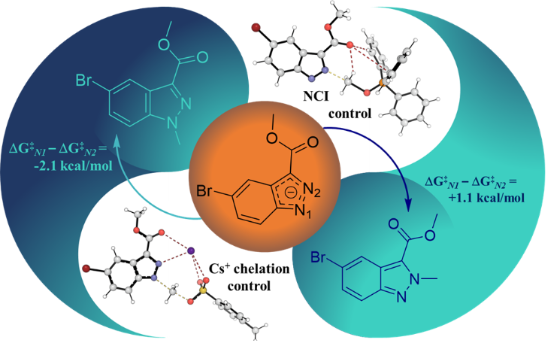
- employed as nucleophiles in chemical transformations, and a mixture of both N1- and N2-alkylated products is formed, depending on the reaction conditions, with little selectivity in regards to substituent effects [27][28][29][30][31][32][33]. Considering the importance of indazoles as a widely used
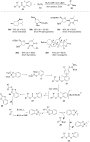
- for N1/N2 discrimination studies. The existing approaches for generating N-substituted indazoles of compound 6 often lead to a mixture of N1- and N2-alkylated indazoles with either low selectivity or moderate yields depending on the conditions used. For example, Takahashi et al. obtained N1- and N2
- -substituted indazole analogs in 44% and 40% yields, respectively, by treating compound 6 with methyl iodide and potassium carbonate in dimethylformamide (DMF) at room temperature for 17 h [40]. Other works have shown poor selectivity when 6 and other isomers similar to 6 were reacted with isopropyl iodide and


A new platform for the synthesis of diketopyrrolopyrrole derivatives via nucleophilic aromatic substitution reactions
Beilstein J. Org. Chem. 2024, 20, 1933–1939, doi:10.3762/bjoc.20.169
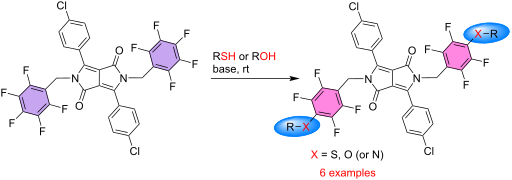
- synthesis of highly fluorescent DPP derivatives through straightforward nucleophilic aromatic substitution reactions with thiols and phenols. These nucleophilic substitutions occur at room temperature and manifest a remarkable selectivity for the 4-position of the pentafluorophenyl groups. Both symmetrical


Negishi-coupling-enabled synthesis of α-heteroaryl-α-amino acid building blocks for DNA-encoded chemical library applications
Beilstein J. Org. Chem. 2024, 20, 1922–1932, doi:10.3762/bjoc.20.168
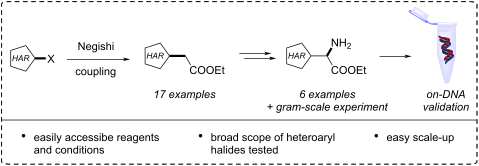
- ][28]. However, the selectivity of these photoredox reactions is driven by the structural properties of the heteroaromatic ring. During the preparation of this article, the Meggers group published an outstanding enantioselective iron-catalyzed α-amination pathway (Scheme 1b) [29]. The method is widely


Novel oxidative routes to N-arylpyridoindazolium salts
Beilstein J. Org. Chem. 2024, 20, 1906–1913, doi:10.3762/bjoc.20.166
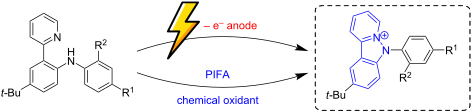
- [13][14][15][16][17][18][19], N,N-diarylbenzidines [20][21], N,N-diaryldihydrophenazines [20][21] and some others. Therefore, the selectivity issue is of primary importance. The guidelines for prediction of the dominant reaction path in the competing oxidative transformations of variously substituted


2-Heteroarylethylamines in medicinal chemistry: a review of 2-phenethylamine satellite chemical space
Beilstein J. Org. Chem. 2024, 20, 1880–1893, doi:10.3762/bjoc.20.163
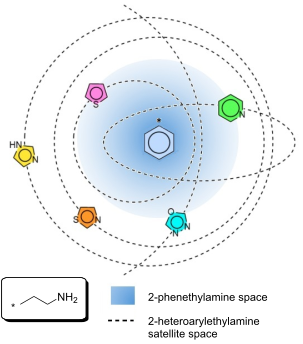
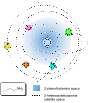
- importance in medicinal chemistry, as it can be employed as a rational to expand bioactive chemical space to tackle lead optimization issues like lack of potency, efficacy, and selectivity or pharmacokinetic/dynamic issues. One of the most important building blocks (in the sense of participating in a vast
- comparable to the original [1]. The main purpose of this approach is quality improvement, such as activity, selectivity, bioavailability, metabolism, and/or toxicity, while expanding the chemical space surrounding bioactive compounds [2][3]. Benzene-to-heteroaromatic ring replacement represents a classical
- )-2, also called lanicemine, AZD6765 or AR-R15896AR, was described as a competitive ketamine alternative without psychotomimetic side effects, although potency and selectivity were significantly lower (Scheme 2) [8][9]. Dukat et al. [10] developed flexible 3-(2-aminoethyl)pyridine (AEP) analogs 3–5 as




The Groebke–Blackburn–Bienaymé reaction in its maturity: innovation and improvements since its 21st birthday (2019–2023)
Beilstein J. Org. Chem. 2024, 20, 1839–1879, doi:10.3762/bjoc.20.162






Synthesis of polycyclic aromatic quinones by continuous flow electrochemical oxidation: anodic methoxylation of polycyclic aromatic phenols (PAPs)
Beilstein J. Org. Chem. 2024, 20, 1746–1757, doi:10.3762/bjoc.20.153
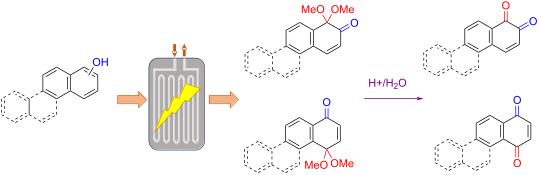
- structure B, which is further destabilized by the neighbouring ketone. A similar resonance hybrid will be formed for molecules substituted in the 4-position, like 6b, explaining the selectivity towards p-quinones. Abstraction of a proton rearomatizes the molecule before another cation is formed in the




Syntheses and medicinal chemistry of spiro heterocyclic steroids
Beilstein J. Org. Chem. 2024, 20, 1713–1745, doi:10.3762/bjoc.20.152
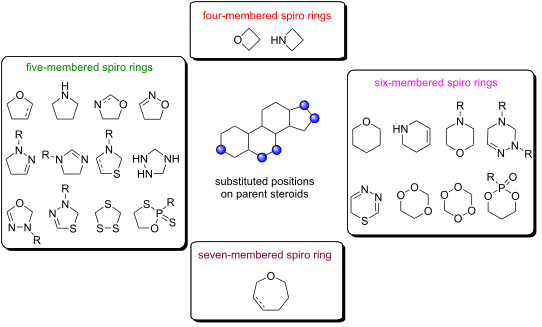
- perspective, the incorporation of a spiro fragment significantly impacts the properties of the drug candidate. Introducing a spirocyclic moiety often leads to increased potency and selectivity, as observed in comparisons between spirocycles and their non-spiro counterparts. Furthermore, several examples
- , albeit less potent than the reference drug. However, many oxazolines showed improved selectivity, with greater separation of antiprogestational and antiglucocorticoid activity (Scheme 19) [38]. 1,2-Aminoalcohols have been extensively utilized as building blocks for synthesizing spiro-1,3-oxazolidin-2


Chemo-enzymatic total synthesis: current approaches toward the integration of chemical and enzymatic transformations
Beilstein J. Org. Chem. 2024, 20, 1693–1712, doi:10.3762/bjoc.20.151
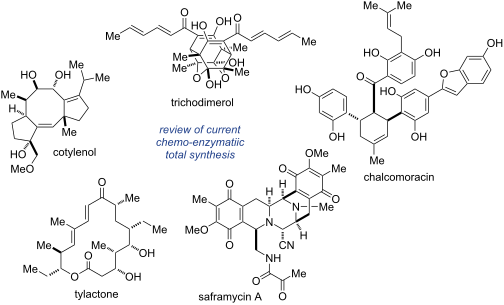
- the Diels–Alder reactions (Scheme 6B). Notably, MaDA-3 exhibited high exo-selectivity (original MaDA: endo-selective) and enabled the enantioselective rapid total synthesis of guangsangon J (60) and mongolicin F (61), which are epimers of 58 and 3, respectively. Comparative analysis of the X-ray
- approach, they used a chiral boron catalyst as a Lewis acid and achieved at best an endo/exo selectivity of 1.9:1 in a similar DA reaction. The use of Diels–Alderase in their recent work significantly improved the endo/exo selectivity under mild conditions in water, thereby highlighting the strengths of
- -stage enzymatic functionalization of core scaffolds could be effective. Selectivity towards target biomolecules can be tailored by gradually increasing the oxidation level of the complex scaffold or by further site- and stereoselective modifications. Through rational enzyme engineering, the selectivity




Methyltransferases from RiPP pathways: shaping the landscape of natural product chemistry
Beilstein J. Org. Chem. 2024, 20, 1652–1670, doi:10.3762/bjoc.20.147
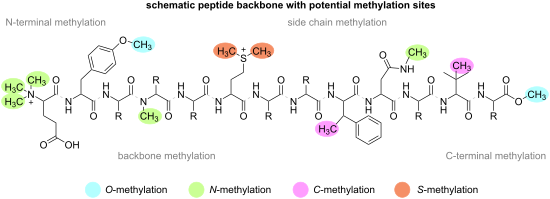
- single methyl group has the ability to modulate a drug’s efficacy by orders of magnitude; this occurrence is also called the ‘magic methyl effect’ [14][15]. Compared to chemical methylation reactions, a biocatalytic methylation often offers several advantages. MTs exhibit high selectivity and are
- bonds and primary amines of the amino acid chains are available for methylation, leading to poor site selectivity of any methylating reaction [39]. Therefore, either pre-methylated amino acids or short methylated peptides are incorporated into the full-length peptide. Direct O-methylation of an O
- both methylated and unmethylated versions of the same amino acid, simply supplying both tRNAs is not sufficient, as the ribosome has a higher selectivity for the tRNA charged with the natural amino acid. This can be addressed by synthesising tRNA for a stop codon charged with the desired modified amino




Benzylic C(sp3)–H fluorination
Beilstein J. Org. Chem. 2024, 20, 1527–1547, doi:10.3762/bjoc.20.137

- incorporate fluorine into compounds of interest, with regio and site selectivity pre-determined by the nature of the functionalised carbon. However, the development of C(sp3)–H fluorination methods represents a more sustainable and versatile approach, as there is no requirement to pre-functionalise the
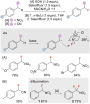
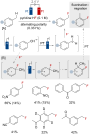
- bond formation to afford the acyloxylation product was observed, and favoured when using directing groups with less steric bulk. This product had the opposite stereochemistry to the fluorination product suggesting it occurred via a competitive SN2 pathway. This is supported by the selectivity for C–O
- on the arene were unsuccessful. Without substituents on the ring, aryl C–H activation and subsequent C–O bond formation occurred along with benzylic fluorination (7) (low efficiency). The presence of a p-methoxy group resulted in a switch in selectivity to acyloxylation 8’ as the major product. The








Towards an asymmetric β-selective addition of azlactones to allenoates
Beilstein J. Org. Chem. 2024, 20, 1504–1509, doi:10.3762/bjoc.20.134
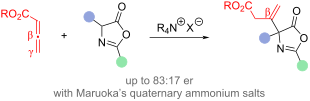
- (Table 1, entry 7, similar non-selective results were obtained when using THF), were found to be less-suited however. Testing the 3,4,5-trifluorobenzene-decorated catalyst B2 with K2CO3 in toluene next (Table 1, entry 8) allowed for a slightly higher selectivity but still gave only a relatively low yield


Bioinformatic prediction of the stereoselectivity of modular polyketide synthase: an update of the sequence motifs in ketoreductase domain
Beilstein J. Org. Chem. 2024, 20, 1476–1485, doi:10.3762/bjoc.20.131
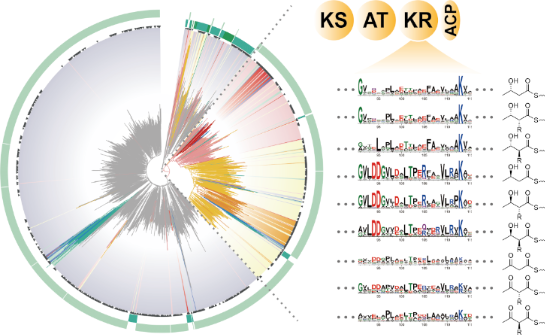
- stereoselectivity of KR is controlled solely by KRC, and KRS does not influence its catalytic selectivity. Moreover, A2- and B2-type KRCs formed a separatable clade from A1- and B1-type KRC, respectively, suggesting that phylogenetic analysis can be used for stereochemical prediction. It is noteworthy that A0- (0


Selectfluor and alcohol-mediated synthesis of bicyclic oxyfluorination compounds by Wagner–Meerwein rearrangement
Beilstein J. Org. Chem. 2024, 20, 1462–1467, doi:10.3762/bjoc.20.129
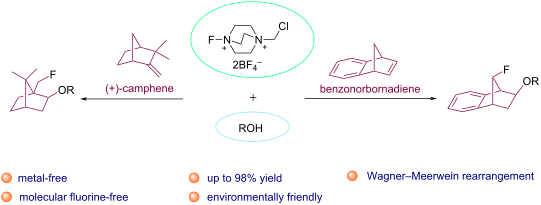
- distinct advantageous such as (i) the methodology does not require the presence of any metal moities, (ii) enables the synthesis of corresponding oxyfluorinated analogues with high yields and selectivity, (iii) allows derivatization of natural chiral molecules, (iv) uses a safe solvent in mild reaction


A comparison of structure, bonding and non-covalent interactions of aryl halide and diarylhalonium halogen-bond donors
Beilstein J. Org. Chem. 2024, 20, 1428–1435, doi:10.3762/bjoc.20.125
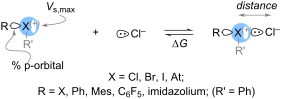
- possibly due to greater dispersive and lesser repulsive forces for larger halogens. This finding may prove useful in catalyst design where close spatial proximity of the substrate to other important structural information (i.e., chirality) has an impact on selectivity. Our analysis of selected XB complexes




Synthetic applications of the Cannizzaro reaction
Beilstein J. Org. Chem. 2024, 20, 1376–1395, doi:10.3762/bjoc.20.120
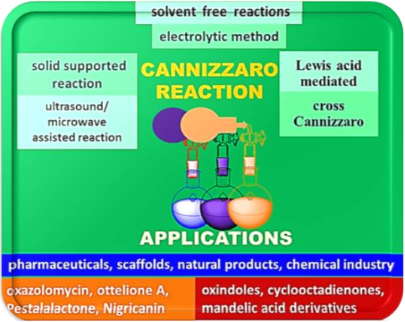
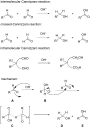
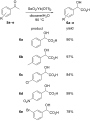
- furnishing the corresponding alcohol (D) and acid molecule (E). Review Modernization of the Cannizzaro reaction Researchers have always aimed to improve the efficiency, selectivity, and sustainability of reaction processes. The development of reagents, solvents, and application of modern technology frame the
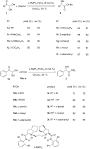
- represented in the table below. The yields and selectivity were found to be superior compared to bisoxazoline (BOX) ligands, which was attributed to the steric bulk imparted by the ligand at the stereoinduction step. Increasing the steric size of the alcohol also contributed to the increased
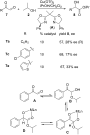
- % enantioselectivity. They employed a double asymmetric induction with (+)/(−)-menthol (12), and CuX2 bis(oxazoline) catalyst where the corresponding chiral mandelate ester 13 was obtained in 81% yield and high selectivity (90% de) (Scheme 6). The proposed mechanism of the reaction is depicted below. Hong et al






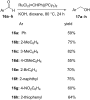


Generation of alkyl and acyl radicals by visible-light photoredox catalysis: direct activation of C–O bonds in organic transformations
Beilstein J. Org. Chem. 2024, 20, 1348–1375, doi:10.3762/bjoc.20.119
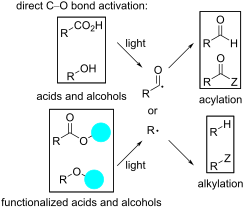
- and acyl radicals and maintaining a high degree of selectivity with respect to the desired outcome are key obstacles to the growth of alkyl and acyl radical chemistry. With this in mind, the emergence of new chemical transformations involving radicals generated via C–O bond cleavage by visible light
- light, a sustainable and abundant energy source, to initiate chemical reactions. This approach offers milder reaction conditions, which often result in improved selectivity and functional group compatibility. Additionally, it allows the activation of typically inert bonds and can enable the development
- of novel synthetic strategies. It has expanded the scope of available synthetic methods and contributed to the synthesis of complex molecules with high efficiency and selectivity. Ongoing research in this field continues to explore new catalysts, photosensitizers, and reaction mechanisms to further








Transition-metal-catalyst-free electroreductive alkene hydroarylation with aryl halides under visible-light irradiation
Beilstein J. Org. Chem. 2024, 20, 1327–1333, doi:10.3762/bjoc.20.116
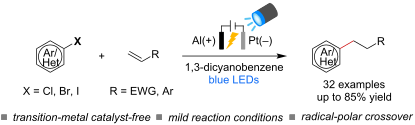
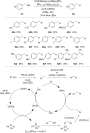
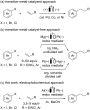
- a hydride donor [5][6][7][8]. On the other hand, aryl radical-involved hydroarylation would be a promising alternative for the synthesis of alkylarenes with high anti-Markovnikov selectivity [9][10]. Aryl halides have received increased attention as ideal radical precursors because of their


Diameter-selective extraction of single-walled carbon nanotubes by interlocking with Cu-tethered square nanobrackets
Beilstein J. Org. Chem. 2024, 20, 1298–1307, doi:10.3762/bjoc.20.113
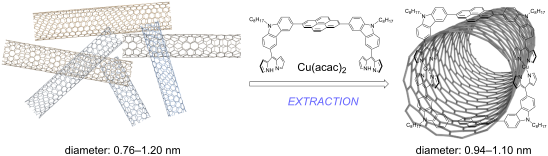
- diameter range. The diameter selectivity is supported by the theoretical calculations with the GFN2-xTB method, indicating that the most preferred SWNT diameter for the square Cu-nanobrackets is 1.04 nm. Keywords: complexation; diameter; extraction; interlock; nanobracket; single-walled carbon nanotubes
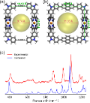
- square in its shape by changing anthracene in 1a to pyrene in 1b. To interpret the results of the diameter selectivity, the theoretical calculation using the semiempirical tight binding quantum chemical method GFN2-xTB was employed instead of the molecular mechanics used in our previous works, because it
- summarized in a graphene map (Figure 5c). This shows that Cu-nanobrackets 1b preferentially recognize larger diameters with wider range (0.94–1.10 nm) than 1a (0.90–0.92 nm) due to the larger cavity with more flexibility of 1b than 1a. Theoretical calculations To interpret the diameter selectivity, the




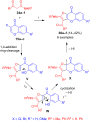
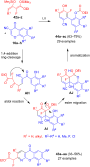
Domino reactions of chromones with activated carbonyl compounds
Beilstein J. Org. Chem. 2024, 20, 1256–1269, doi:10.3762/bjoc.20.108
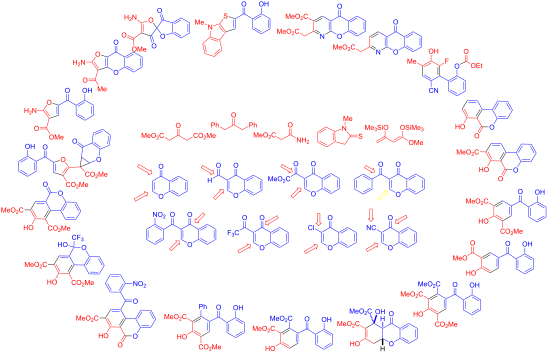
- the chromone moiety was observed for 3-(2-nitrobenzoyl)chromone, presumably due to steric hindrance. The same selectivity was observed also for 3-trifluorochromone and 3-perfluoroalkanoylchromones which might be explained by the fact that the carbonyl adjacent to the perfluoroalkyl group exists as a









Manganese-catalyzed C–C and C–N bond formation with alcohols via borrowing hydrogen or hydrogen auto-transfer
Beilstein J. Org. Chem. 2024, 20, 1111–1166, doi:10.3762/bjoc.20.98
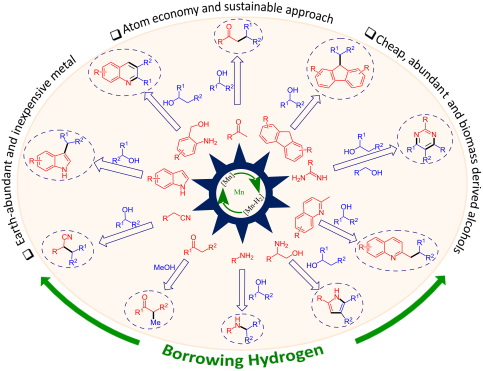
- compounds. To achieve the selective C–C and C–N bond formation via hydrogen borrowing, controlling the selectivity is an important factor since the formation of possible side-products such as overreduction of unsaturated compounds or dialkylation. Hence, developing an efficient catalyst, capable of
- indicates that the cation-coordinative interaction with the catalyst plays a significant role. Moreover, the mechanistic investigation suggested that the observed selectivity is due to the more reactive potassium manganate hydride towards the hydrogenation of imines to amines than the sodium manganate
- Mn-pincer (PNP) complex Mn1 at various concentrations. An extraordinary TON (9233) could be achieved at low catalyst loading using 3.5 equiv NaOMe at 200 °C for 48 h with 91% selectivity and 29% yield (Scheme 45) [73]. In 2020, Kempe's group reported an elegant example for the β-methylation of