


Search results
Search for "zinc" in Full Text gives 372 result(s) in Beilstein Journal of Organic Chemistry. Showing first 200.
Study on the regioselectivity of the N-ethylation reaction of N-benzyl-4-oxo-1,4-dihydroquinoline-3-carboxamide
Beilstein J. Org. Chem. 2019, 15, 388–400, doi:10.3762/bjoc.15.35
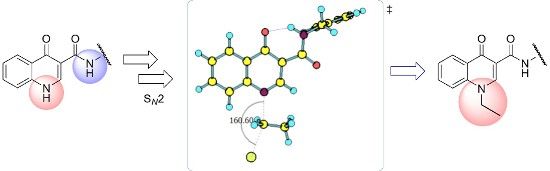
- carboxamide group, may contribute to enhance the bioactivity. This fact could be explained by the coplanarity induced by the C-4 carbonyl hydrogen bond interactions with biological targets [3] or complexation with physiological metal cations such as magnesium and zinc [23]. Besides the derivatives 3a and 3b


Synthesis of C3-symmetric star-shaped molecules containing α-amino acids and dipeptides via Negishi coupling as a key step
Beilstein J. Org. Chem. 2019, 15, 371–377, doi:10.3762/bjoc.15.33
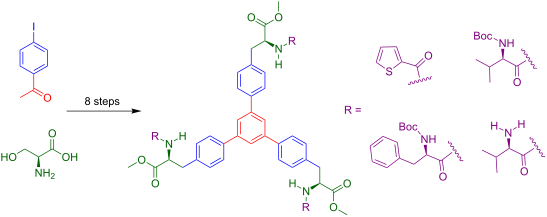
- . Results and Discussion The required zinc insertion compound 7 was prepared from L-serine (3). Thus, commercially available L-serine (3) was treated with acetyl chloride in methanol to give methyl ester 4, which was subjected to N-Boc protection with di-tert-butyl dicarbonate (Boc2O) and triethylamine in
- iodo compound 6 was treated with freshly activated Zn in DMF at room temperature to afford the zinc insertion product 7 (Scheme 1) [43]. With the organozinc compound 7 at hand we turned to the synthesis of the halide component for the attempted Negishi coupling. For this 4-iodoacetophenone (8) was
- resonance (13C NMR, 100 MHz and 125 MHz) spectra were recorded on a Bruker spectrometer. The high-resolution mass measurements were carried out by using electrospray ionization (ESI) spectrometer. Melting points were recorded on a Veego melting point apparatus. Negishi coupling product 10 Zinc (Zn) dust was


Synthesis of 1,2-divinylcyclopropanes by metal-catalyzed cyclopropanation of 1,3-dienes with cyclopropenes as vinyl carbene precursors
Beilstein J. Org. Chem. 2019, 15, 285–290, doi:10.3762/bjoc.15.25

- generate the corresponding zinc–vinyl carbene to efficiently prepare vinylcyclopropane derivatives with a remarkable broad scope (Scheme 1c) [26]. In view of these precedents, we decided to study the feasibility of this reaction in the synthesis of 1,2-divinylcyclopropanes by using 1,3-dienes as trapping
- equimolar mixture of cis/trans diastereoisomers (cis refers to both vinyl substituents). Even though the lack of selectivity was already noticed by Uemura and co-workers in related reactions [17], we attempted the reaction with other zinc salts or rhodium(II) carboxylates as catalysts. Unfortunately, these
- as catalyst allowed the isolation of diastereomerically pure endo-7a,b oxabicycles showing the 1,2-divinylcyclopropane moiety. In contrast, [Rh2(OAc)4] afforded complex reaction mixtures. In spite of the modest yields, this zinc-catalyzed reaction deserves some comments as it constitutes a rare




Olefin metathesis in multiblock copolymer synthesis
Beilstein J. Org. Chem. 2019, 15, 218–235, doi:10.3762/bjoc.15.21

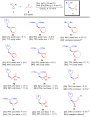
- (cyclohexene carbonate)s was carried out by the β-diiminate (BDI) zinc-catalyzed block copolymerization of functionalized epoxides and CO2 with a norbornenyl-containing initiator (Scheme 5) [68]. The subsequent “grafting through” by ROMP of norbornene resulted in the synthesis of multiblock copolymer brushes




Protein–protein interactions in bacteria: a promising and challenging avenue towards the discovery of new antibiotics
Beilstein J. Org. Chem. 2018, 14, 2881–2896, doi:10.3762/bjoc.14.267
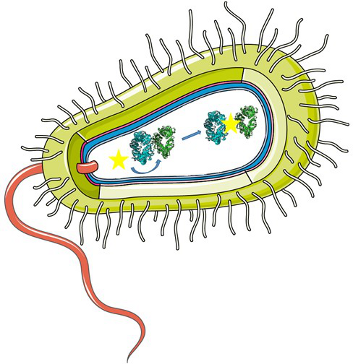
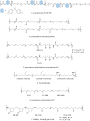
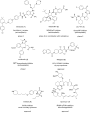
- optimization due to its physicochemical properties and its potential for fragment growth. After virtual screening and binding studies by STD-NMR studies, the authors were able to find tetrazole 32 (Figure 7) which had a three-fold improved affinity (Kd = 1.3 mM) compared to the initial hit 31. Later, the ZINC




Unnatural α-amino ethyl esters from diethyl malonate or ethyl β-bromo-α-hydroxyiminocarboxylate
Beilstein J. Org. Chem. 2018, 14, 2853–2860, doi:10.3762/bjoc.14.264
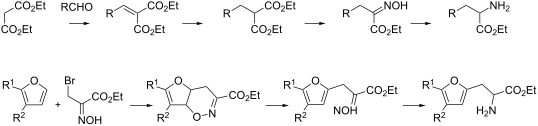
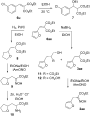
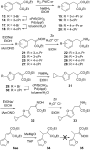
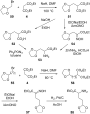
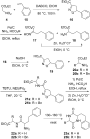
- for the low yield observed and could be sometimes acted upon. In any case, the final reduction of the α-hydroxyimino esters 2b–al using zinc and hydrochloric acid in ethanol gave the α-amino esters 1b–al, which were usually of a high purity grade without recourse to a chromatography. In few cases
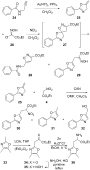
- , 27 and 32 in 31–88% overall yield. These were then reduced into the corresponding α-amino esters 22, 24, 26, 28 and 33 using zinc and hydrochloric acid. We also focused on the preparation of the β-methylated furan-bearing α-hydroxyimino ester 35. The introduction of the methyl group was achieved
- (hydrochloric and powdered zinc) and we successfully used instead the much milder [34] mixture of ammonium formate and zinc in ethanol at room temperature to give 43% of the target α-amino ester 53. The same strategy gave the corresponding α-amino ester homolog 58 from the readily available dioxane derivative



Synthesis of unnatural α-amino esters using ethyl nitroacetate and condensation or cycloaddition reactions
Beilstein J. Org. Chem. 2018, 14, 2846–2852, doi:10.3762/bjoc.14.263
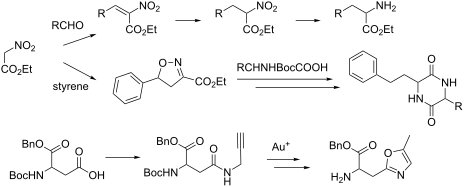
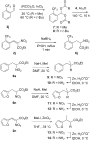
- esters. This started with a study of its condensation with various arylacetals to give ethyl 3-aryl-2-nitroacrylates followed by a reduction (NaBH4 and then zinc/HCl) into α-amino esters. The scope of this method was explored as well as an alternative with arylacylals instead. We also focused on various
- significantly improved 46% yield of 6r, in comparison with our single trial via 5r, which ended up with less than 20% of an impure sample of 6r. Finally, from the isolated α-nitro esters 6a–s, their reduction into the corresponding α-amino esters 1a–s, using zinc and hydrochloric acid in ethanol usually
- proceeded in good yield, although care had to be taken during work-up as zinc complexes required the addition of an excess of ammonia to fully break in the course of the extraction. In an attempt to overcome the lack of condensation between ethyl nitroacetate (4) and electron-poor substrates 5j–l, we



Synthesis of mono-functionalized S-diazocines via intramolecular Baeyer–Mills reactions
Beilstein J. Org. Chem. 2018, 14, 2799–2804, doi:10.3762/bjoc.14.257

- benzyl bromides 8–11, which were commercially available or synthesized by radical bromination. The S-diazocines precursors 13–16 were then subjected to the intramolecular Baeyer–Mills reaction yielding the S-diazocines 1–4. In the first step the nitro group was reduced with zinc powder to the
- zinc and the oxidation from the hydroxylamine to the nitroso compound. These reaction steps are difficult to monitor and furthermore the S-diazocine yield depends on the nature of substituents. However, the overall yields and the reliability of the formation of the azo group are superior to previously
- conditions: i) MeCN, AIBN, NBS; ii) NaBH4, THF; #commercially available iii) BH3·THF complex, THF, *product 17 is not stable; iv) 1. Zinc powder, ammonium chloride, ethanol, 2. Fe(III)Cl3 hexahydrate, H2O/ethanol, acetic acid. Comparison of previous diazocine syntheses approaches compared to the present


Copolymerization of epoxides with cyclic anhydrides catalyzed by dinuclear cobalt complexes
Beilstein J. Org. Chem. 2018, 14, 2779–2788, doi:10.3762/bjoc.14.255
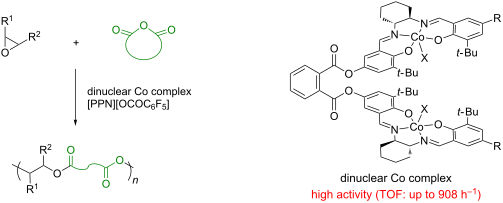
- epoxide/CA copolymerization was constricted until recently because of low catalytic activity and poor control over the main chain sequence (formation of ether linkages through consecutive epoxide enchainment) and molecular weight. In 2007, Coates and co-workers reported that β-diiminate zinc complexes


An overview on recent advances in the synthesis of sulfonated organic materials, sulfonated silica materials, and sulfonated carbon materials and their catalytic applications in chemical processes
Beilstein J. Org. Chem. 2018, 14, 2745–2770, doi:10.3762/bjoc.14.253
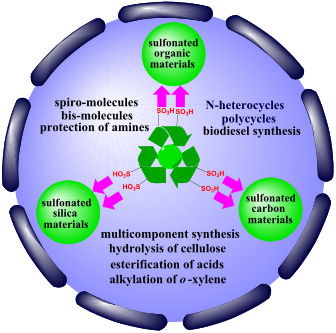
- material 132 was obtained by a carbonization process at 400 °C for 2 h in an N2 atmosphere [72][73]. This material was dispersed into an aqueous solution containing zinc chloride and stirred for 3 h. After completely evaporation of the aqueous solution, ZnCl2-impregnated RF resin spheres were obtained




Novel solid-phase strategy for the synthesis of ligand-targeted fluorescent-labelled chelating peptide conjugates as a theranostic tool for cancer
Beilstein J. Org. Chem. 2018, 14, 2665–2679, doi:10.3762/bjoc.14.244
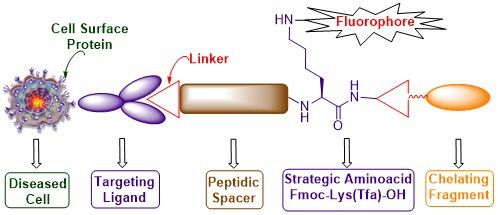
- coordinates with two zinc atoms present in the active site of PSMA. The γ′-carboxylic acid of the DUPA ligand does not play a significant role in the interaction with the PSMA active site and hence exploited as a handle for the construction of peptidic spacer of bioconjugate 13. While designing the required




Pathoblockers or antivirulence drugs as a new option for the treatment of bacterial infections
Beilstein J. Org. Chem. 2018, 14, 2607–2617, doi:10.3762/bjoc.14.239
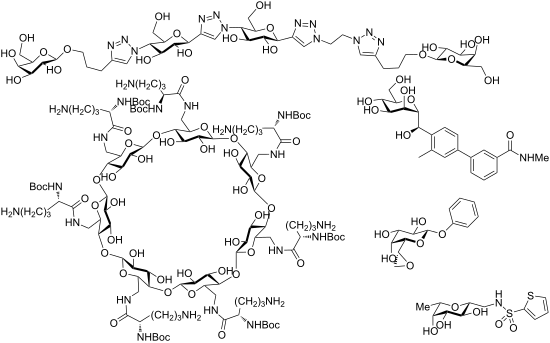
- infections [61]. While not typically classed as toxins, bacterial proteolytic enzymes, such as collagenases or elastases, often account for host cell damage and immune evasion. Janda and co-workers developed thiol-based small molecules targeting the active site zinc ion in P. aeruginosa elastase LasB showing




Learning from B12 enzymes: biomimetic and bioinspired catalysts for eco-friendly organic synthesis
Beilstein J. Org. Chem. 2018, 14, 2553–2567, doi:10.3762/bjoc.14.232
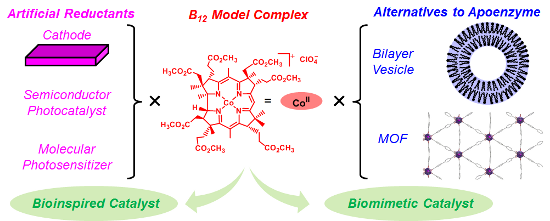
- reaction of H2bpdc, Ru(bpy)2Cl2, and a zinc source under solvothermal conditions (bpy = 2,2′-bipyridine, Scheme 5) [41]. The molecular photosensitizer [Ru(bpy)3]2+ was incorporated into the MOF through adsorption to form Ru@MOF, accompanied by a color change. Furthermore, 1 was effectively immobilized on
- was vital for the activation of 1-octanethiol [76]. A similar reaction was successfully mediated by the imine/oxime-type cobalt complex 2a using zinc powder [77]. 3-2. Methyl transfer to inorganic arsenic for the detoxification of arsenic The wide utilization of inorganic arsenics causes large-scale


Cobalt- and rhodium-catalyzed carboxylation using carbon dioxide as the C1 source
Beilstein J. Org. Chem. 2018, 14, 2435–2460, doi:10.3762/bjoc.14.221
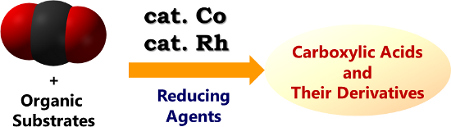
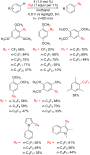
- using cobalt complexes as well as the cobalt-catalyzed reductive carboxylation of α,β-unsaturated nitriles and carboxyamides in the presence of Et2Zn proceed. A Co complex has been demonstrated to act as an efficient catalyst in the carboxylation of allylic C(sp3)–H bonds. Employing zinc as the
- reductant, carboxyzincation and the four-component coupling reaction between alkyne, acrylates, CO2, and zinc occur efficiently. Rh complexes also catalyze the carboxylation of arylboronic esters, C(sp2)–H carboxylation of aromatic compounds, and hydrocarboxylation of styrene derivatives. The Rh-catalyzed
- carboxylation of allylarenes when a suitable ligand is used. In the presence of zinc powder, the Co-catalyzed carboxyzincation of alkynes and the four-component coupling reaction between alkyne, acrylates, CO2, and zinc proceed in an efficient manner. Visible-light-driven hydrocarboxylation reactions are shown



Practical tetrafluoroethylene fragment installation through a coupling reaction of (1,1,2,2-tetrafluorobut-3-en-1-yl)zinc bromide with various electrophiles
Beilstein J. Org. Chem. 2018, 14, 2375–2383, doi:10.3762/bjoc.14.213
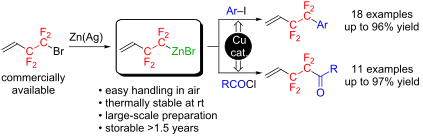
- Ken Tamamoto Shigeyuki Yamada Tsutomu Konno Faculty of Molecular Chemistry and Engineering, Kyoto Institute of Technology, Matsugasaki, Sakyo-ku, Kyoto 606-8585, Japan 10.3762/bjoc.14.213 Abstract (1,1,2,2-Tetrafluorobut-3-en-1-yl)zinc bromide was prepared by insertion of the zinc–silver couple
- into the CF2–Br bond of commercially available 4-bromo-3,3,4,4-tetrafluorobut-1-ene in DMF at 0 °C for 0.5 h, The resultant polyfluorinated zinc reagent was found to be thermally stable at ambient temperature and storable for at least 1.5 years in the refrigerator. This CF2CF2-containing organozinc
- reagent could be easily transmetallated to copper species, which underwent cross-coupling reactions with various aromatic iodides or acyl chlorides to produce a broad range of CF2CF2-containing organic molecules in good-to-excellent yields. Therefore, the zinc reagent could become a new and practical


Stereoselective total synthesis and structural revision of the diacetylenic diol natural products strongylodiols H and I
Beilstein J. Org. Chem. 2018, 14, 2313–2320, doi:10.3762/bjoc.14.206
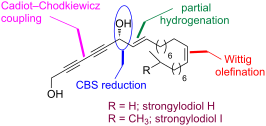
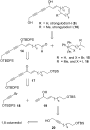
- to long chain aliphatic aldehydes in the presence of N-methylephedrine [17] or an amino alcohol–zinc complex [18] and the Cadiot–Chodkiewicz cross-coupling reaction as key steps [14][15][16]. In continuation to our research interest on the synthesis of acetylenic compounds [19][20][21], recently we



Tetrathiafulvalene – a redox-switchable building block to control motion in mechanically interlocked molecules
Beilstein J. Org. Chem. 2018, 14, 2163–2185, doi:10.3762/bjoc.14.190
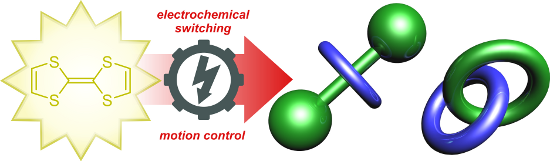
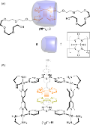
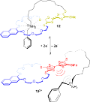
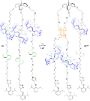
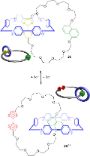
- site. Chemical oxidation to the dication TTF2+ triggers a translational motion of the wheel towards the 1,5-dihydroxynaphthalene station (green) as shown by UV–vis and 2D NMR experiments. Chemical reduction with zinc powder restored the spectroscopic properties of the starting state and back-shuttling











Chiral bisoxazoline ligands designed to stabilize bimetallic complexes
Beilstein J. Org. Chem. 2018, 14, 2002–2011, doi:10.3762/bjoc.14.175

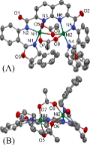
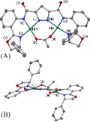
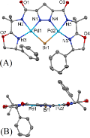
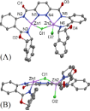
- , Florida 32611, USA 10.3762/bjoc.14.175 Abstract Chiral bisoxazoline ligands containing naphthyridine, pyridazine, pyrazole, and phenol bridging units were prepared and shown to form bimetallic complexes with various metal salts. X-ray crystal structures of bis-nickel naphthyridine-bridged, bis-zinc
- -epoxides [16]. Trost et al. disclosed the synthesis of dinuclear zinc complexes 3 and their application to enantioselective Aldol reactions [17][18] and a host of other asymmetric transformations [18]. Other notable contributions in this area were provided by the groups of Martell [19][20], Maruoka [21][22
- ligand with three nitrogen donor atoms per metal center. Ligand 16-H2 was found to undergo complex formation with various copper, zinc, palladium and nickel salts. Figure 3 shows the X-ray crystal structure of 16·Ni2(OAc)2, obtained from ligand 16-H2 and two equivalents of nickel(ΙΙ) acetate. The







Cationic cobalt-catalyzed [1,3]-rearrangement of N-alkoxycarbonyloxyanilines
Beilstein J. Org. Chem. 2018, 14, 1972–1979, doi:10.3762/bjoc.14.172

- [13]. A divalent cationic zinc catalyst also promoted the present reaction, albeit with lower chemical yield than Co(II) (Table 1, entries 10 and 11), while the use of Fe(II) and Pd(II) resulted in low chemical yield due to the formation of the para-isomer 3a (Table 1, entries 12 and 13). Indeed the


β-Hydroxy sulfides and their syntheses
Beilstein J. Org. Chem. 2018, 14, 1668–1692, doi:10.3762/bjoc.14.143
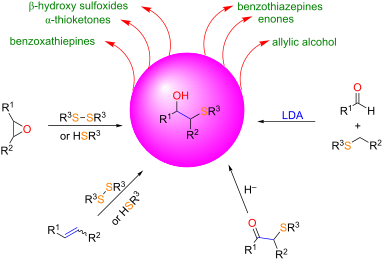
- organophosphine was found to have a profound effect on the catalytic activity; some reactions were sluggish when tricyclohexylphosphine or triphenylphosphine were used as catalysts. The tributylphosphine acts as a nucleophilic trigger to attack, and thus initiates the reaction. 3.1.1.3 Use of zinc salts. In
- continuation of their effort to develop a general methodology for the thiolysis of epoxides, Pizzo et al. reported zinc(II) chloride-catalyzed thiolysis of epoxides in water at 30 °C as shown in Scheme 4 [23]. The reaction was compatible with a variety of epoxide substrates such as α- and β-substituted 1,2
- acid catalyzed protocols. Many asymmetric versions of epoxide opening by thiols assisted by chiral catalysts have been reported and are part of several reviews [30][31][32][33][34][35][36]. In 1985, Yamashita and Mukaiyama demonstrated the efficacy of zinc L-tartrate as a heterogeneous chiral Lewis


Synthesis of chiral 3-substituted 3-amino-2-oxindoles through enantioselective catalytic nucleophilic additions to isatin imines
Beilstein J. Org. Chem. 2018, 14, 1349–1369, doi:10.3762/bjoc.14.114

- aldehydes catalyzed by L-diphenylprolinol trimethylsilyl ether. Addition of dimedone-derived enaminones to N-Boc-isatin imines catalyzed by a phosphoric acid. Addition of hydroxyfuran-2-one-derived enaminones to N-Boc-isatin imines catalyzed by a phosphoric acid. Zinc-catalyzed Mannich reaction of N-Boc











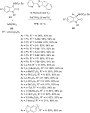
A selective removal of the secondary hydroxy group from ortho-dithioacetal-substituted diarylmethanols
Beilstein J. Org. Chem. 2018, 14, 1229–1237, doi:10.3762/bjoc.14.105
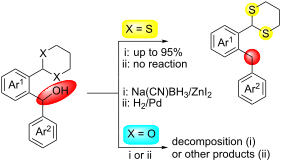
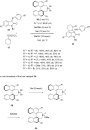
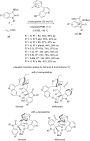
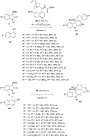
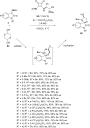
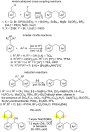
- % yields and is recommended for the substrates containing sulfur atoms, for which transition metal-induced reactions fail. Keywords: diarylmethanes; diarylmethanols; 1,3-dithiane; selective reduction; sodium cyanoborohydride; zinc iodide; Introduction In last decades, diarylmethanes, such as I–IV and
- ortho-1,3-dithianylaryl(aryl)methanols leading to ortho-1,3-dithianylaryl(aryl)methanes using the ZnI2-Na(CN)BH3 reductive system (Scheme 1). The use of zinc iodide is critical in this system. It was used for the first time in dichloroethane by Lau et al. to reduce aryl ketones, aldehydes, benzylic
- -dithianyl derivatives is facilitated by oxophilic zinc which preferentially binds to the OH oxygen atoms (bond dissociation energies for Zn–O and Zn–S are 284 and 205 kJ/mol, respectively) [67]. The weakened C–O bond is thus more susceptible to the borohydride attack to produce the corresponding




Selective carboxylation of reactive benzylic C–H bonds by a hypervalent iodine(III)/inorganic bromide oxidation system
Beilstein J. Org. Chem. 2018, 14, 1087–1094, doi:10.3762/bjoc.14.94
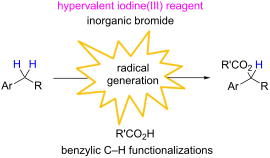
- ), the corresponding benzyl bromides were mainly obtained along with a small amount of the target C–H acetoxylation product; this byproduct formation might imply the intermediacy of these organic bromides before the production of benzyl acetates. Hence, the reaction system was modified to include zinc(II
- -methoxy-3-thiocyanatobenzene (1f), prepared from 1-ethyl-4-methoxybenzene (1a) through the hypervalent iodine(III)-induced aromatic cation radical coupling with thiocyanate [75][76], similarly acetoxylated under the standard reaction conditions without zinc(II) acetate (Table 2, entry 5). The
- substituents than in other previously described compounds, showing higher reactivity and chemoselectivity of the benzylic position (see ref. [51]). The reactions of substrates 1h–j proceeded without the use of zinc(II) acetate (see Table 2, entries 7–9 versus entry 2). The installation of other carboxylic


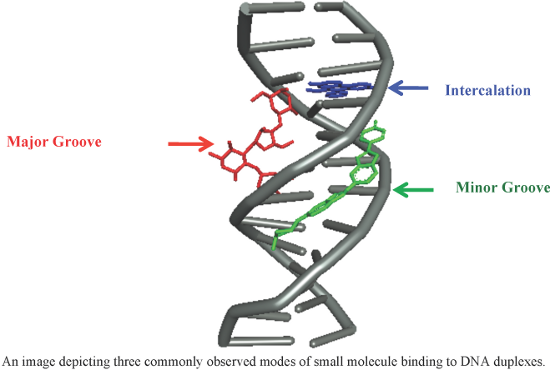
An overview of recent advances in duplex DNA recognition by small molecules
Beilstein J. Org. Chem. 2018, 14, 1051–1086, doi:10.3762/bjoc.14.93




Development of novel cyclic NGR peptide–daunomycin conjugates with dual targeting property
Beilstein J. Org. Chem. 2018, 14, 911–918, doi:10.3762/bjoc.14.78
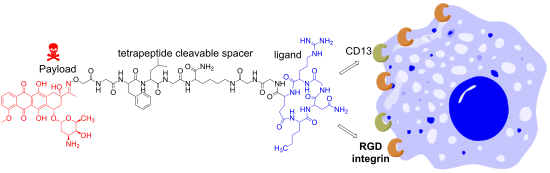
- zinc-dependent metalloprotease that functions in cell proliferation, cell migration and angiogenesis [1][3][4]. However, it is known that the Asn-Gly moiety is subject to Asn deamidation through succinimide formation leading to isoaspartic acid (isoAsp, isoD) and aspartic acid derivatives usually in a





