Search for "acidic conditions" in Full Text gives 396 result(s) in Beilstein Journal of Organic Chemistry. Showing first 200.
Beilstein J. Org. Chem. 2018, 14, 2156–2162, doi:10.3762/bjoc.14.189
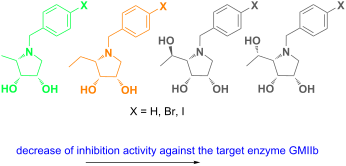
Graphical Abstract
Figure 1: Structures of GMIIb inhibitors.
Scheme 1: Synthesis of pyrrolidines 2a and 3a.
Scheme 2: Synthesis of pyrrolidines 2b,c and 3b,c.
Scheme 3: Synthesis of pyrrolidines 4.
Scheme 4: Synthesis of pyrrolidines 5.
Figure 2: Molecular structure (OLEX2 drawing with adjacent ChemDraw image) of compound 20. Atomic displacemen...
Beilstein J. Org. Chem. 2018, 14, 2082–2089, doi:10.3762/bjoc.14.182
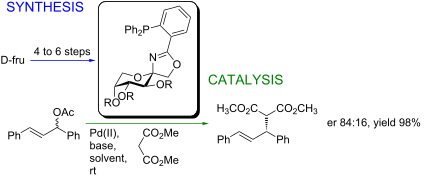
Graphical Abstract
Figure 1: General structure of PHOX ligands 1 and structures of annulated glucosamine-based PHOX and PyOx lig...
Scheme 1: Preparation of 1,2-isopropylidene-protected D-fructose derivatives with different substitution patt...
Scheme 2: Activation of 7 to oxocarbenium ion 9 in the Ritter reaction.
Scheme 3: Zemplén deacetylation of 10i.
Figure 2: Molecular structure of 10j. Ellipsoids are given at the 50% probability level. Grey = carbon, red =...
Scheme 4: Benzylation of 10j to give 10b.
Scheme 5: Plausible mechanism of the Ritter reaction. For better clarity C-2 is not shown in conformers 9a an...
Scheme 6: Neighboring group participation of ester protective groups. For better clarity C-2 is not shown in ...
Scheme 7: Pd catalyzed Tsuji–Trost reation. BSA: N,O-bis(trimethylsilyl)acetamide, DMM: dimethyl malonate.
Beilstein J. Org. Chem. 2018, 14, 1961–1971, doi:10.3762/bjoc.14.171
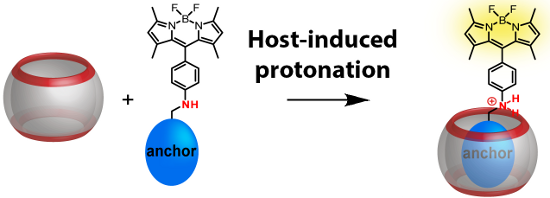
Graphical Abstract
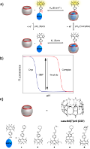
Figure 1: a) The “anchor group” approach for a rational design of CB–dye pairs involving a thermodynamic cycl...
Scheme 1: Synthesis of BODIPY derivatives.
Figure 2: a) Normalized absorption (solid line) and normalized fluorescence emission spectrum (dotted line) o...
Figure 3: a) Fluorescence spectral changes (λexc = 470 nm) upon addition of CB7 to 50 nM 1 in 10 mM citrate b...
Figure 4: Fluorescence pH titration of 2 and the respective complex (in presence of 3 mM CB7) in 30% (v/v) AC...
Figure 5: Fluorescence displacement titrations (λex = 470 nm, λem = 510 nm). a) 5 µM 2 and 2.5 µM CB7 with cy...
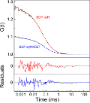
Figure 6: FCS autocorrelation curves obtained with 10 nM 2 in the absence (red fitted line) and presence (blu...
Figure 7: Fluorescence microscopy images of 1 mg/mL polymer microspheres a) with or b) without surface-bound ...
Beilstein J. Org. Chem. 2018, 14, 1854–1858, doi:10.3762/bjoc.14.159
Graphical Abstract
Scheme 1: Previously reported preparation of IBS (1) [17].
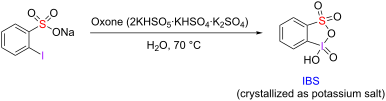
Scheme 2: Oxidation of 2-iodobenzenesulfonate 5 by Oxone in water.
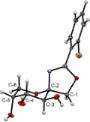
Figure 1: X-ray structure of an independent crystal unit of IBS 6-K.
Figure 2: Simplified representation of structure 6-K. Selected interatomic distances (Å): I(1)=O(1) 1.79; I(1...
Scheme 3: Comparison of the oxidation of sodium 2-iodobenzenesulfonate (5) with NaIO4 and 2-iodobenzenesulfon...
Beilstein J. Org. Chem. 2018, 14, 1846–1853, doi:10.3762/bjoc.14.158
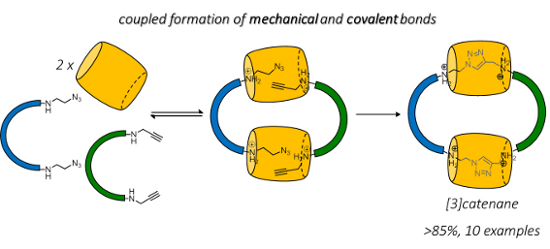
Graphical Abstract
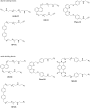
Scheme 1: Diazide and dialkyne building blocks used in this study.
Scheme 2: Synthesis of Cat-1 by CBAAC. aAssembly yield by HPLC; bisolated yield as PF6− salt.
Scheme 3: Synthesis of [3]catenanes by CBAAC. aAssembly yield by HPLC; bisolated yield by precipitation as PF6...
Figure 1: 1H NMR (500 MHz, D2O, 298 K) of Cat-2. The signal at ca. 8.3 ppm is the residual formate from prepa...
Figure 2: (a) ESIMS, (b) HRMS, and (c) MS2 spectrum (parent ion at m/z = 887.8) of Cat-2.
Scheme 4: Synthesis of the [4]catenane Cat-11. aAssembly yield by HPLC; bisolated yield by preparative HPLC.
Beilstein J. Org. Chem. 2018, 14, 1750–1757, doi:10.3762/bjoc.14.149
Graphical Abstract
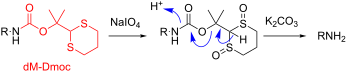
Scheme 1: Dmoc and dM-Dmoc protection and deprotection of amines.
Scheme 2: Selective deprotection of dM-Dmoc-, Boc- and Fmoc-protected amines.
Beilstein J. Org. Chem. 2018, 14, 1668–1692, doi:10.3762/bjoc.14.143
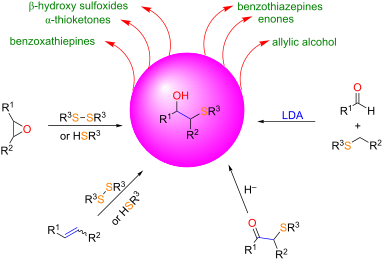
Graphical Abstract
Figure 1: Some sulfur-containing natural products.
Figure 2: Some natural products incorporating β-hydroxy sulfide moieties.
Figure 3: Some synthetic β-hydroxy sulfides of clinical value.
Scheme 1: Alumina-mediated synthesis of β-hydroxy sulfides, ethers, amines and selenides from epoxides.
Scheme 2: β-Hydroxy sulfide syntheses by ring opening of epoxides under different Lewis and Brønsted acid and...
Scheme 3: n-Bu3P-catalyzed thiolysis of epoxides and aziridines to provide the corresponding β-hydroxy and β-...
Scheme 4: Zinc(II) chloride-mediated thiolysis of epoxides.
Scheme 5: Thiolysis of epoxides and one-pot oxidation to β-hydroxy sulfoxides under microwave irradiation.
Scheme 6: Gallium triflate-catalyzed ring opening of epoxides and one-pot oxidation.
Scheme 7: Thiolysis of epoxides and one-pot oxidation to β-hydroxy sulfoxides using Ga(OTf)3 as a catalyst.
Scheme 8: Ring opening of epoxide using ionic liquids under solvent-free conditions.
Scheme 9: N-Bromosuccinimide-catalyzed ring opening of epoxides.
Scheme 10: LiNTf2-mediated epoxide opening by thiophenol.
Scheme 11: Asymmetric ring-opening of cyclohexene oxide with various thiols catalyzed by zinc L-tartrate.
Scheme 12: Catalytic asymmetric ring opening of symmetrical epoxides with t-BuSH catalyzed by (R)-GaLB (43) wi...
Scheme 13: Asymmetric ring opening of meso-epoxides by p-xylenedithiol catalyzed by a (S,S)-(salen)Cr complex.
Scheme 14: Desymmetrization of meso-epoxide with thiophenol derivatives.
Scheme 15: Enantioselective ring-opening reaction of meso-epoxides with ArSH catalyzed by a C2-symmetric chira...
Scheme 16: Enantioselective ring-opening reaction of stilbene oxides with ArSH catalyzed by a C2-symmetric chi...
Scheme 17: Asymmetric desymmetrization of meso-epoxides using BINOL-based Brønsted acid catalysts.
Scheme 18: Lithium-BINOL-phosphate-catalyzed desymmetrization of meso-epoxides with aromatic thiols.
Scheme 19: Ring-opening reactions of cyclohexene oxide with thiols by using CPs 1-Eu and 2-Tb.
Scheme 20: CBS-oxazaborolidine-catalyzed borane reduction of β-keto sulfides.
Scheme 21: Preparation of β-hydroxy sulfides via connectivity.
Scheme 22: Baker’s yeast-catalyzed reduction of sulfenylated β-ketoesters.
Scheme 23: Sodium-mediated ring opening of epoxides.
Scheme 24: Disulfide bond cleavage-epoxide opening assisted by tetrathiomolybdate.
Scheme 25: Proposed reaction mechanism of disulfide bond cleavage-epoxide opening assisted by tetrathiomolybda...
Scheme 26: Cyclodextrin-catalyzed difunctionalization of alkenes.
Scheme 27: Zinc-catalyzed synthesis of β-hydroxy sulfides from disulfides and alkenes.
Scheme 28: tert-Butyl hydroperoxide-catalyzed hydroxysulfurization of alkenes.
Scheme 29: Proposed mechanism of the radical hydroxysulfurization.
Scheme 30: Rongalite-mediated synthesis of β-hydroxy sulfides from styrenes and disulfides.
Scheme 31: Proposed mechanism of Rongalite-mediated synthesis of β-hydroxy sulfides from styrenes and disulfid...
Scheme 32: Copper(II)-catalyzed synthesis of β-hydroxy sulfides 15e,f from alkenes and basic disulfides.
Scheme 33: CuI-catalyzed acetoxysulfenylation of alkenes.
Scheme 34: CuI-catalyzed acetoxysulfenylation reaction mechanism.
Scheme 35: One-pot oxidative 1,2-acetoxysulfenylation of Baylis–Hillman products.
Scheme 36: Proposed mechanism for the oxidative 1,2-acetoxysulfination of Baylis–Hillman products.
Scheme 37: 1,2-Acetoxysulfenylation of alkenes using DIB/KI.
Scheme 38: Proposed reaction mechanism of the diacetoxyiodobenzene (DIB) and KI-mediated 1,2-acetoxysulfenylat...
Scheme 39: Catalytic asymmetric thiofunctionalization of unactivated alkenes.
Scheme 40: Proposed catalytic cycle for asymmetric sulfenofunctionalization.
Scheme 41: Synthesis of thiosugars using intramolecular thiol-ene reaction.
Scheme 42: Synthesis of leukotriene C-1 by Corey et al.: (a) N-(trifluoroacetyl)glutathione dimethyl ester (3 ...
Scheme 43: Synthesis of pteriatoxins with epoxide thiolysis to attain β-hydroxy sulfides. Reagents: (a) (1) K2...
Scheme 44: Synthesis of peptides containing a β-hydroxy sulfide moiety.
Scheme 45: Synthesis of diltiazem (12) using biocatalytic resolution of an epoxide followed by thiolysis.
Beilstein J. Org. Chem. 2018, 14, 1229–1237, doi:10.3762/bjoc.14.105
Graphical Abstract
Figure 1: Structures of biologically active diarylmethanes and commercially available pharmaceuticals based o...
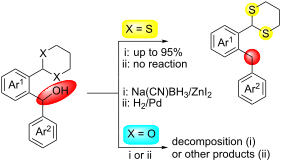
Scheme 1: Various synthetic approaches to diarylmethanols (literature review and this work).
Scheme 2: A general strategy for the synthesis of ortho-1,3-dithianylaryl(aryl)methanols 5 and 6, and their r...
Scheme 3: Attempts of the OH removal in ortho-1,3-dithianyl- 6b and ortho-1,3-dioxanylaryl(aryl)methanols 9 u...
Beilstein J. Org. Chem. 2018, 14, 1120–1180, doi:10.3762/bjoc.14.98
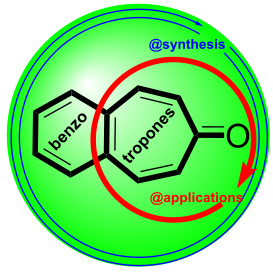
Graphical Abstract
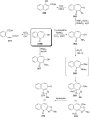
Scheme 1: Tropone (1), tropolone (2) and their resonance structures.
Figure 1: Natural products containing a tropone nucleus.
Figure 2: Possible isomers 11–13 of benzotropone.
Scheme 2: Synthesis of benzotropones 11 and 12.
Scheme 3: Oxidation products of benzotropylium fluoroborate (16).
Scheme 4: Oxidation of 7-bromo-5H-benzo[7]annulene (22).
Scheme 5: Synthesis of 4,5-benzotropone (11) using o-phthalaldehyde (27).
Scheme 6: Synthesis of 4,5-benzotropone (11) starting from oxobenzonorbornadiene 31.
Scheme 7: Acid-catalyzed cleavage of oxo-bridge of 34.
Scheme 8: Synthesis of 4,5-benzotropone (11) from o-xylylene dibromide (38).
Scheme 9: Synthesis of 4,5-benzotropone (11) via the carbene adduct 41.
Scheme 10: Heck coupling strategy for the synthesis of 11.
Scheme 11: Synthesis of benzofulvalenes via carbonyl group of 4,5-benzotropone (11).
Figure 3: Some cycloheptatrienylium cations.
Scheme 12: Synthesis of condensation product 63 and its subsequent oxidative cyclization products.
Figure 4: A novel series of benzo[7]annulenes prepared from 4,5-benzotropone (11).
Scheme 13: Preparation of substituted benzo[7]annulene 72 using the Mukaiyama-Michael reaction.
Figure 5: Possible benzo[7]annulenylidenes 73–75.
Scheme 14: Thermal and photochemical decomposition of 7-diazo-7H-benzo[7]annulene (76) and the trapping of int...
Scheme 15: Synthesis of benzoheptafulvalene 86.
Scheme 16: Synthesis of 7-(diphenylmethylene)-7H-benzo[7]annulene (89).
Scheme 17: Reaction of 4,5-benzotropone (11) with dimethyl diazomethane.
Scheme 18: Synthesis of dihydrobenzomethoxyazocine 103.
Scheme 19: Synthesis and reducibility of benzo-homo-2-methoxyazocines.
Scheme 20: Synthesis of 4,5-benzohomotropones 104 and 115 from 4,5-benzotropones 11 and 113.
Scheme 21: A catalytic deuterogenation of 4,5-benzotropone (11) and synthesis of 5-monosubstituted benzo[7]ann...
Scheme 22: Synthesis of methyl benzo[7]annulenes 131 and 132.
Scheme 23: Ambident reactivity of halobenzo[7]annulenylium cations 133a/b.
Scheme 24: Preparation of benzo[7]annulenylidene–iron complexes 147.
Scheme 25: Synthesis of 1-ethynylbenzotropone (150) and the etheric compound 152 from 4,5-benzotropone (11) wi...
Scheme 26: Thermal decomposition of 4,5-benzotropone (11).
Scheme 27: Reaction of 4,5-benzotropone (11) with 1,2-ethanediol and 1,2-ethanedithiol.
Scheme 28: Conversions of 1-benzosuberone (162) to 2,3-benzotropone (12).
Scheme 29: Synthesis strategies for 2,3-bezotropone (12) using 1-benzosuberones.
Scheme 30: Oxidation-based synthesis of 2,3-benzotropone (12) via 1-benzosuberone (162).
Scheme 31: Synthesis of 2,3-benzotropone (12) from α-tetralone (171) via ring-expansion.
Scheme 32: Preparation of 2,3-benzotropone (12) by using of benzotropolone 174.
Figure 6: Benzoheptafulvenes as condensation products of 2,3-benzotropone (12).
Scheme 33: Conversion of 2,3-benzotropone (12) to tosylhydrazone salt 182 and gem-dichloride 187.
Figure 7: Benzohomoazocines 191–193 and benzoazocines 194–197.
Scheme 34: From 2,3-benzotropone (12) to carbonium ions 198–201.
Scheme 35: Cycloaddition reactions of 2,3-benzotropone (12).
Scheme 36: Reaction of 2,3-benzotropone (12) with various reagents and compounds.
Figure 8: 3,4-Benzotropone (13) and its resonance structure.
Scheme 37: Synthesis of 6,7-benzobicyclo[3.2.0]hepta-3,6-dien-2-one (230).
Figure 9: Photolysis and thermolysis products of 230.
Figure 10: Benzotropolones and their tautomeric structures.
Scheme 38: Synthesis strategies of 4,5-benzotropolone (238).
Scheme 39: Synthesis protocol for 2-hydroxy-4,5-benzotropone (238) using oxazole-benzo[7]annulene 247.
Figure 11: Some quinoxaline and pyrazine derivatives 254–256 prepared from 4,5-benzotropolone (238).
Scheme 40: Nitration product of 4,5-benzotropolone (238) and its isomerization to 1-nitro-naphthoic acid (259)....
Scheme 41: Synthesis protocol for 6-hydroxy-2,3-benzotropone (239) from benzosuberone (162).
Scheme 42: Various reactions via 6-hydroxy-2,3-benzotropone (239).
Scheme 43: Photoreaction of 6-hydroxy-2,3-benzotropone (239).
Scheme 44: Synthesis of 7-hydroxy-2,3-benzotropone (241) from benzosuberone (162).
Scheme 45: Synthesis strategy for 7-hydroxy-2,3-benzotropone (241) from ketone 276.
Scheme 46: Synthesis of 7-hydroxy-2,3-benzotropone (241) from β-naphthoquinone (280).
Scheme 47: Synthesis of 7-hydroxy-2,3-benzotropone (241) from bicyclic endoperoxide 213.
Scheme 48: Synthesis of 7-hydroxy-2,3-benzotropone (241) by ring-closing metathesis.
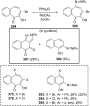
Figure 12: Various monosubstitution products 289–291 of 7-hydroxy-2,3-benzotropone (241).
Scheme 49: Reaction of 7-hydroxy-2,3-benzotropone (241) with various reagents.
Scheme 50: Synthesis of 4-hydroxy-2,3-benzotropones 174 and 304 from diketones 300/301.
Scheme 51: Catalytic hydrogenation of diketones 300 and 174.
Scheme 52: Synthesis of halo-benzotropones from alkoxy-naphthalenes 306, 307 and 310.
Figure 13: Unexpected byproducts 313–315 during synthesis of chlorobenzotropone 309.
Figure 14: Some halobenzotropones and their cycloadducts.
Scheme 53: Multisep synthesis of 2-chlorobenzotropone 309.
Scheme 54: A multistep synthesis of 2-bromo-benzotropone 26.
Scheme 55: A multistep synthesis of bromo-2,3-benzotropones 311 and 316.
Scheme 56: Oxidation reactions of 8-bromo-5H-benzo[7]annulene (329) with some oxidants.
Scheme 57: Synthesis of 2-bromo-4,5-benzotropone (26).
Scheme 58: Synthesis of 6-chloro-2,3-benzotropone (335) using LiCl and proposed intermediate 336.
Scheme 59: Reaction of 7-bromo-2,3-benzotropone (316) with methylamine.
Scheme 60: Reactions of bromo-2,3-benzotropones 26 and 311 with dimethylamine.
Scheme 61: Reactions of bromobenzotropones 311 and 26 with NaOMe.
Scheme 62: Reactions of bromobenzotropones 26 and 312 with t-BuOK in the presence of DPIBF.
Scheme 63: Cobalt-catalyzed reductive cross-couplings of 7-bromo-2,3-benzotropone (316) with cyclic α-bromo en...
Figure 15: Cycloadduct 357 and its di-π-methane rearrangement product 358.
Scheme 64: Catalytic hydrogenation of 2-chloro-4,5-benzotropone (311).
Scheme 65: Synthesis of dibromo-benzotropones from benzotropones.
Scheme 66: Bromination/dehydrobromination of benzosuberone (162).
Scheme 67: Some transformations of isomeric dibromo-benzotropones 261A/B.
Scheme 68: Transformations of benzotropolone 239B to halobenzotropolones 369–371.
Figure 16: Bromobenzotropolones 372–376 and 290 prepared via bromination/dehydrobromination strategy.
Scheme 69: Synthesis of some halobenzotropolones 289, 377 and 378.
Figure 17: Bromo-chloro-derivatives 379–381 prepared via chlorination.
Scheme 70: Synthesis of 7-iodo-3,4-benzotropolone (382).
Scheme 71: Hydrogenation of bromobenzotropolones 369 and 370.
Scheme 72: Debromination reactions of mono- and dibromides 290 and 375.
Figure 18: Nitratation and oxidation products of some halobenzotropolenes.
Scheme 73: Azo-coupling reactions of some halobenzotropolones 294, 375 and 378.
Figure 19: Four possible isomers of dibenzotropones 396–399.
Figure 20: Resonance structures of tribenzotropone (400).
Scheme 74: Two synthetic pathways for tribenzotropone (400).
Scheme 75: Synthesis of tribenzotropone (400) from dibenzotropone 399.
Scheme 76: Synthesis of tribenzotropone (400) from 9,10-phenanthraquinone (406).
Scheme 77: Synthesis of tribenzotropone (400) from trifluoromethyl-substituted arene 411.
Figure 21: Dibenzosuberone (414).
Figure 22: Reduction products 415 and 416 of tribenzotropone (400).
Figure 23: Structures of tribenzotropone dimethyl ketal 417 and 4-phenylfluorenone (412) and proposed intermed...
Figure 24: Structures of benzylidene- and methylene-9H-tribenzo[a,c,e][7]annulenes 419 and 420 and chiral phos...
Figure 25: Structures of tetracyclic alcohol 422, p-quinone methide 423 and cation 424.
Figure 26: Structures of host molecules 425–427.
Scheme 78: Synthesis of non-helical overcrowded derivatives syn/anti-431.
Figure 27: Hexabenzooctalene 432.
Figure 28: Structures of possible eight isomers 433–440 of naphthotropone.
Scheme 79: Synthesis of naphthotropone 437 starting from 1-phenylcycloheptene (441).
Scheme 80: Synthesis of 10-hydroxy-11H-cyclohepta[a]naphthalen-11-one (448) from diester 445.
Scheme 81: Synthesis of naphthotropone 433.
Scheme 82: Synthesis of naphthotropones 433 and 434 via cycloaddition reaction.
Scheme 83: Synthesis of naphthotropone 434 starting from 452.
Figure 29: Structures of tricarbonyl(tropone)irons 458, and possible cycloadducts 459.
Scheme 84: Synthesis of naphthotropone 436.
Scheme 85: Synthesis of precursor 465 for naphthotropone 435.
Scheme 86: Generation of naphthotropone 435 from 465.
Figure 30: Structures of tropylium cations 469 and 470.
Figure 31: Structures of tropylium ions 471+.BF4−, 472+.BF4−, and 473+.BF4−.
Scheme 87: Synthesis of tropylium ions 471+.BF4− and 479+.ClO4−.
Scheme 88: Synthesis of 1- and 2-methylanthracene (481 and 482) via carbene–carbene rearrangement.
Figure 32: Trapping products 488–490.
Scheme 89: Generation and chemistry of a naphthoannelated cycloheptatrienylidene-cycloheptatetraene intermedia...
Scheme 90: Proposed intermediates and reaction pathways for adduct 498.
Scheme 91: Exited-state intramolecular proton transfer of 505.
Figure 33: Benzoditropones 506 and 507.
Scheme 92: Synthesis of benzoditropone 506e.
Scheme 93: Synthetic approaches for dibenzotropone 507 via tropone (1).
Scheme 94: Formation mechanisms of benzoditropone 507 and 516 via 515.
Scheme 95: Synthesis of benzoditropones 525 and 526 from pyromellitic dianhydride (527).
Figure 34: Possible three benzocyclobutatropones 534–536.
Scheme 96: Synthesis of benzocyclobutatropones 534 and 539.
Scheme 97: Synthesis attempts for benzocyclobutatropone 545.
Scheme 98: Generation and trapping of symmetric benzocyclobutatropone 536.
Scheme 99: Synthesis of chloro-benzocyclobutatropone 552 and proposed mechanism of fluorenone derivatives.
Scheme 100: Synthesis of tropolone analogue 559.
Scheme 101: Synthesis of tropolones 561 and 562.
Figure 35: o/p-Tropoquinone rings (563 and 564) and benzotropoquinones (565–567).
Scheme 102: Synthesis of benzotropoquinone 566.
Scheme 103: Synthesis of benzotropoquinone 567 via a Diels–Alder reaction.
Figure 36: Products 575–577 through 1,2,3-benzotropoquinone hydrate 569.
Scheme 104: Structures 578–582 prepared from tropoquinone 567.
Figure 37: Two possible structures 583 and 584 for dibenzotropoquinone, and precursor compound 585 for 583.
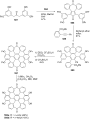
Scheme 105: Synthesis of saddle-shaped ketone 592 using dibenzotropoquinone 584.
Beilstein J. Org. Chem. 2018, 14, 955–970, doi:10.3762/bjoc.14.81
Graphical Abstract
Figure 1: Examples of equipment used to perform mechanochemistry on nucleoside and nucleotide substrates (not...
Figure 2: Ganciclovir.
Scheme 1: Nucleoside tritylation effected by hand grinding in a heated mortar and pestle.
Scheme 2: Persilylation of ribonucleoside hydroxy groups (and in situ acylation of cytidine) in a MBM.
Scheme 3: Nucleoside amine and carboxylic acid Boc protection using an improvised attritor-type mill.
Scheme 4: Nucleobase Boc protection via transient silylation using an improvised attritor-type mill.
Scheme 5: Chemoselective N-acylation of an aminonucleoside using LAG in a MBM.
Scheme 6: Azide–alkyne cycloaddition reactions performed in a copper vessel in a MBM.
Figure 3: a) Custom-machined copper vessel and zirconia balls used to perform CuAAC reactions (showing: upper...
Scheme 7: Thiolate displacement reactions of nucleoside derivatives in a MBM.
Scheme 8: Selenocyanate displacement reactions of nucleoside derivatives in a MBM.
Scheme 9: Nucleobase glycosidation reactions and subsequent deacetylation performed in a MBM.
Scheme 10: Regioselective phosphorylation of nicotinamide riboside in a MBM.
Scheme 11: Preparation of nucleoside phosphoramidites in a MBM using ionic liquid-stabilised chlorophosphorami...
Scheme 12: Preparation of a nucleoside phosphite triester using LAG in a MBM.
Scheme 13: Internucleoside phosphate coupling linkages in a MBM.
Scheme 14: Preparation of ADPR analogues using in a MBM.
Scheme 15: Synthesis of pyrophosphorothiolate-linked dinucleoside cap analogues in a MBM to effect hydrolytic ...
Figure 4: Early low temperature mechanised ball mill as described by Mudd et al. – adapted from reference [78].
Scheme 16: Co-crystal grinding of alkylated nucleobases in an amalgam mill (N.B. no frequency was recorded in ...
Figure 5: Materials used to prepare a smectic phase.
Figure 6: Structures of 5-fluorouracil (5FU) and nucleoside analogue prodrugs subject to mechanochemical co-c...
Scheme 17: Preparation of DNA-SWNT complex in a MBM.
Beilstein J. Org. Chem. 2018, 14, 930–954, doi:10.3762/bjoc.14.80
Graphical Abstract
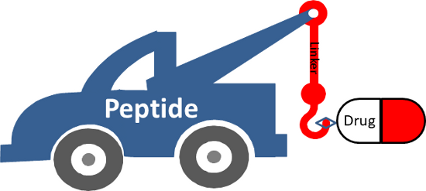
Figure 1: Conventional chemotherapy versus targeted chemotherapy. Black color = Solid malignant tumor; red = ...
Figure 2: A. General structural architecture of the ideal navigated drug delivery system [31]. B. General structu...
Figure 3: Binding and penetration mechanism of iRGD. The iRGD peptide is accumulated on the surface of αv int...
Figure 4: Representative examples of anticancer drugs utilized for the construction of PDCs. The most usual c...
Figure 5: Illustration of the drug release mechanism from the self-immolative spacer PABC conjugated to a tum...
Figure 6: Structures of the PDCs named AN-152 and AN-207.
Figure 7: Structure of the PDC named AN-238.
Figure 8: Chemical structure and synthetic scheme for the PDC ANG1005. (A) ANG1005 is composed of three molec...
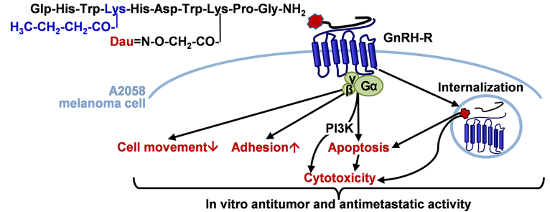
Figure 9: Structure of oxime linked Dau–GnRH-III conjugate with or without cathepsin B labile spacer and thei...
Figure 10: Synthesis of the most effective GnRH-III–Dau conjugate with two drug molecules [153].
Figure 11: Structures of the four different PDCs of D-Lys6-GnRH-I and gemcitabine (GSG, GSG2, 3G, 3G2) [19].
Figure 12: Structures of (A) native sunitinib; (B) SAN1 analog of sunitinib and (C) assembled PDC named SAN1GS...
Figure 13: Synthetic scheme for the formation of GSG and the unexpected side product [156].
Figure 14: Illustration of uncharted guanidinium peptide coupling reagent side reactions during PDCs synthesis ...
Figure 15: Putative mechanism for the formation of the uronium side product [156].
Beilstein J. Org. Chem. 2018, 14, 875–883, doi:10.3762/bjoc.14.74
Graphical Abstract
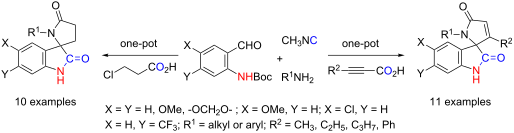
Scheme 1: Previously reported post-Ugi-4CR methods for the synthesis of 2-oxindoles and spirocyclic 2-oxindol...
Scheme 2: Post-Ugi-4CR/transamidation/cyclization sequence.
Scheme 3: Base-promoted intramolecular 5-endo-dig cyclization.
Figure 1: ORTEP diagram of compound 7a.
Figure 2: Readily and synthetically accessible starting materials.
Scheme 4: Reaction scope with varying combinations of substrates.
Scheme 5: Synthesis of 5-chloro-1'-phenylspiro[indoline-3,2'-pyrrolidine]-2,5'-dione (8a).
Figure 3: Small molecule library of spiro[indoline-3,2'-pyrrolidine]-2,5'-dione analogs.
Scheme 6: Method applicability for the one-pot synthesis of 5-HT6 receptor antagonist 8j [53].
Beilstein J. Org. Chem. 2018, 14, 756–771, doi:10.3762/bjoc.14.64
Graphical Abstract
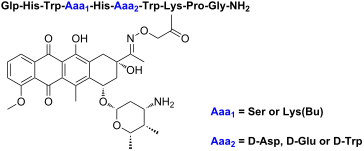
Scheme 1: Syntheses of GnRH-III–[(4Lys(Bu)/4Ser, 6Aaa, 8Lys(Dau=Aoa)] bioconjugates. a) (1) 2% hydrazine in D...
Figure 1: Far-UV ECD spectra of GnRH-III and its drug conjugates in water (GnRH-III solid, K1 dash, K2 dot, 1...
Figure 2: Degradation of the GnRH-III bioconjugates by rat liver lysosomal homogenate. A) Cleavage sites prod...
Figure 3: Cytostatic effect of the GnRH-III bioconjugates at different concentrations on A) HT-29 and B) MCF-...
Figure 4: Cellular uptake of the GnRH-III bioconjugates at different concentrations on A) HT-29 and B) MCF-7 ...
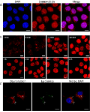
Figure 5: Cellular uptake of bioconjugate K2 (40 µM) visualized by confocal laser scanning microscopy (CLSM) ...
Figure 6: Competitive inhibition of the GnRH-R on MCF-7 cells. Cellular uptake of the GnRH-III bioconjugate K2...
Beilstein J. Org. Chem. 2018, 14, 603–617, doi:10.3762/bjoc.14.47
Graphical Abstract
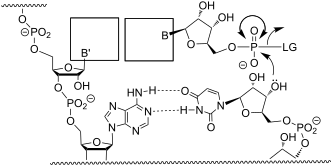
Figure 1: Enzyme-free template-directed extension of an RNA primer by one nucleotide. B = nucleobase, LG = le...
Figure 2: Oligomerization of the 2-methylimidazolide of guanosine-5'-monophosphate on a poly(C) template.
Figure 3: Structures of backbone linkages produced in enzyme-free primer extension reactions: the phosphorami...
Figure 4: System used for studying the template effect with all 64 possible triplets at the extension site (B...
Figure 5: Interactions attracting the incoming nucleotide to the extension site. Besides base pairing via hyd...
Figure 6: Three possible fates of activated nucleotides in aqueous buffer that result from hydrolysis, primer...
Figure 7: Steps and equilibria considered in our quantitative model of chemical primer extension [34]. The model ...
Figure 8: Binding equilibrium between mononucleotides and hairpins representing primer–template duplexes, as ...
Figure 9: Template-directed primer extension on an RNA template performed with OAt-GMP at 1.8 mM (orange), 3....
Figure 10: Copying of four nucleotides on an immobilized RNA duplex, as reported by Deck et al. [32].
Figure 11: Extension cycle of aminoterminal primer with N-protected nucleotides on solid support, as described...
Figure 12: Formation of a highly reactive methylimidazolium bisphosphate from methylimidazolides of nucleotide...
Figure 13: 31P NMR spectrum (161.9 MHz) of crude MeIm-GMP in D2O. The resonance of the imidazolium bisphosphat...
Figure 14: Imidazolium bisphosphate as intermediate in the primer extension reaction, as described by Szostak ...
Figure 15: Proposed steps of enzyme-free primer extension with in situ activation, using the "general condensa...
Beilstein J. Org. Chem. 2018, 14, 593–602, doi:10.3762/bjoc.14.46
Graphical Abstract
Figure 1: Examples of synthetic pharmacologically active chiral 3-substituted isoindolinones.
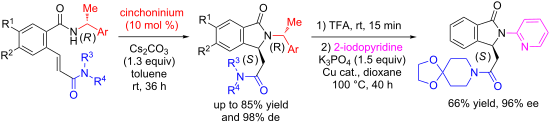
Scheme 1: Retrosynthetic analysis of NH free chiral 3-substituted isoindolinones (3S)-1 and (3S)-2.
Scheme 2: Synthesis of parent benzamides 6–8.
Figure 2: Esters 12a–e, 13 prepared, isolated yield.
Figure 3: Benzamides 6a–d, 7a–e, 8 prepared, isolated yield.
Figure 4: Phase transfer catalysts (PTC) used in this study.
Scheme 3: Synthesis of isoindolinones 3a–d, 4a–e, 5; isolated yield, de by HPLC and 1H NMR. aAfter flash chro...
Scheme 4: Removal of the chiral auxiliary. Synthesis of isoindolinones 1a–c, 1e, 2; isolated yield, ee by HPL...
Figure 5: ORTEP plot of isoindolinone (2R,3S)-3a (CCDC 1590565) [68].
Scheme 5: Synthesis of pazinaclone analogue (3S)-27.
Beilstein J. Org. Chem. 2018, 14, 416–429, doi:10.3762/bjoc.14.30
Graphical Abstract
Scheme 1: The first ENGase-catalysed glycosylation of a GlcNAc acceptor using an N-glycan oxazoline as donor.
Scheme 2: Production of N-glycan oxazolines from peracetylated sugars using Lewis acids.
Scheme 3: Direct conversion of unprotected GlcNAc to a glycosyl oxazoline by treatment with DMC and Et3N in w...
Scheme 4: Total synthesis of a truncated complex biantennary N-glycan oxazoline via an epimerisation approach...
Scheme 5: Wangs’s total synthesis of an N-glycan oxazoline incorporating click handles, employing Crich direc...
Scheme 6: Wangs’s total synthesis of an N-glycan dodecasaccharide oxazoline employing final step oxazoline fo...
Scheme 7: Production of a phosphorylated N-glycan oxazoline, employing final step oxazoline formation with DM...
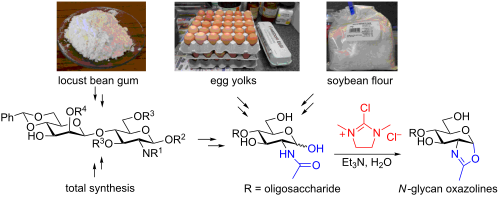
Scheme 8: Enzymatic degradation of locust bean gum, and chemical conversion into an N-glycan dodecasaccharide...
Scheme 9: Production of a complex biantennary N-glycan oxazoline from hens’ eggs by semi-synthesis via isolat...
Scheme 10: Production of a high mannose (Man-9) N-glycan oxazoline from soy bean flour.
Scheme 11: Production of a triantennary N-glycan oxazoline from bovine feruin by semi-synthesis.
Beilstein J. Org. Chem. 2018, 14, 309–317, doi:10.3762/bjoc.14.19
Graphical Abstract
Figure 1: Chloramphenicol-base-derived bifunctional organocatalysts.
Figure 2: Design of new chloramphenicol base amide organocatalysts.
Scheme 1: Synthesis of bifunctional amide catalysts 7a–q.
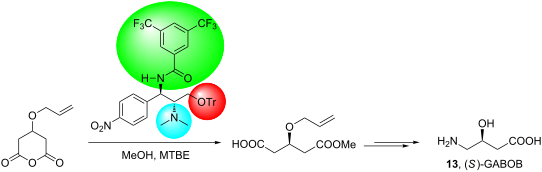
Scheme 2: Asymmetric synthesis of (S)-GABOB (13).
Beilstein J. Org. Chem. 2018, 14, 203–242, doi:10.3762/bjoc.14.15
Graphical Abstract
Figure 1: Selected examples of drugs with fused pyrazole rings.
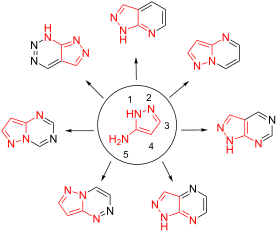
Figure 2: Typical structures of some fused pyrazoloazines from 5-aminopyrazoles.
Scheme 1: Regiospecific synthesis of 4 and 6-trifluoromethyl-1H-pyrazolo[3,4-b]pyridines.
Scheme 2: Synthesis of pyrazolo[3,4-b]pyridine-6-carboxylates.
Scheme 3: Synthesis of 1,4,6-triaryl-1H-pyrazolo[3,4-b]pyridines with ionic liquid .
Scheme 4: Synthesis of coumarin-based isomeric tetracyclic pyrazolo[3,4-b]pyridines.
Scheme 5: Synthesis of 6-substituted pyrazolo[3,4-b]pyridines under Heck conditions.
Scheme 6: Microwave-assisted palladium-catalyzed synthesis of pyrazolo[3,4-b]pyridines.
Scheme 7: Acid-catalyzed synthesis of pyrazolo[3,4-b]pyridines via enaminones.
Scheme 8: Synthesis of pyrazolo[3,4-b]pyridines via aza-Diels–Alder reaction.
Scheme 9: Synthesis of macrocyclane fused pyrazolo[3,4-b]pyridine derivatives.
Scheme 10: Three-component synthesis of 4,7-dihydro-1H-pyrazolo[3,4-b]pyridine derivatives.
Scheme 11: Ultrasonicated synthesis of spiro[indoline-3,4'-pyrazolo[3,4-b]pyridine]-2,6'(1'H)-diones.
Scheme 12: Synthesis of spiro[indoline-3,4'-pyrazolo[3,4-b]pyridine] derivatives under conventional heating co...
Scheme 13: Nanoparticle-catalyzed synthesis of pyrazolo[3,4-b]pyridine-spiroindolinones.
Scheme 14: Microwave-assisted multicomponent synthesis of spiropyrazolo[3,4-b]pyridines.
Scheme 15: Unexpected synthesis of naphthoic acid-substituted pyrazolo[3,4-b]pyridines.
Scheme 16: Multicomponent synthesis of variously substituted pyrazolo[3,4-b]pyridine derivatives.
Scheme 17: Three-component synthesis of 4,7-dihydropyrazolo[3,4-b]pyridines and pyrazolo[3,4-b]pyridines.
Scheme 18: Synthesis of pyrazolo[3,4-b]pyridine-5-spirocycloalkanediones.
Scheme 19: Ultrasound-mediated three-component synthesis of pyrazolo[3,4-b]pyridines.
Scheme 20: Multicomponent synthesis of 4-aryl-3-methyl-1-phenyl-4,6,8,9-tetrahydropyrazolo [3,4-b]thiopyrano[4...
Scheme 21: Synthesis of 2,3-dihydrochromeno[4,3-d]pyrazolo[3,4-b]pyridine-1,6-diones.
Scheme 22: FeCl3-catalyzed synthesis of o-hydroxyphenylpyrazolo[3,4-b]pyridine derivatives.
Scheme 23: Ionic liquid-mediated synthesis of pyrazolo[3,4-b]pyridines.
Scheme 24: Microwave-assisted synthesis of pyrazolo[3,4-b]pyridines.
Scheme 25: Multicomponent synthesis of pyrazolo[3,4-b]pyridine-5-carbonitriles.
Scheme 26: Unusual domino synthesis of 4,7-dihydropyrazolo[3,4-b]pyridine-5-nitriles.
Scheme 27: Synthesis of 4,5,6,7-tetrahydro-4H-pyrazolo[3,4-b]pyridines under conventional heating and ultrasou...
Scheme 28: L-Proline-catalyzed synthesis of of pyrazolo[3,4-b]pyridine.
Scheme 29: Microwave-assisted synthesis of 5-aminoarylpyrazolo[3,4-b]pyridines.
Scheme 30: Microwave-assisted multi-component synthesis of pyrazolo[3,4-e]indolizines.
Scheme 31: Synthesis of fluoropropynyl and fluoroalkyl substituted pyrazolo[1,5-a]pyrimidine.
Scheme 32: Acid-catalyzed synthesis of pyrazolo[1,5-a]pyrimidine derivatives.
Scheme 33: Chemoselective and regiospecific synthesis of 2-(3-methylpyrazol-1’-yl)-5-methylpyrazolo[1,5-a]pyri...
Scheme 34: Regioselective synthesis of 7-trifluoromethylpyrazolo[1,5-a]pyrimidines.
Scheme 35: Microwave-assisted synthesis of 7-trifluoromethylpyrazolo[1,5-a]pyrimidine carboxylates.
Scheme 36: Microwave and ultrasound-assisted synthesis of 7-trifluoromethylpyrazolo[1,5-a]pyrimidines.
Scheme 37: Base-catalyzed unprecedented synthesis of pyrazolo[1,5-a]pyrimidines via C–C bond cleavage.
Scheme 38: Synthesis of aminobenzothiazole/piperazine linked pyrazolo[1,5-a]pyrimidines.
Scheme 39: Synthesis of aminoalkylpyrazolo[1,5-a]pyrimidine-7-amines.
Scheme 40: Synthesis of pyrazolo[1,5-a]pyrimidines from condensation of 5-aminopyrazole 126 and ethyl acetoace...
Scheme 41: Synthesis of 7-aminopyrazolo[1,5-a]pyrimidines.
Scheme 42: Unexpected synthesis of 7-aminopyrazolo[1,5-a]pyrimidines under solvent free and solvent-mediated c...
Scheme 43: Synthesis of N-(4-aminophenyl)-7-aryloxypyrazolo[1,5-a]pyrimidin-5-amines.
Scheme 44: Base-catalyzed synthesis of 5,7-diarylpyrazolo[1,5-a]pyrimidines.
Scheme 45: Synthesis of 6,7-dihydropyrazolo[1,5-a]pyrimidines in PEG-400.
Scheme 46: Synthesis of 7-heteroarylpyrazolo[1,5-a]pyrimidine-3-carboxamides.
Scheme 47: Synthesis of 7-heteroarylpyrazolo[1,5-a]pyrimidine derivatives under conventional heating and micro...
Scheme 48: Synthesis of N-aroylpyrazolo[1,5-a]pyrimidine-5-amines.
Scheme 49: Regioselective synthesis of ethyl pyrazolo[1,5-a]pyrimidine-7-carboxylate.
Scheme 50: Sodium methoxide-catalyzed synthesis of 3-cyano-6,7-diarylpyrazolo[1,5-a]pyrimidines.
Scheme 51: Synthesis of various pyrazolo[3,4-d]pyrimidine derivatives.
Scheme 52: Synthesis of hydrazinopyrazolo[3,4-d]pyrimidine derivatives.
Scheme 53: Synthesis of N-arylidinepyrazolo[3,4-d]pyrimidin-5-amines.
Scheme 54: Synthesis of pyrazolo[3,4-d]pyrimidinyl-4-amines.
Scheme 55: Iodine-catalyzed synthesis of pyrazolo[3,4-d]pyrimidinones.
Scheme 56: Synthesis of ethyl 6-amino-2H-pyrazolo[3,4-d]pyrimidine-4-carboxylate.
Scheme 57: Synthesis of 4-substituted-(3,6-dihydropyran-4-yl)-1H-pyrazolo[3,4-d]pyrimidines.
Scheme 58: Synthesis of 1-(2,4-dichlorophenyl)pyrazolo[3,4-d]pyrimidin-4-yl carboxamides.
Scheme 59: Synthesis of 5-(1,3,4-thidiazol-2-yl)pyrazolo[3,4-d]pyrimidine.
Scheme 60: One pot POCl3-catalyzed synthesis of 1-arylpyrazolo[3,4-d]pyrimidin-4-ones.
Scheme 61: Synthesis of 4-amino-N1,C3-dialkylpyrazolo[3,4-d]pyrimidines under Suzuki conditions.
Scheme 62: Microwave-assisted synthesis of pyrazolo[3,4-b]pyrazines.
Scheme 63: Synthesis and derivatization of pyrazolo[3,4-b]pyrazine-5-carbonitriles.
Scheme 64: Synthesis of 2-thioxo-pyrazolo[1,5-a][1,3,5]triazin-4-ones.
Scheme 65: Synthesis of 2,3-dihydropyrazolo[1,5-a][1,3,5]triazin-4(1H)-one.
Scheme 66: Synthesis of pyrazolo[1,5-a][1,3,5]triazine-8-carboxylic acid ethyl ester.
Scheme 67: Microwave-assisted synthesis of 4,7-dihetarylpyrazolo[1,5-a][1,3,5]triazines.
Scheme 68: Alternative synthetic route to 4,7-diheteroarylpyrazolo[1,5-a][1,3,5]triazines.
Scheme 69: Synthesis of 4-aryl-2-ethylthio-7-methylpyrazolo[1,5-a][1,3,5]triazines.
Scheme 70: Microwave-assisted synthesis of 4-aminopyrazolo[1,5-a][1,3,5]triazine.
Scheme 71: Synthesis of pyrazolo[3,4-d][1,2,3]triazines from pyrazol-5-yl diazonium salts.
Scheme 72: Synthesis of 2,5-dihydropyrazolo[3,4-e][1,2,4]triazines.
Scheme 73: Synthesis of pyrazolo[5,1-c][1,2,4]triazines via diazopyrazolylenaminones.
Scheme 74: Synthesis of pyrazolo[5,1-c][1,2,4]triazines in presence of sodium acetate.
Scheme 75: Synthesis of various 7-diazopyrazolo[5,1-c][1,2,4]triazine derivatives.
Scheme 76: One pot synthesis of pyrazolo[5,1-c][1,2,4]triazines.
Scheme 77: Synthesis of 4-amino-3,7,8-trinitropyrazolo-[5,1-c][1,2,4]triazines.
Scheme 78: Synthesis of tricyclic pyrazolo[5,1-c][1,2,4]triazines by azocoupling reaction.
Beilstein J. Org. Chem. 2018, 14, 182–186, doi:10.3762/bjoc.14.12
Graphical Abstract
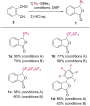
Scheme 1: Phthalide and fluorinated phthalides (1).
Scheme 2: Plausible reaction mechanism for the formation of phthalide 1a.
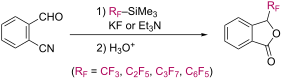
Scheme 3: Synthesis of fluorinated phthalides 1.
Scheme 4: Asymmetric synthesis of 1a using a chiral auxiliary.
Scheme 5: Catalytic asymmetric synthesis of 1a.
Beilstein J. Org. Chem. 2018, 14, 155–181, doi:10.3762/bjoc.14.11
Graphical Abstract
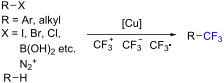
Figure 1: Selected examples of pharmaceutical and agrochemical compounds containing the trifluoromethyl group....
Scheme 1: Introduction of a diamine into copper-catalyzed trifluoromethylation of aryl iodides.
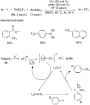
Scheme 2: Addition of a Lewis acid into copper-catalyzed trifluoromethylation of aryl iodides and the propose...
Scheme 3: Trifluoromethylation of heteroaromatic compounds using S-(trifluoromethyl)diphenylsulfonium salts a...
Scheme 4: The preparation of a new trifluoromethylation reagent and its application in trifluoromethylation o...
Scheme 5: Trifluoromethylation of aryl iodides using CF3CO2Na as a trifluoromethyl source.
Scheme 6: Trifluoromethylation of aryl iodides using MTFA as a trifluoromethyl source.
Scheme 7: Trifluoromethylation of aryl iodides using CF3CO2K as a trifluoromethyl source.
Scheme 8: Trifluoromethylation of aryl iodides and heteroaryl bromides using [Cu(phen)(O2CCF3)] as a trifluor...
Scheme 9: Trifluoromethylation of aryl iodides with DFPB and the proposed mechanism.
Scheme 10: Trifluoromethylation of aryl iodides using TCDA as a trifluoromethyl source. Reaction conditions: [...
Scheme 11: The mechanism of trifluoromethylation using Cu(II)(O2CCF2SO2F)2 as a trifluoromethyl source.
Scheme 12: Trifluoromethylation of benzyl bromide reported by Shibata’s group.
Scheme 13: Trifluoromethylation of allylic halides and propargylic halides reported by the group of Nishibayas...
Scheme 14: Trifluoromethylation of propargylic halides reported by the group of Nishibayashi.
Scheme 15: Trifluoromethylation of alkyl halides reported by Nishibayashi’s group.
Scheme 16: Trifluoromethylation of pinacol esters reported by the group of Gooßen.
Scheme 17: Trifluoromethylation of primary and secondary alkylboronic acids reported by the group of Fu.
Scheme 18: Trifluoromethylation of boronic acid derivatives reported by the group of Liu.
Scheme 19: Trifluoromethylation of organotrifluoroborates reported by the group of Huang.
Scheme 20: Trifluoromethylation of aryl- and vinylboronic acids reported by the group of Shibata.
Scheme 21: Trifluoromethylation of arylboronic acids via the merger of photoredox and Cu catalysis.
Scheme 22: Trifluoromethylation of arylboronic acids reported by Sanford’s group. Isolated yield. aYields dete...
Scheme 23: Trifluoromethylation of arylboronic acids and vinylboronic acids reported by the group of Beller. Y...
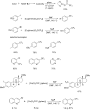
Scheme 24: Copper-mediated Sandmeyer type trifluoromethylation using Umemoto’s reagent as a trifluoromethylati...
Scheme 25: Copper-mediated Sandmeyer type trifluoromethylation using TMSCF3 as a trifluoromethylation reagent ...
Scheme 26: One-pot Sandmeyer trifluoromethylation reported by the group of Gooßen.
Scheme 27: Copper-catalyzed trifluoromethylation of arenediazonium salts in aqueous media.
Scheme 28: Copper-mediated Sandmeyer trifluoromethylation using Langlois’ reagent as a trifluoromethyl source ...
Scheme 29: Trifluoromethylation of terminal alkenes reported by the group of Liu.
Scheme 30: Trifluoromethylation of terminal alkenes reported by the group of Wang.
Scheme 31: Trifluoromethylation of tetrahydroisoquinoline derivatives reported by Li and the proposed mechanis...
Scheme 32: Trifluoromethylation of phenol derivatives reported by the group of Hamashima.
Scheme 33: Trifluoromethylation of hydrazones reported by the group of Baudoin and the proposed mechanism.
Scheme 34: Trifluoromethylation of benzamides reported by the group of Tan.
Scheme 35: Trifluoromethylation of heteroarenes and electron-deficient arenes reported by the group of Qing an...
Scheme 36: Trifluoromethylation of N-aryl acrylamides using CF3SO2Na as a trifluoromethyl source.
Scheme 37: Trifluoromethylation of aryl(heteroaryl)enol acetates using CF3SO2Na as the source of CF3 and the p...
Scheme 38: Trifluoromethylation of imidazoheterocycles using CF3SO2Na as a trifluoromethyl source and the prop...
Scheme 39: Copper-mediated trifluoromethylation of terminal alkynes using TMSCF3 as a trifluoromethyl source a...
Scheme 40: Improved copper-mediated trifluoromethylation of terminal alkynes reported by the group of Qing.
Scheme 41: Copper-catalyzed trifluoromethylation of terminal alkynes reported by the group of Qing.
Scheme 42: Copper-catalyzed trifluoromethylation of terminal alkynes using Togni’s reagent and the proposed me...
Scheme 43: Copper-catalyzed trifluoromethylation of terminal alkynes using Umemoto’s reagent reported by the g...
Scheme 44: Copper-catalyzed trifluoromethylation of 3-arylprop-1-ynes reported by Xiao and Lin and the propose...
Beilstein J. Org. Chem. 2018, 14, 1–10, doi:10.3762/bjoc.14.1
Graphical Abstract
Scheme 1: Synthetic routes to 2,4,6,8-tetraoxaadamantanes.
Scheme 2: Conversion of dipivaloylketene (2) to bisdioxines (2,6,9-trioxabicyclo[3.3.1]nona-3,7-dienes) 4 and...
Scheme 3: 2,6,9-Trioxabicyclo[3.3.1]nonadienes (bisdioxines, 9–13) derived from dipivaloylketene (2).
Scheme 4: Mechanisms of formation of bisdioxine acid derivatives from dimer 3.
Scheme 5: Recently reported synthesis of chromenobisdioxines.
Scheme 6: Formation of tetraoxaadamantanes.
Scheme 7: Decarboxylative hydrolysis and oxa-Michael-type ring closure.
Scheme 8: Oxime and hydrazine derivatives of bisdioxines and tetraoxaadamantanes.
Figure 1: Bistetraoxaadamantane derivatives.
Scheme 9: Inward-pointing isocyanate, urethane and carbamate groups in bisdioxines. The diisocyanate is obtai...
Scheme 10: Microwave-assisted tetraoxaadamantane formation.
Scheme 11: Cyclic bisdioxine ester derivative 34 forming a single mono-tetraoxaadamantane.
Figure 2: Cyclic bisdioxine derivative not forming a tetraoxaadamantane due to reduced cavity size.
Figure 3: The bisdioxine-calix[6]arene derivative 37 complexes Cs+ but does not form a tetraoxaadamantane der...
Beilstein J. Org. Chem. 2017, 13, 2764–2799, doi:10.3762/bjoc.13.272
Graphical Abstract
Scheme 1: Trifluoromethylation of enol acetates by Langlois.
Scheme 2: Trifluoromethylation of (het)aryl enol acetates.
Scheme 3: Mechanism for the trifluoromethylation of enol acetates.
Scheme 4: Oxidative trifluoromethylation of unactivated olefins and mechanistic pathway.
Scheme 5: Oxidative trifluoromethylation of acetylenic substrates.
Scheme 6: Metal free trifluoromethylation of styrenes.
Scheme 7: Synthesis of α-trifluoromethylated ketones by oxytrifluoromethylation of heteroatom-functionalised ...
Scheme 8: Catalysed photoredox trifluoromethylation of vinyl azides.
Scheme 9: Oxidative difunctionalisation of alkenyl MIDA boronates.
Scheme 10: Synthesis of β-trifluoromethyl ketones from cyclopropanols.
Scheme 11: Aryltrifluoromethylation of allylic alcohols.
Scheme 12: Cascade multicomponent synthesis of nitrogen heterocycles via azotrifluoromethylation of alkenes.
Scheme 13: Photocatalytic azotrifluoromethylation of alkenes with aryldiazonium salts and CF3SO2Na.
Scheme 14: Copper-promoted intramolecular aminotrifluoromethylation of alkenes with CF3SO2Na.
Scheme 15: Oxytrifluoromethylation of alkenes with CF3SO2Na and hydroxamic acid.
Scheme 16: Manganese-catalysed oxytrifluoromethylation of styrene derivatives.
Scheme 17: Oxytrifluoromethylation of alkenes with NMP/O2 and CF3SO2Na.
Scheme 18: Intramolecular oxytrifluoromethylation of alkenes.
Scheme 19: Hydrotrifluoromethylation of styrenyl alkenes and unactivated aliphatic alkenes.
Scheme 20: Hydrotrifluoromethylation of electron-deficient alkenes.
Scheme 21: Hydrotrifluoromethylation of alkenes by iridium photoredox catalysis.
Scheme 22: Iodo- and bromotrifluoromethylation of alkenes by CF3SO2Na/I2O5 or CF3SO2Na / NaBrO3.
Scheme 23: N-methyl-9-mesityl acridinium and visible-light-induced chloro-, bromo- and SCF3 trifluoromethylati...
Scheme 24: Carbotrifluoromethylation of N-arylacrylamides with CF3SO2Na / TBHP by Lipshutz.
Scheme 25: Carbotrifluoromethylation of N-arylacrylamides with CF3SO2Na/TBHP reported by Lei.
Scheme 26: Carbotrifluoromethylation of N-arylacrylamides with CF3SO2Na/(NH4)2S2O8.
Scheme 27: Metal-free carbotrifluoromethylation of N-arylacrylamides with CF3SO2Na/K2S2O8 reported by Wang.
Scheme 28: Metal-free carbotrifluoromethylation of N-arylacrylamides with CF3SO2Na/PIDA reported by Fu.
Scheme 29: Metal-free cascade trifluoromethylation/cyclisation of N-arylmethacrylamides (a) and enynes (b) wit...
Scheme 30: Trifluoromethylation/cyclisation of N-arylcinnamamides: Synthesis of 3,4-disubstituted dihydroquino...
Scheme 31: Trifluoromethylation/cyclisation of aromatic-containing unsaturated ketones.
Scheme 32: Chemo- and regioselective cascade trifluoromethylation/heteroaryl ipso-migration of unactivated alk...
Scheme 33: Copper-mediated 1,2-bis(trifluoromethylation) of alkenes.
Scheme 34: Trifluoromethylation of aromatics with CF3SO2Na reported by Langlois.
Scheme 35: Baran’s oxidative C–H trifluoromethylation of heterocycles.
Scheme 36: Trifluoromethylation of acetanilides and anilines.
Scheme 37: Trifluoromethylation of heterocycles in water.
Scheme 38: Trifluoromethylation of coumarins in a continuous-flow reactor.
Scheme 39: Oxidative trifluoromethylation of coumarins, quinolines and pyrimidinones.
Scheme 40: Oxidative trifluoromethylation of pyrimidinones and pyridinones.
Scheme 41: Phosphovanadomolybdic acid-catalysed direct C−H trifluoromethylation.
Scheme 42: Oxidative trifluoromethylation of imidazopyridines and imidazoheterocycles.
Scheme 43: Oxidative trifluoromethylation of imidazoheterocycles and imidazoles in ionic liquid/water.
Scheme 44: Oxidative trifluoromethylation of 8-aminoquinolines.
Scheme 45: Oxidative trifluoromethylation of various 8-aminoquinolines using the supported catalyst CS@Cu(OAc)2...
Scheme 46: Oxidative trifluoromethylation of the naphthylamide 70.
Scheme 47: Oxidative trifluoromethylation of various arenes in the presence of CF3SO2Na and sodium persulfate.
Scheme 48: Trifluoromethylation of electron-rich arenes and unsymmetrical biaryls with CF3SO2Na in the presenc...
Figure 1: Trifluoromethylated coumarin and flavone.
Scheme 49: Metal-free trifluoromethylation catalysed by a photoredox organocatalyst.
Scheme 50: Quinone-mediated trifluoromethylation of arenes and heteroarenes.
Scheme 51: Metal- and oxidant-free photochemical trifluoromethylation of arenes.
Scheme 52: Copper-mediated trifluoromethylation of arenediazonium tetrafluoroborates.
Scheme 53: Oxidative trifluoromethylation of aryl- and heteroarylboronic acids.
Scheme 54: Oxidative trifluoromethylation of aryl- and vinylboronic acids.
Scheme 55: Oxidative trifluoromethylation of unsaturated potassium organotrifluoroborates.
Scheme 56: Oxidative trifluoromethylation of (hetero)aryl- and vinyltrifluoroborates.
Scheme 57: Copper−catalysed decarboxylative trifluoromethylation of cinnamic acids.
Scheme 58: Iron-mediated decarboxylative trifluoromethylation of α,β-unsaturated carboxylic acids.
Scheme 59: Cu/Ag-catalysed decarboxylative trifluoromethylation of cinnamic acids.
Scheme 60: I2O5-Promoted decarboxylative trifluoromethylation of cinnamic acids.
Scheme 61: Silver(I)-catalysed denitrative trifluoromethylation of β-nitrostyrenes.
Scheme 62: Copper-catalysed direct trifluoromethylation of styrene derivatives.
Scheme 63: Transition-metal-free synthesis of β-trifluoromethylated enamines.
Scheme 64: I2O5-mediated iodotrifluoromethylation of alkynes.
Scheme 65: Silver-catalysed tandem trifluoromethylation/cyclisation of aryl isonitriles.
Scheme 66: Photoredox trifluoromethylation of 2-isocyanobiphenyls.
Scheme 67: Trifluoromethylation of potassium alkynyltrifluoroborates with CF3SO2Na.
Scheme 68: N-trifluoromethylation of nitrosoarenes with CF3SO2Na (SQ: semiquinone).
Scheme 69: Trifluoromethylation of disulfides with CF3SO2Na.
Scheme 70: Trifluoromethylation of thiols with CF3SO2Na/I2O5.
Scheme 71: Electrophilic trifluoromethylsulfenylation by means of CF3SO2Na/(EtO)2P(O)H/CuCl/DMSO.
Scheme 72: Electrophilic trifluoromethylsulfenylation by means of CF3SO2Na/(EtO)2P(O)H/TMSCl.
Scheme 73: Electrophilic trifluoromethylsulfenylation by means of CF3SO2Na/PPh3/N-chlorophthalimide.
Scheme 74: Electrophilic trifluoromethylsulfenylation by means of CF3SO2Na/PCl3.
Scheme 75: Electrophilic trifluoromethylsulfenylation by means of CF3SO2Na/PCl3.
Scheme 76: Trifluoromethylsulfenylation of aryl iodides with in situ generated CuSCF3 (DMI: 1,3-dimethyl-2-imi...
Scheme 77: Pioneering trifluoromethylsulfinylation of N, O, and C-nucleophiles.
Scheme 78: Trifluoromethylsulfinylation of (1R,2S)-ephedrine (Im: imidazole; DIEA: N,N-diisopropylethylamine).
Scheme 79: Trifluoromethylsulfinylation of substituted benzenes with CF3SO2Na/CF3SO3H.
Scheme 80: Trifluoromethylsulfinylation of indoles with CF3SO2Na/P(O)Cl3.
Scheme 81: Trifluoromethylsulfinylation of indoles with CF3SO2Na/PCl3.
Scheme 82: Formation of triflones from benzyl bromides (DMA: dimethylacetamide).
Scheme 83: Formation of α-trifluoromethylsulfonyl ketones, esters, and amides.
Scheme 84: Allylic trifluoromethanesulfonylation of aromatic allylic alcohols.
Scheme 85: Copper-catalysed couplings of aryl iodonium salts with CF3SO2Na.
Scheme 86: Palladium-catalysed trifluoromethanesulfonylation of aryl triflates and chlorides with CF3SO2Na.
Scheme 87: Copper-catalysed coupling of arenediazonium tetrafluoroborates with CF3SO2Na.
Scheme 88: Synthesis of phenyltriflone via coupling of benzyne with CF3SO2Na.
Scheme 89: Synthesis of 1-trifluoromethanesulfonylcyclopentenes from 1-alkynyl-λ3-bromanes and CF3SO2Na.
Scheme 90: One-pot synthesis of functionalised vinyl triflones.
Scheme 91: Regioselective synthesis of vinyltriflones from styrenes.
Scheme 92: Trifluoromethanesulfonylation of alkynyl(phenyl) iodonium tosylates by CF3SO2Na.
Scheme 93: Synthesis of thio- and selenotrifluoromethanesulfonates.
Beilstein J. Org. Chem. 2017, 13, 2682–2689, doi:10.3762/bjoc.13.266
Graphical Abstract
Scheme 1: Intramolecular site-selective iodoarylation of 1,1-difluoro-1-alkenes bearing a biaryl group.
Scheme 2: Mechanism for formation of 3a.
Figure 1: ORTEP diagram of 2a with 50% ellipsoid probability.
Scheme 3: Transformation of a CF2I group of 2a into a CHF2 group.
Scheme 4: Construction of seven-membered carbocycles via iodoarylation of 5.
Figure 2: ORTEP diagram of 6a with 50% ellipsoid probability.
Scheme 5: Selective HI elimination from 6a.
Beilstein J. Org. Chem. 2017, 13, 2671–2681, doi:10.3762/bjoc.13.265
Graphical Abstract
Figure 1: Structure of a B-DNA duplex comprising a central C–Ag(I)–C base pair. This figure was created based...
Scheme 1: Hydrogen-bonding patterns of various reversed Watson–Crick base pairs. a) A:T; b) G:C (steric clash...
Scheme 2: Various hydrogen-bonding patterns. a) T:A:T and CH+:G:C base triples indicating how T:A and CH+:G H...
Scheme 3: Representation of a β-dA:α-dT base pair.
Scheme 4: Representation of mononuclear metal-mediated base pairs involving canonical pyrimidine nucleobases....
Scheme 5: Proposed base pairing patterns of FP–Ag(I)–FP, involving a) the Watson–Crick edge (antiparallel-str...
Scheme 6: Reaction pathway towards a parallel-stranded DNA duplex bearing a G–Pt(II)–G base pair. Adapted fro...
Scheme 7: Possible base pairing patterns of dinuclear Ag(I)-mediated base pairs. Base pairs within an antipar...
Scheme 8: Base pairing patterns of the dinuclear Ag(I)-mediated homo base pair of 1,N6-ethenoadenine (εA) wit...
Scheme 9: Additional metal-mediated base pairs involving 1,N6-ethenoadenine (εA). Base pairs within an antipa...
Beilstein J. Org. Chem. 2017, 13, 2637–2658, doi:10.3762/bjoc.13.262
Graphical Abstract
Figure 1: Selected amide bond isosteres.
Figure 2: Monofluoroalkene as an amide bond isostere.
Scheme 1: Synthesis of Cbz-Gly-ψ[(Z)-CF=CH]-Gly using a HWE olefination by Sano and co-workers.
Scheme 2: Synthesis of Phth-Gly-ψ[CF=CH]-Gly using the Julia–Kocienski olefination by Lequeux and co-workers.
Scheme 3: Synthesis of Boc-Nva-ψ[(Z)-CF=CH]-Gly by Taguchi and co-workers.
Figure 3: Mutant tripeptide containing two different peptide bond isosteres.
Scheme 4: Chromium-mediated synthesis of Boc-Ser(PMB)-ψ[(Z)-CF=CH]-Gly-OMe by Konno and co-workers.
Scheme 5: Synthesis of Cbz-Gly-ψ[(E)-CF=C]-Pro by Sano and co-workers.
Scheme 6: Synthesis of Cbz-Gly-ψ[(Z)-CF=C]-Pro by Sano and co-workers.
Scheme 7: Stereoselective synthesis of Fmoc-Gly-ψ[(Z)-CF=CH]-Phe by Pannecoucke and co-workers.
Scheme 8: Ring-closure metathesis to prepare Gly-ψ[(E)-CF=CH]-Phg by Couve-Bonnaire and co-workers.
Scheme 9: Stereoselective synthesis of Fmoc-Gly-ψ[(Z)-CF=CH]-Phe by Dory and co-workers.
Scheme 10: Diastereoselective addition of Grignard reagents to sulfinylamines derived from α-fluoroenals by Pa...
Scheme 11: NHC-mediated synthesis of monofluoroalkenes by Otaka and co-workers.
Scheme 12: Stereoselective synthesis of Boc-Tyr-ψ[(Z)-CF=CH]-Gly by Altman and co-workers.
Scheme 13: Synthesis of the tripeptide Boc-Asp(OBn)-Pro-ψ[(Z)-CF=CH)-Val-CH2OH by Miller and co-workers.
Scheme 14: Copper-catalyzed synthesis of monofluoralkenes by Taguchi and co-workers.
Scheme 15: One-pot intramolecular redox reaction to access amide-type isosteres by Otaka and co-workers.
Scheme 16: Copper-mediated reduction, transmetalation and asymmetric alkylation by Fujii and co-workers.
Scheme 17: Synthesis of (E)-monofluoroalkene-based dipeptide isostere by Fujii and co-workers.
Scheme 18: Diastereoselective synthesis of MeOCO-Val-ψ[(Z)-CF=C]-Pro isostere by Chang and co-workers.
Scheme 19: Asymmetric synthesis of Fmoc-Ala-ψ[(Z)-CF=C]-Pro by Pannecoucke and co-workers.
Scheme 20: Synthesis of Fmoc-Val-ψ[(E)-CF=C]-Pro by Pannecoucke and co-workers.
Figure 4: BMS-790052 and its fluorinated analogue.
Figure 5: Bioactivities of pentapeptide analogues based on the relative maximum agonistic activity at 10 nM o...
Figure 6: Structures and affinities of the Leu-enkephalin and its fluorinated analogue. The affinity towards ...
Figure 7: Activation of the opioid receptor DOPr by Leu-enkephaline and a fluorinated analogue.