Search results
Search for "catalysts" in Full Text gives 1322 result(s) in Beilstein Journal of Organic Chemistry. Showing first 200.
Carbonylative synthesis and functionalization of indoles
Beilstein J. Org. Chem. 2024, 20, 973–1000, doi:10.3762/bjoc.20.87
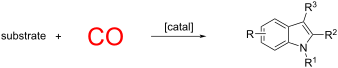
- %, respectively) in methanol under 90 bar of CO at 100 °C for two hours (Scheme 6). As already seen, triple bonds can be activated by Pd(II) catalysts towards the addition of nucleophiles in the right position, leading to heterocyclization reactions. Taking advantage of this possibility, in the Della Cá group, a
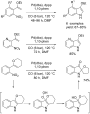
- conditions (200 °C and 80 bar CO) for 5 hours in the presence of catalysts such as Fe(CO)5, Ru3(CO)12, or Rh6(CO)16 [21]. The process was not selective because aniline derivatives and other byproducts were also formed; moreover, the substrate conversion, in some cases, was not complete (Scheme 8). In
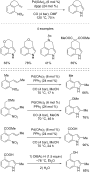
- as ligand, because it was already known that catalysts derived from palladium(II) salts and bidentate nitrogen ligands were highly reactive systems for the reduction of o-nitrostyrenes [28][29][30]. The catalytic system Pd(OAc)2/1,10-phen worked better than Söderberg´s one (Pd(OAc)2/PPh3) under mild












Enantioselective synthesis of β-aryl-γ-lactam derivatives via Heck–Matsuda desymmetrization of N-protected 2,5-dihydro-1H-pyrroles
Beilstein J. Org. Chem. 2024, 20, 940–949, doi:10.3762/bjoc.20.84
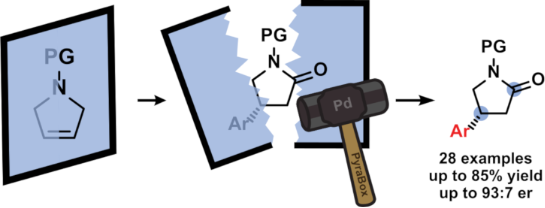
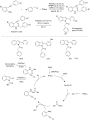
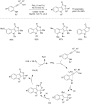
- preclude chirality as in the transformation of a prochiral molecular entity into a chiral one [1]. It is a powerful and elegant strategy in asymmetric synthesis [2], which combined with the use of chiral ligands and transition-metal catalysts enabled many valuable transformations to increase molecular




One-pot Ugi-azide and Heck reactions for the synthesis of heterocyclic systems containing tetrazole and 1,2,3,4-tetrahydroisoquinoline
Beilstein J. Org. Chem. 2024, 20, 912–920, doi:10.3762/bjoc.20.81
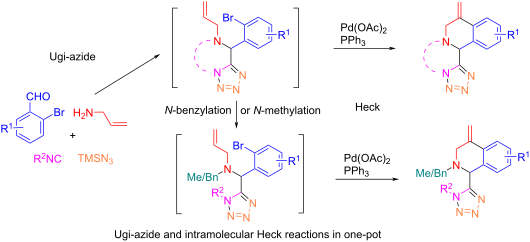
- effort was then focused on the optimization of the intramolecular Heck reaction of 5a for making 1,2,3,4-tetrahydroisoquinoline 6a. A systematic evaluation of different catalysts and ligands, solvents, bases, as well as reaction temperatures and times was conducted (Table 1). The Heck reaction of 5a was
- , and Cs2CO3 (Table 1, entries 12–14). Investigating other Pd catalysts, suche as PdCl2 and Pd(dba)2 also gave low yields (Table 1, entries 15 and 16). Since CH3CN is a more favorable solvent than DMF in green chemistry consideration [52][53], the optimal reaction conditions for the Heck reaction were


Synthesis and properties of 6-alkynyl-5-aryluracils
Beilstein J. Org. Chem. 2024, 20, 898–911, doi:10.3762/bjoc.20.80
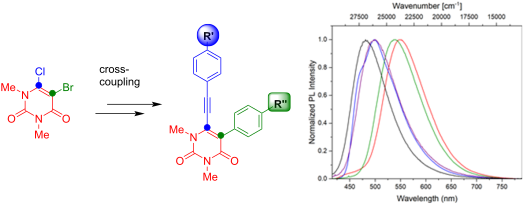
- performed on a Bruker Apex Kappa-II CCD diffractometer. The solvents used, dimethyl sulfoxide and 1,4-dioxane, were purchased as dry solvents and applied without further purification. Other reagents, catalysts, ligands, acids, and bases were used as purchased from commercial suppliers. Column chromatography




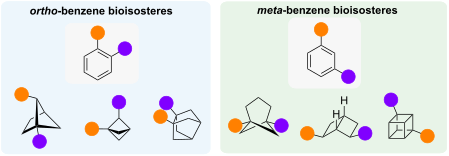
(Bio)isosteres of ortho- and meta-substituted benzenes
Beilstein J. Org. Chem. 2024, 20, 859–890, doi:10.3762/bjoc.20.78
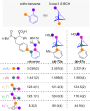
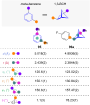
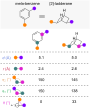
- tetrasubstituted BCHs was recently reported by Shi and co-workers [82]. They employed Hantzsch esters as catalysts in the [2π + 2σ] cycloaddition of alkenes and bicyclobutanes. The synthesis of bicyclohexyl ketones by formal (3 + 2) cycloaddition of bicyclobutane and ketenes was recently reported by Studer and co














Ortho-ester-substituted diaryliodonium salts enabled regioselective arylocyclization of naphthols toward 3,4-benzocoumarins
Beilstein J. Org. Chem. 2024, 20, 841–851, doi:10.3762/bjoc.20.76
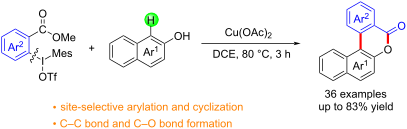
- -benzocoumarin skeletons in the presence of palladium catalysts (Scheme 1b). Furthermore, Olofsson and colleagues described an unprecedented reaction pathway using ortho-fluoro-substituted diaryliodonium salts bearing strong electron-withdrawing groups, leading to novel diarylations of N-, O-, and S-nucleophiles
- solvents including dimethyl sulfoxide (DMSO), N,N-dimethylformamide (DMF), toluene, acetic acid (AcOH) and water (Table 1, entries 9–13) were carried out. However, polar solvents such as AcOH and H2O were proved to be unsuitable for this reaction. For catalysts, we found that Cu(OAc)2 gave the best results


Skeletal rearrangement of 6,8-dioxabicyclo[3.2.1]octan-4-ols promoted by thionyl chloride or Appel conditions
Beilstein J. Org. Chem. 2024, 20, 823–829, doi:10.3762/bjoc.20.74
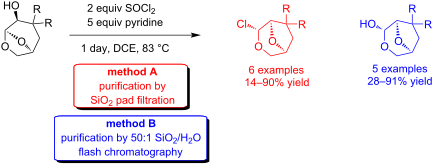
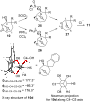
- cyrene (2) allows for its use as a chiral solvent [4]. This product is emerging as a promising platform chemical for the construction of chiral small molecules for pharmaceuticals [5][6][7][8], as a building block for catalysts and auxiliaries [9][10][11], and in materials applications [12][13][14]. New


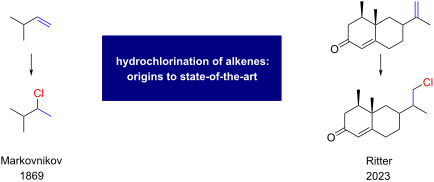
Advancements in hydrochlorination of alkenes
Beilstein J. Org. Chem. 2024, 20, 787–814, doi:10.3762/bjoc.20.72
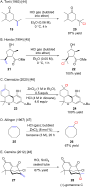
- DHB as a hydride donor and thus give the fully reduced product 142. However, when both DHB and TosCl were present, the reaction of the radical with TosCl was significantly faster leading to 143 in 92% yield. In 2012, Boger demonstrated the efficiency of iron(III) catalysts for the hydrochlorination of






SOMOphilic alkyne vs radical-polar crossover approaches: The full story of the azido-alkynylation of alkenes
Beilstein J. Org. Chem. 2024, 20, 701–713, doi:10.3762/bjoc.20.64
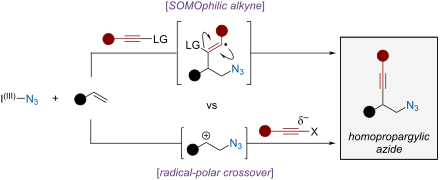
- presence of transition metal catalysts [11][12][13][14]. Currently, this motif is synthesized by sequential introduction of the two functional groups [11][12][13]. Addition of a lithium acetylide to an epoxide affords the corresponding homopropargylic alcohol which can then undergo a sequence of mesylation


Evaluation of the enantioselectivity of new chiral ligands based on imidazolidin-4-one derivatives
Beilstein J. Org. Chem. 2024, 20, 684–691, doi:10.3762/bjoc.20.62
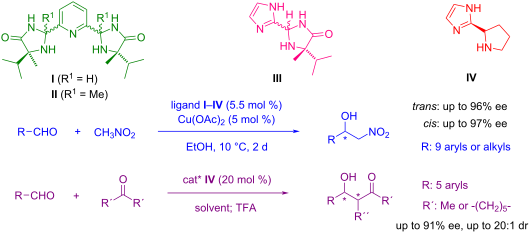
- based on derivatives of imidazolidin-4-one were synthesised and characterised. The catalytic activity and enantioselectivity of their corresponding copper(II) complexes were studied in asymmetric Henry reactions. It was found that the enantioselectivity of these catalysts is overall very high and
- ; Introduction The application of chiral metal complexes as enantioselective catalysts is among the fundamental strategies for preparing compounds in non-racemic forms [1][2][3][4]. These complexes typically comprise a chelating chiral ligand capable of coordinating with a metal ion; otherwise, a metal atom
- -(pyridin-2-yl)imidazolidin-4-one, differentiated by various substitutions at the imidazolidine ring [5][6][7]. Their copper(II) complexes were evaluated as efficient enantioselective catalysts, particularly in asymmetric Henry reactions (Scheme 1). Subsequent research has led to the development of various


Regioselective quinazoline C2 modifications through the azide–tetrazole tautomeric equilibrium
Beilstein J. Org. Chem. 2024, 20, 675–683, doi:10.3762/bjoc.20.61
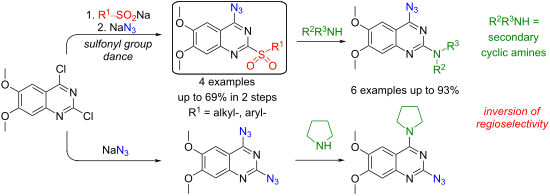
- position of quinazolines requires longer time, higher temperatures, and sometimes the use of expensive transition-metal catalysts [12]. A selective C2 modification can be achieved by using 2-chloroquinazolines IV, where the C4 position is blocked by an unreactive C–C or C–H bond (Scheme 1). Cyclization


Palladium-catalyzed three-component radical-polar crossover carboamination of 1,3-dienes or allenes with diazo esters and amines
Beilstein J. Org. Chem. 2024, 20, 661–671, doi:10.3762/bjoc.20.59
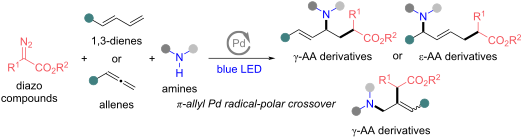
- (Table 1, entry 7), whereas only low yields of 4a were observed with Pd(0) catalysts Pd(PPh3)4 and Pd2(dba)3 (Table 1, entries 8 and 9). Moreover, adding potassium carbonate as additive failed to furnish 4a, demonstrating that the trace amount of acid from the Pd(II) catalyst may facilitate the formation



HPW-Catalyzed environmentally benign approach to imidazo[1,2-a]pyridines
Beilstein J. Org. Chem. 2024, 20, 628–637, doi:10.3762/bjoc.20.55
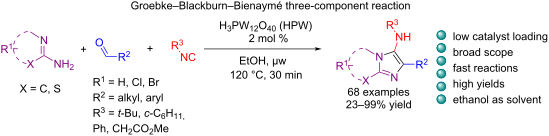
- activities. The most direct way of obtaining this nucleus is the Groebke–Blackburn–Bienaymé three-component reaction (GBB-3CR) between aminopyridines, aldehydes, and isocyanides under both Lewis and Brønsted acid catalysis. However, several catalysts for this reaction have major drawbacks such as being
- 99%), with a low catalyst loading (2 mol %) in only 30 minutes, and allows the successful use of aliphatic aldehydes, substrates not so frequently explored with most usual catalysts for this reaction. Furthermore, the aforementioned advantages make this methodology very attractive and superior to the
- reactivity of the imine formation [24]. The most common catalysts are those derived from triflate salts such as Sc(OTf)3 [25], Yb(OTf)3 [26], In(OTf)3 [27] and Gd(OTf)3 [28], and inorganic Brønsted or Lewis acids like HClO4 [29], ZrCl4 [30], InCl3 [31], BiCl3 [32], RuCl3 [33], NH4Cl [34], HCl [35], LaCl3




Switchable molecular tweezers: design and applications
Beilstein J. Org. Chem. 2024, 20, 504–539, doi:10.3762/bjoc.20.45
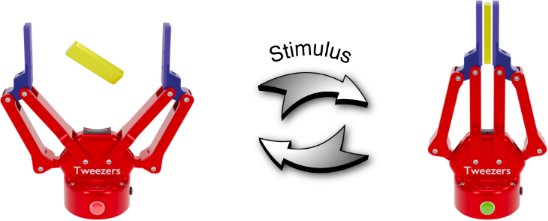
- , the incorporation of responsive functionalities into molecular tweezers not only provides significant benefits in catalysis for the development of switchable catalysts but also extends their utility to molecular magnetism, where magnetic switches exploit mechanical motion, and to molecular electronics
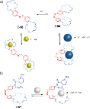
- metalloporphyrin arms [83] or larger assemblies [78]. In particular, remarkable double tweezers (or triple-decker catalysts) 41 have been developed (Figure 22). These tweezers consist of two Rh(I) complexes, wherein a catalytically active metal Al(III)–salen arm is shared on the phosphine thioether ligand side




Ligand effects, solvent cooperation, and large kinetic solvent deuterium isotope effects in gold(I)-catalyzed intramolecular alkene hydroamination
Beilstein J. Org. Chem. 2024, 20, 479–496, doi:10.3762/bjoc.20.43
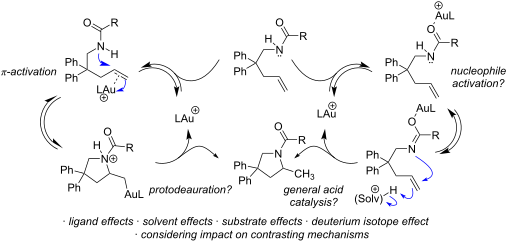
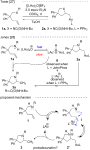
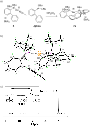
- out under a variety of conditions with cationic gold catalysts supported by phosphine ligands. The impact of ligand on gold, protecting group on nitrogen, and solvent and additive on reaction rates was determined. The most effective reactions utilized more Lewis basic ureas, and more electron
- μL MeOH, the first order plots of alkene decay retained linearity up to 80% conversion, and separate 31P NMR experiments indicated significant decomposition at about 50% conversion. Independently prepared [L–Au–L]+ has been shown by others to be inactive catalysts (L = Ph3P) [41] and we confirmed
- ), a supporting ligand that would be predicted to create more electrophilic gold due to its high π-acceptor properties, major decomposition was observed for the slower substrates (1b and 1c) and the fast urea (1a), indicating catalysts that are much more prone to decomposition, and preventing any







Green and sustainable approaches for the Friedel–Crafts reaction between aldehydes and indoles
Beilstein J. Org. Chem. 2024, 20, 379–426, doi:10.3762/bjoc.20.36
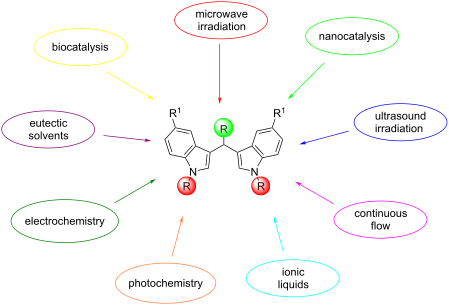
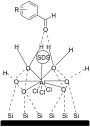
- or Lewis acids as catalysts. In 2010, Shiri published a review, where the majority of the acidic catalysts that have been employed for the synthesis of these compounds were presented [12]. Since then, various alternative acids have been applied including protic acids, such as silica-bonded S-sulfonic
- . The difference between the two mechanistic pathways is the nature of activation of the carbonyl group. Protic acids induce the protonation of the carbonyl group of the aldehyde or ketone, enhancing its electrophilic character. Whereas, Lewis acid catalysts bind to the heteroatom of the carbonyl group
- synthetic pathways in organic chemistry [32][33][34]. Common organic syntheses require the use of harmful chemicals, such as toxic solvents, hazardous reagents, catalysts and reaction conditions, which contribute to environmental pollution and soil degradation [35][36]. Wanting to enhance the sustainability




Mechanisms for radical reactions initiating from N-hydroxyphthalimide esters
Beilstein J. Org. Chem. 2024, 20, 346–378, doi:10.3762/bjoc.20.35
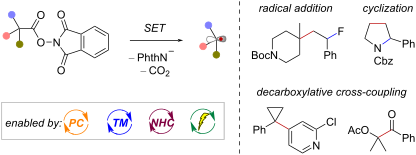
- years and in the past, they were perceived as fleeting reaction intermediates. Recent progress in photoredox catalysis [6][7][8], electrochemistry [9][10], and the use of transition-metal (TM) catalysts in radical cross-coupling reactions [11] have dramatically expanded the use of radicals in synthesis
- photoactive catalysts can be achieved by combining simple transition metal (TM) salts with suitable ligands. These TM catalysts are fundamentally distinct from traditional Ru- and Ir-based photoredox catalysts, as they play a dual role, by engaging in photoinduced electron transfer processes with the
- desaturation of aliphatic carboxylic acids [83]. Initiation by metal catalysts and stoichiometric reductants The activation of NHPI esters under transition metal catalysis without the need of light is also feasible, and generally, two types of coupling reactions can be envisioned. On one hand, the






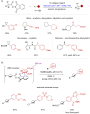


Nucleophilic functionalization of thianthrenium salts under basic conditions
Beilstein J. Org. Chem. 2024, 20, 257–263, doi:10.3762/bjoc.20.26
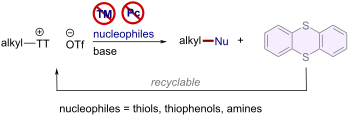
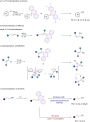
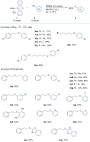
- Abstract In recent years, S-(alkyl)thianthrenium salts have become an important means of functionalizing alcohol compounds. However, additional transition metal catalysts and/or visible light are required. Herein, a direct thioetherification/amination reaction of thianthrenium salts is realized under metal
- ]. Recently, Ritter and co-workers reported that alkylthianthrenium salts can be employed to undergo reactions with N/O-nucleophiles under photocatalytic conditions [46]. Nevertheless, additional transition metal catalysts, visible light, or electrochemical devices are required for the reported works



Substitution reactions in the acenaphthene analog of quino[7,8-h]quinoline and an unusual synthesis of the corresponding acenaphthylenes by tele-elimination
Beilstein J. Org. Chem. 2024, 20, 243–253, doi:10.3762/bjoc.20.24
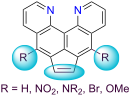
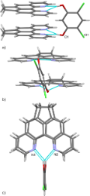
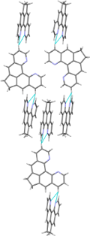
- and used in medicine, food industry, catalysts, dyes, functional materials, oil refining, and electronics [1][2]. Quinoline and its derivatives have antibiotic, antimalarial, antitumor, anti-inflammatory, antihypertensive, and antiretroviral properties [3][4]. Therefore, at present, there is a need




Copper-catalyzed multicomponent reaction of β-trifluoromethyl β-diazo esters enabling the synthesis of β-trifluoromethyl N,N-diacyl-β-amino esters
Beilstein J. Org. Chem. 2024, 20, 212–219, doi:10.3762/bjoc.20.21
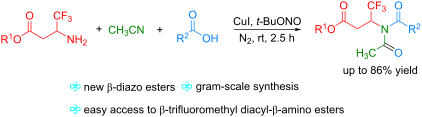
- side reactions was carried out with benzyl 3-amino-4,4,4-trifluorobutanoate (1a) and benzoic acid (3a) as model substrates. The initial reaction of amine 1a and acid 3a in acetonitrile in the presence of diazotization reagent tert-butyl nitrite with CuI (10 mol %) as catalysts for 2.5 h at room




Chiral phosphoric acid-catalyzed transfer hydrogenation of 3,3-difluoro-3H-indoles
Beilstein J. Org. Chem. 2024, 20, 205–211, doi:10.3762/bjoc.20.20
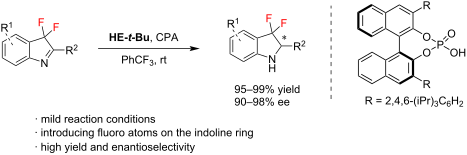
- obtained in 98% yield with 20% ee after 12 h (Table 1, entry 1). Then, the effect of steric hindrance of the CPA catalyst and solvents on the stereochemistry of this transfer hydrogenation were investigated in detail. Among various 3,3’-disubstituted CPA catalysts (Table 1, entries 2–6), chiral phosphoric


Metal-catalyzed coupling/carbonylative cyclizations for accessing dibenzodiazepinones: an expedient route to clozapine and other drugs
Beilstein J. Org. Chem. 2024, 20, 193–204, doi:10.3762/bjoc.20.19
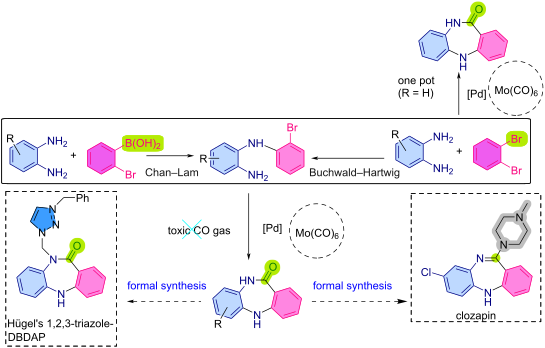
- due to the energetically favorable dissociation of Mo(CO)n into Mo(CO)n−1 which was proven to be a highly exothermic reaction in the presence of metal catalysts especially after the dissociation of the first CO group [23]. It should be noted that the best overall yield for the synthesis of 4a using


Copper-promoted C5-selective bromination of 8-aminoquinoline amides with alkyl bromides
Beilstein J. Org. Chem. 2024, 20, 155–161, doi:10.3762/bjoc.20.14
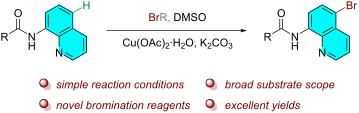
- quinoline ring of 1a in this reaction. Other competitive site-selective C–H bromination products and multiple brominated products were not observed. Subsequently, the bromination reaction was examined with various catalysts such as CoCl2·6H2O, Ni(OAc)2·4H2O, MnSO4·H2O, CuCl, CuBr, CuCl2, CuBr2, and Cu(OAc)2


Perspectives on push–pull chromophores derived from click-type [2 + 2] cycloaddition–retroelectrocyclization reactions of electron-rich alkynes and electron-deficient alkenes
Beilstein J. Org. Chem. 2024, 20, 125–154, doi:10.3762/bjoc.20.13
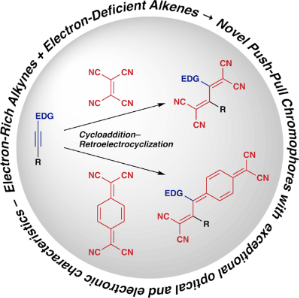
- wormlike nanoparticles. In rotaxanes, the utilization of metal–ligand bonding involving CuI is a common strategy for immobilizing a thread moiety within a macrocycle. However, the efficacy of such a bonding is compromised when catalysts are used in stoppering reactions, e.g., the copper-catalyzed azide


Visible-light-induced radical cascade cyclization: a catalyst-free synthetic approach to trifluoromethylated heterocycles
Beilstein J. Org. Chem. 2024, 20, 118–124, doi:10.3762/bjoc.20.12
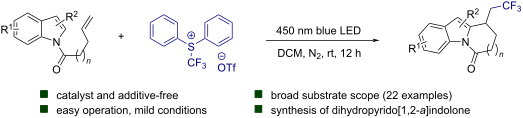
- radicals. This method allows the efficient synthesis of various indole derivatives without the need of photocatalysts or transition-metal catalysts. Mechanism experiments indicate that the process involves a radical chain process initiated by the homolysis of Umemoto's reagent. This straightforward method
- ], Friedel–Crafts acylation [12], radical cascade reactions [2][13], and photoinduced radical cyclizations [14][15][16][17]. However, these methods often suffer from drawbacks such as harsh reaction conditions and the requirement of transition-metal catalysts. Although photocatalyzed cyclization reactions
- usually occur under mild conditions, they typically require expensive metal-based photocatalysts or structurally complex organic dyes [18]. Therefore, the development of a photoinduced cascade reaction without the need of additional catalysts or additives remains highly desirable [19]. The introduction of