


Search results
Search for "diols" in Full Text gives 199 result(s) in Beilstein Journal of Organic Chemistry.
Miniemulsion polymerization as a versatile tool for the synthesis of functionalized polymers
Beilstein J. Org. Chem. 2010, 6, 1132–1148, doi:10.3762/bjoc.6.130
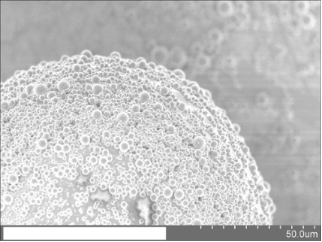
- is the formation of polyurethanes. Originally, there was considerable interest in producing water-borne polyurethane dispersions to replace the solvent-borne formulations and therefore much effort was expended in investigating the synthesis of polyurethane in aqueous miniemulsions. Hydrophobic diols
- miniemulsion. For example, castor oil (a triol) has been used as the monomer [102]. Li et al. showed that short diols can be also replaced efficiently by poly(tetramethylene glycol) [103]. The polyaddition reaction to form urethane bonds was also carried out with a cyclodextrin derivative and IPDI as the
- parameters were found to play a role in increasing the yield. The yield was higher if a) more hydrophobic monomers and b) diols with electron-donating groups were polymerized. The polycondensation of a diamine and sebacoyl chloride was carried out in direct miniemulsions in the presence of silica





β-Hydroxy carbocation intermediates in solvolyses of di- and tetra-hydronaphthalene substrates
Beilstein J. Org. Chem. 2010, 6, 1035–1042, doi:10.3762/bjoc.6.118
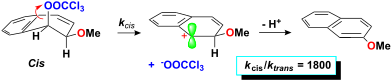
- ratio of cis to trans diols from cis and trans reactants together with a small amount of 2-tetralone. The product distribution for the trans isomer is shown in Scheme 3. The corresponding figures for the cis isomer are 76% cis and 20% trans dihydrodiols plus 4% 2-tetralone. The similarity of the product


Redox-active tetrathiafulvalene and dithiolene compounds derived from allylic 1,4-diol rearrangement products of disubstituted 1,3-dithiole derivatives
Beilstein J. Org. Chem. 2010, 6, 1002–1014, doi:10.3762/bjoc.6.113

- carboxaldehydes affords the corresponding bisalcohol products 2 in good yield (75–90%). Under ambient conditions, these diols decompose slowly. However, on treatment with a few drops of perchloric acid to solutions of 2 in dichloromethane (CH2Cl2), the rate of decomposition of the starting materials greatly
- increases and in all cases the diol is consumed within 24 h. Dihydrofurans, such as 5 (87% yield), were isolated from the corresponding diols as mixtures of stereoisomers, whereas the 4-methoxyphenyl substituted diol gave the rearrangement product 6 in 44% yield. The rearrangement products from 2 were all
- –carbon or carbon–hydrogen bonds followed by formation of new ones via alkyl, hydride and allylic shifts. However, one cannot assume that the mechanism is pinacol-like. Saturated 1,4-diols favour the formation of tetrahydrofuran derivatives, whilst allylic cations will involve some degree of stabilisation


Novel 2-(ω-phosphonooxy-2-oxaalkyl)acrylate monomers for self-etching self-priming one part adhesive
Beilstein J. Org. Chem. 2010, 6, 766–772, doi:10.3762/bjoc.6.95
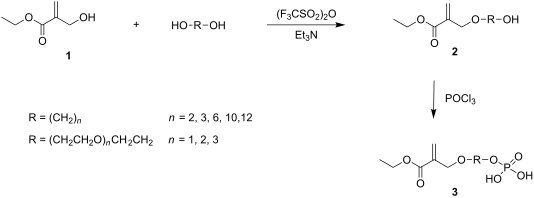
- acrylate and formaldehyde, and subsequent etherification of the obtained product with diols and phosphorylation using POCl3. The polymerization enthalpy of 2-(ω-phosphonooxy-2-oxaalkyl)acrylates 3 as measured by DSC ranges from −29 to −53 kJ·mol−1. The shear bond strength of adhesive compositions 4
- , comprising of phosphoric acid ester moieties, were synthesized via a three step synthesis via Baylis–Hillman reaction of ethyl acrylate and formaldehyde, and subsequent etherification of the obtained product with diols and phosphorylation using POCl3 (Scheme 1, Table 1). The double bonds in 3 are evident in
- -phosphonooxy-2-oxaalkyl)acrylate monomers 3 with phosphoric acid moieties and alkyl as well as oxyalkyl spacers were synthesized in three steps via Baylis–Hillman reaction of ethyl acrylate and formaldehyde, and subsequent etherification of the obtained product with diols and phosphorylation using POCl3. The


Systematic investigations on the reduction of 4-aryl-4-oxoesters to 1-aryl-1,4-butanediols with methanolic sodium borohydride
Beilstein J. Org. Chem. 2010, 6, 748–755, doi:10.3762/bjoc.6.94
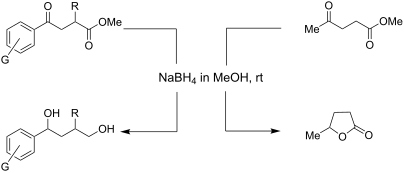
- the keto moiety. Results of a detailed and systematic investigation of the reaction are described. Keywords: diols; esters; lactones; reduction; Introduction Chemoselective reductions of aldehydes, ketones and imines are generally accomplished using NaBH4 in methanol where other reducible functional
- implies 30 °C throughout) both the oxo- and the alkoxycarbonyl moieties were reduced to give the diols (2a–2f), as shown in Scheme 1. γ-Aryl-α,β-unsaturated-γ-ketoesters (1g and 1h), on similar treatment, furnished the saturated diols (2a and 2b) by the reduction of both the keto and the ester groups
- -oxoester to 1,4-diols was finally established (Scheme 11) when substrate 14 [40] (incapable of lactonization due to distal spatial disposition of the oxo- and methoxycarbonyl moieties imposed by the rigidity of the cyclopropane ring system) underwent selective reduction of the oxo-functionality only under


Functionalized copolyimide membranes for the separation of gaseous and liquid mixtures
Beilstein J. Org. Chem. 2010, 6, 789–800, doi:10.3762/bjoc.6.86
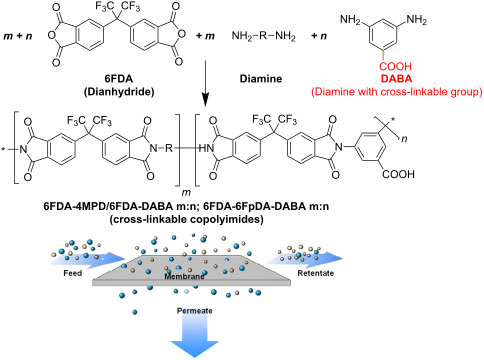
- groups reduces the CO2 plasticization slightly due to the hydrogen bonds between the carboxylic acid groups [23]. Copolyimides with carboxy groups can be further modified via covalent cross-linking with, e.g., diols or diamines or cross-linked ionically with aluminium acetylacetonate or zirconium


Synthesis of 6-PEtN-α-D-GalpNAc-(1–>6)-β-D-Galp-(1–>4)-β-D-GlcpNAc-(1–>3)-β-D-Galp-(1–>4)-β-D-Glcp, a Haemophilus influenzae lipopolysacharide structure, and biotin and protein conjugates thereof
Beilstein J. Org. Chem. 2010, 6, 704–708, doi:10.3762/bjoc.6.80
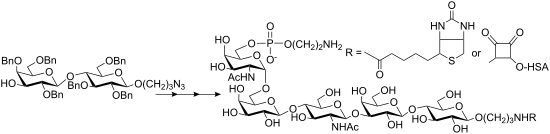
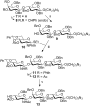
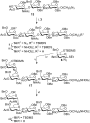
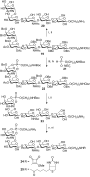
- thioglycoside 4 [14] yielded the 6-O-silylated compound 5 (92%), benzylation of which gave donor 6 (85%). A benzyl group in the 4-position was preferred to an ester group to avoid the risk of acyl migration during subsequent reactions; desilylation, glycosidation and phosphorylation. 3II,4II-Diols of lactose


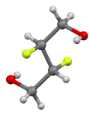
Synthesis and crystallographic analysis of meso-2,3-difluoro-1,4-butanediol and meso-1,4-dibenzyloxy-2,3-difluorobutane
Beilstein J. Org. Chem. 2010, 6, No. 62, doi:10.3762/bjoc.6.62

- hypervalent iodine species [21]. Such approaches often display poor stereoselectivity or result in rearrangement products. Treatment of 1,2-diols with SF4 [22][23], DAST [24], or deoxofluor [25] also leads to vicinal difluorides. Reaction with vicinal triflates has also been successful in some cases [7][26



Preparation of pyridine-3,4-diols, their crystal packing and their use as precursors for palladium-catalyzed cross-coupling reactions
Beilstein J. Org. Chem. 2010, 6, No. 42, doi:10.3762/bjoc.6.42
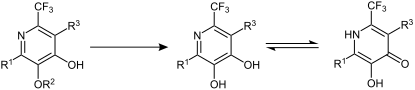
- derivatives in good yields. The X-ray crystal structure analysis proved that a 1:1 mixture of pyridine-3,4-diols and their pyridin-4-one tautomers exist in the solid state. Subsequent conversion into bis(perfluoroalkanesulfonate)s were smoothly achieved. The obtained compounds were used as substrates for
- palladium-catalyzed coupling reactions. Fluorescence measurements of the biscoupled products showed a maximum of emission in the violet region of the spectrum. Keywords: bisnonaflates; fluorescence; palladium catalysis; pyridine-3,4-diols; pyridines; Introduction Pyridine scaffolds have been found in
- numerous naturally occurring compounds and are also frequently used in functional materials [1][2][3][4]. Pyridindiol derivatives are of particular interest as building blocks for the construction of dendritic nanostructures in supramolecular chemistry [5], whereas N-protected pyridine-3,4-diols find


Molecular recognition of organic ammonium ions in solution using synthetic receptors
Beilstein J. Org. Chem. 2010, 6, No. 32, doi:10.3762/bjoc.6.32






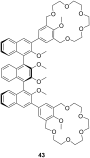


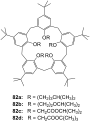


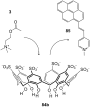


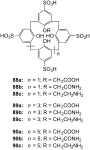


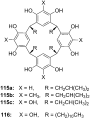
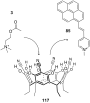


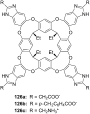


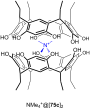


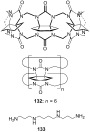


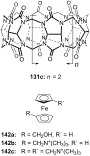


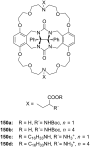
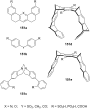


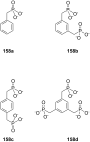

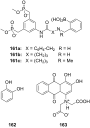


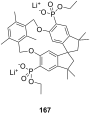
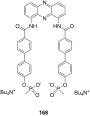







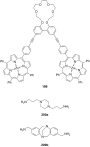


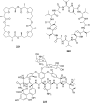


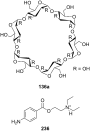
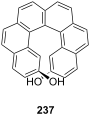




Synthesis of a new class of aminocyclitol analogues with the conduramine D-2 configuration
Beilstein J. Org. Chem. 2010, 6, No. 15, doi:10.3762/bjoc.6.15
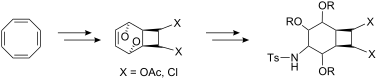
- diols in the presence of p-toluenesulfonyl isocyanate for the introduction of the amino alcohol functionality. We are currently interested in the synthesis of cyclitols and their derivatives [25]. As a part of our program directed towards the synthesis of potential glycosidase inhibitors we used a


Acid- mediated reactions under microfluidic conditions: A new strategy for practical synthesis of biofunctional natural products
Beilstein J. Org. Chem. 2009, 5, No. 40, doi:10.3762/bjoc.5.40
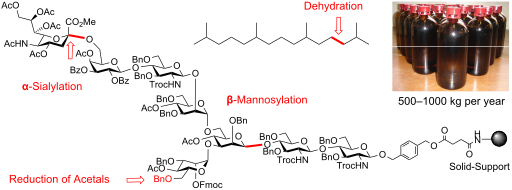
- always reproducible, especially when the reaction is performed in a large scale, giving rise to the hydrolyzed by-products, 4,6-O-diols. The precise temperature control and the mixing efficiency between the substrate, acid, and hydride source are critical for this transformation. In order to facilitate


Mitomycins syntheses: a recent update
Beilstein J. Org. Chem. 2009, 5, No. 33, doi:10.3762/bjoc.5.33
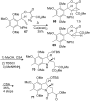
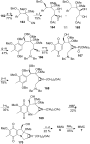
- decent yield of the diasteromeric diols 164 and 165 from olefin 163 (Scheme 46). This is probably due to the poor reactivity of the olefin, which is considerably reduced by the inductive effects of the neighbouring ketal and acetate groups [120][121]. The diol 164 was isolated by chromatography and






The development and evaluation of a continuous flow process for the lipase- mediated oxidation of alkenes
Beilstein J. Org. Chem. 2009, 5, No. 27, doi:10.3762/bjoc.5.27
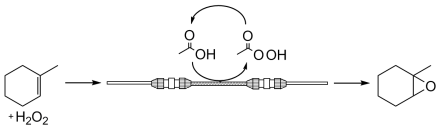
- ; hydrogen peroxide; lipase; micro reactor; Novozym® 435; peracids; Introduction In addition to their synthetic value as intermediates in the preparation of diols, alcohols, hydroxyesters and alkenes, epoxides are a key raw material in many industrial processes, finding application in adhesives, polymers




A short stereoselective synthesis of (+)-(6R,2′S)-cryptocaryalactone via ring- closing metathesis
Beilstein J. Org. Chem. 2009, 5, No. 14, doi:10.3762/bjoc.5.14
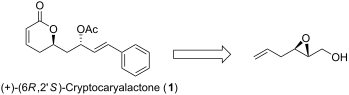
- . Retrosynthetic approach. Synthesis of chiral propargyl secondary hydroxyl group. Determination of the stereochemistry of the 1,3-anti diols. Synthesis of cryptocaryalactone by RCM. Asymmetric alkynylation with phenylacetylene. Supporting Information Supporting Information File 20: Experimental Data


Chemoselective reduction of aldehydes by ruthenium trichloride and resin- bound formates
Beilstein J. Org. Chem. 2008, 4, No. 53, doi:10.3762/bjoc.4.53
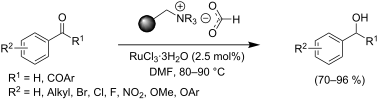
- benzoin proceeded smoothly in good to excellent yields. Until now, various procedures [31][32] including Lewis acid-mediated conditions [32] have been developed for the reduction of 1,2-dicarbonyl compounds to yield the α-hydroxy ketones without over reduction to diols. The direct use of catalytic RuCl3


Synthesis of chiral cyclohexanes and carbasugars by 6-exo-dig radical cyclisation reactions
Beilstein J. Org. Chem. 2008, 4, No. 43, doi:10.3762/bjoc.4.43
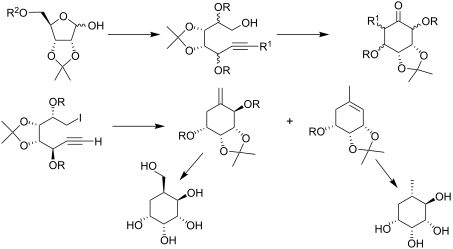
- D-riboses 1 were treated with lithium phenylacetylide to give an inseparable mixture of diastereoisomeric diols 2a in 89% yield (Scheme 1). Analysis of the 1H NMR spectrum showed a 1:2 isomeric mixture of diastereoisomers, on the basis of integration of the tert-butyl group resonances, which were
- slightly separated (syn: 1.08 ppm and anti: 1.09 ppm). The stereochemistry at the new chiral centre was assigned on the basis of our previous findings [22]. The mixtures of diols 2 were treated with chloromethyl methyl ether to afford the corresponding MOM ethers, in a combined yield of 66%. At this
- initial goal we turned our attention to the preparation of a cyclohexane that had an unsubstituted exo-methylene group. Treatment of the silylated ribose derivative with lithium trimethylsilylacetylide in THF gave the diols 2b, in a combined yield of 45% along with the alkynes 2c in 28% yield. The


Diastereoselective and enantioselective reduction of tetralin- 1,4-dione
Beilstein J. Org. Chem. 2008, 4, No. 37, doi:10.3762/bjoc.4.37
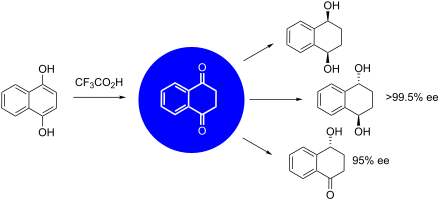
- is important to mention here that these reactions do not occur when tautomer 1 is used. The reductions with NaBH4 (Table 1, entry 1) and BH3·THF (entry 4) gave the diols in high yields but with low diastereoselectivity, slightly favoring the cis-diastereoisomer 6. In contrast, reduction with LiAlH4
- but recrystallization from iPr2O gave cis-1,4-dihydroxytetralin (6) in 66% yield. Diols 6 and 7 have been reported previously. They were obtained by treatment of tetralin with NBS to give a 1 : 1 mixture of the corresponding cis and trans-dibromides, which were converted into diacetates with AgOAc (81
- access to this C2 symmetric chiral diol. Compound (−)-(1R,4R)-7 was previously obtained by HPLC separation of a 1 : 1 mixture of the cis- and trans-diols obtained in 55% yield from a four step sequence from (R)-1-tetralol [12]. Mono-reduction of 2 Mono-reduction was achieved with a reduced amount of


Control of asymmetric biaryl conformations with terpenol moieties: Syntheses, structures and energetics of new enantiopure C2- symmetric diols
Beilstein J. Org. Chem. 2008, 4, No. 25, doi:10.3762/bjoc.4.25
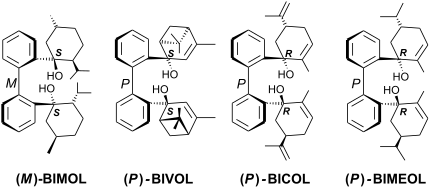
- Y. Alpagut B. Goldfuss J.-M. Neudorfl Institut für Organische Chemie, Universität zu Köln, Greinstrasse 4, D-50939 Köln, Germany. Fax: +49(0)221-470-5057, http://www.uni-koeln.de/goldfuss. 10.3762/bjoc.4.25 Abstract New enantiopure, C2-symmetric biphenyl-2,2′-diols based on (−)-menthone (BIMOL
- ), (−)-verbenone (BIVOL) and (−)-carvone (BICOL and hydrogenated BIMEOL), are accessible via short, synthetic routes. All diols form intramolecular hydrogen bonds and hence can be employed as chelating ligands for catalyst design, as it demonstrated for the (−)-fenchone based BIFOL. The sense of asymmetry of the
- ONIOM evaluations of the diols and their diastereomeric conformers. The experimentally observed biphenyl conformations are all energetically preferred, i.e. with 1.3 kcal/mol for (M)-BIMOL, with 5.1 kcal/mol for (P)-BIVOL, with 5.8 kcal/mol for (P)-BICOL, and with 5.4 kcal/mol for (P)-BIMEOL. Keywords


Solvent- controlled regioselective protection of allyl- 4,6-benzylidene glucopyranosides
Beilstein J. Org. Chem. 2007, 3, No. 26, doi:10.1186/1860-5397-3-26

- functional group manipulations required to access suitable synthetic precursors. For hexopyranoses, acylation of cis-diols can be achieved with high regioselectivity either by means of metal activators such as tin [1][2][3], silver [4], boron [5] or copper [6] or by exploiting the relative reactivity of
- hydroxyl groups [7][8]. However, metal-promoted alkylation and base-catalysed acylation of diols have proven to be highly undependable in the case of glucose and other cyclic trans-diols, where both hydroxyl groups are equatorial. For instance, reports of identical procedures describing the tin-catalysed


The vicinal difluoro motif: The synthesis and conformation of erythro- and threo- diastereoisomers of 1,2-difluorodiphenylethanes, 2,3-difluorosuccinic acids and their derivatives
Beilstein J. Org. Chem. 2006, 2, No. 19, doi:10.1186/1860-5397-2-19
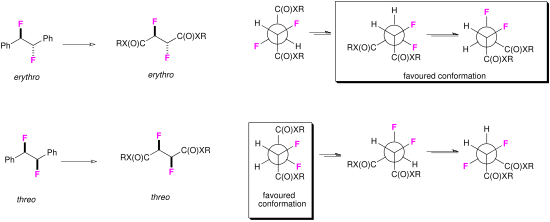
- conversion of vicinal diols to vicinal difluorides has been explored with some success. For example both erythro and threo stereoisomers of dimethyl 2,3-difluorosuccinic acid were obtained either from methyl esters of the L-tartrate 1 or the meso-tartrate 1 by treatment with SF4/HF (Scheme 1) [6][7
- replace SF4 with DAST failed in trying to develop an analogous small scale laboratory process. Deoxofluor is finding use in the stereoselective conversion of vicinal diols to vicinal difluorocompounds and seems less prone to elimination than DAST [8]. In addition, Deoxofluor has been reported to be




The oxanorbornene approach to 3-hydroxy, 3,4-dihydroxy and 3,4,5-trihydroxy derivatives of 2-aminocyclohexanecarboxylic acid
Beilstein J. Org. Chem. 2006, 2, No. 9, doi:10.1186/1860-5397-2-9

- afforded the trans β-amino acid derivative 22 as established by NMR experiments. Having prepared the 4,5-cis diol, we turned our attention to the synthesis of the corresponding trans diols. These could be prepared by simple hydrolytic cleavage of epoxides 10–13. In line with this plan, treatment of 12 with
- ring protons (H-1, H-2, H-3, H-4 and H-5) is consistent with anti diaxial relationships. Such assignments are supported by nOe interactions between H-1 and H-3, H-1 and H-5 and also H-2 and H-4, Figure 3. Similar treatment of epoxides 11 and 13 then afforded the corresponding anti 4,5 diols. Subsequent


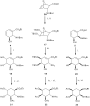


Synthesis and glycosidase inhibitory activity of new hexa- substituted C8-glycomimetics
Beilstein J. Org. Chem. 2005, 1, No. 12, doi:10.1186/1860-5397-1-12

- acid catalyst such as ytterbium triflate, revealed unsuccessful, only leading to recover the starting material. To overcome this difficulty, we turned to a more electrophilic sulfate moiety [36] (Scheme 3). Thus, treatment of the cis-diols 3 and 4 with thionyl chloride in the presence of triethylamine




Synthesis of 2,6-trans- disubstituted 5,6-dihydropyrans from (Z)-1,5-syn-endiols
Beilstein J. Org. Chem. 2005, 1, No. 7, doi:10.1186/1860-5397-1-7

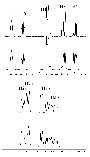
- /1860-5397-1-7 Abstract Certain (Z)-1,5-syn-diols 2 may be converted into 2,6-trans-5,6-dihydropyrans by using phosphonium salt 4 or phosphorane 5 as dehydrating agents. A more general four step procedure converts the (Z)-1,5-syn-endiols into enantiomeric dihydropyrans ent-3 via regioselective
- enantioselectivity.[1] In connection with an ongoing natural product synthesis project, we were interested in developing methods to transform diols 2 into dihydropyrans 3 or the enantiomeric dihydropyrans ent-3 through complementary, regioselective cyclodehydration processes (Scheme 1). 2,6-Disubstituted
- ) ring closing metathesis,[12][13] (iv) vinylsilane cyclization of oxocarbenium ions,[14] and (v) intramolecular allylations.[15][16] However, we were unaware of any reports that describe the direct conversion of 1,5-diols containing an internal olefin such as 2 directly to 2,6-trans-disubstituted 5,6





