Search results
Search for "lithium" in Full Text gives 454 result(s) in Beilstein Journal of Organic Chemistry. Showing first 200.
One hundred years of benzotropone chemistry
Beilstein J. Org. Chem. 2018, 14, 1120–1180, doi:10.3762/bjoc.14.98
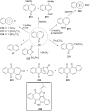
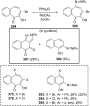
- (Scheme 8). After bromination of 40 with molecular bromine in carbon tetrachloride, direct dehydrobromination with lithium chloride in dimethylformamide gave 11 in 85% isolated yield. Müller’s group reported an alternative synthesis for 11 starting from the carbene adduct 41 over two or three steps [55
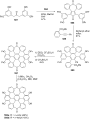
- as a fairly air-stable red-brown solid. b. Nucleophilic addition to 4,5-benzotropone (11): Ried’s group realized the reaction of 4,5-benzotropone (11) and its derivatives with lithium acetylide as a nucleophile between −50 and −32 °C [130]. While the possible 1,4-conjugate addition product 149 was
- bromination of Julia’s ketone 163 followed by spontaneous elimination of hydrogen bromide at the temperature of the reaction. 2,3-Benzotropone (12) was also prepared by bromination of 1-benzosuberone (162) using both NBS and molecular bromine followed by dehydrobromination (using lithium chloride in








Iodine(III)-mediated halogenations of acyclic monoterpenoids
Beilstein J. Org. Chem. 2018, 14, 1103–1111, doi:10.3762/bjoc.14.96
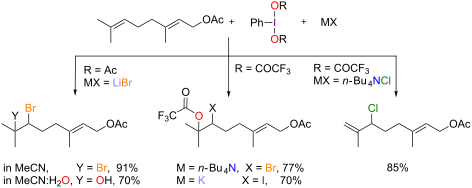
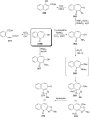
- )iodobenzene (DIB) and lithium bromide yield a dibromo adduct (Scheme 1, reaction 2), whereas a combination of (bis(trifluoroacetoxy)iodo)benzene (PIFA) and tetra-n-butylammonium bromide (TBAB) gives bromo(trifluoro)acetoxylated 3a (Scheme 1, reaction 3) [16]. We then decided to further explore the synthetic
- our previous study on the bromination of enamides [11]. Thus, using a slight excess of DIB along with a two-fold amount of lithium bromide at 0 °C in dry acetonitrile rapidly yielded dibromo adduct 2a in 91% yield (Table 1, entry 1). Switching the reaction conditions to bromo(trifluoro)acetoxylation
- to −10 °C and the amount of lithium bromide, which was added dropwise as an aqueous solution, was diminished to 1.3 equivalents. By doing so, both the selectivity and the yield of 4a were improved though full conversion was not attained (Table 1, entry 4). Keeping the same procedure, complete


Selective carboxylation of reactive benzylic C–H bonds by a hypervalent iodine(III)/inorganic bromide oxidation system
Beilstein J. Org. Chem. 2018, 14, 1087–1094, doi:10.3762/bjoc.14.94
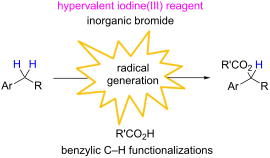
- bromide [52] afforded modest yields of the carboxylation product 2a (Table 1, entry 1). Interestingly, a dramatic influence was observed when altering the bromide source to other types; the use of lithium bromide or organic bromides, e.g., bromotrimethylsilane and tetraethylammonium bromide, instead of
- the potassium salt, were unsuccessful in forming the carboxylate 2a (Table 1, entries 2–4). The reason for this behavior was thought to be because lithium bromide or organic bromides in combination with PIDA generated the electrophilic ‘Br+’ species [71] and molecular bromine [72], or hypobromite and


Cross-coupling of dissimilar ketone enolates via enolonium species to afford non-symmetrical 1,4-diketones
Beilstein J. Org. Chem. 2018, 14, 992–997, doi:10.3762/bjoc.14.84
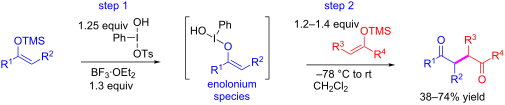
- lithium enolate followed by a second SET step to complete the transformation (Scheme 1a) [16][17]. A different approach, developed by Maulide, relies on the highly efficient umpolung of amides into enolonium species using triflic anhydride, a pyridine base and pyridine N-oxides (Scheme 1b). These


Recent advances in synthetic approaches for medicinal chemistry of C-nucleosides
Beilstein J. Org. Chem. 2018, 14, 772–785, doi:10.3762/bjoc.14.65
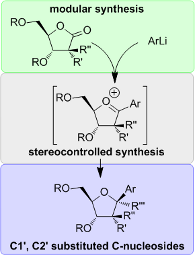
- stereochemical inversion at C3' [75]. The desired stereoselectivity for 2'-deoxy analogues was obtained when BF3·OEt2 was used. Furthermore, another route to the synthesis of C-nucleosides was demonstrated by direct addition of aryl lithium reagents to the 2'-OMe ribonolactone (Figure 11B). While the expected


Stepwise radical cation Diels–Alder reaction via multiple pathways
Beilstein J. Org. Chem. 2018, 14, 704–708, doi:10.3762/bjoc.14.59
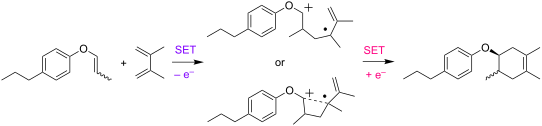
- been developing oxidative SET-triggered cycloadditions of enol ethers by electrocatalysis [26][27][28][29][30][31][32] in lithium perchlorate/nitromethane electrolyte solution [33]. The reactions involve a radical cation chain process and are complete using a catalytic amount of electricity. During the
- “direct” or “indirect” pathways, affording the corresponding adduct 3 in excellent yield. Conclusion In conclusion, we have demonstrated that the radical cation Diels–Alder reaction initiated by electrocatalysis in lithium perchlorate/nitromethane electrolyte solution is not limited to styrenes but was


Investigating radical cation chain processes in the electrocatalytic Diels–Alder reaction
Beilstein J. Org. Chem. 2018, 14, 642–647, doi:10.3762/bjoc.14.51
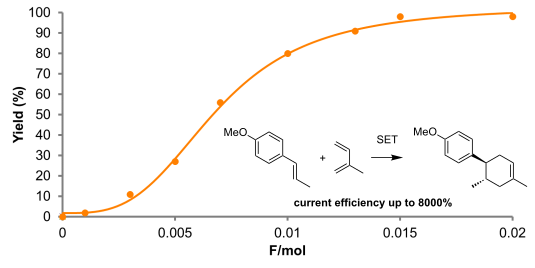
- luminescence quenching experiments [19]. With such an understanding in hand, radical ion chain processes could be further optimized to realize greener transformations. We have been developing anodic cycloadditions [20][21][22][23][24][25] enabled by lithium perchlorate/nitromethane electrolyte solution [26


Mannich base-connected syntheses mediated by ortho-quinone methides
Beilstein J. Org. Chem. 2018, 14, 560–575, doi:10.3762/bjoc.14.43
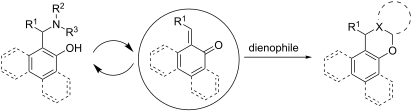
- -1H-indole in the presence of lithium perchlorate as catalyst to afford the new 3,3-dimethyl-2,3,4,9-tetrahydro-1H-xanthen-1-ones and 3-substituted indoles. The process was then extended to isocyanides and new aminobenzofurans formed via [4 + 1] cycloaddition were isolated. Bharate et al. reported


Recent developments in the asymmetric Reformatsky-type reaction
Beilstein J. Org. Chem. 2018, 14, 325–344, doi:10.3762/bjoc.14.21
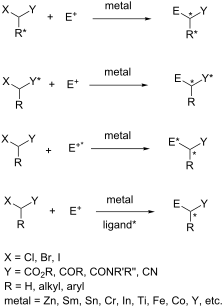
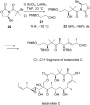
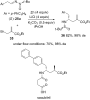
- enolates can be considered as valuable alternatives to lithium enolates. Consequently, a number of samarium-mediated Reformatsky reactions have been developed. For example, SmI2 was found by Rinner et al. to mediate the diastereoselective Reformatsky reaction between chiral aldehyde 11 derived from D











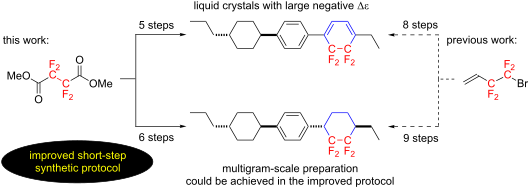
Gram-scale preparation of negative-type liquid crystals with a CF2CF2-carbocycle unit via an improved short-step synthetic protocol
Beilstein J. Org. Chem. 2018, 14, 148–154, doi:10.3762/bjoc.14.10
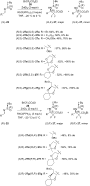
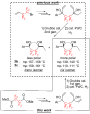
- the 1,2-addition reaction of Int-I proceeds in preference to the conjugate addition reaction, the desired octa-1,7-diene 5a should be produced in higher yield. However, no significant improvement was observed after various attempts such as employing a more nucleophilic lithium reagent instead of the


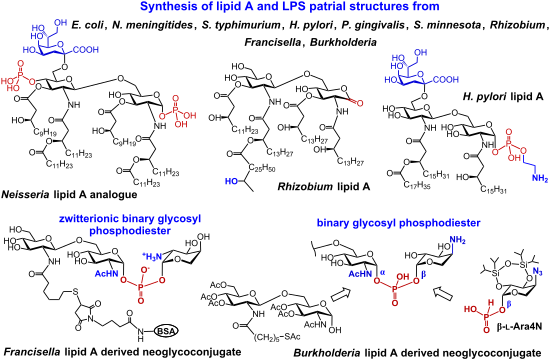
Aminosugar-based immunomodulator lipid A: synthetic approaches
Beilstein J. Org. Chem. 2018, 14, 25–53, doi:10.3762/bjoc.14.3
- TBS ether by treatment with HF in pyridine, followed by phosphorylation using tetrabenzyl pyrophosphate in the presence of lithium bis(trimethyl)silylamide [76] in THF at −78 °C. Final deprotection by catalytic hydrogenolysis over Pd-black provided target lipid A derivatives 8 and 9 corresponding
- hydroxyl group was regio- and stereoselectively phosphorylated using tetrabenzyl diphosphate in the presence of lithium bis(trimethylsilyl)amide [76] to provide glycosyl phosphotriester as exclusively α-anomer. Global deprotection was accomplished by catalytic hydrogenolysis over Pd-black to give
- isomerized in the presence of an Ir complex and the resulting prop-1-enyl group was then removed by aqueous iodine to yield hemiacetal 30 which was stereoselectively phosphorylated by reaction with lithium hexamethyldisilazide (LHMDS), and subsequent treatment with tetrabenzyl pyrophosphate. Final




Vinylphosphonium and 2-aminovinylphosphonium salts – preparation and applications in organic synthesis
Beilstein J. Org. Chem. 2017, 13, 2710–2738, doi:10.3762/bjoc.13.269

- ]. Vinylphosphonium salt can also be synthesized by dehydrohalogenation of α-bromoethylphosphonium bromide 13 in the presence of lithium bromide in anhydrous dimethylformamide (Scheme 10). α-Bromoethylphosphonium salt 13 was obtained according to the three-step procedure, starting from the alkylation of


Development of a fluorogenic small substrate for dipeptidyl peptidase-4
Beilstein J. Org. Chem. 2017, 13, 2690–2697, doi:10.3762/bjoc.13.267
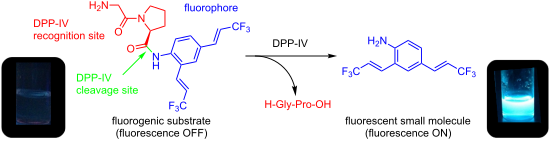
- + calcd for C16H16N2O5, 316.3086; found, 316.1051. (S)-N-(2,4-Bis((E)-3,3,3-trifluoroprop-1-en-1-yl)phenyl)-1-(2-(1,3-dioxo-2H-isoindolin-2-yl)acetyl)pyrrolidine-2-carboxamide (7): 5 (2 mmol) and lithium hydroxide (12 mmol) were placed in a flask. To the flask was added THF (4.8 mL), methanol (1.5 mL


Ring-size-selective construction of fluorine-containing carbocycles via intramolecular iodoarylation of 1,1-difluoro-1-alkenes
Beilstein J. Org. Chem. 2017, 13, 2682–2689, doi:10.3762/bjoc.13.266
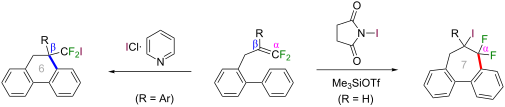
- choice of base, leading to the construction of a [7]annulene system (Scheme 5). The use of lithium bases, such as lithium diisopropylamide and lithium hexamethyldisilazide, induced HF eliminations as well as substantial HI elimination. However, 1,8-diazabicyclo[5.4.0]undec-7-ene (DBU) exclusively


Preparation and isolation of isobenzofuran
Beilstein J. Org. Chem. 2017, 13, 2659–2662, doi:10.3762/bjoc.13.263

- ]. Following a procedure of Doyle et al. we reacted commercially available phthalan (8) with DDQ and methanol in dry dichloromethane under a nitrogen atmosphere at room temperature, and obtained DMIBF (7) with a yield of 85% (Scheme 2) [22]. DMIBF (7) was treated with freshly prepared lithium diisopropylamide
- (LDA) in benzene and IBF (1) was obtained as a solution in benzene which was washed with aqueous NH4Cl to remove lithium salts and amines (Scheme 2) [8][18]. To determine the yield of IBF (1), this solution was reacted with acetylenedicarboxylic acid dimethyl ester (DMAD, 9) and product 10 was obtained


Recent progress in the racemic and enantioselective synthesis of monofluoroalkene-based dipeptide isosteres
Beilstein J. Org. Chem. 2017, 13, 2637–2658, doi:10.3762/bjoc.13.262
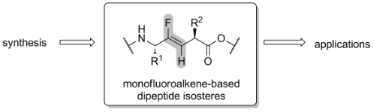
- HWE olefination (Scheme 5). The (E)-monofluoroalkene was thus obtained in an excellent selectivity using n-butyllithium in tert-butyl methyl ether. The resulting ester 21 was reduced using lithium aluminum hydride, and treatment with tartaric acid deprotected the OBO, thus providing the free triol 22
- . This was then converted into a protected amino group employing a Mitsunobu reaction. Finally, removal of the nosyl group, followed by hydrolysis using lithium hydroxide, afforded the targeted isostere 24. Sano and co-workers also worked on the Mg(II)-promoted stereoselective synthesis of (Z


Pyrene–nucleobase conjugates: synthesis, oligonucleotide binding and confocal bioimaging studies
Beilstein J. Org. Chem. 2017, 13, 2521–2534, doi:10.3762/bjoc.13.249
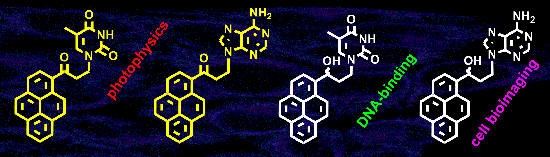
- % yield. Surprisingly, an attempt to reduce the carbonyl function in adenine derivative 3 failed. The reaction performed at the same conditions as for 2 afforded a complex mixture of products. In order to solve this problem, lithium aluminum hydride was used as reducing agent. In this case, the reaction
- mesh ASTM). Triethylamine, dimethylformamide, and tetrahydrofuran were distilled and deoxygenated prior to use. Other solvents were of reagent grade and were used without prior purification. Thymine, adenine, 3-chloropropionyl chloride, lithium aluminum hydride, sodium borohydride, and aluminium




Diastereoselective Mannich reactions of pseudo-C2-symmetric glutarimide with activated imines
Beilstein J. Org. Chem. 2017, 13, 2473–2477, doi:10.3762/bjoc.13.244
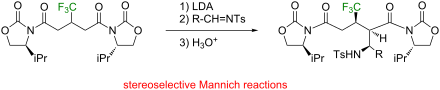
- article. Results and Discussion On the basis of our previous study [4], the chiral glutarimide 1a was employed as the starting material and optimization of reaction conditions with benzaldehyde-based imines 2 was performed (Table 1). Lithium enolate by the action of LDA to 1a was found to be ineffective


Conjugated nitrosoalkenes as Michael acceptors in carbon–carbon bond forming reactions: a review and perspective
Beilstein J. Org. Chem. 2017, 13, 2214–2234, doi:10.3762/bjoc.13.220
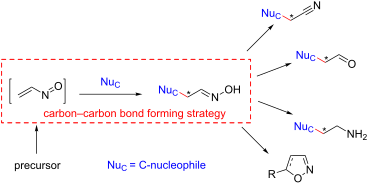
- -bromooxime 26 with lithium enolate 27 to give oxime 28 via the Michael addition to transient nitrosoalkene NSA6 [31]. Oxime adduct 28 existed predominantly in a cyclic 1,2-oxazine form (Scheme 11). Subsequent benzylation of oxime 28 and the thermal retro-[2 + 2]/[4 + 2]-cycloaddition cascade followed by
- reported the use of β-ketoxime sulfones 61 in the reaction with lithium acetylides that resulted in formal substitution of the sulfinate group through an elimination–addition mechanism (Scheme 21) [43]. Interestingly, unlike α-halooximes, 1,4-elimination in sulfones 61 to generate nitrosoalkenes NSA13
- proceeds only at elevated temperatures (50 °C), that may account for relatively low yields of products 62. Furthermore, the reaction of sulfone 63 with lithium (trimethylsilyl)acetylide furnished only enoxime 64. Apparently, the application of more convenient and selective nitrosoalkene sources (e.g., TBS


Phosphonic acid: preparation and applications
Beilstein J. Org. Chem. 2017, 13, 2186–2213, doi:10.3762/bjoc.13.219
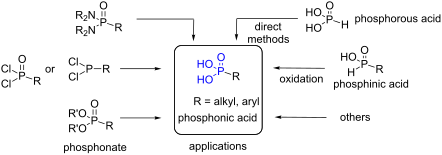
- that when NaI, LiBr or KI was used alone in anhydrous solvents (acetone, MeCN or butanone) under heating (80–100 °C) a selective monodeprotection of the dialkyl phosphonates (alkyl = methyl or ethyl) was observed. The sodium or lithium salts being formed in high yields (87–97% yields) [170]. This


Preparation of imidazo[1,2-a]-N-heterocyclic derivatives with gem-difluorinated side chains
Beilstein J. Org. Chem. 2017, 13, 2115–2121, doi:10.3762/bjoc.13.208
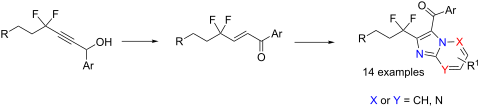
- accessible from gem-difluoropropargylic alcohols C through a base-mediated isomerization process (Scheme 1) [26][27]. Results and Discussion The required propargylic alcohols 5a–e (type C, Scheme 1) were obtained in 27–73% yields by reaction of the lithium salt of the easily accessible gem-difluoro


Block copolymers from ionic liquids for the preparation of thin carbonaceous shells
Beilstein J. Org. Chem. 2017, 13, 1693–1701, doi:10.3762/bjoc.13.163
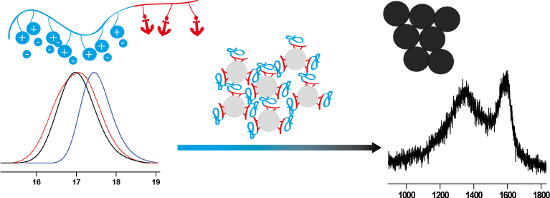
- anchor group could bind to inorganic nanoparticle surfaces, where a second polymer block could be converted into a conductive carbon shell, improving the properties of nanoparticles like TiO2 or ZnO with respect to the reversible storage of lithium or sodium ions [22][23][24][25]. Using a block copolymer
- anode material in lithium or sodium ion batteries. Experimental All chemicals were acquired from commercial sources (Acros or Sigma-Aldrich) and used without further purification. Synthesis and structural characterization: NMR spectroscopy was applied with a Bruker ARX 400 spectrometer. Fourier
- of P (IL-b-DAAM): P (IL-b-NAS) (1 equiv) and lithium bromide (50 equiv) were dissolved in DMSO in a Schlenk flask. Dopamine hydrochloride (50 equiv) and triethylamine (50 equiv) were also dissolved in DMSO. The two solutions were combined and stirred overnight at 50 °C. For work-up, the polymer was


Oxidative dehydrogenation of C–C and C–N bonds: A convenient approach to access diverse (dihydro)heteroaromatic compounds
Beilstein J. Org. Chem. 2017, 13, 1670–1692, doi:10.3762/bjoc.13.162
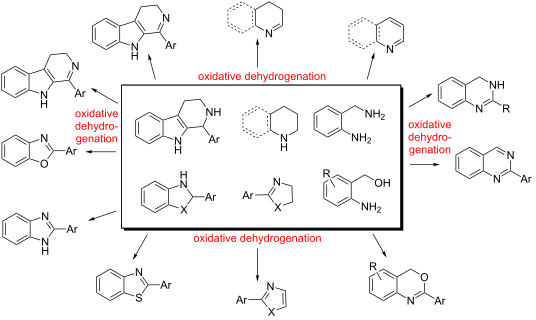
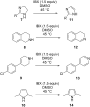
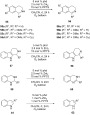
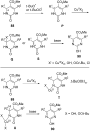
- K-10 and Pd/C as catalysts. The microwave-assisted synthesis of β-carboline 96 from tetrahydro-β-carboline 95 using catalytic Pd/C and lithium carbonate at high temperature is also reported [96]. This high yielding procedure gets completed within a few minutes (Scheme 36). Although the reaction
- lithium carbonate at high temperature. 4-Methoxy-TEMPO-catalyzed aerobic oxidative synthesis of 2-substituted benzazoles. Plausible mechanism of the 4-methoxy-TEMPO-catalyzed transformation. One-pot synthesis of 2-arylquinazolines, catalyzed by 4-hydroxy-TEMPO. Oxidative dehydrogenation – a key step in








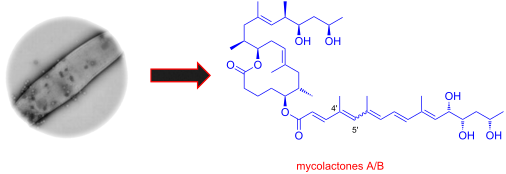
The chemistry and biology of mycolactones
Beilstein J. Org. Chem. 2017, 13, 1596–1660, doi:10.3762/bjoc.13.159









A novel approach to oxoisoaporphine alkaloids via regioselective metalation of alkoxy isoquinolines
Beilstein J. Org. Chem. 2017, 13, 1564–1571, doi:10.3762/bjoc.13.156
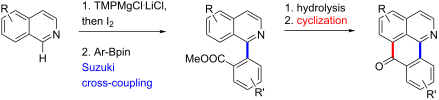
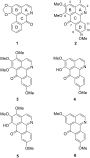
- corresponding diethyl amide 12. For this purpose, ester 10c was reacted in a Weinreb amidation [32] with a mixture of trimethylaluminium and diethylamine to give the amide 12 in 31% yield (Scheme 5). The diethyl amide moiety was designated to promote a directed remote metalation by lithium diisopropylamide (LDA
- metalation at C-6 of the benzamide moiety was not followed by an equilibration giving the desired 8’-metalated intermediate (which in turn should be trapped by the amide group to give the tetracyclic ketone 6). Probably, the DreM at C-8’ is prevented, since the amide moiety forms a chelate with a lithium ion