Search for "mechanisms" in Full Text gives 673 result(s) in Beilstein Journal of Organic Chemistry. Showing first 200.
Beilstein J. Org. Chem. 2022, 18, 420–428, doi:10.3762/bjoc.18.44
Graphical Abstract
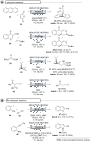
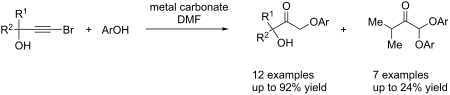
Scheme 1: Scope of the reaction of bromopropargylic alcohol 1a and phenols 2b–i.
Scheme 2: Reaction of bromopropargylic alcohol 1b and phenols 2a and 2d.
Scheme 3: Reaction of bromopropargylic alcohol 1c and phenol (2a).
Scheme 4: Reaction of chloropropargylic alcohol and phenol (2a).
Scheme 5: Reaction of bromopropargylic alcohol 1a and anilines.
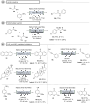
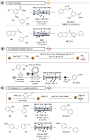
Scheme 6: Control experiments.
Scheme 7: A plausible mechanism for the formation of phenoxyhydroxyketone 4.
Scheme 8: A plausible mechanism for the formation of diphenoxyketone 5.
Scheme 9: Examples of representative preparation of phenoxyketones 4.
Scheme 10: α-Ketol rearrangement of phenoxyketones 4a and 4f.
Beilstein J. Org. Chem. 2022, 18, 381–419, doi:10.3762/bjoc.18.43
Graphical Abstract
Figure 1: Natural bioactive naphthoquinones.
Figure 2: Chemical structures of vitamins K.
Figure 3: Redox cycle of menadione.
Scheme 1: Selected approaches for menadione synthesis using silver(I) as a catalyst.
Scheme 2: Methylation approaches for the preparation of menadione from 1,4-naphthoquinone using tert-butyl hy...
Scheme 3: Methylation approach of 1,4-naphthoquinone using i) rhodium complexes/methylboronic acid and ii) bi...
Scheme 4: Synthesis of menadione (10) from itaconic acid.
Scheme 5: Menadione synthesis via Diels–Alder reaction.
Scheme 6: Synthesis of menadione (10) using p-cresol as a synthetic precursor.
Scheme 7: Synthesis of menadione (10) via demethoxycarbonylating annulation of methyl methacrylate.
Scheme 8: Furan 34 used as a diene in a Diels–Alder reaction for the synthesis of menadione (10).
Scheme 9: o-Toluidine as a dienophile in a Diels–Alder reaction for the synthesis of menadione (10).
Scheme 10: Representation of electrochemical synthesis of menadione.
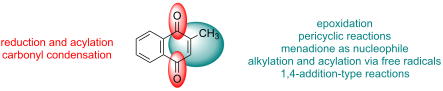
Figure 4: Reaction sites and reaction types of menadione as substrate.
Scheme 11: DBU-catalyzed epoxidation of menadione (10).
Scheme 12: Phase-transfer catalysis for the epoxidation of menadione.
Scheme 13: Menadione epoxidation using a hydroperoxide derived from (+)-norcamphor.
Scheme 14: Enantioselective Diels–Alder reaction for the synthesis of asymmetric quinone 50 catalyzed by a chi...
Scheme 15: Optimized reaction conditions for the synthesis of anthra[9,1-bc]pyranone.
Scheme 16: Synthesis of anthra[9,1-bc]furanone, anthra[9,1-bc]pyridine, and anthra[9,1-bc]pyrrole derivatives.
Scheme 17: Synthesis of derivatives employing protected trienes.
Scheme 18: Synthesis of cyclobutene derivatives of menadione.
Scheme 19: Menadione reduction reactions using sodium hydrosulfite.
Scheme 20: Green methodology for menadiol synthesis and pegylation.
Scheme 21: Menadione reduction by 5,6-O-isopropylidene-ʟ-ascorbic acid under UV light irradiation.
Scheme 22: Selected approaches of menadione hydroacetylation to diacetylated menadiol.
Scheme 23: Thiele–Winter reaction catalyzed by Bi(OTf)3.
Scheme 24: Carbonyl condensation of menadione using resorcinol and a hydrazone derivative.
Scheme 25: Condensation reaction of menadione with thiosemicarbazide.
Scheme 26: Condensation reaction of menadione with acylhydrazides.
Scheme 27: Menadione derivatives functionalized with organochalcogens.
Scheme 28: Synthesis of selenium-menadione conjugates derived from chloromethylated menadione 84.
Scheme 29: Menadione alkylation by the Kochi–Anderson method.
Scheme 30: Menadione alkylation by diacids.
Scheme 31: Menadione alkylation by heterocycles-substituted carboxylic acids.
Scheme 32: Menadione alkylation by bromoalkyl-substituted carboxylic acids.
Scheme 33: Menadione alkylation by complex carboxylic acids.
Scheme 34: Kochi–Anderson method variations for the menadione alkylation via oxidative decarboxylation of carb...
Scheme 35: Copper-catalyzed menadione alkylation via free radicals.
Scheme 36: Nickel-catalyzed menadione cyanoalkylation.
Scheme 37: Iron-catalyzed alkylation of menadione.
Scheme 38: Selected approaches to menadione alkylation.
Scheme 39: Menadione acylation by photo-Friedel–Crafts acylation reported by Waske and co-workers.
Scheme 40: Menadione acylation by Westwood procedure.
Scheme 41: Synthesis of 3-benzoylmenadione via metal-free TBAI/TBHP system.
Scheme 42: Michael-type addition of amines to menadione reported by Kallmayer.
Scheme 43: Synthesis of amino-menadione derivatives using polyalkylamines.
Scheme 44: Selected examples for the synthesis of different amino-substituted menadione derivatives.
Scheme 45: Selected examples of Michael-type addition of complex amines to menadione (10).
Scheme 46: Addition of different natural α-amino acids to menadione.
Scheme 47: Michael-type addition of amines to menadione using silica-supported perchloric acid.
Scheme 48: Indolylnaphthoquinone or indolylnaphthalene-1,4-diol synthesis reported by Yadav et al.
Scheme 49: Indolylnaphthoquinone synthesis reported by Tanoue and co-workers.
Scheme 50: Indolylnaphthoquinone synthesis from menadione by Escobeto-González and co-workers.
Scheme 51: Synthesis of menadione analogues functionalized with thiols.
Scheme 52: Synthesis of menadione-derived symmetrical derivatives through reaction with dithiols.
Scheme 53: Mercaptoalkyl acids as nucleophiles in Michael-type addition reaction to menadione.
Scheme 54: Reactions of menadione (10) with cysteine derivatives for the synthesis of quinoproteins.
Scheme 55: Synthesis of menadione-glutathione conjugate 152 by Michael-type addition.
Beilstein J. Org. Chem. 2022, 18, 120–132, doi:10.3762/bjoc.18.13
Graphical Abstract
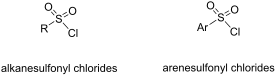
Scheme 1: Organic reactions where the breaking of a C–X bond involves the formation of a high energy ion-pair...
Scheme 2: The chemical structures for the 1-adamantyl substrate, 2-adamantyl substrate, and the S-methyldiben...
Figure 1: The SN2 reaction plot of log (k/ko) vs (1.26 NT + 0.65 YCl) for the solvolyses of benzesulfonyl chl...
Figure 2: The SN2 reaction plot of log (k/ko) vs (1.35 NT + 0.70 YCl) for the solvolyses of 2-thiophenesulfon...
Beilstein J. Org. Chem. 2022, 18, 102–109, doi:10.3762/bjoc.18.11
Graphical Abstract
Figure 1: Examples of amino-functionalized 1,2-oxazole derivatives I–VIII.
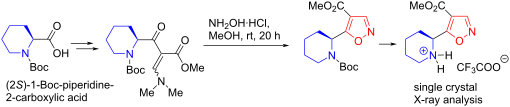
Scheme 1: Conversion of cyclic amino acids to 1,2-oxazole derivatives.
Scheme 2: Plausible mechanisms for the formation of 1,2-oxazoles 4a–h and VII from β-enamino ketoesters 3a–h ...
Figure 2: (a) 1H NMR (italics), 13C NMR (normal), and 15N NMR (bold) chemical shifts (ppm) of compound 3a in ...
Scheme 3: Synthesis of compound 15N-1,2-oxazole 5. The coupling constants of JHN and JCN from 15N2 are indica...
Figure 3: Stacked chromatogram view of pairs of enantiomers with area, %: (R)-4b, ee 100% (tR = 10.1 min) and...
Figure 4: (a) Structure of 4b with syn- and anti-conformers; (b) superimposed 1H NMR and 1D gradient NOE spec...
Scheme 4: Synthesis of 2-[4-(methoxycarbonyl)-1,2-oxazol-5-yl]cycloaminyl-1-ium trifluoroacetates 6a,b.
Figure 5: ORTEP diagram of the asymmetric unit consisting of two cations 6b(A) and 6b(B) and triflate anions.
Beilstein J. Org. Chem. 2022, 18, 25–36, doi:10.3762/bjoc.18.3
Graphical Abstract
Figure 1: Selected examples of natural products and drugs possessing the indane scaffold.
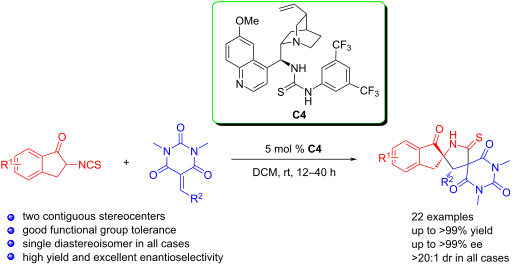
Scheme 1: Known strategies and conceptual advance of this contribution.
Figure 2: Selected examples of bioactive spirobarbiturates.
Figure 3: The screened organocatalysts.
Scheme 2: Substrate scope of 2-isothiocyanato-1-indanones. The reactions were carried out with 1 (0.12 mmol), ...
Scheme 3: Substrate scope of barbiturate-based olefins. The reactions were carried out with 1a (0.12 mmol), 2...
Figure 4: X-ray crystal structure of 3ae (displacement ellipsoids are drawn at the 50% probability level).
Scheme 4: Gram-scale synthesis of 3ah.
Scheme 5: Further transformation of 3ah.
Scheme 6: One-pot three-component reaction.
Scheme 7: Proposed reaction mechanism.
Beilstein J. Org. Chem. 2022, 18, 13–24, doi:10.3762/bjoc.18.2
Graphical Abstract
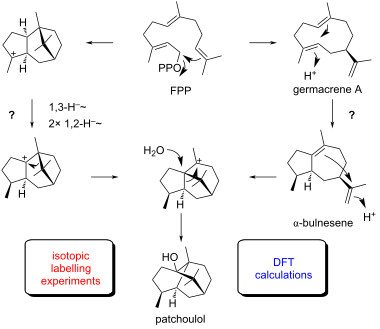
Figure 1: Initially assigned structures for patchoulol by Treibs (1) and by Büchi (2). Structures of patchoul...
Scheme 1: Biosynthesis of patchoulol (part I). A) Cyclisation mechanism from FPP to 3 as suggested by Croteau...
Scheme 2: Biosynthesis of patchoulol (part II). A) Cyclisation mechanism from FPP to 3 as suggested by Akhila...
Scheme 3: Biosynthesis of patchoulol (part III). A) Cyclisation mechanism from FPP to 3 as suggested by Faral...
Figure 2: ORTEP representation of patchoulol (3). Cu Kα, Flack parameter: −0.1(2); P2(true) = 1.000, P3(false...
Scheme 4: Determination of the absolute configurations of compounds 3 and 12 through stereoselective labellin...
Scheme 5: Labelling experiments on the biosynthesis of patchoulol (3, part 1). Black dots indicate 13C-labell...
Scheme 6: Labelling experiments on the biosynthesis of patchoulol (3, part 2). Black dots indicate 13C-labell...
Figure 3: Energy profile from DFT calculations (Gibbs energies at 298 K, mPW1PW91/6-311 + G(d,p)//B97D3/6-31G...
Figure 4: Structure elucidation of (2S,3S,7S,10R)-guaia-1,11-dien-10-ol (17) and structure of its known stere...
Beilstein J. Org. Chem. 2021, 17, 2848–2893, doi:10.3762/bjoc.17.196
Graphical Abstract
Figure 1: Price comparison among iron and other transition metals used in catalysis.
Scheme 1: Typical modes of C–C bond formation.
Scheme 2: The components of an iron-catalyzed domino reaction.
Scheme 3: Iron-catalyzed tandem cyclization and cross-coupling reactions of iodoalkanes 1 with aryl Grignard ...
Scheme 4: Three component iron-catalyzed dicarbofunctionalization of vinyl cyclopropanes 14.
Scheme 5: Three-component iron-catalyzed dicarbofunctionalization of alkenes 21.
Scheme 6: Double carbomagnesiation of internal alkynes 31 with alkyl Grignard reagents 32.
Scheme 7: Iron-catalyzed cycloisomerization/cross-coupling of enyne derivatives 35 with alkyl Grignard reagen...
Scheme 8: Iron-catalyzed spirocyclization/cross-coupling cascade.
Scheme 9: Iron-catalyzed alkenylboration of alkenes 50.
Scheme 10: N-Alkyl–N-aryl acrylamide 60 CDC cyclization with C(sp3)–H bonds adjacent to a heteroatom.
Scheme 11: 1,2-Carboacylation of activated alkenes 60 with aldehydes 65 and alcohols 67.
Scheme 12: Iron-catalyzed dicarbonylation of activated alkenes 68 with alcohols 67.
Scheme 13: Iron-catalyzed cyanoalkylation/radical dearomatization of acrylamides 75.
Scheme 14: Synergistic photoredox/iron-catalyzed 1,2-dialkylation of alkenes 82 with common alkanes 83 and 1,3...
Scheme 15: Iron-catalyzed oxidative coupling/cyclization of phenol derivatives 86 and alkenes 87.
Scheme 16: Iron-catalyzed carbosulfonylation of activated alkenes 60.
Scheme 17: Iron-catalyzed oxidative spirocyclization of N-arylpropiolamides 91 with silanes 92 and tert-butyl ...
Scheme 18: Iron-catalyzed free radical cascade difunctionalization of unsaturated benzamides 94 with silanes 92...
Scheme 19: Iron-catalyzed cyclization of olefinic dicarbonyl compounds 97 and 100 with C(sp3)–H bonds.
Scheme 20: Radical difunctionalization of o-vinylanilides 102 with ketones and esters 103.
Scheme 21: Dehydrogenative 1,2-carboamination of alkenes 82 with alkyl nitriles 76 and amines 105.
Scheme 22: Iron-catalyzed intermolecular 1,2-difunctionalization of conjugated alkenes 107 with silanes 92 and...
Scheme 23: Four-component radical difunctionalization of chemically distinct alkenes 114/115 with aldehydes 65...
Scheme 24: Iron-catalyzed carbocarbonylation of activated alkenes 60 with carbazates 117.
Scheme 25: Iron-catalyzed radical 6-endo cyclization of dienes 119 with carbazates 117.
Scheme 26: Iron-catalyzed decarboxylative synthesis of functionalized oxindoles 130 with tert-butyl peresters ...
Scheme 27: Iron‑catalyzed decarboxylative alkylation/cyclization of cinnamamides 131/134.
Scheme 28: Iron-catalyzed carbochloromethylation of activated alkenes 60.
Scheme 29: Iron-catalyzed trifluoromethylation of dienes 142.
Scheme 30: Iron-catalyzed, silver-mediated arylalkylation of conjugated alkenes 115.
Scheme 31: Iron-catalyzed three-component carboazidation of conjugated alkenes 115 with alkanes 101/139b and t...
Scheme 32: Iron-catalyzed carboazidation of alkenes 82 and alkynes 160 with iodoalkanes 20 and trimethylsilyl ...
Scheme 33: Iron-catalyzed asymmetric carboazidation of styrene derivatives 115.
Scheme 34: Iron-catalyzed carboamination of conjugated alkenes 115 with alkyl diacyl peroxides 163 and acetoni...
Scheme 35: Iron-catalyzed carboamination using oxime esters 165 and arenes 166.
Scheme 36: Iron-catalyzed iminyl radical-triggered [5 + 2] and [5 + 1] annulation reactions with oxime esters ...
Scheme 37: Iron-catalyzed decarboxylative alkyl etherification of alkenes 108 with alcohols 67 and aliphatic a...
Scheme 38: Iron-catalyzed inter-/intramolecular alkylative cyclization of carboxylic acid and alcohol-tethered...
Scheme 39: Iron-catalyzed intermolecular trifluoromethyl-acyloxylation of styrene derivatives 115.
Scheme 40: Iron-catalyzed carboiodination of terminal alkenes and alkynes 180.
Scheme 41: Copper/iron-cocatalyzed cascade perfluoroalkylation/cyclization of 1,6-enynes 183/185.
Scheme 42: Iron-catalyzed stereoselective carbosilylation of internal alkynes 187.
Scheme 43: Synergistic photoredox/iron catalyzed difluoroalkylation–thiolation of alkenes 82.
Scheme 44: Iron-catalyzed three-component aminoazidation of alkenes 82.
Scheme 45: Iron-catalyzed intra-/intermolecular aminoazidation of alkenes 194.
Scheme 46: Stereoselective iron-catalyzed oxyazidation of enamides 196 using hypervalent iodine reagents 197.
Scheme 47: Iron-catalyzed aminooxygenation for the synthesis of unprotected amino alcohols 200.
Scheme 48: Iron-catalyzed intramolecular aminofluorination of alkenes 209.
Scheme 49: Iron-catalyzed intramolecular aminochlorination and aminobromination of alkenes 209.
Scheme 50: Iron-catalyzed intermolecular aminofluorination of alkenes 82.
Scheme 51: Iron-catalyzed aminochlorination of alkenes 82.
Scheme 52: Iron-catalyzed phosphinoylazidation of alkenes 108.
Scheme 53: Synergistic photoredox/iron-catalyzed three-component aminoselenation of trisubstituted alkenes 82.
Beilstein J. Org. Chem. 2021, 17, 2680–2715, doi:10.3762/bjoc.17.182
Graphical Abstract
Figure 1: Representative modified 1,3-oxathiolane nucleoside analogues.
Figure 2: Mechanism of antiviral action of 1,3-oxathiolane nucleosides, 3TC (1) and FTC (2), as chain termina...
Figure 3: Synthetic strategies for the construction of the 1,3-oxathiolane sugar ring.
Scheme 1: Synthesis of 4 from benzoyloxyacetaldehyde (3a) and 2-mercapto-substituted dimethyl acetal 3na.
Scheme 2: Synthesis of 8 from protected glycolic aldehyde 3b and 2-mercaptoacetic acid (3o).
Scheme 3: Synthesis of 20 from ᴅ-mannose (3c).
Scheme 4: Synthesis of 20 from 1,6-thioanhydro-ᴅ-galactose (3d).
Scheme 5: Synthesis of 8 from 2-(tert-butyldiphenylsilyloxy)methyl-5-oxo-1,2-oxathiolane (3m).
Scheme 6: Synthesis of 20a from ʟ-gulose derivative 3f.
Scheme 7: Synthesis of 31 from (+)-thiolactic acid 3p and 2-benzoyloxyacetaldehyde (3a).
Scheme 8: Synthesis of 35a from 1,4-dithiane-2,5-diol (3q) and glyoxylic acid (3g) hydrate.
Scheme 9: Synthetic routes toward 41 through Pummerer reaction from methyl 2-mercaptoacetate (3j) and bromoac...
Scheme 10: Strategy for the synthesis of 2,5-substituted 1,3-oxathiolane 41a using 4-nitrobenzyl glyoxylate an...
Scheme 11: Synthesis of 44 by a resolution method using Mucor miehei lipase.
Scheme 12: Synthesis of 45 from benzoyloxyacetaldehyde (3a) and 2-mercaptoacetaldehyde bis(2-methoxyethyl) ace...
Scheme 13: Synthesis of 46 from 2-mercaptoacetaldehyde bis(2-methoxyethyl) acetal (3nc) and diethyl 3-phosphon...
Scheme 14: Synthesis of 48 from 1,3-dihydroxyacetone dimer 3l.
Scheme 15: Approach toward 52 from protected alkene 3rb and lactic acid derivative 51 developed by Snead et al....
Scheme 16: Recent approach toward 56a developed by Kashinath et al.
Scheme 17: Synthesis of 56a from ʟ-menthyl glyoxylate (3h) hydrate by DKR.
Scheme 18: Possible mechanism with catalytic TEA for rapid interconversion of isomers.
Scheme 19: Synthesis of 35a by a classical resolution method through norephedrine salt 58 formation.
Scheme 20: Synthesis of 63 via [1,2]-Brook rearrangement from silyl glyoxylate 61 and thiol 3nb.
Scheme 21: Combined use of STS and CAL-B as catalysts to synthesize an enantiopure oxathiolane precursor 65.
Scheme 22: Synthesis of 1 and 1a from glycolaldehyde dimer 64 and 1,4-dithiane-2,5-diol (3q) using STS and CAL...
Scheme 23: Synthesis of 68 by using Klebsiella oxytoca.
Scheme 24: Synthesis of 71 and 72 using Trichosporon taibachii lipase and kinetic resolution.
Scheme 25: Synthesis of 1,3-oxathiolan-5-ones 77 and 78 via dynamic covalent kinetic resolution.
Figure 4: Pathway for glycosidic bond formation.
Scheme 26: First synthesis of (±)-BCH-189 (1c) by Belleau et al.
Scheme 27: Enantioselective synthesis of 3TC (1).
Scheme 28: Synthesis of cis-diastereomer 3TC (1) from oxathiolane propionate 44.
Scheme 29: Synthesis of (±)-BCH-189 (1c) via SnCl4-mediated N-glycosylation of 8.
Scheme 30: Synthesis of (+)-BCH-189 (1a) via TMSOTf-mediated N-glycosylation of 20.
Scheme 31: Synthesis of 3TC (1) from oxathiolane precursor 20a.
Scheme 32: Synthesis of 83 via N-glycosylation of 20 with pyrimidine bases.
Scheme 33: Synthesis of 85 via N-glycosylation of 20 with purine bases.
Scheme 34: Synthesis of 86 and 87 via N-glycosylation using TMSOTf and pyrimidines.
Scheme 35: Synthesis of 90 and 91 via N-glycosylation using TMSOTf and purines.
Scheme 36: Synthesis of 3TC (1) via TMSI-mediated N-glycosylation.
Scheme 37: Stereoselective N-glycosylation for the synthesis of 1 by anchimeric assistance of a chiral auxilia...
Scheme 38: Whitehead and co-workers’ approach for the synthesis of 1 via direct N-glycosylation without an act...
Scheme 39: ZrCl4-mediated stereoselective N-glycosylation.
Scheme 40: Plausible reaction mechanism for stereoselective N-glycosylation using ZrCl4.
Scheme 41: Synthesis of enantiomerically pure oxathiolane nucleosides 1 and 2.
Scheme 42: Synthesis of tetrazole analogues of 1,3-oxathiolane nucleosides 97.
Scheme 43: Synthetic approach toward 99 from 1,3-oxathiolane 45 by Camplo et al.
Scheme 44: Synthesis of 100 from oxathiolane phosphonate analogue 46.
Scheme 45: Synthetic approach toward 102 and the corresponding cyclic thianucleoside monophosphate 102a by Cha...
Scheme 46: Synthesis of emtricitabine (2) from 1,4-dithiane-2,5-diol (3q) and glyoxylic acid (3g).
Scheme 47: Synthesis of 1 and 2, respectively, from 56a–d using iodine-mediated N-glycosylation.
Scheme 48: Plausible mechanism for silane- and I2-mediated N-glycosylation.
Scheme 49: Pyridinium triflate-mediated N-glycosylation of 35a.
Scheme 50: Possible pathway for stereoselective N-glycosylation via in situ chelation with a metal ligand.
Scheme 51: Synthesis of novel 1,3-oxathiolane nucleoside 108 from oxathiolane precursor 8 and 3-benzyloxy-2-me...
Scheme 52: Synthesis of 110 using T-705 as a nucleobase and 1,3-oxathiolane derivative 8 via N-glycosylation.
Scheme 53: Synthesis of 1 using an asymmetric leaving group and N-glycosylation with bromine and mesitylene.
Scheme 54: Cytidine deaminase for enzymatic separation of 1c.
Scheme 55: Enzymatic resolution of the monophosphate derivative 116 for the synthesis of (−)-BCH-189 (1) and (...
Scheme 56: Enantioselective resolution by PLE-mediated hydrolysis to obtain FTC (2).
Scheme 57: (+)-Menthyl chloroformate as a resolving agent to separate a racemic mixture 120.
Scheme 58: Separation of racemic mixture 1c by cocrystal 123 formation with (S)-(−)-BINOL.
Beilstein J. Org. Chem. 2021, 17, 2657–2662, doi:10.3762/bjoc.17.179
Graphical Abstract
Scheme 1: A: Synthesis of (Z)-β-enamido triflates and subsequent stereoselective cross-coupling reactions. B:...
Scheme 2: Substrate scope of the Suzuki coupling leading to enamides 2 and 3. aRatio determined by 19F NMR; b...
Scheme 3: Proposed mechanisms for the formed Suzuki coupling retention products 2 and inversion products 3.
Beilstein J. Org. Chem. 2021, 17, 2585–2610, doi:10.3762/bjoc.17.173
Graphical Abstract
Scheme 1: Asymmetric aza-Michael addition catalyzed by cinchona alkaloid derivatives.
Scheme 2: Intramolecular 6-exo-trig aza-Michael addition reaction.
Scheme 3: Asymmetric aza-Michael/Michael addition cascade reaction of 2-nitrobenzofurans and 2-nitrobenzothio...
Scheme 4: Asymmetric aza-Michael addition of para-dienone imide to benzylamine.
Scheme 5: Asymmetric synthesis of chiral N-functionalized heteroarenes.
Beilstein J. Org. Chem. 2021, 17, 2553–2569, doi:10.3762/bjoc.17.171
Graphical Abstract
Figure 1: Schematic representation of the process of aqueous cryogel formation, using (a) monomers/small mole...
Figure 2: Microarchitecture of gelatin cryogels. (A) Surface and cross-sectional SEM micrographs of highly po...
Figure 3: Principle of 3D-cryogel printing. A) Illustration of 3D-printing of cryogels. B) Illustration of th...
Figure 4: Illustration of the production of the injectable multifunctional composite, comprised of alginate c...
Figure 5: Digital and SEM photographs of PETEGA cryogel at 20 °C (top) and 50 °C (bottom), synthesised via UV...
Figure 6: Cell morphology of T47D breast cancer cells cultured in HA cryogels. (A) Schematic representation o...
Figure 7: Preparation of PDMA/β-CD cryogel via cryogenic treatment and photochemical crosslinking in frozen s...
Figure 8: (A) Healing rate of wounds treated with autoclaved CG11 cryogels and those treated with 70% ethanol...
Figure 9: In vivo haemostatic capacity evaluation of the cryogels. Blood loss (a) and haemostatic time (b) in...
Beilstein J. Org. Chem. 2021, 17, 2520–2542, doi:10.3762/bjoc.17.169
Graphical Abstract
Scheme 1: Photoredox catalysis mechanism of [Ru(bpy)3]2+.
Scheme 2: Photoredox catalysis mechanism of CuI.
Scheme 3: Ligands and CuI complexes.
Scheme 4: Mechanism of CuI-based photocatalysis.
Scheme 5: Mechanisms of CuI–substrate complexes.
Scheme 6: Mechanism of CuII-base photocatalysis.
Scheme 7: Olefinic C–H functionalization and allylic alkylation.
Scheme 8: Cross-coupling of unactivated alkenes and CF3SO2Cl.
Scheme 9: Chlorosulfonylation/cyanofluoroalkylation of alkenes.
Scheme 10: Hydroamination of alkenes.
Scheme 11: Cross-coupling reaction of alkenes, alkyl halides with nucleophiles.
Scheme 12: Cross-coupling of alkenes with oxime esters.
Scheme 13: Oxo-azidation of vinyl arenes.
Scheme 14: Azidation/difunctionalization of vinyl arenes.
Scheme 15: Photoinitiated copper-catalyzed Sonogashira reaction.
Scheme 16: Alkyne functionalization reactions.
Scheme 17: Alkynylation of dihydroquinoxalin-2-ones with terminal alkynes.
Scheme 18: Decarboxylative alkynylation of redox-active esters.
Scheme 19: Aerobic oxidative C(sp)–S coupling reaction.
Scheme 20: Copper-catalyzed alkylation of carbazoles with alkyl halides.
Scheme 21: C–N coupling of organic halides with amides and aliphatic amines.
Scheme 22: Copper-catalyzed C–X (N, S, O) bond formation reactions.
Scheme 23: Arylation of C(sp2)–H bonds of azoles.
Scheme 24: C–C cross-coupling of aryl halides and heteroarenes.
Scheme 25: Benzylic or α-amino C–H functionalization.
Scheme 26: α-Amino C–H functionalization of aromatic amines.
Scheme 27: C–H functionalization of aromatic amines.
Scheme 28: α-Amino-C–H and alkyl C–H functionalization reactions.
Scheme 29: Other copper-photocatalyzed reactions.
Scheme 30: Cross-coupling of oxime esters with phenols or amines.
Scheme 31: Alkylation of heteroarene N-oxides.
Beilstein J. Org. Chem. 2021, 17, 2477–2487, doi:10.3762/bjoc.17.164
Graphical Abstract
Figure 1: Structures of azide and alkyne functional molecules and polymers used in the photoinduced CuAAC rea...
Figure 2: UV–vis spectra of CuICl, CuIICl2 and BPNs.
Figure 3: a) 1H NMR spectra of the model reaction between benzyl azide (Az-1) and phenylacetylene (Alk-3) bef...
Scheme 1: Proposed mechanism for photoinduced CuAAC reaction using exfoliated BPNs.
Figure 4: a) 1H NMR spectrum of chain end modified PCL-Anth; b) UV–vis spectra of (azidomethyl)anthracene (bl...
Scheme 2: Synthesis of PS-b-PCL block copolymer via exfoliated BPNs-mediated photoinduced CuAAC reaction.
Figure 5: a) GPC traces of PS-Az, PCL-Alk and block copolymer (Ps-b-PCL) b) 1H NMR spectrum of the block copo...
Scheme 3: Preparation of the cross-linked polymer by CuAAC reaction using multifunctional monomers, Az-3 and ...
Figure 6: a) DSC thermogram of photoinduced synthesis of nanocomposite networks (heating rate: 10 °C/min). b)...
Figure 7: (a, b) TEM images of cross-linked polymer at two different magnifications, c) HAADF-STEM image and ...
Beilstein J. Org. Chem. 2021, 17, 2462–2476, doi:10.3762/bjoc.17.163
Graphical Abstract
Scheme 1: Ag/I2-mediated electrophilic annulation of 2-en-4-ynyl azides 1.
Scheme 2: The proposed mechanism of Ag-catalyzed aza-annulation.
Scheme 3: The proposed mechanism of I2-mediated aza-annulation.
Scheme 4: Copper-catalyzed amination of (E)-2-en-4-ynyl azides 1.
Scheme 5: The proposed mechanism of copper-catalyzed amination.
Scheme 6: The derivatization of sulfonated aminonicotinates.
Scheme 7: Copper-catalyzed chalcogenoamination of (E)-2-en-4-ynyl azides 1.
Scheme 8: The possible mechanism of chalcogenoamination.
Scheme 9: The derivatization of 5‑selenyl- and 5-sulfenyl-substituted nicotinates.
Scheme 10: The tandem reaction of nitriles, Reformatsky reagents, and 1,3-enynes.
Scheme 11: Nickel-catalyzed [4 + 2]-cycloaddition of 3-azetidinones with 1,3-enynes.
Scheme 12: Electrophilic iodocyclization of 2-nitro-1,3-enynes to pyrroles.
Scheme 13: Electrophilic halogenation of 2-trifluoromethyl-1,3-enynes to pyrroles.
Scheme 14: Copper-catalyzed cascade cyclization of 2-nitro-1,3-enynes with amines.
Scheme 15: Tandem cyclization of 2-nitro-1,3-enynes, Togni reagent II, and amines.
Scheme 16: Tandem cyclization of 2-nitro-1,3-enynes, TMSN3, and amines.
Scheme 17: Cascade cyclization of 6-hydroxyhex-2-en-4-ynals to pyrroles.
Scheme 18: Au/Ag-catalyzed oxidative aza-annulation of 1,3-enynyl azides.
Scheme 19: The plausible mechanism of Au/Ag-catalyzed oxidative aza-annulation.
Scheme 20: Synthesis of 2-tetrazolyl-substituted 3-acylpyrroles from enynals.
Scheme 21: CuH-catalyzed coupling reaction of 1,3-enynes and nitriles to pyrroles.
Scheme 22: The mechanism of CuH-catalyzed coupling of 1,3-enynes and nitriles to pyrroles.
Beilstein J. Org. Chem. 2021, 17, 2441–2449, doi:10.3762/bjoc.17.161
Graphical Abstract
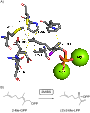
Figure 1: Highly conserved residues in the active site of SdS for Mg2+ complexation, substrate recognition an...
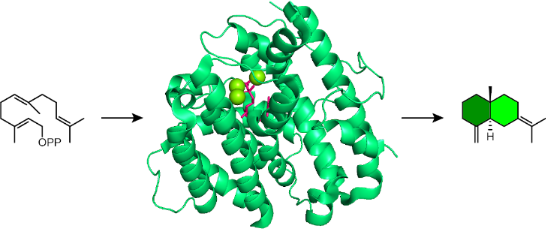
Figure 2: The products of SmTS1. A) Structures of sestermobaraenes A–F (1–6) and sestermobaraol (7). B) The t...
Figure 3: Swiss homology modelling of SmTS1. A) Superimposition of the SdS crystal structure (green) with the...
Figure 4: Products and relative activities of SmTS1 and its variants. Bars left of the dashed line show relat...
Figure 5: Total ion chromatogram of an extract from an incubation of GGPP with the SmTS1 A222V variant.
Figure 6: Relative activities of SmTS1 and its variants towards GFPP (blue bars) and GGPP (yellow bars), and ...
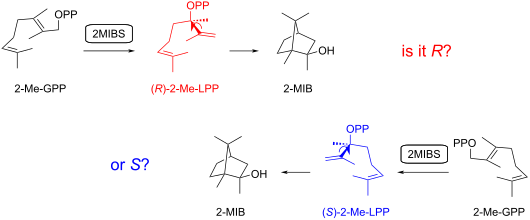
Scheme 1: Determination of the enantiomeric composition of 8 and 9 obtained from GGPP with SmTS1 enzyme varia...
Figure 7: Determination of the absolute configuration of compounds 8 and 9. Partial HSQC spectra of A) unlabe...
Beilstein J. Org. Chem. 2021, 17, 2417–2424, doi:10.3762/bjoc.17.158
Graphical Abstract
Scheme 1: Synthesis of 5–arylethynyl-3-aryl-1,2,4-oxadiazoles 3a–e.
Scheme 2: Plausible reaction mechanism for transformations of 5-acetylenyl-1,2,4-oxadiazoles 3 in Brønsted su...
Scheme 3: Quantitative formation of E/Z-vinyl triflates 4a–c from 5-acetylenyl-1,2,4-oxadiazoles 3a–c in TfOH....
Scheme 4: Formation of compound 4d from 5-acetylenyl-1,2,4-oxadiazole 3a in H2SO4.
Scheme 5: Hydroarylation of 5-acetylenyl-1,2,4-oxadiazole 3a–d by arenes in TfOH leading to compounds E/Z-5a–g...
Beilstein J. Org. Chem. 2021, 17, 2340–2347, doi:10.3762/bjoc.17.152
Graphical Abstract
Figure 1: Biologically active phenanthridines.
Figure 2: Synthetic routes to phenanthridines via iminyl radicals.
Scheme 1: Previous unexpected synthesis of the phenanthridine framework.
Scheme 2: Synthesis of biaryl benzaldehydes.
Scheme 3: Synthesis of biaryl oximes.
Scheme 4: Synthesis of phenanthridines. Reagents and conditions (i) UV irradiation (450 W medium pressure Hg ...
Figure 3: Two possible mechanistic routes and intermediates in the synthesis of phenanthridines.
Scheme 5: Synthesis of trisphaeridine. Reagents and conditions (i) cat. Pd(PPh3)4, aq Na2CO3, DME, reflux, Ar...
Beilstein J. Org. Chem. 2021, 17, 2123–2163, doi:10.3762/bjoc.17.138
Graphical Abstract
Figure 1: (a) Schematic representation of the phase stability of a binary mixture based on the free enthalpy ...
Figure 2: Illustration of the relationship between the type of miscibility gap and the temperature dependence...
Figure 3: Schematically pictured phase diagram of a binary mixture composed of a dissolved polymer with a LCS...
Figure 4: Schematic illustration of a thermo-induced swelling behavior of a star polymer composed of responsi...
Figure 5: Schematic illustration of self-assembly of block copolymer amphiphiles in a polar medium.
Figure 6: Schematic comparison of the size and conformation between free polymer chains (a), grafted polymer ...
Figure 7: Comparison of the possible phase diagrams of a polymer in solution with partially miscibility and t...
Figure 8: Selection of polymers exhibiting UCST behavior due to hydrogen bonding (blue) divided into homo- (a...
Figure 9: Part A shows the molecular structure of PDMAPS stars synthesized by Li et al. (left) demonstrating ...
Figure 10: Part A contains a schematic demonstration of conformational transitions of dual-thermoresponsive bl...
Figure 11: Part A pictures zwitterionic brushes grafted from silicon substrates obtaining a nonassociated, hyd...
Figure 12: Part A pictures the UCST phase transition of zwitterionic polymers grafted on the surface of mesopo...
Beilstein J. Org. Chem. 2021, 17, 2102–2122, doi:10.3762/bjoc.17.137
Graphical Abstract
Scheme 1: Synthesis of 2,2’-bis(indole)borinic ester 3.
Scheme 2: Synthesis of 2,2’-bisindole NHC·boranes by an SEAr mechanism.
Scheme 3: Syntheses of indolyl amines through Buchwald–Hartwig cross coupling.
Scheme 4: Synthesis of 3,3’-bis(indolyl) ethers.
Scheme 5: C–H silylation of indoles.
Scheme 6: n-BuLi-mediated syntheses of bis(indol-3-yl)silanes.
Scheme 7: Acid-catalyzed syntheses of bis(indol-3-yl)silanes and mechanisms.
Scheme 8: B(C6F5)3 and Al(C6F5)3-catalyzed syntheses of bis(indol-3-yl)silanes reported by Han.
Scheme 9: Base-mediated syntheses of bis and tris(indol-2-yl)phosphines.
Scheme 10: Synthesis of bis(indol-2-yl)sulfides using SL2-type reagents.
Scheme 11: Synthesis of 2,3’- and 2,2’-bis(indolyl)sulfides using disulfides as substrates.
Scheme 12: Synthesis of diindol-2-ylsulfide (84) from 2-iodoindole (92) and thiourea.
Scheme 13: Synthesis of bis(indol-3-yl)sulfides using N-silylated 3-bromoindole 93.
Scheme 14: Fischer indole synthesis of bis(indol-3-yl)sulfides using thio diketones.
Scheme 15: Oxidative synthesis of bis(indol-3-yl)sulfides using indoles and elemental sulfur.
Scheme 16: Synthesis of bis(indol-3-yl)sulfides using sulfoxides as sulfur source.
Scheme 17: Syntheses of bis(indol-2-yl)selanes.
Scheme 18: Syntheses of bis(indol-3-yl)selanes.
Scheme 19: Synthesis of bis(indol-2-yl)tellane 147.
Scheme 20: Synthesis of tris(indolyl)borane 154.
Scheme 21: Synthesis of bis(indol-4-yl)amines 159.
Scheme 22: Synthesis of bis(indol-5-yl)amines.
Scheme 23: Synthesis of 6,5’/6,6’-bis(indolyl)amines.
Scheme 24: Synthesis of potent HIV-inhibitors 6,6’-bis(indolyl) ethers.
Scheme 25: Synthesis of bis(indol-7-yl) ether.
Scheme 26: Synthesis of di(indol-5-yl)sulfide (183).
Scheme 27: Syntheses of 2,2’-diformyl-7,7’-bis(indolyl)selenides.
Beilstein J. Org. Chem. 2021, 17, 1952–1980, doi:10.3762/bjoc.17.128
Graphical Abstract
Figure 1: Coumarin-derived commercially available drugs.
Figure 2: Inhibition of acetylcholinesterase by coumarin derivatives.
Scheme 1: Michael addition of 4-hydroxycoumarins 1 to α,β‐unsaturated enones 2.
Scheme 2: Organocatalytic conjugate addition of 4-hydroxycoumarin 1 to α,β-unsaturated aldehydes 2 followed b...
Scheme 3: Synthesis of 3,4-dihydrocoumarin derivatives 10 through decarboxylative and dearomatizative cascade...
Scheme 4: Total synthesis of (+)-smyrindiol (17).
Scheme 5: Michael addition of 4-hydroxycoumarin (1) to enones 2 through a bifunctional modified binaphthyl or...
Scheme 6: Michael addition of ketones 20 to 3-aroylcoumarins 19 using a cinchona alkaloid-derived primary ami...
Scheme 7: Enantioselective reaction of cyclopent-2-enone-derived MBH alcohols 24 with 4-hydroxycoumarins 1.
Scheme 8: Sequential Michael addition/hydroalkoxylation one-pot approach to annulated coumarins 28 and 30.
Scheme 9: Michael addition of 4-hydroxycoumarins 1 to enones 2 using a binaphthyl diamine catalyst 31.
Scheme 10: Asymmetric Michael addition of 4-hydroxycoumarin 1 with α,β-unsaturated ketones 2 catalyzed by a ch...
Scheme 11: Catalytic asymmetric β-C–H functionalization of ketones via enamine oxidation.
Scheme 12: Enantioselective synthesis of polycyclic coumarin derivatives 37 catalyzed by an primary amine-imin...
Scheme 13: Allylic alkylation reaction between 3-cyano-4-methylcoumarins 39 and MBH carbonates 40.
Scheme 14: Enantioselective synthesis of cyclopropa[c]coumarins 45.
Scheme 15: NHC-catalyzed lactonization of 2-bromoenals 46 with 4-hydroxycoumarin (1).
Scheme 16: NHC-catalyzed enantioselective synthesis of dihydrocoumarins 51.
Scheme 17: Domino reaction of enals 2 with hydroxylated malonate 53 catalyzed by NHC 55.
Scheme 18: Oxidative [4 + 2] cycloaddition of enals 57 to coumarins 56 catalyzed by NHC 59.
Scheme 19: Asymmetric [3 + 2] cycloaddition of coumarins 43 to azomethine ylides 60 organocatalyzed by quinidi...
Scheme 20: Synthesis of α-benzylaminocoumarins 64 through Mannich reaction between 4-hydroxycoumarins (1) and ...
Scheme 21: Asymmetric addition of malonic acid half-thioesters 67 to coumarins 66 using the sulphonamide organ...
Scheme 22: Enantioselective 1,4-addition of azadienes 71 to 3-homoacyl coumarins 70.
Scheme 23: Michael addition/intramolecular cyclization of 3-acylcoumarins 43 to 3-halooxindoles 74.
Scheme 24: Enantioselective synthesis of 3,4-dihydrocoumarins 78 catalyzed by squaramide 73.
Scheme 25: Organocatalyzed [4 + 2] cycloaddition between 2,4-dienals 79 and 3-coumarincarboxylates 43.
Scheme 26: Enantioselective one-pot Michael addition/intramolecular cyclization for the synthesis of spiro[dih...
Scheme 27: Michael/hemiketalization addition enantioselective of hydroxycoumarins (1) to: (a) enones 2 and (b)...
Scheme 28: Synthesis of 2,3-dihydrofurocoumarins 89 through Michael addition of 4-hydroxycoumarins 1 to β-nitr...
Scheme 29: Synthesis of pyrano[3,2-c]chromene derivatives 93 via domino reaction between 4-hydroxycoumarins (1...
Scheme 30: Conjugated addition of 4-hydroxycoumarins 1 to nitroolefins 95.
Scheme 31: Michael addition of 4-hydroxycoumarin 1 to α,β-unsaturated ketones 2 promoted by primary amine thio...
Scheme 32: Enantioselective synthesis of functionalized pyranocoumarins 99.
Scheme 33: 3-Homoacylcoumarin 70 as 1,3-dipole for enantioselective concerted [3 + 2] cycloaddition.
Scheme 34: Synthesis of warfarin derivatives 107 through addition of 4-hydroxycoumarins 1 to β,γ-unsaturated α...
Scheme 35: Asymmetric multicatalytic reaction sequence of 2-hydroxycinnamaldehydes 109 with 4-hydroxycoumarins ...
Scheme 36: Mannich asymmetric addition of cyanocoumarins 39 to isatin imines 112 catalyzed by the amide-phosph...
Scheme 37: Enantioselective total synthesis of (+)-scuteflorin A (119).
Beilstein J. Org. Chem. 2021, 17, 1849–1938, doi:10.3762/bjoc.17.126
Graphical Abstract
Scheme 1: Schematic overview of transition metals studied in C–H activation processes.
Scheme 2: (A) Known biological activities related to benzimidazole-based compounds; (B and C) an example of a...
Scheme 3: (A) Known biological activities related to quinoline-based compounds; (B and C) an example of a sca...
Scheme 4: (A) Known biological activities related to sulfur-containing compounds; (B and C) an example of a s...
Scheme 5: (A) Known biological activities related to aminoindane derivatives; (B and C) an example of a scand...
Scheme 6: (A) Known biological activities related to norbornane derivatives; (B and C) an example of a scandi...
Scheme 7: (A) Known biological activities related to aniline derivatives; (B and C) an example of a titanium-...
Scheme 8: (A) Known biological activities related to cyclohexylamine derivatives; (B) an example of an intram...
Scheme 9: (A) Known biologically active benzophenone derivatives; (B and C) photocatalytic oxidation of benzy...
Scheme 10: (A) Known bioactive fluorine-containing compounds; (B and C) vanadium-mediated C(sp3)–H fluorinatio...
Scheme 11: (A) Known biologically active Lythraceae alkaloids; (B) synthesis of (±)-decinine (30).
Scheme 12: (A) Synthesis of (R)- and (S)-boehmeriasin (31); (B) synthesis of phenanthroindolizidines by vanadi...
Scheme 13: (A) Known bioactive BINOL derivatives; (B and C) vanadium-mediated oxidative coupling of 2-naphthol...
Scheme 14: (A) Known antiplasmodial imidazopyridazines; (B) practical synthesis of 41.
Scheme 15: (A) Gold-catalyzed drug-release mechanism using 2-alkynylbenzamides; (B and C) chromium-mediated al...
Scheme 16: (A) Examples of anti-inflammatory benzaldehyde derivatives; (B and C) chromium-mediated difunctiona...
Scheme 17: (A and B) Manganese-catalyzed chemoselective intramolecular C(sp3)–H amination; (C) late-stage modi...
Scheme 18: (A and B) Manganese-catalyzed C(sp3)–H amination; (C) late-stage modification of a leelamine deriva...
Scheme 19: (A) Known bioactive compounds containing substituted N-heterocycles; (B and C) manganese-catalyzed ...
Scheme 20: (A) Known indoles that present GPR40 full agonist activity; (B and C) manganese-catalyzed C–H alkyl...
Scheme 21: (A) Examples of known biaryl-containing drugs; (B and C) manganese-catalyzed C–H arylation through ...
Scheme 22: (A) Known zidovudine derivatives with potent anti-HIV properties; (B and C) manganese-catalyzed C–H...
Scheme 23: (A and B) Manganese-catalyzed C–H organic photo-electrosynthesis; (C) late-stage modification.
Scheme 24: (A) Example of a known antibacterial silylated dendrimer; (B and C) manganese-catalyzed C–H silylat...
Scheme 25: (A and B) Fe-based small molecule catalyst applied for selective aliphatic C–H oxidations; (C) late...
Scheme 26: (A) Examples of naturally occurring gracilioethers; (B) the first total synthesis of gracilioether ...
Scheme 27: (A and B) Selective aliphatic C–H oxidation of amino acids; (C) late-stage modification of proline-...
Scheme 28: (A) Examples of Illicium sesquiterpenes; (B) first chemical synthesis of (+)-pseudoanisatin (80) in...
Scheme 29: (A and B) Fe-catalyzed deuteration; (C) late-stage modification of pharmaceuticals.
Scheme 30: (A and B) Biomimetic Fe-catalyzed aerobic oxidation of methylarenes to benzaldehydes (PMHS, polymet...
Scheme 31: (A) Known tetrahydroquinolines with potential biological activities; (B and C) redox-selective Fe c...
Scheme 32: (A) Known drugs containing a benzofuran unit; (B and C) Fe/Cu-catalyzed tandem O-arylation to acces...
Scheme 33: (A) Known azaindolines that act as M4 muscarinic acetylcholine receptor agonists; (B and C) intramo...
Scheme 34: (A) Known indolinones with anticholinesterase activity; (B and C) oxidative C(sp3)–H cross coupling...
Scheme 35: (A and B) Cobalt-catalyzed C–H alkenylation of C-3-peptide-containing indoles; (C) derivatization b...
Scheme 36: (A) Cobalt-Cp*-catalyzed C–H methylation of known drugs; (B and C) scope of the o-methylated deriva...
Scheme 37: (A) Known lasalocid A analogues; (B and C) three-component cobalt-catalyzed C–H bond addition; (D) ...
Scheme 38: (A and B) Cobalt-catalyzed C(sp2)–H amidation of thiostrepton.
Scheme 39: (A) Known 4H-benzo[d][1,3]oxazin-4-one derivatives with hypolipidemic activity; (B and C) cobalt-ca...
Scheme 40: (A and B) Cobalt-catalyzed C–H arylation of pyrrole derivatives; (C) application for the synthesis ...
Scheme 41: (A) Known 2-phenoxypyridine derivatives with potent herbicidal activity; (B and C) cobalt-catalyzed...
Scheme 42: (A) Natural cinnamic acid derivatives; (B and C) cobalt-catalyzed C–H carboxylation of terminal alk...
Scheme 43: (A and B) Cobalt-catalyzed C–H borylation; (C) application to the synthesis of flurbiprofen.
Scheme 44: (A) Benzothiazoles known to present anticonvulsant activities; (B and C) cobalt/ruthenium-catalyzed...
Scheme 45: (A and B) Cobalt-catalyzed oxygenation of methylene groups towards ketone synthesis; (C) synthesis ...
Scheme 46: (A) Known anticancer tetralone derivatives; (B and C) cobalt-catalyzed C–H difluoroalkylation of ar...
Scheme 47: (A and B) Cobalt-catalyzed C–H thiolation; (C) application in the synthesis of quetiapine (153).
Scheme 48: (A) Known benzoxazole derivatives with anticancer, antifungal, and antibacterial activities; (B and...
Scheme 49: (A and B) Cobalt-catalyzed C–H carbonylation of naphthylamides; (C) BET inhibitors 158 and 159 tota...
Scheme 50: (A) Known bioactive pyrrolo[1,2-a]quinoxalin-4(5H)-one derivatives; (B and C) cobalt-catalyzed C–H ...
Scheme 51: (A) Known antibacterial cyclic sulfonamides; (B and C) cobalt-catalyzed C–H amination of propargyli...
Scheme 52: (A and B) Cobalt-catalyzed intramolecular 1,5-C(sp3)–H amination; (C) late-stage functionalization ...
Scheme 53: (A and B) Cobalt-catalyzed C–H/C–H cross-coupling between benzamides and oximes; (C) late-state syn...
Scheme 54: (A) Known anticancer natural isoquinoline derivatives; (B and C) cobalt-catalyzed C(sp2)–H annulati...
Scheme 55: (A) Enantioselective intramolecular nickel-catalyzed C–H activation; (B) bioactive obtained motifs;...
Scheme 56: (A and B) Nickel-catalyzed α-C(sp3)–H arylation of ketones; (C) application of the method using kno...
Scheme 57: (A and B) Nickel-catalyzed C(sp3)–H acylation of pyrrolidine derivatives; (C) exploring the use of ...
Scheme 58: (A) Nickel-catalyzed C(sp3)–H arylation of dioxolane; (B) library of products obtained from biologi...
Scheme 59: (A) Intramolecular enantioselective nickel-catalyzed C–H cycloalkylation; (B) product examples, inc...
Scheme 60: (A and B) Nickel-catalyzed C–H deoxy-arylation of azole derivatives; (C) late-stage functionalizati...
Scheme 61: (A and B) Nickel-catalyzed decarbonylative C–H arylation of azole derivatives; (C) application of t...
Scheme 62: (A and B) Another important example of nickel-catalyzed C–H arylation of azole derivatives; (C) app...
Scheme 63: (A and B) Another notable example of a nickel-catalyzed C–H arylation of azole derivatives; (C) lat...
Scheme 64: (A and B) Nickel-based metalorganic framework (MOF-74-Ni)-catalyzed C–H arylation of azole derivati...
Scheme 65: (A) Known commercially available benzothiophene-based drugs; (B and C) nickel-catalyzed C–H arylati...
Scheme 66: (A) Known natural tetrahydrofuran-containing substances; (B and C) nickel-catalyzed photoredox C(sp3...
Scheme 67: (A and B) Another notable example of a nickel-catalyzed photoredox C(sp3)–H alkylation/arylation; (...
Scheme 68: (A) Electrochemical/nickel-catalyzed C–H alkoxylation; (B) achieved scope, including three using na...
Scheme 69: (A) Enantioselective photoredox/nickel catalyzed C(sp3)–H arylation; (B) achieved scope, including ...
Scheme 70: (A) Known commercially available trifluoromethylated drugs; (B and C) nickel-catalyzed C–H trifluor...
Scheme 71: (A and B) Stereoselective nickel-catalyzed C–H difluoroalkylation; (C) late-stage functionalization...
Scheme 72: (A) Cu-mediated ortho-amination of oxalamides; (B) achieved scope, including derivatives obtained f...
Scheme 73: (A) Electro-oxidative copper-mediated amination of 8-aminoquinoline-derived amides; (B) achieved sc...
Scheme 74: (A and B) Cu(I)-mediated C–H amination with oximes; (C) derivatization using telmisartan (241) as s...
Scheme 75: (A and B) Cu-mediated amination of aryl amides using ammonia; (C) late-stage modification of proben...
Scheme 76: (A and B) Synthesis of purine nucleoside analogues using copper-mediated C(sp2)–H activation.
Scheme 77: (A) Copper-mediated annulation of acrylamide; (B) achieved scope, including the synthesis of the co...
Scheme 78: (A) Known bioactive compounds containing a naphthyl aryl ether motif; (B and C) copper-mediated eth...
Scheme 79: (A and B) Cu-mediated alkylation of N-oxide-heteroarenes; (C) late-stage modification.
Scheme 80: (A) Cu-mediated cross-dehydrogenative coupling of polyfluoroarenes and alkanes; (B) scope from know...
Scheme 81: (A) Known anticancer acrylonitrile compounds; (B and C) Copper-mediated cyanation of unactivated al...
Scheme 82: (A) Cu-mediated radiofluorination of 8-aminoquinoline-derived aryl amides; (B) achieved scope, incl...
Scheme 83: (A) Examples of natural β-carbolines; (B and C) an example of a zinc-catalyzed C–H functionalizatio...
Scheme 84: (A) Examples of anticancer α-aminophosphonic acid derivatives; (B and C) an example of a zinc-catal...
Beilstein J. Org. Chem. 2021, 17, 1828–1848, doi:10.3762/bjoc.17.125
Graphical Abstract
Figure 1: A schematic representation of 16-mer ASOs in different designs. White circles represent unmodified ...
Figure 2: Structures of 5-(1-propargylamino)-2’-deoxyuridine (A) and 2’-aminoethoxy-5-propargylaminouridine (...
Beilstein J. Org. Chem. 2021, 17, 1814–1827, doi:10.3762/bjoc.17.124
Graphical Abstract
Figure 1: Schematic overview of fungal interactions in the environment. Fungi can be found in essentially all...
Figure 2: Fungal derived bioactive natural compounds with ecological and/or economic relevance.
Figure 3: Gliotoxin biosynthetic gene cluster and it major biosynthetic transformations: Gliotoxin (5) is the...
Figure 4: Amoebicidal secondary metabolites trypacidin and fumagillin of Aspergillus fumigatus.
Figure 5: Intermediates of the DHN-melanin biosynthesis in Aspergillus fumigatus.
Figure 6: Intermediates and products of the fumigaclavine C biosynthesis.
Figure 7: Bioactive secondary metabolites of Aspergillus fumigatus.
Figure 8: Helvolic acid gene cluster of A. fumigatus.
Beilstein J. Org. Chem. 2021, 17, 1752–1813, doi:10.3762/bjoc.17.123
Graphical Abstract
Scheme 1: Fluorination with N-F amine 1-1.
Scheme 2: Preparation of N-F amine 1-1.
Scheme 3: Reactions of N-F amine 1-1.
Scheme 4: Synthesis of N-F perfluoroimides 2-1 and 2-2.
Scheme 5: Synthesis of 1-fluoro-2-pyridone (3-1).
Scheme 6: Fluorination with 1-fluoro-2-pyridone (3-1).
Figure 1: Synthesis of N-F sulfonamides 4-1a–g.
Scheme 7: Fluorination with N-F reagent 4-1b,c,f.
Scheme 8: Fluorination of alkenyllithiums with N-F 4-1h.
Scheme 9: Synthesis of N-fluoropyridinium triflate (5-4a).
Scheme 10: Synthetic methods for N-F-pyridinium salts.
Figure 2: Synthesis of various N-fluoropyridinium salts. Note: athis yield was the one by the improved method...
Scheme 11: Fluorination power order of N-fluoropyridinium salts.
Scheme 12: Fluorinations with N-F salts 5-4.
Scheme 13: Fluorination of Corey lactone 5-7 with N-F-bis(methoxymethyl) salt 5-4l.
Scheme 14: Fluorination with NFPy.
Scheme 15: Synthesis of the N-F reagent, N-fluoroquinuclidinium fluoride (6-1).
Scheme 16: Fluorinations achieved with N-F fluoride 6-1.
Scheme 17: Synthesis of N-F imides 7-1a–g.
Scheme 18: Fluorination with (CF3SO2)2NF, 7-1a.
Scheme 19: Fluorination reactions of various substrates with 7-1a.
Scheme 20: Synthesis of N-F triflate 8-1.
Scheme 21: Synthesis of chiral N-fluoro sultams 9-1 and 9-2.
Scheme 22: Fluorination with chiral N-fluoro sultams 9-1 and 9-2.
Scheme 23: Synthesis of saccharin-derived N-fluorosultam 10-2.
Scheme 24: Fluorination with N-fluorosultam 10-2.
Scheme 25: Synthesis of N-F reagent 11-2.
Scheme 26: Fluorination with N-F reagent 11-2.
Scheme 27: Synthesis and reaction of N-fluorolactams 12-1.
Scheme 28: Synthesis of NFOBS 13-2.
Scheme 29: Fluorination with NFOBS 13-2.
Scheme 30: Synthesis of NFSI (14-2).
Scheme 31: Fluorination with NFSI 14-2.
Scheme 32: Synthesis of N-fluorosaccharin (15-1) and N-fluorophthalimide (15-2).
Scheme 33: Synthesis of N-F salts 16-3.
Scheme 34: Fluorination with N-F salts 16-3.
Figure 3: Monofluorination with Selectfluor (16-3a).
Figure 4: Difluorination with Selectfluor (16-3a).
Scheme 35: Transfer fluorination of Selectfluor (16-3a).
Scheme 36: Fluorination of substrates with Selectfluor (16-3a).
Scheme 37: Synthesis of chiral N-fluoro-sultam 17-2.
Scheme 38: Asymmetric fluorination with chiral 17-2.
Figure 5: Synthesis of Zwitterionic N-fluoropyridinium salts 18-2a–h.
Scheme 39: Fluorinating power order of zwitterionic N-fluoropyridinium salts.
Scheme 40: Fluorination with zwitterionic 18-2.
Scheme 41: Activation of salt 18-2h with TfOH.
Scheme 42: Synthesis of NFTh, 19-2.
Scheme 43: Fluorination with NFTh, 19-2.
Scheme 44: Synthesis of 3-fluorobenzo-1,2,3-oxathiazin-4-one 2,2-dioxide (20-2).
Scheme 45: Fluorination with 20-2.
Scheme 46: Synthesis of N-F amide 21-3.
Scheme 47: Fluorination with N-F amide 21-2.
Scheme 48: Synthesis of N,N’-difluorodiazoniabicyclo[2.2.2]octane salts 22-1.
Scheme 49: One-pot synthesis of N,N’-difluoro-1,4-diazoniabicyclo[2.2.2]octane bistetrafluoroborate salt (22-1d...
Figure 6: Fluorination of anisole with 22-1a, d, e.
Scheme 50: Fluorination with N,N’-diF bisBF4 22-1d.
Scheme 51: Synthesis of bis-N-F reagents 23-1–5.
Scheme 52: Fluorination with 23-2, 4, 5.
Figure 7: Synthesis of N,N’-difluorobipyridinium salts 24-2.
Figure 8: Controlled fluorination of N,N’-diF 24-2.
Scheme 53: Fluorinating power of N,N’-diF salts 24-2 and N-F salt 5-4a.
Scheme 54: Fluorination reactions with SynfluorTM (24-2b).
Scheme 55: Additional fluorination reactions with SynfluorTM (24-2b).
Scheme 56: Synthesis of N-F 25-1.
Scheme 57: Fluorination of polycyclic aromatics with 25-1.
Scheme 58: Synthesis of 26-1 and dimethyl analog 26-2.
Scheme 59: Fluorination with reagents 26-1, 26-2, 1-1, and 26-3.
Scheme 60: Synthesis of N-F reagent 27-2.
Scheme 61: Synthesis of chiral N-F reagents 27-6.
Scheme 62: Synthesis of chiral N-F 27-7–9.
Scheme 63: Asymmetric fluorination with 27-6.
Scheme 64: Synthesis of chiral N-F reagents 28-3.
Scheme 65: Asymmetric fluorination with 28-3.
Scheme 66: Synthesis of chiral N-F reagents 28-7.
Figure 9: Asymmetric fluorination with 28-7.
Scheme 67: In situ formation of N-fluorinated cinchona alkaloids with SelectfluorTM.
Scheme 68: Asymmetric fluorination with N-F alkaloids formed in situ.
Scheme 69: Synthesis of N-fluorocinchona alkaloids with Selectfluor.
Scheme 70: Asymmetric fluorination with 30-1–4.
Scheme 71: Transfer fluorination from various N-F reagents.
Figure 10: Asymmetric fluorination of silyl enol ethers.
Scheme 72: Synthesis of N-fluoro salt 32-2.
Scheme 73: Reactivity of N-fluorotriazinium salt 32-2.
Scheme 74: Synthesis of bulky N-fluorobenzenesulfonimide NFBSI 33-3.
Scheme 75: Comparison of NFSI and NFBSI.
Scheme 76: Synthesis of p-substituted N-fluorobenzenesulfonimides 34-3.
Figure 11: Asymmetric fluorination with 34-3 and a chiral catalyst 34-4.
Scheme 77: 1,4-Fluoroamination with Selecfluor and a chiral catalyst.
Figure 12: Asymmetric fluoroamination with 35-5a, b.
Scheme 78: Synthesis of Selectfluor analogs 35-5a, b.
Scheme 79: Synthesis of chiral dicationic DABCO-based N-F reagents 36-5.
Scheme 80: Asymmetric fluorocyclization with chiral 36-5b.
Scheme 81: Synthesis of chiral 37-2a,b.
Scheme 82: Asymmetric fluorination with chiral 37-2a,b.
Scheme 83: Asymmetric fluorination with chiral 37-2b.
Scheme 84: Reaction of indene with chiral 37-2a,b.
Scheme 85: Synthesis of Me-NFSI, 38-2.
Scheme 86: Fluorination of active methine compounds with Me-NFSI.
Scheme 87: Fluorination of malonates with Me-NFSI.
Scheme 88: Fluorination of keto esters with Me-NFSI.
Scheme 89: Synthesis of N-F 39-3 derived from the ethylene-bridged Tröger’s base.
Scheme 90: Fluorine transfer from N-F 39-3.
Scheme 91: Fluorination with N-F 39-3.
Scheme 92: Synthesis of SelectfluorCN.
Scheme 93: Bistrifluoromethoxylation of alkenes using SelectfluorCN.
Figure 13: Synthesis of NFAS 41-2.
Scheme 94: Radical fluorination with different N-F reagents.
Scheme 95: Radical fluorination of alkenes with NFAS 41-2.
Scheme 96: Radical fluorination of alkenes with NFAS 41-2f.
Scheme 97: Decarboxylative fluorination with NFAS 41-2a,f.
Scheme 98: Fluorine plus detachment (FPD).
Figure 14: FPD values of representative N-F reagents in CH2Cl2 and CH3CN (in parentheses). Adapted with permis...
Scheme 99: N-F homolytic bond dissociation energy (BDE).
Figure 15: BDE values of representative N-F reagents in CH3CN. Adapted with permission from ref. [127]. Copyright 2...
Figure 16: Quantitative reactivity scale for popular N-F reagents. Adapted with permission from ref. [138], publish...
Scheme 100: SET and SN2 mechanisms.
Scheme 101: Radical clock reactions.
Scheme 102: Reaction of potassium enolate of citronellic ester with N-F reagents, 10-1, NFSI, and 8-1.
Scheme 103: Reaction of compound IV with Selectfluor (OTf) and NFSI.
Scheme 104: Reaction of TEMPO with Selecfluor.
Beilstein J. Org. Chem. 2021, 17, 1712–1724, doi:10.3762/bjoc.17.119
Graphical Abstract
Figure 1: A systems glycobiology framework to link multi-OMICs data. a) Cell signaling proceeds to trigger TF...
Figure 2: Analysis workflow: ChiP-Seq provides evidence of TF binding to promoter regions with 0 ≤ RP ≤ 1, qu...
Figure 3: Summary of TFs enriched to glycosylation pathways for luminal and basal breast cancer: The TFs foun...
Figure 4: Luminal breast cancer signaling pathway enrichment and glycogene connections. a) TF-to-glycogene co...
Figure 5: Basal breast cancer signaling pathway enrichments and glycogene connections. a) TF-to-glycogene com...
Figure 6: Summary of TF–glycopathway enrichments across all cancer types: TF enrichments to glycopathways acr...